Provigil
Italy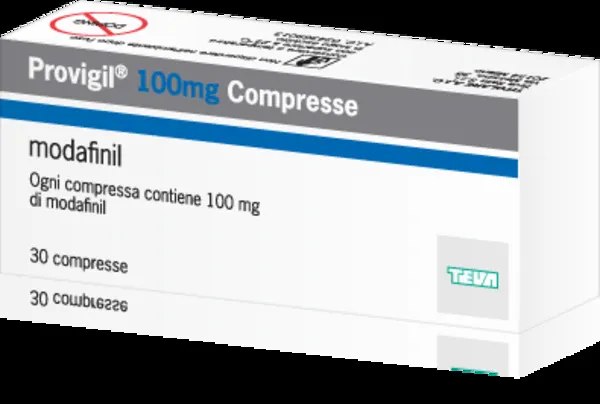
Table of Contents
Patient Information Leaflet
Provigil 100 mg tablets
modafinil
Please read all of this leaflet carefully before you start taking this medicine because it contains important information for you.
- Keep this leaflet. You may need to read it again.
- If you have any questions, ask your doctor or pharmacist.
- This medicine has been prescribed for you only. Do not pass it on to other people, even if their symptoms are the same as yours, as it may be harmful.
- If you experience any side effects, including those not listed in this leaflet, talk to your doctor, pharmacist or nurse. See section 4.
Contents of this leaflet:
- What Provigil is and what it is used for
- What you need to know before taking Provigil
- How to take Provigil
- Possible side effects
- How to store Provigil
- Contents of the pack and other information
1. What Provigil is and what it is used for
The active substance in the tablets is modafinil.
Modafinil can be taken by adults suffering from narcolepsy to help them stay awake.
Narcolepsy is a condition characterized by excessive daytime sleepiness and a tendency to fall asleep suddenly in inappropriate situations (sleep attacks). Modafinil can improve your narcolepsy and reduce the likelihood of experiencing sleep attacks, but there may also be other ways to improve your condition, and your doctor will advise you accordingly.
2. What you need to know before taking Provigil
Do not take Provigil
- if you are allergic to modafinil or to any of the other ingredients of this medicine (listed in section 6);
- if you have an irregular heartbeat;
- if you have moderate to severe, uncontrolled high blood pressure (hypertension).
Warnings and precautions
Talk to your doctor or pharmacist before taking Provigil if
- you have heart problems or high blood pressure. Your doctor will need to monitor you regularly while you are taking Provigil;
- you have suffered from depression, low mood, anxiety, psychosis (loss of contact with reality), mania (overexcitement or feeling extremely happy), or bipolar disorder, because Provigil may worsen your condition;
- you have kidney or liver problems (as you may need a lower dose);
- you have previously had alcohol or drug problems.
Other things to discuss with your doctor or pharmacist
- Some people have reported having suicidal thoughts or suicidal behaviour, or aggressive behaviour while taking this medicine. Tell your doctor immediately if you notice that you are becoming depressed, aggressive or hostile towards others, or if you have suicidal thoughts or other changes in your behaviour (see section 4). You may want to
consider asking a family member or friend to help you watch for signs of
depression or other changes in your behaviour;
- this medicine has the potential to make you dependent on it after prolonged use. If you need to take it for a long time, your doctor will regularly check whether modafinil is still the best medicine for you.
Children and adolescents
This medicine must not be taken by individuals under 18 years of age.
Other medicines and Provigil
Tell your doctor or pharmacist if you are taking, have recently taken, or might take any other medicines.
Provigil and certain other medicines can affect each other, and your doctor may need to adjust the doses you are taking. This is particularly important if you are taking any of the following medicines together with Provigil:
- Hormonal contraceptives (including contraceptive pills, implants, intrauterine devices (IUDs), and patches). Provigil may reduce their effectiveness, therefore you must use alternative or additional contraceptive methods while taking Provigil and for up to 2 months after stopping treatment.
- Omeprazole (for acid reflux, indigestion, or ulcers).
- Antiviral medicines for treating HIV infection (protease inhibitors, e.g. indinavir or ritonavir).
- Cyclosporine (used to prevent organ transplant rejection, for arthritis, or for psoriasis).
- Medicines for epilepsy (e.g. carbamazepine, phenobarbital, or phenytoin).
- Medicines for depression (e.g. amitriptiline, citalopram, or fluoxetine) or for anxiety (e.g. diazepam).
- Medicines to thin the blood (e.g. warfarin). During treatment, your doctor will monitor your blood clotting times.
- Calcium channel blockers or beta-blockers for hypertension or heart problems (e.g. amlodipine, verapamil, or propranolol).
- Statins to lower cholesterol (e.g. atorvastatin or simvastatin).
Pregnancy and breastfeeding
If you are pregnant, think you might be pregnant, or are planning to become pregnant, you must not take Provigil.
Modafinil is suspected of causing birth defects if taken during pregnancy. Taking modafinil during pregnancy could increase the risk of miscarriage.
Ask your doctor which contraceptive method is suitable for you while taking Provigil. You must continue using contraception for 2 months after stopping treatment with Provigil.
Provigil must not be used during breastfeeding.
Driving and using machines
Provigil may cause blurred vision or dizziness, which may affect up to 1 in 10 people. If you are affected, or if you feel excessive sleepiness while taking this medicine, do not drive or operate machinery.
Provigil contains lactose and sodium
If your doctor has diagnosed you with an intolerance to certain sugars, consult your doctor before taking this medicine.
This medicine contains less than 1 mmol (23 mg) of sodium per tablet, i.e. essentially “sodium-free”.
For athletes: using this medicine without a therapeutic need constitutes doping and may result in a positive anti-doping test.
3. How to take Provigil
Take this medicine exactly as your doctor has instructed. If you have any doubts, consult your doctor or pharmacist.
Swallow the tablets whole with water.
Adults
The recommended dose is 200 mg per day. This may be taken either as a single dose (in the morning) or split into two doses (100 mg in the morning and 100 mg at midday).
In some cases, your doctor may decide to increase the daily dose up to 400 mg.
Elderly patients (over 65 years of age)
The recommended dose is 100 mg per day.
Your doctor may increase this dose (up to a maximum of 400 mg per day), provided you do not have liver or kidney problems.
Adults with severe liver or kidney problems
The recommended dose is 100 mg per day.
Your doctor will regularly review your treatment to ensure it is appropriate for you.
If you take more Provigil than you should
If you take too many tablets, you may feel unwell, have insomnia, feel disoriented, confused, agitated, anxious or overexcited. You may also have difficulty sleeping and may experience diarrhoea, hallucinations (hearing or seeing things that are not real), chest pain, changes in heart rate, or increased blood pressure.
Contact the emergency department of your nearest hospital or contact your doctor or pharmacist immediately.
Take this leaflet and any remaining tablets with you.
If you forget to take Provigil
If you forget to take your dose, take the next dose at your usual time. Do not take a double dose to make up for the forgotten dose.
If you have any doubts about how to use this medicine, consult your doctor or pharmacist.
4. Possible side effects
Like all medicines, this medicine can cause side effects, although not everybody gets them.
Stop taking the medicine and contact your doctor immediately if you
-
Experience sudden difficulty breathing or shortness of breath, or if your face, mouth or throat begin to swell;
-
Notice a skin rash or feel itching (especially if it affects the whole body). Severe rashes may cause blisters, skin loss, or ulcers in the mouth, eyes, nose or genital organs. You may also experience increased temperature (fever) and abnormal blood tests.
-
Feel any changes in your mental health or general well-being. Signs may include:
o mood swings or unusual thoughts;
o aggression or hostility;
o forgetfulness or confusion;
o feeling extremely happy;o overexcitement or hyperactivity;
o anxiety or nervousness;
o depression, suicidal thoughts or behaviour;
o agitation or psychosis (a loss of contact with reality which may include delusions or hearing
or seeing things that are not real), feeling indifferent or dazed, or personality disorders.
Other side effects include the following
Very common side effects (may affect more than 1 in 10 people)
- Headache.
Common side effects (may affect up to 1 in 10 people)
- Dizziness;
- Drowsiness, extreme tiredness or difficulty falling asleep (insomnia);
- Awareness of your heartbeat, which may be faster than normal;
- Chest pain;
- Hot flushes;
- Dry mouth;
- Loss of appetite, nausea, stomach pain, indigestion, diarrhoea or constipation;
- Weakness;
- Numbness or tingling in the hands or feet ("pins and needles");
- Blurred vision;
- Abnormal blood test results showing how your liver is functioning (increased liver enzymes);
- Irritability.
Uncommon side effects (may affect up to 1 in 100 people)
- Back pain, neck pain, muscle pain, muscle weakness, leg cramps, joint pain, spasms or tremors;
- Vertigo (sensation of spinning);
- Difficulty moving muscles easily or other movement problems, muscle stiffness, coordination problems;
- Hay fever symptoms, including itchy/runny nose or watery eyes;
- Increased cough, asthma or shortness of breath;
- Rash, acne or itching;
- Sweating;
- Changes in blood pressure (high or low), electrocardiogram abnormalities, slow or irregular heartbeat;
- Difficulty swallowing, swollen tongue or mouth ulcers;
- Excessive flatulence, reflux (regurgitation of fluid from the stomach), increased appetite, changes in body weight, thirst or altered taste;
- Vomiting;
- Migraine;
- Speech problems;
- Diabetes with increased blood sugar;
- High cholesterol;
- Swelling of hands and feet;
- Disturbed sleep or abnormal dreams;
- Loss of sexual drive;
- Nosebleeds, sore throat or inflammation of the nasal passages (sinusitis);
- Abnormal vision or dry eyes;
- Abnormal urine or more frequent urination;
- Abnormal menstrual cycles;
- Abnormal blood test results showing changes in white blood cells;
- Restlessness with increased body movements.
Reporting of side effects
If you get any side effect, including ones not listed in this leaflet, talk to your doctor or pharmacist.
You can also report side effects directly via the national reporting system at https://www.aifa.gov.it/content/segnalazioni-reazioni-avverse. By reporting side effects, you can help provide more information on the safety of this medicine.
5. How to store Provigil
Keep this medicine out of the sight and reach of children.
Do not use this medicine after the expiry date which is stated on the blister and the carton after
"Exp.". The expiry date refers to the last day of that month.
This medicine does not require any special storage conditions.
Do not dispose of medicines via wastewater or household waste. Ask your pharmacist how to
dispose of medicines no longer required. This will help protect the environment.
6. Package contents and other information
What Provigil contains
- The active substance is modafinil. Each tablet contains 100 mg of modafinil.
- The excipients are: monohydrate lactose (see section 2), pregelatinized starch (maize), microcrystalline cellulose, sodium croscarmellose, povidone K29/32 and magnesium stearate.
Description of the appearance of Provigil and pack contents
The tablets are capsule-shaped, white to off-white in colour, 13 x 6 mm, with "100" marked on one side.
Provigil is available in blister packs containing 10, 20, 30, 50, 60, 90, 100 or 120 tablets.
Not all pack sizes may be marketed.
Marketing Authorization Holder and Manufacturer
Marketing Authorization Holder:
Neuraxpharm Pharmaceuticals S.L.
Av. Barcelona, 69. 08970 Sant Joan Despí
(Barcelona) Spain
Manufacturer:
Teva Operations Poland Sp. z.o.o.
ul. Mogilska
80 31-546 Krakow, Poland
This medicinal product is authorized in the European Union Member States under the following names:
Austria: MODASOMIL
Czech Republic, Germany: VIGIL
Cyprus, Denmark, France, Greece, Iceland, Netherlands, Norway, Portugal, Spain: MODIODAL
Belgium, Ireland, Italy, Luxembourg, United Kingdom (Northern Ireland): PROVIGIL
Germany: VIGIL
Ireland: PROVIGIL