Protopic
Italy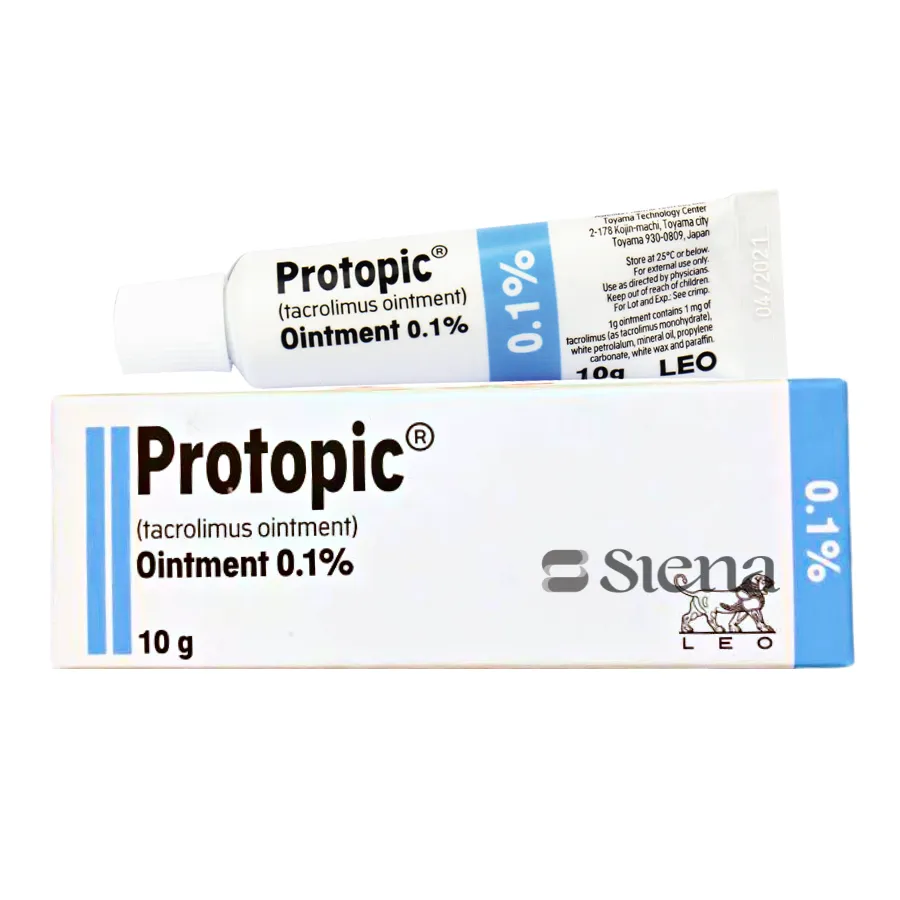
Table of Contents
- Package leaflet: Information for the user
- Protopic 0.03% ointment
- 1. What Protopic is and what it is used for
- 2. What you need to know before using Protopic
- 3. How to use Protopic
- 4. Possible side effects
- 5. How to store Protopic
- 6. Package Contents and Other Information
- Package leaflet: information for the user
- Protopic 0.1% ointment
- 1. What Protopic is and what it is used for
- 2. What you should know before using Protopic
- 3. How to use Protopic
- 4. Possible side effects
- 5. How to store Protopic
- 6. Package contents and other information
Package leaflet: Information for the user
Protopic 0.03% ointment
tacrolimus monohydrate
Please read all of this leaflet carefully before using this medicine because it contains important information for you.
- Keep this leaflet. You may need to read it again.
- If you have any questions, ask your doctor or pharmacist.
- This medicine has been prescribed for you only. Do not give it to other people, even if their symptoms are the same as yours, as it may be harmful.
- If you experience any side effects, including those not listed in this leaflet, inform your doctor or pharmacist. See section 4.
Contents of this leaflet
- What Protopic is and what it is used for
- What you need to know before using Protopic
- How to use Protopic
- Possible side effects
- How to store Protopic
- Contents of the pack and other information
1. What Protopic is and what it is used for
The active substance in Protopic, tacrolimus monohydrate, is an immunomodulatory agent.
Protopic 0.03% ointment is indicated for the treatment of moderate to severe atopic dermatitis (eczema) in adults who do not respond adequately or who are intolerant to conventional therapies such as topical corticosteroids, and in children (from 2 years of age onwards) who have not responded adequately to conventional therapies such as topical corticosteroids.
If moderate to severe atopic dermatitis has cleared or almost cleared after treatment of flare-ups for up to a maximum of 6 weeks, and if frequent relapses occur (4 or more per year), prevention of relapses or prolongation of the relapse-free period may be achieved by using Protopic 0.03% ointment twice a week.
In atopic dermatitis, there is an overreaction of the skin's immune system, leading to skin inflammation (itching, redness, dryness). Protopic modifies the abnormal immune response and relieves skin inflammation and itching.
2. What you need to know before using Protopic
Do not use Protopic
- if you are allergic to tacrolimus or to any of the other ingredients of this medicine (listed in section 6) or to macrolide antibiotics (i.e. azithromycin, clarithromycin, erythromycin).
Warnings and precautions
Talk to your doctor before using Protopic:
-
If you have liver impairment.
-
If you have any malignant tumour (neoplasm) of the skin or if you have a weakened immune system (immunocompromised), regardless of the cause.
-
If you have a congenital skin disease such as Netherton syndrome, lamellar ichthyosis (widespread skin peeling caused by thickening of the outer skin layer), or if you have an inflammatory skin disease such as pyoderma gangrenosum, or if you suffer from generalized erythroderma (inflammatory redness and peeling of the entire skin).
-
If you have cutaneous Graft Versus Host Disease (a skin immune reaction which is a common complication in patients who have undergone bone marrow transplantation).
-
If you have swollen lymph nodes at the start of treatment. If your lymph nodes swell during treatment with Protopic, consult your doctor.
-
If you have infected lesions. Do not apply the ointment to infected lesions.
-
If you notice any changes in the appearance of your skin, inform your doctor.
-
Based on long-term study results and experience, a correlation between treatment with Protopic ointment and the development of malignant neoplasms has not been confirmed, but definitive conclusions cannot be drawn.
-
Avoid prolonged exposure of the skin to sunlight or artificial light such as sunbeds. If you spend time outdoors after applying Protopic, use sunscreen and wear loose-fitting clothing that protects your skin from the sun. Additionally, consult your doctor for other appropriate methods of sun protection. If you have been prescribed phototherapy, inform your doctor that you are using Protopic, as concomitant use of Protopic and phototherapy is not recommended.
-
If your doctor prescribes Protopic twice weekly to prevent recurrence of your atopic dermatitis, your condition should be re-evaluated by your doctor at least every 12 months, even if the disease is under control. In children, maintenance treatment should be discontinued after 12 months to assess whether continued treatment is still necessary.
-
It is recommended to use Protopic ointment at the lowest possible dose, with the lowest frequency, and for the shortest duration necessary. This decision should be based on your doctor's assessment of how your eczema responds to Protopic ointment.
Children
- Protopic ointment is not approved for use in children under 2 years of age. It should therefore not be used in this age group. Please consult your doctor.
- The effect of treatment with Protopic on the development of the immune system in children, especially young children, has not been established.
Other medicines, cosmetics and Protopic
Inform your doctor or pharmacist if you are using, have recently used, or might use any other medicines.
You may use moisturizing creams and lotions during treatment with Protopic; however, they should be applied to the same treated area only two hours before or two hours after application of Protopic.
The effect of concomitant use of Protopic with other topical skin preparations or with oral corticosteroids (e.g. cortisone) or with medicines that affect the immune system has not been studied.
Protopic and alcohol
During use of Protopic, consumption of alcoholic beverages may cause facial or skin flushing and sensations of warmth.
Pregnancy and breastfeeding
If you are pregnant, think you might be pregnant, planning to become pregnant, or are breastfeeding, ask your doctor or pharmacist for advice before taking this medicine.
Protopic contains butylated hydroxytoluene (E321)
Protopic contains butylated hydroxytoluene (E321), which may cause localised skin reactions (e.g. contact dermatitis) or irritation to the eyes and mucous membranes.
3. How to use Protopic
Use this medicine exactly as directed by your doctor. If you have any doubts, consult your doctor or pharmacist.
- Apply a thin layer of Protopic to the affected areas of skin.
- Protopic can be applied to most areas of the body, including the face, neck, and skin folds such as the insides of elbows and knees.
- Avoid using the ointment inside the nose, mouth, or eyes. If the ointment is accidentally applied to these areas, thoroughly clean and/or rinse the area with water.
- Do not cover the treated skin area with bandages or dressings.
- Wash your hands after applying Protopic, unless your hands are part of the area being treated.
- Before applying Protopic after bathing or showering, make sure the skin is completely dry.
Use in children (aged 2 years and older)
Apply Protopic 0.03% ointment twice daily, once in the morning and once in the evening, for three weeks. Afterwards, apply the ointment once daily to each affected area of skin until the eczema has healed.
Adults (aged 16 years and older)
Two strengths of Protopic (Protopic 0.03% and Protopic 0.1% ointment) are available for adult patients (aged 16 years and older). Your doctor will decide which strength is most suitable for you.
Treatment usually starts with Protopic 0.1% ointment applied twice daily, once in the morning and once in the evening, until the eczema has cleared. Depending on how the eczema responds, your doctor will decide whether the frequency of application can be reduced or whether the lower strength (Protopic 0.03%) can be used.
Treat the affected skin areas until the eczema has healed. Improvement is generally seen within one week. Consult your doctor about alternative treatments if no visible improvement occurs after two weeks.
Your doctor may prescribe using Protopic ointment twice a week after atopic dermatitis has cleared or almost cleared (Protopic 0.03% for children and Protopic 0.1% for adults).
Protopic ointment should be applied once daily, twice weekly (for example, on Mondays and Thursdays) to the areas of your body usually affected by atopic dermatitis. Between applications, there should be a 2-3 day break from Protopic treatment.
If symptoms reappear, resume using Protopic twice daily as described above and schedule a follow-up appointment with your doctor to review your treatment.
If you accidentally swallow the ointment
If you accidentally swallow the ointment, consult your doctor or pharmacist as soon as possible. Do not try to induce vomiting.
If you forget to use Protopic
If you forget to apply the ointment at the scheduled time, apply it as soon as you remember, then continue as prescribed.
If you have any questions about the use of this medicine, consult your doctor or pharmacist.
4. Possible side effects
Like all medicines, this medicine can cause side effects, although not everybody gets them.
Very common (may affect more than 1 in 10 people):
- Burning sensation and itching
These symptoms are usually mild to moderate and generally disappear within one week of starting treatment with Protopic.
Common (may affect up to 1 in 10 people):
- Redness
- Sensation of warmth
- Pain
- Increased skin sensitivity (especially to heat and cold)
- Skin tingling
- Rash
- Local skin infection regardless of specific cause, including but not limited to: inflamed or infected hair follicles, cold sores, generalized herpes simplex infections
- Facial flushing or skin irritation after consumption of alcoholic beverages are also common reactions
Uncommon (may affect less than 1 in 100 people):
- Acne
Following treatment twice weekly, application site infections have been reported in children and adults. In children, impetigo, a superficial bacterial skin infection that usually causes blisters or sores on the skin, has been reported.
During the post-marketing period, rosacea (facial redness), pseudo-rosacea dermatitis, lentigo (flat, dark spots on the skin), application site oedema, and herpes-related eye infections have been reported.
Reporting of side effects
If you experience any side effect, including those not listed in this leaflet, talk to your doctor or pharmacist.
You can also report side effects directly via the national reporting system listed in Annex V.
Reporting side effects can help provide more information on the safety of this medicine.
5. How to store Protopic
Keep this medicine out of the sight and reach of children.
Do not use this medicine after the expiry date stated on the tube and the carton after EXP.
The expiry date refers to the last day of that month.
Do not store above 25°C.
Do not dispose of any medicine via wastewater or household waste. Ask your pharmacist how to
dispose of medicines no longer required. This will help protect the environment.
6. Package Contents and Other Information
What Protopic Contains
- The active substance is tacrolimus monohydrate. One gram of Protopic 0.03% ointment contains 0.3 mg of tacrolimus (as tacrolimus monohydrate).
- The other ingredients are white soft paraffin, liquid paraffin, propylene carbonate, white beeswax, solid paraffin, butylated hydroxytoluene (E321) and all-rac-α-tocopherol.
Description of the Appearance of Protopic and Contents of the Pack
Protopic is a white ointment, slightly yellowish in appearance. It is available in tubes containing 10, 30 or 60 grams of ointment. Not all pack sizes may be marketed. Protopic is available in two strengths (Protopic 0.03% and Protopic 0.1% ointment).
Marketing Authorization Holder
LEO Pharma A/S
Industriparken 55
2750 Ballerup
Denmark
Manufacturer
Astellas Ireland Co. Ltd.
Killorglin
County Kerry
Ireland
LEO Laboratories Ltd.
285 Cashel Road
Crumlin, Dublin 12
Ireland
For further information on this medicinal product, please contact the local representative of the Marketing Authorization Holder:
België/Belgique/Belgien Lietuva
LEO Pharma N.V./S.A LEO Pharma A/S
Tél/Tel: +32 3 740 7868 Tel: +45 44 94 58 88
България Luxembourg/Luxemburg
LEO Pharma A/S LEO Pharma N.V./S.A
Teл.: +45 44 94 58 88 Tél/Tel: +32 3 740 7868
Česká republika Magyarország
LEO Pharma s.r.o. LEO Pharma A/S
Tel: +420 734 575 982 Tel: +45 44 94 58 88
Danmark Malta
LEO Pharma AB LEO Pharma A/S
Tlf: +45 70 22 49 11 Tel: +45 44 94 58 88
Deutschland Nederland
LEO Pharma GmbH LEO Pharma B.V.
Tel: +49 6102 2010 Tel: +31 205104141
Eesti Norge
LEO Pharma A/S LEO Pharma AS
Tel: +45 44 94 58 88 Tlf: +47 22514900
Ελλάδα Österreich
LEO Pharmaceutical Hellas S.A. LEO Pharma GmbH
Τηλ: +30 210 68 34322 Tel: +43 1 503 6979
España Polska
Laboratorios LEO Pharma, S.A. LEO Pharma Sp. z o.o.
Tel: +34 93 221 3366 Tel: +48 22 244 18 40
France Portugal
Laboratoires LEO LEO Farmacêuticos Lda.
Tél: +33 1 3014 40 00 Tel: +351 21 711 0760
Hrvatska România
LEO Pharma A/S LEO Pharma A/S
Tel:+45 44 94 58 88 Tel: +45 44 94 58 88
Ireland Slovenija
LEO Laboratories Ltd LEO Pharma A/S
Tel: +353 (0) 1 490 8924 Tel: +45 44 94 58 88
Ísland Slovenská republika
Vistor hf. LEO Pharma s.r.o.
Sími: +354 535 7000 Tel: +420 734 575 982
Italia Suomi/Finland
LEO Pharma S.p.A. LEO Pharma Oy
Tel: +39 06 52625500 Puh./Tel: +358 20 721 8440
Κύπρος Sverige
The Star Medicines Importers Co. Ltd. LEO Pharma AB
Τηλ: +357 2537 1056 Tel: +46 40 3522 00
Latvija United Kingdom (Northern Ireland)
LEO Pharma A/S LEO Laboratories Ltd
Tel: +45 44 94 58 88 Tel: +44 (0) 1844 347333
More detailed information on this medicinal product is available on the European Medicines Agency website: http://www.ema.europa.eu/ .
Package leaflet: information for the user
Protopic 0.1% ointment
tacrolimus monohydrate
Please read this leaflet carefully before using this medicine as it contains important information for you.
- Keep this leaflet. You may need to read it again.
- If you have any questions, consult your doctor or pharmacist.
- This medicine has been prescribed for you only. Do not give it to other people, even if their symptoms are the same as yours, as it could be harmful.
- If you experience any side effect, including those not listed in this leaflet, contact your doctor or pharmacist. See section 4.
Contents of this leaflet:
- What Protopic is and what it is used for
- What you need to know before using Protopic
- How to use Protopic
- Possible side effects
- How to store Protopic
- Contents of the pack and other information
1. What Protopic is and what it is used for
The active substance of Protopic, tacrolimus monohydrate, is an immunomodulatory agent.
Protopic 0.1% ointment is indicated for the treatment of moderate to severe atopic dermatitis (eczema) in adults who do not respond adequately or are intolerant to conventional therapies such as topical corticosteroids.
If moderate to severe atopic dermatitis has cleared or almost cleared after treatment of flare-ups for up to a maximum of 6 weeks, and if frequent relapses occur (4 or more per year), prevention or prolongation of the relapse-free period may be achieved by using Protopic 0.1% ointment twice a week.
In atopic dermatitis, there is an overreaction of the skin's immune system, leading to skin inflammation (itching, redness, dryness). Protopic modifies the abnormal immune response and relieves skin inflammation and itching.
2. What you should know before using Protopic
Do not use Protopic
- if you are allergic to tacrolimus or to any of the other ingredients of this medicine (listed in section 6) or to macrolide antibiotics (i.e. azithromycin, clarithromycin, erythromycin).
Warnings and precautions
Talk to your doctor or pharmacist before using Protopic:
- If you have liver impairment.
- If you have any malignant skin tumour (neoplasm) or if you have a weakened immune system (immunocompromised), regardless of the cause.
- If you have a congenital skin disease such as Netherton syndrome, lamellar ichthyosis (widespread skin peeling caused by thickening of the outer skin layer), or if you have an inflammatory skin disease such as pyoderma gangrenosum, or if you suffer from generalized erythroderma (inflammatory redness and peeling of the entire skin).
- If you have cutaneous Graft Versus Host Disease (GVHD) (a skin immune reaction which is a common complication in patients who have undergone bone marrow transplantation).
- If you have swollen lymph nodes at the beginning of treatment. If your lymph nodes become swollen during treatment with Protopic, consult your doctor.
- If you have infected lesions. Do not apply the ointment to infected lesions.
- If you notice any changes in the appearance of your skin, inform your doctor.
- Based on long-term study results and experience, no definitive correlation has been confirmed between treatment with Protopic ointment and the development of malignant neoplasms; however, definitive conclusions cannot be drawn.
- Avoid prolonged exposure of the skin to sunlight or artificial light sources such as sunbeds. If you spend time outdoors after applying Protopic, use sunscreen and wear loose-fitting clothing that protects your skin from the sun. Additionally, consult your doctor for other appropriate methods of sun protection. If phototherapy has been prescribed for you, inform your doctor that you are using Protopic, as concomitant use of Protopic and phototherapy is not recommended.
- If your doctor prescribes Protopic twice a week to prevent recurrence of your atopic dermatitis, your condition should be re-evaluated by your doctor at least every 12 months, even if the disease is under control. In children, maintenance treatment should be interrupted after 12 months to assess whether continued treatment is still necessary.
- It is recommended to use Protopic ointment at the lowest possible dose, with the lowest frequency, and for the shortest duration necessary. This decision should be based on your doctor’s assessment of how your eczema responds to Protopic ointment.
Children
- Protopic 0.1% ointment is not approved for use in children under 16 years of age. It should therefore not be used in this age group. Please consult your doctor.
- The effect of treatment with Protopic on the development of the immune system in children, especially young children, has not been established.
Other medicines, cosmetics and Protopic
Inform your doctor or pharmacist if you are using, have recently used, or might use any other
medicines.
You may use moisturizing creams and lotions during treatment with Protopic; however, they should be
applied to the same treated area only two hours before or two hours after application of Protopic.
The effect of concomitant use of Protopic with other topical skin preparations or with oral corticosteroids (e.g. cortisone) or with medicines that affect the immune system has not been studied.
Protopic and alcohol
During use of Protopic, consumption of alcoholic beverages may cause facial or skin flushing and sensations of warmth.
Pregnancy and breastfeeding
If you are pregnant, think you may be pregnant, are planning a pregnancy, or are breastfeeding, ask your doctor or pharmacist for advice before taking this medicine.
Protopic contains butylated hydroxytoluene (E321)
Protopic contains butylated hydroxytoluene (E321), which may cause local skin reactions (e.g. contact dermatitis) or irritation to the eyes and mucous membranes.
3. How to use Protopic
Use this medicine exactly as directed by your doctor. If you have any doubts, consult your doctor or pharmacist.
- Apply a thin layer of Protopic to the affected areas of skin.
- Protopic may be applied to most areas of the body, including the face, neck, and skin folds such as elbows and knees.
- Avoid using the ointment inside the nose, in the mouth, or in the eyes. If the ointment is accidentally applied to these areas, thoroughly clean and/or rinse the area with water.
- Do not cover the treated skin area with bandages or dressings.
- Wash your hands after applying Protopic, unless your hands are part of the area being treated.
- Before applying Protopic after a bath or shower, make sure the skin is completely dry.
Adults (aged 16 years and older)
Two strengths of Protopic are available for adult patients (aged 16 years and older): Protopic 0.03% and Protopic 0.1% ointment. Your doctor will decide which strength is most appropriate for you.
Generally, treatment starts with Protopic 0.1% applied twice daily, once in the morning and once in the evening, until the eczema has cleared. Depending on how the eczema responds, your doctor may decide whether the frequency of application can be reduced or whether the lower strength (Protopic 0.03%) can be used.
Treat affected skin areas until the eczema has healed. Improvement is usually seen within one week. Consult your doctor about alternative treatments if no visible improvement is observed after two weeks.
Your doctor may prescribe Protopic 0.1% ointment twice weekly after atopic dermatitis has cleared or almost cleared. Protopic 0.1% ointment should be applied once daily, twice a week (for example, Monday and Thursday) to the areas of your body usually affected by atopic dermatitis. Between applications, treatment with Protopic should be withheld for 2–3 days. If symptoms reappear, resume using Protopic twice daily as described above and schedule a follow-up appointment with your doctor to review your treatment.
If you accidentally swallow the ointment
If you accidentally swallow the ointment, contact your doctor or pharmacist as soon as possible. Do not try to induce vomiting.
If you forget to use Protopic
If you forget to apply the ointment at the scheduled time, apply it as soon as you remember, then continue as prescribed.
If you have any questions about the use of this medicine, consult your doctor or pharmacist.
4. Possible side effects
Like all medicines, this medicine can cause side effects, although not everybody gets them.
Very common (may affect more than 1 in 10 people):
- Burning sensation and itching. These symptoms are usually mild to moderate and generally disappear within one week after starting treatment with Protopic.
Common (may affect up to 1 in 10 people):
- Redness
- Sensation of warmth
- Pain
- Increased skin sensitivity (especially to heat and cold)
- Skin tingling
- Rash
- Localized skin infection, regardless of specific cause, including but not limited to: inflamed or infected hair follicles, cold sores, widespread herpes simplex infections
- Facial flushing or skin irritation after consuming alcoholic beverages are also common reactions
Uncommon (may affect less than 1 in 100 people):
- Acne
Following twice-weekly treatment, application site infections have been reported in adults.
During the post-marketing phase, rosacea (facial redness), pseudo-rosacea dermatitis, lentigo (presence of flat, dark spots on the skin), application site oedema, and eye infections caused by herpes have been reported.
Reporting of side effects
If you experience any side effects, including those not listed in this leaflet, talk to your doctor or pharmacist. You can also report side effects directly via the national reporting system referred to in Annex V. By reporting side effects, you can help provide more information on the safety of this medicine.
5. How to store Protopic
Keep this medicine out of the sight and reach of children.
Do not use this medicine after the expiry date stated on the tube and carton after EXP.
The expiry date refers to the last day of that month.
Do not store above 25ºC.
Do not dispose of any medicine via wastewater or household waste. Ask your pharmacist how to
dispose of medicines you no longer use. This will help protect the environment.
6. Package contents and other information
What Protopic contains
- The active substance is tacrolimus monohydrate. One gram of Protopic 0.1% ointment contains 1.0 mg of tacrolimus (as tacrolimus monohydrate).
- The other components are white soft paraffin, liquid paraffin, propylene carbonate, white beeswax, hard paraffin, butylated hydroxytoluene (E321) and all-rac-α-tocopherol.
Description of the appearance of Protopic and contents of the pack
Protopic is a white ointment, slightly yellowish in tint. It is available in tubes containing 10, 30 or
60 grams of ointment. Not all pack sizes may be marketed. Protopic is
available in two strengths (Protopic 0.03% and Protopic 0.1% ointment).
Marketing Authorization Holder
LEO Pharma A/S
Industriparken 55
2750 Ballerup
Denmark
Manufacturer
Astellas Ireland Co. Ltd.
Killorglin
County Kerry
Ireland
LEO Laboratories Ltd.
285 Cashel Road
Crumlin, Dublin 12
Ireland
For further information about this medicinal product, please contact the local representative of the Marketing Authorization Holder:
België/Belgique/Belgien Lietuva
LEO Pharma N.V./S.A LEO Pharma A/S
Tél/Tel: +32 3 740 7868 Tel: +45 44 94 58 88
България Luxembourg/Luxemburg
LEO Pharma A/S LEO Pharma N.V./S.A
Teл.: +45 44 94 58 88 Tél/Tel: +32 3 740 7868
Česká republika Magyarország
LEO Pharma s.r.o. LEO Pharma A/S
Tel: +420 734 575 982 Tel: +45 44 94 58 88
Danmark Malta
LEO Pharma AB LEO Pharma A/S
Tlf: +45 70 22 49 11 Tel: +45 44 94 58 88
Deutschland Nederland
LEO Pharma GmbH LEO Pharma B.V.
Tel: +49 6102 2010 Tel: +31 205104141
Eesti Norge
LEO Pharma A/S LEO Pharma AS
Tel: +45 44 94 58 88 Tlf: +47 22514900
Ελλάδα Österreich
LEO Pharmaceutical Hellas S.A. LEO Pharma GmbH
Τηλ: +30 210 68 34322 Tel: +43 1 503 6979
España Polska
Laboratorios LEO Pharma, S.A. LEO Pharma Sp. z o.o.
Tel: +34 93 221 3366 Tel: +48 22 244 18 40
France Portugal
Laboratoires LEO LEO Farmacêuticos Lda.
Tél: +33 1 3014 40 00 Tel: +351 21 711 0760
Hrvatska România
LEO Pharma A/S LEO Pharma A/S
Tel:+45 44 94 58 88 Tel: +45 44 94 58 88
Ireland Slovenija
LEO Laboratories Ltd LEO Pharma A/S
Tel: +353 (0) 1 490 8924 Tel: +45 44 94 58 88
Ísland Slovenská republika
Vistor hf. LEO Pharma s.r.o.
Sími: +354 535 7000 Tel: +420 734 575 982
Italia Suomi/Finland
LEO Pharma S.p.A. LEO Pharma Oy
Tel: +39 06 52625500 Puh./Tel: +358 20 721 8440
Κύπρος Sverige
The Star Medicines Importers Co. Ltd. LEO Pharma AB
Τηλ: +357 2537 1056 Tel: +46 40 3522 00
Latvija United Kingdom (Northern Ireland)
LEO Pharma A/S LEO Laboratories Ltd
Tel: +45 44 94 58 88 Tel: +44 (0) 1844 347333
More detailed information on this medicinal product is available on the website of the European Medicines Agency: http://www.ema.europa.eu/ .
Annex IV
Scientific conclusions and grounds for the variation to the terms of the marketing authorisation(s)
Scientific conclusions
Taking into account the evaluation by the Pharmacovigilance and Risk Assessment Committee (PRAC) of the Periodic Safety Update Report(s) (PSUR) for tacrolimus (topical formulations), the scientific conclusions are as follows:
Based on available data from case reports in the literature regarding the risk of significant systemic absorption when used off-label for the treatment of pyoderma gangrenosum, the PRAC concluded that product information for topical tacrolimus-containing medicines should be updated to include pyoderma gangrenosum in the list of conditions in the SmPC for which tacrolimus ointment is not recommended.
Following review of the PRAC recommendation, the CHMP agrees with the general conclusions and reasoning of the PRAC.
Grounds for the variation to the terms of the marketing authorisation(s)
Based on the scientific conclusions regarding tacrolimus (topical formulations), the CHMP considers that the benefit-risk balance of the medicinal product(s) containing tacrolimus (topical formulations) remains unchanged, subject to the proposed amendments to the product information.
The CHMP recommends a variation to the terms of the marketing authorisation(s).