Propess
ItalyTable of Contents
Package Leaflet: Information for the User
PROPESS 10 mg vaginal device
dinoprostone
Please read all of this leaflet carefully before using this medicine because it contains important information for you.
- Keep this leaflet. You may need to read it again.
- If you have any questions, ask your doctor or nurse.
- If you experience any side effects, including those not listed in this leaflet, inform your doctor or nurse. See section 4.
- PROPESS must be used only under the supervision of a qualified specialist.
Contents of this leaflet:
- What PROPESS is and what it is used for
- What you need to know before using PROPESS
- How to use PROPESS
- Possible side effects
- How to store PROPESS
- Contents of the pack and other information
1. What PROPESS is and what it is used for
PROPESS contains the active substance dinoprostone 10 mg and is indicated to help initiate labour, provided that the 37th week of gestation has been completed. Dinoprostone promotes dilation of the part of the birth canal known as the cervix, to allow passage of the baby. There are various situations that may require assistance in starting this process. If you would like more information, please ask your doctor.
2. What you should know before taking PROPESS
Do not take PROPESS
You must not be given PROPESS:
-
if the size of your baby's head may cause problems during delivery
-
if your baby is not correctly positioned in the uterus for natural birth
-
if your baby is not in good health and/or shows signs of fetal distress
-
if you have had previous major uterine surgery or cervical rupture
-
if you currently have untreated pelvic inflammatory disease (an infection of the uterus, ovaries, fallopian tubes and/or cervix)
-
if the placenta is blocking the birth canal (placenta praevia)
-
if you have had unexplained vaginal bleeding during this pregnancy
-
if you have had previous uterine surgery, including a previous caesarean section for any prior child
-
if you are hypersensitive (allergic) to dinoprostone or to any of the other ingredients of PROPESS (listed in section 6). Your doctor or nurse will not administer PROPESS or will remove it after insertion:
-
once labour has started
-
if you need to be given a medication, for example an oxytocic agent, to help progress labour
-
if your contractions are too strong or prolonged
-
if your baby shows signs of fetal distress
-
if you experience adverse effects (see section 4, "Possible side effects").
Experience with the use of PROPESS in cases of ruptured membranes is limited. Your doctor or nurse will remove PROPESS after administration if your membranes rupture spontaneously or are ruptured by medical or nursing staff.
Warnings and precautions
Before you are given PROPESS, inform your doctor or nurse if any of the following apply to you:
- if you have or have ever had asthma (breathing difficulties) or glaucoma (a disease of the eye)
- if in a previous pregnancy you experienced contractions that were too strong or prolonged
- if you have diseases of the lungs, liver or kidneys
- if you are about to have a twin delivery
- if you have had more than three full-term deliveries
- if you are taking a painkiller and/or anti-inflammatory medicine containing non-steroidal anti-inflammatory drugs (NSAIDs), for example aspirin
- if you are 35 years of age or older, if you have had complications during pregnancy such as diabetes, high blood pressure or low levels of thyroid hormones (hypothyroidism), or if your pregnancy has exceeded forty weeks, due to an increased risk of developing disseminated intravascular coagulation (DIC), a rare condition affecting blood clotting.
Children and adolescents
The use of PROPESS in children and adolescents under 18 years of age has not been studied.
Other medicines and PROPESS
Tell your doctor or nurse if you are taking, have recently taken, or might take any other medicines, including those not requiring a prescription.
PROPESS may make you more sensitive to medicines belonging to the oxytocic class, which are used to strengthen contractions. It is not recommended to administer these medicines at the same time as PROPESS.
Pregnancy and breastfeeding
PROPESS is used to help initiate term labour. PROPESS must not be used at any other time during pregnancy.
The use of PROPESS during breastfeeding has not been studied. PROPESS may be excreted in breast milk, but the amount and duration of excretion are considered limited and should not interfere with breastfeeding. No effects have been observed in breastfed newborns.
Driving and using machines
Not applicable, as PROPESS is used only during labour.
3. How to take PROPESS
PROPESS will be administered by a qualified healthcare professional in a hospital or clinic where equipment is available to monitor you and your baby.
Your doctor or nurse will insert a vaginal device near the cervix into the vagina. You must not do this yourself. Before insertion, your doctor or nurse will apply a small amount of lubricating gel to the device. A sufficient length of tape will be left outside the vagina to facilitate removal of the vaginal device when necessary.
You must lie down during this procedure and remain lying down for approximately 20–30 minutes after insertion of PROPESS.
Once placed, the vaginal device absorbs some moisture. This allows the dinoprostone to be slowly released.
While the vaginal device is in place and inducing the onset of labour, you will be regularly monitored to assess various parameters including:
- cervical dilation
- uterine contractions
- labour pain and the baby’s condition.
Your doctor or nurse will decide how long PROPESS should remain in place based on progress. PROPESS may be left in place for a maximum of 24 hours.
Upon removal from the vagina, the vaginal device will have swollen to 2–3 times its original size and will be flexible.
If you have been given PROPESS for longer than recommended
If PROPESS is administered for longer than recommended, this may lead to increased contractions or fetal distress. The PROPESS vaginal device must be removed immediately.
4. Possible side effects
Like all medicines, this medicine can cause side effects, although not everyone will experience them.
Common: may affect up to 1 in 10 people
- Increased uterine contractions, which may or may not affect the baby
- Fetal distress and/or abnormally fast or slow heart rate in the baby
- Discoloured amniotic fluid
Uncommon: may affect up to 1 in 100 people
- Headache
- Decreased blood pressure
- Breathing difficulties in the baby immediately after birth
- High levels of bilirubin in the newborn’s blood (a breakdown product of red blood cells), which may cause yellowing of the skin and eyes (jaundice)
- Itching
- Heavy vaginal bleeding after childbirth
- Premature separation of the placenta from the uterine wall before the baby is born
- Altered condition of the baby immediately after birth
- Slowed progress of labour
- Inflammation of the membranes lining the inside of the uterus
- The mother’s uterus does not contract properly after childbirth due to lack of normal uterine contractions
- Burning sensation in the genital area
- Fever
Frequency not known: frequency cannot be estimated from the available data
- Fetal mortality, stillbirth, and neonatal death; especially following serious events such as uterine rupture
- Disseminated intravascular coagulation (DIC), a rare condition affecting blood clotting. This may lead to blood clots forming and may increase the risk of bleeding
- The fluid surrounding the baby during pregnancy may enter the mother’s bloodstream during childbirth and block a blood vessel, leading to a condition called amniotic fluid embolism (anaphylactoid syndrome of pregnancy), which may include symptoms such as: shortness of breath, low blood pressure, anxiety, and chills; life-threatening conditions involving blood clotting problems, seizures, coma, bleeding, fluid in the lungs, and fetal distress (e.g. low heart rate)
- Hypersensitivity reactions and severe allergic reactions (anaphylactic reactions), which may include: difficulty breathing, shortness of breath, weak or rapid pulse, dizziness, itching, skin redness, and rashes
- Abdominal pain
- Nausea
- Vomiting
- Diarrhoea
- Swelling of the genital area
- Uterine rupture
Reporting of side effects
If you experience any side effects, including those not listed in this leaflet, please inform your doctor or nurse. You can also report side effects directly via the national reporting system at the following website: https://www.aifa.gov.it/content/segnalazioni-reazioni-avverse
By reporting side effects, you can help provide more information on the safety of this medicine.
5. How to store PROPESS
Keep this medicine out of the sight and reach of children.
Do not use this medicine after the expiry date stated on the aluminium pouch and on the carton after "Exp".
Store in a freezer (between -10 and -25 °C). Store in the original packaging to protect the medicine from moisture.
Medicines must not be disposed of via wastewater or household waste. After use, the doctor or nurse will dispose of it as clinical waste. This will help protect the environment.
6. Package contents and other information
What PROPESS contains
- The active substance is dinoprostone, more commonly known as Prostaglandin E₂. Each vaginal device contains 10 mg of dinoprostone, which is released at approximately 0.3 mg per hour over 24 hours.
- The other components are: cross-linked macrogol (hydrogel) and polyester thread.
Description of the appearance of PROPESS and package contents
The vaginal device is a small, rectangular plastic object contained within a mesh retrieval system. The plastic object consists of a polymeric hydrogel that swells in the presence of moisture, releasing dinoprostone. The retrieval system has a long tape that enables the doctor or nurse to remove the device when necessary.
Each vaginal device is individually packaged in an aluminum pouch, formed from an aluminum/polyethylene laminate strip, and supplied in a carton.
The pack contains 5 vaginal devices.
Marketing Authorization Holder and Manufacturer
Marketing Authorization Holder
Ferring S.p.A.
Via C. Imbonati 18
20159 Milan, Italy
Manufacturer
Ferring GmbH
Wittland 11
24109 Kiel, Germany
This medicinal product is authorized in the European Economic Area (EEA) and the United Kingdom (Northern Ireland) under the following names:
Austria: PROPESS 10 mg vaginales Freisetzungssystem
Belgium: PROPESS 10 mg hulpmiddel voor vaginaal gebruik, PROPESS 10 mg système de diffusion vaginal, PROPESS 10 mg vaginales Wirkstofffreisetzungssystem
Bulgaria: ПРОПЕС 10 mg вагинална лекарстводоставяща система / PROPESS 10 mg vaginal delivery system
Croatia: Propess 10 mg sustav za isporuku u rodnicu
Cyprus: Propess
Czech Republic: CERVIDIL
Denmark: Propess, vaginalindlæg
Estonia: Propess
Finland: Propess 10 mg depotlääkevalmiste, emättimeen
France: PROPESS 10 mg, système de diffusion vaginal
Germany: PROPESS 10 mg vaginales Freisetzungssystem
Greece: PROPESS 10 mg σύστημα ενδοκολπικής χορήγησης
Hungary: Propess 10mg hüvelyben alkalmazott gyógyszerleadó rendszer
Ireland: Propess 10 mg vaginal delivery system
Italy: PROPESS 10 mg – Dispositivo vaginale
Latvia: Propess
Lithuania: Propess
Luxembourg: PROPESS 10 mg système de diffusion vaginal
Netherlands: Propess, vaginaal toedieningssysteem 10 mg
Norway: Propess
Poland: Cervidil
Portugal: PROPESS 10 mg, Sistema de libertação vaginal
Romania: PROPESS 10 mg/24 ore sistem cu cedare vaginala
Slovakia: Cervidil 10 mg vaginálny inzert
Slovenia: Propess 10mg vaginalni dostavni sistem
Spain: PROPESS 10 mg sistema de liberación vaginal
Sweden: Propess 10 mg vaginalinlägg
United Kingdom (Northern Ireland): PROPESS 10mg vaginal delivery system
The following information is intended for healthcare professionals only:
DIRECTIONS FOR USE
Application
- To remove PROPESS from its packaging, tear along the top edge of the aluminum pouch. Do not use scissors or sharp instruments to cut the aluminum pouch, as this may damage the product. Use the retrieval system to gently remove the product from the pouch. Hold the vaginal device between the index and middle fingers and insert it into the vagina. If necessary, a small amount of water-soluble lubricant may be used.
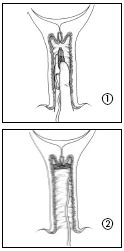
- PROPESS must be positioned transversely in the upper posterior vaginal fornix.
- Leave a portion of the tape (approximately 2 cm) outside the vagina to ensure easy removal of the vaginal device. If needed, the tape may be shortened.
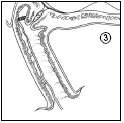
- Ensure that the patient remains lying down or sitting for 20–30 minutes after insertion to allow the vaginal device to swell properly.
Removal of the device
PROPESS can be quickly and easily removed by gently pulling the tape. After removal, ensure that the entire product (vaginal device and retrieval system) has been completely removed from the vagina.