Propafenone Ratiopharm
Italy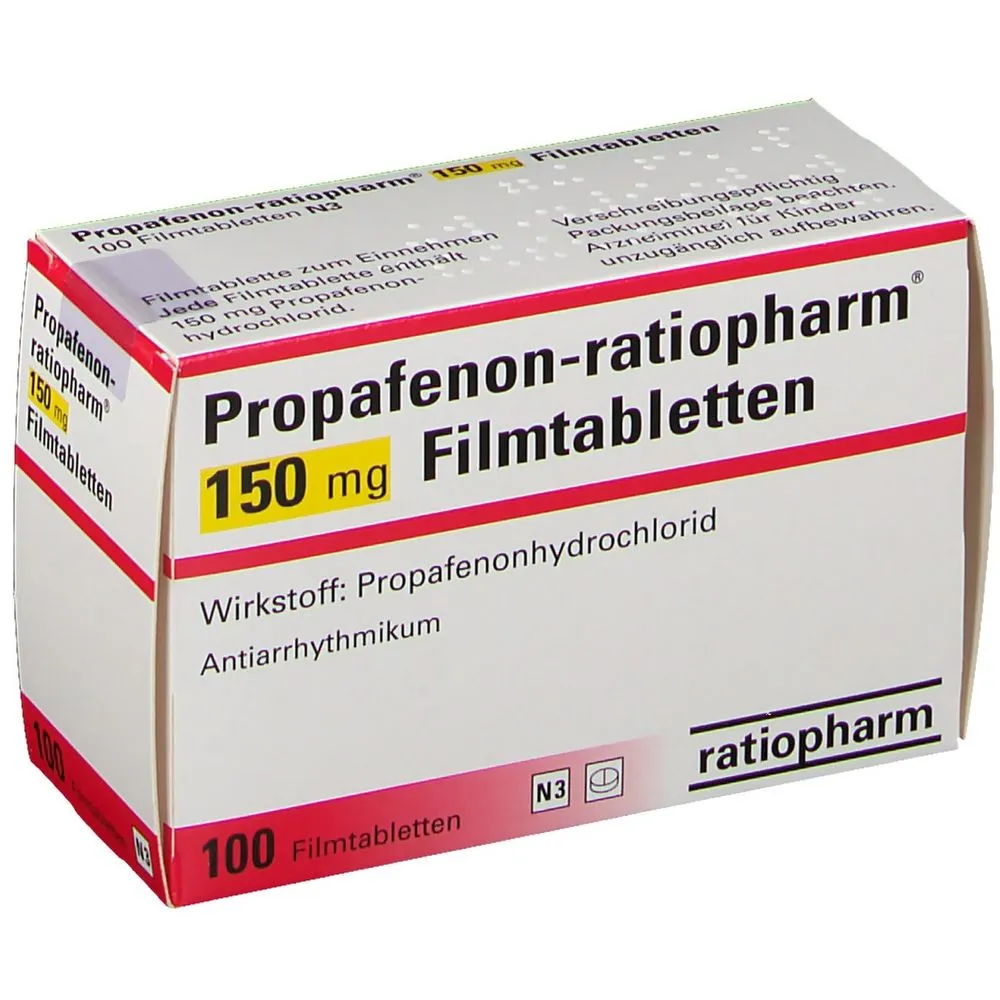
Table of Contents
- Patient Information Leaflet
- Propafenone ratiopharm 150 mg film-coated tablets
- 1. What Propafenone ratiopharm is and what it is used for
- 2. What you should know before taking Propafenone ratiopharm
- 3. How to take Propafenone ratiopharm
- 4. Possible side effects
- 5. How to store Propafenone ratiopharm
- 6. Contents of the pack and other information
Patient Information Leaflet
Propafenone ratiopharm 150 mg film-coated tablets
propafenone hydrochloride
Equivalent medicine
Please read this leaflet carefully before taking this medicine because it contains
important information for you
- Keep this leaflet. You may need to read it again.
- If you have any questions, ask your doctor or pharmacist.
- This medicine has been prescribed for you only. Do not give it to others, even if their symptoms are the same as yours, as it may be harmful.
- If you experience any adverse reaction, including those not listed in this leaflet, contact your doctor or pharmacist. See section 4.
Contents of this leaflet:
- What Propafenone ratiopharm is and what it is used for
- What you need to know before taking Propafenone ratiopharm
- How to take Propafenone ratiopharm
- Possible side effects
- How to store Propafenone ratiopharm
- Contents of the pack and other information
1. What Propafenone ratiopharm is and what it is used for
Propafenone ratiopharm contains propafenone, an active substance belonging to a class of medicines called antiarrhythmics, used in the treatment of certain heart rhythm disorders.
Propafenone ratiopharm is used for the prevention and treatment of certain heart conditions that cause abnormalities in the normal heartbeat, when associated with disabling symptoms that interfere with your daily life. In particular, Propafenone ratiopharm is used for:
- tachycardia;
- ventricular and supraventricular tachyarrhythmias;
- Wolff-Parkinson-White syndrome.
Talk to your doctor if you do not feel better or if you feel worse.
2. What you should know before taking Propafenone ratiopharm
Do not take Propafenone ratiopharm
- if you are allergic to the active substance, to other similar substances, or to any of the other ingredients of this medicine (listed in section 6);
- if you have any of the following heart function disorders:
- Brugada syndrome, a genetic disorder of the heart's electrical conduction system that predisposes to developing severe ventricular arrhythmias,
- a heart attack within the last three months,
- poor heart function (overt heart failure or uncontrolled congestive heart failure);
- you have a severe circulation problem due to reduced heart activity (cardiogenic shock, except when caused by arrhythmia);
- you have an unusually slow heartbeat (severe symptomatic bradycardia) or very low blood pressure (marked hypotension); or suffer from other heart problems (severe pre-existing conduction disturbances at sinoatrial, atrioventricular, and intraventricular levels, sick sinus syndrome (bradycardia-tachycardia syndrome), and, in patients without a pacemaker, bundle branch block or sinus node syndrome);
- if blood levels of certain minerals such as potassium are abnormal (electrolyte imbalance);
- if you have a lung disease characterized by airway obstruction (severe obstructive lung disease);
- if you have a condition characterized by extreme muscle weakness (myasthenia gravis);
- if you are being treated with ritonavir, used for treating HIV infection (the virus that causes AIDS) (see also “Other medicines and Propafenone ratiopharm”);
- during pregnancy, unless your doctor considers it strictly necessary;
- during breastfeeding.
Warnings and precautions
Talk to your doctor or pharmacist before taking Propafenone ratiopharm.
Exercise particular caution and consult your doctor before taking Propafenone ratiopharm:
- if you are elderly;
- if you have a pacemaker;
- if you have previously had a heart attack, if your left ventricular function is severely impaired, or if you suffer from significant heart damage. If you have had a previous heart attack, your doctor will prescribe Propafenone ratiopharm only if you have a life-threatening ventricular arrhythmia;
- if your liver or kidney function is impaired;
- if you have respiratory problems (obstructive bronchopulmonary disease, asthma). Laboratory tests Before and during treatment with propafenone, your doctor will perform periodic checks (ECG, clinical examinations) to assess your response to this medicine. Depending on your health status before starting propafenone and your response to the drug, your doctor may periodically prescribe heart monitoring and blood tests during treatment to check your blood clotting ability and the function of your heart, kidneys, and liver.
Other medicines and Propafenone ratiopharm
Inform your doctor or pharmacist if you are taking, have recently taken, or might take any other medicine.
DO NOT use this medicine if you are already being treated with doses of ritonavir (used for treating AIDS) of 800–1200 mg/day (see also section “Do not take Propafenone ratiopharm”).
Exercise particular caution and inform your doctor if you are taking any of the following medicines:
- medicines that reduce heart rate or affect the heart's ability to contract, such as local anesthetics, beta-blockers (used to treat high blood pressure or certain heart disorders), tricyclic antidepressants, or amiodarone (used to treat certain heart disorders), as they may increase the undesirable effects of propafenone;
- propranolol and metoprolol (used to treat high blood pressure or certain heart disorders), desipramine (used to treat depression), cyclosporine (used after organ transplantation to prevent rejection), digoxin (used to increase the heart's contraction force), and theophylline (used to treat asthma), as concomitant use with propafenone may increase blood levels of these medicines;
- medicines that increase propafenone blood levels, such as cimetidine (used to treat stomach ulcers), quinidine (used to treat arrhythmias), ketoconazole (used to treat certain infections), erythromycin (an antibiotic), or fluoxetine and paroxetine (used to treat depression);
- phenobarbital (used for epilepsy) or rifampicin (an antibiotic), as taking one of these medicines with propafenone may reduce the therapeutic effect of propafenone;
- oral anticoagulants (such as phenprocoumon and warfarin), as concomitant use with propafenone may enhance the anticoagulant effect;
- lidocaine (an anesthetic or antiarrhythmic agent) when administered by intravenous infusion, as concomitant use with propafenone increases the risk of adverse central nervous system events;
- venlafaxine (an antidepressant), as propafenone may increase its blood levels.
Propafenone ratiopharm and beverages
Consumption of grapefruit juice during treatment with propafenone is not recommended, as it may lead to accumulation of the drug in the blood and consequently increase the risk of adverse effects.
Pregnancy and breastfeeding
If you are pregnant, suspect you may be pregnant, planning a pregnancy, or breastfeeding, consult your doctor or pharmacist before taking this medicine.
Pregnancy
Propafenone ratiopharm must not be used during pregnancy unless your doctor considers it strictly necessary.
Breastfeeding
Do not take Propafenone ratiopharm if you are breastfeeding, as propafenone passes into breast milk. Your doctor will help you decide whether to discontinue treatment with this medicine or to stop breastfeeding.
Driving and using machines
Propafenone ratiopharm may affect your ability to drive or operate machinery, as during treatment you may experience visual disturbances (blurred vision), dizziness, fatigue, or low blood pressure. This is particularly likely at the beginning of treatment, when your dose is increased, when switching to another propafenone-containing product, or when consuming alcohol.
Propafenone ratiopharm contains sodium
This medicine contains less than 1 mmol (23 mg) of sodium per tablet, i.e., essentially “sodium-free”.
3. How to take Propafenone ratiopharm
Take this medicine exactly as directed by your doctor or pharmacist. If
you have any doubts, consult your doctor or pharmacist.
Your doctor will assess your health status and body weight to determine the appropriate initial and
maintenance dose for you.
The traditionally recommended doses for an adult weighing approximately 70 kg are listed below.
The recommended dose for initial and maintenance treatment is 450–600 mg, equivalent to
1 tablet of 150 mg taken 3 or 4 times daily.
If deemed necessary by your doctor, after this initial treatment period, the daily dose may be
gradually increased up to 900 mg (2 tablets of 150 mg taken 3 times daily). Only in exceptional
cases might your doctor consider a further dose increase, provided you are subjected to regular
monitoring of heart function.
Elderly patients and patients with heart problems
If you are elderly or have severe heart damage, the dose of Propafenone ratiopharm should be
increased gradually, and your doctor must closely monitor you, especially at the beginning of
treatment.
Patients with liver and/or kidney problems
If you have liver or kidney problems (hepatic/renal insufficiency), your doctor must closely monitor
you and reduce the dose of this medicine if necessary.
Method of administration
Swallow the tablets whole, without sucking or chewing them, with a little water, and with food.
If you take more Propafenone ratiopharm than you should
In case of accidental ingestion or overdose of this medicine, contact your doctor immediately or go
immediately to the nearest hospital.
Symptoms of overdose may include seizures, which are very rare, and more commonly headache,
dizziness, blurred vision, altered sensation in the limbs or other parts of the body (paresthesia),
tremors, nausea, constipation, and dry mouth.
Additionally, heart-related disturbances may occur, such as prolongation of the QRS and QT intervals,
suppression of sinus node automaticity, atrioventricular block, ventricular tachycardia, flutter, and
ventricular fibrillation, as well as low blood pressure that may lead to shock.
Severe poisoning may result in muscle cramps associated with convulsive seizures, altered sensation
in the limbs or other parts of the body (paresthesia), drowsiness, respiratory arrest, coma, and death.
If you forget to take Propafenone ratiopharm
Do not take a double dose to make up for the missed dose.
If you stop taking Propafenone ratiopharm
Consult your doctor if you intend to discontinue treatment.
If you have any doubts about how to use this medicine, consult your doctor or pharmacist.
4. Possible side effects
Like all medicines, this medicine can cause side effects, although not everybody will experience them.
Stop taking Propafenone ratiopharm immediately and contact your doctor if you experience any of the following:
- allergic reactions manifesting as itching, sudden or gradual appearance of skin lesions, for example discolouration in spots or widespread areas, swelling of the face, eyes, lips, tongue or throat, breathing difficulties, blood abnormalities, increased heart rate possibly with sudden drop in blood pressure (anaphylactic reactions);
- weight loss, yellowing of the eyes or skin (jaundice), dark urine, pale stools, itching or abdominal pain, possible signs of allergy, liver damage, cholestasis or liver inflammation (hepatitis). Very common (may affect more than 1 in 10 people)
- dizziness;
- sensation of heart pounding (palpitations), disturbances in heart conduction. Common (may affect up to 1 in 10 people)
- decreased appetite;
- psychological disturbances such as anxiety and sleep disorders;
- altered sensation in limbs or other body parts (paraesthesia);
- headache;
- altered taste (dysgeusia);
- blurred vision; sudden drop in blood pressure upon rapidly changing from a sitting or lying position to standing (orthostatic hypotension), particularly in elderly patients with impaired heart function;
- low blood pressure (hypotension);
- vertigo;
- fainting (syncope);
- chest pain;
- irregular heartbeat, such as slowing (sinus bradycardia, bradycardia) or increased (tachycardia) or markedly increased (atrial flutter);
- rapid heartbeat (ventricular tachycardia or arrhythmia);
- worsening of heart failure;
- retching, vomiting, nausea, early satiety, constipation, abdominal pain;
- difficulty breathing (dyspnea) in patients with respiratory problems (bronchospasm);
- dry mouth;
- diarrhoea;
- bitter taste and numbness of the mouth (oral hypoaesthesia), especially after high initial doses;
- feeling of fatigue or complete physical exhaustion (tiredness, asthenia);
- fever;
- abnormal liver function (detectable by changes in liver enzyme levels). Uncommon (may affect up to 1 in 100 people)
- reduced platelet count in the blood (thrombocytopenia);
- mental fatigue, mental disturbances;
- restlessness, nightmares;
- muscle rigidity, expressionless face, motor restlessness, slowness or blockage of movements, slowed reflexes (extrapyramidal disorder);
- lack of coordination of voluntary muscle movements due to nervous system damage (ataxia);
- abdominal distension, flatulence;
- impaired bile flow (cholestasis) due to allergic reaction or altered liver function (elevated levels of certain liver enzymes such as transaminases or alkaline phosphatase), yellowing of the skin and whites of the eyes (jaundice), and hepatitis;
- skin allergic reactions such as redness (erythema), itching, rash, urticaria;
- erectile dysfunction. Rare (may affect up to 1 in 1,000 people)
- reduced white blood cell count in the blood (leucopenia*, granulocytopenia* and agranulocytosis);
- increased levels of certain antibodies in the blood (called antinuclear antibodies);
- disturbances in heart rhythm (ventricular flutter and ventricular fibrillation);
- lupus erythematosus-like syndrome (a serious disease affecting the immune system);
- reduced sperm count*, following high-dose treatment. In addition, gastrointestinal swelling has been rarely observed, and in elderly patients, motor difficulties due to completely involuntary postural movements (dystonia) have been occasionally observed, especially after high initial doses.
Other side effects with unknown frequency
- allergic reaction;
- confusion;
- seizures, restlessness;
- reduced heart rate;
- stomach or intestinal disturbances;
- liver cell abnormalities; * These symptoms are reversible after discontinuation of treatment.
Very rarely, cramps associated with convulsive seizures have been observed in cases of overdose (see section “If you take more Propafenone ratiopharm than you should”).
Reporting of side effects
If you experience any side effect, including those not listed in this leaflet, tell your doctor or pharmacist. You can also report side effects directly via the national reporting system at:
https://www.aifa.gov.it/content/segnalazioni-reazioni-avverse
By reporting side effects, you can help provide more information on the safety of this medicine.
5. How to store Propafenone ratiopharm
Keep this medicine out of the sight and reach of children.
This medicine requires no special storage conditions.
Do not use this medicine after the expiry date stated on the packaging after “Exp.”. The expiry date refers to the last day of that month.
Do not dispose of any medicine via wastewater or household waste. Ask your pharmacist how to dispose of medicines no longer required. This will help protect the environment.
6. Contents of the pack and other information
What Propafenone ratiopharm contains
- The active substance is propafenone hydrochloride. One film-coated tablet contains 150 mg of propafenone hydrochloride (equivalent to 135.552 mg of propafenone base).
- The other components are maize starch, copovidone, sodium croscarmellose, magnesium stearate, anhydrous colloidal silica, hypromellose, titanium dioxide, macrogol 6000.
Description of the appearance of Propafenone ratiopharm and pack contents
Propafenone ratiopharm is presented in a box containing 30 film-coated tablets in blister packs.
Marketing Authorisation Holder and Manufacturer
Marketing Authorisation Holder
ratiopharm GmbH - Graf-Arco Strasse 3 - Ulm (Germany)
Manufacturer
Merckle GmbH - Graf-Arco Strasse 3 - Ulm (Germany)