Prometax
Italy
Table of Contents
- Package leaflet: Information for the user
- Prometax 1.5 mg hard capsules, 3.0 mg hard capsules, 4.5 mg hard capsules, 6.0 mg hard capsules
- 1. What Prometax is and what it is used for
- 2. What you need to know before taking Prometax
- 3. How to take Prometax
- 4. Possible side effects
- 5. How to store Prometax
- 6. Package contents and other information
- Patient Information Leaflet: Information for the User
- Prometax 2 mg/ml oral solution
- 1. What Prometax is and what it is used for
- 2. What you need to know before taking Prometax
- 3. How to take Prometax
- 4. Possible side effects
- 5. How to store Prometax
- 6. Package contents and other information
- Package leaflet: Information for the user
- Prometax 4.6 mg/24 hours transdermal patch, 9.5 mg/24 hours transdermal patch, 13.3 mg/24 hours transdermal patch
- 1. What Prometax is and what it is used for
- 2. What you need to know before using Prometax
- 3. How to use Prometax
- 4. Possible side effects
- 5. How to store Prometax
- 6. Contents of the pack and other information
Package leaflet: Information for the user
Prometax 1.5 mg hard capsules, 3.0 mg hard capsules, 4.5 mg hard capsules, 6.0 mg hard capsules
rivastigmine
Please read this leaflet carefully before taking this medicine because it contains important information for you.
- Keep this leaflet. You may need to read it again.
- If you have any questions, ask your doctor, pharmacist or nurse.
- This medicine has been prescribed for you only. Do not pass it on to other people, even if their symptoms are the same as yours, because it may be harmful.
- If you experience any side effect, including those not listed in this leaflet, tell your doctor, pharmacist or nurse. See section 4.
Contents of this leaflet
- What Prometax is and what it is used for
- What you need to know before taking Prometax
- How to take Prometax
- Possible side effects
- How to store Prometax
- Contents of the pack and other information
1. What Prometax is and what it is used for
Prometax contains the active substance rivastigmine.
Rivastigmine belongs to a class of substances known as cholinesterase inhibitors. In patients with Alzheimer's dementia or dementia associated with Parkinson's disease, certain brain cells die, resulting in low levels of acetylcholine (a substance that enables nerve cells to communicate with each other). Rivastigmine works by inhibiting the enzymes that break down acetylcholine: acetylcholinesterase and butyrylcholinesterase. By inhibiting these enzymes, Prometax increases acetylcholine levels in the brain, thereby improving the symptoms of Alzheimer's disease or dementia associated with Parkinson's disease.
Prometax is used to treat adult patients with mild to moderate Alzheimer's dementia, a progressive disorder of the central nervous system that gradually affects memory, learning ability, and behaviour. The hard capsules and oral solution are also used to treat dementia in adult patients with Parkinson's disease.
2. What you need to know before taking Prometax
Do not take Prometax
- if you are allergic to rivastigmine (the active substance in Prometax) or to any of the other ingredients of this medicine (listed in section 6).
- if you have had a skin reaction extending beyond the area where the patch was applied, or if you experienced a more severe local reaction (such as blisters, increased skin inflammation, swelling) that did not improve within 48 hours after removing the patch. If this applies to you, inform your doctor and do not take Prometax.
Warnings and precautions
Talk to your doctor before taking Prometax:
- if you have or have ever had a heart condition such as irregular or slow heartbeat, QTc interval prolongation, family history of QTc interval prolongation, torsades de pointes, or if you have low levels of potassium or magnesium in your blood.
- if you have or have ever had an active stomach ulcer.
- if you have or have ever had difficulty urinating.
- if you have or have ever had seizures (epileptic fits).
- if you have or have ever had asthma or severe respiratory disorders.
- if you have or have ever had impaired kidney function.
- if you have or have ever had impaired liver function.
- if you suffer from tremors.
- if you are underweight.
- if you experience gastrointestinal disorders such as nausea, vomiting, and diarrhea. If vomiting and diarrhea are persistent, you may become dehydrated (excessive fluid loss). If any of these apply to you, your doctor may monitor you more frequently during treatment with this medicine.
If you have not taken Prometax for more than three days, consult your doctor before resuming treatment.
Children and adolescents
There is no indication for the use of Prometax in the pediatric population for the treatment of Alzheimer's disease.
Other medicines and Prometax
Inform your doctor or pharmacist if you are taking, have recently taken, or might take any other medicines.
Prometax must not be administered together with other medicines that have similar effects. Prometax may interfere with anticholinergic medicines (medicines used to relieve stomach cramps or spasms, for the treatment of Parkinson's disease, or to prevent motion sickness).
Prometax must not be taken at the same time as metoclopramide (a medicine used to relieve or prevent nausea and vomiting). Taking both medicines together may cause side effects such as stiffness of the limbs and hand tremors.
If you are scheduled for surgery and are being treated with Prometax, inform your doctor before receiving anesthesia, as Prometax may enhance the effects of certain muscle relaxants during anesthesia.
Caution is advised when taking Prometax together with beta-blockers (medicines such as atenolol, used to treat hypertension, angina, and other heart conditions). Taking both medicines together may cause side effects such as slowing of the heart rate (bradycardia), which may lead to fainting or loss of consciousness.
Caution is also advised when taking Prometax together with other medicines that may affect heart rhythm or the heart's electrical system (prolongation of the QT interval).
Pregnancy, breastfeeding and fertility
If you are pregnant, think you may be pregnant, are planning to become pregnant, or are breastfeeding, consult your doctor or pharmacist before taking this medicine.
If you are pregnant, the benefits of using Prometax must be weighed against the potential risks to the unborn child. Prometax must not be used during pregnancy unless strictly necessary.
You must not breastfeed during treatment with Prometax.
Driving and using machines
Your doctor will advise you whether your condition allows you to drive or operate machinery safely. Prometax may cause dizziness and drowsiness, especially at the beginning of treatment or when the dose is increased. If you feel dizzy or drowsy, do not drive, operate machinery, or perform any other activity requiring alertness.
3. How to take Prometax
Take this medicine exactly as directed by your doctor. If you have any doubts, consult your
doctor, pharmacist, or nurse.
Starting treatment
Your doctor will tell you what dose of Prometax to take.
- Treatment usually starts with a low dose.
- Your doctor will slowly increase the dose based on your response to treatment.
- The highest dose that can be taken is 6.0 mg twice daily.
Your doctor will regularly check whether the medicine is working. Your doctor will also monitor
your weight while you are taking this medicine.
If you have not taken Prometax for more than three days, consult your doctor before restarting treatment.
Taking the medicine
- Inform the person caring for you that you are being treated with Prometax.
- To benefit from treatment, take the medicine every day.
- Take Prometax twice daily, in the morning and in the evening, with food.
- Swallow the capsules whole with a drink.
- Do not open or break the capsules.
If you take more Prometax than you should
If you accidentally take more Prometax than you should, inform your doctor. You may need
medical treatment. Some people who accidentally took an excessive amount of Prometax have
experienced nausea, vomiting, diarrhoea, high blood pressure, and hallucinations. A slowed
heart rate and fainting may also occur.
If you forget to take Prometax
If you realize you have forgotten to take your dose of Prometax, wait and take the next dose at
the scheduled time. Do not take a double dose to make up for the missed dose.
If you have any questions about the use of this medicine, ask your doctor or pharmacist.
4. Possible side effects
Like all medicines, this medicine can cause side effects, although not everybody gets them.
Side effects may be more common when you start taking the medicine or when the dose is increased.
Generally, side effects will gradually disappear as your body gets used to the medicine.
Very common (may affect more than 1 in 10 people)
- Dizziness
- Loss of appetite
- Stomach problems such as nausea, vomiting, diarrhoea
Common (may affect up to 1 in 10 people)
- Anxiety
- Sweating
- Headache
- Heartburn
- Weight loss
- Stomach pain
- Feeling restless
- Feeling tired or weak
- General feeling of being unwell
- Tremors or feeling confused
- Loss of appetite
- Nightmares
Uncommon (may affect up to 1 in 100 people)
- Depression
- Sleep disorders
- Fainting or accidental falls
- Changes in liver function
Rare (may affect up to 1 in 1,000 people)
- Chest pain
- Rash, itching
- Seizures (epileptic fits)
- Stomach or intestinal ulcer
Very rare (may affect up to 1 in 10,000 people)
- High blood pressure
- Urinary tract infection
- Seeing things that are not there (hallucinations)
- Heart rhythm disorders, such as fast or slow heartbeat
- Bleeding in the intestine – shown by blood in the stool or vomit
- Inflammation of the pancreas – shown by severe pain in the upper stomach, often accompanied by nausea or vomiting
- Worsening of Parkinson's disease symptoms or development of similar symptoms – such as muscle stiffness, difficulty performing movements
Not known (frequency cannot be estimated from the available data)
- Severe vomiting which may lead to rupture of the tube connecting the mouth to the stomach (oesophagus)
- Dehydration (excessive loss of fluids)
- Liver problems (yellowing of the skin and whites of the eyes, unusually dark urine, or unexplained nausea, vomiting, tiredness and loss of appetite)
- Aggression, feeling restless
- Irregular heartbeat
- Pisa syndrome (a condition involving involuntary muscle contractions causing abnormal sideways bending of the body and head)
Patients with dementia and Parkinson's disease
These patients more frequently experience certain side effects. They may also experience additional side effects:
Very common (may affect more than 1 in 10 people)
- Tremors
- Fainting
- Accidental falls
Common (may affect up to 1 in 10 people)
- Anxiety
- Feeling restless
- Slow and fast heartbeat
- Sleep disorders
- Excessive salivation and dehydration
- Unusual slowing of movements or uncontrollable movements
- Worsening of Parkinson's disease symptoms or development of similar symptoms – such as muscle stiffness, difficulty performing movements and muscle weakness
Uncommon (may affect up to 1 in 100 people)
- Irregular heartbeat and poor control of movements
Not known (frequency cannot be estimated from the available data)
- Pisa syndrome (a condition involving involuntary muscle contractions causing abnormal sideways bending of the body and head)
Other side effects observed with Prometax transdermal patches and which may occur with the capsules:
Common (may affect up to 1 in 10 people)
- Fever
- Severe confusion
- Urinary incontinence (inability to properly retain urine)
Uncommon (may affect up to 1 in 100 people)
- Hyperactivity (high level of activity, restlessness)
Not known (frequency cannot be estimated from the available data)
- Allergic reactions at the patch application site, such as blisters or skin inflammation
If you experience any of these symptoms, contact your doctor, as you may require medical assistance.
Reporting of side effects
If you get any side effects, including any not listed in this leaflet, talk to your doctor, pharmacist or nurse.
You can also report side effects directly via the national reporting system detailed in Annex V.
By reporting side effects, you can help provide more information on the safety of this medicine.
5. How to store Prometax
- Keep this medicine out of the sight and reach of children.
- Do not use this medicine after the expiry date stated on the packaging after Exp.. The expiry date refers to the last day of that month.
- Do not store above 30°C.
- Do not dispose of any medicine via wastewater or household waste. Ask your pharmacist how to dispose of medicines you no longer use. This will help protect the environment.
6. Package contents and other information
What Prometax contains
- The active substance is rivastigmine hydrogen tartrate.
- The other ingredients are hypromellose, magnesium stearate, microcrystalline cellulose, precipitated silica, gelatin, yellow iron oxide (E172), red iron oxide (E172), titanium dioxide (E171), and shellac.
Each Prometax 1.5 mg capsule contains 1.5 mg of rivastigmine.
Each Prometax 3.0 mg capsule contains 3.0 mg of rivastigmine.
Each Prometax 4.5 mg capsule contains 4.5 mg of rivastigmine.
Each Prometax 6.0 mg capsule contains 6.0 mg of rivastigmine.
Description of the appearance of Prometax and contents of the pack
- Prometax 1.5 mg hard capsules, containing a powder from almost white to slightly yellow, with a yellow cap and a yellow body, and red print "ENA 713 1.5 mg" on the body.
- Prometax 3.0 mg hard capsules, containing a powder from almost white to slightly yellow, with an orange cap and an orange body, and red print "ENA 713 3 mg" on the body.
- Prometax 4.5 mg hard capsules, containing a powder from almost white to slightly yellow, with a red cap and a red body, and white print "ENA 713 4.5 mg" on the body.
- Prometax 6.0 mg hard capsules, containing a powder from almost white to slightly yellow, with a red cap and an orange body, and red print "ENA 713 6 mg" on the body.
Prometax hard capsules are packed in blisters available in three different carton packs (28, 56 or 112 capsules), although not all pack sizes may be marketed.
Marketing Authorization Holder
Almirall, S.A.
Ronda General Mitre, 151
08022 Barcelona
Spain
Manufacturer
Novartis Farmacéutica, S.A.
Gran Via de les Corts Catalanes, 764
08013 Barcelona
Spain
Novartis Pharma GmbH
Roonstraße 25
D-90429 Nuremberg
Germany
For further information about this medicinal product, please contact the local representative of the Marketing Authorization Holder:
België/Belgique/Belgien, България, Česká republika, Danmark, Deutschland, Eesti, Ελλάδα, España, France, Hrvatska, Ireland, Ísland, Italia, Κύπρος, Latvija, Lietuva, Luxembourg/Luxemburg, Magyarország, Malta, Nederland, Norge, Österreich, Polska, Portugal, România, Slovenija, Slovenská republika, Suomi/Finland, Sverige
Almirall, S.A.
Tél/Tel/Teл./Tlf./Τηλ/Sími/Tel./Tlf/Puh: +34 93 291 30 00
Other sources of information
More detailed information on this medicinal product is available on the website of the European Medicines Agency: https://www.ema.europa.eu/
Patient Information Leaflet: Information for the User
Prometax 2 mg/ml oral solution
rivastigmine
Please read this leaflet carefully before taking this medicine because it contains
important information for you.
- Keep this leaflet. You may need to read it again.
- If you have any questions, ask your doctor, pharmacist or nurse.
- This medicine has been prescribed for you only. Do not give it to other people, even if their symptoms are the same as yours, as it may be harmful.
- If you experience any side effects, including those not listed in this leaflet, contact your doctor, pharmacist or nurse. See section 4.
Contents of this leaflet
- What Prometax is and what it is used for
- What you need to know before taking Prometax
- How to take Prometax
- Possible side effects
- How to store Prometax
- Contents of the pack and other information
1. What Prometax is and what it is used for
Prometax contains the active substance rivastigmine.
Rivastigmine belongs to a class of substances known as cholinesterase inhibitors. In patients with
Alzheimer's dementia or dementia associated with Parkinson's disease, certain brain cells die, resulting
in low levels of acetylcholine (a substance that enables nerve cells to communicate with each other).
Rivastigmine works by inhibiting the enzymes that break down acetylcholine: acetylcholinesterase and
butyrylcholinesterase. By inhibiting these enzymes, Prometax increases acetylcholine levels in the brain,
thereby improving the symptoms of Alzheimer's disease or dementia associated with Parkinson's
disease.
Prometax is used for the treatment of adult patients with mild to moderate Alzheimer's dementia, a
progressive disorder of the central nervous system that gradually affects memory, learning ability, and
behaviour. The hard capsules and oral solution are also used for the treatment of dementia in adult
patients with Parkinson's disease.
2. What you need to know before taking Prometax
Do not take Prometax
- if you are allergic to rivastigmine (the active substance in Prometax) or to any of the other ingredients of this medicine (listed in section 6).
- if you have experienced a skin reaction extending beyond the area where the patch was applied, or if you have had a more severe local reaction (such as blisters, increased skin inflammation, swelling) that did not improve within 48 hours after removing the patch. If this applies to you, inform your doctor and do not take Prometax.
Warnings and precautions
Talk to your doctor before taking Prometax:
- if you have or have ever had a heart condition such as irregular or slow heartbeat,
prolongation of the QTc interval, family history of QTc interval prolongation,
torsade de pointes, or if you have low levels of potassium or magnesium in your blood. - if you have or have ever had an active stomach ulcer.
- if you have or have ever had difficulty urinating.
- if you have or have ever had seizures (epileptic fits).
- if you have or have ever had asthma or severe respiratory disorders.
- if you have or have ever had impaired kidney function.
- if you have or have ever had impaired liver function.
- if you suffer from tremors.
- if you are underweight.
- if you experience gastrointestinal disorders such as nausea, vomiting, and diarrhea. If vomiting and diarrhea are persistent, you may become dehydrated (excessive fluid loss). If any of these situations apply to you, your doctor may monitor you more frequently during treatment with this medicine.
If you have not taken Prometax for more than three days, consult your doctor before resuming treatment.
Children and adolescents
There is no indication for the specific use of Prometax in the pediatric population for the treatment of Alzheimer's disease.
Other medicines and Prometax
Inform your doctor or pharmacist if you are taking, have recently taken, or might take any other medicines.
Prometax should not be administered together with other medicines that have similar effects. Prometax may interfere with anticholinergic medicines (medicines used to relieve stomach cramps or spasms, for the treatment of Parkinson's disease, or to prevent motion sickness).
Prometax should not be administered simultaneously with metoclopramide (a medicine used to relieve or prevent nausea and vomiting). Taking the two medicines together may cause disturbances such as stiffness of limbs and hand tremors.
If you are scheduled for surgery and are being treated with Prometax, inform your doctor before receiving anesthesia, as Prometax may enhance the effects of certain muscle relaxants during anesthesia.
Caution is recommended when Prometax is taken together with beta-blockers (medicines such as atenolol, used to treat hypertension, angina, and other heart conditions). Taking both medicines together may cause disturbances such as slowing of the heartbeat (bradycardia), which may lead to fainting or loss of consciousness.
Caution is recommended when Prometax is taken together with other medicines that may affect heart rhythm or the heart's electrical system (prolongation of the QT interval).
Pregnancy, breastfeeding and fertility
If you are pregnant, think you might be pregnant, planning to become pregnant, or breastfeeding, consult your doctor or pharmacist before taking this medicine.
If you are pregnant, the benefits of using Prometax must be weighed against the potential risks to the unborn child. Prometax should not be used during pregnancy unless strictly necessary.
You must not breastfeed during treatment with Prometax.
Driving and using machines
Your doctor will advise you whether your condition allows you to drive or operate machinery safely. Prometax may cause dizziness and drowsiness, especially at the beginning of treatment or when the dose is increased. If you feel dizzy or drowsy, do not drive, operate machinery, or perform any other activity requiring alertness.
Prometax contains sodium benzoate (E211) and sodium
One of the inactive ingredients in Prometax oral solution is sodium benzoate (E211). Benzoic acid is mildly irritating to the skin, eyes, and mucous membranes. This medicine contains 3 mg of sodium benzoate (E211) per 3 ml of oral solution.
This medicine contains less than 1 mmol (23 mg) of sodium per ml, i.e., essentially 'sodium-free'.
3. How to take Prometax
Take this medicine exactly as your doctor has told you. If you are unsure, consult your doctor, pharmacist, or nurse.
Starting treatment
Your doctor will tell you what dose of Prometax to take.
- Treatment usually starts with a low dose.
- Your doctor will gradually increase the dose based on your response to treatment.
- The highest dose that can be taken is 6.0 mg twice daily.
Your doctor will regularly check whether the medicine is working. Your doctor will also monitor your weight while you are taking this medicine.
If you have not taken Prometax for more than three days, consult your doctor before restarting treatment.
Taking the medicine
- Inform the person caring for you that you are being treated with Prometax.
- To benefit from treatment, take the medicine every day.
- Take Prometax twice daily, in the morning and evening, with food.
How to use this medicine
- Preparing the bottle and syringe
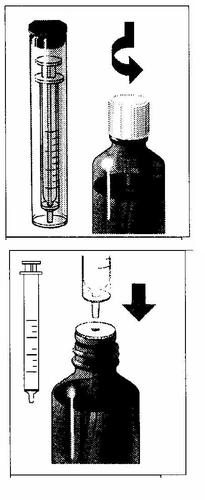
- Remove the syringe from the protective tube.
- To open the bottle, press and turn the safety cap.
- Inserting the syringe into the bottle
- Push the tip of the syringe through the hole in the white seal.
- Filling the syringe
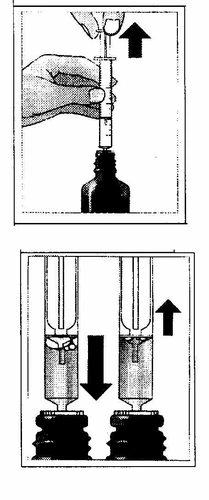
- Pull the plunger up to the mark corresponding to the dose prescribed by your doctor.
- Removing air bubbles
- Push and pull the plunger several times to remove any large air bubbles.
- Small air bubbles are not a concern and do not affect the accuracy of the dose.
- Check that the dose is still correct.
- Then remove the syringe from the bottle.
- Taking the medicine
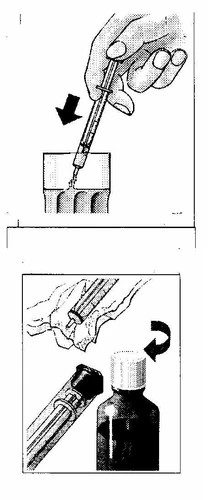
- Drink the medicine directly from the syringe.
- Alternatively, you may mix the medicine in a glass with a small amount of water. Stir and drink the entire mixture.
- After using the syringe
- Wipe the outside of the syringe with a clean tissue.
- Then place the syringe back into the protective tube.
- Replace the safety cap on the bottle to close it.
If you take more Prometax than you should
If you accidentally take more Prometax than you should, inform your doctor. You may need medical treatment. Some people who have accidentally taken an excessive amount of Prometax have experienced nausea, vomiting, diarrhoea, high blood pressure, and hallucinations. Slowing of the heartbeat and fainting may also occur.
If you forget to take Prometax
If you realize you have forgotten to take your dose of Prometax, wait and take the next dose at the scheduled time. Do not take a double dose to make up for the forgotten dose.
If you have any questions about the use of this medicine, ask your doctor or pharmacist.
4. Possible side effects
Like all medicines, this medicine can cause side effects, although not everyone gets them.
Side effects may be more common when you start taking the medicine or when the dose is increased.
Generally, side effects will gradually disappear as your body gets used to the medicine.
Very common (may affect more than 1 in 10 people)
- Dizziness
- Loss of appetite
- Stomach problems such as nausea, vomiting, diarrhoea
Common (may affect up to 1 in 10 people)
- Anxiety
- Sweating
- Headache
- Heartburn
- Weight loss
- Stomach ache
- Feeling restless
- Feeling tired or weak
- General feeling of being unwell
- Tremors or confusion
- Loss of appetite
- Nightmares
Uncommon (may affect up to 1 in 100 people)
- Depression
- Sleep disorders
- Fainting or accidental falls
- Changes in liver function
Rare (may affect up to 1 in 1,000 people)
- Chest pain
- Rash, itching
- Seizures (epileptic fits)
- Stomach or intestinal ulcer
Very rare (may affect up to 1 in 10,000 people)
- High blood pressure
- Urinary tract infection
- Seeing things that are not there (hallucinations)
- Heart rhythm disorders, such as fast or slow heartbeat
- Bleeding in the intestine – shown by blood in the stool or vomit
- Inflammation of the pancreas – shown by severe pain in the upper stomach, often accompanied by nausea or vomiting
- Worsening of Parkinson’s disease symptoms or development of similar symptoms – such as muscle stiffness, difficulty performing movements
Not known (frequency cannot be estimated from the available data)
- Severe vomiting which may lead to rupture of the tube connecting the mouth to the stomach (oesophagus)
- Dehydration (excessive loss of fluids)
- Liver problems (yellowing of the skin and whites of the eyes, abnormally dark urine, unexplained nausea, vomiting, tiredness and loss of appetite)
- Aggression, feeling restless
- Irregular heartbeat
- Pisa syndrome (a condition involving involuntary muscle contraction causing abnormal bending of the body and head to one side)
Patients with dementia and Parkinson’s disease
These patients more frequently experience certain side effects. They may also experience additional side effects:
Very common (may affect more than 1 in 10 people)
- Tremors
- Fainting
- Accidental falls
Common (may affect up to 1 in 10 people)
- Anxiety
- Feeling restless
- Slow and fast heartbeat
- Sleep disorders
- Excessive salivation and dehydration
- Unusual slowing of movements or uncontrollable movements
- Worsening of Parkinson’s disease symptoms or development of similar symptoms – such as muscle stiffness, difficulty performing movements and muscle weakness
Uncommon (may affect up to 1 in 100 people)
- Irregular heartbeat and poor control of movements
Not known (frequency cannot be estimated from the available data)
- Pisa syndrome (a condition involving involuntary muscle contraction causing abnormal bending of the body and head to one side)
Other side effects observed with Prometax transdermal patches and which may also occur with the oral solution:
Common (may affect up to 1 in 10 people)
- Fever
- Severe confusion
- Urinary incontinence (inability to properly retain urine)
Uncommon (may affect up to 1 in 100 people)
- Hyperactivity (high level of activity, restlessness)
Not known (frequency cannot be estimated from the available data)
- Allergic reactions at the patch application site, such as blisters or skin inflammation
If you experience any of these symptoms, contact your doctor, as you may need medical assistance.
Reporting of side effects
If you get any side effects, including those not listed in this leaflet, talk to your doctor, pharmacist or nurse.
You can also report side effects directly via the national reporting system listed in Annex V.
By reporting side effects, you can help provide more information on the safety of this medicine.
5. How to store Prometax
- Keep this medicine out of the sight and reach of children.
- Do not use this medicine after the expiry date stated on the pack after Exp. The expiry date refers to the last day of that month.
- Do not store above 30°C. Do not refrigerate or freeze.
- Store in an upright position.
- Use Prometax oral solution within 1 month after opening the bottle.
- Do not dispose of any medicine via wastewater or household waste. Ask your pharmacist how to dispose of medicines no longer in use. This will help protect the environment.
6. Package contents and other information
What Prometax contains
- The active substance is rivastigmine hydrogen tartrate. Each ml contains an amount of rivastigmine hydrogen tartrate equivalent to 2.0 mg of rivastigmine base.
- The other components are sodium benzoate (E211), citric acid, sodium citrate, quinoline yellow dye (E104) and purified water.
Description of the appearance of Prometax and package contents
Prometax oral solution is available in amber glass bottles with a child-resistant cap, seal, dip tube and self-aligning piston, containing 50 ml or 120 ml of a yellow, clear solution. The oral solution is supplied with an oral dosing syringe contained in a plastic tube.
Marketing Authorisation Holder
Almirall, S.A.
Ronda General Mitre, 151
08022 Barcelona
Spain
Manufacturers
Novartis Farmacéutica, S.A.
Gran Via de les Corts Catalanes, 764
08013 Barcelona
Spain
Novartis Pharma GmbH
Roonstraße 25
D-90429 Nuremberg
Germany
For further information about this medicinal product, please contact the local representative of the Marketing Authorisation Holder in the following countries:
België/Belgique/Belgien, България, Česká republika, Danmark, Deutschland, Eesti, Ελλάδα,
España, France, Hrvatska, Ireland, Ísland, Italia, Κύπρος, Latvija, Lietuva,
Luxembourg/Luxemburg, Magyarország, Malta, Nederland, Norge, Österreich, Polska,
Portugal, România, Slovenija, Slovenská republika, Suomi/Finland, Sverige
Almirall, S.A.
Tél/Tel/Teл./Tlf./Τηλ/Sími/Tel./Tlf/Puh: +34 93 291 30 00
Other sources of information
More detailed information on this medicinal product is available on the website of the European Medicines Agency: https://www.ema.europa.eu/
Package leaflet: Information for the user
Prometax 4.6 mg/24 hours transdermal patch, 9.5 mg/24 hours transdermal patch, 13.3 mg/24 hours transdermal patch
rivastigmine
Please read this leaflet carefully before using this medicine because it contains important information for you.
- Keep this leaflet. You may need to read it again.
- If you have any questions, ask your doctor, pharmacist, or nurse.
- This medicine has been prescribed for you only. Do not give it to others, even if they have the same symptoms as yours, as it could be harmful.
- If you experience any side effect, including those not listed in this leaflet, talk to your doctor, pharmacist, or nurse. See section 4.
Contents of this leaflet
- What Prometax is and what it is used for
- What you need to know before using Prometax
- How to use Prometax
- Possible side effects
- How to store Prometax
- Contents of the pack and other information
1. What Prometax is and what it is used for
Prometax contains the active substance rivastigmine.
Rivastigmine belongs to a class of substances known as cholinesterase inhibitors. In patients
with Alzheimer's dementia, certain brain cells die, resulting in low levels of
acetylcholine (a substance that enables nerve cells to communicate with each other). Rivastigmine
works by inhibiting the enzymes that break down acetylcholine: acetylcholinesterase and
butyrylcholinesterase. By inhibiting these enzymes, Prometax increases acetylcholine levels in the
brain, thereby improving the symptoms of Alzheimer's disease.
Prometax is used for the treatment of adult patients with mild to moderate Alzheimer's dementia, a progressive disorder of the central nervous system that gradually affects memory, learning ability, and behaviour.
2. What you need to know before using Prometax
Do not use Prometax
- if you are allergic to rivastigmine (the active substance in Prometax) or to any of the other ingredients of this medicine (listed in section 6).
- if you have previously had an allergic reaction to medicines of a similar type (carbamate derivatives).
- if you have experienced a skin reaction to the patch that extended beyond the area where the patch was applied, or if you had a more severe local reaction (such as blisters, increased skin inflammation, swelling) that did not improve within 48 hours after removing the patch. If this applies to you, inform your doctor and do not apply Prometax transdermal patches.
Warnings and precautions
Talk to your doctor before using Prometax:
- if you have or have ever had a heart condition such as irregular or slow heartbeat, QTc interval prolongation, family history of QTc interval prolongation, torsades de pointes, or low levels of potassium or magnesium in your blood.
- if you have or have ever had an active stomach ulcer.
- if you have or have ever had difficulty urinating.
- if you have or have ever had seizures (epileptic fits).
- if you have or have ever had asthma or severe respiratory disorders.
- if you suffer from tremors.
- if you have a low body weight.
- if you experience gastrointestinal disturbances such as nausea, vomiting, and diarrhea. If vomiting and diarrhea are persistent, you may become dehydrated (excessive fluid loss).
- if you have impaired liver function. If any of these apply to you, your doctor may examine you more frequently during treatment with this medicine.
If you have not applied a patch for more than three days, consult your doctor before applying the next one.
Children and adolescents
There is no indication for the specific use of Prometax in the pediatric population for the treatment of Alzheimer's disease.
Other medicines and Prometax
Inform your doctor or pharmacist if you are taking, have recently taken, or might take any other medicines.
Prometax must not be administered together with other medicines that have similar effects. Prometax may interfere with anticholinergic medicines (medicines used to relieve cramps or spasms in the stomach, for the treatment of Parkinson's disease, or to prevent motion sickness).
The Prometax patch must not be administered simultaneously with metoclopramide (a medicine used to relieve or prevent nausea and vomiting). Taking both medicines together may cause adverse effects such as stiffness of the limbs and hand tremors.
If you are scheduled for surgery and are being treated with Prometax, inform your doctor before receiving anesthesia, as Prometax may enhance the effects of certain muscle relaxants during anesthesia.
Caution is advised when taking Prometax patch together with beta-blockers (medicines such as atenolol, used to treat hypertension, angina, and other heart conditions).
Taking both medicines together may cause adverse effects such as slowing of the heartbeat (bradycardia), which may lead to fainting or loss of consciousness.
Caution is also advised when taking Prometax together with other medicines that may affect heart rhythm or the heart's electrical system (QT interval prolongation).
Pregnancy, breastfeeding, and fertility
If you are pregnant, think you may be pregnant, planning to become pregnant, or breastfeeding, consult your doctor or pharmacist before taking this medicine.
If you are pregnant, the benefits of using Prometax must be weighed against the potential risks to the unborn child. Prometax must not be used during pregnancy unless strictly necessary.
You must not breastfeed while being treated with Prometax transdermal patches.
Driving and using machines
Your doctor will advise you whether your condition allows you to drive or operate machinery safely. Prometax transdermal patches may cause fainting or severe confusion. If you feel faint or confused, do not drive, do not use machinery, and avoid any other activity requiring alertness.
3. How to use Prometax
Use Prometax transdermal patches exactly as directed by your doctor. If you have any doubts, consult your doctor, pharmacist, or nurse.
IMPORTANT:
- Remove the previous day’s patch before applying a NEW one.
- One patch only per day.
- Do not cut the patch into pieces.
- Press firmly on the patch with the palm of your hand for at least 30 seconds.
Starting treatment
Your doctor will tell you which Prometax transdermal patch is most suitable for you.
- Treatment usually starts with Prometax 4.6 mg/24 hours.
- The usual recommended daily dose is Prometax 9.5 mg/24 hours. If well tolerated, your doctor may consider increasing the dose to 13.3 mg/24 hours.
- Apply only ONE Prometax patch at a time and replace it with a new one every 24 hours. During treatment, your doctor may adjust the dose according to your individual needs.
If you have not applied a patch for more than three days, do not apply the next one without first consulting your doctor. You may resume treatment with the transdermal patches at the same dose if therapy has not been interrupted for more than 3 days; otherwise, your doctor will restart treatment with Prometax 4.6 mg/24 hours.
Prometax may be used while eating food, drinking beverages, or consuming alcohol.
Where to apply the Prometax transdermal patch
- Before applying a patch, make sure the skin is clean, dry, and hair-free. Avoid powders, oils, moisturizers, or lotions, as these may prevent the patch from adhering properly to the skin. The skin should be free of cuts, rashes, and/or irritation.
- Carefully remove any existing patch before applying a new one. Having more than one patch on the skin could expose you to an excessive amount of medication, which could be potentially dangerous.
- Apply ONE patch per day to ONE of the following application sites shown in the figures below:
- upper left arm or upper right arm
- upper left chest or upper right chest (avoid the breast area)
- upper left back or upper right back
- lower left back or lower right back
Every 24 hours, remove the previous patch before applying
a NEW ONE to ONE of the following possible sites.
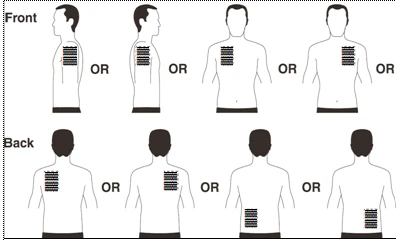
When changing the patch, remove the previous day’s patch and apply the new one each time at a different site (for example, on the right side of the body one day and the left side the next day, upper body one day and lower body the next). Do not reapply a new patch to the same spot until at least 14 days have passed.
How to apply the Prometax transdermal patch
Prometax patches are thin, opaque, plastic-based patches that adhere to the skin. Each patch is sealed in a protective pouch until ready for use. Do not open the pouch or remove the patch until just before application.
Carefully remove the existing patch before applying
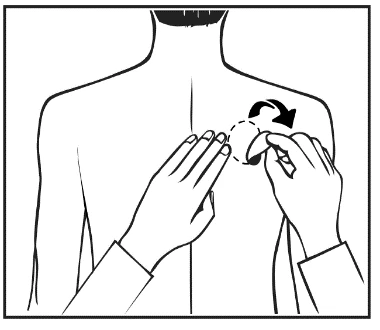
a new one.
For patients starting treatment for the first time and for patients restarting treatment with Prometax after an interruption, please follow the instructions shown below next to the second image.
Each patch is sealed in its protective pouch.
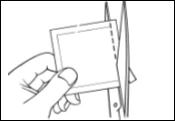
Open the pouch only when you are ready to apply the patch.
Cut the pouch along the dotted line with scissors and remove the patch from the pouch.
A protective liner covers the adhesive side of the patch.
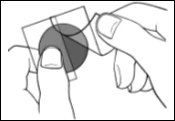
Peel off one side of the protective liner and avoid touching the adhesive surface of the patch with your fingers.
Place the adhesive side of the patch on the upper
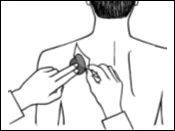
or lower back, upper arm, or chest, then remove the second side of the protective liner.
Press firmly on the patch with the palm of your hand
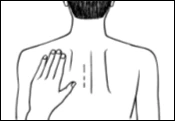
for at least 30 seconds, ensuring that the edges adhere well.
If helpful, you may write on the patch—for example, the day of the week—using a fine-tipped ballpoint pen.
The patch should be worn continuously until it is time to replace it with a new one. If desired, when applying a new patch, you may try different sites to find those most comfortable for you and where clothing does not rub against the patch.
How to remove the Prometax transdermal patch
Gently lift one corner of the patch to slowly remove it from the skin. If adhesive residue remains on the skin, moisten the area gently but thoroughly with warm water and mild soap, or use baby oil to remove it. Do not use alcohol or other solvents (such as nail polish remover or similar products).
After removing the patch, wash your hands with soap and water. If you come into contact with your eyes or if your eyes become red after handling the patch, rinse immediately with plenty of water and consult a doctor if symptoms do not improve.
Can you bathe, swim, or sunbathe while wearing the Prometax transdermal patch?
- Bathing, swimming, or showering should not interfere with the patch. Ensure the patch does not become dislodged during these activities.
- Do not expose the patch to external sources of heat (e.g., excessive sunlight, sauna, sunbed) for prolonged periods.
What to do if the patch comes off
If the patch comes off, apply a new one for the remainder of the day, then replace the patch the following day at the usual time.
When and for how long to apply the Prometax transdermal patch
- To benefit from treatment, apply a new patch every day, preferably at the same time each day.
- Apply only one patch at a time and replace it with a new one after 24 hours.
If you use more Prometax than you should
If you accidentally apply more than one patch, remove all patches from your skin and inform your doctor that you have accidentally applied more than one patch. You may require medical treatment. Some people who have accidentally received an excessive amount of Prometax have experienced nausea, vomiting, diarrhea, high blood pressure, and hallucinations. Slowing of the heartbeat and fainting may also occur.
If you forget to use Prometax
If you realize you have forgotten to apply a patch, apply a new one immediately. You may apply the next patch at the usual time the following day. Do not apply two patches to make up for the missed one.
If you stop using Prometax
If you stop treatment with the patch, inform your doctor or pharmacist.
If you have any doubts about using this medicine, speak to your doctor or pharmacist.
4. Possible side effects
Like all medicines, Prometax transdermal patches can cause side effects, although not everyone gets them.
Side effects may be more frequent when starting treatment or when increasing the dose. Generally, side effects will gradually disappear as the body gets used to the medicine.
Remove the patch and contact your doctor immediately if you notice any of the following
side effects becoming severe:
Common (may affect up to 1 in 10 people)
- Loss of appetite
- Dizziness
- Feeling agitated or drowsy
- Urinary incontinence (inability to properly retain urine)
Uncommon (may affect up to 1 in 100 people)
- Heart rhythm disorders such as slow heartbeat
- Seeing things that are not really there (hallucinations)
- Stomach ulcer
- Dehydration (excessive loss of fluids)
- Hyperactivity (high level of activity, restlessness)
- Aggressiveness
Rare (may affect up to 1 in 1,000 people)
- Falls
Very rare (may affect up to 1 in 10,000 people)
- Stiffness in arms or legs
- Hand tremors
Not known (frequency cannot be estimated from the available data)
- Allergic reactions at the application site, such as blisters or inflamed skin
- Worsening of Parkinson’s disease symptoms – such as tremor, stiffness, and shuffling gait
- Inflammation of the pancreas – characterized by severe pain in the upper abdomen, often accompanied by nausea or vomiting
- Fast or irregular heartbeat
- High blood pressure
- Seizures (epileptic fits)
- Liver disorders (yellowing of the skin and whites of the eyes, abnormally dark-coloured urine, or unexplained nausea, vomiting, fatigue, and loss of appetite)
- Changes in liver function test results
- Feeling restless
- Nightmares
- Pisa syndrome (a condition involving involuntary muscle contractions causing abnormal sideways bending of the body and head)
Remove the patch and contact your doctor immediately if you notice any of the side effects listed above.
Other side effects observed with Prometax capsules or oral solution that may also occur with the patch:
Common (may affect up to 1 in 10 people)
- Excessive salivation
- Loss of appetite
- Feeling restless
- General feeling of being unwell
- Tremors or confusion
- Increased sweating
Uncommon (may affect up to 1 in 100 people)
- Irregular heartbeat (e.g. fast heartbeat)
- Sleep disturbances
- Accidental falls
Rare (may affect up to 1 in 1,000 people)
- Seizures (epileptic fits)
- Intestinal ulcer
- Chest pain – this may be caused by heart spasm
Very rare (may affect up to 1 in 10,000 people)
- High blood pressure
- Inflammation of the pancreas – characterized by severe pain in the upper abdomen, often accompanied by nausea or vomiting
- Intestinal bleeding – indicated by blood in stools or vomit
- Seeing things that are not there (hallucinations)
- In some people with severe vomiting, rupture of the tube connecting the mouth to the stomach (oesophagus) has occurred
Reporting of side effects
If you get any side effects, including those not listed in this leaflet, talk to your doctor, pharmacist, or nurse. You can also report side effects directly via the national reporting system detailed in Annex V. By reporting side effects, you can help provide more information on the safety of this medicine.
5. How to store Prometax
- Keep this medicine out of the sight and reach of children.
- Do not use this medicine after the expiry date stated on the carton and sachet after Exp./EXP. The expiry date refers to the last day of that month.
- Do not store above 25°C.
- Keep the transdermal patch in its sachet until ready to use.
- Do not use the patch if it is damaged or shows signs of tampering.
- After removing a patch, fold it in half with the adhesive sides together and press firmly. Return the used patch into its original sachet and dispose of it in such a way that children cannot touch it. Avoid touching your eyes with your fingers and wash your hands thoroughly with water and soap after removing the patch. Do not dispose of any medicine via wastewater or household waste. Ask your pharmacist how to dispose of medicines no longer in use. This will help protect the environment.
6. Contents of the pack and other information
What Prometax contains
- The active substance is rivastigmine.
- Prometax 4.6 mg/24 hours transdermal patches: Each 5 cm patch releases 4.6 mg of rivastigmine over 24 hours and contains 9 mg of rivastigmine.
- Prometax 9.5 mg/24 hours transdermal patches: Each 10 cm patch releases 9.5 mg of rivastigmine over 24 hours and contains 18 mg of rivastigmine.
- Prometax 13.3 mg/24 hours transdermal patches: Each 15 cm patch releases 13.3 mg of rivastigmine over 24 hours and contains 27 mg of rivastigmine.
- The other components are coated polyethylene terephthalate film, alpha-tocopherol, poly(butyl methacrylate, methyl methacrylate), acrylic copolymer, silicone oil, dimethicone, polyester film, fluoropolymer-coated.
Description of the appearance of Prometax and contents of the pack
Each transdermal patch is thin and consists of three layers. The outer layer is beige and marked with one of the following inscriptions:
- “Prometax”, “4.6 mg/24 h” and “AMCX”,
- “Prometax”, “9.5 mg/24 h” and “BHDI”,
- “Prometax”, “13.3 mg/24 h” and “CNFU”
Each transdermal patch is sealed in a sachet. The patches are available in packs containing 7 or 30 sachets, and in multiple packs containing 60 or 90 sachets. Not all pack sizes may be marketed.
Marketing Authorization Holder
Almirall, S.A.
Ronda General Mitre, 151
08022 Barcelona
Spain
Manufacturer
LTS Lohmann Therapie-Systeme AG
Lohmannstrasse 2
56626 Andernach
Germany
For further information about this medicinal product, please contact the local representative of the Marketing Authorization Holder:
België/Belgique/Belgien, България, Česká republika, Danmark, Deutschland, Eesti, Ελλάδα, España, France, Hrvatska, Ireland, Ísland, Italia, Κύπρος, Latvija, Lietuva, Luxembourg/Luxemburg, Magyarország, Malta, Nederland, Norge, Österreich, Polska, Portugal, România, Slovenija, Slovenská republika, Suomi/Finland, Sverige
Almirall, S.A.
Tél/Tel/Teл./Tlf./Τηλ/Sími/Tel./Tlf/Puh: +34 93 291 30 00
Other sources of information
More detailed information on this medicinal product is available on the website of the European Medicines Agency: https://www.ema.europa.eu/
ANNEX IV
SCIENTIFIC CONCLUSIONS AND REASONS FOR THE VARIATION OF THE TERMS OF THE
MARKETING AUTHORISATION(S)
Scientific conclusions
Taking into account the evaluation by the Pharmacovigilance Risk Assessment Committee (PRAC) of the Periodic Safety Update Report (PSUR) for rivastigmine, the scientific conclusions of the PRAC are as follows:
Based on literature data suggesting a causal relationship between rivastigmine and pleurototonus, with reports of positive response upon withdrawal of treatment (dechallenge) and/or re-administration (rechallenge), including a dose-effect relationship in some cases, and considering a potential class effect, it is recommended to update the product information for medicinal products containing rivastigmine to include the adverse reaction "pleurototonus", also known as Pisa syndrome.
Having reviewed the PRAC recommendation, the Committee for Human Medicinal Products (CHMP) agrees with the overall conclusions and the rationale of the recommendation.
Reasons for the variation of the terms of the marketing authorisation(s)
Based on the scientific conclusions for rivastigmine, the CHMP considers that the benefit-risk balance of the medicinal product(s) containing rivastigmine remains unchanged, subject to the proposed amendments to the product information.
The CHMP recommends the variation of the terms of the marketing authorisation(s).