Prohance
Italy
Table of Contents
Patient Information Leaflet
PROHANCE 279.3 mg/ml solution for infusion
Gadoteridolo
Please read this leaflet carefully before you are given this medicine
because it contains important information for you.
- Keep this leaflet. You may need to read it again.
- If you have any questions, ask your doctor.
- If you experience any side effects, including those not listed in this leaflet, tell your doctor. See section 4.
Contents of this leaflet:
- What ProHance is and what it is used for
- What you need to know before you are given ProHance
- How ProHance will be administered to you
- Possible side effects
- How to store ProHance
- Contents of the pack and other information
1. What ProHance is and what it is used for
ProHance is a magnetic resonance contrast agent containing gadoteridol.
ProHance is used for diagnostic purposes during a radiological examination, as it enables the physician to obtain improved visualization of the brain, spinal cord, and surrounding structures.
It also allows visualization of the internal structures of the entire body, including the head, neck, liver, breasts, the musculoskeletal system, and pathologies of soft tissues.
2. What you must know before you are given ProHance
Do not use ProHance
- if you are allergic to gadoteridol or to any of the other ingredients of this medicine (listed in section 6).
Warnings and precautions
Talk to your doctor before you are given ProHance if:
- you suffer from allergies (e.g. hay fever, hives, food allergies or drug allergies). Your doctor will monitor you closely during and after the examination;
- your kidneys are not functioning properly;
- you have recently had or are about to undergo liver transplantation;
- you suffer from epilepsy or have had a brain injury. Your doctor may decide to perform a blood test to assess whether your kidneys are functioning properly before deciding to use ProHance, especially if you are 65 years of age or older. Page 1 of 10
Also inform your doctor if:
- you have a pacemaker;
- you have had a metal clip or any other metallic device implanted during surgery (e.g. for an aneurysm).
Repeated procedures – In general, if your doctor considers it necessary, an additional dose of ProHance may be administered up to 30 minutes after the first.
If you have severe kidney problems, have undergone or are about to undergo liver transplantation, the contrast examination must not be repeated within 7 days.
In newborns or children, the contrast examination must not be repeated within 7 days.
Newborns and infants
Since renal function is not yet mature in newborns up to 4 weeks of age and in children up to 1 year of age, ProHance will be used in these patients only after careful medical evaluation (see section 2).
Other medicines and ProHance
Inform your doctor if you are taking, have recently taken, or might take any other medicines.
Pregnancy, breastfeeding and fertility
If you are pregnant, suspect you may be pregnant, are planning to become pregnant, or are breastfeeding, ask your doctor for advice before this medicine is administered to you.
Pregnancy
Gadoteridol may cross the placenta. It is not known whether it has an effect on the unborn child. Inform your doctor if you think you may be pregnant or if you are planning a pregnancy. ProHance must not be used during pregnancy unless strictly necessary.
Breastfeeding
Inform your doctor if you are breastfeeding or intend to start breastfeeding. Your doctor will decide whether you can continue breastfeeding or whether you should interrupt breastfeeding for a period of 24 hours after administration of ProHance.
Driving and using machines
Before driving or operating machinery, check whether you are experiencing any adverse effects such as dizziness or visual disturbances.
ProHance contains sodium
This medicine contains less than 1 mmol (23 mg) of sodium per dose and can therefore be considered essentially sodium-free.
Page 2 of 10
3. How to use ProHance
ProHance will be administered by the radiologist and/or healthcare professionals. ProHance will be
injected into a vein.
The dose to be injected is strictly determined by the physician and/or radiology technician and varies
according to your body weight and the type of examination.
The usual recommended dose is 0.1 mmol/kg (0.2 ml/kg). Higher doses, up to 0.3 mmol/kg, may be used in selected
cases (for example, in suspected cerebral metastases or inadequate contrast enhancement after administration
of the standard dose).
The recommended whole-body dose is 0.1 mmol/kg.
Dosing in special patient populations
The use of ProHance is not recommended in patients with severe kidney problems and in patients
who have recently undergone or are about to undergo a liver transplant.
However, if use is required, only one dose of ProHance should be given during the examination, and a second
administration must not be given within at least 7 days.
Use in neonates, infants, children and adolescents
In children, the recommended dose is based on body weight.
Since kidney function is not yet fully mature in neonates up to 4 weeks of age and in children up to 1 year of age,
ProHance should be used only after careful medical evaluation. Neonates and children should receive only one dose of
ProHance during the examination and should not receive a second injection within at least 7
days.
The use of ProHance for whole-body MRI is not recommended in patients under 18 years of age.
Elderly patients
No dose adjustment is necessary if you are 65 years of age or older, but you may undergo a blood test to assess whether your kidneys are functioning
properly.
If you are given more ProHance than you should
It is highly unlikely that you will be given more ProHance than required, as your doctor will closely monitor the procedure during the examination.
In the event of an overdose, your doctor will promptly initiate appropriate therapy to prevent any potential harm.
Gadoteridol can be removed from the body by blood filtration and purification (dialysis).
4. Possible side effects
Like all medicines, ProHance can cause side effects, although not everyone will experience them.
Allergic reactions have occurred, whose symptoms mainly present as:
- tightness in the throat, throat irritation;
- difficulty breathing (dyspnea), chest discomfort;
- sensation of warmth, burning sensation;
- difficulty swallowing (dysphagia), swelling of the pharynx or larynx (pharyngeal or laryngeal edema);
- drop in blood pressure (hypotension);
- loss of consciousness following respiratory and/or cardiac arrest, which could lead to death.
The following side effects have been reported with gadoteridol and are listed below according to their frequency:
Common (may affect up to 1 in 10 people)
-
nausea;
Uncommon (may affect up to 1 in 100 people) -
headache;
-
numbness of limbs (paraesthesia), dizziness;
-
altered taste, dry mouth;
-
increased lacrimation;
-
flushing, low blood pressure (hypotension);
-
vomiting;
-
itching, skin rashes, urticaria;
-
reaction at injection site, weakness (asthenia);
-
reaction at injection site (in some cases due to extravasation of contrast medium);
-
increased heart rate, irregular electrocardiogram (prolongation of PR interval on ECG).
Rare (may affect up to 1 in 1,000 people) -
anaphylactic/anaphylactoid reactions;
-
anxiety;
-
mental disturbance, abnormal coordination, seizures;
-
ringing in the ears (tinnitus);
-
alteration in heart rhythm (nodal arrhythmia);
-
laryngeal disorders (the organ where voice is produced) causing difficulty in airflow, difficulty breathing (dyspnea);
-
rhinitis, cough, breathing interruption (apnea), wheezing;
-
abdominal pain, tongue swelling, mouth itching;
-
gingivitis, diarrhoea;
-
facial swelling;
-
musculoskeletal rigidity;
-
chest pain, fever.
Not known (frequency cannot be estimated from available data) -
allergic reactions, even very severe ones (anaphylactic shock);
-
confusion, agitation, coma and loss of consciousness;
-
transient loss of consciousness (syncope), decreased sensitivity to stimuli (hypoesthesia), burning sensation;
-
stupor, language disturbances, somnolence;
-
increased muscle tone (hypertonia), tremor, impaired sense of smell (parosmia);
-
conjunctivitis, eye pain, blurred vision, temporary blindness;
-
ear pain;
-
cardiac arrest, slow heartbeat (bradycardia), irregular and fast heartbeat (ventricular tachycardia);
-
bluish/purplish discoloration of the skin and mucous membranes (cyanosis), palpitations;
-
increased blood pressure (hypertension), reduced blood flow to the body (shock), pallor;
-
respiratory arrest, fluid accumulation in the lungs (pulmonary edema), oxygen deficiency (hypoxia), decreased and/or increased respiratory rate (hypoventilation and/or hyperventilation);
-
throat disorders (pharyngeal tightness, pharyngeal irritation, pharyngolaryngeal pain), asthma, bronchial narrowing causing breathing difficulty (bronchospasm);
-
noisy breathing (stridor), obstructive respiratory disorders, voice disorder (dysphonia), swelling of the pharynx and larynx, respiratory depression;
-
difficulty swallowing (dysphagia), increased salivary secretion (hypersalivation);
-
increased sweating, periorbital swelling, facial swelling, swelling of the face, lips, mouth, tongue or throat which may cause difficulty in swallowing and breathing (angioneurotic edema), blistering skin rash (bullous dermatitis);
-
inability to retain urine (urinary incontinence), kidney disorders (acute renal failure in patients with pre-existing severe renal impairment, renal tubular necrosis, altered kidney function);
-
swelling (edema), malaise, sensation of warmth, sensation of cold, chills, pain, reactions and pain at injection site (attributable to contrast medium extravasation);
-
decreased blood pressure, abnormal liver function tests.
Additionally, after administration of ProHance, the following side effects may occur, for which frequency cannot be estimated:
Vasovagal reactions
A pathological condition caused by emotional stress or fear (e.g. needle prick), whose commonly experienced symptoms include nausea, dizziness and sweating. In severe cases, this may lead to transient loss of consciousness (syncope), pallor and sweating, altered consciousness and slow heartbeats (bradycardia). You may also feel apprehension, restlessness, weakness and increased salivary secretion.
Cases of nephrogenic systemic fibrosis (which causes skin hardening and may also affect soft tissues and internal organs) have been reported in patients who received ProHance together with other gadolinium-containing contrast agents.
Paediatric patients
The safety profile of ProHance is similar in children and adults.
Reporting of side effects
If you experience any side effect, including those not listed in this leaflet, talk to your doctor. You can also report side effects directly via the national reporting system at www.aifa.gov.it/content/segnalazioni-reazione-avverse.
By reporting side effects, you can help provide more information on the safety of this medicine.
5. How to store ProHance
Store at room temperature between 15-30 °C, protected from light.
Keep this medicine out of the sight and reach of children.
Do not use this medicine after the expiry date which is stated on the packaging after "Exp".
The expiry date refers to the last day of that month.
Do not dispose of any medicine via wastewater or household waste. Ask your pharmacist
how to dispose of medicines no longer used. This will help protect the environment.
Vials and pre-filled syringes of ProHance must not be used if they have been frozen.
Any leftover contrast medium must not be reused.
6. Package Contents and Other Information
What ProHance Contains
The active substance is gadoteridol. 1 ml of infusion solution contains 279.3 mg of
gadoteridol (0.5 M).
The 5 ml vial contains 1396.5 mg of gadoteridol.
The 10 ml vial contains 2793 mg of gadoteridol.
The 15 ml vial contains 4189.5 mg of gadoteridol.
The 20 ml vial contains 5586 mg of gadoteridol.
The 50 ml vial contains 13965 mg of gadoteridol.
The 100 ml vial contains 27930 mg of gadoteridol.
A 5 ml pre-filled syringe contains 1396.5 mg of gadoteridol.
A 10 ml pre-filled syringe contains 2793 mg of gadoteridol.
A 15 ml pre-filled syringe contains 4189.5 mg of gadoteridol.
A 17 ml pre-filled syringe contains 4748.1 mg of gadoteridol.
The other components are calcium calteridol, trometamol, hydrochloric acid and/or sodium
hydroxide, and water for injections.
Description of the Appearance of ProHance and Contents of the Package
ProHance is a clear solution, colourless to slightly yellowish.
It is available in:
- Vials of 5 - 10 - 15 - 20 - 50 - 100 ml
- Pre-filled syringes of 5 - 10 - 15 - 17 ml.
Not all pack sizes may be marketed.
Page 6 of 10
Marketing Authorisation Holder and Manufacturer
Bracco Imaging S.p.A.
Via E. Folli, 50
20134 Milan, Italy
Manufacturer
Vials
Bracco Imaging SpA
Bioindustry Park - Via Ribes 5, 10010 Colleretto Giacosa (TO), Italy
BIPSO GmbH
Robert-Gerwig-Strasse 4, 78224 Singen, Germany
Pre-filled syringes
Bracco Imaging SpA
Bioindustry Park - Via Ribes 5, 10010 Colleretto Giacosa (TO), Italy
BIPSO GmbH
Robert-Gerwig-Strasse 4, 78224 Singen, Germany
The following information is intended exclusively for physicians or healthcare professionals:
Therapeutic Indications
Enhancement of contrast resolution in magnetic resonance imaging (MRI) of the brain, spinal cord, and surrounding anatomical structures.
By predominantly affecting spin-lattice relaxation, the use of ProHance enables, in T1-weighted images, a selective increase in signal intensity in tissues where it distributes, such as the pituitary gland and meningeal structures lacking a blood-brain barrier (BBB), the choroid plexuses, low-flow venous spaces, and lesions of the central nervous system that alter BBB permeability.
In magnetic resonance imaging, ProHance may be used for whole-body imaging, including the head, neck, liver, breast, musculoskeletal system, and soft tissue pathologies.
ProHance should only be used when diagnostic information is essential and cannot be obtained with MRI without contrast agent.
Precautions for Use
Extravasation: Care must be taken during injection of the contrast agent to avoid extravasation, as local reactions may occur.
During clinical trials with ProHance, the product caused no clinically significant changes in serum iron concentrations, iron-related metabolic parameters, or hematological, biochemical, and urinary profiles.
Dosage, Route and Time of Administration
Use the lowest dose that provides sufficient diagnostic enhancement. The dose should be calculated based on the patient's body weight and must not exceed the recommended dose per kilogram of body weight stated in this section.
Adults
A dose of 0.1 mmol/kg (0.2 ml/kg) of ProHance is usually sufficient for adequate evaluation of brain or spinal cord lesions. Higher doses, up to 0.3 mmol/kg, should be used only in selected cases (e.g., suspected cerebral metastases or insufficient contrast enhancement after standard dose administration).
The recommended dose for whole-body MRI is 0.1 mmol/kg.
Elderly
Special attention is required when administering ProHance to elderly patients.
If administered via intravenous infusion, to ensure complete delivery, the contrast agent injection should be immediately followed by a 5 ml saline flush through the same infusion line.
Instrumental imaging must be completed within one hour after ProHance injection.
No dose adjustment is necessary for patients over 65 years of age; however, renal function testing may be required to assess normal kidney function.
Children of any age (from term neonates)
The recommended dose of ProHance is 0.1 mmol/kg (0.2 ml/kg).
Prior to administration of ProHance, all patients should be screened for renal dysfunction using laboratory tests.
Cases of nephrogenic systemic fibrosis (NSF) have been reported following the use of some gadolinium-containing contrast agents in patients with severe acute or chronic renal impairment (GFR < 30 ml/min/1.73 m²). Patients undergoing liver transplantation are at particular risk due to the high incidence of acute renal failure in this group. Since NSF may occur with ProHance, the medicinal product should be used in patients with severe renal impairment and in patients during the perioperative period of liver transplantation only after careful assessment of the risk-benefit ratio and if the diagnostic information is essential and cannot be obtained with MRI without contrast agent.
Page 8 of 10
If ProHance use is necessary, the dose must not exceed 0.1 mmol/kg body weight. No more than one dose should be administered per examination. Due to lack of data on repeated administrations, ProHance injections should not be repeated unless at least 7 days have elapsed between doses.
Due to immature renal function in neonates up to 4 weeks of age and children up to 1 year of age, ProHance should be used in these patients only after careful consideration and at a dose not exceeding 0.1 mmol/kg body weight. No more than one dose should be administered per examination. Due to lack of data on repeated administrations, ProHance injections should not be repeated unless at least 7 days have elapsed between doses.
The use of ProHance for whole-body MRI is not recommended in patients under 18 years of age.
Since renal clearance of gadoteridol may be impaired in elderly patients, it is particularly important to screen renal function in patients aged 65 years and older.
Hemodialysis shortly after ProHance administration may help remove ProHance from the body. There is no evidence supporting the use of hemodialysis for the prevention or treatment of NSF in patients not already undergoing hemodialysis.
ProHance must not be used during pregnancy unless the clinical condition of the woman requires the use of gadoteridol.
The physician and breastfeeding mother must decide whether to continue or interrupt breastfeeding for at least 24 hours after the examination.
The adhesive traceability label on vials and pre-filled syringes must be removed and affixed to the patient's medical record to ensure accurate documentation of the gadolinium-containing contrast agent used. The administered dose must be recorded. If electronic records are used, the product name, batch number, and dose must be entered into the patient's electronic medical record.
Instructions for Use and Handling of Pre-filled Syringes
Follow carefully the instructions below:
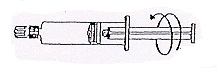
- Rotate the plunger rod clockwise to screw its threaded end into the piston, and push forward slightly to eliminate any friction between the piston and the glass barrel of the syringe.
- Holding the syringe vertically, aseptically remove the rubber cap from the syringe tip and attach a sterile disposable needle or infusion set with a compatible connector, applying gentle pressure and rotation simultaneously.
- While keeping the syringe vertical, expel air by pushing the plunger
until liquid appears at the tip of the needle or until the infusion set is completely filled. Perform injection after standard aspiration procedure. To ensure complete administration of the contrast agent, the injection should be followed by a saline flush.
Page 9 of 10
Incompatibilities
ProHance must not be mixed with other medicinal products.
STORAGE
Store at room temperature (15–30 °C), protected from light.
ProHance vials and pre-filled syringes must not be used if they have been frozen.
Any unused portion of contrast agent must not be reused.
Page 10 of 10