Procysbi
Italy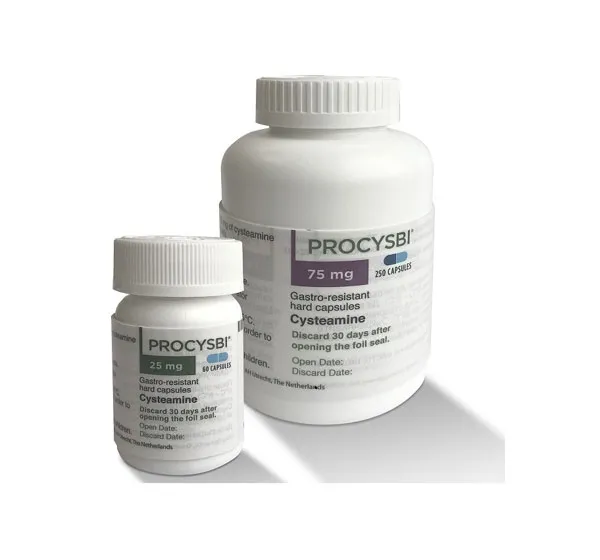
Table of Contents
- Package leaflet: Information for the user
- PROCYSBI 25 mg gastro-resistant hard capsules, 75 mg gastro-resistant hard capsules
- 1. What PROCYSBI is and what it is used for
- 2. What you should know before taking PROCYSBI
- 3. How to take PROCYSBI
- 4. Possible side effects
- 5. How to store PROCYSBI
- 6. Package contents and other information
- Package leaflet: information for the user
- PROCYSBI 75 mg gastro-resistant granules, 300 mg gastro-resistant granules
- 1. What PROCYSBI is and what it is used for
- 2. What you need to know before taking PROCYSBI
- 3. How to take PROCYSBI
- 4. Possible side effects
- 5. How to store PROCYSBI
- 6. Package contents and other information
Package leaflet: Information for the user
PROCYSBI 25 mg gastro-resistant hard capsules, 75 mg gastro-resistant hard capsules
cysteamine (mercaptamine bitartrate)
Please read all of this leaflet carefully before you start using this medicine because it contains important information for you.
- Keep this leaflet. You may need to read it again.
- If you have any questions, ask your doctor or pharmacist.
- This medicine has been prescribed for you only. Do not pass it on to others, even if they have the same symptoms as you, because it may be harmful.
- If you experience any side effects, including those not listed in this leaflet, tell your doctor or pharmacist. See section 4.
Contents of this leaflet
- What PROCYSBI is and what it is used for
- What you need to know before taking PROCYSBI
- How to take PROCYSBI
- Possible side effects
- How to store PROCYSBI
- Contents of the pack and other information
1. What PROCYSBI is and what it is used for
PROCYSBI contains the active substance cysteamine (also known as mercaptamine) and is taken for
the treatment of nephropathic cystinosis in children and adults. Cystinosis is a disease that affects
body functions, causing an abnormal accumulation of the amino acid cystine in various organs of the body, such as
the kidneys, eyes, muscles, pancreas, and brain. The accumulation of cystine damages the kidneys and causes
excessive excretion of glucose, proteins, and electrolytes. Different organs are affected at
different ages.
PROCYSBI is a medicine that reacts with cystine to reduce its levels within cells. To achieve maximum benefit, cysteamine therapy should be started as soon as possible after diagnosis of nephropathic cystinosis is confirmed.
2. What you should know before taking PROCYSBI
Do not take PROCYSBI
- if you are allergic to cysteamine (also known as mercaptamine) or to any of the other ingredients of this medicine (listed in section 6).
- if you are allergic to penicillamine (this is not "penicillin", but a medicine used to treat Wilson's disease).
- if you are breastfeeding.
Warnings and precautions
Talk to your doctor or pharmacist before taking PROCYSBI.
- Since oral cysteamine does not prevent the accumulation of cystine crystals in the eyes, you must continue using the ophthalmic cysteamine solution prescribed by your doctor.
- To avoid the risk of choking, intact cysteamine capsules must not be administered to children under approximately 6 years of age (refer to section 3 “How to take PROCYSBI – Method of administration”).
- Severe skin lesions may occur in patients treated with high doses of cysteamine. Your doctor will routinely monitor your skin and bones and will reduce or discontinue treatment if necessary (see section 4).
- Ulcers and gastrointestinal bleeding may occur in patients taking cysteamine (see section 4).
- Other gastrointestinal symptoms such as nausea, vomiting, anorexia, and stomach pain may occur with cysteamine. If these symptoms occur, your doctor may interrupt or adjust the dosage.
- Contact your doctor if you experience unusual stomach symptoms or changes in your usual stomach symptoms.
- Symptoms such as dizziness, fatigue, drowsiness, depression, and brain disorders (encephalopathy) may occur with cysteamine. If such symptoms occur, consult your doctor, who may adjust the dosage.
- Abnormal liver function or reduced white blood cell count (leukopenia) may occur with cysteamine use. Your doctor will routinely monitor your white blood cell count and liver function.
- Your doctor will monitor you for possible benign intracranial hypertension (or pseudotumor cerebri [PTC]) and/or swelling of the optic nerve (papilledema) associated with cysteamine treatment. You will undergo regular eye examinations to detect this condition, as prompt treatment can prevent vision loss.
Other medicines and PROCYSBI
Inform your doctor or pharmacist if you are taking, have recently taken, or might take any other medicines. If your doctor prescribes bicarbonate, do not take it at the same time as PROCYSBI; take bicarbonate at least one hour before or at least one hour after taking this medicine.
PROCYSBI with food and drinks
For at least 1 hour before and 1 hour after taking PROCYSBI, avoid fatty or protein-rich meals and any food or drink that may reduce stomach acidity, such as milk or yogurt. If this is not possible, you may eat a small amount (about 100 grams) of food (preferably carbohydrates, e.g., bread, pasta, fruit) during the hour before and after taking PROCYSBI.
Take the capsule with an acidic beverage (such as orange juice or any acidic fruit juice) or water. For children and patients who have difficulty swallowing, refer to section 3 “How to take PROCYSBI – Method of administration”.
Pregnancy and breastfeeding
If you are pregnant, think you might be pregnant, planning to become pregnant, or breastfeeding, consult your doctor or pharmacist before taking this medicine.
This medicine must not be used during pregnancy, especially during the first trimester.
Before starting treatment, you must have a negative pregnancy test, and during treatment you must use an adequate method of contraception. If you are planning a pregnancy or if you become pregnant, contact your doctor immediately to discuss discontinuation of this medicine, as continuing treatment may be harmful to the unborn child.
Do not use this medicine if you are breastfeeding (see section 2 under “Do not take PROCYSBI”).
Driving and using machines
This medicine may cause drowsiness. When starting treatment, avoid driving, operating machinery, or engaging in other hazardous activities until you know how this medicine affects you.
PROCYSBI contains sodium
This medicine contains less than 1 mmol (23 mg) of sodium per dose, i.e., it is essentially ‘sodium-free’.
3. How to take PROCYSBI
Take this medicine exactly as directed by your doctor or pharmacist. If you have any doubts, consult your doctor or pharmacist.
The prescribed dose for you or your child will depend on your age and body surface area or that of your child. The recommended maintenance dose is 1.3 g/m²/day.
Dosing schedule
Take this medicine twice daily, every 12 hours. To achieve the maximum benefit from this medicine, try to avoid meals and dairy products regularly for at least 1 hour before and 1 hour after taking PROCYSBI. If this is not possible, you may consume a small amount (approximately 100 grams) of food (preferably carbohydrates, e.g., bread, pasta, fruit) during the hour before and after taking PROCYSBI.
It is important to take PROCYSBI regularly and consistently over time.
Do not increase or decrease the dose without prior approval from your doctor.
The total daily dose should not exceed 1.95 g/m²/day.
Duration of treatment
Treatment with PROCYSBI is lifelong, as determined by your doctor.
Method of administration
This medicine is for oral use only.
For PROCYSBI to work properly, follow the instructions below:
- For patients able to swallow the capsule whole: Swallow the capsule whole with an acidic beverage (such as orange juice or any acidic fruit juice) or water. Do not crush or chew the capsules or their contents. Children under 6 years of age may not be able to swallow gastro-resistant hard capsules and could therefore choke. PROCYSBI may be administered to children under 6 years of age by opening the capsules and dispersing their contents into food or liquid, as described below.
For patients unable to swallow the capsule whole or who use a feeding tube:
Administration of the medicine dispersed in food
Open the gastro-resistant hard capsules and disperse the contents (granules) into approximately 100 grams of soft food, such as apple puree or fruit jam.
Gently stir the granules into the soft food to form a mixture of granules and food.
Consume the entire mixture, then drink 250 mL of an acidic beverage (such as orange juice or any acidic fruit juice) or water to aid swallowing.
If the mixture is not consumed immediately, it may be stored in the refrigerator (2°C–8°C) from the time of preparation until administration, and must be consumed within 2 hours of preparation. Do not store any leftover mixture for longer than 2 hours.
Administration via feeding tube
Open the gastro-resistant hard capsules and disperse the contents (granules) into approximately 100 grams of apple puree or fruit jam. Gently stir the granules into the soft food to form a mixture of granules and food. Administer the mixture through a gastrostomy tube, nasogastric tube, or gastrostomy-jejunostomy tube using a catheter-tipped syringe. Before administering PROCYSBI: open the gastrostomy button and connect the feeding tube. Flush with 5 mL of water to clean the button. Aspirate the mixture into the syringe. It is recommended to use no more than 60 mL of mixture per catheter-tipped syringe when using a straight feeding tube or for bolus administration. Insert the tip of the syringe containing the PROCYSBI-food mixture into the feeding tube port and completely fill the tube with the mixture. To prevent possible blockage, apply gentle pressure on the syringe and keep the feeding tube in a horizontal position during administration. To further reduce the risk of blockage, it is also recommended to use a viscous food such as apple puree or fruit jam, administering it at a rate of approximately 10 mL every 10 seconds until the syringe is completely emptied. Repeat this step until the entire mixture has been administered. After administering PROCYSBI, aspirate 10 mL of fruit juice or water into another syringe and flush the gastrostomy tube, ensuring that no residue of the PROCYSBI-food mixture remains in the tube.
If the mixture is not administered immediately, it may be stored in the refrigerator (2°C–8°C) from the time of preparation until administration, and must be administered within 2 hours of preparation. Do not store any leftover mixture for longer than 2 hours.
Consult your pediatrician for precise instructions on the correct method of administering the medicine through a feeding tube and in case of tube blockage.
Administration of the medicine dispersed in orange juice, any acidic fruit juice, or water
Open the gastro-resistant hard capsules and disperse the contents (granules) into approximately 100–150 mL of acidic fruit juice (such as orange juice or any acidic fruit juice) or water.
Gently mix the PROCYSBI mixture for 5 minutes by stirring in a cup or shaking in a covered cup (e.g., a sippy cup), then drink the mixture.
If the mixture is not consumed immediately, it may be stored in the refrigerator (2°C–8°C) from the time of preparation until administration, and must be consumed within 30 minutes of preparation. Do not store any leftover mixture for longer than 30 minutes.
Administration of the liquid mixture using an oral syringe
Aspirate the liquid mixture into an oral dosing syringe and administer it directly into the mouth.
If the mixture is not consumed immediately, it may be stored in the refrigerator (2°C–8°C) from the time of preparation until administration, and must be consumed within 30 minutes of preparation. Do not store any leftover mixture for longer than 30 minutes.
Your doctor may recommend or prescribe additional supplements, along with cysteamine, to replace important electrolytes that are lost through the kidneys. It is important to take these supplements exactly as directed. Consult your doctor if you have missed several doses of these supplements or if you experience weakness or drowsiness.
Regular blood tests to measure the amount of cystine within white blood cells and/or blood cysteamine concentration are required to determine the correct dose of PROCYSBI. You or your doctor will arrange for these blood tests to be performed.
These tests should be conducted 12.5 hours after the evening dose of the previous day, thus 30 minutes after taking the next morning’s dose. Regular blood and urine tests are also needed to monitor levels of important body electrolytes, to help you or your doctor properly adjust the doses of these supplements.
If you take more PROCYSBI than you should
If you have taken more PROCYSBI than prescribed, contact your doctor or emergency services immediately.
You may experience drowsiness.
If you forget to take PROCYSBI
If you forget to take a dose, take it as soon as possible. However, if less than 4 hours remain before the next scheduled dose, skip the missed dose and resume your regular dosing schedule.
Do not take a double dose to make up for a forgotten dose.
If you have any questions about the use of this medicine, consult your doctor or pharmacist.
4. Possible side effects
Like all medicines, this medicine can cause side effects, although not everybody gets them.
Contact a doctor or nurse immediately if you notice any of the following side effects – you may need urgent medical treatment:
- Severe allergic reaction (reported uncommonly): seek emergency medical assistance if you experience any of the following signs of an allergic reaction: hives; difficulty breathing; swelling of the face, lips, tongue, or throat.
If any of the following side effects occur, contact your doctor immediately. Since some of these are serious, consult your doctor for a more detailed explanation of the related warning signs.
Common side effects (may affect up to 1 in 10 people):
- Skin rash: inform your doctor immediately if you develop a skin rash. You may need to temporarily stop taking PROCYSBI until the rash resolves. If the rash is severe, your doctor may discontinue treatment with cysteamine.
- Abnormal liver function test results. Your doctor will monitor you for this.
Uncommon side effects (may affect up to 1 in 100 people):
- Skin lesions, bone lesions, and joint problems: treatment with high doses of cysteamine may lead to the development of skin lesions. These include striae (stretch marks), bone lesions (such as fractures), bone deformities, and joint problems. While taking this medicine, check your skin regularly and inform your doctor of any changes. Your doctor will monitor you accordingly.
- Decreased white blood cell count. Your doctor will monitor you for this.
- Central nervous system symptoms: some patients taking cysteamine have developed dizziness, depression, or excessive apathy (drowsiness). Inform your doctor if you experience these symptoms.
- Stomach and intestine (gastrointestinal) problems: patients taking cysteamine have developed ulcers and bleeding. Inform your doctor immediately if you have stomach pain or if you vomit blood.
- Benign intracranial hypertension, also known as pseudotumor cerebri, has been reported with the use of cysteamine. This is a condition in which there is increased pressure of the fluid around the brain. Inform your doctor immediately if you develop any of the following symptoms while taking PROCYSBI: ringing or "whooshing" sounds in the ears, dizziness, double vision, blurred vision, vision loss, pain behind the eye, or eye pain associated with eye movement. Your doctor will perform eye examinations to detect and treat this condition promptly. This will help reduce the risk of vision loss.
The other side effects listed below are provided with an estimate of how frequently they may occur with PROCYSBI.
Very common side effects (may affect more than 1 in 10 people):
- nausea
- vomiting
- loss of appetite
- diarrhoea
- fever
- feeling sleepy
Common side effects
- headache
- encephalopathy
- abdominal pain
- dyspepsia
- bad breath and unpleasant body odour
- heartburn
- fatigue
Uncommon side effects
- leg pain
- scoliosis (curvature of the spine)
- brittle bones
- hair discoloration
- seizures
- nervousness
- hallucinations
- kidney effects manifested by swelling of the extremities and weight gain
Reporting of side effects
If you experience any side effect, including those not listed in this leaflet, talk to your doctor or pharmacist. You can also report side effects directly via the national reporting system listed in Annex V. Reporting side effects can help provide more information on the safety of this medicine.
5. How to store PROCYSBI
Keep this medicine out of the sight and reach of children.
Do not use this medicine after the expiry date stated on the carton and on the label of the
bottle after "Exp.". The expiry date refers to the last day of that month.
Do not take this medicine if the seal has been open for more than 30 days. Discard the opened bottle and use a new one.
Store in the refrigerator (2°C-8°C). Do not freeze.
After opening, do not store above 25°C.
Keep the container tightly closed to protect the medicine from light and moisture.
Do not dispose of any medicine via wastewater. Ask your pharmacist how to dispose of medicines you no longer use. This will help protect the environment.
6. Package contents and other information
What PROCYSBI contains
- The active substance is cysteamine (bitartrate mercaptamine).
PROCYSBI 25 mg gastro-resistant hard capsules
Each gastro-resistant hard capsule contains 25 mg of cysteamine.
PROCYSBI 75 mg gastro-resistant hard capsules
Each gastro-resistant hard capsule contains 75 mg of cysteamine.
- The other components are:
o In the capsules: microcrystalline cellulose, methacrylic acid-ethyl acrylate copolymer (1:1), hypromellose, talc, triethyl citrate, sodium lauryl sulfate (see section “PROCYSBI contains sodium”).
o In the capsule shell: gelatin, titanium dioxide (E171), indigo carmine (E132).
o In the printing ink: shellac, povidone (K-17), titanium dioxide (E171).
Description of the appearance of PROCYSBI and contents of the pack
- PROCYSBI 25 mg is presented as blue gastro-resistant hard capsules (size 15.9 x 5.8 mm). The light blue cap is printed with the logo “PRO” in white ink and the light blue body is printed with “25 mg” in white ink. A white plastic bottle contains 60 capsules. The closure cap is child-resistant and has a seal liner. Each bottle contains two cylindrical plastic containers for additional protection from moisture and air.
- PROCYSBI 75 mg is presented as blue gastro-resistant hard capsules (size 21.7 x 7.6 mm). The dark blue cap is printed with the logo “PRO” in white ink and the light blue body is printed with “75 mg” in white ink. A white plastic bottle contains 250 capsules. The closure cap is child-resistant and has a seal liner. Each bottle contains three cylindrical plastic containers for additional protection from moisture and air.
- During use of the bottle, the cylindrical containers should remain inside it. The cylindrical containers may be discarded together with the bottle after use.
Marketing Authorization Holder
Chiesi Farmaceutici S.p.A.
Via Palermo 26/A
43122 Parma
Italy
Manufacturer
Chiesi Farmaceutici S.p.A.
Via San Leonardo 96
43122 Parma
Italy
For further information about this medicinal product, please contact the local representative of the Marketing Authorization Holder:
België/Belgique/Belgien
Chiesi sa/nv
Tél/Tel: + 32 (0)2 788 42 00
България
Chiesi Bulgaria EOOD
Teл.: + 359 29201205
Česká republika
Chiesi CZ s.r.o.
Tel: + 420 261221745
Danmark
Chiesi Pharma AB
Tlf: + 46 8 753 35 20
Deutschland
Chiesi GmbH
Tel: + 49 40 89724-0
Eesti
Chiesi Pharmaceuticals GmbH
Tel: + 43 1 4073919
Ελλάδα
Chiesi Hellas AEBE
Τηλ: + 30 210 6179763
España
Chiesi España, S.A.U.
Tel: + 34 93 494 8000
France
Chiesi S.A.S.
Tél: + 33 1 47688899
Hrvatska
Chiesi Pharmaceuticals GmbH
Tel: + 43 1 4073919
Ireland
Chiesi Farmaceutici S.p.A.
Tel: + 39 0521 2791
Ísland
Chiesi Pharma AB
Sími: +46 8 753 35 20
Italia
Chiesi Italia S.p.A.
Tel: + 39 0521 2791
Κύπρος
Chiesi Farmaceutici S.p.A.
Τηλ: + 39 0521 2791
Latvija
Chiesi Pharmaceuticals GmbH
Tel: + 43 1 4073919
Lietuva
Chiesi Pharmaceuticals GmbH
Tel: + 43 1 4073919
Luxembourg/Luxemburg
Chiesi sa/nv
Tél/Tel: + 32 (0)2 788 42 00
Magyarország
Chiesi Hungary Kft.
Tel.: + 36-1-429 1060
Malta
Chiesi Farmaceutici S.p.A.
Tel: + 39 0521 2791
Nederland
Chiesi Pharmaceuticals B.V.
Tel: + 31 88 501 64 00
Norge
Chiesi Pharma AB
Tlf: + 46 8 753 35 20
Österreich
Chiesi Pharmaceuticals GmbH
Tel: + 43 1 4073919
Polska
Chiesi Poland Sp. z.o.o.
Tel.: + 48 22 620 1421
Portugal
Chiesi Farmaceutici S.p.A.
Tel: + 39 0521 2791
România
Chiesi Romania S.R.L.
Tel: + 40 212023642
Slovenija
Chiesi Slovenija d.o.o.
Tel: + 386-1-43 00 901
Slovenská republika
Chiesi Slovakia s.r.o.
Tel: + 421 259300060
Suomi/Finland
Chiesi Pharma AB
Puh/Tel: +46 8 753 35 20
Sverige
Chiesi Pharma AB
Tel: +46 8 753 35 20
United Kingdom (Northern Ireland)
Chiesi Farmaceutici S.p.A.
Tel: + 39 0521 2791
More detailed information on this medicinal product is available on the European Medicines Agency website: http://www.ema.europa.eu.
Package leaflet: information for the user
PROCYSBI 75 mg gastro-resistant granules, 300 mg gastro-resistant granules
cysteamine (mercaptamine bitartrate)
Please read this leaflet carefully before using this medicine because it contains important information for you.
- Keep this leaflet. You may need to read it again.
- If you have any questions, consult your doctor or pharmacist.
- This medicine has been prescribed for you only. Do not give it to others, even if their symptoms are the same as yours, as it may be harmful.
- If you experience any side effects, including those not listed in this leaflet, contact your doctor or pharmacist. See section 4.
Contents of this leaflet
- What PROCYSBI is and what it is used for
- What you need to know before taking PROCYSBI
- How to take PROCYSBI
- Possible side effects
- How to store PROCYSBI
- Contents of the pack and other information
1. What PROCYSBI is and what it is used for
PROCYSBI contains the active substance cysteamine (also known as mercaptamine) and is taken for
the treatment of nephropathic cystinosis in children and adults. Cystinosis is a disease that affects
bodily functions, causing an abnormal accumulation of the amino acid cystine in various organs of the body, such as
the kidneys, eyes, muscles, pancreas, and brain. The accumulation of cystine damages the kidneys and causes
excessive amounts of glucose, proteins, and electrolytes to be excreted. Different organs are affected at
different ages.
PROCYSBI is a medicine that reacts with cystine to reduce its level within cells. To achieve maximum benefit, cysteamine therapy should be started as soon as possible after diagnosis of nephropathic cystinosis is confirmed.
2. What you need to know before taking PROCYSBI
Do not take PROCYSBI
- if you are allergic to cysteamine (also known as mercaptamine) or to any of the other ingredients of this medicine (listed in section 6).
- if you are allergic to penicillamine (this is not “penicillin”, but a medicine used to treat Wilson’s disease).
- if you are breastfeeding.
Warnings and precautions
Talk to your doctor or pharmacist before taking PROCYSBI.
- Since oral cysteamine does not prevent the accumulation of cystine crystals in the eyes, you must continue using the cysteamine eye drops prescribed by your doctor.
- Severe skin lesions may occur in patients treated with high doses of cysteamine. Your doctor will routinely monitor your skin and bones and will reduce or discontinue treatment if necessary (see section 4).
- Ulcers and gastrointestinal bleeding in the stomach and intestines may occur in patients taking cysteamine (see section 4).
- Other gastrointestinal symptoms such as nausea, vomiting, anorexia, and stomach pain may occur with cysteamine. If these symptoms occur, your doctor may suspend or adjust the dosage.
- Contact your doctor if you experience unusual stomach symptoms or changes in your usual stomach symptoms.
- Symptoms such as dizziness, fatigue, drowsiness, depression, and brain disorders (encephalopathy) may occur with cysteamine. If you experience any of these symptoms, contact your doctor, who may adjust the dosage.
- Liver function abnormalities or a reduction in white blood cell count (leukopenia) may occur with cysteamine use. Your doctor will routinely monitor your white blood cell count and liver function.
- Your doctor will monitor you for the possible development of benign intracranial hypertension (or pseudotumor cerebri [PTC]) and/or swelling of the optic nerve (papilledema) associated with cysteamine treatment. You will undergo regular eye examinations to detect this condition, as prompt treatment can prevent vision loss.
Other medicines and PROCYSBI
Tell your doctor or pharmacist if you are taking, have recently taken, or might take any other medicines. If your doctor prescribes bicarbonate, do not take it at the same time as PROCYSBI; take bicarbonate at least one hour before or at least one hour after taking PROCYSBI.
PROCYSBI with food and drinks
For at least 1 hour before and 1 hour after taking PROCYSBI, try to avoid high-fat or high-protein meals and any food or liquid that may reduce stomach acidity, such as milk or yogurt. If this is not possible, you may eat a small amount (about 100 grams) of food (preferably carbohydrates, e.g., bread, pasta, fruit) during the hour before and after taking PROCYSBI.
See also section 3 “How to take PROCYSBI – Instructions for use”.
Pregnancy and breastfeeding
If you are pregnant, suspect you may be pregnant, planning to become pregnant, or breastfeeding, consult your doctor or pharmacist before taking this medicine.
This medicine must not be used during pregnancy, particularly during the first trimester.
Before starting treatment, you must have a pregnancy test, which must be negative. During treatment, you must use an adequate method of contraception. If you are planning a pregnancy or if you become pregnant, contact your doctor immediately to discuss discontinuation of this medicine, as continuing treatment may be harmful to the unborn child.
Do not use this medicine if you are breastfeeding (see section 2 under “Do not take PROCYSBI”).
Driving and using machines
This medicine may cause drowsiness. When starting treatment, avoid driving, operating machinery, or engaging in other potentially hazardous activities until you know how this medicine affects your abilities.
PROCYSBI contains sodium
This medicine contains less than 1 mmol (23 mg) of sodium per dose, i.e., it is essentially ‘sodium-free’.
3. How to take PROCYSBI
Take this medicine exactly as directed by your doctor or pharmacist. If
you have any doubts, consult your doctor or pharmacist.
The recommended dose prescribed for you or your child will depend on age and body surface area. The usual maintenance dose is 1.3 g/m²/day.
Dosing schedule
Take this medicine twice daily, every 12 hours. To achieve the maximum benefit from
this medicine, try to avoid food and dairy products regularly for at least 1 hour
before and 1 hour after taking PROCYSBI. If this is not possible, you may eat a small
amount (approximately 100 grams) of food (preferably carbohydrates, e.g. bread, pasta, fruit) during the hour
before and after taking PROCYSBI.
It is important to take PROCYSBI regularly and consistently.
Do not increase or decrease the dose without approval from your doctor.
The total daily dose should not exceed 1.95 g/m²/day.
Duration of treatment
Treatment with PROCYSBI is lifelong, as directed by your doctor.
Method of administration
This medicine is for oral use only.
Each sachet must be used only once.
To ensure this medicine works properly, follow the instructions below:
Open the sachet and disperse all the granules into food (such as apple sauce or fruit jam) for oral intake or administration via feeding tubes, or mix them into an acidic beverage (such as orange juice or any acidic fruit juice) or water, then drink the mixture. Do not crush or chew the granules.
Administration of the medicine dispersed in food
Open the sachet and disperse all the granules into approximately 100 grams of food, such as apple sauce or fruit jam. Gently stir the granules into the soft food to form a mixture of granules and food. Swallow the entire mixture, then drink approximately 250 mL of an acidic beverage (such as orange juice or any acidic fruit juice) or water to aid swallowing.
If you do not consume the mixture immediately, it may be stored in the refrigerator (2 °C–8 °C) from the time of preparation until administration and must be consumed within 2 hours of preparation. Do not store any leftover mixture for longer than 2 hours.
Administration via feeding tube
Open the sachet and disperse the granules into approximately 100 grams of apple sauce or fruit jam. Gently stir the granules into the soft food to form a mixture of granules and food. Administer the mixture through a gastrostomy tube, nasogastric tube, or gastrostomy-jejunostomy tube using a catheter-tip syringe. Before administering PROCYSBI: open the gastrostomy button and connect the feeding tube. Flush with 5 mL of water to clean the button. Draw up the mixture into the syringe. It is recommended to use no more than 60 mL of mixture in a catheter-tip syringe when using a straight feeding tube or for bolus administration. Insert the opening of the syringe containing the PROCYSBI and food mixture into the feeding tube port and completely fill the tube with the mixture. To prevent possible blockage, gently push on the syringe plunger and keep the feeding tube in a horizontal position during administration. To minimize the risk of blockage, it is also recommended to use a viscous food such as apple sauce or fruit jam and administer it at a rate of approximately 10 mL every 10 seconds until the syringe is empty. Repeat this step until the entire mixture has been administered. After administering PROCYSBI, draw up 10 mL of fruit juice or water into another syringe and flush the gastrostomy tube to ensure no residue of the PROCYSBI and food mixture remains in the tube.
If you do not consume the mixture immediately, it may be stored in the refrigerator (2 °C–8 °C) from the time of preparation until administration and must be consumed within 2 hours of preparation. Do not store any leftover mixture for longer than 2 hours.
Consult your paediatrician for precise instructions on the correct method of administering the medicine via feeding tube and in case of tube blockage.
Dispersion in orange juice, any acidic fruit juice, or water
Open the sachet and disperse the granules into approximately 100–150 mL of acidic fruit juice (such as orange juice or any acidic fruit juice) or water. Gently mix the PROCYSBI mixture for 5 minutes by stirring in a glass or shaking in a covered cup (e.g., a sippy cup), then drink the mixture.
If you do not drink the mixture immediately, it may be stored in the refrigerator (2 °C–8 °C) from the time of preparation until administration and must be consumed within 30 minutes of preparation. Do not store any leftover mixture for longer than 30 minutes.
Administration of a drinkable mixture using an oral syringe
Draw up the drinkable mixture into an oral dosing syringe and administer it directly into the mouth.
If you do not consume the mixture immediately, it may be stored in the refrigerator (2 °C–8 °C) from the time of preparation until administration and must be consumed within 30 minutes of preparation. Do not store any leftover mixture for longer than 30 minutes.
Your doctor may recommend or prescribe one or more supplements in addition to cysteamine to replace important electrolytes that are lost through the kidneys. It is important to take these supplements exactly as directed. Consult your doctor if you have missed several doses of these supplements or if you experience weakness or drowsiness.
Regular blood tests to measure the amount of cystine within white blood cells and/or the concentration of cysteamine in the blood are necessary to determine the correct dose of PROCYSBI. You or your doctor will arrange for these blood tests to be performed. These tests should be carried out 12.5 hours after the evening dose of the previous day, and thus 30 minutes after taking the morning dose the following day. Regular blood and urine tests are also required to monitor levels of important electrolytes in the body, to help you or your doctor adjust the doses of these supplements appropriately.
If you take more PROCYSBI than you should
If you have taken more PROCYSBI than prescribed, contact your doctor or go to the emergency department immediately.
You may experience drowsiness.
If you forget to take PROCYSBI
If you forget to take a dose, take it as soon as possible. However, if less than 4 hours remain before the next scheduled dose, skip the missed dose and resume your regular dosing schedule.
Do not take a double dose to make up for a forgotten dose.
If you have any questions about the use of this medicine, consult your doctor or pharmacist.
4. Possible side effects
Like all medicines, this medicine can cause side effects, although not everyone gets them.
Contact a doctor or nurse immediately if you notice any of the following side effects – you may need urgent medical treatment:
- Severe allergic reaction (reported uncommonly): seek emergency medical help if you experience any of the following signs of an allergic reaction: hives; difficulty breathing; swelling of the face, lips, tongue, or throat.
If any of the following side effects occur, contact your doctor immediately. Since some of these are serious, consult your doctor for a more detailed explanation of the related warning signs.
Common side effects (may affect up to 1 in 10 people):
- Skin rash: inform your doctor immediately if you develop a skin rash. You may need to temporarily stop PROCYSBI until the rash resolves. If the rash is severe, your doctor may discontinue treatment with cysteamine.
- Abnormal liver function in blood tests. Your doctor will monitor you for this.
Uncommon side effects (may affect up to 1 in 100 people):
- Skin lesions, bone lesions, and joint problems: treatment with high doses of cysteamine may lead to the development of skin lesions. These include striae (stretch marks that resemble whip marks), bone lesions (such as fractures), bone deformities, and joint problems. While taking this medicine, check your skin regularly and report any changes to your doctor. Your doctor will monitor you for these effects.
- Decreased white blood cell count. Your doctor will monitor you for this.
- Central nervous system symptoms: some patients taking cysteamine have developed dizziness, depression, and excessive apathy (excessive drowsiness). If you experience these symptoms, inform your doctor.
- Stomach and intestinal (gastrointestinal) problems: patients taking cysteamine have developed ulcers and bleeding. Inform your doctor immediately if you have stomach pain or if you vomit blood.
- Benign intracranial hypertension, also known as pseudotumor cerebri, has been reported with the use of cysteamine. This is a condition in which increased pressure of the fluid around the brain develops. Inform your doctor immediately if you develop any of the following symptoms while taking PROCYSBI: ringing or "whooshing" sounds in the ear, dizziness, double vision, blurred vision, vision loss, pain behind the eye, or eye pain associated with eye movement. Your doctor will perform eye examinations to detect and treat this condition promptly. This will help reduce the risk of vision loss.
The other side effects listed below are provided with an estimate of how frequently they may occur with PROCYSBI.
Very common side effects (may affect more than 1 in 10 people):
- nausea
- vomiting
- loss of appetite
- diarrhoea
- fever
- feeling sleepy
Common side effects
- headache
- encephalopathy
- abdominal pain
- dyspepsia
- bad breath and unpleasant body odour
- heartburn
- fatigue
Uncommon side effects
- leg pain
- scoliosis (curvature of the spine)
- brittle bones
- hair discoloration
- seizures
- nervousness
- hallucinations
- kidney effects manifested by swelling of the extremities and weight gain
Reporting of side effects
If you experience any side effect, including those not listed in this leaflet, talk to your doctor or pharmacist. You can also report side effects directly via the national reporting system listed in Annex V. By reporting side effects, you can help provide more information on the safety of this medicine.
5. How to store PROCYSBI
Keep this medicine out of the sight and reach of children.
Do not use this medicine after the expiry date stated on the carton and sachet after "Exp.".
The expiry date refers to the last day of that month.
Store in a refrigerator (2°C–8°C). Do not freeze.
Keep the sachets in the outer packaging to protect the medicine from light and moisture.
Unopened sachets can be stored for a single period not exceeding 4 months outside the refrigerator at a temperature below 25°C. After this time, the medicine must be discarded.
Each sachet is for single use only.
Do not dispose of medicines via wastewater. Ask your pharmacist how to dispose of medicines you no longer use. This will help protect the environment.
6. Package contents and other information
What PROCYSBI contains
-
The active substance is cysteamine (mercaptamine bitartrate).
PROCYSBI 75 mg gastro-resistant granules: Each sachet of gastro-resistant granules contains 75 mg of cysteamine.
PROCYSBI 300 mg gastro-resistant granules: Each sachet of gastro-resistant granules contains 300 mg of cysteamine. -
The other components are: microcrystalline cellulose, methacrylic acid-ethyl acrylate copolymer (1:1), hypromellose, talc, triethyl citrate, sodium lauryl sulfate (see section “PROCYSBI contains sodium”).
Description of the appearance of PROCYSBI and pack contents
- PROCYSBI 75 mg is presented as white to off-white gastro-resistant granules in sachets. Each pack contains 120 sachets.
- PROCYSBI 300 mg is presented as white to off-white gastro-resistant granules in sachets. Each pack contains 120 sachets.
Marketing Authorization Holder
Chiesi Farmaceutici S.p.A.
Via Palermo 26/A
43122 Parma
Italy
Manufacturer
Chiesi Farmaceutici S.p.A.
Via San Leonardo 96
43122 Parma
Italy
For further information about this medicinal product, please contact the local representative of the Marketing Authorization Holder:
België/Belgique/Belgien Lietuva
Chiesi sa/nv Chiesi Pharmaceuticals GmbH
Tél/Tel: + 32 (0)2 788 42 00 Tel: + 43 1 4073919
България Luxembourg/Luxemburg
Chiesi Bulgaria EOOD Chiesi sa/nv
Teл.: + 359 29201205 Tél/Tel: + 32 (0)2 788 42 00
Česká republika Magyarország
Chiesi CZ s.r.o. Chiesi Hungary Kft.
Tel: + 420 261221745 Tel.: + 36-1-429 1060
Danmark Malta
Chiesi Pharma AB Chiesi Farmaceutici S.p.A.
Tlf: + 46 8 753 35 20 Tel: + 39 0521 2791
Deutschland Nederland
Chiesi GmbH Chiesi Pharmaceuticals B.V.
Tel: + 49 40 89724-0 Tel: + 31 88 501 64 00
Eesti Norge
Chiesi Pharmaceuticals GmbH Chiesi Pharma AB
Tel: + 43 1 4073919 Tlf: + 46 8 753 35 20
Ελλάδα Österreich
Chiesi Hellas AEBE Chiesi Pharmaceuticals GmbH
Τηλ: + 30 210 6179763 Tel: + 43 1 4073919
España Polska
Chiesi España, S.A.U. Chiesi Poland Sp. z.o.o.
Tel: + 34 93 494 8000 Tel.: + 48 22 620 1421
France Portugal
Chiesi S.A.S. Chiesi Farmaceutici S.p.A.
Tél: + 33 1 47688899 Tel: + 39 0521 2791
Hrvatska România
Chiesi Pharmaceuticals GmbH Chiesi Romania S.R.L.
Tel: + 43 1 4073919 Tel: + 40 212023642
Ireland Slovenija
Chiesi Farmaceutici S.p.A. Chiesi Slovenija d.o.o.
Tel: + 39 0521 2791 Tel: + 386-1-43 00 901
Ísland Slovenská republika
Chiesi Pharma AB Chiesi Slovakia s.r.o.
Sími: +46 8 753 35 20 Tel: + 421 259300060
Italia Suomi/Finland
Chiesi Italia S.p.A. Chiesi Pharma AB
Tel: + 39 0521 2791 Puh/Tel: +46 8 753 35 20
Κύπρος Sverige
Chiesi Farmaceutici S.p.A. Chiesi Pharma AB
Τηλ: + 39 0521 2791 Tel: +46 8 753 35 20
Latvija United Kingdom (Northern Ireland)
Chiesi Pharmaceuticals GmbH Chiesi Farmaceutici S.p.A.
Tel: + 43 1 4073919 Tel: + 39 0521 2791
More detailed information on this medicinal product is available on the European Medicines Agency website: http://www.ema.europa.eu.