Primovist
Italy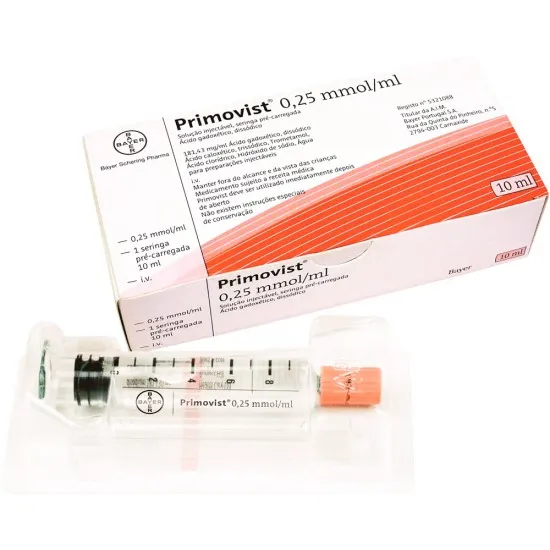
Table of Contents
- Package Leaflet: Information for the User
- PRIMOVIST 0.25 mmol/ml injection solution
- 1. What Primovist is and what it is used for
- 2. What you need to know before receiving Primovist
- Package Leaflet: Information for the User
- PRIMOVIST 0.25 mmol/ml solution for injection, pre-filled syringe
- 1. What Primovist is and what it is used for
- 2. What you need to know before receiving Primovist
- 3. How to use Primovist
- 4. Possible side effects
- 5. How to store Primovist
- 6. Package Contents and Other Information
Package Leaflet: Information for the User
PRIMOVIST 0.25 mmol/ml injection solution
gadoxetate disodium
Please read this leaflet carefully before being given this medicine because it
contains important information for you.
- Keep this leaflet. You may need to read it again.
- If you have any questions, ask the doctor administering Primovist to you.
- If you experience any side effects, including those not listed in this leaflet, tell your doctor. See section 4.
Contents of this leaflet:
- What Primovist is and what it is used for
- What you need to know before being given Primovist
- How to use Primovist
- Possible side effects
- How to store Primovist
- Contents of the pack and other information
1. What Primovist is and what it is used for
Primovist is a contrast agent indicated for liver imaging in magnetic resonance (MR) diagnostics.
It is used to facilitate the detection and diagnosis of abnormalities that may be found in the liver.
It allows for better assessment of liver abnormalities in terms of number, size, and distribution.
Primovist can also help the physician determine the nature of these abnormalities, thereby increasing diagnostic confidence.
Primovist is an injectable solution for intravenous use and is a medicinal product intended solely for diagnostic use.
MR is a diagnostic technique that generates images by detecting water molecules in normal and abnormal tissues, using a complex system of magnets and radio waves.
2. What you need to know before receiving Primovist
Do not use Primovist
- if you are allergic to gadoxetate disodium or to any of the excipients of this medicine (listed in section 6.)
Warnings and precautions
Talk to your doctor before receiving Primovist if you:
- have or have had asthma or an allergy such as hay fever, hives
- have previously experienced a reaction to contrast agents
- have severely reduced kidney function. The use of certain gadolinium-containing contrast agents in patients with this condition has been associated with a disease called Nephrogenic Systemic Fibrosis (NSF).
NSF
is a disease that causes thickening and hardening of the skin and connective tissues. NSF
can lead to immobility, muscle weakness, or damage to the function of internal organs, which
can potentially be life-threatening.
- have a serious heart or blood vessel disease
- have low levels of potassium
- you or someone in your family has had a problem with the electrical conduction of the heart, known as long QT syndrome
- have had heart rhythm disturbances after taking medicines
- have a cardiac pacemaker or any metallic implants or clips
After using Primovist, allergic-type reactions may occur, including delayed reactions occurring hours or
days later. See section 4.
Inform your doctor if:
- your kidneys are not working properly
- you have recently had or are scheduled to receive a liver transplant soon
Your doctor may decide to perform a blood test to assess whether your kidneys are functioning
correctly before deciding to use Primovist, especially if you are 65 years of age or older.
Accumulation in the body
The action of Primovist is due to a metal called gadolinium. Studies have shown that small
amounts of gadolinium may remain in the body, including the brain. No adverse effects due to the retention of gadolinium in the brain have been observed.
Children and adolescents
The safety and efficacy of Primovist have not been established in patients under 18 years of age due to limited experience with its use. Further information is provided at the end of this leaflet.
Other medicines and Primovist
Inform your doctor if you are taking, have recently taken, or might take any other
medicines. These include in particular:
- beta-blockers, medicines used to treat high blood pressure or other heart conditions
- medicines that alter the rhythm or rate of the heartbeat (such as amiodarone, sotalol)
- rifampicin: a medicine used to treat tuberculosis or certain other infections
Pregnancy and breastfeeding
Pregnancy
Gadoxetic acid may cross the placenta. It is not known whether this affects the baby.
Inform your doctor if you think you may be pregnant or if you are planning a pregnancy. Primovist should not
be used during pregnancy unless strictly necessary.
Breastfeeding
Inform your doctor if you are breastfeeding or intend to start breastfeeding. Your doctor will decide whether you can continue breastfeeding or whether you should interrupt breastfeeding for a period of 24 hours after administration of Primovist.
Driving and using machines
Primovist does not affect the ability to drive or use machinery.
Primovist contains sodium
This medicine contains 82 mg of sodium (the main component of table salt) per dose based on the
amount administered to a 70 kg person. This corresponds to 4.1% of the maximum
recommended daily dietary intake for an adult.
- How to use Primovist
Primovist is injected into a vein using a fine needle. Primovist will be administered to you immediately
before the magnetic resonance imaging (MRI) examination.
After the injection, you will be monitored for at least 30 minutes.
The recommended dose is
0.1 ml of Primovist per kg of body weight.
Dosing in special patient populations
The use of Primovist is not recommended in patients with severe kidney problems and in patients who have
recently had or are about to undergo a liver transplant. However, if use is required, you should receive only one dose of Primovist during the examination and should not receive a second administration for at least 7 days.
Elderly
No dose adjustment is necessary if you are 65 years of age or older, but you may be given a
blood test to assess whether your kidneys are functioning correctly.
If you are given more Primovist than you should
Overdose is unlikely. However, if it does occur, your doctor will treat any symptoms that arise.
- Possible side effects
Like all medicines, this medicine can cause side effects, although not everybody gets them. Most of the side effects are mild to moderate.
If you experience any side effect, contact your doctor.
As with other contrast agents, rare cases of allergic-like reactions may occur. Delayed reactions may occur hours or days after administration of Primovist.
The most serious side effect in patients receiving Primovist is anaphylactic shock (a severe allergic-like reaction).
Contact your doctor immediately if you experience any of the following signs or have difficulty
breathing:
- low blood pressure
- swelling of the tongue, throat or face
- runny nose, sneezing, cough
- red, watery, itchy eyes
- stomach pain
- hives
- reduced sensation or sensitivity of the skin, itching, paleness
The following additional side effects may occur:
Common: may affect up to 1 in 10 people
- headache
- nausea
Uncommon: may affect up to 1 in 100 people - dizziness
- numbness and tingling
- changes in taste or smell
- facial flushing
- high blood pressure
- breathing difficulties
- vomiting
- dry mouth
- skin rash
- severe itching affecting the whole body or the eye
- back pain, chest pain
- injection site reactions such as
- burning, cold sensation, irritation, pain
- feeling of warmth
- chills
- fatigue
- feeling of abnormality
Rare: may affect up to 1 in 1,000 people
- inability to remain still or seated
- uncontrollable tremor
- sensation of increased heart rate
- irregular heartbeat (signs of cardiac arrest)
- mouth discomfort
- increased salivation
- skin rash with wheals or reddish spots
- increased sweating
- feeling of discomfort, general malaise
Not known: Frequency cannot be estimated from the available data
- rapid heartbeat
- restlessness
Laboratory values may be slightly altered shortly after administration of Primovist. If you provide
blood or urine samples, inform healthcare personnel if you have recently received Primovist.
Cases of nephrogenic systemic fibrosis (which causes hardening of the skin and may also affect soft tissues and internal organs) have been reported in association with the use of other gadolinium-containing contrast agents.
Reporting of side effects
If you experience any side effect, including those not listed in this leaflet, talk to your
doctor or pharmacist. You can also report side effects directly via the website
https://www.aifa.gov.it/content/segnalazioni-reazioni-avverse .
By reporting side effects, you can help provide more information on the safety of
this medicine.
- How to store Primovist
Keep this medicine out of the sight and reach of children.
Do not use this medicine after the expiry date which is stated on the vial and carton after Exp.
The expiry date refers to the last day of that month.
This medicine does not require any special storage conditions.
This medicine should be used immediately after opening.
It should be inspected visually before use. This medicine must not be used if there is marked discoloration, presence of particles, or if the container is damaged.
Do not dispose of any medicine via wastewater or household waste. Ask your pharmacist how to dispose of medicines no longer required. This will help protect the environment.
- Contents of the pack and other information
What Primovist contains
- The active substance is gadoxetate disodium. Each ml of injectable solution contains 0.25 mmol of gadoxetate disodium (equivalent to 181.43 mg of gadoxetate disodium).
- The other components are caloxetate trisodium, trometamol, sodium hydroxide and hydrochloric acid (both for pH adjustment), water for injections. 1 vial with 5.0 ml of solution contains 907 mg of gadoxetate disodium 1 vial with 7.5 ml of solution contains 1361 mg of gadoxetate disodium 1 vial with 10.0 ml of solution contains 1814 mg of gadoxetate disodium
Description of the appearance of Primovist and contents of the pack
Primovist is a clear, particle-free solution ranging from colourless to pale yellow. The packs contain 1, 5 or 10 vials with
5.0 ml of injectable solution (in a 6 ml vial)
7.5 ml of injectable solution (in a 10 ml vial)
10.0 ml of injectable solution (in a 10 ml vial)
Not all pack sizes may be marketed.
Marketing Authorisation Holder:
Bayer S.p.A.
Viale Certosa, 130
20156 Milan
Telephone: +39 02 3978 1
Manufacturer
Bayer AG
Muellerstrasse 178
13353 Berlin, Germany
This leaflet was last approved on
<--------------------------------------------------------------------------------------------------------------------------
The following information is intended exclusively for physicians or healthcare professionals:
- Renal function impairment Before administration of Primovist, it is recommended that all patients be screened for renal dysfunction with laboratory tests. Cases of nephrogenic systemic fibrosis (NSF) have been reported in association with the use of certain gadolinium-containing contrast agents in patients with severe acute or chronic renal failure (GFR < 30 ml/min/1.73m²). Patients undergoing liver transplantation are at particular risk since the incidence of acute renal failure is high in this patient group. Because NSF may occur with Primovist, its use should be avoided
- in patients with severe renal impairment
- in the perioperative period of liver transplantation unless diagnostic information is essential and cannot be obtained by non-contrast MRI. If the use of Primovist cannot be avoided, the dose must not exceed 0.025 mmol/kg body weight. No more than one dose should be administered during each examination. Due to the lack of information on repeated administrations, injections of Primovist must not be repeated unless the interval between them is at least 7 days.
Since renal clearance of gadoxetate may be impaired in elderly patients, screening for renal function is particularly important in patients aged 65 years and older.
Haemodialysis shortly after administration of Primovist may be helpful in removing Primovist
from the body. There is no evidence supporting the use of haemodialysis in the prevention or treatment of NSF in patients not already undergoing haemodialysis.
- Pregnancy and breastfeeding Primovist should not be used during pregnancy unless the clinical condition of the woman requires the use of gadoxetate.
The doctor and the breastfeeding mother should decide whether to continue or interrupt breastfeeding for 24 hours after administration of Primovist.
- Paediatric population An observational study was conducted in 52 paediatric patients aged over 2 months and under 18 years. The patients were candidates for liver MRI with Primovist to evaluate suspected or known focal liver lesions. Additional diagnostic information was obtained when contrast-enhanced liver MRI images were compared with non-contrast MRI images alone. Serious adverse events were reported; however, none of these events were assessed by the investigator as related to Primovist. Due to the retrospective nature and small sample size of the study, definitive conclusions regarding efficacy and safety in this population cannot be drawn.
- Before injection Primovist is a clear, particle-free solution ranging from colourless to pale yellow. The contrast agent must be inspected visually before use. Contrast agents must not be used if there is marked discoloration, presence of particles, or if the container is damaged.
- Administration Primovist must be administered undiluted as an intravenous bolus injection at a rate of 2 ml/sec. After injection, the cannula/venous line must be flushed with physiological saline solution (9 mg/ml).
- The patient must be monitored for at least 30 minutes after injection.
- Primovist must not be mixed with other medicines.
- Intramuscular administration must be strictly avoided.
- Use Primovist is a ready-to-use solution. Vials containing the contrast agent are not intended for multiple dose withdrawal. Primovist should be drawn into the syringe only immediately before use. The rubber stopper must never be punctured more than once. Any unused solution remaining after the examination must be disposed of in accordance with local regulations. Further information on the use of Primovist is provided in section 3 of the package leaflet.
The adhesive traceability label on the vials should be removed and affixed to the patient's documentation to allow accurate recording of the gadolinium-containing contrast agent used. The administered dose must also be recorded. If electronic documentation is used, the product name, batch number, and dose must be entered into the patient's electronic record.
Package Leaflet: Information for the User
PRIMOVIST 0.25 mmol/ml solution for injection, pre-filled syringe
gadoxetate disodium
Please read this leaflet carefully before you are given this medicine, as it contains important information for you.
- Keep this leaflet. You may need to read it again.
- If you have any questions, ask the doctor administering Primovist to you.
- If you experience any side effects, including those not listed in this leaflet, tell your doctor. See section 4.
Contents of this leaflet:
- What Primovist is and what it is used for
- What you need to know before administration of Primovist
- How to use Primovist
- Possible side effects
- How to store Primovist
- Contents of the pack and other information
1. What Primovist is and what it is used for
Primovist is a contrast agent indicated for liver imaging in magnetic resonance (MR). It is used to facilitate the detection and diagnosis of abnormalities that may be found in the liver. It enables a better assessment of liver abnormalities in terms of number, size, and distribution. Primovist can also help the physician determine the nature of these abnormalities, thereby increasing diagnostic confidence.
Primovist is an injectable solution for intravenous use and is a medicinal product intended solely for diagnostic use.
MR is a diagnostic technique that produces images by detecting water molecules in normal and abnormal tissues, using a complex system of magnets and radio waves.
2. What you need to know before receiving Primovist
Do not use Primovist
- if you are allergic to gadoxetic acid disodium or to any of the excipients of this medicine (listed in section 6)
Warnings and precautions
Please speak to your doctor before receiving Primovist if you:
- have had asthma or an allergic condition such as hay fever or hives
- have previously reacted to contrast agents
- have severely reduced kidney function. The use of some gadolinium-containing contrast agents in patients with this condition has been associated with a disease called Nephrogenic Systemic Fibrosis (NSF). NSF is a disease that causes thickening and hardening of the skin and connective tissues. NSF can lead to immobility, muscle weakness, or damage to the function of internal organs, which may potentially be life-threatening.
- have severe heart or blood vessel disease
- have low potassium levels
- have, or someone in your family has, a problem with the heart's electrical conduction known as long QT syndrome
- have had heart rhythm disturbances following the use of medicines
- have a cardiac pacemaker or any metallic implants or clips
Allergic-type reactions, including delayed reactions occurring hours or days later, may occur after the use of Primovist. See section 4.
Inform your doctor if:
- your kidneys are not functioning properly
- you have recently had or are scheduled to receive a liver transplant soon
Your doctor may decide to perform a blood test to assess whether your kidneys are functioning properly before deciding to use Primovist, especially if you are 65 years of age or older.
Accumulation in the body
The action of Primovist is due to a metal called gadolinium. Studies have shown that small amounts of gadolinium may remain in the body, including the brain. No adverse effects have been observed due to the retention of gadolinium in the brain.
Children and adolescents
The safety and efficacy of Primovist have not been established in patients under 18 years of age due to limited experience with its use. Further information is provided at the end of this leaflet.
Other medicines and Primovist
Inform your doctor if you are taking, have recently taken, or might take any other medicines. These include in particular:
- beta-blockers, medicines used to treat high blood pressure or other heart conditions
- medicines that alter heart rhythm or heart rate (such as amiodarone, sotalol)
- rifampicin, a medicine used to treat tuberculosis or certain other infections
Pregnancy and breastfeeding
Pregnancy
Gadoxetic acid may cross the placenta. It is not known whether this affects the unborn child.
Inform your doctor if you think you may be pregnant or if you are planning a pregnancy. Primovist must not be used during pregnancy unless strictly necessary.
Breastfeeding
Inform your doctor if you are breastfeeding or intend to breastfeed. Your doctor will decide whether you can continue breastfeeding or whether you should interrupt breastfeeding for a period of 24 hours after administration of Primovist.
Driving and using machines
Primovist does not affect the ability to drive or operate machinery.
Primovist contains sodium
This medicine contains 82 mg of sodium (a component of common table salt) per dose based on the amount administered to a 70 kg person. This corresponds to 4.1% of the maximum daily dietary intake recommended for an adult.
3. How to use Primovist
Primovist is injected into a vein using a fine needle. Primovist will be administered to you immediately
before the magnetic resonance imaging examination.
After the injection, you will be monitored for at least 30 minutes.
The recommended dose is
0.1 ml of Primovist per kg of body weight.
Dosing in special patient populations
The use of Primovist is not recommended in patients with severe kidney problems and in patients who have
recently had or are about to undergo a liver transplant. However, if use is required, only one dose of Primovist
should be given during the examination, and a second administration must not be given within at least 7 days.
Elderly
No dose adjustment is necessary if you are 65 years of age or older, but you may undergo a blood test to assess
whether your kidneys are functioning properly.
If you are given more Primovist than you should have
Overdose is unlikely. However, if it does occur, your doctor will treat any symptoms that may arise.
4. Possible side effects
Like all medicines, this medicine can cause side effects, although not everyone gets them. Most side effects are mild to moderate.
If you experience any side effect, contact your doctor.
As with other contrast agents, rare cases of allergic-like reactions may occur. Delayed reactions may occur hours or days after administration of Primovist.
The most serious side effect in patients receiving Primovist is anaphylactic shock (a severe allergic-like reaction).
Immediately inform your doctor if you experience any of the following signs or have difficulty breathing:
- low blood pressure
- swelling of the tongue, throat or face
- runny nose, sneezing, cough
- red, watery, itchy eyes
- stomach pain
- hives
- reduced sensation or skin sensitivity, itching, paleness
The following additional side effects may occur:
Common: may affect up to 1 in 10 people
- headache
- nausea
Uncommon: may affect up to 1 in 100 people
- dizziness
- numbness and tingling
- taste or smell disturbances
- facial flushing
- high blood pressure
- breathing difficulties
- vomiting
- dry mouth
- skin rash
- severe itching affecting the whole body or the eye
- back pain, chest pain
- injection site reactions such as
- burning, cold sensation, irritation, pain
- feeling of warmth
- chills
- fatigue
- feeling unwell
Rare: may affect up to 1 in 1,000 people
- inability to stay still or seated
- uncontrollable tremor
- sensation of increased heart rate
- irregular heartbeat (signs of cardiac arrest)
- mouth discomfort
- increased salivation
- skin rash with bumps or reddish spots
- increased sweating
- feeling of discomfort, general malaise
Not known: frequency cannot be estimated from the available data
- rapid heartbeat
- restlessness
Laboratory test results may be slightly altered shortly after administration of Primovist. If you provide blood or urine samples, inform healthcare personnel if you have recently received Primovist.
Cases of nephrogenic systemic fibrosis (which causes skin hardening and may also affect soft tissues and internal organs) have been reported in association with the use of other gadolinium-containing contrast agents.
Reporting of side effects
If you experience any side effect, including those not listed in this leaflet, talk to your doctor or pharmacist. You can also report side effects directly via the national reporting system at https://www.aifa.gov.it/content/segnalazioni-reazioni-avverse.
By reporting side effects, you can help provide more information on the safety of this medicine.
5. How to store Primovist
Keep this medicine out of the sight and reach of children.
Do not use this medicine after the expiry date which is stated on the syringe and carton after "Exp". The
expiry date refers to the last day of that month.
This medicine does not require any special storage conditions.
This medicine must be used immediately after opening.
It must be inspected visually before use. This medicine must not be used if there is marked discoloration,
presence of particles, or if the container is damaged.
Do not dispose of any medicine via wastewater or household waste. Ask your pharmacist how to dispose of
medicines you no longer use. This will help protect the environment.
6. Package Contents and Other Information
What Primovist Contains
- The active substance is gadoxetate disodium. Each ml of injectable solution contains 0.25 mmol of gadoxetate disodium (equivalent to 181.43 mg of gadoxetate disodium).
- The other components are trisodium caloxetate, trometamol, sodium hydroxide, and hydrochloric acid (both used for pH adjustment), and water for injections.
One pre-filled syringe containing 5.0 ml of solution contains 907 mg of gadoxetate disodium.
One pre-filled syringe containing 7.5 ml of solution contains 1361 mg of gadoxetate disodium [glass syringe only].
One pre-filled syringe containing 10.0 ml of solution contains 1814 mg of gadoxetate disodium.
Description of the Appearance of Primovist and Contents of the Package
Primovist is a clear, particle-free solution, colourless to slightly yellow. The packages contain 1, 5, or 10 pre-filled syringes with:
5.0 ml of injectable solution (in 10 ml glass/plastic pre-filled syringes)
7.5 ml of injectable solution (in 10 ml glass pre-filled syringes) [glass syringe only]
10.0 ml of injectable solution (in 10 ml glass/plastic pre-filled syringes)
Not all pack sizes may be marketed.
Marketing Authorization Holder:
Bayer S.p.A.
Viale Certosa, 130
20156 Milan, Italy
Manufacturer:
Bayer AG
Muellerstrasse 178
13353 Berlin, Germany
This leaflet was last approved on:
<--------------------------------------------------------------------------------------------------------------------------
The following information is intended exclusively for physicians or healthcare professionals:
- Renal Impairment
Before administration of Primovist, it is recommended that all patients be screened for renal dysfunction using laboratory tests.
Cases of nephrogenic systemic fibrosis (NSF) have been reported following the use of certain gadolinium-containing contrast agents in patients with severe acute or chronic renal insufficiency (GFR < 30 ml/min/1.73m²). Patients undergoing liver transplantation are at particular risk, as the incidence of acute renal failure is high in this patient group.
Since NSF may occur with Primovist, its use should be avoided:
- in patients with severe renal impairment
- in the perioperative period of liver transplantation, unless the diagnostic information is essential and cannot be obtained by non-contrast MRI.
If the use of Primovist cannot be avoided, the dose must not exceed 0.025 mmol/kg body weight. No more than one dose should be administered per examination. Due to lack of data on repeated administrations, repeated injections of Primovist should not be given unless at least 7 days have elapsed between doses.
As renal clearance of gadoxetate may be reduced in elderly patients, it is particularly important to screen patients aged 65 years and older for renal function.
Haemodialysis immediately after administration of Primovist may help remove Primovist from the body. However, there is no evidence supporting the use of haemodialysis for the prevention or treatment of NSF in patients not already undergoing haemodialysis.
- Pregnancy and Breastfeeding
Primovist must not be used during pregnancy unless the woman's clinical condition requires the use of gadoxetate.
The physician and the breastfeeding mother must decide whether to continue or interrupt breastfeeding for 24 hours after administration of Primovist.
-
Paediatric Population
An observational study was conducted in 52 paediatric patients aged over 2 months and under 18 years. The patients were candidates for liver MRI with Primovist to evaluate suspected or known focal liver lesions. Additional diagnostic information was obtained when contrast-enhanced MRI images were compared with non-contrast MRI images alone. Serious adverse events were reported; however, none were assessed by the investigator as related to Primovist. Due to the retrospective nature of the study and the small sample size, no definitive conclusions can be drawn regarding efficacy and safety in this population. -
Before Injection
Primovist is a clear, particle-free solution, colourless to slightly yellow. The contrast agent must be inspected visually before use. The contrast agent must not be used if there is a marked change in colour, if particles are present, or if the container is damaged.-
Administration
Primovist must be administered undiluted as a bolus injection via the intravenous route at a rate of 2 ml/sec. After injection, the cannula/IV line must be flushed with physiological saline (9 mg/ml). -
The patient must be observed for at least 30 minutes after injection.
-
Primovist must not be mixed with other medicinal products.
-
Intramuscular administration must be strictly avoided.
-
-
Use
Primovist is a ready-to-use solution. The pre-filled syringe must be prepared for injection immediately before the examination. The needle cap must be removed from the syringe immediately before use. Any unused solution must be disposed of in accordance with local regulations.
The adhesive traceability label on the syringes must be removed and affixed to the patient's documentation to ensure accurate recording of the gadolinium-containing contrast agent used. The administered dose must also be recorded. If electronic documentation is used, the product name, batch number, and dose must be entered into the patient's electronic record.
Glass Syringe Only:
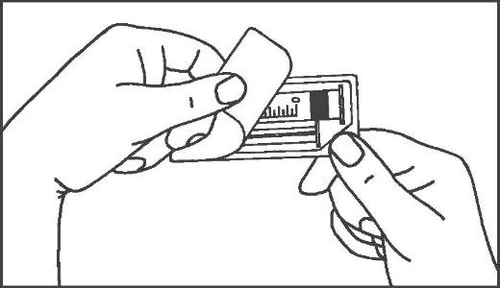
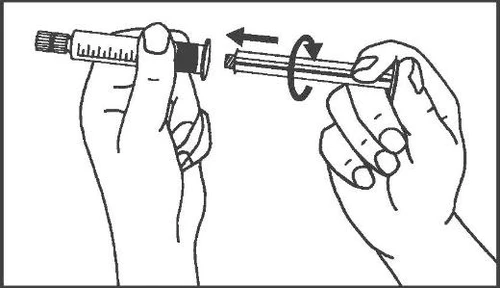
- Open the package 2. Screw the plunger into the syringe
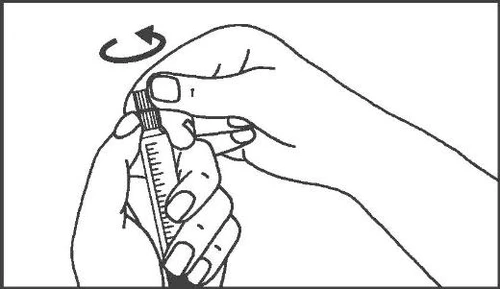
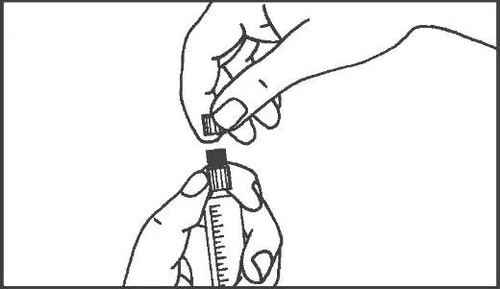
- Break off the protective cap 4. Remove the protective cap
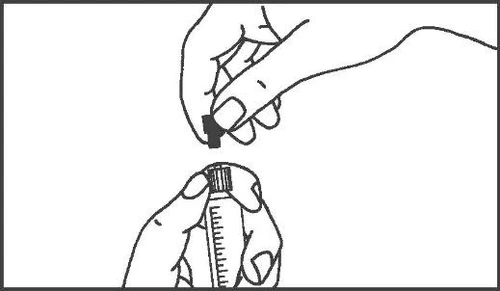
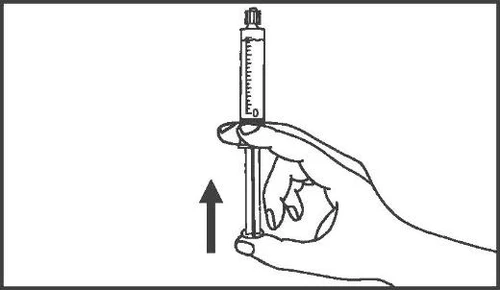
- Remove the rubber stopper 6. Remove air from the syringe
Plastic Syringe Only
Manual Injection Automatic Injector Injection
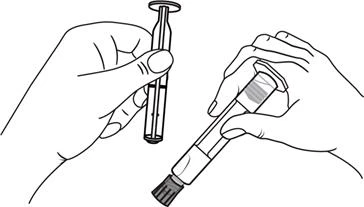
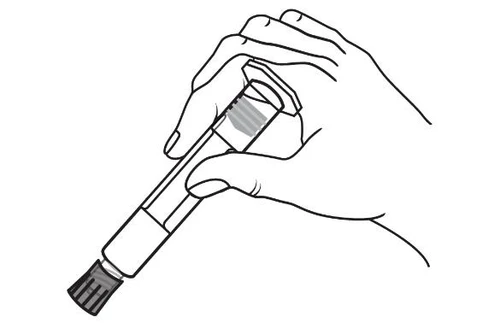
- Remove the syringe and plunger 1. Remove the syringe
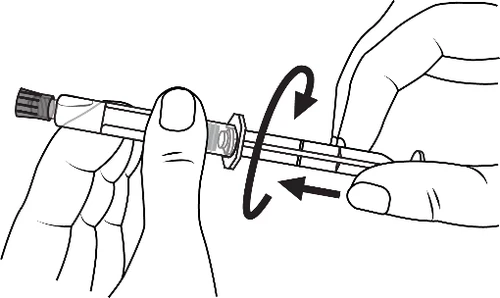
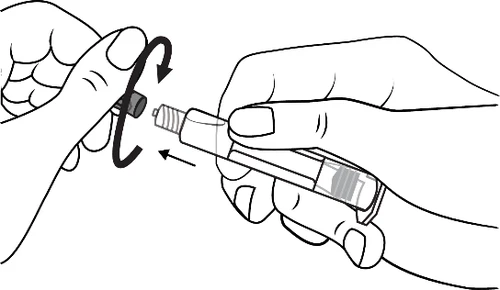
- Open the cap by twisting it
- Screw the plunger clockwise into the syringe
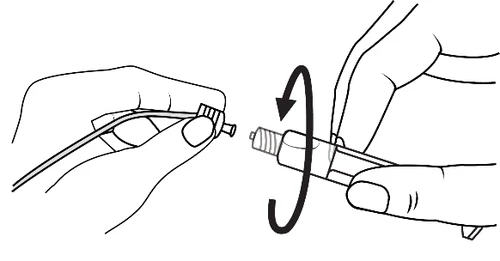
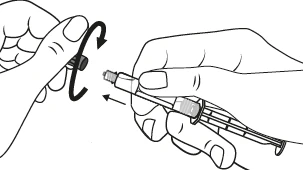
- Open the cap by twisting it
- Connect the syringe tip to the tubing system by turning it clockwise. Follow the manufacturer's instructions for the device.
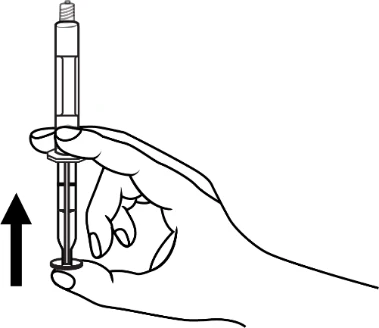
- Remove air from the syringe