Prilagin
Italy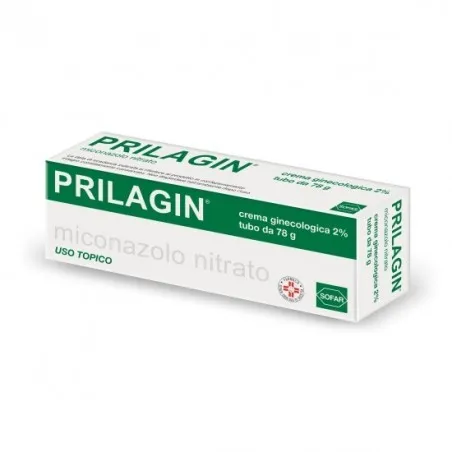
Table of Contents
- Package leaflet: Information for the user
- Prilagin vaginal capsules 400 mg, 1,200 mg vaginal capsules
- 1. What Prilagin is and what it is used for
- 2. What you need to know before using Prilagin
- 3. How to use Prilagin
- 4. Possible side effects
- 5. How to store Prilagin
- 6. Package contents and other information
- Patient information leaflet
- Prilagin 2% dermatological cream
- 1. What Prilagin is and what it is used for
- 2. What you need to know before using Prilagin
- 3. How to use Prilagin
- 4. Possible side effects
- 5. How to store Prilagin
- 6. Package contents and other information
- Package leaflet: information for the user
- Prilagin gynecological cream 2%
- 1. What Prilagin is and what it is used for
- 2. What you should know before using Prilagin
- 3. How to use Prilagin
- 4. Possible side effects
- 5. How to store Prilagin
- 6. Package contents and other information
- Patient Information Leaflet
- Prilagin 2% cutaneous emulsion
- 1. What Prilagin is and what it is used for
- 2. What you need to know before using Prilagin
- 3. How to use Prilagin
- 4. Possible adverse reactions
- 5. How to store Prilagin
- 6. Package contents and other information
Package leaflet: Information for the user
Prilagin vaginal capsules 400 mg, 1,200 mg vaginal capsules
Miconazole nitrate
Please read this leaflet carefully before using this medicine because it contains important information for you.
Always use this medicine exactly as described in this leaflet or as your doctor or pharmacist has instructed you.
- Keep this leaflet. You may need to read it again.
- If you need more information or advice, consult your pharmacist.
- If you experience any side effects, including those not listed in this leaflet, consult your doctor or pharmacist. See section 4.
- Consult your doctor if you do not notice any improvement or if your symptoms worsen after a short period of treatment.
Contents of this leaflet:
- What Prilagin is and what it is used for
- What you need to know before using Prilagin
- How to use Prilagin
- Possible side effects
- How to store Prilagin
- Contents of the pack and other information
1. What Prilagin is and what it is used for
Prilagin vaginal capsules contain miconazole, an active substance belonging to a class of medicines known as “antiseptics and anti-infectives”. These medicines work by stopping the growth of, or killing, both fungi and Gram-positive bacteria, which are causes of infections.
Prilagin vaginal capsules are indicated for the treatment of vulval and vaginal infections caused by a fungus called Candida, including cases where other infections due to Gram-positive germs are also present.
Prilagin rapidly relieves itching, which often accompanies infections caused by skin fungi (dermatophytes) and by Candida, even before the cream acts on the infection itself.
2. What you need to know before using Prilagin
Do not use Prilagin
- if you are allergic to miconazole, to other similar antifungal medicines, or to any of the other ingredients of this medicine (listed in section 6).
Warnings and precautions
Talk to your doctor or pharmacist before using Prilagin.
Prilagin must not be used together with latex condoms or diaphragms. Prilagin may damage latex-based products and prevent them from working properly.
Other medicines and Prilagin
Tell your doctor or pharmacist if you are taking, have recently taken, or might take any other medicines.
No interactions with other medicines are known.
Pregnancy and breastfeeding
If you are pregnant, think you may be pregnant, planning a pregnancy, or are breastfeeding, ask your doctor or pharmacist for advice before using this medicine.
During pregnancy, use Prilagin only if clearly needed and under medical supervision.
Driving and using machines
Prilagin has no effect on the ability to drive vehicles or use machinery.
Prilagin contains sodium ethyl p-hydroxybenzoate and sodium propyl p-hydroxybenzoate, which may cause allergic reactions (including delayed reactions).
3. How to use Prilagin
Use this medicine exactly as stated in this leaflet or as directed by your doctor or pharmacist. If you have any doubts, consult your doctor or pharmacist.
Vaginal capsules 400 mg
Insert deeply into the vagina one capsule daily, in the evening before going to bed.
The treatment should last for 3 days.
Vaginal capsules 1,200 mg
Insert deeply into the vagina one capsule, in the evening before going to bed.
If the infection recurs, your doctor may advise you to repeat the treatment with another 1,200 mg capsule.
If symptoms are severe or if you are pregnant, your doctor may immediately prescribe a treatment with one 1,200 mg capsule daily (one capsule inserted vaginally in the evening) for 2 days.
Do not stop the treatment even if symptoms disappear quickly or during your menstrual period.
If you use more Prilagin than you should
Cases of overdose have not been reported. In case of accidental ingestion/overdose of Prilagin, contact your doctor immediately or go to the nearest hospital.
If you forget to use Prilagin
Do not use a double dose to make up for the forgotten dose.
If you stop using Prilagin
If you have any doubts about the use of this medicine, consult your doctor or pharmacist.
4. Possible side effects
Like all medicines, this medicine can cause side effects, although not everyone will experience them.
Discontinue treatment with Prilagin and contact your doctor immediately if you experience any of the
following side effects, which usually occur at the beginning of treatment:
- vaginal burning or irritation;
- acute abdominal pain below the navel area (pelvic cramps).
Rare side effects (may affect up to 1 in 1,000 people)
- skin rashes;
- headache.
Reporting of side effects
If you experience any side effect, including those not listed in this leaflet, talk to your doctor or pharmacist.
You can also report side effects directly via the national reporting system at: http://www.aifa.gov.it/content/segnalazioni-reazioni-avverse .
By reporting side effects, you can help provide more information on the safety of this medicine.
5. How to store Prilagin
Keep this medicine out of the sight and reach of children.
Do not use this medicine after the expiry date stated on the pack after "Exp.". The expiry date refers to the last day of that month.
This medicine does not require any special storage conditions.
Do not dispose of any medicine via wastewater or household waste. Ask your pharmacist how to dispose of medicines you no longer use. This will help protect the environment.
6. Package contents and other information
What Prilagin contains
The active substance in Prilagin vaginal capsules is miconazole nitrate.
Each 400 mg vaginal capsule contains 400 mg of miconazole nitrate.
The other components are paraffin oil, white soft paraffin, gelatin, glycerin, titanium dioxide, sodium ethyl p-hydroxybenzoate, sodium propyl p-hydroxybenzoate.
Each 1,200 mg vaginal capsule contains 1,200 mg of miconazole nitrate.
The other components are paraffin oil, white soft paraffin, soybean lecithin, gelatin, glycerin, titanium dioxide, sodium ethyl p-hydroxybenzoate, sodium propyl p-hydroxybenzoate.
Description of the appearance of Prilagin and package contents
Prilagin is presented as vaginal capsules.
The pack of Prilagin 400 mg vaginal capsules contains 6 capsules in two polyethylene/aluminum blisters.
The pack of Prilagin 1,200 mg vaginal capsules contains 2 capsules in one polyethylene/aluminum blister.
Marketing Authorisation Holder and Manufacturer
Marketing Authorisation Holder
Alfasigma S.p.A. - Via Ragazzi del '99, n. 5 - 40133 Bologna (BO)
Manufacturer
Cardinal Health Italy 407 S.p.A.
Via Nettunense km 20,100,
04011 Aprilia (LT)
Italy
Patient information leaflet
Prilagin 2% dermatological cream
Miconazole nitrate
Please read this leaflet carefully before using this medicine because it contains important information for you.
Always use this medicine exactly as described in this leaflet or as your doctor or pharmacist has instructed you.
- Keep this leaflet. You may need to read it again.
- If you need more information or advice, consult your pharmacist.
- If you experience any side effects, including those not listed in this leaflet, contact your doctor or pharmacist. See section 4.
- Contact your doctor if you do not notice improvement or if you notice worsening of symptoms after a short period of treatment.
Contents of this leaflet:
- What Prilagin is and what it is used for
- What you need to know before using Prilagin
- How to use Prilagin
- Possible side effects
- How to store Prilagin
- Contents of the pack and other information
1. What Prilagin is and what it is used for
Prilagin 2% dermatological cream contains miconazole nitrate, an active substance belonging to a group of medicines called "Topical antifungals". These medicines work by stopping the growth of or killing fungi, and possibly Gram-positive bacteria, which are responsible for infections.
Prilagin 2% dermatological cream is indicated for the treatment of skin and nail infections caused by dermatophytes, a group of fungi that feed on keratin present in the stratum corneum of the epidermis, hair, or nails, or by fungi such as Candida, even when infection is present.
Prilagin 2% dermatological cream is used for the treatment of:
- infections caused by dermatophytes, such as:
- tinea pedis or athlete’s foot, an infection affecting the feet;
- tinea manum, an infection affecting the hands;
- tinea corporis, an infection affecting glabrous skin (hairless areas of the body);
- tinea cruris, an infection affecting the groin folds;
- tinea unguium, an infection affecting the nails;
- infections caused by bacteria and/or fungi, such as:
- paronychia, infection of the skin adjacent to the nails;
- angular cheilitis or perlèche, infection affecting one or both corners of the mouth.
Prilagin 2% dermatological cream also exerts a very rapid action on itching, which frequently accompanies these infections.
Consult your doctor if you do not notice any improvement or if you observe a worsening of symptoms after a short period of treatment.
2. What you need to know before using Prilagin
Do not use Prilagin
- if you are allergic to miconazole nitrate, or to other similar antifungal medicines, or to any of the other ingredients of this medicine (listed in section 6).
Warnings and precautions
Talk to your doctor or pharmacist before using Prilagin.
To achieve better treatment results, it is recommended to:
- wash the affected areas or lesions daily;
- regularly change and disinfect socks and shoes. Prilagin does not stain the skin or clothing. Avoid contact with the eyes.
Other medicines and Prilagin
Tell your doctor or pharmacist if you are taking, have recently taken, or might take any other medicines.
No interactions with other medicines are known.
Pregnancy and breastfeeding
If you are pregnant, suspect you may be pregnant, are planning a pregnancy, or are breastfeeding, consult your doctor or pharmacist before using this medicine.
During pregnancy, use Prilagin only if clearly needed and under medical supervision.
Driving and using machines
Prilagin has no effect on the ability to drive or operate machinery.
Prilagin contains
- butylated hydroxyanisole, which may cause local skin reactions (e.g. contact dermatitis) or irritation of the eyes and mucous membranes;
- benzoic acid, which is mildly irritating to the skin, eyes, and mucous membranes.
3. How to use Prilagin
Use this medicine exactly as stated in this leaflet or as instructed by your doctor or pharmacist. If you have any doubts, consult your doctor or pharmacist.
Skin infections
Apply 1 cm of cream to the affected lesions, 1–2 times daily, then spread it gently with your fingers.
Treatment should continue uninterrupted until the lesions are completely healed (usually 2 to 5 weeks).
Infections of the nails
Cut infected nails as short as possible.
Apply a small amount of cream to the infected nail, 1–2 times daily, and spread it gently with your fingers. Then cover the nail with an airtight dressing (occlusive dressing).
Treatment should continue without interruption, even after the infected nail falls off (which usually occurs after 2–3 weeks), until the nail has completely regrown and the lesions have healed (usually no less than 2 months).
If you use more Prilagin than you should
Cases of overdose have not been reported. In case of accidental ingestion/overdose of Prilagin, contact your doctor immediately or go to the nearest hospital.
If you forget to use Prilagin
Do not use a double dose to make up for the missed dose.
If you stop using Prilagin
If you have any doubts about using this medicine, consult your doctor or pharmacist.
4. Possible side effects
Like all medicines, this medicine can cause side effects, although not everyone experiences them.
Treatment with miconazole is generally well tolerated.
The use of Prilagin, especially if prolonged, may lead to sensitization reactions. If this occurs, discontinue
treatment with Prilagin and contact your doctor immediately.
Reporting of side effects
If you experience any side effect, including those not listed in this leaflet, consult your doctor or pharmacist.
You may also report side effects directly through the national reporting system at the following address: http://www.aifa.gov.it/content/segnalazioni-reazioni-avverse.
By reporting side effects, you can help provide more information on the safety of this medicine.
5. How to store Prilagin
Keep this medicine out of the sight and reach of children.
Do not use this medicine after the expiry date stated on the packaging after "Exp.". The expiry date refers to the last day of that month.
This medicine does not require any special storage conditions.
Do not dispose of medicines via wastewater or household waste. Ask your pharmacist how to dispose of medicines you no longer use. This will help protect the environment.
6. Package contents and other information
What Prilagin contains
- The active substance is miconazole nitrate. Each gram of cream contains 20 mg of miconazole nitrate;
- The other components are ethylene glycol palmitostearate and polyethylene glycols, polyoxyethylene glycolated glycerides, liquid paraffin, butylated hydroxyanisole, benzoic acid, purified water.
Description of the appearance of Prilagin and package contents
Prilagin is a cream supplied in a 30 g aluminium tube.
Marketing Authorisation Holder and Manufacturer
Marketing Authorisation Holder
Alfasigma S.p.A. - Via Ragazzi del '99, n. 5 - 40133 Bologna (BO)
Manufacturer
SOFAR S.p.A.
Via Firenze 40,
20060 Trezzano Rosa (MI)
Italy
Package leaflet: information for the user
Prilagin gynecological cream 2%
Miconazole nitrate
Please read this leaflet carefully before using this medicine, as it contains important information for you.
Always use this medicine exactly as described in this leaflet or as your doctor or pharmacist has instructed you.
- Keep this leaflet. You may need to read it again.
- If you need more information or advice, consult your pharmacist.
- If you experience any of the side effects, including those not listed in this leaflet, contact your doctor or pharmacist. See section 4.
- Contact your doctor if you do not notice improvement or if you experience worsening of symptoms after 10 days.
Contents of this leaflet:
- What Prilagin is and what it is used for
- What you need to know before using Prilagin
- How to use Prilagin
- Possible side effects
- How to store Prilagin
- Contents of the pack and other information
1. What Prilagin is and what it is used for
Prilagin vaginal cream contains miconazole, an active substance belonging to the family of medicines known as anti-infectives and antiseptics. These medicines work by stopping the growth of, or killing, both fungi and Gram-positive bacteria that cause infections.
Prilagin vaginal cream is indicated for the treatment of infections of the vulva and vagina caused by a fungus called Candida, even when other infections due to Gram-positive germs are present.
Prilagin acts rapidly on the itching often associated with infections caused by fungi infecting the skin (dermatophytes) and by Candida, even before the cream acts directly on the infection itself.
2. What you should know before using Prilagin
Do not use Prilagin
- if you are allergic to miconazole, or to other similar antifungal medicines, or to any of the other ingredients of this medicine (listed in section 6)
Warnings and precautions
Talk to your doctor or pharmacist before using Prilagin.
Prilagin must not be used together with latex condoms or diaphragms. Prilagin may damage latex-based products and prevent them from working properly.
Other medicines and Prilagin
Tell your doctor or pharmacist if you are taking, have recently taken, or might take any other medicines.
No interactions with other medicines are known.
Pregnancy and breastfeeding
If you are pregnant, think you might be pregnant, are planning to become pregnant, or are breastfeeding, consult your doctor or pharmacist before using this medicine.
During pregnancy, use Prilagin only if clearly needed and under medical supervision.
Driving and using machines
Prilagin has no influence on the ability to drive or use machinery.
Prilagin contains
- benzoic acid, which is slightly irritating to the skin, eyes, and mucous membranes;
- butylated hydroxyanisole, which may cause local skin reactions (e.g. contact dermatitis) or irritation of the eyes and mucous membranes.
3. How to use Prilagin
Use this medicine exactly as described in this leaflet or as directed by your doctor or pharmacist. If you have any doubts, consult your doctor or pharmacist.
Insert the contents of the applicator (5 g of cream) deeply into the vagina once daily, in the evening before going to bed.
Treatment should continue for at least 10 days, even if itching and vaginal discharge (leucorrhoea) have already disappeared.
If you do not notice any improvement after 10 days, consult your doctor, who will recommend repeating diagnostic tests to confirm the diagnosis.
Instructions for using Prilagin vaginal cream:
- Screw the applicator onto the tube of cream;
- Gently squeeze the tube at the end to fill the applicator with cream: if the plunger offers resistance, pull it gently. Unless otherwise instructed by your doctor, the applicator should be filled completely;
- Remove the applicator and immediately close the tube with the cap;
- While lying down, with knees raised and apart, gently insert the applicator as deeply as possible into the vagina. Push the plunger fully to allow the cream to be released from the applicator. Then remove the applicator without touching the plunger.
The applicator must always be perfectly clean. After each use, wash it thoroughly with lukewarm water and soap. If your doctor has advised you to sterilize the applicator for specific reasons, do not use hot water above 50°C or ether.
If you use more Prilagin than you should
Cases of overdose have not been reported. In the event of accidental ingestion/overdose of Prilagin, contact your doctor immediately or go to the nearest hospital.
If you forget to use Prilagin
Do not use a double dose to make up for the missed dose.
If you stop using Prilagin
If you have any questions about the use of this medicine, consult your doctor or pharmacist.
4. Possible side effects
Like all medicines, this medicine can cause side effects, although not everybody gets them.
Discontinue treatment with Prilagin and contact your doctor immediately if you experience any of the following side effects, which are usually observed at the beginning of treatment:
- vaginal burning or irritation;
- acute abdominal pain in the area below the navel (pelvic cramps).
Rare side effects (may affect up to 1 in 1,000 people)
- skin rashes;
- headache.
Reporting of side effects
If you get any side effects, including ones not listed in this leaflet, talk to your doctor or pharmacist. You can also report side effects directly via the national reporting system at: http://www.aifa.gov.it/content/segnalazioni-reazioni-avverse.
By reporting side effects, you can help provide more information on the safety of this medicine.
5. How to store Prilagin
Keep this medicine out of the sight and reach of children.
Do not use this medicine after the expiry date stated on the packaging after "Exp.". The expiry date refers to the last day of that month.
This medicine does not require any special storage conditions.
Do not dispose of medicines via wastewater or household waste. Ask your pharmacist how to dispose of medicines you no longer use. This will help protect the environment.
6. Package contents and other information
What Prilagin contains
- The active substance is miconazole nitrate. Each gram of cream contains 20 mg of miconazole nitrate;
- The other components are ethylene glycol palmitostearate and polyethylene glycols, polyoxyethylene glycolyzed glycerides, liquid paraffin, butylhydroxyanisole, benzoic acid, purified water.
Description of the appearance of Prilagin and the contents of the pack
Prilagin is a vaginal cream supplied in an aluminium tube of 78 g with cap.
The pack includes a reusable polyethylene applicator.
Marketing Authorization Holder and Manufacturer
Marketing Authorization Holder
Alfasigma S.p.A. - Via Ragazzi del '99, n. 5 - 40133 Bologna (BO)
Manufacturer
SOFAR S.p.A.
Via Firenze 40,
20060 Trezzano Rosa (MI)
Italy
Patient Information Leaflet
Prilagin 2% cutaneous emulsion
Miconazole nitrate
Please read this leaflet carefully before using this medicine because it contains important information for you.
Use this medicine exactly as described in this leaflet or as your doctor or pharmacist has instructed you.
- Keep this leaflet. You may need to read it again.
- If you need more information or advice, consult your pharmacist.
- If you experience any of the side effects listed in this leaflet, or any that are not listed, contact your doctor or pharmacist. See section 4.
- Contact your doctor if you do not notice improvement or if your symptoms worsen after a short period of treatment.
Contents of this leaflet:
- What Prilagin is and what it is used for
- What you need to know before using Prilagin
- How to use Prilagin
- Possible side effects
- How to store Prilagin
- Contents of the pack and other information
1. What Prilagin is and what it is used for
Prilagin cutaneous emulsion 2% contains miconazole nitrate, an active substance belonging to a class of medicines called "Topical antifungal agents". These medicines work by stopping the growth of, or killing, fungi and possibly Gram-positive bacteria that cause infections.
Prilagin cutaneous emulsion is indicated for the treatment of skin and nail infections caused by dermatophytes, a group of fungi that feed on keratin present in the stratum corneum of the epidermis, hair, or nails, or by fungi such as Candida, even when a bacterial infection is present.
Prilagin cutaneous emulsion is used for the treatment of:
- infections caused by dermatophytes, such as:
- tinea pedis or athlete's foot, an infection affecting the feet;
- tinea manuum, an infection affecting the hands;
- tinea corporis, an infection affecting glabrous skin (areas of the body without hair);
- tinea cruris, an infection affecting the groin folds;
- tinea unguium, an infection affecting the nails;
- infections caused by bacteria and/or fungi, such as:
- paronychia, infection of the skin adjacent to the nails;
- angular stomatitis or perlèche, infection of one or both corners of the mouth;
- otitis externa, inflammation of the external auditory canal.
Prilagin cutaneous emulsion also provides rapid relief from itching, which frequently accompanies these infections.
Consult your doctor if you do not notice any improvement or if you notice worsening of symptoms after a short period of treatment.
2. What you need to know before using Prilagin
Do not use Prilagin
- if you are allergic to miconazole nitrate, or to other similar antifungal medicines, or to any of the other ingredients of this medicine (listed in section 6).
Warnings and precautions
Talk to your doctor or pharmacist before using Prilagin.
To achieve the best treatment outcome, it is recommended to:
- wash the affected areas or infected parts daily;
- regularly change and disinfect socks and shoes.
Prilagin does not stain the skin or clothing.
Avoid contact with the eyes.
Other medicines and Prilagin
Inform your doctor or pharmacist if you are taking, have recently taken, or might take any other medicines.
No interactions with other medicines are known.
Pregnancy and breastfeeding
If you are pregnant, think you might be pregnant, planning a pregnancy, or breastfeeding, consult your doctor or pharmacist before using this medicine.
During pregnancy, use Prilagin only if clearly needed and under medical supervision.
Driving and using machines
Prilagin has no effect on the ability to drive vehicles or operate machinery.
Prilagin contains
- butylhydroxyanisole, which may cause local skin reactions (e.g. contact dermatitis) or irritation of the eyes and mucous membranes;
- benzoic acid, which is slightly irritating to the skin, eyes, and mucous membranes.
3. How to use Prilagin
Use this medicine exactly as stated in this leaflet or as instructed by your doctor or pharmacist. If you have any doubts, consult your doctor or pharmacist.
Skin infections
Apply a few drops of the cutaneous emulsion to the affected areas, 1–2 times daily, and then spread it gently with your fingers.
Treatment should be continued without interruption until the lesions are completely healed (usually 2 to 5 weeks).
Infections of the nails
Cut infected nails as short as possible.
Apply a small amount of cutaneous emulsion to the infected nail, 1–2 times daily, and spread it gently with your fingers. Then cover the nail with an airtight dressing (occlusive dressing).
Treatment must be continued without interruption, even after the infected nail has fallen off (this usually occurs after 2–3 weeks), until the nail has completely regrown and the lesions have healed (usually no less than 2 months).
External otitis
Insert a small amount of cutaneous emulsion into the ear canal, twice daily, until complete healing (usually 2–3 weeks).
If you use more Prilagin than you should
Cases of overdose have not been reported. In case of accidental ingestion or overdose, contact your doctor immediately or go to the nearest hospital.
If you forget to use Prilagin
Do not use a double dose to make up for the forgotten dose.
If you stop using Prilagin
If you have any doubts about using this medicine, consult your doctor or pharmacist.
4. Possible adverse reactions
Like all medicines, this medicine can cause adverse reactions, although not everybody will experience them.
Treatment with miconazole is generally well tolerated.
Use of Prilagin, especially if prolonged, may lead to sensitization reactions. If this occurs, discontinue treatment with Prilagin and contact your doctor immediately.
Reporting of adverse reactions
If you experience any adverse reaction, including those not listed in this leaflet, talk to your doctor or pharmacist.
You may also report adverse reactions directly through the national reporting system at: http://www.aifa.gov.it/content/segnalazioni-reazioni-avverse .
By reporting adverse reactions, you can help provide more information on the safety of this medicine.
5. How to store Prilagin
Keep this medicine out of the sight and reach of children.
Do not use this medicine after the expiry date stated on the packaging after "Exp.". The expiry date refers to the last day of that month.
This medicine does not require any special storage conditions.
Do not dispose of medicines via wastewater or household waste. Ask your pharmacist how to dispose of medicines you no longer use. This will help protect the environment.
6. Package contents and other information
What Prilagin contains
- The active substance is miconazole nitrate. Each gram of cutaneous emulsion contains 20 mg of miconazole nitrate;
- The other components are polyethylene glycol stearate and polyethylene glycols, polyoxethylated glycolyzed glycerides, liquid paraffin, butylhydroxyanisole, benzoic acid, purified water.
Description of the appearance of Prilagin and contents of the pack
Prilagin is a cutaneous emulsion contained in a 30 g polyethylene bottle with a dosing nozzle and cap.
Marketing Authorisation Holder and Manufacturer
Marketing Authorisation Holder
Alfasigma S.p.A. - Via Ragazzi del '99, n. 5 - 40133 Bologna (BO)
Manufacturer
SOFAR S.p.A.
Via Firenze 40,
20060 Trezzano Rosa (MI)
Italy