Pravastatin Zentiva
Italy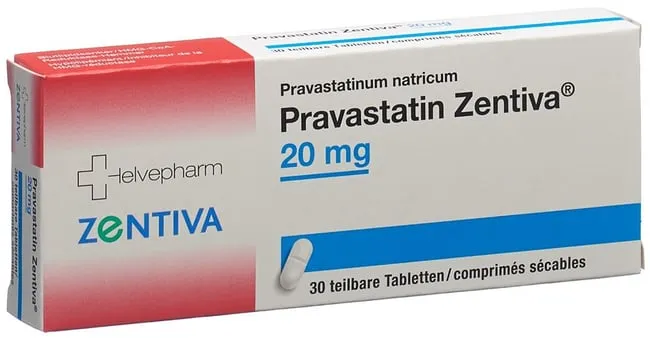
Table of Contents
- PACKAGE LEAFLET: INFORMATION FOR THE PATIENT
- PRAVASTATIN ZENTIVA 20 mg tablets, 40 mg tablets
- 1. What Pravastatina Zentiva is and what it is used for
- 2. WHAT YOU NEED TO KNOW BEFORE TAKING PRAVASTATIN ZENTIVA
- 3. How to take Pravastatin Zentiva
- 4. POSSIBLE ADVERSE REACTIONS
- 5. How to store Pravastatin Zentiva
PACKAGE LEAFLET: INFORMATION FOR THE PATIENT
PRAVASTATIN ZENTIVA 20 mg tablets, 40 mg tablets
Generic medicine
Please read all of this leaflet carefully before taking this medicine because it contains
important information for you.
Keep this leaflet. You may need to read it again.
If you have any questions, ask your doctor or pharmacist.
This medicine has been prescribed for you only. Do not give it to other people, even if
their symptoms are the same as yours, because it could be harmful.
If you experience any side effect, including any not listed in this leaflet, talk to your doctor or pharmacist. See section 4.
Contents of this leaflet:
- What Pravastatin Zentiva is and what it is used for
- What you need to know before taking Pravastatin Zentiva
- How to take Pravastatin Zentiva
- Possible side effects
- How to store Pravastatin Zentiva
- Contents of the pack and other information
1. What Pravastatina Zentiva is and what it is used for
The name of the medicine is Pravastatina Zentiva 20 mg and 40 mg tablets.
Each tablet contains 20 mg or 40 mg of pravastatin sodium (referred to as pravastatin in this leaflet).
Pravastatin belongs to a group of medicines called statins (or HMG-CoA reductase inhibitors). It works by preventing the liver from producing cholesterol, thereby reducing the levels of cholesterol and other fats (triglycerides) in your body.
When there are excessive levels of cholesterol in the blood, it accumulates on the walls of blood vessels and blocks them.
This condition is known as thickening of the arteries or atherosclerosis and can cause:
- chest pain (angina pectoris), when a blood vessel of the heart is partially blocked,
- heart attack (myocardial infarction), when a blood vessel of the heart is completely blocked,
- stroke (cerebrovascular accident), when a blood vessel in the brain is completely blocked.
This medicine is used in 3 situations:
In the treatment of high levels of cholesterol and fats in the blood
Pravastatina Zentiva is used to reduce high levels of "bad" cholesterol and to increase levels of "good" cholesterol in the blood when diet and exercise have proven inadequate.
In the prevention of heart and blood vessel disorders
- If you have high cholesterol levels in the blood and risk factors that promote these disorders (if you smoke, are overweight, have high blood sugar levels, have high blood pressure, or do little physical exercise), Pravastatina Zentiva is used to reduce your risk of developing heart and blood vessel disorders and to reduce your likelihood of dying from such disorders.
- If you have already had a stroke or have chest pain (unstable angina), even if your cholesterol levels are normal, Pravastatina Zentiva is used to reduce your risk of having another heart attack or stroke in the future and to reduce your likelihood of dying from such disorders.
After organ transplantation
If you have undergone an organ transplant and are taking medicines to prevent transplant rejection, Pravastatina Zentiva is used to reduce high levels of fats in the blood.
2. WHAT YOU NEED TO KNOW BEFORE TAKING PRAVASTATIN ZENTIVA
Do not take Pravastatin Zentiva:
- if you are allergic to pravastatin or to any of the other ingredients of this medicine (listed in section 6);
- if you have liver disease (active hepatic disorder);
- if you are pregnant, planning to become pregnant, or breastfeeding (see "Pregnancy, breastfeeding and fertility");
- if previous blood tests have shown abnormal liver function (elevated liver enzymes in the blood).
Warnings and precautions
Talk to your doctor or pharmacist before taking Pravastatin Zentiva
- if you have or have had kidney problems;
- if you have or have had an underactive thyroid (hypothyroidism);
- if you have or have had liver disease or problems related to alcoholism (drinking large amounts of alcohol);
- if you have or have had muscle disorders due to an inherited condition;
- if you have or have had muscle problems caused by another medicine belonging to the statin group (drugs that inhibit HMG-CoA reductase) or by a medicine belonging to the group known as fibrates (see "Other medicines and Pravastatin Zentiva");
- if you have or have had severe respiratory failure;
- if you are currently taking or have taken within the last 7 days a medicine called fusidic acid (a medicine for bacterial infections) taken orally or by injection. The combination of fusidic acid with pravastatin may lead to serious muscle problems (rhabdomyolysis);
- if you have or have had myasthenia (a disease characterized by generalized muscle weakness, including in some cases the muscles used for breathing) or ocular myasthenia (a disease causing weakness of the eye muscles), since statins may sometimes worsen myasthenia or cause its onset (see section 4).
If you have previously experienced any of these conditions or if you are over 70 years of age, your doctor will need to perform a blood test before, and possibly during, treatment with Pravastatin Zentiva.
These blood tests will be used to assess your risk of experiencing muscle-related adverse effects.
If, during treatment, you experience unexplained muscle cramps or pain, inform your doctor immediately.
While taking this medicine, your doctor will carefully monitor whether you have diabetes or are at risk of developing diabetes. Risk factors for developing diabetes include high levels of sugar and fats in the blood, being overweight, and having high blood pressure.
Inform your doctor or pharmacist if you experience persistent muscle weakness. Further tests and treatments may be necessary to diagnose and manage this condition.
Your doctor should perform a blood test before you start taking Pravastatin Zentiva and if you develop any symptoms related to liver problems while taking Pravastatin Zentiva. This is to check how well your liver is functioning.
Your doctor may also ask you to have blood tests to monitor liver function after you have started taking Pravastatin Zentiva.
Other medicines and Pravastatin Zentiva
Tell your doctor or pharmacist if you are taking, have recently taken, or might take any other medicines.
When taken together with Pravastatin Zentiva, the following medicines may increase the risk of developing muscle problems (see "Possible side effects").
It is important that you inform your doctor if you are already being treated with:
- a medicine that lowers cholesterol levels in the blood (fibrates, e.g. gemfibrozil, fenofibrate);
- a medicine that suppresses the body's immune defenses (cyclosporine);
- a medicine used to treat bacterial infections (antibiotics such as erythromycin or clarithromycin);
- another medicine that lowers cholesterol levels in the blood (nicotinic acid);
- a medicine used to treat bacterial infections (fusidic acid). If you need to take fusidic acid orally, you will need to temporarily stop taking this medicine. Your doctor will advise you when it is safe to restart pravastatin. Taking pravastatin with fusidic acid may rarely lead to muscle weakness, tenderness, or pain (rhabdomyolysis). For more information on rhabdomyolysis, see section 4;
- colchicine (used to treat gout);
- rifampicin (used to treat an infection called tuberculosis);
- lenalidomide (used to treat a type of blood cancer called multiple myeloma).
If you are also taking a medicine that lowers fat levels in the blood (such as bile acid sequestrants like cholestyramine or colestipol), this treatment should be taken at least one hour before or four hours after taking the bile acid sequestrant. This is because the sequestrant may impair the absorption of Pravastatin Zentiva if both medicines are taken too close together.
If you are taking a medicine used to treat and prevent blood clots known as a “vitamin K antagonist”, consult your doctor before taking Pravastatin Zentiva, as using vitamin K antagonists together with Pravastatin Zentiva may increase the results of blood tests used to monitor treatment with vitamin K antagonists.
Pravastatin Zentiva with food, drinks and alcohol
Pravastatin Zentiva can be taken with or without food, with half a glass of water.
You should always limit alcohol consumption to minimal amounts. If you want to know how much alcohol you can safely drink while taking this medicine, discuss it with your doctor.
Pregnancy, breastfeeding and fertility
If you are pregnant, suspect you may be pregnant, planning to become pregnant, or breastfeeding, consult your doctor or pharmacist before taking this medicine.
Pregnancy
Do not take Pravastatin Zentiva during pregnancy. If you become pregnant, inform your doctor immediately.
Breastfeeding
Do not take Pravastatin Zentiva if you intend to breastfeed, as this medicine passes into breast milk.
Driving and using machines
Generally, Pravastatin Zentiva does not impair your ability to drive or operate machinery.
However, if you experience dizziness, blurred vision, or double vision during treatment, make sure you are able to drive and operate machinery safely before doing so.
Pravastatin Zentiva contains sodium
This medicine contains less than 1 mmol of sodium (23 mg) per tablet, i.e. essentially “sodium-free”.
3. How to take Pravastatin Zentiva
Take this medicine exactly as instructed by your doctor or
pharmacist.
If you have any doubts, consult your doctor or pharmacist.
Your doctor will advise you to follow a low-fat diet throughout the entire treatment period.
Pravastatin Zentiva can be taken with or without food, with half a glass of water.
The tablets may be divided into two equal doses.
Dosage
Adults
- For the treatment of high levels of cholesterol and fats in the blood: the usual dose is 10–40 mg once daily, preferably in the evening.
- For the prevention of cardiovascular disorders: the usual dose is 40 mg once daily, preferably in the evening.
The maximum daily dose of 40 mg of Pravastatin Zentiva must not be exceeded. Your doctor will determine the most appropriate dose for you.
Children (8–13 years) and adolescents (14–18 years) with an inherited disorder causing high cholesterol levels in the blood:
For children aged 8 to 13 years, the usual dose is 10–20 mg once daily; for adolescents aged 14 to 18 years, the usual dose is 10–40 mg once daily.
After organ transplantation:
Your doctor may prescribe an initial dose of 20 mg once daily. The dose may be adjusted by your doctor up to 40 mg.
If you are also taking a medicine that suppresses the body's immune system (ciclosporin), your doctor may prescribe an initial dose of 20 mg once daily. The dose may be adjusted up to 40 mg.
If you have kidney problems or severe liver disease, your doctor may prescribe a lower dose of Pravastatin Zentiva.
If you feel that the effect of this treatment is too strong or too weak, talk to your doctor or pharmacist.
Duration of treatment
Your doctor will advise you on how long to take Pravastatin Zentiva. This medicine should be taken regularly and for the full duration recommended by your doctor, even if this is for a very long time. Do not stop treatment on your own initiative.
If you take more Pravastatin Zentiva than you should
If you have taken too many tablets, or if someone has accidentally ingested some, contact your doctor or the nearest hospital for appropriate advice. Take the packaging and any remaining tablets with you so that doctors know what has been taken.
If you forget to take Pravastatin Zentiva
If you forget a dose, simply take your next usual dose at the scheduled time. Do not take a double dose to make up for the forgotten dose.
If you stop taking Pravastatin Zentiva
Continue taking Pravastatin Zentiva until your doctor tells you to stop.
If you have any questions about the use of this medicine, consult your doctor or pharmacist.
4. POSSIBLE ADVERSE REACTIONS
Like all medicines, this medicine can cause adverse reactions, although not everyone experiences them.
Stop taking Pravastatin Zentiva and inform your doctor immediately if you experience any unexpected or persistent muscle pain, tenderness, weakness or cramps, especially if at the same time you feel unwell or have a fever.
In very rare cases, muscle problems can be severe (rhabdomyolysis) and may lead to serious kidney disease, potentially fatal.
Sudden, severe allergic reactions, including swelling of the face, lips, tongue or trachea, which may cause severe breathing difficulties. This is a very rare reaction, which, if it occurs, may be serious. If this happens, you must inform your doctor immediately.
Uncommon (may affect up to 1 in 100 people):
- dizziness, fatigue, headache or sleep disorders, including insomnia
- blurred or double vision
- indigestion/heartburn, nausea, vomiting, stomach pain or discomfort, diarrhoea or constipation, and bloating
- itching, acne, urticaria, skin rashes, scalp and hair problems (including hair loss)
- bladder problems (painful or more frequent urination, need to urinate during the night) and sexual difficulties
- muscle and joint pain.
Very rare (may affect up to 1 in 10,000 people):
- sensory disturbances, including burning sensations, tingling or numbness, which may indicate nerve damage
- a serious skin disease (lupus erythematosus-like syndrome)
- inflammation of the liver or pancreas; jaundice (detectable by yellowing of the skin and whites of the eyes); rapid death of liver cells (fulminant hepatic necrosis)
- inflammation of one or more muscles causing muscle pain or weakness (myositis, polymyositis or dermatomyositis); muscle pain or weakness, inflammation of tendons which may lead to tendon rupture
- increased transaminases (a group of enzymes naturally present in the blood), which may indicate liver problems. Your doctor may periodically check their levels through blood tests.
Frequency not known (frequency cannot be estimated from the available data):
- persistent muscle weakness, liver failure
- myasthenia gravis (a disease causing generalized muscle weakness, including in some cases the muscles used for breathing)
- ocular myasthenia (a disease causing weakness of the eye muscles)
- muscle rupture.
Contact your doctor if you experience worsening weakness in the arms or legs after periods of activity, double vision or drooping eyelids, difficulty swallowing or shortness of breath.
Other adverse reactions
- nightmares
- memory loss
- depression
- respiratory problems including persistent cough and/or shortness of breath or fever
- dermatomyositis (a condition characterized by inflammation of muscles and skin)
- diabetes. This is more likely if you have high levels of sugar and fats in the blood, are overweight, and have high blood pressure. Your doctor will monitor you during treatment with this medicine.
Reporting of adverse reactions
If you experience any adverse reaction, including those not listed in this leaflet, contact your doctor or pharmacist. You can also report adverse reactions directly via the national reporting system at the website
https://www.aifa.gov.it/content/segnalazioni-reazioni-avverse. By reporting adverse reactions, you can help provide more information on the safety of this medicine.
5. How to store Pravastatin Zentiva
Keep this medicine out of the sight and reach of children.
Do not use this medicine after the expiry date stated on the carton and blister pack after "EXP". The expiry date refers to the last day of that month.
Do not store above 30 °C. Store in the original packaging to protect the medicine from light and moisture.
If you notice any broken or chipped tablets, speak to your pharmacist before taking them.
Do not dispose of any medicine via wastewater or household waste. Ask your pharmacist how to dispose of medicines you no longer use. This will help protect the environment.
6. Contents of the pack and other information
What Pravastatin Zentiva 20 mg, 40 mg tablets contain
Each tablet contains 20 mg or 40 mg of pravastatin sodium as the active substance. Each tablet also contains mannitol, microcrystalline cellulose, hydrogenated castor oil, calcium lactate pentahydrate, calcium carbonate, crospovidone, red iron oxide (E172) and magnesium stearate.
Description of the appearance of Pravastatin Zentiva and contents of the pack
Pravastatin Zentiva 20 mg tablets are round, light lilac in colour, mottled, with an indentation line on both sides.
Pravastatin Zentiva 40 mg tablets are round, light lilac in colour, mottled, with an indentation line on both sides.
The tablets may be divided into two equal doses.
Pack sizes: 10, 14, 28, 30, 50, 56, 60, 98 and 100 tablets.
Not all pack sizes may be marketed.
Marketing Authorisation Holder and Manufacturer
Marketing Authorisation Holder
Zentiva Italia S.r.l. Via P. Paleocapa 7, 20121 Milano, Italy
Manufacturer
S.C. ZENTIVA S.A
Theodor Pallady Blvd., no 50, 3 district
032266, Bucharest, Romania
This medicine is authorised in the Member States of the European Economic Area under the
following names:
Italy: Pravastatin Zentiva 20 mg, 40 mg tablets