PravaFenix
Italy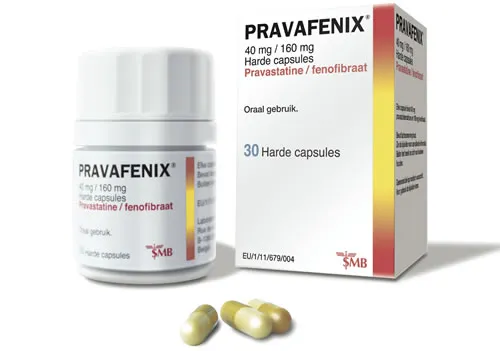
Table of Contents
- PATIENT INFORMATION LEAFLET: INFORMATION FOR THE USER
- Pravafenix 40 mg/160 mg hard capsules
- 1. WHAT PRAVAFENIX IS AND WHAT IT IS USED FOR
- 2. WHAT YOU SHOULD KNOW BEFORE TAKING PRAVAFENIX
- 3. HOW TO TAKE PRAVAFENIX
- 4. POSSIBLE ADVERSE REACTIONS
- 5. HOW TO STORE PRAVAFENIX
- 6. PACK CONTENTS AND OTHER INFORMATION
PATIENT INFORMATION LEAFLET: INFORMATION FOR THE USER
Pravafenix 40 mg/160 mg hard capsules
pravastatin sodium / fenofibrate
Please read this leaflet carefully before taking this medicine because it contains important information for you.
- Keep this leaflet. You may need to read it again.
- If you have any questions, ask your doctor or pharmacist. This medicine has been prescribed for you only. Do not give it to other people, even if their symptoms are the same as yours, as it could be harmful.
- If you experience any side effect, including those not listed in this leaflet, contact your doctor or pharmacist. See section 4.
Contents of this leaflet:
- What Pravafenix is and what it is used for
- What you need to know before taking Pravafenix
- How to take Pravafenix
- Possible side effects
- How to store Pravafenix
- Contents of the pack and other information
1. WHAT PRAVAFENIX IS AND WHAT IT IS USED FOR
Pravafenix contains two active substances: pravastatin and fenofibrate. Both are lipid-modifying medicines that help manage cholesterol.
Pravafenix is used in adults in combination with a low-fat diet
- to reduce levels of "bad" cholesterol (LDL cholesterol).
- This is achieved by lowering blood levels of total cholesterol and of fats known as triglycerides.
- to increase levels of "good" cholesterol (HDL cholesterol). What should I know about cholesterol and triglycerides? Cholesterol is one of many fats found in the blood. Total cholesterol is mainly composed of LDL and HDL cholesterol. LDL cholesterol is commonly referred to as "bad" cholesterol because it can accumulate in the walls of arteries and form plaques. Over time, these plaques grow larger and may eventually block the arteries. This blockage can slow down or stop blood flow to vital organs such as the heart and brain. When blood flow is blocked, a heart attack or stroke may occur. HDL cholesterol is often called "good" cholesterol because it helps prevent "bad" cholesterol from building up in the arteries and protects against heart disease.
Triglycerides are another type of fat in the blood. High levels may increase the risk of heart problems.
In most people, there are initially no signs indicating a cholesterol problem.
Your doctor can measure your cholesterol with a simple blood test. Visit your doctor regularly to monitor your cholesterol levels.
Pravafenix is used in adults at high risk of heart disease and when it is necessary to improve cholesterol and triglyceride levels in the blood, particularly when "bad" cholesterol levels are not adequately controlled with pravastatin alone or with another moderately intensive statin (a cholesterol-lowering medicine).
2. WHAT YOU SHOULD KNOW BEFORE TAKING PRAVAFENIX
Do not take Pravafenix
- if you are allergic to fenofibrate, pravastatin, or any of the other ingredients of this medicine (listed in section 6).
- if you have liver disease
- if you are under 18 years of age
- if you have kidney disease
- if you have previously experienced photoallergy (allergic reactions caused by sunlight or UV light exposure) or phototoxic reactions (skin damage caused by exposure to sunlight or UV light) during treatment with fibrates (medicines that modify lipid levels) or ketoprofen (an anti-inflammatory medicine taken orally or applied to the skin for muscle or bone problems, or taken orally for gout or menstrual pain)
- if you have gallbladder disease
- if you have pancreatitis (inflammation of the pancreas causing abdominal pain)
- if you are pregnant or breastfeeding
- if you have experienced muscle problems (e.g. myopathy or rhabdomyolysis) during treatment with cholesterol-lowering medicines known as “statins” (such as simvastatin, atorvastatin, pravastatin, rosuvastatin) or fibrates (such as fenofibrate or bezafibrate).
Do not take Pravafenix if any of the above conditions apply to you. If you are unsure, speak with your doctor or pharmacist before taking Pravafenix.
Warnings and precautions
Talk to your doctor or pharmacist before taking Pravafenix.
Before taking Pravafenix, you must inform your doctor if you have or have had any health problems.
- Inform your doctor about your medical condition, including allergies. Inform your doctor if you drink large amounts of alcohol (if you consume more than the recommended daily amount; if in doubt, consult your doctor or pharmacist) – or if you have had liver disease. See below section “Taking Pravafenix with food, drinks and alcohol”. Your doctor should perform a blood test before you start taking Pravafenix. This test checks the function of your liver and kidneys.
- Your doctor may also perform blood tests to monitor liver and kidney function after you have started taking Pravafenix. If you have or have had myasthenia (a disease characterized by generalized muscle weakness, including in some cases the muscles used for breathing) or ocular myasthenia (a disease causing weakness of the eye muscles), because statins may sometimes worsen myasthenia or trigger its onset (see section 4).
Contact your doctor immediately if you experience unexplained muscle pain, tenderness, or muscle weakness. This is because, although rarely, muscle problems can be serious and lead to muscle breakdown with kidney damage, and in very rare cases, death has occurred.
Also, inform your doctor or pharmacist if you have persistent muscle weakness. Further tests and medicines may be needed to diagnose and treat this condition.
The risk of muscle breakdown is higher in certain patients. Inform your doctor if any of the following conditions apply to you:
- liver or kidney disease
- thyroid disorders
- age over 70 years
- muscle problems during treatment with cholesterol-lowering medicines such as statins or fibrates
- you are taking or have taken within the last 7 days an oral or injectable medicine called fusidic acid (a medicine for bacterial infections). The combination of fusidic acid and Pravafenix can lead to serious muscle problems (rhabdomyolysis).
- inherited muscle disorders (you or a close relative)
- alcohol problems (regularly drinking large amounts of alcohol)
Before taking Pravafenix, consult your doctor or pharmacist if:
you have severe respiratory insufficiency, i.e. breathing problems with persistent dry cough, general deterioration such as asthenia (weakness), weight loss and/or shortness of breath or fever. If you have any of these symptoms, you should stop taking Pravafenix and inform your doctor.
During treatment with this medicine, your doctor will closely monitor you if you have diabetes or are at risk of developing diabetes. You are more likely to be at risk of developing diabetes if your blood sugar and fat levels are high, if you are overweight, and if you have high blood pressure.
Children and adolescents
Do not take Pravafenix if you are under 18 years of age.
Other medicines and Pravafenix
Inform your doctor or pharmacist if you are taking, have recently taken, or might take any other medicines. It is important to inform your doctor if you are already being treated with any of the following medicines:
- bile acid sequestrants such as cholestyramine/colestipol (a medicine to lower cholesterol), because they may interfere with the effect of Pravafenix
- cyclosporine (a medicine often used in patients who have received an organ transplant)
- medicines to prevent blood clotting such as warfarin, fluindione, phenprocoumon or acenocoumarol (anticoagulants)
- antibiotics such as erythromycin or clarithromycin used to treat bacterial infections
- fusidic acid: if you need to take fusidic acid orally to treat a bacterial infection, you must temporarily stop taking this medicine. Your doctor will tell you when you can restart taking Pravafenix. Taking Pravafenix with fusidic acid may rarely lead to muscle weakness, tenderness or pain (rhabdomyolysis). See further information on rhabdomyolysis in section 4.
- glecaprevir/pibrentasvir (used to treat hepatitis C virus infection), because it may increase the risk of certain adverse events, including muscle problems.
- a specific class of diabetes medicines (such as rosiglitazone and pioglitazone).
Pravafenix with food, drinks and alcohol
- Always take Pravafenix with food, as Pravafenix is less well absorbed on an empty stomach. You should always keep alcohol consumption to a minimum. If you are unsure about how much alcohol you may drink while taking this medicine, discuss it with your doctor. If in doubt, follow your doctor’s advice.
Pregnancy and breastfeeding
Do not take Pravafenix if you are pregnant, suspect you may be pregnant, or are planning a pregnancy. If you are planning a pregnancy or become pregnant, inform your doctor immediately. The medicine must be discontinued due to the potential risk to the fetus.
Do not take Pravafenix while breastfeeding.
Driving and using machines
Pravafenix usually has no effect on the ability to drive or use machines. However, if you experience dizziness, double vision or blurred vision during treatment, make sure you are able to drive or use machines safely before doing so.
Pravafenix contains lactose and sodium
Pravafenix contains a sugar called lactose. If your doctor has told you that you are intolerant to certain sugars, contact your doctor before taking this medicine.
This medicine contains 33.3 mg of sodium (a component of table salt) per capsule (excipients and active ingredient). This corresponds to 1.7% of the maximum daily intake of sodium for an adult.
3. HOW TO TAKE PRAVAFENIX
Always take Pravafenix exactly as instructed by your doctor. If you have any doubts, consult your doctor or pharmacist.
- Before starting to take Pravafenix, you must follow a diet to lower cholesterol. Continue this diet while taking Pravafenix.
The recommended dose is one capsule taken daily with the evening meal. Swallow the capsules whole with water. It is important to take the capsules with food, as they do not work as effectively when taken on an empty stomach.
If your doctor has prescribed Pravafenix together with colestyramine or another bile acid-binding resin (medicines to lower cholesterol), take Pravafenix either 1 hour before or 4–6 hours after taking the resin. This is because colestyramine or other bile acid-binding resins often reduce the absorption of medicines if taken too close together, and thus may prevent the absorption of Pravafenix. If you take medicines for dyspepsia (used to neutralize stomach acidity), take Pravafenix 1 hour after.
If you take more Pravafenix than you should
Contact your doctor or pharmacist.
If you forget to take Pravafenix
Do not take a double dose to make up for the missed dose. Take only your normal dose of Pravafenix at the usual time the following day.
If you stop taking Pravafenix
Do not stop taking Pravafenix without first discussing it with your doctor.
If you have any doubts about how to use Pravafenix, consult your doctor or pharmacist.
4. POSSIBLE ADVERSE REACTIONS
Like all medicines, this medicine can cause adverse reactions, although not everyone experiences them.
The following adverse reactions are important and require immediate action.
Contact your doctor immediately if you experience any muscle pain or cramping, tenderness, or weakness of unknown origin. This is because, very rarely (may affect up to 1 in 10,000 people), muscle problems can be severe and lead to muscle breakdown with kidney damage, and very rarely, deaths have occurred.
Severe and sudden allergic reactions may cause swelling of the face, lips, tongue, or larynx, which can lead to significant breathing difficulties. This is a very rare but potentially serious reaction. Inform your doctor immediately if this occurs.
Other adverse reactions
Common adverse reactions (may affect up to 1 in 10 people)
- Gastrointestinal effects: gastric or intestinal disturbances (abdominal pain, nausea, vomiting, diarrhoea and flatulence, constipation, dry mouth, abdominal pain and swelling (dyspepsia), belching).
- Liver effects: increased transaminases.
Uncommon adverse reactions (may affect up to 1 in 100 people)
- Changes in heart rhythm (palpitations), formation of blood clots in veins (deep vein thrombosis), and blockage of the pulmonary arteries by blood clots (pulmonary embolism).
- Skin rashes, itching, urticaria, or reactions to sunlight or exposure to UV light (photosensitivity reactions), hair/scalp abnormalities (including hair loss).
- Nervous system effects: dizziness (sensation of unsteadiness), headache, sleep disorders (including difficulty sleeping and nightmares), tingling sensation (paresthesia).
- Muscle and joint pain (myalgia, arthralgia), lower back pain, changes in certain laboratory tests related to muscle function.
- Vision problems such as blurred or double vision.
- Kidney problems (increase or decrease in levels of certain enzymes in the body detectable by blood tests), bladder problems (frequent or painful urination, need to urinate at night), sexual dysfunction.
- Asthenia, fatigue, flu-like symptoms.
- Hypersensitivity.
- Increased cholesterol levels, increased triglyceride levels, increased LDL, increased gamma-glutamyl transferase (a liver enzyme), liver pain (abdominal pain in the upper right quadrant with or without back pain), weight gain.
- Obesity.
- Muscle inflammation (myositis), muscle cramps, and weakness.
Rare adverse reactions (may affect up to 1 in 1,000 people)
- Reduction in haemoglobin (the pigment that carries oxygen in the blood) and leukocytes (white blood cells).
Very rare adverse reactions (may affect up to 1 in 10,000 people)
- Inflammation of the liver (hepatitis), with symptoms such as mild yellowing of the skin and whites of the eyes (jaundice), abdominal pain, and itching.
- Muscle breakdown (rhabdomyolysis), some cases with tendon problems, sometimes complicated by tendon rupture.
- A condition characterized by inflammation of the muscles and skin (dermatomyositis).
- Skin rash, possibly with joint pain (lupus-like syndrome).
- Tingling and numbness (peripheral neuropathy).
Adverse reactions of unknown frequency (frequency cannot be estimated from the available data)
- Persistent muscle weakness.
- Muscle tear.
- Skin rash (lichenoid eruption).
- Myasthenia gravis (a disease causing generalized muscle weakness, including in some cases the muscles used for breathing).
- Ocular myasthenia (a disease causing weakness of the eye muscles). Contact your doctor if you experience worsening weakness in the arms or legs after periods of activity, double vision or drooping eyelids, difficulty swallowing, or shortness of breath.
Possible adverse reactions observed with some statins (same type of cholesterol-lowering medicines such as pravastatin)
- Memory loss
- Depression
- Respiratory problems including persistent cough or reduced breathing capacity or fever
- Diabetes. This is more likely if you have high levels of sugar and fat in your blood, are overweight, and have high blood pressure. Your doctor will monitor you while you are taking this medicine.
Reporting of adverse reactions
If you experience any adverse reaction, including those not listed in this leaflet, speak to your doctor or pharmacist. You may also report adverse reactions directly via the national reporting system listed in Annex V.
By reporting adverse reactions, you can help provide more information on the safety of this medicine.
5. HOW TO STORE PRAVAFENIX
Keep this medicine out of the sight and reach of children.
Do not use this medicine after the expiry date stated on the carton and on the blister/on the bottle after "Exp.". The expiry date refers to the last day of that month.
This medicine does not require any special storage conditions.
Do not dispose of any medicine via wastewater or household waste. Ask your pharmacist how to dispose of medicines you no longer use. This will help protect the environment.
6. PACK CONTENTS AND OTHER INFORMATION
What Pravafenix contains
- The active substances are fenofibrate and pravastatin sodium. Each hard capsule contains 40 mg of pravastatin sodium and 160 mg of fenofibrate.
- The excipients are:
- Capsule contents: monohydrate lactose, microcrystalline cellulose, ascorbyl palmitate, povidone, sodium starch glycolate, magnesium stearate, talc, triacetin, sodium hydrogen carbonate, lauroyl macrogolglycerides, hydroxypropylcellulose, macrogol 20 000.
- Capsule coating: gelatin, indigotine (E132), black iron oxide (E172), titanium dioxide (E171), yellow iron oxide (E172).
Description of the appearance of Pravafenix and pack contents
Pravafenix consists of a hard gelatin capsule with an olive-colored cap and a light green body, containing a white-beige waxy mass and a tablet. The capsules are contained in blisters made of polyamide-aluminum-PVC/aluminum, with packs containing 30, 60, or 90 capsules, and in white opaque plastic bottles containing 14, 30, 60, or 90 capsules.
Not all pack sizes may be marketed.
Marketing Authorization Holder Manufacturer
Laboratoires SMB s.a. SMB Technology s.a.
Rue de la Pastorale, 26-28 Rue du Parc Industriel 39
B-1080 Bruxelles B-6900 Marche en Famenne
Belgium Belgium
For further information on this medicinal product, please contact the local representative of the Marketing Authorization Holder:
België/Belgique/Belgien Lietuva
Laboratoires SMB S.A. Laboratoires SMB S.A.
Tél/Tel: + 32.2.411.48.28. Tel: + 32.2.411.48.28.
България Luxembourg/Luxemburg
Laboratoires SMB S.A. Laboratoires SMB S.A.
Teл.: + 32.2.411.48.28. Tél/Tel: + 32.2.411.48.28.
Česká republika Magyarország
Laboratoires SMB S.A. Laboratoires SMB S.A.
Tel: + 32.2.411.48.28. Tel.: + 32.2.411.48.28.
Danmark Malta
Laboratoires SMB S.A. Laboratoires SMB S.A.
Tlf: + 32.2.411.48.28. Tel: + 32.2.411.48.28.
Deutschland Nederland
Galephar Pharma GmbH Galephar B.V.
Tel: +49 7164 66 26 Tel: +31 71 562 15 02
Eesti Norge
Laboratoires SMB S.A. Laboratoires SMB S.A.
Tel: + 32.2.411.48.28. Tlf: + 32.2.411.48.28.
Ελλάδα Österreich
Meditrina LTD Laboratoires SMB S.A.
Tηλ: +30 2106726260 Tel: + 32.2.411.48.28.
España Polska
Lacer S.A. Laboratoires SMB S.A.
Tel: +34 934 46 53 00 Tel.: + 32.2.411.48.28.
France Portugal
Laboratoires SMB S.A. Tecnimede Sociedade Técnico-Medicinal S.A.
Tél: + 32.2.411.48.28. Tel: +351 21 041 41 00
Hrvatska România
Laboratoires SMB S.A. Meditrina Pharmaceuticals S.r.l.
Tel: + 32.2.411.48.28. Tel: +40 21 211 71 83
Ireland Slovenija
Laboratoires SMB S.A. Laboratoires SMB S.A.
Tel: + 32.2.411.48.28. Tel: + 32.2.411.48.28.
Ísland Slovenská republika
Laboratoires SMB S.A. Laboratoires SMB S.A.
Sími: + 32.2.411.48.28. Tel: + 32.2.411.48.28.
Italia Suomi/Finland
Laboratoires SMB S.A. Laboratoires SMB S.A.
Tel: + 32.2.411.48.28. Puh/Tel: + 32.2.411.48.28.
Κύπρος Sverige
Multi-Pharm Co. Ltd. Laboratoires SMB S.A.
Τηλ: +357 22438443 Tlf: + 32.2.411.48.28.
Latvija United Kingdom (Northern Ireland)
Laboratoires SMB S.A. Laboratoires SMB S.A.
Tel: + 32.2.411.48.28. Tel: + 32.2.411.48.28.
More detailed information on this medicinal product is available on the European Medicines Agency website: http://www.ema.europa.eu/.