Portolac
Italy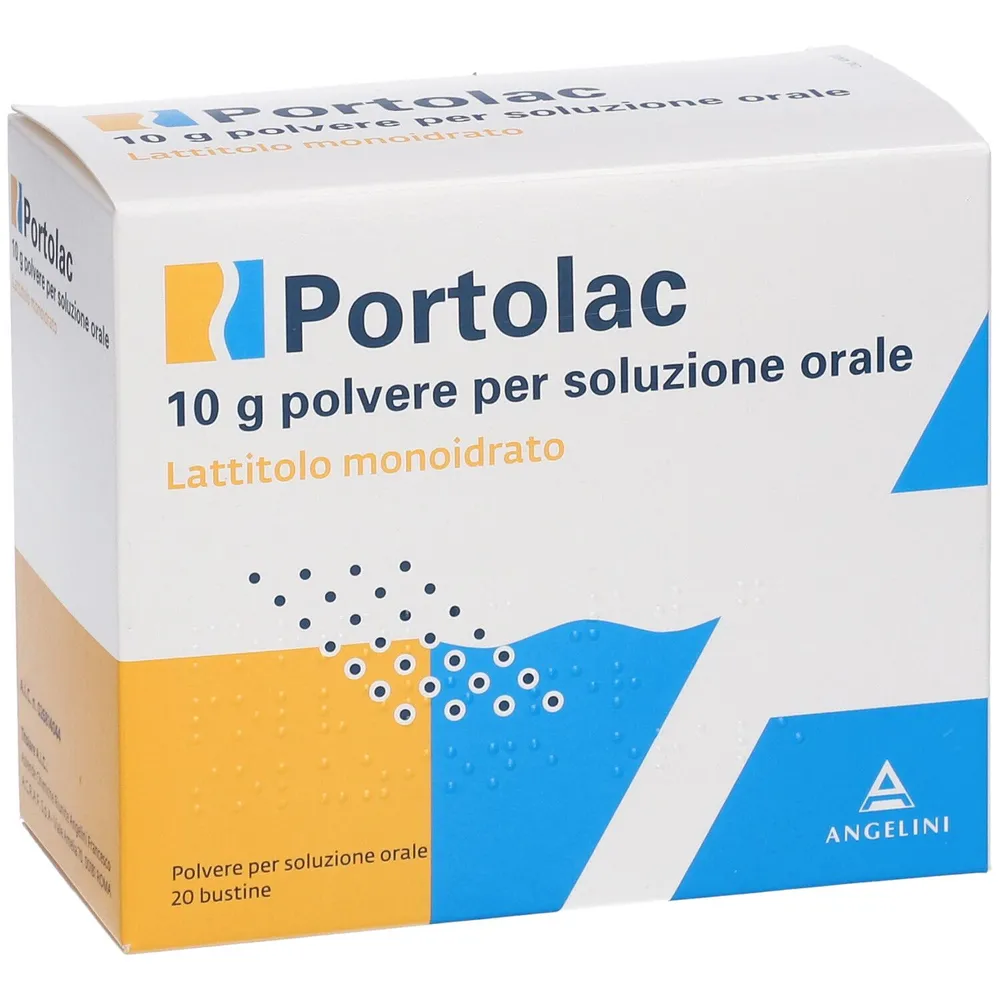
Table of Contents
- Package leaflet: Information for the patient
- Portolac 5 g powder for oral solution, 10 g powder for oral solution
- 1. What Portolac is and what it is used for
- 2. What you should know before taking/giving Portolac to the child
- 3. How to take/give Portolac to a child
- 4. Possible side effects
- 5. How to store Portolac
- 6. Package contents and other information
- Patient Information Leaflet
- Portolac 66.67 g/100 ml syrup
- 1. What Portolac is and what it is used for
- 2. What you should know before taking/giving Portolac to the child
- 3. How to take/give Portolac to the child
- 4. Possible side effects
- 5. How to store Portolac
- 6. Package contents and other information
Package leaflet: Information for the patient
Portolac 5 g powder for oral solution, 10 g powder for oral solution
Lactitol monohydrate
Please read all of this leaflet carefully before you start taking/giving the child this medicine because it contains important information for you.
Always take/give the child this medicine exactly as described in this leaflet or as your doctor or pharmacist has told you to do.
- Keep this leaflet. You may need to read it again.
- If you need more advice or information, consult your pharmacist.
- If you or the child experience any of the side effects, including those not listed in this leaflet, talk to your doctor or pharmacist. See section 4.
- Consult your doctor if you do not notice any improvement or if symptoms worsen after 7 days of treatment.
Contents of this leaflet:
- What Portolac is and what it is used for
- What you need to know before taking/giving the child Portolac
- How to take/give the child Portolac
- Possible side effects
- How to store Portolac
- Contents of the pack and other information
1. What Portolac is and what it is used for
Portolac contains the active substance lactitol monohydrate, which belongs to a group of medicines called osmotic laxatives. This medicine works by increasing the water content in the intestine, thereby promoting the evacuation of soft and bulky stools.
Portolac is indicated in adults and children for the short-term treatment of occasional constipation.
Consult your doctor if you or the child does not feel better or feels worse after 7 days of treatment.
2. What you should know before taking/giving Portolac to the child
Do not take/do not give Portolac to the child
- if you or the child are allergic to lactitol monohydrate or to any of the other ingredients of this medicine (listed in section 6);
- if you or the child suffer from reduced intestinal motility (e.g. intestinal blockage due to obstruction);
- if you or the child have or may have intestinal damage;
- if you or the child have any unexplained abdominal pain;
- if you or the child have rectal bleeding;
- if you or the child suffer from hydro-electrolytic imbalance (altered concentrations of fluids and salts in the body);
- if you or the child suffer from galactose intolerance (a type of sugar).
Do not give Portolac to breastfed infants or children with fructose intolerance (another type of sugar).
If you or your child suffer from fecal impaction (a hard and large mass of stool in the intestine caused by constipation), this condition must be treated differently before using laxatives.
Warnings and precautions
Talk to your doctor or pharmacist before taking/giving Portolac to the child.
Treatment of chronic or recurrent constipation always requires medical supervision for diagnosis, prescription of medicines, and monitoring during therapy.
Consult your doctor:
- when the constipation you or the child suffer from is chronic or particularly persistent. In such cases, the doctor will advise treating constipation first with a high-fiber diet, adequate fluid intake, or physical activity;
- if you are scheduled to undergo electrocauterization (a medical procedure used to remove tissue) of the intestine;
- if you experience nausea or meteorism (gas in the abdomen);
- if you or the child have had an ileostomy or colostomy (surgical procedures creating an abdominal opening to allow feces to be expelled externally);
- if the doctor has diagnosed you or the child with intolerance to certain sugars;
- when the need for a laxative arises from a sudden change in previous bowel habits (frequency and characteristics of bowel movements) lasting more than two weeks, or when the use of the laxative fails to produce effects;
- if you are elderly and/or debilitated, as the doctor may wish to regularly monitor blood electrolyte levels.
It is important to correct any hydro-electrolytic imbalance (altered concentrations of fluids and salts in the body) before starting treatment with a laxative.
Abuse of laxatives
If you or the child abuse (frequent or prolonged use, or excessive doses) laxatives:
- persistent diarrhea may occur, leading to loss of water, minerals (especially potassium), and other essential nutrients;
- in more severe cases, severe fluid loss from the body (dehydration) or decreased blood potassium levels may occur. This could lead to heart or muscle problems, especially if you are also taking medicines such as cardiac glycosides, diuretics, or corticosteroids for heart disease or inflammation;
- you may develop dependence (and therefore a possible need to progressively increase the dose), chronic constipation, and loss of normal intestinal function (intestinal atony).
For these reasons, prolonged, uninterrupted use of laxatives should be avoided, and the doctor should aim to determine the optimal dose at the beginning of treatment.
Children
This medicine may be used in children only after consulting a doctor.
Other medicines and Portolac
Inform your doctor or pharmacist if you/the child are taking, have recently taken, or might take any other medicines.
Laxatives may reduce intestinal transit time, and thus the absorption, of other medicines taken orally at the same time.
Avoid taking/facilitating the intake of laxatives and other medicines simultaneously: after taking/giving a medicine to the child, wait at least 2 hours before taking/giving the laxative.
Inform your doctor if you or the child are taking:
- neomycin (a medicine used to treat infections) and antacids (to treat stomach acidity). In particular, do not take these medicines with Portolac in case of severe liver disease (cirrhosis with hepatic encephalopathy);
- cardiac glycosides (medicines used to treat heart diseases), as they may increase the toxic effects of these medicines;
- antibacterial agents (medicines used to treat infections) and oral antacids, as they reduce the effect of Portolac on intestinal bacterial flora;
- medicines that when taken together with Portolac increase potassium loss, for example:
- thiazide diuretics (medicines that increase urine production);
- corticosteroids (anti-inflammatory agents);
- carbenoxolone (a medicine used to treat ulcers);
- amphotericin B (medicines used to treat fungal infections).
Portolac with food and drink
If you experience nausea, take Portolac during meals.
Pregnancy and breastfeeding
If you are pregnant, suspect you may be pregnant, plan to become pregnant, or are breastfeeding, ask your doctor or pharmacist for advice before taking this medicine.
Pregnancy
During the first 3 months of pregnancy, take Portolac only if clearly needed and under medical supervision.
Breastfeeding
If you are breastfeeding, consult your doctor before taking Portolac.
Driving and using machines
Portolac does not affect the ability to drive or use machinery.
Health education notes
In most cases, a balanced diet rich in water and fiber (bran, vegetables, and fruit) can resolve constipation.
Many people believe they suffer from constipation if they do not have a bowel movement every day. This is a misconception, as it is perfectly normal for many individuals not to defecate daily. Constipation should instead be considered when bowel movements are reduced compared to one's usual habits and are associated with the passage of hard stools.
If episodes of constipation occur repeatedly, you should consult a doctor.
3. How to take/give Portolac to a child
Take/give this medicine to the child exactly as stated in this leaflet or as directed by the doctor or pharmacist. If in doubt, consult the doctor or pharmacist.
Adults
The recommended dose is 10–15 g of Portolac per day, equivalent to 2–3 sachets of 5 g or 1 sachet of 10 g.
Take Portolac preferably in the evening, before going to bed, as a single dose. If you experience nausea, it is advisable to take Portolac during meals.
Use in children
Children
➢ from 2 to 6 years: 5 g per day, equivalent to one 5 g sachet.
➢ over 6 years: 5–10 g per day, equivalent to 1–2 sachets of 5 g or one 10 g sachet.
Give Portolac to the child as a single dose in the morning with breakfast.
In general, the optimal effect can be achieved by adjusting the daily dose in increments of 5 g (up or down) in adults.
The correct dose is the lowest one that produces easy passage of soft stools. Initially, use/give the child the lowest recommended doses. When necessary, the dose may be increased, but must never exceed the maximum recommended dose.
Dissolve the powder in water or other beverages (milk, tea, coffee, fruit juices), or add it to other foods such as: yoghurt, cooked fruit, etc.
Take/give Portolac to the child together with an adequate amount of water (a generous glass). A diet rich in fluids enhances the effect of the medicine.
Take/give laxatives as infrequently as possible and for no longer than 7 days. Use beyond this period requires a doctor's prescription following adequate assessment of the individual case.
Avoid prolonged, uninterrupted use of laxatives.
If you take/give the child more Portolac than you should
In case of accidental ingestion/overdose of Portolac, contact a doctor immediately or go to the nearest hospital.
If an excessive dose is accidentally ingested, you or the child may experience stomach pains and diarrhoea. In such cases, treatment should be stopped, fluids should be taken, and medical advice sought.
See also the information provided in the section “Warnings and Precautions” regarding laxative abuse.
If you forget to take/give the child Portolac
Do not take/give a double dose to make up for a missed dose.
If you have any doubts about the use of this medicine, consult your doctor or pharmacist.
4. Possible side effects
Like all medicines, this medicine can cause side effects, although not everyone gets them.
At the beginning of treatment, Portolac may cause abdominal discomfort, especially with gas emission from the intestine, and rarely abdominal pain or sometimes bloating. These effects tend to decrease or disappear after a few days of regular use of Portolac.
The following side effects may occur, with the following frequency:
Rare (may affect up to 1 in 1,000 people)
- vomiting
- diarrhoea
- abdominal pain
- bloating
- intestinal gas production (flatulence).
Very rare (may affect up to 1 in 10,000 people)
- nausea
- abnormal stomach and intestinal sounds
- anal itching.
Reporting of side effects
If you or the child experience any side effect, including those not listed in this leaflet, talk to your doctor or pharmacist. You can also report side effects directly via the national reporting system at the following address:
https://www.aifa.gov.it/content/segnalazioni-reazioni-avverse.
By reporting side effects, you can help provide more information on the safety of this medicine.
5. How to store Portolac
Keep this medicine out of the sight and reach of children.
Do not use this medicine after the expiry date stated on the packaging after "Exp.".
The expiry date refers to the last day of that month.
Portolac 5 g and 10 g powder for oral solution: this medicine requires no special storage
conditions.
Do not dispose of any medicine via wastewater or household waste. Ask your pharmacist how to
dispose of medicines you no longer use. This will help protect the environment.
6. Package contents and other information
What Portolac contains
Portolac 5 g or 10 g powder for oral solution
- The active substance is: lactitol monohydrate (each sachet contains 5 g or 10 g of lactitol monohydrate).
No other components are present.
Description of the appearance of Portolac and contents of the pack
Portolac is a powder for oral solution, available in packs of 10 sachets of 5 g or
packs of 20 sachets of 10 g.
It is possible that not all pack sizes are marketed.
Marketing Authorization Holder
Aziende Chimiche Riunite Angelini Francesco - A.C.R.A.F. S.p.A.
Viale Amelia, 70
00181 ROMA
Manufacturer
Lamp San Prospero S.p.A., Via della Pace 25/A – 41030 San Prospero (MO)
A.C.R.A.F. S.p.A., Via Vecchia del Pinocchio 22 - 60131 Ancona
November 2025
Patient Information Leaflet
Portolac 66.67 g/100 ml syrup
Lactitol monohydrate
Please read this leaflet carefully before taking/giving the child this medicine because it contains important information for you.
Always take/give the child this medicine exactly as described in this leaflet or as your doctor or pharmacist has instructed.
- Keep this leaflet. You may need to read it again.
- If you need more information or advice, consult your pharmacist.
- If you or the child experience any side effects, including those not listed in this leaflet, consult your doctor or pharmacist. See section 4.
- Consult your doctor if you do not notice improvement or if symptoms worsen after 7 days of treatment.
Contents of this leaflet:
- What Portolac is and what it is used for
- What you need to know before taking/giving Portolac to the child
- How to take/give Portolac to the child
- Possible side effects
- How to store Portolac
- Contents of the pack and other information
1. What Portolac is and what it is used for
Portolac contains the active substance lactitol monohydrate, which belongs to a group of medicines called osmotic laxatives. This medicine works by increasing the water content in the intestine, thereby promoting the evacuation of soft and bulky stools.
Portolac is indicated in adults and children for the short-term treatment of occasional constipation.
Consult a doctor if you or the child do not feel better or feel worse after 7 days of treatment.
2. What you should know before taking/giving Portolac to the child
Do not take/do not give Portolac to the child
- if you or the child are allergic to lactitol monohydrate or to any of the other ingredients of this medicine (listed in section 6)
- if you or the child suffer from reduced intestinal motility (e.g. intestinal blockage due to obstruction)
- if you or the child have or may have an intestinal lesion
- if you or the child have any abdominal pain of unknown origin
- if you or the child have rectal bleeding
- if you or the child suffer from hydro-electrolytic imbalance (alteration in the concentrations of fluids and salts in the body)
- if you or the child suffer from galactose intolerance (a type of sugar).
Do not give Portolac to breastfed infants or children with fructose intolerance (another type of sugar).
If you or your child suffer from fecaloma (a hard, large mass of stool in the intestine caused by constipation), this condition must be treated differently before using laxatives.
Warnings and precautions
Talk to your doctor or pharmacist before taking/giving Portolac to the child.
The treatment of chronic or recurrent constipation always requires medical intervention for diagnosis, prescription of medication, and monitoring during therapy.
Consult your doctor:
- when the constipation affecting you or the child is chronic or particularly persistent. In such cases, your doctor will advise treating constipation first with a high-fiber diet, adequate fluid intake, or physical activity
- if you need to undergo intestinal electrocautery procedures (a medical procedure used to remove tissue)
- if you experience nausea or meteorism (gas in the abdomen)
- if you or the child have undergone ileostomy or colostomy (surgical techniques creating an abdominal opening allowing feces to be expelled externally)
- if your doctor has diagnosed you or the child with intolerance to certain sugars
- when the need for a laxative arises from a sudden change in previous bowel habits (frequency and characteristics of bowel movements) lasting more than two weeks, or when the use of a laxative fails to produce effects
- if you are elderly and/or debilitated, as your doctor may wish to regularly monitor blood electrolyte levels.
It is important to correct any existing hydro-electrolytic imbalance (alteration in the concentrations of fluids and salts in the body) before starting treatment with a laxative.
Abuse of laxatives
If you or the child abuse (frequent or prolonged use or excessive doses) laxatives:
- persistent diarrhea may occur, leading to loss of water, minerals (especially potassium), and other essential nutrients
- in more severe cases, significant fluid loss (dehydration) or decreased blood potassium levels may occur. This could lead to heart or muscle problems, especially if you are also taking medications such as cardiac glycosides, diuretics, or corticosteroids for heart disease or inflammation
- you may develop dependence (and therefore possibly need to progressively increase the dose), chronic constipation, and loss of normal intestinal function (intestinal atony).
For these reasons, prolonged, uninterrupted use of laxatives should be avoided, and the doctor should determine the optimal dosage at the beginning of treatment.
Children
In children and infants, this medicine may be used only after consulting a doctor.
Other medicines and Portolac
Inform your doctor or pharmacist if you/the child are taking, have recently taken, or might take any other medicines.
Laxatives may reduce intestinal transit time, and thus the absorption, of other medicines taken orally at the same time.
Avoid taking/giving laxatives and other medicines simultaneously to the child: after taking/giving a medicine to the child, wait at least 2 hours before taking/giving the laxative.
Inform your doctor if you or the child are taking:
- neomycin (a medicine used to treat infections) and antacids (to treat stomach acidity). In particular, these medicines should not be taken with Portolac in case of severe liver disease (cirrhosis with hepatic encephalopathy)
- cardiac glycosides (medicines used to treat heart conditions), as they may increase the toxic effects of these medicines
- antibacterial agents and oral antacids, as they reduce the effect of Portolac on intestinal bacterial flora
- medicines that, when taken with Portolac, increase potassium loss, for example: thiazide diuretics (medicines that increase urine production); corticosteroids (anti-inflammatory medicines)
- carbenoxolone (a medicine used to treat ulcers)
- amphotericin B (medicines used to treat fungal infections)
Portolac with food and drink
If you have nausea, take Portolac during meals.
Pregnancy and breastfeeding
If you are pregnant, think you may be pregnant, are planning pregnancy, or are breastfeeding, consult your doctor or pharmacist before taking this medicine.
Pregnancy
During the first 3 months of pregnancy, take Portolac only if clearly needed and under medical supervision.
Breastfeeding
If you are breastfeeding, consult your doctor before taking Portolac.
Driving and using machines
Portolac does not affect the ability to drive or operate machinery.
Health education notes
In most cases, a balanced diet rich in water and fiber (bran, vegetables, and fruit) can resolve constipation.
Many people believe they are constipated if they do not have a bowel movement every day. This is a misconception, as it is perfectly normal for many individuals not to defecate daily. Constipation should instead be considered when bowel movements are less frequent than usual and associated with hard stools.
If episodes of constipation recur, consult your doctor.
Portolac contains:
- benzoic acid: This medicine contains 30 mg of benzoic acid per dose (37.5 ml), equivalent to 10 mg/37.5 ml. Benzoic acid may increase jaundice (yellowing of the skin and eyes) in newborns up to 4 weeks of age
- sodium: This medicine contains less than 1 mmol (23 mg) of sodium per dose and per maximum daily dose, i.e., essentially 'sodium-free'.
3. How to take/give Portolac to the child
Take/give this medicine to the child exactly as stated in this leaflet or as directed by the doctor or pharmacist. If you have any doubts, consult the doctor or pharmacist.
Adults
The recommended dose is 15–30 ml of Portolac per day, equivalent to 1–2 measuring cups filled up to the 15 ml mark.
Generally, depending on individual needs, the dose may be increased or decreased by taking 7.5 ml of syrup (measuring cup mark at 7.5 ml) more or less per day.
Take Portolac preferably in the evening, before bedtime, as a single dose. If you experience nausea, it is advisable to take Portolac during meals.
Use in children
Children
- from 2 to 6 years: 10 ml per day, equivalent to 1 measuring cup filled up to the 10 ml mark.
- over 6 years: 10–15 ml per day, equivalent to 1 measuring cup filled up to the 10 ml or 15 ml mark. Give Portolac to the child as a single dose in the morning with breakfast.
Infants
On average, 5 ml of syrup per day, equivalent to 1 measuring cup filled up to the 5 ml mark.
The correct dose is the minimum amount sufficient to produce easy passage of soft stools. Initially, use/give the child the lowest recommended doses. When necessary, the dose may be increased, but must never exceed the maximum recommended dose.
Use the provided measuring cup, filling it up to the mark corresponding to the prescribed dose.
Clean the measuring cup thoroughly after each use before returning it to the packaging.
Take/give Portolac to the child together with an adequate amount of water (a generous glass). A diet rich in fluids enhances the effect of the medicine.
Take/give laxatives as infrequently as possible and for no longer than 7 days. Use for longer periods requires a doctor's prescription following appropriate evaluation of the individual case.
Avoid prolonged, uninterrupted use of laxatives.
If you take/give the child more Portolac than you should
In case of accidental ingestion/overdose of Portolac, contact your doctor immediately or go to the nearest hospital.
If an excessive dose has been accidentally ingested, you or the child may experience stomach pains and diarrhoea. In such cases, treatment should be stopped, fluids should be taken, and a doctor should be consulted.
See also the information provided in the section “Warnings and Precautions” regarding laxative abuse.
If you forget to take/give Portolac to the child
Do not take/give a double dose to make up for a missed dose.
If you have any doubts about the use of this medicine, consult your doctor or pharmacist.
4. Possible side effects
Like all medicines, this medicine can cause side effects, although not everybody gets them.
At the beginning of treatment, Portolac may cause abdominal discomfort, especially intestinal gas, and rarely stomach pain or sometimes bloating. These effects tend to decrease or disappear after a few days of regular use of Portolac.
The following side effects may occur, according to the frequency shown below:
Rare (may affect up to 1 in 1,000 people)
- vomiting
- diarrhoea
- stomach pain
- bloating
- intestinal gas production (flatulence).
Very rare (may affect up to 1 in 10,000 people)
- nausea
- abnormal stomach and intestinal sounds
- anal itching.
Reporting of side effects
If you or the child experience any side effect, including those not listed in this leaflet, talk to your doctor or pharmacist. You can also report side effects directly via the national reporting system at the website https://www.aifa.gov.it/content/segnalazioni-reazioni-avverse.
By reporting side effects, you can help provide more information on the safety of this medicine.
5. How to store Portolac
Keep this medicine out of the sight and reach of children.
After first opening, use the medicine within 12 months.
Do not use this medicine after the expiry date stated on the container after "Exp". The expiry date refers to the last day of that month.
This medicine does not require any special storage conditions.
Do not dispose of medicines via wastewater or household waste. Ask your pharmacist how to dispose of medicines no longer required. This will help protect the environment.
6. Package contents and other information
What Portolac contains
- The active substance is: lactitol monohydrate (100 ml of syrup contains 66.67 g of lactitol monohydrate).
- The other components are: benzoic acid; sodium hydroxide; purified water.
Description of the appearance of Portolac and the contents of the pack
Portolac is a syrup and is presented as a clear, colourless and odourless solution. It is available in a 200 ml bottle with a closure cap and supplied with a dosing spoon.
Marketing Authorisation Holder
Aziende Chimiche Riunite Angelini Francesco - A.C.R.A.F. S.p.A.
Viale Amelia, 70
00181 ROMA
Manufacturer
Doppel Farmaceutici S.r.l., Via Martiri delle Foibe, 1 – 29016 Cortemaggiore (PC)
or
A.C.R.A.F. S.p.A., Via Vecchia del Pinocchio 22 - 60131 ANCONA