Ponvory
Italy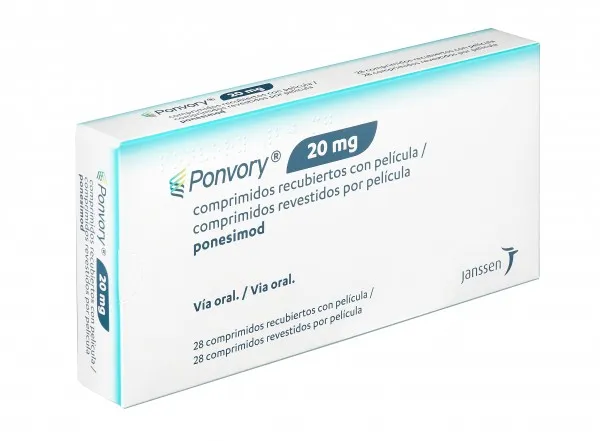
Table of Contents
- Package leaflet: Information for the patient
- Ponvory 2 mg film-coated tablets, 3 mg film-coated tablets, 4 mg film-coated tablets, 5 mg film-coated tablets, 6 mg film-coated tablets, 7 mg film-coated tablets, 8 mg film-coated tablets, 9 mg film-coated tablets, 10 mg film-coated tablets, 20 mg film-coated tablets
- 1. What Ponvory is and what it is used for
- 2. What you need to know before taking Ponvory
- 3. How to take Ponvory
- 4. Possible side effects
- 5. How to store Ponvory
- 6. Package contents and other information
Package leaflet: Information for the patient
Ponvory 2 mg film-coated tablets, 3 mg film-coated tablets, 4 mg film-coated tablets, 5 mg film-coated tablets, 6 mg film-coated tablets, 7 mg film-coated tablets, 8 mg film-coated tablets, 9 mg film-coated tablets, 10 mg film-coated tablets, 20 mg film-coated tablets
ponesimod
Please read this leaflet carefully before taking this medicine because it contains
important information for you.
- Keep this leaflet. You may need to read it again.
- If you have any questions, ask your doctor or pharmacist.
- This medicine has been prescribed for you only. Do not give it to other people, even if they have the same symptoms as yours, because it may be harmful.
- If you experience any side effect, including those not listed in this leaflet, contact your doctor or pharmacist. See section 4.
Contents of this leaflet
- What Ponvory is and what it is used for
- What you need to know before taking Ponvory
- How to take Ponvory
- Possible side effects
- How to store Ponvory
- Contents of the pack and other information
1. What Ponvory is and what it is used for
What Ponvory is
Ponvory contains the active substance ponesimod. Ponesimod belongs to a group of medicines called sphingosine-1-phosphate (S1P) receptor modulators.
What Ponvory is used for
Ponvory is used to treat adults with relapsing forms of multiple sclerosis (RMS) with active disease. Active disease in RMS means that relapses are present or MRI (magnetic resonance imaging) results show signs of inflammation.
What is multiple sclerosis
Multiple sclerosis (MS) affects the nerves in the brain and spinal cord (the central nervous system).
In MS, the immune system (one of the body’s main defence systems) does not work properly. The immune system attacks a protective covering around nerve cells called the myelin sheath, causing inflammation. This destruction of the myelin sheath (called demyelination) prevents nerves from functioning properly.
The symptoms of MS depend on which parts of the brain and spinal cord are affected. These may include problems with walking and balance, weakness, numbness, double and blurred vision, poor coordination, and bladder problems.
Symptoms of a relapse may disappear completely once the relapse has ended, but some problems may persist.
How Ponvory works
Ponvory reduces circulating lymphocytes, which are white blood cells involved in the immune system. It does this by trapping them in lymphoid organs (lymph nodes). As a result, fewer lymphocytes are available to attack the myelin sheath around nerves in the brain and spinal cord.
Reducing nerve damage in patients with MS decreases the number of attacks (relapses) and slows the progression of disability.
2. What you need to know before taking Ponvory
Do not take Ponvory if
- you are allergic to ponesimod or to any of the other ingredients of this medicine (listed in section 6)
- your healthcare provider has told you that you have a severely weakened immune system
- you have had a heart attack, chest pain called unstable angina, stroke or mini-stroke (transient ischaemic attack, TIA), or certain types of heart failure in the last 6 months
- you have certain types of heart block (abnormal heart tracing on an ECG [electrocardiogram], usually with a slow heartbeat) or abnormal or irregular heartbeat (arrhythmia), unless you have a pacemaker
- you have an active severe infection or an active chronic infection
- you have an active tumour
- you have moderate or severe liver problems
- you are a pregnant woman or a woman of childbearing potential who is not using effective contraception.
If you are unsure whether any of these conditions apply to you, speak with your doctor before taking
Ponvory.
Warnings and precautions
Talk to your doctor before taking Ponvory if:
- you have an irregular, abnormal or slow heartbeat
- you have had a stroke or other blood vessel-related diseases in the brain
- you have fainted or suddenly lost consciousness (syncope)
- you have a fever or an infection
- you have an immune system that does not function properly due to a disease or due to taking medicines that weaken the immune system
- you have never had chickenpox or have not received a chickenpox vaccine. Your doctor may test your blood for the chickenpox virus. You may need to complete the full course of chickenpox vaccination and then wait 1 month before starting Ponvory
- you suffer from breathing problems (such as severe respiratory disease, pulmonary fibrosis or chronic obstructive pulmonary disease)
- you have liver problems
- you have diabetes. Patients with diabetes have a higher risk of developing macular oedema (see below)
- you have eye problems, especially an eye inflammation called uveitis
- you have high blood pressure. If you fall into any of the above conditions (or if you have any doubts), consult your doctor before taking Ponvory.
Contact your doctor immediately if you notice any of the following side effects during
treatment with Ponvory:
slow heart rate (bradycardia or bradyarrhythmia)
Ponvory can slow your heart rate, especially after taking the first dose.
Before taking the first dose of Ponvory or restarting Ponvory after interruption of
treatment, you will need to undergo an electrocardiogram (ECG, to monitor the electrical activity of your
heart).
- If you are at high risk of side effects due to a slow heart rate, your doctor may monitor your heart rate and blood pressure for at least 4 hours after taking the first dose of Ponvory.
- You will also have an ECG at the end of the 4 hours. If you still have a very low or decreasing heart rate, you may need to be monitored until the condition resolves.
Infections
Ponvory can increase the risk of developing serious infections that may be life-threatening.
Ponvory reduces the number of lymphocytes in the blood. These cells fight infections. Their number usually returns to normal within 1 week after stopping treatment. Your doctor will need to evaluate your recent blood count before you start taking Ponvory.
Contact your doctor immediately if you experience any of the following signs of infection during treatment with Ponvory or within 1 week after your last dose of Ponvory:
- fever
- fatigue
- body aches
- chills
- nausea
- vomiting
- headache with fever, neck stiffness, sensitivity to light, nausea, confusion (these may be symptoms of meningitis, an infection of the membrane surrounding the brain and spinal cord).
Macular oedema
Ponvory can cause a vision problem called macular oedema (fluid accumulation in the back part of the eye [retina], which may cause changes in vision, including blindness).
Symptoms of macular oedema may be similar to vision symptoms caused by a multiple sclerosis (MS) relapse (optic neuritis). There may be no symptoms at first. Be sure to inform your doctor of any changes in vision. Macular oedema, if it occurs, usually develops within the first 6 months after starting Ponvory.
Your doctor will need to perform an eye examination before you start taking Ponvory and also whenever you notice changes in vision during treatment. The risk of macular oedema is higher if you have diabetes or have had an eye inflammation called uveitis.
Contact your doctor immediately if you notice any of the following:
- blurred vision or shadows in the centre of your vision
- a blind spot in the centre of your vision
- sensitivity to light
- unusual colour vision
Liver problems
Ponvory can cause liver problems. Before you start taking Ponvory, your doctor will need to perform blood tests to check your liver function.
Contact your doctor immediately if you notice any of the following symptoms of liver problems:
- nausea
- vomiting
- stomach pain
- fatigue
- loss of appetite
- yellowing of the skin or whites of the eyes
- dark urine.
Increased blood pressure
Since Ponvory can increase your blood pressure, your doctor will perform regular checks during treatment with Ponvory.
Sun exposure and sun protection
Because Ponvory may increase the risk of skin cancer, you should limit exposure to sunlight and UV (ultraviolet) rays
- by wearing protective clothing
- by regularly applying sunscreen with a high sun protection factor.
Breathing problems
Some people taking Ponvory may experience shortness of breath. Contact your doctor immediately if you develop new or worsening breathing problems.
Swelling and narrowing of blood vessels in the brain
A condition called PRES (reversible posterior encephalopathy syndrome) has occurred with medicines that work similarly to Ponvory. Symptoms of PRES usually improve when Ponvory treatment is stopped. However, if untreated, it can lead to stroke.
Contact your doctor immediately if you experience any of the following symptoms:
- sudden severe headache
- sudden confusion
- sudden loss of vision or other vision changes
- seizures.
Worsening of multiple sclerosis after stopping Ponvory
When Ponvory is stopped, MS symptoms may reappear and could be worse than before or during treatment. Always consult your doctor before stopping Ponvory. Inform your doctor if you experience worsening of MS symptoms after stopping Ponvory.
Children and adolescents
Ponvory has not been studied in children and adolescents and is therefore not recommended for use in children and adolescents under 18 years of age.
Other medicines and Ponvory
Tell your doctor or pharmacist if you are taking, have recently taken, or might take any other medicines, including prescription medicines, over-the-counter medicines, vitamins, and herbal supplements. In particular, inform your doctor if you are taking:
- medicines to control heart rhythm (antiarrhythmics), blood pressure (antihypertensives), or heart rate (such as calcium channel blockers or beta-blockers that can slow the heart rate)
- medicines that affect the immune system, due to a possible additive effect on the immune system.
Vaccines and Ponvory
Inform your doctor if you have recently received or plan to receive any vaccination. You should avoid receiving live vaccines during treatment with Ponvory. If you receive a live vaccine, you may contract the infection the vaccine is intended to prevent. Ponvory should be stopped 1 week before and for 4 weeks after receiving a live vaccine. Additionally, other vaccines may not work as effectively if administered during treatment with Ponvory.
Pregnancy, contraception and breastfeeding
If you are pregnant, think you may be pregnant, are planning to become pregnant, or are breastfeeding, consult your doctor before taking this medicine.
Pregnancy
- Do not use Ponvory during pregnancy. If Ponvory is used during pregnancy, there is a risk of harm to the unborn baby.
- Do not use it if you are planning a pregnancy or if you are a woman of childbearing potential and are not using an effective method of contraception.
Women of childbearing potential/Contraceptive measures for women
If you are a woman of childbearing potential:
- your doctor will inform you of the risks of harm to the unborn baby before starting Ponvory treatment, and you will need to undergo a pregnancy test to confirm you are not pregnant
- you must use an effective method of contraception while taking Ponvory and for 1 week after stopping treatment. Speak with your doctor about reliable contraceptive methods.
If you become pregnant while taking Ponvory, stop taking Ponvory and inform your doctor immediately.
If you become pregnant within 1 week after stopping Ponvory treatment, talk to your doctor.
Breastfeeding
You must not breastfeed while taking Ponvory. This is to avoid the risk of side effects in the infant, as Ponvory may pass into breast milk.
Driving and using machines
Ponvory is not expected to affect your ability to drive or operate machinery.
Ponvory contains lactose
This medicine contains lactose, which is a type of sugar. If your doctor has diagnosed you with an intolerance to certain sugars, contact them before taking this medicine.
Ponvory contains sodium
This medicine contains less than 1 mmol (23 mg) of sodium per tablet, i.e., essentially ‘sodium-free’.
3. How to take Ponvory
Take this medicine exactly as your doctor has told you. If you are unsure, consult your doctor or pharmacist.
How to take it
- Take Ponvory exactly as directed by your doctor. Do not change the dose or stop taking Ponvory unless instructed by your doctor.
- Take only 1 tablet per day. To help you remember to take the medicine, take it at the same time each day.
- Take the Ponvory tablet with or without food.
Treatment initiation pack (14 days)
- Start treatment with Ponvory using only the treatment initiation pack, through which the dose will be gradually increased over 14 days. The purpose of this titration phase is to reduce the risk of side effects related to slowing of the heart rate at the beginning of treatment.
- Record the date of the day you start taking the medicine next to day 1 on the Ponvory treatment initiation pack.
- Follow this 14-day treatment schedule.
| Day on the package for start of treatment | Daily dose |
| Day 1 | 2 mg |
| Day 2 | 2 mg |
| Day 3 | 3 mg |
| Day 4 | 3 mg |
| Day 5 | 4 mg |
| Day 6 | 4 mg |
| Day 7 | 5 mg |
| Day 8 | 6 mg |
| Day 9 | 7 mg |
| Day 10 | 8 mg |
| Day 11 | 9 mg |
| Day 12 | 10 mg |
| Day 13 | 10 mg |
| Day 14 | 10 mg |
Maintenance dose
- After finishing the tablets in the starter pack, continue treatment using the maintenance dose of 20 mg.
- Record the date of the day you start taking the 20 mg maintenance dose next to week 1 of the Ponvory 20 mg blister pack.
If you take more Ponvory than you should
If you have taken more Ponvory than you should, call your doctor immediately or go to hospital straight away. Take the medicine pack and this leaflet with you.
If you forget to take Ponvory
Do not take a double dose to make up for a forgotten tablet.
- If you miss up to 3 consecutive tablets of Ponvory while taking the starter pack or the maintenance dose, you may continue treatment by taking the first missed dose. Take 1 tablet as soon as you remember, then take 1 tablet daily to continue with the dose from the starter pack or the maintenance dose as scheduled.
- If you miss 4 or more consecutive tablets of Ponvory while taking the starter pack or the maintenance dose, you will need to restart treatment with a new starter pack for 14 days. Contact your doctor immediately if you miss 4 or more doses of Ponvory. Record the date when you start taking the medicine, so you will know if you miss 4 or more consecutive doses.
Do not stop taking Ponvory without first talking to your doctor.
Do not restart Ponvory after an interruption of 4 or more consecutive days without consulting your doctor.
You will need to restart treatment with a new starter pack.
If you have any doubts about how to use this medicine, consult your doctor or pharmacist.
4. Possible side effects
Like all medicines, this medicine can cause side effects, although not everyone gets them.
Some side effects could be or become serious.
Immediately inform your doctor, pharmacist or nurse if you notice any of the following side effects, as they could be signs of serious reactions:
Common (may affect up to 1 in 10 people)
- urinary tract infection
- bronchitis
- influenza
- viral infection of the nose, throat or chest (viral respiratory tract infections)
- viral infections
- shingles (herpes zoster infection)
- lung infection (pneumonia)
- sensation of loss of balance (dizziness)
- fever (pyrexia)
- fluid accumulation at the back of the eye (retina), which may cause vision disturbances, including blindness (macular oedema)
- epileptic seizures (convulsive seizures)
Uncommon (may affect up to 1 in 100 people)
- slowing of the heartbeat (bradycardia)
Other side effects
Very common (may affect more than 1 in 10 people)
- infection of the nose, sinuses or throat (rhinopharyngitis, upper respiratory tract infections)
- increased levels of liver enzymes in the blood (a sign of liver problems)
Common (may affect up to 1 in 10 people)
- high blood pressure (hypertension)
- back pain
- feeling extremely tired
- dizziness
- shortness of breath (dyspnoea)
- high levels of cholesterol in the blood (hypercholesterolaemia)
- joint pain (arthralgia)
- pain in arms or legs
- depression
- sleep disorders (insomnia)
- cough
- itchy nose, runny or blocked nose (rhinitis), throat infection or irritation (pharyngitis, laryngitis), infection of the sinuses (sinusitis)
- feeling anxious
- reduced sensation, especially of the skin (hypoesthesia)
- increased level of a protein in the blood that may indicate infection or inflammation (increase in C-reactive protein)
- feeling sleepy
- indigestion (dyspepsia)
- swelling of hands, ankles or feet (peripheral oedema)
- migraine
- ligament sprain
- chest pain
- low number of a type of white blood cells called lymphocytes (lymphopenia)
Uncommon (may affect up to 1 in 100 people)
- high level of potassium in the blood (hyperkalaemia)
- swollen joints
- dry mouth
Reporting of side effects
If you get any side effects, including those not listed in this leaflet, talk to your doctor or pharmacist. You can also report side effects directly through the national reporting system listed in Annex V. Reporting side effects can help provide more information on the safety of this medicine.
5. How to store Ponvory
Keep this medicine out of the sight and reach of children.
Do not use this medicine after the expiry date stated on the carton and blister after
Exp. The expiry date refers to the last day of that month.
This medicine does not require any special storage conditions.
Do not dispose of medicines via wastewater or household waste. Ask your pharmacist how to dispose of medicines you no longer use. This will help protect the environment.
6. Package contents and other information
What Ponvory contains
- The active substance is ponesimod.
- The other ingredients (excipients) are: tablet core
sodium croscarmellose
lactose monohydrate (see “Ponvory contains lactose”)
magnesium stearate
microcrystalline cellulose
povidone K30
colloidal anhydrous silica
sodium lauryl sulfate
film coating
hypromellose 2910
lactose monohydrate
macrogol 3350
titanium dioxide
triacetin
Ponvory 3 mg film-coated tablets
red iron oxide (E172) and
yellow iron oxide (E172)
Ponvory 4 mg film-coated tablets
red iron oxide (E172) and
black iron oxide (E172)
Ponvory 5 mg film-coated tablets
black iron oxide (E172) and
yellow iron oxide (E172)
Ponvory 7 mg film-coated tablets
red iron oxide (E172) and
yellow iron oxide (E172)
Ponvory 8 mg film-coated tablets
red iron oxide (E172) and
black iron oxide (E172)
Ponvory 9 mg film-coated tablets
red iron oxide (E172),
black iron oxide (E172),
yellow iron oxide (E172)
Ponvory 10 mg film-coated tablets
red iron oxide (E172) and
yellow iron oxide (E172)
Ponvory 20 mg film-coated tablets
yellow iron oxide (E172)
Description of the appearance of Ponvory and package contents
Ponvory 2 mg film-coated tablets are white, round, biconvex film-coated tablets, 5 mm in diameter, marked with "2" on one side and an arc on the other side.
Ponvory 3 mg film-coated tablets are red, round, biconvex film-coated tablets, 5 mm in diameter, marked with "3" on one side and an arc on the other side.
Ponvory 4 mg film-coated tablets are purple, round, biconvex film-coated tablets, 5 mm in diameter, marked with "4" on one side and an arc on the other side.
Ponvory 5 mg film-coated tablets are green, round, biconvex film-coated tablets, 8.6 mm in diameter, marked with "5" on one side and an arc and an "A" on the other side.
Ponvory 6 mg film-coated tablets are white, round, biconvex film-coated tablets, 8.6 mm in diameter, marked with "6" on one side and an arc and an "A" on the other side.
Ponvory 7 mg film-coated tablets are red, round, biconvex film-coated tablets, 8.6 mm in diameter, marked with "7" on one side and an arc and an "A" on the other side.
Ponvory 8 mg film-coated tablets are purple, round, biconvex film-coated tablets, 8.6 mm in diameter, marked with "8" on one side and an arc and an "A" on the other side.
Ponvory 9 mg film-coated tablets are brown, round, biconvex film-coated tablets, 8.6 mm in diameter, marked with "9" on one side and an arc and an "A" on the other side.
Ponvory 10 mg film-coated tablets are orange, round, biconvex film-coated tablets, 8.6 mm in diameter, marked with "10" on one side and an arc and an "A" on the other side.
Ponvory 20 mg film-coated tablets are yellow, round, biconvex film-coated tablets, 8.6 mm in diameter, marked with "20" on one side and an arc and an "A" on the other side.
Ponvory starter pack (blister pack configuration)
Each 14-tablet blister pack for a 2-week treatment schedule contains:
2 film-coated 2 mg tablets
2 film-coated 3 mg tablets
2 film-coated 4 mg tablets
1 film-coated 5 mg tablet
1 film-coated 6 mg tablet
1 film-coated 7 mg tablet
1 film-coated 8 mg tablet
1 film-coated 9 mg tablet
3 film-coated 10 mg tablets
Ponvory 20 mg film-coated tablets (maintenance pack) (blister pack configuration)
Pack containing 28 film-coated tablets for a 4-week treatment regimen, or a multiple pack containing 84 tablets (3 packs of 28) for a 12-week treatment regimen.
Not all pack sizes may be marketed in your country.
Marketing Authorization Holder
LABORATOIRES JUVISE PHARMACEUTICALS
149 Boulevard Bataille de Stalingrad
69100 Villeurbanne
France
Manufacturer
Janssen Pharmaceutica NV
Turnhoutseweg 30
B-2340 Beerse
Belgium
Patheon France
40 Boulevard De Champaret
38300 Bourgoin Jallieu
France
Creapharm Industry
29 rue Leon Faucher
51100 Reims
France
Other sources of information
More detailed information on this medicinal product is available on the European Medicines Agency website: https://www.ema.europa.eu