Pneumovax
Italy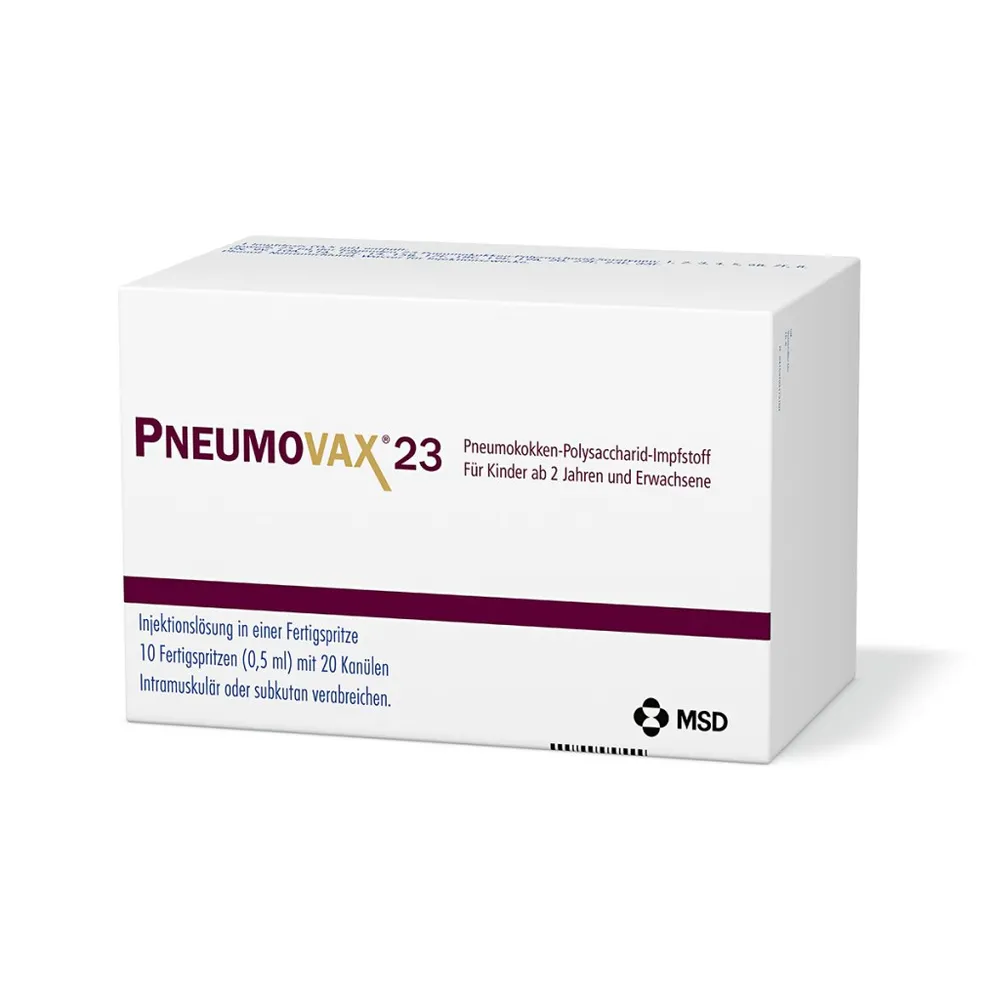
Table of Contents
- Package leaflet: Information for the user
- PNEUMOVAX injectable solution in pre-filled syringe
- 1. What PNEUMOVAX is and what it is used for
- 2. What you should know before you or your child receive PNEUMOVAX
- 3. How to use PNEUMOVAX
- 4. Possible side effects
- 5. How to store PNEUMOVAX
- 6. Contents of the pack and other information
- Package leaflet: Information for the user
- PNEUMOVAX injectable solution in vial
- 1. What PNEUMOVAX is and what it is used for
- 2. What you should know before you or your child receive PNEUMOVAX
- 3. How to use PNEUMOVAX
- 4. Possible side effects
- 5. How to store PNEUMOVAX
- 6. Package contents and other information
Package leaflet: Information for the user
PNEUMOVAX injectable solution in pre-filled syringe
Pneumococcal polysaccharide vaccine
For adults and children aged 2 years and older.
Please read all of this leaflet carefully before you or your child receive this vaccine because it contains important information for you.
- Keep this leaflet. You may need to read it again.
- If you have any questions, ask your doctor or pharmacist.
- This vaccine has been prescribed for you or your child. Do not give it to other people, even if their symptoms are the same as yours or your child's, as it could be harmful.
- If you or your child experience any adverse reactions, including those not listed in this leaflet, talk to your doctor, pharmacist or nurse. See section 4.
Contents of this leaflet
- What PNEUMOVAX is and what it is used for
- What you need to know before you or your child receive PNEUMOVAX
- How to use PNEUMOVAX
- Possible side effects
- How to store PNEUMOVAX
- Contents of the pack and other information
1. What PNEUMOVAX is and what it is used for
PNEUMOVAX is a pneumococcal vaccine. Vaccines are used to protect you or your child against infectious diseases. Your doctor has recommended PNEUMOVAX for you or your child (aged 2 years or older) to protect against serious infections caused by bacteria known as pneumococci.
Pneumococci can cause infections of the lungs (particularly pneumonia), of the membranes covering the brain and spinal cord (meningitis), and bloodstream infections (bacteremia or septicemia). The vaccine will protect you and your child only against pneumococcal infections caused by the serotypes of these bacteria included in the vaccine. However, the 23 pneumococcal serotypes contained in the vaccine include those responsible for the majority of pneumococcal infections (approximately 9 out of 10).
When the vaccine is administered to you or your child, the body's natural defenses will produce antibodies that help protect against pneumococcal infections.
Pneumococcal infections occur worldwide and can affect individuals of any age, but they are more common in:
- elderly people.
- individuals who have had their spleen removed or who have impaired spleen function.
- individuals with reduced resistance to infections due to chronic diseases or infections (such as heart disease, lung disease, diabetes mellitus, kidney or liver disease, or HIV infection).
- individuals with reduced resistance to infections due to treatments received for certain diseases (such as cancer).
Pneumococcal infections of the membranes covering the brain and spinal cord (meningitis) may occasionally occur following skull trauma and fractures, and very rarely after certain surgical procedures. The vaccine may not prevent all such infections.
Additionally, pneumococcal infections may occur in the paranasal sinuses, ears, and other parts of the body. The vaccine is not considered effective in protecting you or your child against these types of milder infections.
2. What you should know before you or your child receive PNEUMOVAX
PNEUMOVAX is indicated for use only in individuals aged 2 years and older, as younger children do not respond effectively to the vaccine.
To ensure the vaccine is suitable for you or your child, it is important to inform your doctor or nurse if any of the following apply to you or your child. If anything is unclear or you are uncertain, please ask your doctor or nurse for advice. As with any vaccine, PNEUMOVAX may not fully protect all vaccinated individuals.
Do not use PNEUMOVAX if you or your child are allergic (hypersensitive) to the pneumococcal polysaccharide vaccine or to any of the other components of the vaccine listed in section 6.
Warnings and precautions
Inform your doctor, pharmacist, or nurse before vaccination if:
you or your child have an infection with high fever, as vaccination may need to be postponed until recovery.
You should also inform your doctor before vaccination if:
you or your child have a weakened resistance to infections due to ongoing medical treatment (such as medications or radiotherapy for cancer).
you or your child have a chronic illness or an infection that may have reduced your resistance to pneumococcal infections.
In these cases, vaccination may need to be delayed, and even then, the vaccine may not protect you to the same extent as healthy individuals.
Individuals aged 65 years and older may not tolerate medical treatments in the same way as younger individuals. Therefore, a higher number and/or greater severity of reactions cannot be excluded in some older subjects.
Other medicines and PNEUMOVAX
Inform your doctor or pharmacist if you or your child are taking, have recently taken, or might take any other medicines.
PNEUMOVAX can be administered simultaneously with the influenza vaccine at separate injection sites. Most people are able to respond to both vaccines when administered concurrently, thus becoming protected against both infections.
For information on concomitant administration of PNEUMOVAX and ZOSTAVAX, please consult your doctor or healthcare provider.
If you or your child are already taking antibiotics to prevent pneumococcal infection, the treatment should not be interrupted after vaccination. Furthermore, even after vaccination, it is always important to consult a doctor and start antibiotic therapy promptly if you or your child are suspected of having contracted any type of infection, especially if you or your child are at high risk of pneumococcal infection (for example, if the spleen has been removed or does not function properly).
Pregnancy, breastfeeding, and fertility
If you are pregnant, suspect you may be pregnant, planning a pregnancy, or are breastfeeding or intend to breastfeed, consult your doctor or pharmacist before receiving this vaccine.
Driving and using machines
There is no information indicating that the vaccine affects the ability to drive vehicles or operate machinery.
PNEUMOVAX contains sodium
This medicine contains less than 1 mmol (23 mg) of sodium per dose, i.e. essentially "sodium-free".
3. How to use PNEUMOVAX
Vaccination must be administered by a doctor or nurse trained in the use of vaccines. The vaccine should be given in a medical office or hospital setting so that equipment for managing any uncommon severe allergic reaction following injection is readily available.
Always use this vaccine exactly as your doctor or pharmacist has instructed you. If you have any doubts, consult your doctor or pharmacist.
The vaccine is administered by intramuscular injection or by deep subcutaneous injection. The doctor or nurse will take care not to inject the vaccine into the skin or into a blood vessel for you or your child.
The vaccine is sometimes given before (usually at least two weeks before) the scheduled date for spleen removal or the start of specific cancer treatments. If you or your child have already started or completed specific treatments, vaccination may be delayed by approximately three months.
When administered to HIV-positive individuals, the vaccine is generally given as soon as test results are available.
You or your child will receive one dose of the vaccine. A second dose of vaccine is not usually given until at least three years after the first dose. Healthy individuals usually do not require a second dose of vaccine. However, additional doses may be recommended for individuals at high risk of severe pneumococcal infections (for example, those who have had their spleen removed or who have impaired spleen function), usually between 3 and 5 years after the first dose. Revaccination is not usually recommended within 3 years of the first dose, as it increases the risk of adverse reactions.
Your doctor or nurse will decide whether and when to administer an additional dose of vaccine to you or your child.
If you use more PNEUMOVAX than you should
There is no data available regarding overdose with this vaccine. Overdose is highly unlikely, as the vaccine is supplied in a single-dose, pre-filled syringe and is administered by a doctor or nurse.
4. Possible side effects
Like all vaccines and medicines, PNEUMOVAX may cause side effects, although not everybody experiences them.
Allergic reactions
Contact a doctor immediately if you or your child experience any of the following symptoms, or other severe symptoms, after vaccination:
difficulty breathing, bluish discoloration of the tongue or lips,
decrease in blood pressure (causing dizziness) and collapse,
fever, general feeling of illness accompanied by pain or inflammation,
joint swelling and muscle pain,
swelling of the face, lips, tongue and/or throat and neck,
swelling of the hands, feet or ankles,
hives (inflammatory skin lesions) and skin rash.
If any severe allergic reaction occurs, it usually appears very shortly after the vaccine has been administered, while the person is still at the medical facility.
Side effects
The most commonly reported reactions (which may affect more than 1 in 10 people) are tenderness, pain, redness, warmth, swelling and hardening at the injection site, and fever. These reactions tend to occur more frequently after the second dose of the vaccine than after the first dose.
Other side effects include:
Rare (may affect up to 1 in 1,000 people):
swelling of the limb where the injection was given.
Not known (frequency cannot be estimated from the available data):
reduced mobility of the limb where the injection was given,
feeling of tiredness,
general feeling of malaise,
uncontrollable chills,
feeling of illness or discomfort,
enlarged and/or inflamed glands,
joint pain, inflammation and swelling, and muscle pain,
reduction in the number of certain blood particles called platelets in people who already have low platelet counts due to a condition known as ITP (Idiopathic Thrombocytopenic Purpura), which increases the risk of bleeding and bruising,
headache, altered skin sensation or tingling, reduced limb mobility,
numbness and weakness of the legs and arms (including a condition known as Guillain-Barré syndrome),
increase in the value of a blood test indicating inflammation in the body (C-reactive protein (CRP)),
patients with previous blood disorders may develop destruction of red blood cells leading to insufficient red blood cells (haemolytic anaemia),
increase in the number of certain types of white blood cells,
febrile seizure (convulsion) associated with high temperature.
Reporting of side effects
If you experience any side effect, including those not listed in this leaflet, talk to your doctor, pharmacist or nurse. You can also report side effects directly via the national reporting system at: www.agenziafarmaco.gov.it/content/come-segnalare-una-sospetta-reazione-avversa. By reporting side effects, you can help provide more information on the safety of this medicine.
5. How to store PNEUMOVAX
Keep this vaccine out of the sight and reach of children.
Do not use this vaccine after the expiry date stated on the carton after "Exp.".
The expiry date refers to the last day of that month.
Store in the refrigerator (2°C – 8°C). Do not freeze.
Before the vaccine is administered to you or your child, the doctor or nurse will check that the solution is clear, colourless, and free from foreign particles.
Do not dispose of any vaccine via wastewater or household waste. Ask your pharmacist how to dispose of vaccines no longer required. This will help protect the environment.
6. Contents of the pack and other information
What PNEUMOVAX contains
One 0.5 millilitre dose contains:
Active substances – 25 micrograms (a very small amount) of each of the 23 serotypes of
polysaccharide derived from bacteria known as pneumococci. The 23 pneumococcal polysaccharide serotypes present in the vaccine are 1, 2, 3, 4, 5, 6B, 7F, 8, 9N, 9V, 10A,
11A, 12F, 14, 15B, 17F, 18C, 19F, 19A, 20, 22F, 23F and 33F.
Other components – phenol, sodium chloride and water for injections.
The vaccine contains less than 1 mmol (23 mg) of sodium per dose, i.e. it is practically “sodium-free”.
Description of the appearance of PNEUMOVAX and contents of the pack
PNEUMOVAX is an injectable solution in a pre-filled syringe (0.5 mL).
It is available in packs containing 1 or 10 pre-filled syringes without needle.
It is available in packs containing 1 or 10 pre-filled syringes with 1 separate needle.
It is available in packs containing 1 or 10 pre-filled syringes with 2 separate needles.
Not all pack sizes may be marketed.
Marketing Authorisation Holder and Manufacturer
Marketing Authorisation Holder
MSD Italia S.r.l.
Via Vitorchiano, 151
00189 Rome
Italy
Manufacturer
Merck Sharp & Dohme B.V., Waarderweg 39, 2031 BN Haarlem, The Netherlands.
This medicinal product is authorised in the European Economic Area countries under the following names:
PNEUMOVAX 23 Austria; Belgium; Bulgaria; Croatia; Cyprus;
Czech Republic; Germany; Greece; Ireland;
Luxembourg; Malta; The Netherlands; Portugal;
Romania; Slovakia; Slovenia; Spain;
United Kingdom
PNEUMOVAX Denmark; Finland; France; Italy;
Iceland; Lithuania; Norway; Sweden
Package leaflet: Information for the user
PNEUMOVAX injectable solution in vial
Pneumococcal polysaccharide vaccine
For adults and children aged 2 years and older.
Please read this leaflet carefully before you or your child receive this vaccine, as it contains
important information for you.
- Keep this leaflet. You may need to read it again.
- If you have any questions, ask your doctor or pharmacist.
- This medicine has been prescribed for you or your child. Do not give it to other people, even if their symptoms are the same as yours or your child's, as it may be harmful.
- If you or your child experience any side effects, including those not listed in this leaflet, consult your doctor, pharmacist, or nurse. See section 4.
Contents of this leaflet
- What PNEUMOVAX is and what it is used for
- What you need to know before you or your child receive PNEUMOVAX
- How to use PNEUMOVAX
- Possible side effects
- How to store PNEUMOVAX
- Contents of the pack and other information
1. What PNEUMOVAX is and what it is used for
PNEUMOVAX is a pneumococcal vaccine. Vaccines are used to protect you or your child against infectious diseases. Your doctor has recommended this vaccine for you or your child (aged 2 years or older) to provide protection against serious infections caused by a bacterium known as Streptococcus pneumoniae (pneumococcus).
Pneumococcus can cause infections of the lungs (particularly pneumonia), of the membranes covering the brain and spinal cord (meningitis), and infections of the bloodstream (bacteremia or septicemia). The vaccine will protect you or your child only against pneumococcal infections caused by the bacterial serotypes contained in the vaccine. However, the 23 pneumococcal serotypes included in the vaccine cover the serotypes responsible for most pneumococcal infections (approximately 9 out of 10).
When the vaccine is administered to you or your child, the body's natural defenses will produce antibodies that help protect against pneumococcal infections.
Pneumococcal infections occur worldwide and can affect individuals of any age, but they are more common in:
- elderly people.
- individuals who have had their spleen removed or who have a spleen dysfunction.
- individuals with weakened resistance to infections due to chronic diseases or infections (such as heart disease, lung disease, diabetes mellitus, kidney or liver disease, or HIV infection).
- individuals with weakened resistance to infections due to treatments they have received for certain diseases (such as cancer).
Pneumococcal infections of the membranes covering the brain and spinal cord (meningitis) may occasionally occur following skull trauma or fractures, and very rarely after certain surgical procedures. The vaccine may not prevent all such infections.
Additionally, pneumococcal infections may occur in the paranasal sinuses, ears, and other body sites. The vaccine is not considered effective in protecting you or your child against these less severe types of infections.
2. What you should know before you or your child receive PNEUMOVAX
PNEUMOVAX is indicated for use only in individuals aged 2 years and older, as younger children do not respond effectively to the vaccine.
To ensure the vaccine is suitable for you or your child, it is important to inform your doctor or nurse if any of the following apply to you or your child. If anything is unclear or you are uncertain, please ask your doctor or nurse for advice. As with any other vaccine, PNEUMOVAX may not fully protect all vaccinated individuals.
Do not use PNEUMOVAX if you or your child are allergic (hypersensitive) to the pneumococcal polysaccharide vaccine or to any of the other ingredients of the vaccine listed in section 6.
Warnings and precautions
Inform your doctor, pharmacist, or nurse before vaccination if:
you or your child have an infection with high fever, as vaccination may need to be postponed until recovery.
You should also inform your doctor before vaccination if:
you or your child have a weakened resistance to infections due to medical treatment (such as medications or radiotherapy for cancer treatment).
you or your child have a chronic illness or an infection that may have reduced your resistance to pneumococcal infections.
In these cases, vaccination may need to be postponed, and even then, the vaccine may not protect you to the same extent as healthy individuals.
Individuals aged 65 years and older may not tolerate medical treatments in the same way as younger individuals. Therefore, a higher number and/or greater severity of reactions in some older subjects cannot be ruled out.
Other medicines and PNEUMOVAX
Inform your doctor or pharmacist if you or your child are taking, have recently taken, or might take any other medicines.
PNEUMOVAX can be administered simultaneously with the influenza vaccine at separate injection sites. Most people are able to respond to both vaccines when administered together, thus becoming protected against both infections.
For information on concomitant administration of PNEUMOVAX and ZOSTAVAX, consult your doctor or healthcare provider.
If you or your child are already taking antibiotics to prevent pneumococcal infection, the treatment should not be stopped after vaccination. Furthermore, even after vaccination, it remains important to consult a doctor and promptly start antibiotic therapy if you or your child are suspected of having contracted any type of infection, especially if you or your child have been identified as being at high risk of pneumococcal infection (for example, if the spleen has been removed or does not function properly).
Pregnancy, breastfeeding, and fertility
If you are pregnant, suspect you may be pregnant, planning to become pregnant, or are breastfeeding or intend to breastfeed, please consult your doctor or pharmacist before receiving this vaccine.
Driving and using machines
There is no information indicating that the vaccine affects the ability to drive or operate machinery.
PNEUMOVAX contains sodium
This medicine contains less than 1 mmol (23 mg) of sodium per dose, i.e., essentially "sodium-free".
3. How to use PNEUMOVAX
Vaccination must be performed by a doctor or nurse trained in the use of vaccines. The vaccine should be administered in a medical office or hospital setting so that equipment needed to manage any uncommon severe allergic reaction following injection is readily available.
Use this medicine exactly as directed by your doctor or pharmacist. If you have any doubts, consult your doctor or pharmacist.
The vaccine is administered by intramuscular injection or by deep subcutaneous injection. The doctor or nurse will take care not to inject the vaccine into the skin or into a blood vessel for you or your child.
The vaccine is sometimes given before (usually at least two weeks prior to) the scheduled date for spleen removal or the start of specific cancer treatments. If you or your child have already started or completed specific treatments, vaccination may be delayed by approximately three months.
When the vaccine is administered to HIV-positive individuals, it is generally given as soon as test results are available.
You or your child will receive one dose of the vaccine. A second dose of the vaccine is not usually administered until at least three years after the first dose. Healthy individuals usually do not require a second dose of the vaccine. However, additional doses may be recommended for individuals at high risk of severe pneumococcal infections (for example, those who have had their spleen removed or who have impaired spleen function), usually between 3 and 5 years after the first dose. Re-vaccination is not usually recommended within 3 years of the first dose, as it increases the risk of adverse reactions.
Your doctor or nurse will decide whether and when to administer an additional dose of the vaccine to you or your child.
If you use more PNEUMOVAX than you should
There are no data regarding overdose with this vaccine. Overdose is highly unlikely, as the vaccine is supplied in a single-dose vial and is administered by a doctor or nurse.
4. Possible side effects
Like all vaccines and medicines, PNEUMOVAX may cause side effects, although not everybody gets them.
Allergic reactions
Contact a doctor immediately if you or your child experience any of the following symptoms, or other serious symptoms, after vaccination:
difficulty breathing, bluish discoloration of the tongue or lips,
decrease in blood pressure (causing dizziness) and collapse,
fever, general feeling of illness accompanied by pain or inflammation,
joint swelling and muscle pain,
swelling of the face, lips, tongue and/or throat and neck,
swelling of the hands, feet or ankles,
hives (inflammatory skin lesions) and skin rash.
If any severe allergic reaction occurs, it usually appears very soon after the vaccine has been administered, while the person is still at the medical facility.
Side effects
The most commonly reported reactions (which may affect more than 1 in 10 people) are tenderness, pain, redness, warmth, swelling and hardening at the injection site, and fever. These reactions tend to occur more frequently after the second dose of the vaccine than after the first dose.
Other side effects include:
Rare (may affect up to 1 in 1,000 people):
swelling of the limb where the injection was given.
Not known (frequency cannot be estimated from the available data):
reduced mobility of the limb where the injection was given,
feeling of tiredness,
general feeling of unwellness,
uncontrollable shivering,
feeling of illness or malaise,
enlarged and/or inflamed glands,
joint pain, inflammation and swelling, and muscle pain,
decrease in the number of certain blood particles called platelets in people who already have a low platelet count due to a condition known as ITP (Idiopathic Thrombocytopenic Purpura), which increases the risk of bleeding and bruising,
headache, altered skin sensation or tingling, reduced limb mobility,
numbness and weakness in the legs and arms (including a condition known as Guillain-Barré syndrome),
increase in a blood test value indicating body inflammation (C-reactive protein (CRP)),
patients with blood disorders may develop destruction of red blood cells leading to insufficient red blood cell count (hemolytic anemia),
increase in the number of certain types of white blood cells,
febrile seizure (convulsion associated with high temperature).
Reporting of side effects
If you experience any side effects, including those not listed in this leaflet, please inform your doctor, pharmacist, or nurse. You can also report side effects directly via the national reporting system at: www.agenziafarmaco.gov.it/content/come-segnalare-una-sospetta-reazione-avversa. By reporting side effects, you can help provide more information on the safety of this medicine.
5. How to store PNEUMOVAX
Keep this vaccine out of the sight and reach of children.
Do not use this vaccine after the expiry date stated on the carton after the word “Exp.”.
The expiry date refers to the last day of that month.
Store in a refrigerator (2°C – 8°C). Do not freeze.
Before the vaccine is administered to you or your child, your doctor or nurse will check that the liquid is clear, colourless, and free from foreign particles.
Do not dispose of any vaccine via wastewater or household waste. Ask your pharmacist how to dispose of vaccines no longer required. This will help protect the environment.
6. Package contents and other information
What PNEUMOVAX contains
One 0.5 mL dose contains:
Active substances – 25 micrograms (a very small amount) of each of the 23 serotypes of
polysaccharide derived from bacteria known as pneumococci. The 23 pneumococcal
polysaccharide serotypes present in the vaccine are 1, 2, 3, 4, 5, 6B, 7F, 8, 9N, 9V, 10A,
11A, 12F, 14, 15B, 17F, 18C, 19F, 19A, 20, 22F, 23F and 33F.
Other components – phenol, sodium chloride and water for injections.
The vaccine contains less than 1 mmol (23 mg) of sodium per dose, i.e. it is practically “sodium-free”.
Description of the appearance of PNEUMOVAX and contents of the pack
Injectable solution in a vial (0.5 mL).
Available in packs containing 1, 10 or 20 vials.
Not all pack sizes may be marketed.
Marketing Authorisation Holder and Manufacturer
Marketing Authorisation Holder
MSD Italia S.r.l.
Via Vitorchiano, 151
00189 Rome
Italy
Manufacturer
Merck Sharp & Dohme B.V., Waarderweg 39, 2031 BN Haarlem, The Netherlands.
This medicinal product is authorised in the European Economic Area Member States under the
following names:
PNEUMOVAX 23 Belgium; Greece; Spain; Germany;
Luxembourg; The Netherlands; Austria;
Portugal; Ireland
PNEUMOVAX Denmark; France; Iceland; Italy; Norway;
Finland; Sweden
Pneumococcal polysaccharide vaccine
United Kingdom