Pixuvri
Italy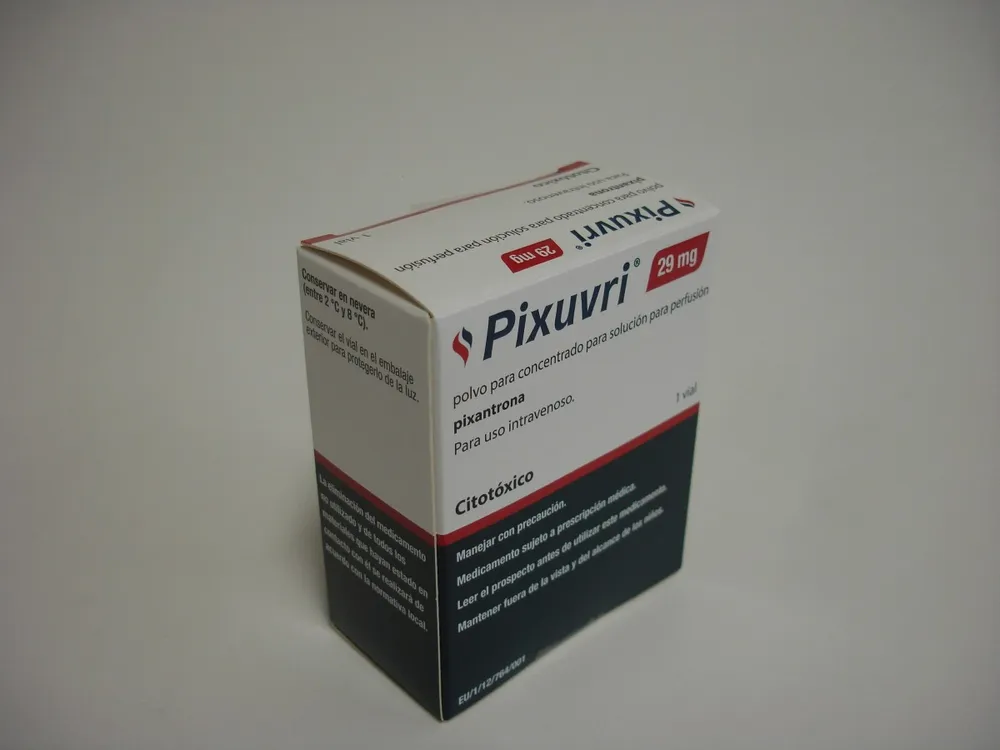
Table of Contents
- Package leaflet: Information for the user
- Pixuvri 29 mg powder for concentrate for solution for infusion
- 1. What Pixuvri is and what it is used for
- 2. What you need to know before using Pixuvri
- 3. How to use Pixuvri
- 4. Possible side effects
- 5. How to store Pixuvri
- 6. Package contents and other information
- - The following information is intended exclusively for healthcare professionals:
Package leaflet: Information for the user
Pixuvri 29 mg powder for concentrate for solution for infusion
pixantrone
Please read all of this leaflet carefully before you start using this medicine because it contains important information for you.
- Keep this leaflet. You may need to read it again.
- If you have any questions, ask your doctor.
- If you get any side effects, talk to your doctor. This includes any possible side effects not listed in this leaflet. See section 4.
What is in this leaflet
- What Pixuvri is and what it is used for
- What you need to know before using Pixuvri
- How to use Pixuvri
- Possible side effects
- How to store Pixuvri
- Contents of the pack and other information
1. What Pixuvri is and what it is used for
Pixuvri belongs to a pharmacotherapeutic group of medicines known as "antineoplastic agents",
used in the treatment of tumours.
Pixuvri is used to treat adult patients with relapsed aggressive non-Hodgkin lymphomas that have recurred multiple times or are refractory. By binding to DNA, Pixuvri destroys tumour cells, causing their death.
The medicine is used in patients whose tumour has not responded to treatment or has reappeared after treatment with other chemotherapies.
2. What you need to know before using Pixuvri
Do not use Pixuvri:
- if you are allergic to pixantrone dimaleate or to any of the other ingredients of this medicine (listed in section 6);
- if you have recently been vaccinated;
- if you know you have long-standing low levels of red blood cells, white blood cells, and platelets;
- if you have severe liver problems.
Warnings and precautions
Talk to your doctor before using Pixuvri:
- if you have been told that you have very low levels of white blood cells;
- if you have heart disease or if your blood pressure remains high despite treatment, especially if you have previously suffered from heart failure or have had a heart attack within the last six months;
- if you currently have an infection;
- if you have never undergone cancer therapy before;
- if you are on a low-salt (sodium) diet;
- if you are taking other medicines that may interact with Pixuvri (see “Other medicines and Pixuvri”).
Skin sensitivity to sunlight
During treatment with pixantrone, you should minimize or avoid exposure to natural or artificial sunlight (sunbeds or UV-A/B treatments). If you are exposed to sunlight, you must wear protective clothing and use sunscreen with high UV-A absorption.
Children and adolescents
This medicine must not be given to children and adolescents under 18 years of age, as there is no information available on the use of Pixuvri in children and adolescents.
Other medicines and Pixuvri
Inform your doctor if you are taking, have recently taken, or might take any other medicines. This is extremely important because taking several medicines at the same time may increase or reduce their effects. Pixuvri must not be used together with other medicines unless your doctor has determined it is safe to do so.
In particular, make sure to inform your doctor if you are currently using or have recently used any of the following medicines:
Inform your doctor if you are taking medicines such as:
- Warfarin, to prevent blood clots;
- Theophylline, for the treatment of lung conditions such as emphysema or asthma;
- Amitriptyline, used in the treatment of depression;
- Olanzapine, clozapine, for the treatment of schizophrenia or manic depression;
- Haloperidol, used in the treatment of anxiety and insomnia;
- Ondansetron, used to prevent nausea and vomiting during chemotherapy;
- Propranolol, to treat high blood pressure.
Pixuvri with food and drink
You do not need to change your diet after treatment with Pixuvri, unless your doctor advises otherwise.
Pregnancy, breastfeeding, and fertility
Pixuvri must not be given to pregnant women, as it may harm the unborn baby. If you are pregnant, suspect you may be pregnant, are planning to become pregnant, or are breastfeeding, consult your doctor before taking this medicine.
Effective contraception must be used during treatment with Pixuvri and for 6 months after treatment has ended. This applies both to women of childbearing potential and to men who may be fertile and are being treated with Pixuvri.
Women being treated with Pixuvri must not breastfeed.
Driving and using machines
It is not known whether Pixuvri has an effect on the ability to drive or use machines.
Pixuvri contains sodium
After reconstitution and dilution, this medicine contains approximately 1 g per dose (43 mmol) of sodium (the main component of table salt). This amount corresponds to 50% of the maximum daily sodium intake for an adult.
Information for patients on a low-salt (sodium) diet
After dilution, the medicine contains approximately 1,000 mg (43 mmol) of sodium per dose. This should be taken into account by patients following a low-sodium diet.
3. How to use Pixuvri
What dose to administer
The amount (dose) of Pixuvri you will be given depends on your body surface area expressed in square meters (m²). Body surface area is calculated based on your height and weight. Your blood test results and your general health condition will also be taken into account. The recommended dose is 50 mg/m². If necessary, your doctor will adjust the dose during treatment.
Before starting therapy with Pixuvri, your doctor will prescribe certain tests.
How often to administer Pixuvri
Pixuvri is administered on days 1, 8, and 15 of each 28-day cycle, for a maximum of 6 cycles.
Before the infusion, you may be given medications to prevent or reduce any possible reactions to Pixuvri, such as anti-nausea drugs.
How to administer Pixuvri
Pixuvri is administered by intravenous infusion into a vein. The administration is performed by a nurse or doctor.
Duration of infusion
The infusion will last approximately one hour, unless otherwise specified.
4. Possible side effects
Like all medicines, this medicine can cause side effects, although not everyone experiences them.
Reactions due to infusion
In rare cases, pain or redness may occur at the injection site during infusion of Pixuvri. If you experience pain or notice redness at the injection site, inform the healthcare professional administering the infusion immediately. It may be necessary to slow down or stop the infusion. If symptoms disappear or improve, the infusion may continue.
Pixuvri is a dark blue solution; for several days after administration of Pixuvri, your skin or eyes may develop a bluish discoloration, as may your urine. Skin discoloration usually resolves within a few days or weeks as the drug is eliminated from the body.
Infections
Inform your doctor of any signs or symptoms of infection (e.g., fever, chills, difficulty breathing, cough, mouth ulcers, difficulty swallowing, or severe diarrhea) after treatment with Pixuvri. Infections are more likely to occur after administration of Pixuvri.
Heart
There is a possibility that the heart's pumping function may weaken following treatment. A serious condition known as "heart failure" may develop, particularly if your heart function was already impaired before starting treatment with Pixuvri. Your doctor will monitor your heart function for signs or symptoms of cardiac involvement.
Inform your doctor if you think you are experiencing any of the following reactions
Very common side effects (may affect more than 1 in 10 people):
- nausea, vomiting;
- changes in skin color;
- thinning or loss of hair;
- abnormal urine color;
- physical weakness;
- reduction in white blood cell count, reduction in red blood cell count (anemia);
- reduction in platelet count in the blood (may require transfusion).
Common side effects (may affect up to 1 in 10 people):
- infections such as lung infection, skin infections, infections associated with low white blood cell count, oral thrush;
- fever;
- severe blood infection (sepsis);
- altered taste;
- skin sensitivity disorders including numbness, tingling, prickling (paresthesia);
- headache;
- insomnia;
- fatigue;
- eye inflammation (conjunctivitis);
- diarrhea;
- abdominal pain;
- inflammation and/or ulceration of the throat and mouth;
- dry mouth, constipation, indigestion, loss of appetite;
- skin disorders such as redness and itching, nail abnormalities;
- heart damage, decreased ability of the heart to pump blood, electrical conduction block in the heart, irregular or rapid heartbeat;
- low blood pressure;
- discoloration of veins, pale skin;
- shortness of breath, cough;
- presence of blood in the urine;
- excessive presence of protein in the urine;
- swelling in legs, ankles, or other parts of the body;
- bone pain;
- chest pain;
- low levels of phosphate in the blood;
- abnormal results in liver or kidney function tests.
Uncommon side effects (may affect up to 1 in 100 people):
- severe infections including septic shock, bronchitis, pneumonia, candidiasis, cellulitis, meningitis, gastroenteritis;
- viral infections such as shingles or reactivation of other viruses such as oral herpes;
- nervousness, insomnia;
- loss of energy;
- dizziness, vertigo;
- dry eyes;
- numbness sensation in the mouth;
- corneal infection;
- allergic reaction to the medicine;
- reduced levels of calcium and sodium in the blood; increased levels of uric acid in the blood;
- inflammation or fluid accumulation around the lungs;
- runny nose;
- bleeding such as intestinal bleeding or red spots on the skin due to rupture of blood vessels;
- venous irritation;
- night sweats;
- irregular heartbeat;
- spontaneous erection;
- skin rash and/or ulceration;
- pain, swelling, weakness, stiffness in joints or muscles;
- reduced volume of urine passed each time;
- weight loss;
- increased bilirubin levels in blood or urine;
- inflammation of the esophagus;
- neck, back, or extremity pain;
- nail infection;
- progression of neoplastic disease (tumor);
- development of new bone marrow or blood cancers, such as acute myeloid leukemia (AML);
- myelodysplastic syndrome (MDS);
- liver damage;
- bone marrow failure;
- increased eosinophils in the blood.
Reporting of side effects
If you experience any side effect, including those not listed in this leaflet, please inform your doctor. You can also report side effects directly via the national reporting system listed in Annex V.
By reporting side effects, you can help provide more information on the safety of this medicine.
5. How to store Pixuvri
Keep this medicine out of the sight and reach of children.
Do not use this medicine after the expiry date stated on the vial label and the carton after "Exp.". The expiry date refers to the last day of that month.
Store in a refrigerator (2°C – 8°C).
Keep the vial in the outer packaging to protect the medicine from light.
Pixuvri does not contain components capable of preventing bacterial growth; therefore, immediate use after reconstitution is recommended. Otherwise, storage times and conditions prior to administration are the responsibility of the user and must not exceed 24 hours at a temperature of 2°C – 8°C.
The reconstituted pixantrone solution is stable for 24 hours at room temperature (15°C – 25°C) when stored in standard infusion bags.
Each Pixuvri vial is for single use only. Unused medicine and waste materials derived from this medicine, including materials used for reconstitution, dilution, and administration, must be disposed of in accordance with current local regulations.
6. Package contents and other information
What Pixuvri contains
- The active substance is pixantrone. Each vial contains 50 mg of pixantrone dimaleate (equivalent to 29 mg of pixantrone). The other components are lactose monohydrate, sodium hydroxide, hydrochloric acid and sodium chloride.
Description of the appearance of Pixuvri and contents of the pack
Pixuvri is a powder for concentrate for solution for infusion. It is presented as a dark blue powder in vials containing 29 mg of pixantrone. Pack: 1 vial.
Marketing Authorisation Holder
Les Laboratoires Servier
50, rue Carnot
92284 Suresnes cedex
France
Manufacturer(s)
Les Laboratoires Servier Industrie
905 route de Saran
45520 Gidy
France
For further information about this medicinal product, please contact the local representative of the Marketing Authorisation Holder:
België/Belgique/Belgien Lietuva
S.A. Servier Benelux N.V. UAB “SERVIER PHARMA”
Tél/Tel: +32 (0)2 529 43 11 Tel: +370 (5) 2 63 86 28
България Luxembourg/Luxemburg
Сервие Медикал ЕООД S.A. Servier Benelux N.V.
Тел.: +359 2 921 57 00 Tel: +32 (0)2 529 43 11
Česká republika Magyarország
Servier s.r.o. Servier Hungaria Kft.
Tel: +420 222 118 111 Tel: +36 1 238 7799
Danmark Malta
Servier Danmark A/S V.J. Salomone Pharma Ltd
Tlf: +45 36 44 22 60 Tel: + 356 21 22 01 74
Deutschland Nederland
Servier Deutschland GmbH Servier Nederland Farma B.V.
Tel: +49 (0)89 57095 01 Tel: + 31 (0)71 5246700
Eesti Norge
Servier Laboratories OÜ Servier Danmark A/S
Tel:+ 372 664 5040 Tlf: +45 36 44 22 60
Eλλάδα Österreich
ΣΕΡΒΙΕ ΕΛΛΑΣ ΦΑΡΜΑΚΕΥΤΙΚΗ ΕΠΕ Servier Austria GmbH
Τηλ: + 30 210 939 1000 Tel: +43 (1) 524 39 99
España Polska
Laboratorios Servier S.L. Servier Polska Sp. z o.o.
Tel: + 34 91 748 96 30 Tel: + 48 (0) 22 594 90 00
France Portugal
Les Laboratoires Servier Servier Portugal, Lda
Tél: + 33 (0)1 55 72 60 00 Tel: + 351 21 312 20 00
Hrvatska România
Servier Pharma, d. o. o. Servier Pharma SRL
Tel: + 385 (0)1 3016 222 Tel: + 4 021 528 52 80
Ireland Slovenija
Servier Laboratories (Ireland) Ltd. Servier Pharma d. o. o.
Tel: + 353 (0)1 663 8110 Tel: + 386 (0)1 563 48 11
Ísland Slovenská republika
Servier Laboratories Servier Slovensko spol. s r.o.
c/o Icepharma hf Tel: + 421 2 5920 41 11
Sími: + 354 540 8000
Italia Suomi/Finland
Servier Italia S.p.A. Servier Finland Oy
Tel: + 39 (06) 669081 P. /Tel: +358 (0)9 279 80 80
Κύπρος Sverige
CA Papaellinas Ltd. Servier Sverige AB
Τηλ: + 357 22 741 741 Tel : +46 (0)8 522 508 00
Latvija United Kingdom
SIA Servier Latvia Servier Laboratories Ltd
Tel: + 371 67502039 Tel: +44 (0)1753 666409
Other sources of information
More detailed information on this medicinal product is available on the website of the European Medicines Agency: http://www.ema.europa.eu
This leaflet is available in all languages of the European Union/European Economic Area on the website of the European Medicines Agency.
__________________________________________________________________________________
- The following information is intended exclusively for healthcare professionals:
Detailed instructions for users
BEFORE RECONSTITUTION, READ CAREFULLY ALL
INSTRUCTIONS FOR PREPARATION
Special precautions for use
Pixuvri is a cytotoxic antineoplastic medicinal product; caution must be exercised during handling. Avoid contact with eyes and skin. During handling and decontamination procedures, wear gloves, masks, and protective goggles. In case of contact with Pixuvri (lyophilized powder or reconstituted liquid solution) on the skin, immediately wash the affected area and rinse membranes thoroughly with water.
Reconstitution/preparation for intravenous administration
Each single-use vial of Pixuvri contains an amount of pixantrone dimaleate equivalent to 29 mg of pixantrone. After reconstitution with 5 ml of 9 mg/ml (0.9%) sodium chloride injection solution, each ml of concentrate contains pixantrone dimaleate equivalent to 5.8 mg of pixantrone.
Reconstitute each 29 mg vial aseptically with 5 ml of 9 mg/ml (0.9%) sodium chloride solution for injection. The powder should dissolve completely within 60 seconds upon gentle agitation of the vial, yielding a dark blue solution with a pixantrone concentration of 5.8 mg/ml.
Following aseptic procedures, withdraw the volume required for the prescribed dose (based on a concentration of 5.8 mg/ml) and subsequently dilute it with 9 mg/ml (0.9%) sodium chloride solution for infusion to a final volume of 250 ml. Compatibility with other diluents has not been established. After transfer, mix the contents of the infusion bag thoroughly. The resulting mixture should be a dark blue solution.
During administration of the diluted Pixuvri solution, the use of in-line filters with a pore size of 0.2 µm made of polyethersulfone is recommended.
Storage conditions prior to administration
Pixuvri does not contain components capable of preventing bacterial growth and should therefore be used immediately after reconstitution. Otherwise, storage times and conditions prior to administration are the responsibility of the user and must not exceed 24 hours at a temperature of 2°C – 8°C.
The reconstituted and diluted solution is stable for 24 hours at room temperature (15°C to 25°C) when exposed to sunlight in standard polyethylene (PE) infusion bags.
Special precautions for disposal and handling
Pixuvri is a cytotoxic agent. Unused medicinal product and waste materials resulting from its use must be disposed of in accordance with local regulations.
Surfaces and equipment accidentally contaminated with Pixuvri should be treated with a sodium hypochlorite solution (100 µl of water and 20 µl of sodium hypochlorite [7 ± 2% available chlorine] per 0.58 mg of Pixuvri).
Equipment such as vials, needles, and syringes used for the administration of Pixuvri must be handled as toxic waste.