Pirfenidone Tecnigen
ItalyTable of Contents
Package leaflet: Information for the user
Talidomide Aurobindo 50 mg hard capsules
Equivalent medicine
WARNING
Thalidomide causes birth defects and fetal death. Do not take thalidomide if you are pregnant or could
become pregnant. You must follow your doctor's advice regarding contraceptive methods.
Read this leaflet carefully before taking this medicine, as it contains important information for you.
- Keep this leaflet. You may need to read it again.
- If you have any questions, ask your doctor or pharmacist.
- This medicine has been prescribed for you only. Do not give it to others, even if they have the same symptoms as you, because it could be harmful.
- If you experience any side effect, including those not listed in this leaflet, contact your doctor or pharmacist. See section 4.
Contents of this leaflet:
- What Talidomide Aurobindo is and what it is used for
- What you need to know before taking Talidomide Aurobindo
- How to take Talidomide Aurobindo
- Possible side effects
- How to store Talidomide Aurobindo
- Contents of the pack and other information
1. What Talidomide Aurobindo is and what it is used for
What Talidomide Aurobindo is
Talidomide Aurobindo contains an active substance called “thalidomide”. It belongs to a group of medicines
that affect the way the immune system works.
What Talidomide Aurobindo is used for
Talidomide Aurobindo is used in combination with two other medicines called “melphalan” and “prednisone”,
for the treatment of adults with a type of cancer known as multiple myeloma. It is used in patients who have
recently been diagnosed and who have never been treated with other medicines for multiple myeloma, either
aged 65 years or older, or under 65 years of age who cannot be treated with high-dose chemotherapy, which
can be very difficult for the body to tolerate.
What is multiple myeloma
Multiple myeloma is a type of cancer that affects a certain type of white blood cells called plasma cells.
These cells accumulate in the bone marrow and divide uncontrollably. This can damage bones and kidneys.
Multiple myeloma is usually incurable. However, signs and symptoms may be greatly reduced or disappear for a certain period, known as “remission”.
How Talidomide Aurobindo works
Talidomide Aurobindo works by helping the body’s immune system and directly attacking the tumour. It acts in several different ways:
- stopping the growth of tumour cells;
- inhibiting the growth of blood vessels within the tumour;
- stimulating part of the immune system to attack tumour cells.
2. What you need to know before taking Talidomide Aurobindo
Your doctor will have provided you with specific information, particularly regarding the effects of Talidomide Aurobindo on the fetus
(described in the Talidomide Aurobindo Pregnancy Prevention Programme).
Your doctor will have given you patient information material. Read this material carefully and follow the instructions provided.
If you do not fully understand these instructions, ask your doctor for further clarification before taking
Talidomide Aurobindo. For additional information, refer to the sections below titled “Warnings and precautions” and “Pregnancy and breastfeeding”.
Do not take Talidomide Aurobindo
- if you are pregnant, think you might be pregnant, or are planning a pregnancy, because Talidomide Aurobindo causes birth defects and fetal death;
- if you are of childbearing potential, unless you are able to comply with the required contraceptive measures to prevent pregnancy (see section 2 “Warnings and precautions” and “Pregnancy and breastfeeding”);
- if you are of childbearing potential, your doctor will document at each prescription that the necessary precautions have been taken and will provide you with this confirmation;
- if you are allergic to thalidomide or to any of the other ingredients of this medicine (listed in section 6 “Contents of the pack and other information”).
Do not take Talidomide Aurobindo if any of the above conditions apply to you. If you have any doubts, consult your doctor or pharmacist before taking Talidomide Aurobindo.
Warnings and precautions
Talk to your doctor, pharmacist, or nurse before taking this medicine in the following situations:
For women taking Talidomide Aurobindo
Before starting treatment, you must ask your doctor whether there is any possibility that you could become pregnant, even if you think it is unlikely. Even if you do not have menstrual bleeding after anti-tumour therapy, you may still become pregnant.
If you are of childbearing potential:
- Your doctor will ensure that pregnancy tests are performed: either before treatment, every 4 weeks during treatment, or 4 weeks after treatment ends.
- You must use an effective method of contraception: either for at least 4 weeks before starting treatment, during treatment, and for at least 4 weeks after treatment ends. Your doctor will advise you on which contraceptive method to use.
If you are of childbearing potential, your doctor must document at each prescription that the necessary contraceptive measures described above have been taken.
For men taking Talidomide Aurobindo
Thalidomide Aurobindo is present in seminal fluid. Therefore, you must not have unprotected sexual intercourse, even if you have had a vasectomy.
- Pregnancy and exposure to the drug during pregnancy must be avoided. Always use a condom: either during treatment or for at least 7 days after treatment ends.
- You must not donate semen:
o during treatment
o for at least 7 days after treatment ends.
For all patients
Talk to your doctor before taking Talidomide Aurobindo if
- you do not understand the advice given by your doctor regarding contraceptive measures or if you feel unable to comply with this advice;
- you have had a heart attack, have had a blood clot in the past, or if you smoke, have high blood pressure, or high cholesterol levels. The risk of developing blood clots (thrombi) in veins and arteries increases during treatment with Talidomide Aurobindo (see also section 4 “Possible side effects”);
- you have or have had neuropathy, i.e. nerve damage causing tingling, coordination problems, or pain in hands or feet (see also section 4 “Possible side effects”);
- you have or have had a slow heart rate (which may be a sign of bradycardia);
- you have high blood pressure in the arteries of the lungs (pulmonary hypertension) (see also section 4 “Possible side effects”);
- you have or have had a low white blood cell count (neutropenia) accompanied by fever and infection;
- you have a low platelet count. You will be more prone to bleeding and bruising;
- you have or have had liver damage (hepatic disorders), including abnormal liver function test results;
- you have or have had severe skin reactions in the past, known as Stevens-Johnson syndrome, toxic epidermal necrolysis, or drug reaction with eosinophilia and systemic symptoms (also known as DRESS or drug hypersensitivity syndrome) (for a description of symptoms, see section 4 “Possible side effects”);
- you have had an allergic reaction during treatment with Talidomide Aurobindo, such as rash, itching, swelling, dizziness, or difficulty breathing;
- you have experienced drowsiness;
- you have had fever, chills, and severe shivering, possibly complicated by low blood pressure and confusion (which may be signs of serious infections);
- you have or have had a viral infection in the past, particularly chickenpox, hepatitis B virus infection, or HIV. If in doubt, consult your doctor. Treatment with Talidomide Aurobindo may cause reactivation of the virus in carriers, leading to recurrence of infection. Your doctor should check whether you have ever had hepatitis B virus infection;
- you have kidney or liver problems (see also section 4 “Possible side effects”).
Before taking Talidomide Aurobindo, you may be required to have your thyroid function checked and monitored during treatment.
At any time during or after treatment, inform your doctor or nurse immediately if you experience blurred vision, loss of vision, double vision, difficulty speaking, weakness in one arm or leg, changes in walking or balance problems, persistent numbness, reduced sensation, or loss of sensation, memory loss, or confusion. These may be symptoms of a serious brain disease that can be fatal, known as progressive multifocal leukoencephalopathy (PML).
If you had these symptoms before starting treatment with Talidomide Aurobindo, inform your doctor of any changes in these symptoms.
Your doctor may assess whether you have a high tumour burden throughout the body, including in the bone marrow. This may lead to a condition in which tumours break down and cause abnormal levels of chemicals in the body, potentially leading to kidney failure (this condition is called tumour lysis syndrome) (see also section 4 “Possible side effects”).
Your doctor should monitor whether you develop other types of blood cancers (called acute myeloid leukaemia and myelodysplastic syndromes) during treatment with Talidomide Aurobindo (see also section 4 “Possible side effects”).
You must not donate blood during treatment with Talidomide Aurobindo and for at least 7 days after treatment ends.
If you are unsure whether any of the above conditions apply to you, consult your doctor before taking Talidomide Aurobindo.
Children and adolescents
The use of Talidomide Aurobindo is not recommended in children and adolescents under 18 years of age.
Other medicines and Talidomide Aurobindo
Tell your doctor or pharmacist if you are taking, have recently taken, or might take any other medicines, including over-the-counter medicines and herbal products.
Be sure to inform your doctor if you are taking other medicines that:
- cause drowsiness, as thalidomide may increase these effects. These include sedatives (such as anxiolytics, hypnotics, antipsychotics, H1 antihistamines, opioid derivatives, and barbiturates)
- reduce heart rate (cause bradycardia), such as anticholinesterase agents and beta-blockers
- are used for heart problems and complications (such as digoxin) or to thin the blood (such as warfarin)
- are associated with neuropathy, such as other anti-cancer treatments
- are used for contraception.
Talidomide Aurobindo with food, drinks and alcohol
Do not consume alcohol during treatment with Talidomide Aurobindo, as alcohol may cause drowsiness, which may be worsened by Talidomide Aurobindo.
Pregnancy and breastfeeding
If you are pregnant, think you might be pregnant, are planning a pregnancy, or are breastfeeding, consult your doctor or pharmacist before taking this medicine.
Pregnancy
Talidomide Aurobindo causes severe birth defects or fetal death.
- It is sufficient for a pregnant woman to take just one capsule to cause severe birth defects in the newborn.
- These defects may include shortened arms or legs, malformation of hands or feet, eye or ear defects, and internal organ problems.
If you are pregnant, you must not take Talidomide Aurobindo. In addition, if you are taking Talidomide Aurobindo, you must avoid becoming pregnant.
If you are a woman of childbearing potential, you must use an effective method of contraception (see section 2 “What you need to know before taking Talidomide Aurobindo”).
You must stop treatment and inform your doctor immediately if:
- You miss a menstrual period or think you may have missed one, notice unusual menstrual bleeding, or suspect you are pregnant.
- You are sexually active without using an effective method of contraception.
If you become pregnant during treatment with thalidomide, you must stop treatment and inform your doctor immediately.
For men taking Talidomide Aurobindo whose partner is of childbearing potential, see section 2 “What you need to know before taking Talidomide Aurobindo”. If your partner becomes pregnant while you are taking Talidomide Aurobindo, you must inform your doctor immediately.
Breastfeeding
Do not breastfeed while taking Talidomide Aurobindo, as it has not been established whether thalidomide passes into breast milk.
Driving and using machines
Do not drive or operate tools or machinery if you experience side effects such as dizziness, fatigue, drowsiness, or blurred vision.
Talidomide Aurobindo contains sodium
This medicine contains less than 1 mmol (23 mg) of sodium per capsule, i.e. it is essentially ‘sodium-free’.
Talidomide Aurobindo contains isomalt
If your doctor has diagnosed you with an intolerance to certain sugars, contact them before taking this medicine.
3. How to take Talidomide Aurobindo
Take Talidomide Aurobindo exactly as your doctor or pharmacist has told you. If you are unsure, consult your doctor or pharmacist.
How much medicine to take
The recommended dose is 200 mg (4 capsules x 50 mg) daily for adults aged 75 years and younger, and 100 mg (2 capsules x 50 mg) daily for adults older than 75 years. However, your doctor will decide your dose, monitor your progress, and may adjust the dose as necessary. Your doctor will instruct you on how to take Talidomide Aurobindo and for how long (see section 2 “What you need to know before taking Talidomide Aurobindo”).
Talidomide Aurobindo is taken daily in treatment cycles of 6 weeks each, in combination with melphalan and prednisone (taken on day 1 and day 4 of each 6-week cycle).
How to take this medicine
- Do not break, open, or chew the capsules. If the powder from a broken Talidomide BMS capsule comes into contact with the skin, wash the skin immediately and thoroughly with soap and water.
- Healthcare providers, caregivers, and family members should wear disposable gloves when handling the blister pack or capsule. Gloves should then be removed carefully to avoid skin exposure, placed in a sealed polyethylene bag, and disposed of according to local regulations. Hands should then be washed thoroughly with soap and water. Pregnant women, or those who suspect they may be pregnant, must not handle the blister pack or capsule.
- Take this medicine by mouth.
- Swallow the capsules whole with a full glass of water.
- Do not crush or chew the capsule.
- Take the single dose capsule before going to bed. This helps reduce the likelihood of feeling drowsy at other times.
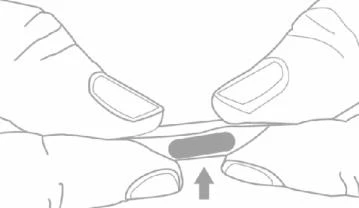
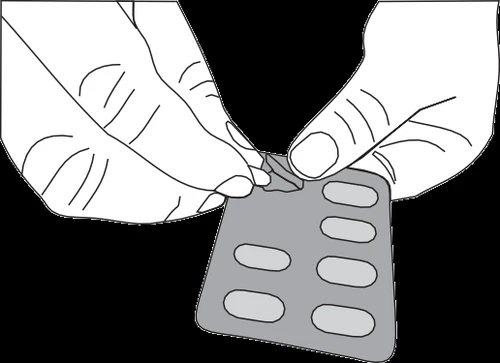
To remove the capsule from the blister, press on one side of the capsule, pushing it through the aluminium foil. Do not press in the center of the capsule, as this may cause it to break.

If you take more Talidomide Aurobindo than you should
If you take more Talidomide Aurobindo than prescribed, contact your doctor or go to a hospital immediately. If possible, bring the medicine pack and this patient information leaflet with you.
If you forget to take Talidomide Aurobindo
If you forget to take Talidomide Aurobindo at your usual time:
- Less than 12 hours have passed: take the missed capsules as soon as possible.
- More than 12 hours have passed: do not take the missed capsules. Take the next dose at your usual time the following day.
If you have any doubts about how to use this medicine, ask your doctor, pharmacist, or nurse.
4. Possible side effects
Like all medicines, this medicine can cause side effects, although not everybody gets them.
The use of this medicine may cause the following side effects:
Stop taking Talidomide Aurobindo and contact your doctor immediately if you notice any of the following
serious side effects. You may need urgent medical treatment:
- Extremely severe and serious skin reactions. Adverse skin reactions may present as rashes with or without blisters. Skin irritation, ulcers or swelling in the mouth, throat, eyes, nose and genital area may occur, together with oedema, fever and flu-like symptoms. These symptoms may be signs of rare and serious skin reactions, such as Stevens-Johnson syndrome, toxic epidermal necrolysis or DRESS syndrome.
- Allergic reactions, such as localized or generalized rash with itching, angioedema and anaphylactic reaction (types of severe allergic reactions which may present as hives, skin rashes, swelling of the eyes, mouth or face, difficulty breathing or itching).
If you notice any of the following serious side effects, tell your doctor immediately:
- Numbness, tingling, coordination problems or pain in the hands and feet. These may be caused by nerve damage (“peripheral neuropathy”), a very common side effect. It can become very severe, painful and disabling. If you experience these symptoms, contact your doctor immediately, as your dose may need to be reduced or treatment stopped. This side effect usually occurs when taking this medicine for many months, but may also occur after shorter periods. It may also develop some time after stopping treatment. It may not resolve or may resolve slowly.
- Sudden chest pain or difficulty breathing. This may be caused by blood clots in the arteries supplying blood to the lungs (“pulmonary embolism”), a common side effect. Blood clots may form during treatment or after treatment has ended.
- Pain or swelling in the legs, especially in the lower legs or calves. This may be caused by blood clots in the deep veins of the legs (“deep vein thrombosis”), a common side effect. Blood clots may form during treatment or after treatment has ended.
- Chest pain spreading to the arms, neck, jaw, back or stomach, accompanied by sweating, shortness of breath, feeling unwell or vomiting. These may be symptoms of a heart attack/myocardial infarction (which may be caused by blood clots in the heart arteries).
- Temporary difficulty seeing or speaking. These may be symptoms of a stroke (which may be caused by a blood clot in a cerebral artery).
- Fever, chills, sore throat, cough, mouth ulcers or any other sign of infection.
- Bleeding or bruising without injury.
Other side effects are listed below:
Please note that a small number of patients with multiple myeloma may develop other types of cancer, particularly blood cancers, and this risk may possibly increase with treatment with Talidomide Aurobindo; therefore, your doctor must carefully evaluate the benefits and risks when prescribing Talidomide Aurobindo to you.
Very common (may affect more than 1 in 10 people)
- Constipation.
- Dizziness.
- Drowsiness, feeling tired.
- Tremor (trembling).
- Reduced or abnormal sensation (dysaesthesia).
- Swelling of the hands and feet.
- Reduced blood cell counts. This may mean you are more likely to develop infections. During treatment with Talidomide Aurobindo, your doctor may monitor your blood cell counts.
Common (may affect up to 1 in 10 people)
- Indigestion, feeling unwell (nausea), feeling unwell (vomiting), dry mouth.
- Erythema, dry skin.
- A reduction in white blood cell count (neutropenia) accompanied by fever and infection.
- A simultaneous reduction in red blood cells, white blood cells and platelets (pancytopenia).
- Feeling weak, fainting or instability, lack of energy or strength, low blood pressure.
- Fever, feeling generally unwell.
- Seizures.
- Dizziness, making it difficult to stand upright and move normally.
- Blurred vision.
- Chest infection (pneumonia), lung disease.
- Slow heart rate, heart failure.
- Depression, confusion, mood changes, anxiety.
- Hearing loss or deafness.
- Kidney disease (renal failure).
Uncommon (may affect up to 1 in 100 people)
- Inflammation and swelling of the lung airways (bronchitis).
- Inflammation of the cells lining the stomach wall.
- Perforation of part of the large intestine (colon), which may lead to infection.
- Bowel obstruction.
- Drop in blood pressure when standing up, which may lead to fainting.
- Irregular heartbeat (heart block or atrial fibrillation), feeling faint or fainting.
Not known (frequency cannot be estimated from the available data)
- Underactive thyroid gland (hypothyroidism).
- Sexual dysfunction, for example impotence.
- Severe blood infection (sepsis), accompanied by fever, chills and severe shaking, possibly complicated by low blood pressure and confusion (septic shock).
- Tumour lysis syndrome – metabolic complications that may occur during cancer treatment and sometimes even without treatment. These complications are caused by the breakdown products of dying tumour cells and may include: changes in blood chemistry; high levels of potassium, phosphate and uric acid; and low calcium levels, leading to changes in kidney function, heart rhythm, seizures and sometimes death.
- Liver damage (hepatic disorders), including changes in liver function tests.
- Bleeding from the stomach or intestine (gastrointestinal haemorrhage).
- Worsening of symptoms of Parkinson’s disease (such as tremor, depression or confusion).
- Pain in the upper abdomen and/or back, which may be severe and last for several days, possibly accompanied by nausea, vomiting, fever and rapid pulse: these symptoms may be due to inflammation of the pancreas (pancreatitis).
- Increased pressure in the blood vessels supplying the lungs, which may cause shortness of breath, fatigue, dizziness, chest pain, rapid heartbeat or swelling in the legs or ankles (pulmonary hypertension).
- Viral infections, including herpes zoster (also known as “shingles”, a viral illness causing a painful blistering rash) and reactivation of hepatitis B infection (which may cause yellowing of the skin and eyes, dark brown urine, stomach pain on the right side, fever and feeling nauseous or unwell).
- A brain condition with symptoms including changes in vision, headache, seizures and confusion, with or without high blood pressure (posterior reversible encephalopathy syndrome or PRES).
- A condition affecting the skin, caused by inflammation of small blood vessels, with joint pain and fever (leucocytoclastic vasculitis).
Reporting of side effects
If you get any side effect, including ones not listed in this leaflet, talk to your doctor, pharmacist or nurse.
You can also report side effects directly via the national reporting system at www.aifa.gov.it/content/segnalazioni-reazioni-avverse.
By reporting side effects, you can help provide more information on the safety of this medicine.
5. How to store Talidomide Aurobindo
Keep this medicine out of the sight and reach of children.
Do not use this medicine after the expiry date stated on the pack and blister pack after EXP.
The expiry date refers to the last day of that month.
Do not use this medicine if you notice that the packaging is damaged or shows signs of tampering.
Clear PVC/Aclar (PCTFE)-aluminium foil blister packs: This medicine does not require
special storage conditions.
Clear PVC/PVdC-aluminium foil blister packs: Store below 30°C.
Do not dispose of any medicine via wastewater or household waste. Ask your pharmacist how to dispose of
medicines you no longer use. This will help protect the environment.
6. Package contents and other information
What Talidomide Aurobindo contains
The active substance is thalidomide.
Each hard capsule contains 50 mg of thalidomide.
The other components are:
Isomalt, croscarmellose sodium, talc, sodium stearil fumarate.
Cap
Titanium dioxide (E171), gelatin.
Body
Titanium dioxide (E171), gelatin.
Printing ink (black)
Shellac, black iron oxide (E172), potassium hydroxide.
Description of the appearance of Talidomide Aurobindo and pack contents
Hard capsule.
White powder contained in a white opaque hard gelatin capsule of size “4”, with a white opaque cap printed with “TLM” in black ink and a white opaque body printed with “50” in black ink.
It must be free from physical defects. Each capsule measures approximately 14.00 mm x 5.30 mm.
Talidomide Aurobindo 50 mg hard capsules:
Talidomide Aurobindo 50 mg hard capsules are available in transparent blister packs (PVC/Aclar (PCTFE)-aluminum foil and PVC/PVdC-aluminum foil) containing 28 hard capsules.
Not all pack sizes may be marketed.
Marketing Authorization Holder
Eugia Pharma (Malta) Limited
Vault 14, Level 2, Valletta Waterfront,
Floriana FRN 1914, Malta
Manufacturer
APL Swift Services (Malta) Limited
HF26, Hal Far Industrial Estate,
Hal Far, Birzebbugia, BBG 3000
Malta
Generis Farmacêutica, S.A.
Rua João De Deus, no 19,
Venda Nova, 2700-487 Amadora
Portugal
This medicinal product is authorized in the Member States of the European Economic Area under the following names:
Italy: Talidomide Aurobindo
Portugal: Talidomida Generis