Pioglitazone Aurobindo
Italy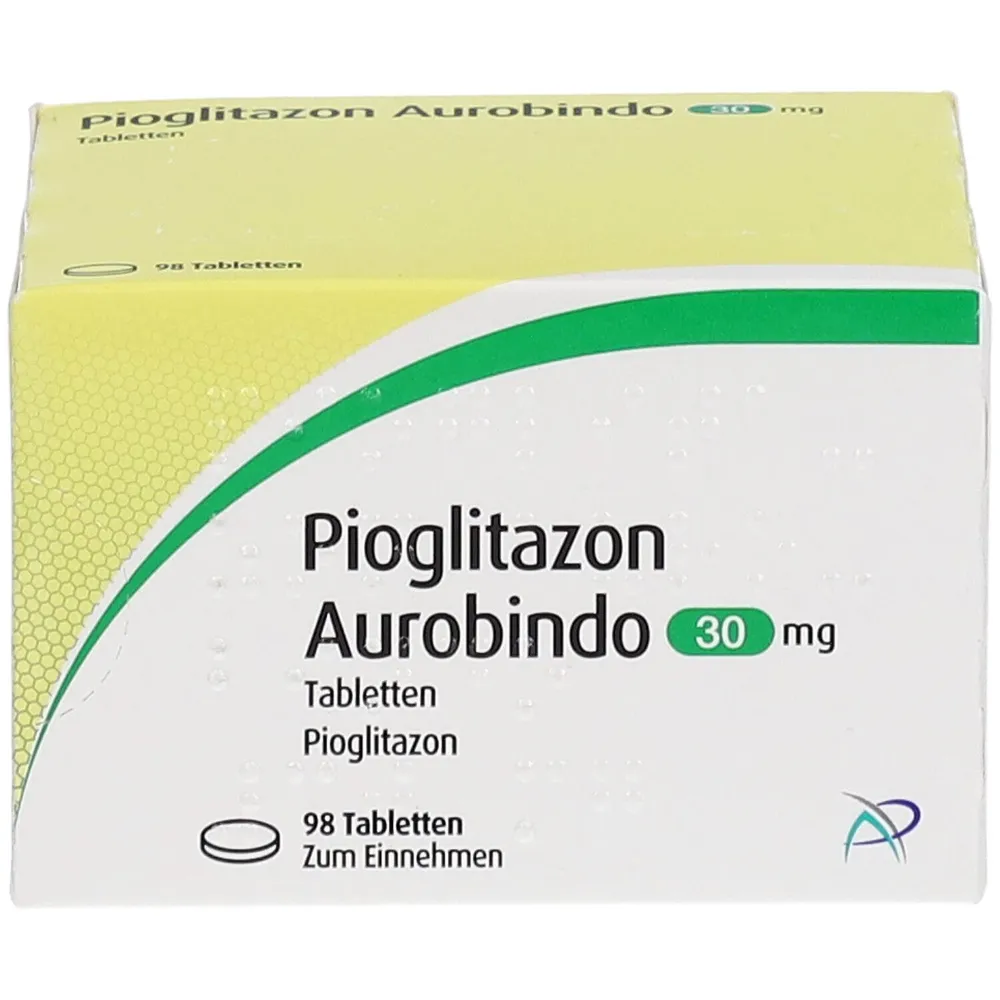
Table of Contents
- Package leaflet: Information for the user
- Pioglitazone Aurobindo 15 mg tablets, 30 mg tablets
- 1. What Pioglitazone Aurobindo is and what it is used for
- 2. What you need to know before taking Pioglitazone Aurobindo
- 3. How to take Pioglitazone Aurobindo
- 4. Possible side effects
- 5. How to store Pioglitazone Aurobindo
- 6. Package contents and other information
Package leaflet: Information for the user
Pioglitazone Aurobindo 15 mg tablets, 30 mg tablets
Generic medicine
Please read all of this leaflet carefully before you start taking this medicine because it contains important information for you.
- Keep this leaflet. You may need to read it again.
- If you have any questions, ask your doctor or pharmacist.
- This medicine has been prescribed for you only. Do not pass it on to other people, even if their symptoms are the same as yours, because it may be harmful.
- If you experience any side effects, including those not listed in this leaflet, tell your doctor or pharmacist. See section 4.
Contents of this leaflet:
- What Pioglitazone Aurobindo is and what it is used for
- What you need to know before taking Pioglitazone Aurobindo
- How to take Pioglitazone Aurobindo
- Possible side effects
- How to store Pioglitazone Aurobindo
- Contents of the pack and other information
1. What Pioglitazone Aurobindo is and what it is used for
Pioglitazone Aurobindo contains pioglitazone. It is an antidiabetic medicine used to treat
type 2 diabetes mellitus (non-insulin-dependent) in adults when metformin is not suitable or has not
worked adequately. This type of diabetes usually occurs in adults.
Pioglitazone Aurobindo helps control your blood sugar level when you have type 2 diabetes by helping your body make better use of the insulin it produces.
Your doctor will assess whether Pioglitazone Aurobindo is working 3 to 6 months after you have started taking it.
Pioglitazone Aurobindo can be used alone in patients who are unable to take metformin and in whom treatment with diet and exercise has failed to control blood glucose, or it may be added to other therapies (such as metformin, sulfonylurea, or insulin) when these have not provided adequate blood sugar control.
2. What you need to know before taking Pioglitazone Aurobindo
Do not take Pioglitazone Aurobindo:
- if you are allergic to pioglitazone or to any of the other ingredients of this medicine (listed in section 6).
- if you have heart failure or have previously had heart failure.
- if you have liver problems.
- if you have had diabetic ketoacidosis (a complication of diabetes causing rapid weight loss, nausea or vomiting).
- if you have or have previously had bladder cancer.
- if you have blood in your urine for which your doctor has not yet carried out investigations.
Warnings and precautions:
Talk to your doctor or pharmacist before taking Pioglitazone Aurobindo (also see section 4)
- if you retain water (fluid retention) or have heart failure problems, especially if you are over 75 years old. You must also inform your doctor if you are taking anti-inflammatory medicines that may cause fluid retention and swelling,
- if you have a particular type of diabetic eye disease called macular edema (swelling at the back of the eye).
- if you have ovarian cysts (polycystic ovary syndrome). The likelihood of becoming pregnant may increase, as ovulation may resume when you take Pioglitazone Aurobindo. If this applies to you, use an appropriate contraceptive method to avoid the risk of unplanned pregnancy.
- if you have liver or heart problems. Before starting Pioglitazone Aurobindo, you will have a blood test to check your liver function. This test may be repeated periodically. Some patients with long-standing type 2 diabetes and heart disease or a history of stroke who were treated with Pioglitazone Aurobindo and insulin developed heart failure. Inform your doctor as soon as possible if you experience signs of heart failure such as unusual shortness of breath, rapid weight gain, or localized swelling (edema).
If you take Pioglitazone Aurobindo with other diabetes medicines, your blood sugar level is more likely to drop below normal levels (hypoglycaemia).
You may also experience a reduction in blood cell count (anaemia).
Bone fractures
A higher number of bone fractures has been observed in patients, particularly in women taking pioglitazone. Your doctor will take this into account when managing your diabetes.
Children and adolescents
Use in children and adolescents under 18 years of age is not recommended.
Other medicines and Pioglitazone Aurobindo:
Inform your doctor or pharmacist if you are taking, have recently taken, or might take any other medicines, including those obtained without a prescription.
Generally, you can continue taking other medicines while being treated with Pioglitazone Aurobindo.
However, certain medicines may particularly affect your blood sugar levels:
- gemfibrozil (used to lower cholesterol)
- rifampicin (used to treat tuberculosis and other infections)
Inform your doctor or pharmacist if you are taking any of these medicines. Your blood sugar level will be monitored and it may be necessary to adjust the dose of Pioglitazone Aurobindo.
Pioglitazone Aurobindo with food and drink
You may take the tablets with or without food. Swallow the tablets with a glass of water.
Pregnancy and breastfeeding
Inform your doctor if
- you are pregnant, think you might be pregnant, or are planning a pregnancy.
- you are breastfeeding or planning to breastfeed your baby. Your doctor will advise you to stop treatment with this medicine.
Driving and using machines
Pioglitazone will not affect your ability to drive or use machines, but be cautious if you have vision problems.
Pioglitazone Aurobindo contains lactose monohydrate
Pioglitazone Aurobindo contains lactose monohydrate. If your doctor has informed you that you have an intolerance to certain sugars, contact your doctor before taking Pioglitazone Aurobindo.
3. How to take Pioglitazone Aurobindo
Take this medicine exactly as directed by your doctor or pharmacist. Check with your doctor or pharmacist if you are unsure.
The usual starting dose is one tablet containing 15 mg or 30 mg of pioglitazone once daily. Your doctor may increase the dose up to a maximum of 45 mg once daily. Your doctor will tell you which dose to take.
If you think that the effect of Pioglitazone Aurobindo is too weak, talk to your doctor.
When Pioglitazone Aurobindo is taken in combination with other medicines used to treat diabetes (such as insulin, chlorpropamide, glibenclamide, gliclazide, tolbutamide), your doctor will tell you whether you need to take a lower dose of these other medicines.
Your doctor will ask you to have periodic blood tests during treatment with Pioglitazone Aurobindo. These tests are to monitor normal liver function.
If you are following a special diabetic diet, you must continue it while taking Pioglitazone Aurobindo.
Your weight should be monitored regularly; if you gain weight, inform your doctor.
If you take more Pioglitazone Aurobindo than you should
If you accidentally take too many tablets, or if someone else or a child takes your tablets, contact your doctor or pharmacist immediately. Your blood sugar level may drop below normal levels, and this can be treated by taking sugar. It is advisable to carry sugar lumps, sweets, biscuits, or sugary fruit juices with you.
If you forget to take Pioglitazone Aurobindo
Take Pioglitazone Aurobindo every day as prescribed. However, if you forget to take a dose, continue with your next dose as usual. Do not take a double dose to make up for a forgotten tablet.
If you stop taking Pioglitazone Aurobindo
Pioglitazone Aurobindo must be taken every day to work properly. If you stop taking Pioglitazone Aurobindo, your blood sugar level may increase. Talk to your doctor before stopping treatment.
If you have any questions about how to use this medicine, ask your doctor or pharmacist.
4. Possible side effects
Like all medicines, this medicine can cause side effects, although not everybody gets them.
In particular, the following side effects have been reported in some patients:
Heart failure has occurred commonly (may affect up to 1 in 10 people) in patients treated with pioglitazone in combination with insulin. Symptoms include unusual shortness of breath, rapid weight gain, or localized swelling (edema). If you experience any of these symptoms, especially if you are over 65 years old, consult a doctor immediately.
Bladder cancer has occurred uncommonly (may affect up to 1 in 100 people) in patients treated with pioglitazone. Signs and symptoms include blood in the urine, pain during urination, or a sudden need to urinate. If you experience any of these symptoms, contact your doctor as soon as possible.
Localized swelling (edema) has occurred very commonly (may affect more than 1 in 10 people) in patients treated with pioglitazone in combination with insulin. If you experience this side effect, contact your doctor as soon as possible.
Common cases of bone fractures (may affect up to 1 in 10 people) have been reported in female patients and also in male patients taking Actos (available data do not allow estimation of frequency). If you experience this adverse effect, inform your doctor as soon as possible.
Blurred vision due to swelling (or fluid accumulation) in the back of the eye has also been reported (frequency cannot be determined based on available data) in patients treated with pioglitazone. If you experience this symptom for the first time, contact your doctor as soon as possible.
Moreover, if you already have blurred vision and the symptom worsens, contact your doctor as soon as possible.
Allergic reactions (frequency cannot be determined based on available data) have been reported in patients taking Pioglitazone Aurobindo. If you experience a severe allergic reaction including hives and swelling of the face, lips, tongue, or throat, which may cause difficulty breathing or swallowing, stop taking this medicine immediately and contact your doctor as soon as possible.
Other side effects experienced by some patients taking pioglitazone are:
Common (may affect up to 1 in 10 people)
- respiratory infections
- abnormal vision
- weight gain
- numbness
Uncommon (may affect up to 1 in 100 people)
- inflammation of the sinuses (sinusitis)
- difficulty sleeping (insomnia)
Not known (frequency cannot be determined from available data)
- increased liver enzymes
- allergic reactions
Other side effects observed in some patients when pioglitazone is taken with other antidiabetic medicines are:
Very common (may affect more than 1 in 10 users)
- decrease in blood sugar (hypoglycaemia)
Common (may affect up to 1 in 10 people)
- headache
- dizziness
- joint pain
- impotence
- back pain
- shortness of breath
- slight reduction in red blood cell count
- flatulence
Uncommon (may affect up to 1 in 100 people)
- sugar in the urine, protein in the urine
- increased enzymes
- sensation of dizziness (vertigo)
- sweating
- fatigue
- increased appetite
If you experience any side effect, including those not listed in this leaflet, talk to your doctor or pharmacist. You may also report side effects via the national reporting system at the following website:
www.agenziafarmaco.gov.it/content/come-segnalare-una-sospetta-reazione-avversa
By reporting side effects, you can help provide more information on the safety of this medicine.
5. How to store Pioglitazone Aurobindo
Keep out of the sight and reach of children.
This medicinal product does not require any special storage conditions.
Do not use this medicinal product after the expiry date stated on the carton, blister, or bottle label after "EXP.". The expiry date refers to the last day of that month.
Do not dispose of any medicinal product via wastewater or household waste. Ask your pharmacist how to dispose of medicines you no longer use. This will help protect the environment.
6. Package contents and other information
What Pioglitazone Aurobindo contains
- The active substance is pioglitazone. Each tablet contains 15 mg of pioglitazone (as hydrochloride). Each tablet contains 30 mg of pioglitazone (as hydrochloride).
- The other ingredients are monohydrate lactose, calcium carmellose, hydroxypropylcellulose, magnesium stearate.
Description of the appearance of Pioglitazone Aurobindo and contents of the pack
Tablet
Pioglitazone Aurobindo 15 mg tablets:
Uncoated tablets, white to almost white, round, biconvex, marked with '31' on one side and 'H' on the other side.
Pioglitazone Aurobindo 30 mg tablets:
Uncoated tablets, white to almost white, round, flat-faced, bevelled edge, marked with '32' on one side and 'H' on the other side.
Pioglitazone Aurobindo tablets are available in PVC/PVDC/aluminium transparent blisters or in HDPE bottles with polypropylene caps.
Blisters packs: 14, 28, 30, 50, 56, 84, 90, 98, 112 and 196 tablets.
HDPE bottle packs:
15 mg and 30 mg: 30 and 500 tablets.
Not all pack sizes may be marketed.
Marketing Authorisation Holder
Aurobindo Pharma (Italia) S.r.l.
Vicolo San Giovanni sul Muro, 9
20121 Milano
Italy
Manufacturer
APL Swift Services (Malta) Limited
HF26, Hal Far Industrial Estate, Hal Far,
Birzebbugia, BBG 3000.
Malta
Milpharm Limited
Ares, Odyssey Business Park, West End Road,
South Ruislip HA4 6QD.
United Kingdom
This medicinal product is authorised in the European Economic Area countries under the following names:
Germany Pioglitazon Aurobindo 15 mg / 30 mg Tabletten
Italy Pioglitazone Aurobindo 15 mg / 30 mg tablets
Netherlands Pioglitazon Aurobindo 15 mg / 30 mg tabletten
Portugal Pioglitazona Aurobindo
Spain Pioglitazona Aurobindo 15 mg / 30 mg EFG tablets
This leaflet was last approved on