Pethidine hydrochloride S.A.L.F.
Italy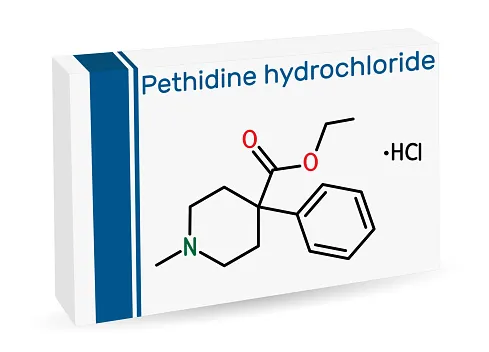
Table of Contents
- Package leaflet: Information for the user
- PETIDINE HYDROCHLORIDE S.A.L.F. 100 mg/2 ml injectable solution
- 1. What PETIDINA CLORIDRATO S.A.L.F. is and what it is used for
- 2. What you need to know before using PETIDINE HYDROCHLORIDE S.A.L.F.
- 3. How to use PETIDINE HYDROCHLORIDE S.A.L.F.
- 4. Possible side effects
- 5. How to store PETIDINE HYDROCHLORIDE S.A.L.F.
- 6. Package contents and other information
- The following information is intended exclusively for doctors or healthcare professionals
Package leaflet: Information for the user
PETIDINE HYDROCHLORIDE S.A.L.F. 100 mg/2 ml injectable solution
Pethidine hydrochloride
Generic medicine
Read this leaflet carefully before using this medicine because it contains important information for you.
- Keep this leaflet. You may need to read it again.
- If you have any questions, ask your doctor, pharmacist, or nurse.
- This medicine has been prescribed for you only. Do not give it to other people, even if their symptoms are the same as yours, as it may be harmful.
- If you experience any side effects, including those not listed in this leaflet, tell your doctor, pharmacist, or nurse. See section 4.
Contents of this leaflet:
- What PETIDINE HYDROCHLORIDE S.A.L.F. is and what it is used for
- What you need to know before using PETIDINE HYDROCHLORIDE S.A.L.F.
- How to use PETIDINE HYDROCHLORIDE S.A.L.F.
- Possible side effects
- How to store PETIDINE HYDROCHLORIDE S.A.L.F.
- Contents of the pack and other information
1. What PETIDINA CLORIDRATO S.A.L.F. is and what it is used for
PETIDINA CLORIDRATO S.A.L.F. contains the active substance petidine, which belongs to a group of
medicines called narcotic analgesics. These medicines work by reducing pain.
Petidina cloridrato S.A.L.F. is indicated:
- for the treatment of pain of various origins, particularly pain due to surgery (postoperative pain), cancer (neoplastic pain), or labour, even if during pregnancy the patient has suffered from high blood pressure and swelling due to fluid retention (pre-eclampsia) or seizures (eclampsia);
- in adults, to induce anaesthesia prior to surgical procedures (pre-anaesthesia).
2. What you need to know before using PETIDINE HYDROCHLORIDE S.A.L.F.
Do not use PETIDINE HYDROCHLORIDE S.A.L.F.
- if you are allergic to pethidine, substances similar to pethidine, or any of the other ingredients of this medicine (listed in section 6);
- if you are pregnant (except during labour) or breastfeeding;
- if you suffer from breathing disorders (respiratory depression, acute bronchial asthma);
- if you suffer from increased pressure inside the skull (increased intracranial pressure);
- if you suffer from irregular heartbeat (supraventricular tachycardia);
- if you have a tumour of the adrenal gland (pheochromocytoma);
- if you suffer from seizures;
- if you are taking medicines for depression (MAO inhibitors); treatment with these medicines must be discontinued at least 15 days before starting treatment with PETIDINE HYDROCHLORIDE S.A.L.F.;
- if you regularly consume alcohol (acute alcoholism) or experience symptoms of alcohol withdrawal (delirium tremens);
- if your blood acid levels are elevated due to diabetes (diabetic acidosis) and you are prone to worsening health conditions (coma);
- if you have severe liver or kidney problems (severe hepatic dysfunction, severe renal failure);
- if you experience central nervous system depression, particularly due to the use of other medicines (especially hypnotics, sedatives, tranquilizers, etc.);
- if you suffer from thyroid gland disorders (hypothyroidism);
- if you suffer from a disorder of the adrenal glands (Addison's disease);
- if you have abdominal disorders (acute abdomen) or intestinal disorders (paralytic ileus).
Warnings and precautions
Talk to your doctor, pharmacist, or nurse before using PETIDINE HYDROCHLORIDE S.A.L.F., or if you notice the appearance of any of the following symptoms during use of PETIDINE HYDROCHLORIDE S.A.L.F.:
- Loss of libido, impotence, menstrual cycle disorders, or other signs suggesting reduced fertility. This may be due to decreased production of sex hormones.
During treatment with this medicine, especially with prolonged treatment, a reduction in its effectiveness and duration of action (tolerance and dependence) may occur. If this happens, consult your doctor, who may increase the dosage.
After stopping treatment, you may feel the need to continue using this medicine (dependence), together with the appearance of numerous other symptoms collectively known as "withdrawal syndrome" (see section "If you stop taking PETIDINE HYDROCHLORIDE S.A.L.F.").
Tolerance and dependence develop very slowly if this medicine is administered to prevent pain onset rather than on an as-needed basis.
Even though the risk of dependence is rare when using this medicine to prevent pain, do not use it if:
- your pain can be controlled by less potent analgesic medicines;
- you are not under strict medical supervision during treatment with this medicine.
Always use this medicine under medical supervision and inform your doctor if:
- you suffer from brain disorders (organic brain conditions);
- you suffer from lung disorders (chronic pulmonary conditions), especially if you have increased mucus secretion in the bronchi (bronchial hypersecretion);
- you suffer from other breathing problems (respiratory obstruction), associated with high body weight (obesity) and spinal disorders (kyphoscoliosis);
- you suffer from thyroid gland disorders causing increased mucus secretion in the bronchi (myxoedema);
- you have low blood pressure associated with severe circulatory problems (severe hypotensive states and shock);
- you have gallbladder problems (biliary colic), occurring after surgical procedures on the biliary or urinary tracts;
- you have intestinal problems (slowed intestinal transit, intestinal inflammation or obstruction);
- you suffer from liver (acute and chronic hepatopathies) or kidney (chronic nephropathies) disorders;
- you suffer from heart or circulatory disorders (cardiovascular conditions) or irregular heartbeats (arrhythmias).
For athletes: Using this medicine without therapeutic need constitutes doping and may lead to a positive result in anti-doping tests.
Children
Use PETIDINE HYDROCHLORIDE S.A.L.F. with caution in newborns and children, as there is a higher risk of respiratory problems (respiratory depression) due to greater accumulation of pethidine metabolites.
Other medicines and PETIDINE HYDROCHLORIDE S.A.L.F.
Inform your doctor or pharmacist if you are taking, have recently taken, or might take any other medicine.
Use PETIDINE HYDROCHLORIDE S.A.L.F. with caution and inform your doctor if you are taking the following medicines, as they may increase its effects, particularly causing breathing problems:
- medicines used to induce anaesthesia before surgery (general anaesthetics);
- tranquilizing medicines (hypnotics, sedatives, anxiolytics);
- medicines used to treat certain mental disorders (neuroleptics and phenothiazines);
- medicines used to treat depression (tricyclic antidepressants);
- medicines used to treat allergies (antihistamines);
- medicines used to treat seizures (barbiturates and phenytoin);
- cimetidine, a medicine used to treat stomach acidity and lesions of the stomach and intestine.
Use PETIDINE HYDROCHLORIDE S.A.L.F. with caution and inform your doctor if you are taking:
- medicines that may cause fluid retention and reduced sodium levels in the blood (hyponatraemia);
- medicines belonging to opioid agonists that have been shown to reduce or delay absorption of clopidogrel;
- medicines that are inhibitors of the cytochrome CYP3A4, which may increase the effect of opioids, including breathing difficulties (respiratory depression). A reduction in the dose of pethidine is recommended in patients treated with such medicines, along with close monitoring for possible opioid withdrawal symptoms;
- medicines that are inducers of the cytochrome CYP3A4, which may decrease plasma levels of pethidine by accelerating its elimination. Close monitoring of patients for possible opioid withdrawal symptoms (respiratory depression or sedation) is advised;
- medicines that regulate the production and elimination of the neurotransmitter serotonin.
Concomitant use with sedative medicines such as benzodiazepines or related drugs
Concomitant use of PETIDINE HYDROCHLORIDE S.A.L.F. and sedative medicines such as benzodiazepines or related drugs increases the risk of drowsiness, breathing difficulties (respiratory depression), coma, and may be life-threatening. Therefore, concomitant use should only be considered when no other treatment options are possible.
However, if your doctor prescribes PETIDINE HYDROCHLORIDE S.A.L.F. together with sedative medicines, the dose and duration of concomitant therapy must be limited by the doctor.
Inform your doctor if you are taking sedative medicines and strictly follow the dose recommended by your doctor.
It may be helpful to inform friends or relatives about the possibility of developing the above-mentioned signs and symptoms. Consult your doctor if such symptoms occur.
If you are a smoker, tobacco may increase the effects of this medicine.
PETIDINE HYDROCHLORIDE S.A.L.F. and alcohol
Avoid consuming alcohol during treatment with this medicine, as breathing problems (inhibition of respiratory function) may occur.
Pregnancy and breastfeeding
If you are pregnant, suspect you may be pregnant, plan to become pregnant, or are breastfeeding, consult your doctor or pharmacist before using this medicine.
Do not use this medicine during pregnancy, as it crosses the placenta and reaches fetal concentrations higher than maternal levels (see section Do not use PETIDINE HYDROCHLORIDE S.A.L.F.).
Do not use this medicine during breastfeeding, as the newborn may experience breathing problems (respiratory depressant effects) (see section Do not use PETIDINE HYDROCHLORIDE S.A.L.F.).
Driving and using machines
This medicine may cause adverse effects such as sedation and dizziness, impairing your ability to drive or operate machinery. These effects may be stronger if you take this medicine together with alcohol. If this occurs, avoid driving or operating machinery.
3. How to use PETIDINE HYDROCHLORIDE S.A.L.F.
This medicine will be administered to you by a doctor or trained medical personnel.
The solution must be clear, colourless, and free from visible particles.
Do not use the medicine if the solution appears coloured.
Each vial is intended for single and uninterrupted administration only; any remaining medicine must not be used and must be discarded.
Use in adults
This medicine may be administered by injection into a muscle (intramuscular route), under the skin (subcutaneous route), or directly into a vein (intravenous route).
Injection into a muscle or under the skin: the recommended dose is 25–100 mg.
Direct injection into a vein: the recommended dose is 25–50 mg.
Use in children
This medicine will be administered by injection into a muscle (intramuscular route).
The recommended dose is 0.5–2 mg per kilogram of body weight.
Use during labour
This medicine will be administered by injection into a muscle or under the skin as soon as contractions become regular.
The recommended dose is 50–100 mg. If necessary, your doctor may decide to repeat the dose after 1–3 hours.
Use before surgery (pre-anaesthesia)
The recommended dose is 50–100 mg, administered one hour before the operation.
Your doctor may reduce the dose of this medicine if:
- you are taking other medicines that depress the central nervous system (e.g. opioid medicines for pain relief);
- you are elderly or debilitated;
- you have kidney problems (renal insufficiency), prostate or urinary tract disorders (prostatic hypertrophy, urethral stricture);
- you have reduced blood volume (hypovolemia).
If you use more PETIDINE HYDROCHLORIDE S.A.L.F. than you should
In case of overdose, problems affecting the nervous system (central nervous system depression) may occur, which can cause the following symptoms:
- unconsciousness, ranging from partial impairment to deep coma;
- breathing difficulties (respiratory depression), even severe (Cheyne-Stokes respiration), associated with bluish skin discoloration due to low oxygen levels in the body (cyanosis);
- lowered body temperature (hypothermia) with cold, clammy skin;
- muscle paralysis (flaccid paralysis);
- slowed heart rate (bradycardia);
- low blood pressure (hypotension);
- dilated pupils (mydriasis);
- dry mouth (xerostomia);
- increased muscle activity;
- muscle tremors;
- involuntary muscle contractions (myoclonus);
- increased heart rate (tachycardia);
- delirium and disorientation;
- hallucinations;
- seizures (similar to grand mal seizures).
In severe cases of overdose, which may occur if the medicine is injected too rapidly into a vein, the following may occur:
- absence of breathing (apnoea);
- inadequate blood circulation (circulatory collapse, shock);
- cessation of heart activity (cardiac arrest);
- cessation of breathing (respiratory arrest);
- death;
- lung inflammation (pneumonia), fluid accumulation in the lungs (pulmonary oedema), and severe drop in blood pressure possibly leading to cardiac arrest (shock), which may be fatal.
In case of accidental ingestion/overdose of PETIDINE HYDROCHLORIDE S.A.L.F., contact your doctor immediately or go to the nearest hospital.
If you forget to use PETIDINE HYDROCHLORIDE S.A.L.F.
Do not use a double dose to make up for a forgotten dose.
If you stop using PETIDINE HYDROCHLORIDE S.A.L.F.
Do not stop treatment with this medicine suddenly or without consulting your doctor first, as various undesirable effects (withdrawal syndrome) may occur. Therefore, treatment should be discontinued gradually.
If your doctor decides to stop treatment, they will gradually reduce the dose to minimise withdrawal symptoms, which may occur after stopping ongoing treatment, such as:
- increased sensitivity to pain (hyperalgesia) and widespread tenderness;
- dilated pupils (mydriasis);
- increased blood pressure (hypertension);
- chills;
- restlessness;
- yawning;
- tearing and runny nose (rhinorrhoea);
- sweating and erection of hairs (piloerection);
- involuntary muscle contractions (fasciculations and muscle spasms);
- abdominal, leg, and lower back pain (lumbago);
- headache (cephalalgia);
- sneezing;
- weakness;
- anxiety and irritability;
- sleep disturbances or insomnia;
- agitation;
- loss of appetite (anorexia) and weight loss;
- nausea, vomiting, and diarrhoea;
- dehydration;
- increased heart rate (tachycardia);
- increased respiratory rate (tachypnoea);
- fever;
- blood vessel disorders (vasomotor disturbances).
These symptoms are more likely to occur after prolonged use of high doses, beginning within 3 hours of the last dose, peaking in intensity after 8–12 hours, and lasting for 3–5 days.
If you have any doubts about the use of this medicine, consult your doctor, pharmacist, or nurse.
4. Possible side effects
Like all medicines, PETIDINE HYDROCHLORIDE S.A.L.F. can cause side effects, although not
everyone experiences them.
The risk of experiencing side effects increases if this medicine is administered
intravenously too rapidly.
The following side effects may occur:
Frequency not known (frequency cannot be estimated from the available data)
- disorientation, visual disturbances, hallucinations, mood disturbances (dysphoria, euphoria), agitation, depression, mental clouding (obtundation), psychiatric disorders (psychosis), headache, increased muscle activity, tremors, rigidity, seizures, sedation, coma, increased risk of delirium in elderly patients;
- breathing difficulties (mild or moderate respiratory depression), which may worsen your health condition if you suffer from lung problems (bronchopulmonary disorders);
- dizziness;
- decreased production of certain hormones (ACTH, glucocorticoids and TSH, leading to adrenal insufficiency and hypothyroidism);
- decreased or increased blood pressure (hypotension, hypertension), increased heart rate (tachycardia), blood vessel dilation (vasodilation), temporary loss of consciousness (syncope), cardiac arrest, shock;
- if this medicine is accidentally injected into arteries instead of veins, severe tissue damage may occur (necrosis and gangrene);
- skin irritations (rash, urticaria, erythema), itching;
- severe allergic reactions (anaphylaxis);
- increased levels of certain enzymes in the blood (amylase and lipase), due to involuntary contraction of a muscle regulating their secretion (spasm of the sphincter of Oddi), increased activity of an enzyme (butyrate dehydrogenase);
- nausea, vomiting, dry mouth (xerostomia), constipation;
- constriction of the structure regulating bile and pancreatic juice flow into the intestine (sphincter of Oddi), increased pressure in the biliary ducts and abdominal pain (biliary colic);
- constipation;
- difficulty urinating (urinary retention);
- irritation at the injection site, muscle stiffness (muscular tissue fibrosis), pus formation (abscesses);
- breathing problems in the newborn (respiratory depression), when this medicine is administered to relieve pain during labour;
- withdrawal symptoms (see sections “Warnings and precautions” and “If you stop treatment with PETIDINE HYDROCHLORIDE S.A.L.F.”);
- a combination of the following symptoms: nausea, vomiting, diarrhoea, weight loss, anorexia, fatigue, dizziness and low blood pressure, muscle and joint pain may indicate a potentially life-threatening condition called adrenal insufficiency, in which the adrenal glands do not produce sufficient amounts of hormones.
Reporting of side effects
If you experience any side effect, including those not listed in this leaflet, consult your doctor or pharmacist. You may also report side effects directly via the national reporting system at http://www.aifa.gov.it/content/segnalazioni-reazioni-avverse.
By reporting side effects, you can help provide more information on the safety of this medicine.
5. How to store PETIDINE HYDROCHLORIDE S.A.L.F.
Keep this medicine out of the sight and reach of children.
Do not use this medicine after the expiry date stated on the packaging after "Exp.".
The expiry date refers to the last day of that month, provided the product is in its original unopened packaging and has been stored correctly.
Store in the original packaging to protect the medicine from light.
Each vial is for single use only; any remaining medicine must not be used and should be discarded.
Do not dispose of any medicine via wastewater or household waste. Ask your pharmacist how to dispose of medicines you no longer use. This will help protect the environment.
6. Package contents and other information
What PETIDINA CLORIDRATO S.A.L.F. 100 mg/2ml injectable solution contains
- The active substance is petidina cloridrato. Each vial contains 100 mg of petidina cloridrato.
- The other component is: water for injectable preparations.
Description of the appearance of PETIDINA CLORIDRATO S.A.L.F. 100 mg/2ml and contents of the
packaging
Pack containing 5 vials of 2 ml each.
Marketing Authorization Holder and Manufacturer
S.A.L.F. S.p.A. Laboratorio Farmacologico - Via Marconi, 2 - Cenate Sotto (BG) - Tel. 035 - 940097
The following information is intended exclusively for doctors or healthcare professionals
Special warnings and precautions for use
Tolerance and dependence develop very slowly in clinical practice when the drug is administered to prevent the onset of pain, rather than on an as-needed basis. The mechanisms of opioid addiction with "craving" (drug-seeking behavior) presuppose a phase of self-administration, involving dosage regimens and motivations different from those intended for the management of chronic pain in clinical settings. Therefore, cases of high-degree tolerance and compulsive drug-seeking behaviors are rare; if present, they require specialist intervention.
Furthermore, discontinuation of opioid therapy, when carried out gradually, does not typically lead to behavioral complications in clinical practice, provided the underlying cause of pain has been removed.
However, the risk of dependence exists; therefore, meperidine should not be used in painful conditions responsive to less potent analgesics or in patients who are not under close medical supervision.
Incompatibilities
Meperidine is unstable in alkaline solutions, with sodium thiopental and other barbiturates, aminophylline, sodium heparin, sodium iodide, sodium sulfadiazine, sodium nitrofurantoin, sodium phenytoin, and diethanolamine sulfafurazole.
When meperidine hydrochloride in 5% glucose solution is mixed with minocycline hydrochloride or tetracycline hydrochlorine, the solution changes color from pale yellow to light green. The same solution forms a precipitate upon addition of cefoperazone sodium or mezlocillin sodium, while it shows transient opalescence, disappearing upon shaking, with nafcillin sodium. Incompatibility has also been observed between meperidine hydrochloride and sodium acyclovir, imipenem, furosemide, and idarubicin.
Special precautions for disposal and handling
The solution must be clear, colorless, and free from visible particles. Do not use if slightly opalescent. It is intended for single, uninterrupted administration; any remaining residue must not be used.
Unused medicine and waste materials derived from this medicine must be disposed of in accordance with local regulations.
For further information, refer to the Summary of Product Characteristics.