Periven
ItalyTable of Contents
- Package leaflet: Information for the user
- Periven
- 1. What Periven is and what it is used for
- 2. What you need to know before taking Periven
- 3. How to take Periven
- 4. Possible side effects
- 5. How to store Periven
- 6. Contents of the pack and other information
- 1. Removing the overpouch
- 2. Mixing
- 3. Final preparation phase:
- 4. Hanging the bag
Package leaflet: Information for the user
Periven
Infusion emulsion
Please read this leaflet carefully before using this medicine because it contains
important information for you.
- Keep this leaflet. You may need to read it again.
- If you have any questions, ask your doctor, pharmacist or nurse.
- If you get any side effects, including those not listed in this leaflet, tell your doctor, pharmacist or nurse. See section 4.
Contents of this leaflet:
- What Periven is and what it is used for
- What you need to know before using Periven
- How to use Periven
- Possible side effects
- How to store Periven
- Contents of the pack and other information
1. What Periven is and what it is used for
Periven consists of a three-compartment bag and an overpouch. Periven contains the following
medicines: amino acid solution (building blocks of proteins), lipid solution, glucose solution, and
electrolyte solution.
It provides energy (as sugar and lipids) and amino acids into the bloodstream in cases where normal
feeding is not possible.
It is used as part of a balanced intravenous diet, together with salts, trace elements, and vitamins, which together supply the complete nutritional requirements.
2. What you need to know before taking Periven
Periven must not be administered to you if:
- you are allergic to any of the active substances or to any of the other ingredients of this medicine (listed in section 6)
- you are allergic to products containing eggs, soy or peanuts
- you have abnormally high levels of lipids in your blood (such as cholesterol)
- you have severely impaired liver function
- you are suffering from acute shock (resulting from severe blood loss or an allergic reaction)
- you have a congenital blood coagulation disorder (hemophagocytic syndrome) or if your blood does not clot properly
- you have a condition in which your body has problems utilizing proteins or amino acids
- you have severe kidney problems
- you have hyperglycemia ( too much sugar in the blood ) when more than 6 units of insulin per hour are required
- you have elevated levels of electrolytes (salts) in the blood
- you have metabolic acidosis (the acid levels in your body fluids and tissues become too high)
- you have too much fluid in your body—hyperhydration
- you have fluid in the lungs (acute pulmonary edema)
- you are dehydrated with low salt levels
- you have heart problems
- you are in a coma
- you have severe sepsis (a condition in which your body is affected by a severe infection).
Warnings and precautions
Talk to your doctor before taking Periven if you have:
- reduced liver function
- untreated diabetes
- a condition in which your body has problems appropriately utilizing lipids
- kidney problems
- any condition affecting the pancreas
- thyroid problems—hypothyroidism
- sepsis (a condition in which your body is affected by an infection)
- your body has difficulty eliminating electrolytes
- a condition in which there is insufficient oxygen in your cells
- increased serum osmolarity
If during the infusion you develop fever, rash, chills, or have difficulty breathing, inform healthcare professionals immediately. These symptoms may be caused by an allergic reaction or may indicate that too much medicine has been administered (see section 4).
This medicine may interfere with the results of other laboratory tests you may undergo. It is important to inform any doctor performing tests that you are taking Periven.
Your doctor may want to perform regular blood tests to ensure that treatment with Periven is working properly.
Children
Periven must not be administered to neonates or children under 2 years of age.
Other medicines and Periven
Inform your doctor or pharmacist if you are taking, have recently taken, or might take any other medicines.
Inform your doctor if you are taking:
- a medicine called heparin, used to prevent blood clots from forming and to help dissolve existing clots
- warfarin, because Vitamin K1 contained in soybean oil may interfere with blood clotting ability
- insulin for the treatment of diabetes.
Pregnancy and breastfeeding
If you are pregnant, suspect you may be pregnant, planning to become pregnant, or are breastfeeding, consult your doctor or pharmacist before taking this medicine.
The safety of using Periven during pregnancy or breastfeeding has not been studied. If parenteral nutrition (nutrition directly into the veins) is considered necessary during pregnancy or breastfeeding, your doctor will administer Periven only after careful evaluation.
Driving and using machines
Periven is not expected to affect your ability to drive vehicles or operate machinery.
3. How to take Periven
You will receive the medicine as an infusion (intravenous infusion administered drop by drop).
The dose of Periven and the strength used depend on body weight in kilograms and on your body's ability to use lipids and sugar. Periven will be infused slowly over a period of 12–24 hours. The doctor will determine the correct dose to be administered to you or your child. You must be monitored during treatment.
Children
Periven is not suitable for use in neonates or children under two years of age.
If you are given more Periven than you should
It is highly unlikely that you will receive more infusion solution than required, as your doctor or nurse will monitor you during treatment. Effects of an overdose may include nausea, vomiting, sweating, and fluid retention. Hyperglycaemia (high blood sugar levels) and electrolyte imbalances have also been reported. In case of overdose, there is a risk of receiving too many lipids. This is known as "lipid overload syndrome". See section 4 "Possible side effects" for further information. If you notice any of the symptoms listed above or think you have received too much Periven, inform your doctor or nurse immediately. The infusion may be either stopped immediately or continued at a reduced dose. These symptoms usually resolve by reducing the infusion rate or by stopping the infusion.
If you have any doubts about the use of Periven, consult your doctor, nurse, or pharmacist.
4. Possible side effects
Like all medicines, this medicine can cause side effects, although not everybody gets them.
Periven may cause an allergic reaction. Very rare (may affect up to 1 in 10,000 people).
Inform your doctor immediately if:
- a raised, itchy rash appears on your skin
- you have a very high temperature
- you have difficulty breathing.
Other side effects include:
Common side effects (may affect up to 1 in 10 people)
- a slight increase in body temperature
- inflammation of the vein where the infusion was given.
Uncommon side effects (may affect up to 1 in 100 people)
- chills
- fatigue
- stomach ache
- headache
- nausea or vomiting
- increased enzyme levels. Your doctor will inform you if this occurs.
Very rare side effects (may affect up to 1 in 10,000 people)
- high or low blood pressure
- difficulty breathing
- prolonged and painful erection in men
- blood disorders.
Lipid overload syndrome
This may occur if your body has problems using lipids due to administration of too much Periven. It may also occur due to a sudden change in your condition (such as kidney problems or infection). Possible symptoms include fever, increased levels of lipids in the blood, cells and tissues, disturbances in various organs, and coma. All these symptoms usually disappear if the infusion is stopped.
Reporting of side effects
If you experience any side effect, including those not listed in this leaflet, talk to your doctor, pharmacist or nurse. You can also report side effects directly via the national reporting system at www.agenziafarmaco.gov.it/it/responsabili. By reporting side effects, you can help provide more information on the safety of this medicine.
5. How to store Periven
Keep this medicine out of the sight and reach of children.
The physician and the hospital pharmacist are responsible for the correct storage, use, and disposal of
Periven. Do not store above 25°C. Do not freeze and always keep the container in its packaging.
The emulsion must not be used after the expiry date stated on the label.
Do not use if the bag shows signs of leakage.
For single use only. Any unused portions must be discarded.
6. Contents of the pack and other information
What Periven contains
Periven is available in a bag with a three-compartment system. Each bag contains the following different volumes according to the three pack sizes:
2400 ml 1920 ml 1440 ml
Glucose (Glucose 11%) 1475 ml 1180 ml 885 ml
Amino acids and electrolytes (Vamin 18 Novum) 500 ml 400 ml 300 ml
Lipid emulsion (Intralipid 20%) 425 ml 340 ml 255 ml
- The active substances are
| Purified soybean oil | 85 g | 68 g | 51 g |
| Glucose monohydrate corresponding to Glucose (anhydrous) |
178 g 162 g |
143 g 130 g |
107 g 97 g |
| Alanine | 8.0 g | 6.4 g | 4.8 g |
| Arginine | 5.6 g | 4.5 g | 3.4 g |
| Aspartic acid | 1.7 g | 1.4 g | 1.0 g |
| Glutamic acid | 2.8 g | 2.2 g | 1.7 g |
| Glycine | 4.0 g | 3.2 g | 2.4 g |
| Histidine | 3.4 g | 2.7 g | 2.0 g |
| Isoleucine | 2.8 g | 2.2 g | 1.7 g |
| Leucine | 4.0 g | 3.2 g | 2.4 g |
| Lysine hydrochloride corresponding to Lysine |
5.6 g 4.5 g |
4.5 g 3.6 g |
3.4 g 2.7 g |
| Methionine | 2.8 g | 2.2 g | 1.7 g |
| Phenylalanine | 4.0 g | 3.2 g | 2.4 g |
| Proline | 3.4 g | 2.7 g | 2.0 g |
| Serine | 2.2 g | 1.8 g | 1.4 g |
| Threonine | 2.8 g | 2.2 g | 1.7 g |
| Tryptophan | 0.95 g | 0.76 g | 0.57 g |
| Tyrosine | 0.12 g | 0.092 g | 0.069 g |
| Valine | 3.6 g | 2.9 g | 2.2 g |
| Calcium chloride 2H₂O corresponding to Calcium chloride |
0.49 g 0.37 g |
0.39 g 0.30 g |
0.29 g 0.22 g |
| Sodium glycerophosphate (anhydrous) | 2.5 g | 2.0 g | 1.5 g |
| Magnesium sulfate 7H₂O corresponding to Magnesium sulfate |
1.6 g 0.80 g |
1.3 g 0.64 g |
0.99 g 0.48 g |
| Potassium chloride | 3.0 g | 2.4 g | 1.8 g |
| Sodium acetate 3H₂O corresponding to Sodium acetate |
4.1 g 2.4 g |
3.3 g 2.0 g |
2.5 g 1.5 g |
- The other components are purified egg phospholipids, glycerol, sodium hydroxide, glacial acetic acid, water for injections.
Description of the appearance of Periven and contents of the pack
The glucose and amino acid solutions are clear and colourless or slightly yellow, and the lipid emulsion is
white. Periven consists of a bag with three compartments and an overpouch. An oxygen absorber is
placed between the inner bag and the overpouch, which must be removed before use. The inner bag is
divided into three compartments by peelable seals. The contents of the three compartments must be mixed before
use by opening the peelable seals.
Pack sizes:
1 x 1440 ml, 4 x 1440 ml
1 x 1920 ml, 2 x 1920 ml, 4 x 1920 ml (Biofine)
1 x 2400 ml, 2 x 2400 ml, 3 x 2400 ml (Biofine)
Not all pack sizes may be marketed.
Marketing Authorisation Holder and Manufacturer
Marketing Authorisation Holder
Fresenius Kabi Italia S.r.l.
Via Camagre, 41
37063 Isola della Scala - Verona
Manufacturer
Fresenius Kabi AB,
SE-751 74 Uppsala, Sweden.
Fresenius Kabi Austria GmbH,
Hafnerstrasse 36,
8055 Graz, Austria.
This medicinal product is authorised in the Member States of the European Economic Area under the
following names:
| Belgium | Kabiven Peri |
| Denmark | Kabiven Perifer |
| Finland | Kabiven Perifer |
| France | Perikabiven |
| Germany | Kabiven Peripher |
| Greece | Kabiven Peripheral |
| Iceland | Kabiven Perifer |
| Ireland | Kabiven Peripheral |
| Italy | Periven |
| Netherlands | Kabiven Perifeer |
| Norway | Kabiven Perifer |
| Portugal | Kabiven Peripheral |
| Spain | Kabiven Periférico |
| Sweden | Kabiven Perifer |
| United Kingdom | Kabiven Peripheral |
<-----------------------------------------------------------------------------------------------------------------------------
The following information is intended exclusively for healthcare professionals:
Special warnings and precautions for use
To avoid risks associated with too rapid infusion rates, continuous and carefully controlled infusion is recommended, preferably using a volumetric pump.
Since the use of a central vein is associated with an increased risk of infection, strict aseptic precautions must be taken to prevent any contamination during catheter insertion.
Serum glucose, electrolytes, and osmolarity, as well as fluid balance, acid-base status, and liver and enzyme tests, should be monitored.
Any signs or symptoms of anaphylactic reaction (such as fever, chills, rash, or dyspnea) must lead to immediate discontinuation of the infusion.
Periven must not be administered simultaneously with blood through the same infusion set due to the risk of pseudoagglutination.
Thrombophlebitis may occur if peripheral veins are used for infusion. The catheter insertion site should be evaluated daily for signs of local thrombophlebitis.
Method of administration
For intravenous use, infusion via peripheral or central vein.
To provide total parenteral nutrition, trace elements, vitamins, and possibly electrolytes (taking into account the electrolytes already present in Periven) must be added to Periven according to the patient's needs.
Infusion rate
The maximum infusion rate for glucose is 0.25 g/kg/hour.
The dose of amino acids must not exceed 0.1 g/kg/hour.
The dose of lipids must not provide more than 0.15 g/kg/hour.
The infusion rate must not exceed 3.7 ml/kg/hour (equivalent to 0.25 g glucose, 0.09 g amino acids, and 0.13 g lipids per kg). The recommended infusion period for individual Periven bags is 12–24 hours.
Disposal precautions
Do not use if the packaging is damaged.
Use only if the amino acid and glucose solutions are clear and colorless or slightly yellow, and the lipid emulsion is white and homogeneous. The contents of the three separate compartments must be mixed before use and before any additions are made through the addition port.
After opening the peelable seals, the bag must be inverted three times to ensure homogeneous mixing without evidence of phase separation.
For single use only. Any remaining mixture after infusion must be discarded.
Compatibility
Only medicinal or nutritional solutions for which compatibility has been documented may be added to Periven. Compatibility data for various additives and shelf-life for different mixtures are available upon request.
Additions must be performed under aseptic conditions.
Shelf life
Shelf life after mixing
After breaking the seals, chemical and physical in-use stability of the three mixed compartments has been demonstrated for 24 hours at 25°C.
Shelf life after mixing with additives
After opening the peelable seals and mixing the three solutions, additions may be made through the addition port.
From a microbiological standpoint, the product should be used immediately after additions have been made. If not used immediately, the duration and conditions of storage prior to use are the responsibility of the user and normally should not exceed 24 hours at 2–8°C. If storage cannot be avoided and provided that additions are performed under controlled, validated aseptic conditions, the mixed emulsion may be stored for up to 6 days at 2–8°C before the start of use.
Once storage conditions at 2–8°C are no longer maintained, the mixture must be administered within 24 hours.
Instructions for use of Periven
- To remove the overpouch, hold the bag upside down and tear from the slit along the upper edge, then simply tear along the long side, remove the plastic cover, and discard it together with the oxygen absorber.
- To mix the contents of the bag, place fingertips on the upper compartment directly over the seal as shown in the figure.
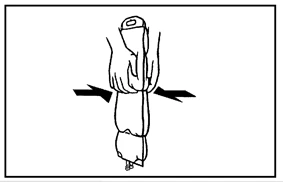
- Firmly grasp the upper compartment with fingertips and thumbs and rotate gently using knuckles until the seal breaks.
Alternative technique (3): Place the bag on a flat surface. Roll the bag from the handle end until the seals break. Mix by inverting the bag.
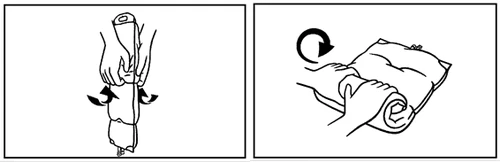
- Gently separate the remaining portion of the seal.
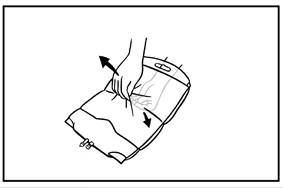
- To open the lower seal, use the same procedure described above. Mix the contents completely by gently inverting the bag several times.
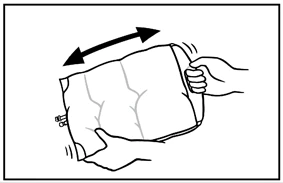
- Before adding additives, disinfect the addition port with a suitable antiseptic.
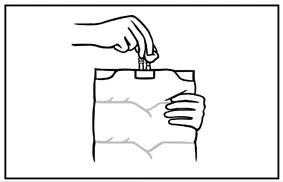
- Hold the base of the addition port. Fully insert the needle and inject compatible additives into the center of the injection site. Mix the contents after each addition by inverting the bag several times.
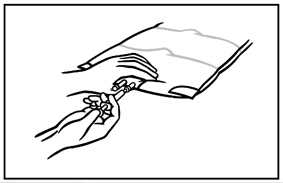
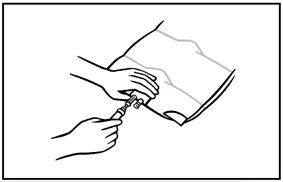
- Use a non-punctured infusion set or keep the opening closed if using a punctured set. Remove the protective cap from the infusion port by pulling the designated ring. Hold the base of the infusion port. Insert the spike straight into the infusion port. Rotate and press the spike through the diaphragm. The spike must be fully inserted to lock it in place.
Instructions for use of Periven
The bag
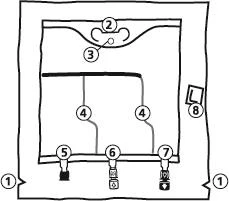
- Slits on the overpouch
- Handle
- Hole for hanging the bag
- Peelable seals
- Blind port (used only during manufacturing)
- Addition port
- Infusion port
- Oxygen absorber
1. Removing the overpouch
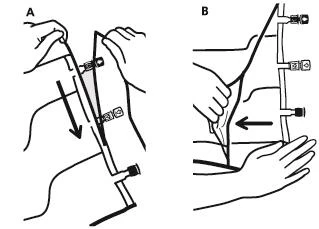
- To remove the overpouch, hold the pouch horizontally and tear from the slits near the ports along the upper edge (A).
- Then simply tear along the long side. Remove the overpouch and discard it together with the oxygen absorber (B).
2. Mixing
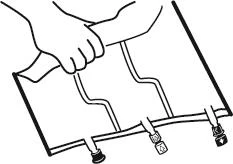
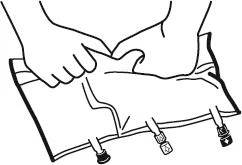
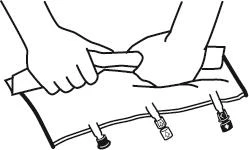
- Place the bag on a flat surface.
- Roll the bag tightly from the handle side towards the ports, first using the right hand, then applying constant pressure with the left hand until the vertical seals break. The vertical seals open due to the pressure of the liquid. The seals may also be opened before removing the overpouch. Note: The liquids will mix easily even if the horizontal seal remains closed.
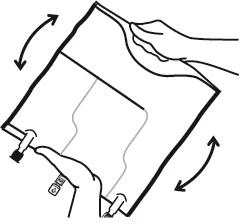
- Mix the contents of the three compartments by inverting the bag three times, until the components are thoroughly mixed.
3. Final preparation phase:
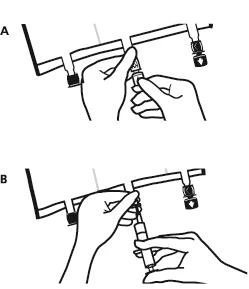
- Place the bag back on a flat surface. Just before injecting the additives, tear off the tab with the arrow from the white additive port (A). Note: The membrane in the additive port is sterile.
- Hold the base of the additive port. Insert the needle and inject the additives (of known compatibility) through the center of the injection site (B).
- Mix thoroughly after each addition by inverting the bag three times. Use syringes with needles sized between 18–23 gauge and a maximum length of 40 mm.
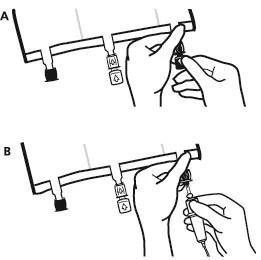
- Just before inserting the infusion set, tear off the tab with the arrow from the blue infusion port (A). Note: The membrane in the infusion port is sterile.
- Use a non-puncturing infusion set, or keep the opening closed if using a puncturing-type set.
- Hold the base of the infusion port.
- Push the spike fully through the infusion port. The spike must be completely inserted to lock it in place. Note: The inner part of the infusion port is sterile.
4. Hanging the bag
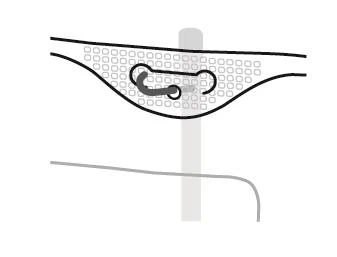
- Hang the bag from the hole under the handle.