Periactin
Italy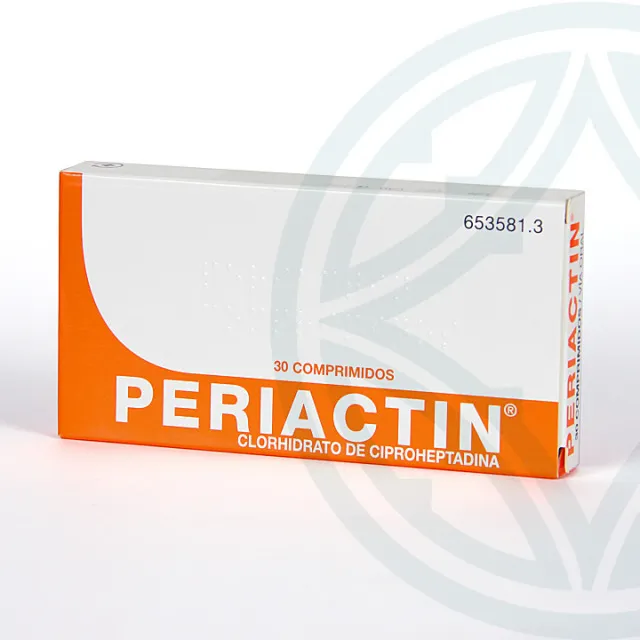
Table of Contents
- Package leaflet: Information for the patient
- Periactin 4 mg tablets, 0.4 mg/ml syrup
- 1. What Periactin is and what it is used for
- 2. What you should know before taking Periactin
- 3. How to take Periactin
- 4. Possible adverse reactions
- 5. How to store Periactin
- 6. Package contents and other information
Package leaflet: Information for the patient
Periactin 4 mg tablets, 0.4 mg/ml syrup
cyproheptadine hydrochloride anhydrous
Please read this leaflet carefully before taking this medicine because it contains important information for you.
- Keep this leaflet. You may need to read it again.
- If you have any questions, ask your doctor or pharmacist.
- This medicine has been prescribed for you only. Do not give it to other people, even if their symptoms are the same as yours, as it could be harmful.
- If you experience any side effects, including those not listed in this leaflet, talk to your doctor or pharmacist. See section 4.
Contents of this leaflet:
- What Periactin is and what it is used for
- What you need to know before taking Periactin
- How to take Periactin
- Possible side effects
- How to store Periactin
- Contents of the pack and other information
1. What Periactin is and what it is used for
Periactin contains the active substance cyproheptadine, which belongs to the class of antihistamine medicines.
Periactin is used for the treatment of allergic diseases and pruritic dermatoses.
Periactin is indicated for:
- acute and chronic treatment of symptoms of:
o seasonal allergic reactions to pollen (hay fever) (rhinitis, conjunctivitis)
o urticaria
o pruritus - treatment of vasomotor rhinitis, characterized by chronic congestion of blood vessels in the nasal mucosa, sneezing and watery nasal discharge
- treatment of skin diseases due to allergic reactions such as:
o skin inflammations (dermatitis), including neurodermatitis and localized neurodermatitis
o eczema
o eczematous dermatitis
o excessive skin reactivity to mechanical stimuli (dermatographism)
o insect bites - adjunctive treatment of generalized reactions caused by sera or medications
- adjunctive treatment of mild, uncomplicated angioedema
2. What you should know before taking Periactin
Do not use Periactin
- if you are allergic to cyproheptadine, other antihistamine medicines, or any of the other ingredients of this medicine (listed in section 6)
- to treat an acute asthma attack
- in newborns and premature infants (up to 2 years of age)
- during breastfeeding
- if you are an elderly patient
- if you are a debilitated patient
- if you are taking monoamine oxidase inhibitors (MAOIs)
- if you have a condition of the eye called glaucoma
- if you have narrowing at the level of the passage between the stomach and duodenum called pylorus (pyloroduodenal stenosis)
- if you have benign prostatic hyperplasia
- if you have an obstruction in the lower part of the bladder (vesical neck obstruction)
- if you have a stomach or duodenal ulcer associated with narrowing of the digestive tract (stenosing peptic ulcer)
- if you have porphyria; porphyrias are a group of rare, mostly hereditary diseases caused by a malfunction in one of the enzymes involved in the synthesis of a component in the blood.
Warnings and precautions
Talk to your doctor or pharmacist before taking Periactin.
Inform your doctor before taking Periactin:
- if you have diseases affecting the lower airways, including bronchial asthma, because Periactin may not be suitable for you
- if you have had asthma
- if you have had heart and/or blood vessel problems
- if you have had high blood pressure
- if you have had hyperthyroidism (a condition in which your thyroid gland is overactive)
- if you have had high intraocular pressure
- if you are taking other medicines (see section “Other medicines and Periactin”), including:
o medicines used to induce sleep (hypnotics)
o medicines that cause relaxation (sedatives, tranquillisers)
o medicines to reduce anxiety (anxiolytics)
o or if you consume alcohol
It is important to know that: - prolonged treatment with antihistamines, including Periactin, may rarely cause blood disorders (haematological dyscrasia)
- the use of antihistamines, including Periactin, may mask the early signs of ototoxicity (ear toxicity) caused by certain medicines used to treat infections (antibiotics).
Children and adolescents
- Periactin must not be used in children under two years of age because safety and efficacy have not been established (see section “Do not use Periactin” and section 3 “How to use Periactin”).
- Antihistamines may reduce attention capacity. However, particularly in younger children, they may occasionally cause excitation.
- Your doctor will pay special attention when determining the dosage in children and adolescents, as they are more sensitive to antihistamines.
Other medicines and Periactin
Inform your doctor or pharmacist if you are taking, have recently taken, or might take any other medicine.
You must not use Periactin together with:
- monoamine oxidase inhibitor medicines (MAOIs) (see section “Do not use Periactin”).
Inform your doctor before taking Periactin if you are taking or need to take:
o medicines used to induce sleep (hypnotics)
o medicines that cause relaxation (sedatives, tranquillisers)
o medicines to reduce anxiety (anxiolytics)
(see section “Warnings and precautions”).
Periactin with food and alcohol
Taking Periactin after meals may reduce the occurrence of stomach disturbances (stomach pain, nausea, vomiting).
Do not drink alcohol with Periactin because its effects may be increased.
Interference with diagnostic tests
Treatment with Periactin should be discontinued before performing pituitary function tests that use the growth hormone (GH) response to insulin-induced hypoglycaemia.
Periactin may cause false-positive results for tricyclic antidepressants in urine or serum.
Pregnancy and breastfeeding
If you are pregnant, think you may be pregnant, planning to become pregnant, or are breastfeeding, ask your doctor or pharmacist for advice before taking this medicine.
Pregnancy
Periactin should be used during pregnancy only if clearly needed and under direct medical supervision.
In particular, the use of antihistamines during the third trimester of pregnancy may cause adverse effects in premature infants and newborns, as they are more sensitive to these medicines.
Breastfeeding
Periactin must not be used during breastfeeding (see section “Do not use Periactin”).
It is not known whether Periactin is excreted in human milk, and due to the risk of serious adverse reactions in breastfed infants, a decision must be made whether to discontinue breastfeeding or to discontinue the medicinal product, taking into account the importance of the therapy for the mother.
Driving and using machines
Periactin may reduce attention capacity; therefore, you must not drive vehicles or operate machinery requiring special attention.
Periactin tablets contain lactose
If your doctor has diagnosed you with an intolerance to certain sugars, contact him before taking this medicine.
Periactin syrup contains sucrose, ethanol, and glycerol
If your doctor has diagnosed you with an intolerance to certain sugars, contact him before taking this medicine.
This medicine contains 5 g of sucrose per 20 ml. This should be taken into consideration in patients with diabetes mellitus.
This medicine contains 5 vol % ethanol (alcohol), i.e. up to 1.616 mg per dose, equivalent to 96 ml of beer or 40 ml of wine per dose. It may be harmful for alcoholics. This should be taken into consideration in pregnant or breastfeeding women, children, and high-risk groups such as patients with liver disease or epilepsy.
This medicine contains glycerol, which may cause headache, gastrointestinal disturbances, and diarrhoea.
For athletes
Periactin syrup contains ethyl alcohol; the use of medicines containing ethyl alcohol may result in positive anti-doping tests, depending on the blood alcohol concentration limits set by certain sports federations.
3. How to take Periactin
Take this medicine exactly as directed by your doctor or pharmacist. If you have
any doubts, consult your doctor or pharmacist.
Periactin is available in tablets and syrup.
The effect of a single dose lasts approximately 4–6 hours; therefore, the daily dose should be divided into three
separate administrations to achieve consistent relief from symptoms.
Use in adults
The dose ranges from 4 to 20 mg per day. Most patients require between 12 and 16 mg per day. In exceptional cases,
up to 32 mg per day may be needed to achieve adequate relief.
The recommended starting dose is 4 mg (1 tablet or 10 ml of syrup) three times daily. Your doctor will then determine
the most appropriate dose based on body weight and response to treatment.
The maximum dose is 32 mg per day.
Use in children and adolescents
Children under 2 years of age
Periactin must not be used in children under two years of age, as safety and efficacy have not been established (see sections “Do not use Periactin” and “Children and adolescents”).
Children aged 2 to 6 years
The recommended starting dose is 2 mg (½ tablet or 5 ml of syrup) two or three times daily. Your doctor will then determine
the most appropriate dose based on body weight and response to treatment.
If an additional daily dose is required, it should preferably be taken before bedtime.
The maximum recommended dose is 12 mg per day.
Children and adolescents aged 7 to 14 years
The recommended dose is 4 mg (1 tablet or 10 ml of syrup) three times daily. Your doctor will then determine
the most appropriate dose based on body weight and response to treatment.
If an additional daily dose is required, it should preferably be taken before bedtime.
The maximum dose is 16 mg per day.
How to take the syrup
- Use the graduated oral dispenser supplied in the package to take the syrup.
- Do not use household spoons or teaspoons, as this may lead to dosing errors.
If you take more Periactin than you should
If you accidentally take too much Periactin, contact your doctor immediately or go to the nearest hospital.
Overdose with antihistamines, including Periactin, may cause:
- depression or stimulation of the central nervous system, potentially leading to seizures and death, particularly in infants and children;
- atropine-like signs and symptoms, e.g. dry mouth, fixed and dilated pupils, flushing, etc.;
- gastrointestinal symptoms.
If you forget to take Periactin
Do not take a double dose to make up for a forgotten dose.
If you stop taking Periactin
If you have any questions about using this medicine, consult your doctor or pharmacist.
4. Possible adverse reactions
Like all medicines, this medicine can cause adverse reactions, although not everyone experiences them.
Adverse reactions are listed by organ system and frequency, and are categorized as follows:
Very common (≥1/10); Common (≥1/100, <1/10); Uncommon (≥1/1,000, <1/100); Rare (≥1/10,000,
<1/1,000); Very rare (<1/10,000); Not known (frequency cannot be estimated from the available data).
The most frequently reported adverse reaction is drowsiness. Many patients who initially experience
drowsiness overcome this inconvenience after the first three or four days of continuous administration.
The most common adverse reactions associated with the use of antihistamines are:
Haematopoietic and lymphatic system disorders
Haemolytic anaemia, leucopenia, agranulocytosis, thrombocytopenia
Immune system disorders
Allergic oedema, anaphylactic shock
Metabolism and nutrition disorders
Reduced appetite, increased appetite
Psychiatric disorders
Confusional state, restlessness (agitation), excitement, nervousness, irritability, insomnia, euphoric mood,
conversion disorder, hallucinations, hysteria
Nervous system disorders
Sedation, drowsiness (often transient), dizziness, motor coordination difficulties, tremor,
paraesthesia, neuritis, convulsions, headache, syncope
Eye disorders
Diplopia, blurred vision
Ear and labyrinth disorders
Acute labyrinthitis, vertigo, tinnitus
Cardiac disorders
Palpitations, tachycardia, extrasystoles
Vascular disorders
Hypotension
Respiratory, thoracic and mediastinal disorders
Dryness of nose and throat, thickening of bronchial secretions, chest tightness and wheezing, nasal
obstruction, sneezing
Gastrointestinal disorders
Dry mouth, epigastric pain, anorexia, nausea, vomiting, diarrhoea, constipation
Hepatobiliary disorders
Hypertransaminasaemia, jaundice
Skin and subcutaneous tissue disorders
Allergic dermatitis (allergic rash manifestations), hyperhidrosis, urticaria, photosensitivity
Renal and urinary disorders
Polyuria, dysuria (difficulty urinating), urinary retention
Reproductive system and breast disorders
Irregular menstruation (premature)
General disorders and administration site conditions
Asthenia, fatigue, chills
Investigations
Weight gain
The occurrence of adverse reactions may require adjustment of the Periactin dosage, and in more severe
cases, discontinuation of treatment.
Reporting of adverse reactions
If you experience any adverse reaction, including those not listed in this leaflet, contact your doctor or
pharmacist. You may also report adverse reactions directly via the national reporting system at the website
http://www.agenziafarmaco.gov.it/it/responsabili.
By reporting adverse reactions, you can help provide more information on the safety of this medicine.
5. How to store Periactin
Periactin tablets
This medicine does not require any special storage conditions.
Periactin syrup
Do not store below +10°C.
Keep this medicine out of the sight and reach of children.
Do not use this medicine after the expiry date stated on the packaging after "Exp.". The expiry date refers to the last day of that month.
Do not dispose of any medicine via wastewater or household waste. Ask your pharmacist how to dispose of medicines you no longer use. This will help protect the environment.
6. Package contents and other information
What Periactin contains
Periactin tablets
- The active substance is cyproheptadine. Each tablet contains 4.34 mg of cyproheptadine hydrochloride hydrate, equivalent to 4.00 mg of anhydrous cyproheptadine hydrochloride.
- The other ingredients are lactose, calcium phosphate, potato starch, magnesium stearate.
Periactin syrup
- The active substance is cyproheptadine. 100 ml of syrup contain 43.34 mg of cyproheptadine hydrochloride hydrate, equivalent to 40.00 mg of anhydrous cyproheptadine hydrochloride.
- The other ingredients are sucrose, glycerol, ethanol, sodium benzoate, sodium saccharinate, mixed fruit flavour, peppermint flavour, purified water.
Description of the appearance of Periactin and package contents
Periactin tablets
Each pack contains 30 tablets of 4 mg.
Periactin syrup
Each pack contains 1 bottle of 150 ml of syrup.
Marketing Authorization Holder
Alfasigma S.p.A. - Viale Sarca, n. 223 - 20126 Milan (MI)
Manufacturer
Alfasigma S.p.A., Via Pontina km 30.400 - 00071 Pomezia (RM)