Pedea
Italy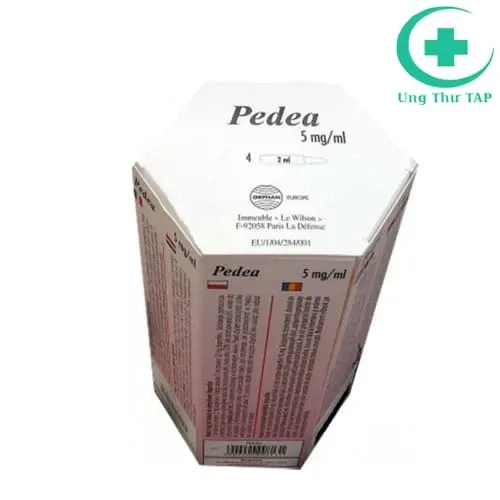
Table of Contents
PACKAGE LEAFLET: INFORMATION FOR THE USER
Pedea 5 mg/mL injection solution
Ibuprofen
Please read this leaflet carefully before this medicine is administered to the child
because it contains important information for you.
- Keep this leaflet. You may need to read it again.
- If you have any questions, consult your doctor or pharmacist.
- This medicine has been prescribed for the child only. Do not give it to others, even if their symptoms are the same as the child's, because it could be harmful.
- If any adverse reaction occurs, including those not listed in this leaflet, contact your doctor or pharmacist. See section 4.
Contents of this leaflet:
- What Pedea is and what it is used for
- What you need to know before Pedea is administered to the child
- How to use Pedea
- Possible side effects
- How to store Pedea
- Contents of the pack and other information
1. WHAT PEDEA IS AND WHAT IT IS USED FOR
While in the womb, the fetus does not need to use its lungs. The fetus has a blood vessel near the heart called the ductus arteriosus, which allows blood to bypass the pulmonary circulation and flow to the rest of the body.
At birth, the newborn begins to use its lungs and, normally, the ductus arteriosus closes. In some cases, however, this does not happen. The medical term for this condition is "patent ductus arteriosus", meaning an open ductus arteriosus. This condition, which may cause heart problems in the infant, is much more common in premature infants than in full-term babies.
Pedea, when administered to the infant, can help close the ductus arteriosus.
The active substance in Pedea is ibuprofen. Pedea closes the ductus arteriosus by inhibiting the production of prostaglandin, a chemical substance naturally produced by the body that keeps the ductus arteriosus open.
2. WHAT YOU SHOULD KNOW BEFORE PEDEA IS ADMINISTERED TO THE
CHILD
Pedea will be administered to the child exclusively by a qualified healthcare professional in a specialized neonatal intensive care unit.
Do not use Pedea
- if the child is allergic to ibuprofen or to any of the excipients of this medicine (listed in section 6);
- if the child has a life-threatening infection that has not been treated;
- if the child has ongoing bleeding, particularly intracranial (inside the skull) or intestinal hemorrhage;
- if the child has a reduced number of blood cells called platelets (thrombocytopenia) or other blood clotting disorders;
- if the child has kidney problems;
- if the child has other heart conditions in which the ductus arteriosus must remain open to maintain adequate blood circulation;
- if the child has or is suspected of having certain intestinal problems (a disease called necrotizing enterocolitis).
Take special care with Pedea
- Before treatment with Pedea, the child will undergo a heart examination to confirm that the ductus arteriosus is open.
- Pedea must not be administered within the first 6 hours of life.
- If a liver disease in the child is suspected, whose signs and symptoms include yellowing of the skin and eyes.
- If the child has an infection for which treatment is ongoing, the doctor will administer Pedea only after carefully evaluating the child's condition.
- Pedea must be administered cautiously by the healthcare professional to avoid damage to the skin and surrounding tissues.
- Since ibuprofen may reduce the blood’s ability to clot, the child should be closely monitored for signs of prolonged bleeding.
- Intestinal and renal bleeding may occur in the child; therefore, tests on feces and urine may be performed to detect the possible presence of blood.
- Pedea may reduce the amount of urine produced by the child. If this occurs significantly, treatment may be discontinued until urine output returns to normal.
- The effectiveness of Pedea may be reduced in very premature infants with a gestational age of less than 27 weeks.
- Serious skin reactions have been reported with Pedea treatment. The doctor must immediately discontinue treatment with Pedea if any of the following adverse effects occur: skin rash, mucosal lesions, blisters, or other signs of allergy, as these may be early signs of a severe skin reaction. See section 4.
- Drug reaction with eosinophilia and systemic symptoms (DRESS syndrome) has been identified as a potential risk associated with ibuprofen. The doctor must immediately discontinue treatment with Pedea if any of the following adverse effects occur: skin rash, fever, swollen lymph nodes, and increased eosinophils (a type of white blood cell).
Other medicines and Pedea
Inform the doctor or pharmacist if the child is taking or has recently taken any other medicines, including those without a prescription.
Some medicines, when administered together with Pedea, may cause adverse effects. These are described below:
-
the child may have urinary problems for which diuretics have been prescribed. Ibuprofen may reduce the effect of these medicines;
-
the child may be receiving anticoagulants (medicines that prevent blood clotting). Ibuprofen may enhance the anticoagulant effect of these products;
-
the child may be receiving nitric oxide to improve blood oxygenation. Ibuprofen may increase the risk of bleeding;
-
the child may be receiving corticosteroids to prevent inflammation. Ibuprofen may increase the risk of gastrointestinal and intestinal bleeding.
-
the child may be given aminoglycosides (a class of antibiotics) to treat infections. Ibuprofen may increase their blood concentration, thereby increasing the risk of kidney and ear toxicity.
Important information on some excipients of Pedea
This medicine contains less than 1 mmol of sodium (15 mg) per 2 mL; this means it is essentially sodium-free.
3. HOW TO USE PEDEA
Pedea must be administered to neonates only by a qualified healthcare professional in a specialized neonatal intensive care unit.
A treatment cycle is defined as three intravenous doses of Pedea administered at 24-hour intervals. The dose to be administered will be calculated based on the neonate's body weight. It is 10 mg/kg for the first administration and 5 mg/kg for the second and third administrations.
The calculated volume will be administered by infusion into a vein over 15 minutes.
If, after this initial treatment cycle, the ductus arteriosus has not closed or has reopened, the physician may decide to administer a second treatment cycle to the neonate.
If the ductus arteriosus remains open after the second treatment cycle, surgical intervention may be considered.
If the child is given more Pedea than they should receive:
If the child is administered more Pedea than intended, consult the child's physician to understand the risks and any necessary actions. Symptoms of overdose may include drowsiness, loss of consciousness, coma, seizures, gastrointestinal disturbances, slow heart rate, low blood pressure, respiratory problems or respiratory arrest, blood in the urine, inability of the kidneys to function properly, excess acid in the blood, and low levels of potassium in the blood.
4. POSSIBLE ADVERSE REACTIONS
Like all medicines, Pedea can cause adverse reactions, although not everyone experiences them. However, it may be difficult to distinguish these from the frequent complications occurring in premature newborns or from complications induced by the underlying disease.
The frequency of the possible adverse reactions listed below is defined using the following convention:
very common (affects more than 1 in 10 users)
common (affects from 1 to 10 in 100 users)
uncommon (affects from 1 to 10 in 1,000 users)
very rare (affects less than 1 in 10,000 users)
not known (frequency cannot be estimated from the available data)
Very common:
- Decrease in the number of platelets in the blood (thrombocytopenia),
- Decrease in white blood cells called neutrophils (neutropenia),
- Increased blood creatinine levels,
- Decreased blood sodium levels,
- Respiratory problems (bronchopulmonary dysplasia)
Common:
- Bleeding within the brain (intraventricular haemorrhage) and brain tissue injury (periventricular leukomalacia),
- Pulmonary haemorrhage,
- Intestinal perforation and intestinal tissue injury (necrotising enterocolitis),
- Reduced urine volume, blood in urine, fluid retention
Uncommon:
- Acute kidney function failure,
- Intestinal bleeding,
- Arterial blood oxygen levels below normal (hypoxaemia)
Not known:
- Gastric perforation,
- Widespread, red, scaly skin rash with formation of pustules under the skin and blisters mainly located in skin folds, trunk, and upper limbs, accompanied by fever at the beginning of treatment (generalised acute exanthematous pustulosis). Discontinue use of Pedea and contact your doctor immediately if you develop these symptoms. See also section 2.
- A drug reaction with eosinophilia and systemic symptoms (DRESS syndrome), a severe skin reaction, may occur. Symptoms of DRESS syndrome include skin rash, fever, lymph node enlargement, and increased eosinophils (a type of white blood cell).
If any of the adverse reactions worsen, or if you notice any adverse reactions not listed in this leaflet, inform your child’s doctor or pharmacist.
Reporting of adverse reactions
If you experience any adverse reaction, including those not listed in this leaflet, consult your doctor or pharmacist. You may also report adverse reactions directly via the national reporting system detailed in Annex V. By reporting adverse reactions, you help provide more information on the safety of this medicine.
5. HOW TO STORE PEDEA
Keep this medicine out of the sight and reach of children.
Do not use this medicine after the expiry date which is stated on the carton and label after
Exp. The expiry date refers to the last day of that month.
This medicine does not require any special storage conditions.
After opening, Pedea must be administered immediately.
Do not dispose of medicines via wastewater or household waste. Ask your pharmacist how to
dispose of medicines you no longer use. This will help protect the environment.
6. CONTENTS OF THE PACKAGE AND OTHER INFORMATION
What Pedea contains
- The active substance is ibuprofen. Each mL contains 5 mg of ibuprofen. Each 2 mL vial contains 10 mg of ibuprofen.
- The excipients are: tromethamine, sodium chloride, sodium hydroxide (for pH adjustment), hydrochloric acid 25% (for pH adjustment), water for injections.
Description of the appearance of Pedea and contents of the pack
Pedea 5 mg/mL solution for injection is a clear, colourless to slightly yellow solution.
Pedea 5 mg/mL solution for injection is available in packs of four 2 mL vials.
Marketing Authorisation Holder
Recordati Rare Diseases
Tour Hekla
52, avenue du Général de Gaulle
F-92800 Puteaux
France
Manufacturer
Recordati Rare Diseases
Tour Hekla
52, avenue du Général de Gaulle
F-92800 Puteaux
France
or
Recordati Rare Diseases
Eco River Parc
30, rue des Peupliers
F-92000 Nanterre
France
For further information about this medicine, please contact the local representative of the Marketing Authorisation Holder:
Belgique/België/Belgien Lietuva
Recordati Recordati AB
Tél/Tel: +32 2 46101 36 Tel: +46 8 545 80 230
Švedija
България Luxembourg/Luxemburg
Recordati Rare Diseases Recordati
Tel: +33 (0)1 47 73 64 58 Tél/Tel: +32 2 46101 36
France Belgique/Belgien
Česká republika Magyarország
Recordati Rare Diseases Recordati Rare Diseases
Tel: +33 (0)1 47 73 64 58 Tel: +33 (0)1 47 73 64 58
France Magyarország
Danmark Malta
Recordati AB Recordati Rare Diseases
Tlf.: +46 8 545 80 230 Tel: +33 1 47 73 64 58
Sverige Malta
Deutschland Nederland
Recordati Rare Diseases Germany GmbH Recordati
Tel: +49 731 140 554 0 Tel: +32 2 46101 36
België
Eesti Norge
Recordati AB Recordati AB
Tel: +46 8 545 80 230 Tlf: +46 8 545 80 230
Estonia Sverige
Ελλάδα Österreich
Recordati Rare Diseases Recordati Rare Diseases Germany GmbH
Tηλ: +33 (0)1 47 73 64 58 Tel: +49 731 140 554 0
France Germany
España Polska
Recordati Rare Diseases Spain S.L.U. Recordati Rare Diseases
Tel: +34 91 659 28 90 Tel: +33 (0)1 47 73 64 58
France
France Portugal
Recordati Rare Diseases Recordati Rare Diseases SARL
Tél: +33 (0)1 47 73 64 58 Tel: +351 21 432 95 00
Hrvatska România
Recordati Rare Diseases Recordati Rare Diseases
Tél: +33 (0)1 47 73 64 58 Tél: +33 (0)1 47 73 64 58
France Romania
Ireland Slovenija
Recordati Rare Diseases Recordati Rare Diseases
Tel: +33 (0)1 47 73 64 58 Tél: +33 (0)1 47 73 64 58
France Slovenia
Ísland Slovenská republika
Recordati AB Recordati Rare Diseases
Simi: +46 8 545 80 230 Tél: +33 (0)1 47 73 64 58
Iceland Slovakia
Italia Suomi/Finland
Recordati Rare Diseases Italy Srl Recordati AB
Tel: +39 02 487 87 173 Puh/Tel: +46 8 545 80 230
Sweden
Κύπρος Sverige
Recordati Rare Diseases Recordati AB
Τηλ: +33 1 47 73 64 58 Tel: +46 8 545 80 230
France
Latvija
Recordati AB
Tel: +46 8 545 80 230
Latvia
More detailed information on this medicine is available on the European Medicines Agency website: https://ema.europa.eu/
The following information is intended exclusively for physicians or healthcare professionals:
As with all parenteral products, visually inspect the Pedea vials before use to exclude the presence of particulate matter and to confirm container integrity. The vials are for single use only; any unused residual solution should be discarded.
Dosage and method of administration (see also section 3)
For intravenous use only. Treatment with Pedea must be administered exclusively in a neonatal intensive care unit under the supervision of an experienced neonatologist.
A treatment course is defined as three intravenous doses of Pedea administered at 24-hour intervals.
Determine the ibuprofen dose according to body weight as follows:
- 1st dose: 10 mg/kg,
- 2nd and 3rd doses: 5 mg/kg.
If the ductus arteriosus remains patent within 48 hours after the last dose or reopens, a second course of three doses may be administered as described above.
If no improvement is observed after the second course of treatment, surgical closure of the patent ductus arteriosus may be required.
If anuria or overt oliguria occurs after the first or second dose, the third dose must not be administered until urine output has returned to normal.
Method of administration:
Pedea must be administered as a short infusion lasting 15 minutes, preferably undiluted. An infusion pump may be used to facilitate administration.
If necessary, adjust the injection volume with an injectable solution of sodium chloride 9 mg/mL (0.9%) or glucose 50 mg/mL (5%). Any unused residual solution must be discarded.
In preterm neonates, the total volume of injected solution must be taken into account in relation to the total daily fluid volume administered. A maximum volume of 80 mL/kg/day should normally be administered on the first day of life; this volume should then be progressively increased over the following 1–2 weeks (approximately 20 mL/kg of birth weight/day) up to a maximum of 180 mL/kg of birth weight/day.
Incompatibilities
Chlorhexidine is incompatible with Pedea solution and therefore must not be used to disinfect the vial. For aseptic preparation of the vial prior to use, a 60% ethanol or 70% isopropyl alcohol solution is recommended.
When disinfecting the vial with an antiseptic, ensure the vial is completely dry before opening to avoid any contact with the Pedea solution.
This medicinal product must not be mixed with other medicinal products except sodium chloride 9 mg/mL (0.9%) solution for injection or glucose 50 mg/mL (5%) solution.
To avoid significant pH variations due to acidic medicinal products that may remain in the infusion line, flush the line with 1.5–2 mL of sodium chloride 9 mg/mL (0.9%) solution for injection or glucose 50 mg/mL (5%) solution before and after administration of Pedea.