Pecfent
Italy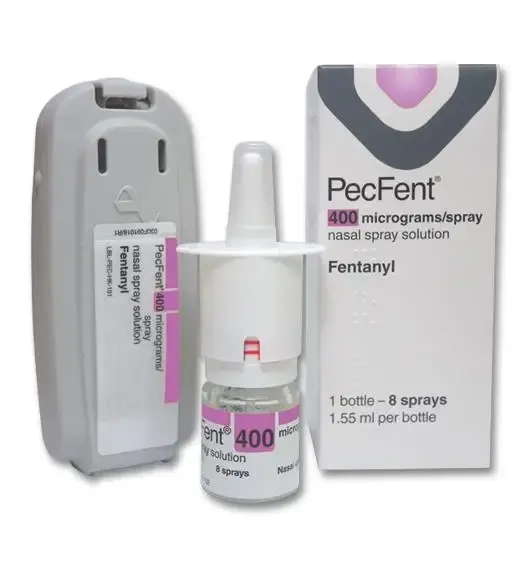
Table of Contents
- Package leaflet: Information for the user
- PecFent 100 micrograms/dose nasal spray, solution, 400 micrograms/dose nasal spray, solution
- 1. What PecFent is and what it is used for
- 2. What you need to know before using PecFent
- 3. How to use PecFent
- 4. Possible side effects
- 5. How to store PecFent
- 6. Package contents and other information
- Package leaflet: information for the user
- PecFent 100 micrograms/dose nasal spray, solution, 2-dose bottle
- 1. What PecFent is and what it is used for
- 2. What you should know before using PecFent
- 3. How to use PecFent
- 4. Possible side effects
- 5. How to store PecFent
- 6. Contents of the pack and other information
Package leaflet: Information for the user
PecFent 100 micrograms/dose nasal spray, solution, 400 micrograms/dose nasal spray, solution
fentanyl
Please read this leaflet carefully before using this medicine because it contains important information for you.
- Keep this leaflet. You may need to read it again.
- If you have any questions, ask your doctor or pharmacist.
- This medicine has been prescribed for you only. Do not give it to other people, even if their symptoms are the same as yours, as it may be harmful.
- If you experience any side effects, including those not listed in this leaflet, contact your doctor or pharmacist. See section 4.
Contents of this leaflet
- What PecFent is and what it is used for
- What you need to know before using PecFent
- How to use PecFent
- Possible side effects
- How to store PecFent
- Contents of the pack and other information
1. What PecFent is and what it is used for
What PecFent is
PecFent contains fentanyl, a strong pain-relieving medicine, known as an opioid analgesic.
What PecFent is used for
PecFent is used in adults with cancer for the treatment of a type of pain called "episodic intense pain (EIP – Breakthrough Pain)".
- Episodic intense pain occurs suddenly.
- The pain occurs even when you are already taking your usual opioid painkiller (such as morphine, fentanyl, oxycodone or hydromorphone) to control your ongoing persistent pain. PecFent must only be used in adults who are already taking daily opioid painkillers for persistent pain caused by cancer.
How PecFent works
PecFent is a nasal spray solution.
- When PecFent is sprayed into the nose, the very fine droplets form a thin gel.
- Fentanyl is rapidly absorbed through the nasal mucosa and enters the bloodstream.
- This means that the medicine enters the circulation quickly to provide relief from episodic intense pain.
2. What you need to know before using PecFent
Do not use PecFent if:
- you are allergic to fentanyl or any of the other ingredients of this medicine (listed in section 6)
- you are not already taking, on a daily and regular basis, a prescription opioid medicine (e.g. codeine, fentanyl, hydromorphone, morphine, oxycodone, pethidine) to control persistent pain for at least one week. If you are not taking these medicines, you must not use PecFent, as this could increase the risk of your breathing becoming dangerously slow and/or shallow, or even stopping
- you suffer from short-term pain other than breakthrough pain
- you have severe respiratory or lung problems
- you are being treated with medicines containing sodium oxybate.
Do not use PecFent if any of the above apply to you. If you have any doubts, consult your doctor or pharmacist before using PecFent.
Warnings and precautions
Keep this medicine in a safe and secure place, out of reach of other people (see section 5 “How to store PecFent” for more information).
How to keep PecFent safe from children
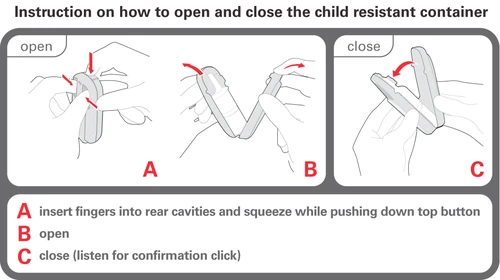
- When not in use, you must store PecFent in its child-resistant container, even after all 8 doses have been used. This is because accidental ingestion by a child could have life-threatening consequences.
Talk to your doctor or pharmacist before using PecFent if:
- you have recently changed the dose of your daily opioid medicine for constant pain
- you have breathing problems, such as asthma, wheezing, or shortness of breath
- you have recently suffered a severe head injury
- you have heart problems, particularly a slow heartbeat
- you have low blood pressure or low blood volume
- you have liver or kidney problems. These may affect how your body processes the medicine
- you are taking antidepressants or antipsychotics; refer to the section “Other medicines and PecFent”.
If any of the above apply to you (or if you are unsure), consult your doctor or pharmacist before using PecFent.
- If you are an athlete, the use of PecFent could result in a positive anti-doping test.
Consult your doctor during treatment with PecFent if:
- you experience repeated nosebleeds; your doctor may recommend an alternative treatment
- you feel that PecFent is becoming less effective in treating episodes of intense pain
- you develop pain or increased sensitivity to pain (hyperalgesia) that does not respond to an increase in the dose of your prescribed medicine
- you think you have become dependent on PecFent
- you experience a combination of the following symptoms: nausea, vomiting, loss of appetite, fatigue, weakness, dizziness, and low blood pressure. Together, these symptoms may indicate a potentially life-threatening condition called adrenal insufficiency, in which the adrenal glands do not produce enough hormones
- you have previously developed adrenal insufficiency or sex hormone deficiency (androgen deficiency) while using opioids
Long-term use and tolerance
This medicine contains fentanyl, an opioid medicine. Repeated use of opioid painkillers may make the medicine less effective (you become accustomed to it, a phenomenon known as drug tolerance). You may also become more sensitive to pain while using PecFent. This is known as hyperalgesia. Increasing the dose of PecFent may help reduce pain for a while, but it may also be harmful. If you notice the medicine becoming less effective, speak to your doctor. Your doctor will decide whether it is better to increase the dose or gradually reduce the use of PecFent.
Dependence and substance abuse
Repeated use of PecFent may also lead to dependence, abuse, and substance abuse, which may result in potentially fatal overdose. The risk of these adverse effects may increase with higher doses and prolonged use. Dependence or substance abuse may make you feel you have lost control over how much medicine you need or how often you need to use it. You may feel the need to continue using the medicine, even if it no longer helps relieve pain.
The risk of developing dependence or substance abuse varies from person to person. You may have a higher risk of becoming dependent on or abusing PecFent if:
you or a family member has previously suffered from alcohol, prescription medicine, or illegal substance abuse (“substance abuse”);
you are a smoker;
you have previously had mood disorders (depression, anxiety, or a personality disorder) or have been treated by a psychiatrist for other mental illnesses.
The appearance of any of the following signs during treatment with PecFent may indicate dependence or substance abuse:
You feel the need to use the medicine for longer than prescribed by your doctor
You feel the need to use a higher dose than recommended
You use the medicine for reasons other than those prescribed, e.g., “to stay calm” or “to help sleep”
You have repeatedly tried to stop or control your use of this medicine without success
When you stop taking the medicine, you feel unwell (e.g. nausea, vomiting, diarrhoea, anxiety, chills, tremors, and sweating), and feel better when you start taking it again (“withdrawal effects”)
If you notice any of these signs, speak to your doctor to discuss the best treatment approach for you, including whether it is appropriate to stop treatment and how to do so safely.
Sleep-related breathing disorders
PecFent may cause sleep-related breathing disorders, such as sleep apnoea (pauses in breathing during sleep) and sleep-related hypoxaemia (low oxygen levels in the blood). Symptoms may include pauses in breathing during sleep, waking up at night due to shortness of breath, difficulty staying asleep, or excessive daytime sleepiness. If you or someone else notices these symptoms, contact your doctor. Your doctor may consider reducing the dose.
Children and adolescents
PecFent is not approved for use in children under 18 years of age.
Other medicines and PecFent
Tell your doctor or pharmacist if you are taking, have recently taken, or might take any other medicines.
In particular, inform your doctor or pharmacist before using PecFent if you are taking any of the following medicines:
- medicines that may cause drowsiness, such as sleeping pills, tranquillisers, muscle relaxants, medicines for anxiety such as benzodiazepines (e.g. diazepam), or medicines for allergies (antihistamines). Using PecFent together with medicines that cause drowsiness increases the risk of drowsiness, breathing difficulties (respiratory depression), coma, and may be fatal. Contact your doctor if any of these symptoms occur. For this reason, the use of PecFent together with sedatives should only be considered when no other treatment options are available. However, if your doctor prescribes PecFent together with sedative medicines, the dose and duration of treatment must be limited by your doctor. Inform your doctor about all sedative medicines you are taking and follow their instructions regarding dosage carefully. It may be helpful to inform friends or family members to watch for the signs and symptoms listed above.
- medicines for depression called “monoamine oxidase inhibitors” (MAOIs). Inform your doctor or pharmacist if you have taken an MAOI medicine within the last 2 weeks before using PecFent. The risk of adverse effects increases if you are taking medicines such as certain antidepressants or antipsychotics. PecFent may interact with these medicines, leading to changes in mental state (e.g. agitation, hallucinations, coma) and other effects such as body temperature above 38°C, rapid heartbeat, unstable blood pressure, excessive reflexes, muscle rigidity, lack of coordination, and/or gastrointestinal symptoms (e.g. nausea, vomiting, diarrhoea). Your doctor will advise whether PecFent is suitable for you
- nasal sprays for treating a blocked nose (containing a decongestant such as oxymetazoline)
- medicines that may affect how your body processes PecFent. These include: o medicines for HIV infection (such as ritonavir, nelfinavir, amprenavir, or fosamprenavir) o medicines for fungal infections (such as ketoconazole, itraconazole, or fluconazole) o medicines for bacterial infections (such as troleandomycin, clarithromycin, or erythromycin) o “aprepitant”, used to prevent nausea, or “diltiazem” and “verapamil”, used for high blood pressure or heart problems. o other painkillers known as partial agonist/antagonists, such as buprenorphine, nalbuphine, pentazocine. While using these medicines, symptoms of withdrawal (nausea, vomiting, diarrhoea, anxiety, chills, tremors, and sweating) may occur. o certain nerve pain medicines (gabapentin and pregabalin).
If any of the above apply to you (or if you are unsure), consult your doctor or pharmacist before using PecFent.
Do not use other types of nasal spray for at least 15 minutes after using PecFent.
PecFent with food, drinks, and alcohol
- Do not drink alcohol while using PecFent, as it may increase the risk of serious adverse effects.
- Do not drink grapefruit juice while using PecFent. This may affect how your body processes PecFent.
Pregnancy, breastfeeding, and fertility
If you are pregnant, think you may be pregnant, are planning to become pregnant, or are breastfeeding, ask your doctor or pharmacist for advice before taking this medicine.
- Do not use PecFent if you are pregnant or could become pregnant, unless instructed by your doctor.
- Do not use PecFent during childbirth, as it may cause breathing problems in the baby.
- Do not use PecFent while breastfeeding. This is because the medicine may pass into breast milk and cause adverse effects in the infant.
- Do not start breastfeeding within 5 days after your last dose of PecFent.
Driving and using machines
- Consult your doctor to find out whether it is safe for you to drive or operate tools or machinery after using PecFent.
- You may feel drowsy, dizzy, or have vision problems after using PecFent. If this happens, do not drive and do not operate tools or machinery.
- Do not drive or operate tools or machinery until you know how this medicine affects you.
PecFent contains propyl parahydroxybenzoate (E216)
It may cause allergic reactions (possibly delayed) and, in rare cases, bronchospasm (if the nasal spray is not used correctly).
3. How to use PecFent
Before starting treatment and regularly during treatment, your doctor will discuss with you what you can expect from using PecFent, when and for how long it is necessary to use it, when to contact your doctor, and when you should stop treatment (see also section 2, Withdrawal symptoms when stopping PecFent).
Use this medicine exactly as instructed by your doctor or pharmacist. If you have any doubts, consult your doctor or pharmacist.
PecFent is available in two different strengths: a bottle delivering 100 micrograms per spray and a bottle delivering 400 micrograms per spray. Make sure you use the strength prescribed by your doctor.
Amount to use
- One dose for the treatment of breakthrough pain may be 1 spray or 2 sprays (one in each nostril). Your doctor will tell you how many sprays (1 or 2) you should use to treat breakthrough pain.
- Do not use a higher dose than prescribed by your doctor for each single episode of breakthrough pain.
- Do not use PecFent more than 4 times a day.
- Wait at least 4 hours before taking the next dose of PecFent.
Starting dose
- The starting dose is 100 micrograms.
- This corresponds to a single spray in one nostril using the 100 microgram per spray bottle.
- See "How to use the PecFent bottle" for instructions on how to use a dose.
Finding the right dose
- Your doctor will help you find the right dose for relief of breakthrough pain. It is very important to follow your doctor’s instructions.
- Inform your doctor about your pain and the effectiveness of PecFent. Your doctor will decide whether the dose of PecFent needs to be adjusted.
- Do not change the dose without consulting your doctor.
Once the right dose has been found
- Inform your doctor if the dose of PecFent does not relieve your breakthrough pain. Your doctor will decide whether the dose needs to be changed. Do not change the dose of PecFent or of other painkillers without consulting your doctor.
- Inform your doctor immediately if you experience more than 4 episodes of breakthrough pain per day. Your doctor may change your medication for constant pain. Once constant pain is under control, your doctor may adjust your PecFent dose.
If you have any doubts about the correct dose or amount of PecFent to use, consult your doctor.
How to use the PecFent bottle
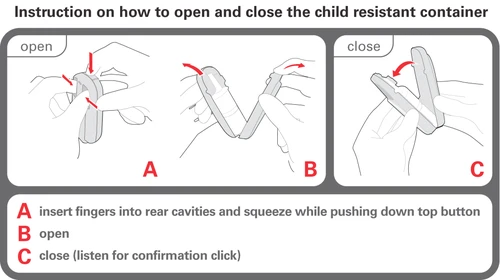
Instructions for opening and closing the child-resistant container
Preparing the PecFent bottle for use
Before using a new PecFent bottle, it must be prepared for use. This procedure is called “priming”.
To prime the bottle, follow the instructions below:
- A new PecFent bottle shows two red lines in the dose counter window on the upper white plastic part of the bottle (Figure 1 and Figure 3a).
- Remove the transparent plastic protective cap from the applicator (Figure 1).
- Point the nasal spray away from yourself (and from other people).
- Hold the PecFent nasal spray upright, with your thumb on the bottom of the bottle and your index and middle fingers on the grip on either side of the applicator (Figure 2).
- Firmly press down on the grip until you hear a “click”, then release. You will hear a second “click”, and now a single large red bar should be visible in the dose counter window (Figure 3b).
- Repeat step 5 three times. As you repeat step 5, the red bar will gradually become smaller until a green bar appears in the dose counter window (Figures 3b-e). The green bar means that the PecFent nasal spray is ready for use.
- Wipe the applicator with a tissue and dispose of the tissue in the toilet.
- If you do not intend to use the medicine immediately, replace the protective cap. Then place the PecFent bottle into the child-resistant container. If PecFent is not used for 5 days, re-prime the bottle by spraying once.
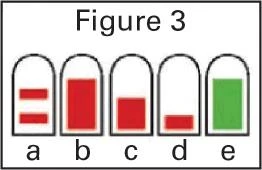
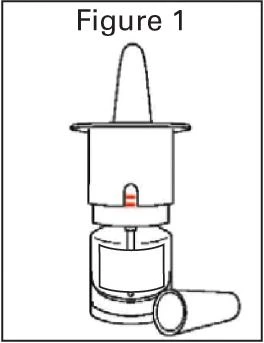
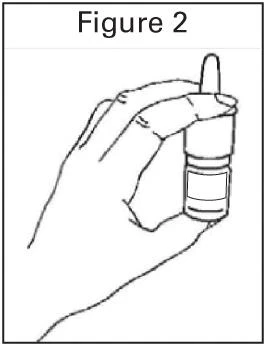
Figure 1 Figure 3
Figure 2
How to use PecFent
PecFent must only be used by nasal administration.
- Check that a green bar or a number is visible in the dose counter window (Figure 4): this confirms that the PecFent bottle has been primed (see “Preparing the PecFent bottle for use”).
- Blow your nose if needed.
- Sit with your head upright.
- Remove the protective cap from the applicator.
- Hold the PecFent bottle with your thumb on the bottom and your index and middle fingers on the grip (Figure 4).
- Insert the applicator a short distance (about 1 cm) into one nostril. Direct it toward the nasal wall. This will cause a slight tilt of the bottle (Figure 5).
- Close the other nostril with a finger of your other hand (Figure 5).
- Firmly press down on the grip so that PecFent delivers a spray into the nostril. When you hear a click, release the grip. Note: You may not feel any particular sensation in the nose; this does not mean the spray did not work—rely on the click and the dose counter.
- Gently inhale through your nose and exhale through your mouth.
- The dose counter will advance after each use and indicate how many sprays have been used.
- If your doctor has prescribed a second spray, repeat steps 5 to 9 using the other nostril.
Do not use a higher dose than prescribed by your doctor to treat a single episode of pain.
- After each use, return the PecFent bottle to the child-resistant container. Keep it out of sight and reach of children (Figure 6).
- Remain seated for at least 1 minute after using the nasal spray.
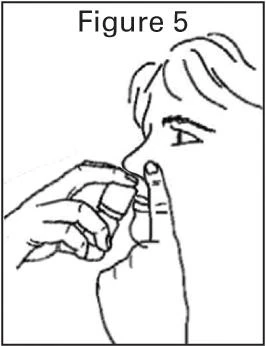
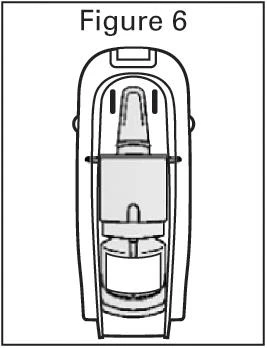
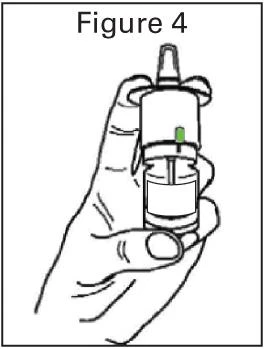
Figure 5 Figure 6
Figure 4
Number of sprays contained in a PecFent bottle
Each bottle contains 8 full sprays.
- After the first spray, the number 1 appears in the dose counter window. This number increases each time the spray is used.
- When you see a red “8” in the dose counter window, the bottle is empty and no further complete spray can be delivered.
Disposal of unused PecFent
If you can see a number other than “8” in the dose counter window, this means NOT all 8 sprays contained in the bottle have been used. There are still doses of PecFent remaining in the bottle.
You must empty the remaining doses of PecFent from the bottle by directing the nasal spray away from yourself (and from other people) and pressing and releasing the grip until the red “8” appears in the dose counter window.
When you see the number “8” in the dose counter window, there is still some medicine in the bottle that must be expelled.
- Press and release the grip 4 more times, directing the nasal spray away from yourself (and from other people).
- You will feel increased resistance when pressing, and the grip will move only slightly.
- DO NOT hear a click when pressing the grip.
- The dose counter will remain fixed at “8”.
- Replace the protective cap on the spray bottle.
- Return the bottle to the child-resistant container.
- Contact your local pharmacy for instructions on disposal of empty bottles (see “How to store PecFent”).
If the PecFent nasal spray becomes blocked or does not spray properly
- If the spray is blocked, direct it away from yourself (and from other people) and firmly press the pump. This should clear any blockage.
- If the nasal spray still does not work properly, discard the defective bottle and start using a new one. Inform your doctor about this. Never attempt to repair the nasal spray yourself or disassemble it. This could result in an incorrect dose being delivered.
Discard the PecFent bottle and start a new one if:
- 60 days or more have passed since you first primed or used the bottle.
If you use more PecFent than you should
-
You may experience drowsiness, nausea, dizziness, or slow or deep breathing. In severe cases, taking too much PecFent may also cause coma. If you experience severe dizziness, extreme drowsiness, or slow and deep breathing, call an ambulance or ask someone to call immediately.
-
An overdose may also cause a brain disorder known as toxic leukoencephalopathy.
If you stop using PecFent
If you no longer have breakthrough pain, talk to your doctor before stopping treatment with PecFent and follow their advice. However, you will need to continue taking your other opioid medicine for constant pain. Your doctor may need to adjust the dose.
When you stop treatment with PecFent, you may experience withdrawal symptoms similar to the possible side effects of PecFent. If withdrawal symptoms occur, contact your doctor. Your doctor will assess whether you need a medicine to reduce or eliminate these symptoms.
If you have any doubts about using this medicine, consult your doctor or pharmacist.
4. Possible side effects
Like all medicines, this medicine can cause side effects, although not everyone gets them.
Call an ambulance or ask someone to call an ambulance immediately if:
- you feel severe dizziness or faint
- you feel extremely sleepy
- your breathing becomes slow or shallow
- you have cold sweats, look pale, have a weak pulse or other signs of shock.
If you or the person caring for you notices any of the side effects listed above, call an ambulance immediately.
Common side effects (may affect up to 1 in 10 people):
- disorientation (not knowing where you are)
- altered taste
- dizziness
- nausea or vomiting
- drowsiness, headache
- nosebleed, nasal discomfort (e.g. burning sensation in the nose), runny nose
- constipation
- itching
Uncommon side effects (may affect up to 1 in 100 people):
- chest infection
- pain, irritation or inflammation of the throat or nose
- cough, sneezing, phlegm or cold symptoms, changes in nasal secretions
- allergic reaction, rash
- loss or increase in appetite, weight gain
- dehydration, thirst
- misuse of the medicine
- seeing or hearing things that are not real (hallucinations/delirium), feeling confused
- feeling depressed, anxious, slow reflexes or nervousness
- difficulty concentrating or increased activity
- memory loss
- feeling of euphoria
- reduced awareness or responsiveness, loss of consciousness
- seizure (convulsive fit)
- muscle seizures or tremor
- loss of taste, loss or change in sense of smell
- difficulty speaking
- bluish discoloration of the skin
- dizziness, falls, feeling unwell
- problems with body temperature and circulation, hot flushes or fever, chills, excessive sweating
- swelling of soft tissues
- low blood pressure
- blockage in the windpipe
- shortness of breath
- vaginal bleeding
- tear in the intestine or inflammation of the stomach lining
- numbness or tingling of the mouth, tongue or nose, or other tongue problems, mouth ulcers, dry mouth
- diarrhoea
- retching, stomach pain, indigestion
- joint irritation or pain
- difficulty or inability to urinate
- chest pain
- feeling tired or weak, movement problems
- changes in blood cells (detected by laboratory tests)
- increased blood glucose (sugar levels in the blood)
- presence of protein in the urine
Other side effects (frequency not known, frequency cannot be estimated from the available data):
- severe breathing problems
- flushing
- insomnia
- withdrawal syndrome (may occur with symptoms such as: nausea, vomiting, diarrhoea, anxiety, chills, tremor and sweating)
- drug tolerance, drug dependence, drug abuse (see section 2)
Prolonged use of fentanyl during pregnancy may cause withdrawal symptoms in the newborn baby, which can be fatal (see section 2).
Reporting of side effects
If you get any side effects, including ones not listed in this leaflet, talk to your doctor or pharmacist.
You can also report side effects directly via the national reporting system listed in Annex V*. Reporting side effects can help provide more information on the safety of this medicine.
5. How to store PecFent
Keep this medicine out of the sight and reach of children. If accidentally taken by a child, PecFent could have fatal consequences.
Keep this medicine in a secure and protected place, inaccessible to others. Accidental or intentional use of this medicine by someone to whom it has not been prescribed may cause serious harm or be fatal.
- Do not use this medicine after the expiry date stated on the carton and bottle following "Exp". The expiry date refers to the last day of that month.
- Do not store PecFent above 25 °C.
- Do not freeze.
- Keep the bottle in the child-resistant container to protect the medicine from light.
- Always keep the PecFent bottle in the child-resistant container, even when empty.
- Do not use for more than 60 days after first use (loading or use for treatment of an episode of breakthrough pain).
- Even if PecFent has passed its expiry date or is no longer needed, it may still contain an amount of medicine that could harm others, especially children. PecFent must not be disposed of via wastewater or household waste. Unused PecFent should be disposed of as soon as possible, following the instructions in section Disposal of unused PecFent. Empty bottles should be placed back into the child-resistant container and disposed of by returning them to a pharmacy or in accordance with local regulations.
6. Package contents and other information
What PecFent contains
The active substance is fentanyl.
- PecFent 100 micrograms/spray nasal spray, solution: Each mL of solution contains 1,000 micrograms of fentanyl (as citrate). One spray (100 microliters) delivers 100 micrograms of fentanyl (as citrate).
- PecFent 400 micrograms/spray nasal spray, solution: Each mL of solution contains 4,000 micrograms of fentanyl (as citrate). One spray (100 microliters) delivers 400 micrograms of fentanyl (as citrate).
The other components are pectin (E440), mannitol (E421), phenylethyl alcohol, propyl parahydroxybenzoate (E216), sucrose, purified water, and hydrochloric acid or sodium hydroxide for pH adjustment.
Description of the appearance of PecFent and contents of the pack
The medicine is a nasal spray, solution, colourless, from clear to almost clear. It is contained in a transparent glass bottle equipped with a metering pump. The pump has a spray counter that clicks to confirm that a spray has been delivered, and a protective cap. After the PecFent bottle has been primed (prepared for use), it delivers 8 full sprays. Each PecFent bottle is supplied in a child-resistant container.
PecFent bottles in their respective child-resistant containers are supplied in cardboard packs containing 1, 4 or 12 bottles.
Not all pack sizes may be marketed.
Marketing Authorisation Holder
Grünenthal GmbH
Zieglerstraße 6
52078 Aachen
Germany
Manufacturer
L. Molteni & C. dei F.lli Alitti Società di Esercizio S.p.A
Strada Statale 67 Tosco Romagnola,
Fraz. Granatieri – 50018 Scandicci (FI)
Italy
Other sources of information
More detailed information on this medicine is available on the website of the European Medicines Agency: http://www.ema.europa.eu.
Package leaflet: information for the user
PecFent 100 micrograms/dose nasal spray, solution, 2-dose bottle
fentanyl
Please read this leaflet carefully before using this medicine because it contains important information for you.
- Keep this leaflet. You may need to read it again.
- If you have any questions, ask your doctor or pharmacist.
- This medicine has been prescribed for you only. Do not give it to other people, even if their symptoms are the same as yours, as it could be harmful.
- If you experience any side effects, including those not listed in this leaflet, talk to your doctor or pharmacist. See section 4.
Contents of this leaflet
- What PecFent is and what it is used for
- What you need to know before using PecFent
- How to use PecFent
- Possible side effects
- How to store PecFent
- Contents of the pack and other information
1. What PecFent is and what it is used for
What PecFent is
PecFent contains fentanyl, a strong pain-relieving medicine, known as an opioid analgesic.
What PecFent is used for
PecFent is used in adults with cancer to treat a type of pain called "breakthrough pain" (episodic intense pain).
- Episodic intense pain arises suddenly.
- This pain occurs even when you are already taking your regular opioid painkiller (such as morphine, fentanyl, oxycodone or hydromorphone) to control your persistent background pain.
PecFent must only be used in adults who are already taking daily opioid painkillers for persistent pain caused by cancer.
How PecFent works
PecFent is a nasal spray solution.
- When you spray PecFent into your nose, the very fine mist droplets form a thin gel.
- Fentanyl is rapidly absorbed through the nasal mucosa and enters the bloodstream.
- This means the medicine enters the circulation quickly to provide relief from episodic intense pain.
2. What you should know before using PecFent
Do not use PecFent if
- you are allergic to fentanyl or to any of the other ingredients of this medicine (listed in section 6)
- you are not already taking, on a daily and regular basis, a prescription opioid medicine (e.g. codeine, fentanyl, hydromorphone, morphine, oxycodone, pethidine) to control persistent pain. If you are not taking such medicines, you must not use PecFent, as this could increase the risk of your breathing becoming dangerously slow and/or shallow, or even stopping
- you suffer from short-term pain other than breakthrough pain
- you have severe respiratory or lung problems
- you are being treated with medicines containing sodium oxybate.
Do not use PecFent if any of the above apply to you. If you are unsure, consult your doctor or pharmacist before using PecFent.
Warnings and precautions
Keep this medicine in a safe and secure place, out of reach of other people (see section 5 “How to store PecFent” for more information).
How to keep PecFent safe from children
- When not in use, you must store PecFent in its child-resistant container, even if you have already used both doses. This is because PecFent could have life-threatening consequences if accidentally ingested by a child.
Consult your doctor or pharmacist before using PecFent if:
- you have recently changed the dose of your daily opioid medicine for constant pain
- you have breathing problems, such as asthma, wheezing or shortness of breath
- you have suffered a severe head injury
- you have heart problems, particularly a slow heartbeat
- you have low blood pressure or low blood volume
- you have liver or kidney problems. This is because they may affect how your body processes the medicine
- you are taking antidepressants or antipsychotics; refer to the section “Other medicines and PecFent”.
If any of the above apply to you (or if you are unsure), consult your doctor or pharmacist before using PecFent.
- If you are an athlete, the use of PecFent may result in a positive doping test.
Consult your doctor during treatment with PecFent if:
- you repeatedly experience nosebleeds; your doctor may recommend an alternative treatment
- you feel that PecFent is becoming less effective in treating episodes of intense pain
- you develop pain or increased sensitivity to pain (hyperalgesia) that does not respond to an increase in the dose of medicine prescribed by your doctor
- you think you have become dependent on PecFent
- you experience a combination of the following symptoms: nausea, vomiting, loss of appetite, fatigue, weakness, dizziness and low blood pressure. Together, these symptoms may be a sign of a potentially life-threatening condition called adrenal insufficiency, in which the adrenal glands do not produce enough hormones
- you have previously developed adrenal insufficiency or lack of sex hormones (androgen deficiency) while using opioids
- you are taking certain nerve pain medicines (gabapentin and pregabalin).
Long-term use and tolerance
This medicine contains fentanyl, an opioid medicine. Repeated use of opioid painkillers may make the medicine less effective (you become accustomed to it, a phenomenon known as drug tolerance). You may also become more sensitive to pain during treatment with PecFent. This is known as hyperalgesia. Increasing the dose of PecFent may help reduce pain for a while, but it may also be harmful. If you notice the medicine becoming less effective, consult your doctor. Your doctor will decide whether it is better to increase the dose or gradually reduce the use of PecFent.
Dependence and substance abuse
Repeated use of PecFent may also lead to dependence, abuse and substance abuse, which could result in a potentially fatal overdose. The risk of these adverse effects may increase with higher doses and prolonged duration of use. Dependence or substance abuse may make you feel that you have lost control over the amount of medicine needed or how often you need to use it. You may feel the need to continue using the medicine even if it does not help relieve your pain.
The risk of developing dependence or substance abuse varies from person to person. You may have a higher risk of becoming dependent on or abusing PecFent if:
you or a family member has previously suffered from alcohol, prescription medicine or illegal substance abuse or dependence (“substance abuse”);
you are a smoker;
you have previously had mood disorders (depression, anxiety or a personality disorder) or have been treated by a psychiatrist for other mental illnesses.
The appearance of any of the following signs during treatment with PecFent may be a sign of dependence or substance abuse:
you feel the need to use the medicine for longer than prescribed by your doctor
you feel the need to use a higher dose than recommended
you use the medicine for reasons other than those prescribed, e.g. “to stay calm” or “to help sleep”
you have repeatedly tried to stop or control the use of this medicine without success
you feel unwell when stopping the medicine (e.g. nausea, vomiting, diarrhoea, anxiety, chills, tremors and sweating) and feel better when you start taking it again (“withdrawal effects”)
If you notice any of these signs, consult your doctor to discuss the best treatment approach for you, including whether it is appropriate to stop treatment and how to do so safely.
Sleep-related breathing disorders
PecFent may cause sleep-related breathing disorders, such as sleep apnoea (pauses in breathing during sleep) and sleep-related hypoxemia (low oxygen levels in the blood). Symptoms may include pauses in breathing during sleep, waking up at night due to shortness of breath, difficulty maintaining sleep or excessive daytime sleepiness. If you or someone else notices these symptoms, contact your doctor. Your doctor may consider reducing the dose.
Children and adolescents
PecFent is not approved for use in children under 18 years of age.
Other medicines and PecFent
Inform your doctor or pharmacist if you are taking, have recently taken or might take any other medicines.
In particular, inform your doctor or pharmacist before using PecFent if you are taking any of the following medicines:
- medicines that may cause drowsiness, such as sleeping medicines, tranquillisers, muscle relaxants, medicines for anxiety such as benzodiazepines (e.g. diazepam) or medicines for allergies (antihistamines). Using PecFent together with medicines that cause drowsiness increases the risk of drowsiness, breathing difficulties (respiratory depression), coma and may be fatal. Contact your doctor if any of these symptoms occur. For this reason, the use of PecFent together with sedatives should be considered only when no other treatment options are possible. However, if your doctor prescribes PecFent together with sedative medicines, the dose and duration of treatment must be limited by your doctor. Inform your doctor about all sedative medicines you are taking and follow their dosage instructions carefully. It may be helpful to inform friends or family members to watch for the signs and symptoms listed above.
- medicines for depression called “monoamine oxidase inhibitors” (MAOIs). Inform your doctor or pharmacist if you have taken an MAOI medicine within the last 2 weeks before using PecFent. The risk of adverse effects increases if you are taking medicines such as certain antidepressants or antipsychotics. PecFent may interact with these medicines and may cause changes in mental state (e.g. agitation, hallucinations, coma) and other effects such as body temperature above 38°C, increased heart rate, unstable blood pressure, excessive reflexes, muscle rigidity, lack of coordination and/or gastrointestinal symptoms (e.g. nausea, vomiting, diarrhoea). Your doctor will tell you whether PecFent is suitable for you
- nasal sprays for treating a blocked nose (containing a decongestant such as oxymetazoline)
- medicines that may affect how your body processes PecFent. These include:
o medicines for HIV infection (such as ritonavir, nelfinavir, amprenavir or fosamprenavir)
o medicines for fungal infections (such as ketoconazole, itraconazole or fluconazole)
o medicines for bacterial infections (such as troleandomycin, clarithromycin or erythromycin)
o “aprepitant”, used to prevent nausea, or “diltiazem” and “verapamil”, used for high blood pressure or heart problems
o other painkillers known as partial agonist/antagonist opioids, such as buprenorphine, nalbuphine, pentazocine. When using these medicines, symptoms of withdrawal syndrome (nausea, vomiting, diarrhoea, anxiety, chills, tremors and sweating) may occur.
If any of the above apply to you (or if you are unsure), consult your doctor or pharmacist before using PecFent.
Do not use other types of nasal spray for at least 15 minutes after using PecFent.
PecFent with food, drinks and alcohol
- Do not drink alcohol while using PecFent, as it may increase the risk of serious adverse effects.
- Do not drink grapefruit juice while using PecFent. This may affect how your body processes PecFent.
Pregnancy, breastfeeding and fertility
If you are pregnant, think you may be pregnant or are planning to become pregnant, or if you are breastfeeding, consult your doctor or pharmacist before taking this medicine.
- Do not use PecFent if you are pregnant or may become pregnant, unless instructed by your doctor.
- Do not use PecFent during childbirth, as it may cause breathing problems in the baby.
- Do not use PecFent if you are breastfeeding. This is because the medicine may pass into breast milk and cause adverse effects in the infant.
- You must not start breastfeeding within 5 days after the last dose of PecFent.
Driving and using machines
- Consult your doctor to find out whether it is safe for you to drive or operate tools or machinery after using PecFent.
- You may feel drowsy, dizzy or have vision problems after using PecFent. If this happens, do not drive and do not operate tools or machinery.
- Do not drive or operate tools or machinery until you know how this medicine affects you.
PecFent contains propyl parahydroxybenzoate (E216)
It may cause allergic reactions (likely delayed) and, in rare cases, bronchospasm (if the nasal spray is not used correctly).
3. How to use PecFent
Before starting treatment and regularly during treatment, your doctor will discuss with you what you can expect from using PecFent, when and for how long it is necessary to use it, when to contact your doctor, and when treatment should be stopped (see also section 2, Withdrawal symptoms when stopping PecFent).
Always use this medicine exactly as instructed by your doctor or pharmacist. If you have any doubts, consult your doctor or pharmacist.
PecFent is available in two different strengths: a bottle delivering 100 micrograms per spray and a bottle delivering 400 micrograms per spray. Make sure you use the strength prescribed by your doctor.
Amount to use
- A dose for the treatment of breakthrough pain may be 1 spray or 2 sprays (one in each nostril). Your doctor will tell you how many sprays (1 or 2) to use to treat breakthrough pain.
- Do not use a higher dose than prescribed by your doctor for each single episode of breakthrough pain.
- Do not use PecFent more than 4 times a day.
- Wait at least 4 hours before taking the next dose of PecFent.
Starting dose
- The starting dose is 100 micrograms.
- This corresponds to a single spray in one nostril using the 100 microgram per spray bottle.
- See “How to use the PecFent bottle” for instructions on how to use a dose.
Finding the right dose
- Your doctor will help you find the right dose for relief of breakthrough pain. It is very important to follow your doctor’s instructions.
- Inform your doctor about your pain and the effectiveness of PecFent. Your doctor will decide whether the dose of PecFent needs to be adjusted.
- Do not change the dose without consulting your doctor.
Once the right dose has been found
- Inform your doctor if the dose of PecFent does not relieve your breakthrough pain. Your doctor will decide whether the dose needs to be changed. Do not change the dose of PecFent or of your other painkillers without consulting your doctor.
- Inform your doctor immediately if you experience more than 4 episodes of breakthrough pain per day. Your doctor may change your medication for constant pain. Once constant pain is under control, your doctor may adjust the dose of PecFent.
If you have any doubts about the correct dose or amount of PecFent to use, consult your doctor.
How to use the PecFent bottle
Instructions for opening and closing the child-resistant container
Preparing the PecFent bottle for use
Before using a new PecFent bottle, it must be prepared for use. This procedure is called “priming”. It is recommended to prime the bottle immediately before use rather than in advance (Note: this 2-spray bottle cannot be re-primed. If, after priming, the spray is not used within 5 days, the bottle must be discarded.)
To prime the bottle, follow the instructions below:
- A new PecFent bottle shows two red lines in the dose counter window on the upper white plastic part of the bottle (Figure 1 and Figure 3a).
- Remove the white plastic protective cap from the applicator (Figure 1).
- Point the nasal spray away from yourself (and from other people).
- Hold the PecFent nasal spray upright, with your thumb on the bottom of the bottle and your index and middle fingers on the grip on either side of the applicator (Figure 2).
- Press firmly on the grip until you hear a “click”, then release. You will hear a second “click”, and now a single large red bar should be visible in the dose counter window (Figure 3b).
- Repeat step 5 three times. As you repeat step 5, the red bar will become progressively smaller until a green bar appears in the dose counter window (Figures 3b-e). The green bar means that the PecFent nasal spray is ready for use.
- Wipe the applicator with a tissue and dispose of the tissue in the toilet.
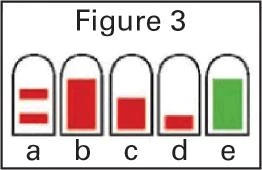
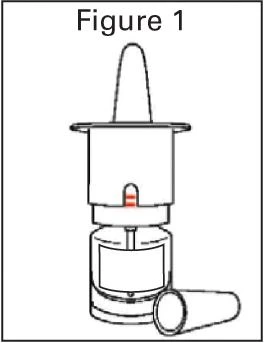
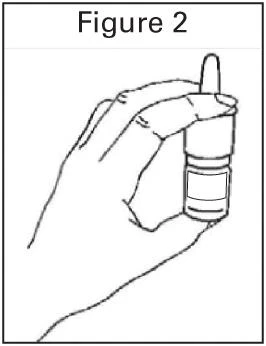
Figure 1 Figure 3
Figure 2
How to use PecFent
PecFent must only be used by nasal spray administration.
- Check that a green bar or a number is visible in the dose counter window (Figure 4): this confirms that the PecFent bottle has been primed (see “Preparing the PecFent bottle for use”).
- Blow your nose if needed.
- Sit with your head upright.
- Remove the protective cap from the applicator.
- Hold the PecFent bottle with your thumb on the bottom and your index and middle fingers on the grip (Figure 4).
- Insert the applicator a short distance (about 1 cm) into the nostril. Direct it towards the nasal wall, which will cause a slight tilt of the bottle (Figure 5).
- Close the other nostril with a finger of your other hand (Figure 5).
- Press firmly on the grip so that PecFent delivers a spray into the nostril. When you hear a click, release the grip. Note: you may not feel any particular sensation in the nose; this does not mean the spray has not worked: rely on the click and the dose counter.
- Gently inhale through the nose and exhale through the mouth.
- The dose counter will advance after each use and will indicate how many sprays have been used.
- If your doctor has prescribed a second spray, repeat steps 5 to 9 using the other nostril.
Do not use a higher dose than prescribed by your doctor to treat a single episode of breakthrough pain.
- After each use, return the PecFent bottle to the child-resistant container. Keep it out of sight and reach of children (Figure 6).
- Remain seated for at least 1 minute after using the nasal spray.
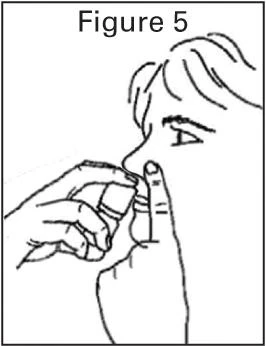
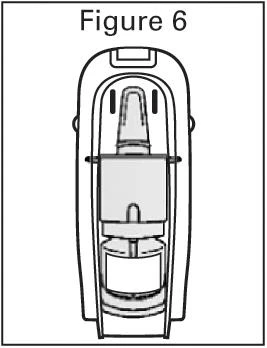
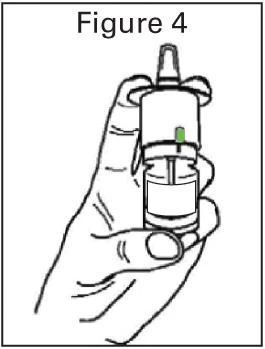
Figure 5 Figure 6
Figure 4
Number of sprays contained in this PecFent bottle
Each bottle contains 2 complete sprays.
- After the first spray, the number 1 appears in the dose counter window. This number increases each time the spray is used. At the next use, the number increases to 2.
- When you see a red “2” in the dose counter window, the bottle is empty and no further complete spray is possible.
Disposal of unused PecFent
- If you can see a number other than “2” in the dose counter window, this means NOT all 8 sprays contained in the bottle have been used. There are still doses of PecFent remaining in the bottle.
- You must empty the remaining doses of PecFent from the bottle by pointing the nasal spray away from yourself (and from others) and pressing and releasing the grip until the red “2” appears in the dose counter window.
When you see the number “2” in the dose counter window, there is still some medicine in the bottle that must be expelled.
- Press and release the grip 4 more times, pointing the nasal spray away from yourself (and from others).
- You will feel increased resistance when pressing, and the grip will move only slightly.
- DO NOT hear a click when pressing the grip.
- The dose counter will remain fixed at “2”.
- Replace the protective cap on the spray bottle.
- Return the bottle to the child-resistant container.
- Contact your local pharmacy for instructions on disposal of empty bottles (see “How to store PecFent”).
If the PecFent nasal spray becomes blocked or does not spray properly
- If the spray is blocked, point it away from yourself (and from others) and press firmly on the pump. This should clear any blockage.
- If the nasal spray still does not work properly, discard the defective bottle and start using a new one. Inform your doctor about this. Never attempt to repair the nasal spray yourself or to disassemble it. This is because it might then deliver an incorrect dose.
Discard the PecFent bottle and start a new one if:
- More than 5 days have passed since you first primed the bottle.
If you use more PecFent than you should
-
You may experience drowsiness, nausea, dizziness, or have slow or deep breathing. In severe cases, using too much PecFent can also cause coma. If you experience severe dizziness, strong drowsiness, or slow and deep breathing, call an ambulance or ask someone to call one immediately.
-
An overdose may also cause a brain disorder known as toxic leukoencephalopathy.
If you stop treatment with PecFent
If you no longer have breakthrough pain, talk to your doctor before stopping treatment with PecFent and follow their advice. However, you will need to continue taking your other opioid-containing medicine for constant pain. Your doctor may need to review the dose.
When stopping treatment with PecFent, you may experience withdrawal symptoms, similar to the possible side effects of PecFent. If withdrawal symptoms occur, contact your doctor. Your doctor will assess whether you need a medicine to reduce or eliminate these symptoms.
If you have any doubts about using this medicine, consult your doctor or pharmacist.
4. Possible side effects
Like all medicines, this medicine can cause side effects, although not everyone gets them.
Call an ambulance or ask someone to call an ambulance immediately if:
- you feel severe dizziness or faint
- you feel intense drowsiness
- you have slow or shallow breathing
- you have cold sweats, look pale, have a weak pulse, or other signs of shock.
If you or the person caring for you notices any of the side effects listed above, call an ambulance immediately.
Common side effects (may affect up to 1 in 10 people):
- not knowing where you are (disorientation)
- taste disturbances
- dizziness
- nausea or vomiting
- drowsiness, headache
- nosebleed, nasal discomfort (e.g. burning sensation in the nose), runny nose
- constipation
- itching
Uncommon side effects (may affect up to 1 in 100 people):
- chest infection
- pain, irritation or inflammation of the throat or nose
- cough, sneezing, mucus or cold symptoms, changes in nasal secretions
- allergic reaction, rash
- loss or increase in appetite, weight gain
- dehydration, thirst
- misuse of the medicine
- seeing or hearing non-existent things (hallucinations/delirium), feeling confused
- feeling depressed, anxious, slow reflexes or nervousness
- difficulty concentrating or increased activity
- memory loss
- feeling of euphoria
- reduced awareness or responsiveness, loss of consciousness
- seizure (convulsions)
- muscle seizures or tremors
- loss of taste, loss or alteration of smell
- difficulty speaking
- bluish skin discoloration
- dizziness, falls, malaise
- problems with temperature and circulation, hot flushes or fever, chills, excessive sweating
- swelling of soft tissues
- low blood pressure
- blockage in the trachea
- shortness of breath
- vaginal bleeding
- intestinal perforation or inflammation of the stomach lining
- numbness or tingling of the mouth, tongue or nose, or other tongue problems, mouth ulcers, dry mouth
- diarrhoea
- retching, stomach pain, indigestion
- joint irritation or pain
- difficulty or inability to urinate
- chest pain
- feeling tired or weak, movement problems
- changes in blood cells (detected by laboratory tests)
- increased blood glucose (sugar levels in the blood)
- presence of protein in the urine
Other side effects (frequency not known, frequency cannot be estimated from the available data):
- severe breathing problems
- redness
- insomnia
- withdrawal syndrome (may occur with the appearance of the following side effects: nausea, vomiting, diarrhoea, anxiety, chills, tremor and sweating).
- drug tolerance, drug dependence (addiction), drug abuse (see section 2)
Prolonged fentanyl treatment during pregnancy may cause withdrawal symptoms in the newborn, which may be fatal (see section 2).
Reporting of side effects
If you get any side effect, including ones not listed in this leaflet, talk to your doctor or pharmacist. You can also report side effects directly via the national reporting system listed in Annex V*. Reporting side effects can help provide more information on the safety of this medicine.
5. How to store PecFent
Keep this medicine out of sight and reach of children. If accidentally taken by a child, PecFent could have fatal consequences.
Keep this medicine in a secure and protected place, inaccessible to others. Accidental or intentional use of this medicine by someone other than the person it was prescribed for may cause serious harm and can be fatal.
- Do not use this medicine after the expiry date stated on the carton and bottle after "Exp". The expiry date refers to the last day of that month.
- Do not store PecFent above 25 °C.
- Do not freeze.
- Keep the bottle in the child-resistant container to protect the medicine from light.
- Always store the PecFent bottle in the child-resistant container, even when it is empty.
- Do not use for more than 5 days after first use (after priming or using for treatment of an episode of breakthrough pain).
- Even if PecFent has passed its expiry date or is no longer needed, it may still contain an amount of medicine that could harm others, especially children. PecFent must not be disposed of via wastewater or household waste. Any unused PecFent should be disposed of as soon as possible, following the instructions in section Disposal of unused PecFent. Empty bottles should be placed back into the child-resistant container and disposed of by returning them to a pharmacy or in accordance with local regulations.
6. Contents of the pack and other information
What PecFent contains
The active substance is fentanyl.
- PecFent 100 micrograms/dose nasal spray, solution: Each mL of solution contains 1,000 micrograms of fentanyl (as citrate). One dose (100 microlitres) contains 100 micrograms of fentanyl (as citrate).
The other components are pectin (E440), mannitol (E421), phenylethyl alcohol, propyl parahydroxybenzoate (E216), sucrose, purified water, and hydrochloric acid or sodium hydroxide for pH adjustment.
Description of the appearance of PecFent and contents of the pack
The medicine is a nasal spray, solution, colourless, from clear to almost clear. It is contained in a transparent glass bottle equipped with a metering pump. The pump has a dose counter which emits a click to confirm that the dose has been delivered, and a protective cap. After the PecFent bottle has been primed (prepared for use), it delivers 2 complete doses. Each PecFent bottle is supplied in a child-resistant container.
Bottles containing 2 doses of PecFent, in their respective child-resistant containers, are supplied in a cardboard pack containing 1 bottle.
Marketing Authorisation Holder
Grünenthal GmbH
Zieglerstraße 6
52078 Aachen
Germany
Manufacturer
L. Molteni & C. dei F.lli Alitti Società di Esercizio S.p.A
Strada Statale 67 Tosco Romagnola,
Fraz. Granatieri – 50018 Scandicci (FI)
Italy
Other sources of information
More detailed information on this medicine is available on the website of the European Medicines Agency: http://www.ema.europa.eu.