Paracetamol Zentiva Italia
Italy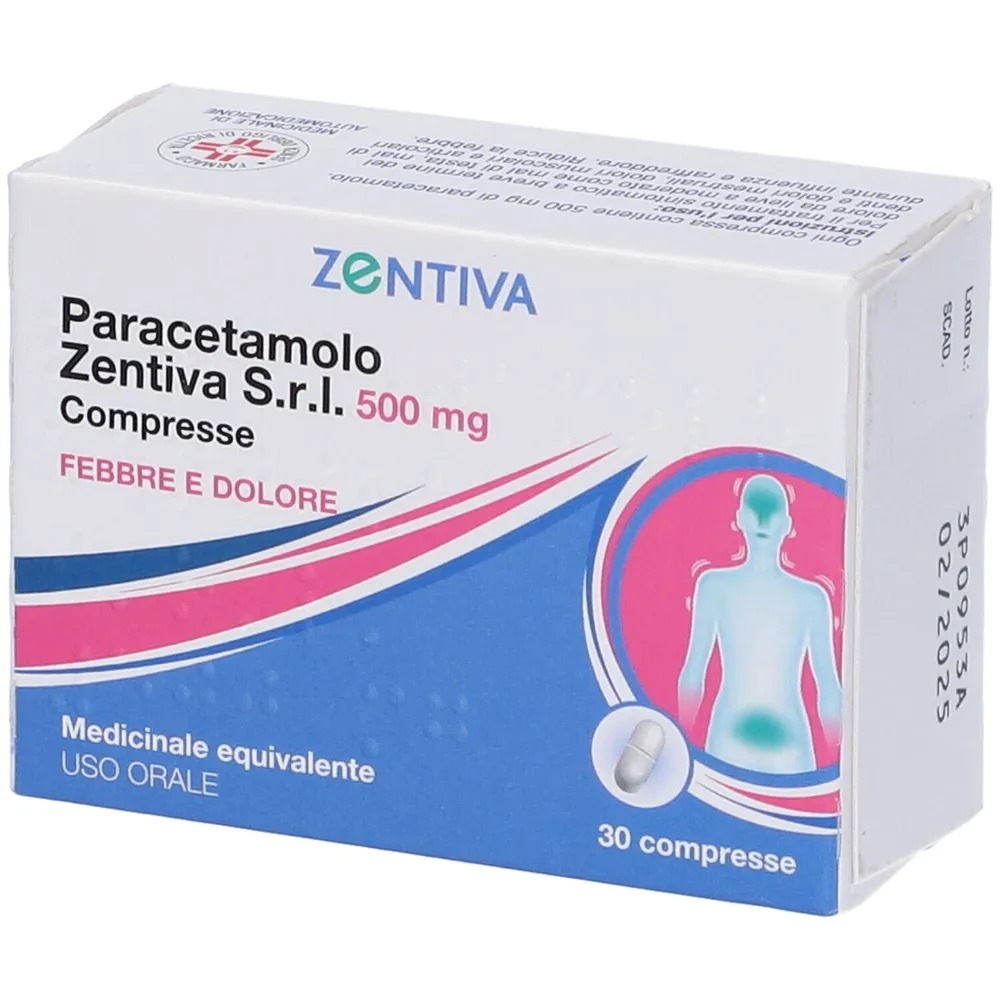
Table of Contents
- Package leaflet: Information for the patient
- Paracetamol Zentiva Italia 500 mg tablets
- 1. What Paracetamolo Zentiva Italia is and what it is used for
- 2. What you need to know before taking Paracetamol Zentiva Italia
- 3. How to take Paracetamolo Zentiva Italia
- 4. Possible side effects
- 5. How to store Paracetamolo Zentiva Italia
- 6. Package contents and other information
Package leaflet: Information for the patient
Paracetamol Zentiva Italia 500 mg tablets
Read all of this leaflet carefully before taking this medicine because it contains
important information for you.
Always take this medicine exactly as described in this leaflet or as your doctor or
pharmacist has instructed you.
- Keep this leaflet. You may need to read it again.
- If you need more information or advice, consult your pharmacist.
- If you experience any side effects, including those not listed in this leaflet, consult your doctor or pharmacist.
- Consult your doctor if you do not notice any improvement or if your symptoms worsen after 3 days.
Contents of this leaflet:
- What Paracetamol Zentiva Italia is and what it is used for
- What you need to know before taking Paracetamol Zentiva Italia
- How to take Paracetamol Zentiva Italia
- Possible side effects
- How to store Paracetamol Zentiva Italia
- Contents of the pack and other information
1. What Paracetamolo Zentiva Italia is and what it is used for
Paracetamolo Zentiva Italia contains the active substance paracetamol, which belongs to the class of analgesic medicines (which reduce pain) and antipyretic medicines (which reduce fever).
Paracetamolo Zentiva Italia is used:
- As an antipyretic: for the symptomatic treatment of feverish conditions such as influenza, exanthematous diseases, and acute respiratory tract disorders.
- As an analgesic: for the treatment of headaches, neuralgias, myalgias, and other moderate-intensity painful conditions of various origin.
Consult your doctor if you do not feel better or if you feel worse after 3 days.
2. What you need to know before taking Paracetamol Zentiva Italia
Do not take Paracetamol Zentiva Italia
if you are allergic to paracetamol or to other substances closely related from a chemical point of view, particularly to other analgesics and antipyretics, or to any of the other components of this medicinal product (listed in section 6);
Warnings and precautions
Talk to your doctor or pharmacist before taking Paracetamol Zentiva Italia.
In rare cases of allergic reactions, administration must be discontinued and appropriate treatment initiated. If, during treatment with this medicine, you develop progressive skin rashes often accompanied by blisters or mucosal lesions (Stevens-Johnson syndrome and toxic epidermal necrolysis), stop taking Paracetamol Zentiva Italia and consult your doctor.
Paracetamol should be administered with caution and under direct medical supervision if you suffer from renal impairment, mild to moderate hepatocellular insufficiency (including Gilbert's syndrome), severe hepatic impairment (Child-Pugh > 9), acute hepatitis, if you are receiving concomitant treatment with drugs that alter liver function, if you have low glutathione reserves (e.g. in malnutrition), in case of dehydration and chronic malnutrition, if you consume alcohol or have recently consumed it, if you have glucose-6-phosphate dehydrogenase deficiency, or if you suffer from haemolytic anaemia.
If you are elderly, always consult your doctor first.
High or prolonged doses of this medicine may lead to high-risk hepatopathy and serious adverse effects on the kidneys and blood.
During treatment with paracetamol, before taking any other medicine, check that it does not contain the same active ingredient, as overdose and serious adverse effects may occur if paracetamol is taken in excessive doses.
Contact your doctor before combining this medicine with any other medicine. See also section “Other medicines and Paracetamol Zentiva Italia”.
Contact your doctor before taking this medicine if you are sensitive to non-steroidal anti-inflammatory drugs (NSAIDs) and/or acetylsalicylic acid.
Do not take this medicine for more than 3 consecutive days without consulting your doctor.
Children
Do not administer Paracetamol Zentiva Italia to children weighing less than 21 kg.
Other medicines and Paracetamol Zentiva Italia
Inform your doctor or pharmacist if you are taking, have recently taken, or might take any other medicines.
- Medicines that slow down or increase the rate of gastric emptying: the oral absorption of paracetamol depends on the rate of gastric emptying. Therefore, concomitant administration of medicines that slow down (e.g. anticholinergics, opioids) or increase (e.g. prokinetics such as metoclopramide and domperidone) gastric emptying may respectively decrease or increase the bioavailability (amount of drug that exerts therapeutic activity) of the medicine.
- Cholestyramine: concomitant administration of cholestyramine reduces the absorption of paracetamol.
- Chloramphenicol: simultaneous intake of paracetamol and chloramphenicol may increase the half-life of chloramphenicol, increasing its potential toxicity.
- Salicylamide: (used to treat fever or mild pain) may delay the elimination of paracetamol from the body.
- Lamotrigine: (used to treat epilepsy), paracetamol may reduce its effect;
- Probenecid: (used, for example, to treat gout), lower doses of paracetamol may be required;
- Oral anticoagulants: concomitant use of paracetamol with oral anticoagulants such as warfarin, other coumarins, and anti-vitamin K drugs may increase the risk of bleeding and may cause slight changes in INR values. In such cases, more frequent monitoring of INR values is required during and after discontinuation of concomitant use. Your doctor may reduce the dose of paracetamol to be taken.
- Flucloxacillin (an antibiotic), due to a serious risk of blood and fluid disturbances (metabolic acidosis with high anion gap) that must be treated urgently and which may occur particularly in cases of severe renal impairment, sepsis (when bacteria and their toxins circulate in the blood causing organ damage), malnutrition, chronic alcoholism, and when maximum daily doses of paracetamol are used.
- Use with extreme caution and under close monitoring during chronic treatment with drugs that may induce hepatic mono-oxygenases or in cases of exposure to substances that may have such an effect, for example rifampicin (medicines used to treat bacterial infections), isoniazid (to treat tuberculosis), cimetidine (used to treat stomach and intestinal ulcers), St. John's wort (Hypericum perforatum) (used to treat depression), antiepileptics such as glutethimide, phenobarbital, carbamazepine, phenytoin, topiramate. The same applies to alcohol consumption and in patients treated with zidovudine.
The use of chelating resin may reduce the absorption of paracetamol.
Administration of paracetamol may interfere with the determination of uric acid levels (by the phosphotungstic acid method) and blood glucose levels (by the glucose-oxidase-peroxidase method).
Paracetamol Zentiva Italia and alcohol
Concomitant use of Paracetamol Zentiva Italia and alcohol should be avoided.
Pregnancy and breastfeeding
If you are pregnant, think you may be pregnant, planning a pregnancy, or breastfeeding, consult your doctor or pharmacist before taking this medicine.
If necessary, Paracetamol Zentiva Italia can be used during pregnancy.
It is advisable to use the lowest possible dose that relieves pain and/or fever, and to take it for the shortest possible duration.
Contact your doctor if pain and/or fever do not decrease, or if you need to take the medicine more frequently.
Paracetamol Zentiva Italia at the recommended doses can be used during breastfeeding, but caution is advised with long-term use.
Driving and using machines
Paracetamol Zentiva Italia does not alter, or alters negligibly, the ability to drive vehicles or operate machinery.
3. How to take Paracetamolo Zentiva Italia
Take this medicine exactly as stated in this leaflet or as directed by your doctor or pharmacist. If you have any doubts, consult your doctor or pharmacist.
Adults
The recommended dose is 1 tablet at a time, which may be repeated if necessary after 4 hours, without exceeding 6 doses per day.
In the case of severe pain or high fever, the recommended dose is 2 tablets of 500 mg, repeated if necessary no sooner than every 4 hours.
The maximum oral dosage is 3000 mg of paracetamol per day (see section “If you take more Paracetamolo Zentiva Italia than you should”).
Use in children and adolescents
Paracetamolo Zentiva Italia must not be administered to children weighing less than 21 kg.
For children, it is essential to follow the dosage based on body weight and therefore select the appropriate formulation. Approximate age ranges corresponding to body weight are provided for informational purposes only.
Children weighing between 21 and 25 kg (approximately 6 to 10 years of age):
The recommended dose is ½ tablet at a time, repeated if necessary after 4 hours, without exceeding 6 doses per day.
Children weighing between 26 and 40 kg (approximately 8 to 13 years of age):
The recommended dose is 1 tablet at a time, repeated if necessary after 6 hours, without exceeding 4 doses per day.
Adolescents weighing between 41 and 50 kg (approximately 12 to 15 years of age):
The recommended dose is 1 tablet at a time, repeated if necessary after 4 hours, without exceeding 6 doses per day.
Adolescents weighing more than 50 kg (approximately over 15 years of age):
The recommended dose is 1 tablet at a time, repeated if necessary after 4 hours, without exceeding 6 doses per day.
Method of administration
Do not exceed the recommended doses without medical advice.
This medicine should be taken with food.
If you take more Paracetamolo Zentiva Italia than you should
If you accidentally ingest or take an excessive dose of Paracetamolo Zentiva Italia, contact your doctor immediately or go to the nearest hospital.
Accidental ingestion of very high doses of paracetamol may result in acute intoxication, characterized by anorexia, nausea, vomiting, pallor, and abdominal pain, followed by a severe deterioration in general condition. These symptoms usually appear within the first 24 hours. In cases of overdose, paracetamol may cause hepatic cytolysis that can progress to massive and irreversible necrosis, leading to hepatocellular failure, gastrointestinal bleeding, metabolic acidosis, and encephalopathy, potentially resulting in coma and death.
Concurrently, increased levels of hepatic transaminases, lactate dehydrogenase, and bilirubin, as well as decreased prothrombin levels, may be observed within 12 to 48 hours after ingestion. Overdose may also lead to pancreatitis, acute renal failure, pancytopenia, and myocardial abnormalities.
If you have any questions about the use of this medicine, consult your doctor or pharmacist.
4. Possible side effects
Like all medicines, this medicine can cause side effects, although not everybody will experience them.
If you experience difficulty breathing, swelling of the face, lips, neck, tongue or throat (severe allergic reactions), or progressive skin rashes often accompanied by blisters or mucosal lesions, stop treatment immediately and contact your doctor without delay.
Rare: may affect up to 1 in 1,000 people
- Blood platelet disorders (coagulation disorders), disorders of stem cells (disorders of cells responsible for blood formation in the bone marrow).
- Depression, confusion, hallucinations.
- Tremor, headache.
- Visual disturbances.
- Edema (abnormal accumulation of fluid under the skin).
- Abdominal pain, bleeding, diarrhea, nausea, vomiting.
- Abnormal liver function, liver failure, jaundice (with symptoms such as yellowing of the skin and eyes), hepatic necrosis (death of liver cells).
- Itching, sweating, red spots on the skin (purpura).
- Dizziness, malaise, fever, partial impairment of consciousness (sedation), interaction with other medicines.
- Overdose and poisoning.
Very rare: may affect up to 1 in 10,000 people
- Blood disorders (reduction in platelets, white blood cells and neutrophils in the blood).
- Skin rash, urticaria, erythema.
- Low blood glucose levels.
- Hepatotoxicity.
- Erythema, skin rash and urticaria.
- Cloudy urine and kidney disorders.
- Hypersensitivity reactions.
Frequency not known: frequency cannot be estimated from the available data
- Agranulocytosis (almost complete absence of granulocytes).
- Anemia.
- Hemolytic anemia (abnormal breakdown of red blood cells) in patients with glucose-6-phosphate-dehydrogenase deficiency.
- Allergic reactions such as anaphylactic shock and angioedema (urticaria with wheals due to abnormal accumulation of fluid in the skin, subcutaneous tissues or submucosal tissues), laryngeal edema.
- Dizziness.
- Bronchospasm (reduction in bronchial lumen due to abnormal contraction of smooth muscle, resulting in reduced airflow).
- Gastrointestinal reaction (stomach and intestinal disturbances).
- Progressive skin rashes often with blisters or mucosal lesions (toxic epidermal necrolysis and Stevens-Johnson syndrome, two potentially life-threatening conditions).
- Allergic coronary spasm leading to vasospastic myocardial ischemia or infarction (Kounis syndrome).
- Generalized acute exanthematous pustulosis.
- Drug-induced fixed eruption.
- Erythema multiforme.
- Abnormal liver function, hepatitis, cytolytic hepatitis which may lead to liver failure.
- Acute kidney failure, interstitial nephritis (inflammation of kidney tissue), hematuria (presence of blood in urine), anuria (absence of urine production).
Reporting of side effects
If you experience any side effect, including those not listed in this leaflet, please inform your doctor or pharmacist. You may also report side effects directly via the national reporting system at the following website:
https://www.aifa.gov.it/content/segnalazioni-reazioni-avverse.
By reporting side effects, you can help provide more information on the safety of this medicine.
5. How to store Paracetamolo Zentiva Italia
Keep this medicine out of the sight and reach of children.
This medicine does not require any special storage conditions.
Do not use this medicine after the expiry date stated on the packaging. The expiry date refers to the product in its original, undamaged packaging, correctly stored.
Do not dispose of any medicine via wastewater or household waste. Ask your pharmacist how to dispose of medicines you no longer use. This will help protect the environment.
6. Package contents and other information
What Paracetamolo Zentiva Italia contains
- The active substance is paracetamol. One tablet contains 500 mg of paracetamol.
- The other components are: maize starch, sodium carboxymethylcellulose, anhydrous colloidal silica, microcrystalline cellulose, talc, magnesium stearate, modified maize starch.
Description of the appearance of Paracetamolo Zentiva Italia and pack sizes
Carton containing 30 tablets of 500 mg.
Marketing Authorisation Holder and Manufacturer
Marketing Authorisation Holder
Zentiva Italia S.r.l. Via P. Paleocapa, 7 20121 Milan, Italy
Manufacturer
Mipharm S.p.A. - Via B. Quaranta, 12 - Milan, Italy