Paracetamol Sandoz
Italy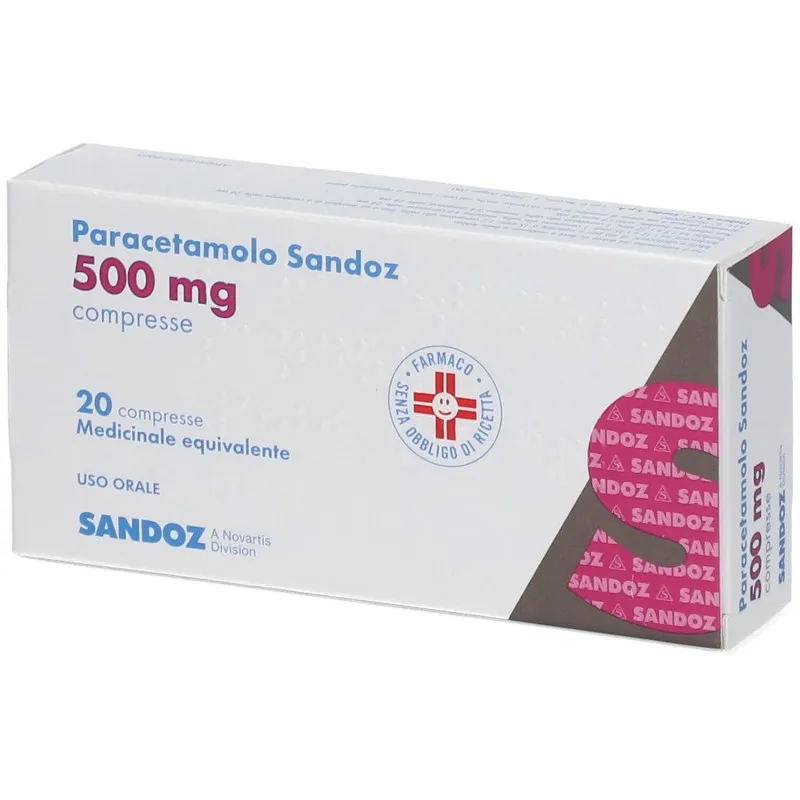
Table of Contents
- Package leaflet: Information for the patient
- Paracetamolo Sandoz 500 mg tablets
- 1. What Paracetamolo Sandoz is and what it is used for
- 2. What you need to know before taking Paracetamol Sandoz
- 3. How to take Paracetamol Sandoz
- 4. Possible side effects
- 5. How to store Paracetamolo Sandoz
- 6. Package contents and other information
- Patient Information Leaflet
- Paracetamolo Sandoz 1000 mg tablets
- 7. What Paracetamolo Sandoz is and what it is used for
- 8. What you need to know before taking Paracetamol Sandoz
- 9. How to take Paracetamol Sandoz
- 10. Possible side effects
- 11. How to store Paracetamol Sandoz
- 12. Package contents and other information
Package leaflet: Information for the patient
Paracetamolo Sandoz 500 mg tablets
Generic medicine
Please read all of this leaflet carefully before you start taking this medicine because it contains
important information for you.
- Always take this medicine exactly as described in this leaflet or as your doctor or pharmacist has told you to do.
- Keep this leaflet. You may need to read it again.
- If you need more information or advice, consult your pharmacist.
- If you experience any side effects, including any not listed in this leaflet, consult your doctor or pharmacist. See section 4.
- Consult your doctor if you do not notice improvement or if you experience worsening of symptoms after 5 days of treatment for pain or 3 days of treatment for fever.
Contents of this leaflet:
- What Paracetamolo Sandoz is and what it is used for
- What you need to know before taking Paracetamolo Sandoz
- How to take Paracetamolo Sandoz
- Possible side effects
- How to store Paracetamolo Sandoz
- Contents of the pack and other information
1. What Paracetamolo Sandoz is and what it is used for
Paracetamolo Sandoz contains the active substance paracetamol. It is a medicine used to relieve
pain and reduce fever (analgesic and antipyretic).
Paracetamolo Sandoz 500 mg is used for mild to moderate pain and for fever in adults, adolescents, and children over 9 years of age.
Consult your doctor if you do not notice improvement or if you notice worsening of symptoms after 5
days of treatment for pain or 3 days of treatment for fever.
2. What you need to know before taking Paracetamol Sandoz
Do not take Paracetamol Sandoz
- if you are allergic to paracetamol or to any of the other ingredients of this medicine (listed in section 6).
Warnings and precautions
Talk to your doctor or pharmacist before taking Paracetamol Sandoz if you have:
FI Paracetamol Sandoz 500 mg
- frequent consumption of large amounts of alcohol
- liver problems such as liver inflammation or reduced liver function
- Gilbert's syndrome (a rare inherited metabolic disorder that may cause signs such as yellowing of the skin or whites of the eyes)
- kidney problems (moderate to severe renal failure)
- an inherited deficiency of a certain enzyme called Glucose-6-phosphate dehydrogenase
- abnormal breakdown of red blood cells that may cause pale yellow skin and lead to weakness or shortness of breath (haemolytic anaemia)
- total body water deficiency (dehydration)
- underweight or chronic malnutrition
- asthmatic patients sensitive to acetylsalicylic acid
Consult your doctor if any of the above warnings apply to you or have applied to you in the
past. It may be necessary to avoid using this medicine or to reduce the dose of
Paracetamol Sandoz.
During treatment with Paracetamol Sandoz, inform your doctor immediately if:
If you suffer from serious illnesses, including severe renal impairment or sepsis (when bacteria and their
toxins circulate in the blood causing organ damage) or malnutrition, chronic alcoholism or
you are also taking flucloxacillin (an antibiotic). In patients with these conditions, a serious condition called metabolic acidosis (an abnormality in blood and fluids) has been reported when paracetamol is used at regular doses over a prolonged period or when paracetamol is taken concomitantly with flucloxacillin. Symptoms of metabolic acidosis may include: severe breathing difficulties with rapid deep breathing, drowsiness, nausea and vomiting.
Warning: taking higher doses than recommended does not provide better pain relief, but increases the risk of severe liver damage. Therefore, the maximum daily dose of paracetamol must not be exceeded. Ask your doctor or pharmacist before using other medicines containing paracetamol at the same time. Symptoms of liver damage usually appear after a few days. It is therefore important to consult a doctor immediately if you have taken more than recommended. See also section 3 "If you take more Paracetamol Sandoz than you should".
If you have high fever, signs of infection, or symptoms lasting longer than expected (persistent for more than 5 days for pain or 3 days for fever) or if symptoms worsen, you must contact a doctor.
Frequent long-term use of painkillers may cause headaches or make them worse. Do not increase the dose of the painkiller, but contact your doctor for advice.
Effects of paracetamol on diagnostic tests: for example, certain tests to measure uric acid and blood glucose levels may be affected.
Children
FI Paracetamol Sandoz 500 mg
Paracetamol Sandoz 500 mg is not suitable for children under 9 years of age.
Other medicines and Paracetamol Sandoz
Tell your doctor or pharmacist if you are taking, have recently taken or might take any other medicines.
In particular, before taking Paracetamol Sandoz, inform your doctor or pharmacist if you are
taking any of the following medicines:
- other medicines containing paracetamol, such as some cold and flu remedies. Be careful not to exceed the maximum daily dose of paracetamol, as this could seriously damage the liver.
- other medicines known to affect the liver
- medicines that induce liver enzymes such as:
- barbiturates such as phenobarbital (a group of anaesthetics and medicines used to treat epilepsy)
- certain medicines used for epilepsy such as phenytoin and carbamazepine
- certain antidepressants (tricyclic antidepressants)
- medicines used to treat tuberculosis, such as rifampicin and isoniazid
- probenecid (a medicine used to treat high levels of uric acid in the blood and gout)
- zidovudine (also known as AZT, a medicine used to treat HIV infections)
- chloramphenicol (an antibiotic used to treat infections)
- flucloxacillin (an antibiotic), due to a serious risk of blood and fluid imbalances (called metabolic acidosis with high anion gap) that requires urgent treatment
- metoclopramide or domperidone (medicines used to treat nausea and vomiting)
- colestyramine (a medicine used to lower cholesterol levels)
- coumarin anticoagulants used to prevent blood clots such as warfarin, phenprocoumon or acenocoumarol
- lamotrigine (a medicine used to treat epilepsy or mental disorders called bipolar disorders)
- salicylamide (a medicine used to treat pain and inflammation)
Paracetamol Sandoz and alcohol
If you consume large quantities of alcoholic drinks, take particular care when using
paracetamol. You must not take more than 2 grams of paracetamol (4 tablets of 500 mg or 2
tablets of 1000 mg) per day (see section 3 “How to take Paracetamol Sandoz”).
During treatment with Paracetamol Sandoz, do not drink alcoholic beverages.
Pregnancy and breastfeeding
If you are pregnant, think you may be pregnant, are planning to become pregnant, or are breastfeeding,
please consult your doctor or pharmacist before taking this
medicine.
If necessary, Paracetamol Sandoz can be used during pregnancy. You should use the lowest dose that relieves your pain and/or fever and use it for the shortest possible time.
Contact your doctor if pain and/or fever do not improve or if you need to take the
medicine more often.
FI Paracetamol Sandoz 500 mg
Although paracetamol is excreted in small amounts in breast milk, no adverse effects have been reported in breastfed infants. At the recommended doses, Paracetamol
Sandoz can be used during breastfeeding.
Driving and using machines
Paracetamol Sandoz generally does not impair the ability to drive or operate machinery. However, if you experience adverse events such as dizziness, drowsiness, confusion or blurred vision, you must not drive or operate machinery.
Paracetamol Sandoz contains sodium
This medicine contains less than 1 mmol of sodium (23 mg) per tablet, i.e.
essentially ‘sodium-free’.
3. How to take Paracetamol Sandoz
Take this medicine exactly as described in this leaflet or precisely as directed by your doctor or pharmacist. If you have any doubts, consult your doctor or pharmacist.
Always use the lowest effective dose needed to relieve your symptoms.
This medicine contains paracetamol. Excessive use of paracetamol can seriously damage your liver. Do not use this medicine if you are taking other medicines containing paracetamol for the treatment of pain, fever, cold or flu symptoms, whether prescription or over-the-counter. Do not exceed the recommended dose.
The recommended dose is as follows:
Adults and adolescents aged 15 years and older (body weight above 55 kg)
Start with 1 tablet (500 mg paracetamol) at a time, if necessary 2 tablets (1000 mg paracetamol); up to a maximum of 6 tablets (3000 mg paracetamol) every 24 hours.
Adolescents aged 12 to 15 years (body weight 40–55 kg)
1 tablet at a time, maximum 4–6 tablets every 24 hours.
Children aged 9 to 12 years (body weight 30–40 kg)
1 tablet at a time, maximum 3–4 tablets every 24 hours.
After taking a dose of Paracetamol Sandoz, wait at least 4 hours before taking the next dose, even if symptoms return earlier.
The daily dose must not exceed 60 mg of paracetamol per kg of body weight per day (up to 2 g per day) in the following situations:
- adults weighing less than 50 kg
- mild to moderate hepatic impairment, Gilbert's syndrome
- total body water deficiency (dehydration)
- chronic malnutrition
- chronic alcoholism
FI Paracetamol Sandoz 500 mg
If pain persists for more than 5 days or fever for more than 3 days, or if symptoms worsen, stop taking Paracetamol Sandoz and consult your doctor.
If prescribed by your doctor, your doctor will inform you of how long you may use Paracetamol Sandoz.
Method of administration
For oral use.
Swallow the tablets with a sufficient amount of water or dissolve the tablet in a sufficient amount of water, mix well and drink.
If you take more Paracetamol Sandoz than you should
If you have taken more Paracetamol Sandoz than indicated, contact your doctor immediately or go to the nearest emergency department. Taking a higher dose than recommended may cause nausea, vomiting and loss of appetite. Repeated administration of doses exceeding the maximum daily dose may cause severe liver damage. Unconsciousness usually does not occur. However, even if no signs of overdose are apparent, you must consult a doctor immediately. Delay in treatment may result in irreversible liver damage.
If you forget to take Paracetamol Sandoz
Take the missed dose as soon as possible. However, ensure that you maintain the minimum time interval between doses (see above).
Do not take a double dose to make up for a forgotten dose.
If you have any doubts about how to use this medicine, consult your doctor or pharmacist.
4. Possible side effects
Like all medicines, this medicine can cause side effects, although not everybody gets them.
Stop taking the medicine and contact your doctor immediately if you experience severe allergic
reactions (hypersensitivity) to paracetamol, which may include signs such as: swelling of the face,
lips, neck or throat (angioedema), shortness of breath (dyspnea), sweating (episodes of sweating),
nausea or low blood pressure, as well as shock (very rare: may affect up to 1 in 10,000 people).
The following additional side effects may occur with the use of paracetamol:
Rare (may affect up to 1 in 1,000 people)
- Some blood disorders:
- reduction in platelet count, increasing the risk of bleeding or bruising (thrombocytopenia)
- unexplained formation of bruises (thrombocytopenic purpura)
- reduction in white blood cells (leukopenia)
- reduction in red blood cells, which may make the skin pale and yellowish and cause weakness or shortness of breath (hemolytic anemia)
- severe reduction in the number of white blood cells, which may lead to infections, particularly with long-term treatment
FI Paracetamolo Sandoz 500 mg
- allergic reactions (excluding angioedema)
- abnormal liver function, increased liver enzymes in the blood, liver failure, liver necrosis, yellowing of the skin and whites of the eyes (jaundice)
- skin rash, itching, sweating, redness, urticaria
- depression, confusion, seeing, perceiving or hearing things that are not there (hallucinations)
- tremor, headache
- blurred vision
- swelling due to fluid retention (edema)
- bleeding, abdominal pain, diarrhea, feeling unwell, vomiting
- dizziness, general feeling of discomfort, fever, drowsiness
Very rare (may affect up to 1 in 10,000 people)
- severe reduction in blood cells, which may cause weakness, bruising or increased risk of infections (pancytopenia)
- severe skin reactions
- generalized skin rash (exanthema)
- constriction due to spasms of the airway muscles (bronchospasm) in people who are sensitive to acetylsalicylic acid or other non-steroidal anti-inflammatory drugs (NSAIDs, a group of painkillers with anti-inflammatory and antipyretic action)
- decrease in blood sugar levels
- kidney damage: inflammation of the kidneys (interstitial nephritis), cloudy urine (sterile pyuria), blood in the urine, inability to produce urine
Frequency not known (frequency cannot be estimated from the available data)
- Severe skin reactions: acute generalized exanthematous pustulosis, toxic epidermal necrolysis, drug-induced dermatosis and Stevens-Johnson syndrome
- Hepatic toxicity
- Severe condition that may make the blood more acidic (called metabolic acidosis), in patients with serious illness using paracetamol (see section 2)
Single daily doses of 6 g of paracetamol (in children above 140 mg/kg body weight), or long-term use of 3–4 g of paracetamol per day, may cause liver damage.
Reporting of side effects
If you experience any side effect, including those not listed in this leaflet, talk to your doctor or pharmacist. You can also report side effects directly via the national reporting system at
https://www.aifa.gov.it/content/segnalazioni-reazioni-avverse .
By reporting side effects, you can help provide more information on the safety of this medicine.
5. How to store Paracetamolo Sandoz
Keep this medicine out of the sight and reach of children.
FI Paracetamolo Sandoz 500 mg
Do not use this medicine after the expiry date stated on the blister and the carton after "Exp". The expiry date refers to the last day of that month.
This medicine does not require any special storage conditions.
Do not dispose of any medicine via wastewater or household waste. Ask your pharmacist how to dispose of medicines you no longer use. This will help protect the environment.
6. Package contents and other information
What Paracetamol Sandoz contains
The active substance is paracetamol.
Each tablet contains 500 mg of paracetamol.
The other components are povidone K-30 (E1201), pregelatinized starch (maize), sodium starch
glycolate (type A) and stearic acid (E570).
Description of the appearance of Paracetamol Sandoz 500 mg tablets and contents of the pack
White, capsule-shaped tablets, marked with the inscription “500” on one side and smooth on the other side (17.5 mm x 7.3 mm).
One blister contains 10, 12, 16, 20, 24, 30, 50, 120 or 240 tablets; or 100 tablets are contained in a plastic bottle with child-resistant closure.
Not all pack sizes may be marketed.
Marketing Authorization Holder
Sandoz S.p.A.
Viale Luigi Sturzo 43
20154 Milan
Italy
Manufacturer
Salutas Pharma GmbH, Otto-von-Guericke-Allee 1, 39179 Barleben, Germany
Lek Pharmaceuticals d.d, Verovškova ulica 57, Ljubljana, 1526, Slovenia
This medicinal product has been authorised in EEA Member States under the following names:
Netherlands Paracetamol Sandoz 500 mg, tabletten
Austria Paracetamol Sandoz 500 mg – Tabletten
Belgium Paracetamol Sandoz 500 mg Tabletten
Italy Paracetamolo Sandoz
Hungary Paracetamol Sandoz 500 mg tabletta
FI Paracetamolo Sandoz 500 mg
Patient Information Leaflet
Paracetamolo Sandoz 1000 mg tablets
Generic medicinal product
Please read this leaflet carefully before taking this medicine because it contains
important information for you.
- Keep this leaflet. You may need to read it again.
- If you have any questions, ask your doctor or pharmacist.
- This medicine has been prescribed for you only. Do not give it to others, even if their symptoms are the same as yours, as it could be harmful.
- If you experience any side effects, including those not listed in this leaflet, contact your doctor or pharmacist. See section 4.
Contents of this leaflet:
- What Paracetamolo Sandoz is and what it is used for
- What you need to know before taking Paracetamolo Sandoz
- How to take Paracetamolo Sandoz
- Possible side effects
- How to store Paracetamolo Sandoz
- Contents of the pack and other information
7. What Paracetamolo Sandoz is and what it is used for
Paracetamolo Sandoz contains the active substance paracetamol. It is a medicine used to relieve pain and reduce fever (analgesic and antipyretic).
Paracetamolo Sandoz 1000 mg is used for mild to moderate pain associated with osteoarthritis of the hip and knee in adults and adolescents over 15 years of age.
8. What you need to know before taking Paracetamol Sandoz
Do not take Paracetamol Sandoz
- if you are allergic to paracetamol or to any of the other ingredients of this medicine (listed in section 6).
Warnings and precautions
Talk to your doctor or pharmacist before taking Paracetamol Sandoz if you:
- frequently consume large amounts of alcohol
- have liver problems such as liver inflammation or reduced liver function
- have Gilbert's syndrome (a rare inherited metabolic disorder that may cause signs such as yellowing of the skin or whites of the eyes)
- have kidney problems (moderate to severe renal impairment)
- have an inherited deficiency of an enzyme called Glucose-6-phosphate dehydrogenase
FI Paracetamol Sandoz 500 mg
- abnormal breakdown of red blood cells that may cause pale yellow skin and lead to weakness or breathlessness (haemolytic anaemia)
- total body water deficiency (dehydration)
- underweight or chronic malnutrition
- asthmatic patients who are sensitive to acetylsalicylic acid
Consult your doctor if any of the above warnings apply to you or have applied to you in the past. You may need to avoid using this medicine or reduce the dose of Paracetamol Sandoz.
During treatment with Paracetamol Sandoz, inform your doctor immediately if:
If you suffer from serious illnesses, including severe kidney impairment or sepsis (when bacteria and their toxins circulate in the blood causing organ damage), or malnutrition, chronic alcoholism, or if you are also taking flucloxacillin (an antibiotic). In patients with these conditions, a serious condition called metabolic acidosis (an abnormality in blood and body fluids) has been reported when paracetamol is used at regular doses over a prolonged period or when paracetamol is taken concomitantly with flucloxacillin. Symptoms of metabolic acidosis may include: severe breathing difficulties with deep, rapid breathing, drowsiness, nausea, and vomiting.
Warning: Taking higher doses than recommended does not provide better pain relief, but increases the risk of severe liver damage. Therefore, the maximum daily dose of paracetamol must not be exceeded. Ask a doctor or pharmacist before using other medicines containing paracetamol. Symptoms of liver damage usually appear after a couple of days. It is therefore important to consult a doctor immediately if you have taken more than recommended. See also section 3 "If you take more Paracetamol Sandoz than you should".
If you have high fever, signs of infection, or symptoms lasting longer (persisting for more than 5 days for pain or 3 days for fever) or if symptoms worsen, you should contact a doctor.
Frequent and long-term use of painkillers may cause headaches or make them worse. Do not increase the dose of the painkiller, but contact your doctor for advice.
Effects of paracetamol on diagnostic tests: for example, certain tests to measure uric acid and blood glucose levels may be affected.
Children and adolescents
Paracetamol Sandoz 1000 mg is not suitable for children and adolescents under 15 years of age.
Other medicines and Paracetamol Sandoz
Tell your doctor or pharmacist if you are taking, have recently taken, or might take any other medicines.
FI Paracetamol Sandoz 500 mg
In particular, before taking Paracetamol Sandoz, inform your doctor or pharmacist if you are taking any of the following medicines:
- other medicines containing paracetamol, such as some cold and flu remedies. Be careful not to exceed the maximum daily dose of paracetamol, as this could seriously damage the liver.
- other medicines known to affect the liver
- medicines that induce liver enzymes, such as:
- barbiturates such as phenobarbital (a group of anaesthetics and medicines used to treat epilepsy)
- certain medicines used for epilepsy, such as phenytoin and carbamazepine
- some antidepressants (tricyclic antidepressants)
- medicines used to treat tuberculosis, such as rifampicin and isoniazid
- probenecid (a medicine used to treat high levels of uric acid in the blood and gout)
- zidovudine (also known as AZT, a medicine used to treat HIV infections)
- chloramphenicol (an antibiotic used to treat infections)
- flucloxacillin (an antibiotic), due to a serious risk of blood and fluid disturbances (called high anion gap metabolic acidosis) that requires urgent treatment
- metoclopramide or domperidone (medicines used to treat nausea and vomiting)
- colestyramine (a medicine used to lower cholesterol levels)
- coumarin anticoagulants used to prevent blood clots, such as warfarin, phenprocoumon, acenocoumarol
- lamotrigine (a medicine used to treat epilepsy or mental disorders known as bipolar disorders)
- salicylamide (a medicine used to treat pain and inflammation)
Paracetamol Sandoz and alcohol
If you consume large quantities of alcoholic beverages, take particular care when using paracetamol. You must not take more than 2 grams of paracetamol (4 tablets of 500 mg or 2 tablets of 1000 mg) per day (see section 3 "How to take Paracetamol Sandoz").
During treatment with Paracetamol Sandoz, do not consume alcoholic beverages.
Pregnancy and breastfeeding
If you are pregnant, think you may be pregnant, are planning to become pregnant, or are breastfeeding, consult your doctor or pharmacist before taking this medicine.
If necessary, Paracetamol Sandoz may be used during pregnancy.
You should use the lowest dose that relieves your pain and/or fever, and use it for the shortest possible time.
Contact your doctor if pain and/or fever do not improve or if you need to take the medicine more frequently.
Although paracetamol is excreted in small amounts in breast milk, no adverse effects have been reported in breastfed infants. At the recommended doses, Paracetamol Sandoz may be used during breastfeeding.
FI Paracetamol Sandoz 500 mg
Driving and using machines
Paracetamol Sandoz generally does not impair the ability to drive or use machinery. However, if you experience adverse events such as dizziness, drowsiness, confusion, or blurred vision, you must not drive or operate machinery.
Paracetamol Sandoz contains sodium
This medicine contains less than 1 mmol of sodium (23 mg) per tablet, i.e. essentially 'sodium-free'.
9. How to take Paracetamol Sandoz
Take this medicine exactly as directed by your doctor. If you have any doubts,
consult your doctor or pharmacist.
Always use the lowest effective dose needed to relieve your symptoms.
This medicine contains paracetamol. Excessive use of paracetamol can cause serious liver damage.
Do not use this medicine if you are taking other medicines containing paracetamol for the treatment of pain, fever, cold and flu symptoms, whether prescription or over-the-counter. Do not exceed the recommended dose.
Adults and adolescents aged 15 years and older (body weight over 55 kg)
The recommended dose is as follows:
Start with half a tablet (500 mg of paracetamol) and, if necessary, take 1 tablet (1000 mg); the maximum daily dose is 4 tablets (4000 mg of paracetamol).
After taking half a tablet of Paracetamol Sandoz, wait at least 4 hours before taking the next dose, even if symptoms return earlier.
After taking a whole tablet of Paracetamol Sandoz, wait at least 6 hours before taking the next dose, even if symptoms return earlier.
The daily dose should not exceed 60 mg of paracetamol per kg of body weight per day (up to 2 g per day) in the following situations:
- adults weighing less than 50 kg
- mild to moderate liver impairment, Gilbert's syndrome
- total body water deficiency (dehydration)
- chronic malnutrition
- chronic alcoholism
If pain persists for more than 5 days or fever for more than 3 days, or if symptoms worsen,
discontinue use of Paracetamol Sandoz and consult your doctor.
If prescribed by your doctor, your doctor will inform you how long you may use Paracetamol Sandoz.
Method of administration
Oral use
FI Paracetamol Sandoz 500 mg
Swallow the tablets with a sufficient amount of water or dissolve the tablet in a sufficient amount of water, mix well and drink.
The tablet may be divided into two equal doses.
If you take more Paracetamol Sandoz than you should
If you have taken more Paracetamol Sandoz than indicated, contact your doctor immediately or go to the nearest emergency department. Taking more than the recommended dose may cause nausea, vomiting, and loss of appetite. Repeated administration of doses exceeding the maximum daily dose can cause severe liver damage. Unconsciousness usually does not occur. However, even if no signs of overdose appear, you should consult a doctor immediately. Delay in treatment may result in irreversible liver damage.
If you forget to take Paracetamol Sandoz
Take the missed dose as soon as possible. However, make sure to maintain the minimum time interval between doses (see above).
Do not take a double dose to make up for a forgotten dose.
If you have any doubts about the use of this medicine, consult your doctor or pharmacist.
10. Possible side effects
Like all medicines, this medicine can cause side effects, although not everybody will experience them.
Stop taking the medicine and contact your doctor immediately if you experience severe allergic
reactions (hypersensitivity) to paracetamol, which may include signs such as: swelling of the face,
lips, neck or throat (angioedema), shortness of breath (dyspnea), sweating (episodes of sweating),
nausea or low blood pressure, as well as shock (very rare: may affect up to 1 in 10,000 people).
The following side effects may occur after using paracetamol:
Rare (may affect up to 1 in 1,000 people)
- Some blood disorders:
- reduced platelet count, increasing the risk of bleeding or bruising (thrombocytopenia)
- unexplained bruising (thrombocytopenic purpura)
- reduced white blood cells (leukopenia)
- reduced red blood cells, which may make the skin pale and yellowish and cause weakness or shortness of breath (hemolytic anemia)
- severe reduction in the number of white blood cells, which may lead to infections, more likely with long-term treatment
- allergic reactions (excluding angioedema)
- abnormal liver function, increased liver enzymes in blood, liver failure, liver necrosis, yellowing of the skin and whites of the eyes (jaundice)
FI Paracetamol Sandoz 500 mg
- skin rash, itching, sweating, redness, urticaria
- depression, confusion, seeing, perceiving or hearing things that are not there (hallucinations)
- tremor, headache
- blurred vision
- swelling due to fluid retention (edema)
- bleeding, abdominal pain, diarrhea, feeling unwell, vomiting
- dizziness, general feeling of discomfort, fever, drowsiness
Very rare (may affect up to 1 in 10,000 people)
- severe reduction in blood cells, which may cause weakness, bruising or increased risk of infections (pancytopenia)
- severe skin reactions
- generalized skin rash (exanthema)
- airway muscle spasms causing constriction (bronchospasm) in people sensitive to acetylsalicylic acid or other non-steroidal anti-inflammatory drugs (NSAIDs, a group of painkillers with anti-inflammatory and antipyretic effects)
- decreased blood sugar levels
- kidney damage: kidney inflammation (interstitial nephritis), cloudy urine (sterile pyuria), blood in urine, inability to produce urine
Frequency not known (frequency cannot be estimated from the available data)
- Severe skin reactions: acute generalized exanthematous pustulosis, toxic epidermal necrolysis, drug-induced drug reaction with eosinophilia and systemic symptoms (DRESS), and Stevens-Johnson syndrome
- Hepatic intoxication
- Severe condition that may make the blood more acidic (called metabolic acidosis), in patients with serious illness taking paracetamol (see section 2)
Single daily doses of 6 g of paracetamol (in children above 140 mg/kg body weight), or long-term use of 3–4 g of paracetamol per day, may cause liver damage.
Reporting of side effects
If you experience any side effects, including those not listed in this leaflet, talk to your doctor or pharmacist. You can also report side effects directly via the national reporting system at
https://www.aifa.gov.it/content/segnalazioni-reazioni-avverse .
By reporting side effects, you can help provide more information on the safety of this medicine.
11. How to store Paracetamol Sandoz
Keep this medicine out of the sight and reach of children.
Do not use this medicine after the expiry date which is stated on the blister and the carton after
Exp. The expiry date refers to the last day of that month.
This medicine does not require any special storage conditions.
FI Paracetamol Sandoz 500 mg
Do not dispose of any medicine via wastewater or household waste. Ask your pharmacist how to
dispose of medicines you no longer use. This will help protect the environment.
12. Package contents and other information
What Paracetamolo Sandoz contains
The active substance is paracetamol.
Each tablet contains 1000 mg of paracetamol.
The other components are povidone K-30 (E1201), pregelatinized starch (corn), sodium starch
glycolate (type A) and stearic acid (E570).
Description of the appearance of Paracetamolo Sandoz 1000 mg tablets and package contents
White to almost white, capsule-shaped tablets, with a break line between the刻ings “10” and “00” on one side and a second break line between the刻ings “PA” and “RA” on the other side (21.4 mm x 9.0 mm).
A blister contains 8, 10, 16, 20, 30 or 40, 60, 90 or 120 tablets; or 100 tablets are contained in a plastic bottle with child-resistant closure.
Not all pack sizes may be marketed.
Marketing Authorization Holder
Sandoz S.p.A.
Viale Luigi Sturzo 43
20154 Milan
Italy
Manufacturer
Salutas Pharma GmbH, Otto-von-Guericke-Allee 1, 39179 Barleben, Germany
Lek Pharmaceuticals d.d, Verovškova ulica 57, Ljubljana, 1526, Slovenia
This medicinal product has been authorized in the Member States of the EEA under the following names:
Netherlands Paracetamol Sandoz 1000 mg, tabletten
Belgium Paracetamol Sandoz 1 g Tabletten
Italy Paracetamolo Sandoz
Slovenia Lekadol 1000 mg tablete
FI Paracetamolo Sandoz 500 mg