Paracetamol Farmakopea
Italy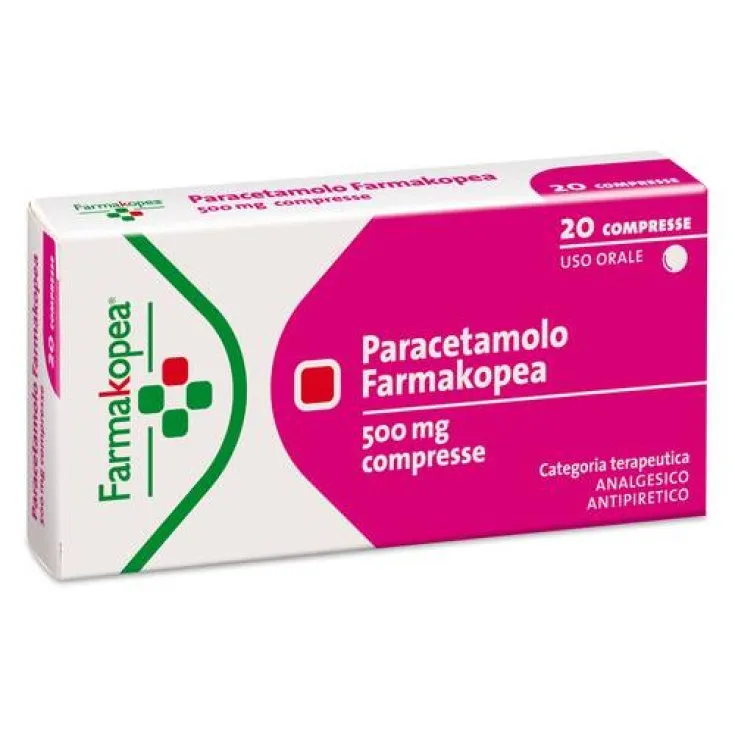
Table of Contents
- PACKAGE LEAFLET: INFORMATION FOR THE PATIENT
- PARACETAMOL FARMAKOPEA 500 mg tablets
- 1. What PARACETAMOL FARMAKOPEA is and what it is used for
- 2. What you need to know before taking PARACETAMOL FARMAKOPEA
- 3. How to take PARACETAMOLO FARMAKOPEA
- 4. Possible side effects
- 5. How to store PARACETAMOLO FARMAKOPEA
- 6. Package contents and other information
- Patient Information Leaflet
- PARACETAMOL FARMAKOPEA 250 mg effervescent tablets
- 1. What PARACETAMOLO FARMAKOPEA is and what it is used for
- 2. What you should know before taking PARACETAMOL FARMAKOPEA
- 3. How to take PARACETAMOLO FARMAKOPEA
- 4. Possible side effects
- 5. How to store PARACETAMOLO FARMAKOPEA
- 6. Package contents and other information
- Patient information leaflet
- PARACETAMOLO FARMAKOPEA 500 mg effervescent tablets
- 1. What PARACETAMOLO FARMAKOPEA is and what it is used for
- 2. What you need to know before taking PARACETAMOLO FARMAKOPEA
- 3. How to take PARACETAMOLO FARMAKOPEA
- 4. Possible side effects
- 5. How to store PARACETAMOLO FARMAKOPEA
- 6. Package contents and other information
PACKAGE LEAFLET: INFORMATION FOR THE PATIENT
PARACETAMOL FARMAKOPEA 500 mg tablets
Paracetamol
Please read this leaflet carefully before taking this medicine because it contains important information for you.
Always take this medicine exactly as described in this leaflet or as your doctor or pharmacist has told you to do.
- Keep this leaflet. You may need to read it again.
- If you need more information or advice, consult your pharmacist.
- If you experience any side effects, including those not listed in this leaflet, consult your doctor or pharmacist. (See section 4).
- Consult your doctor if you do not notice improvement or if you notice worsening of symptoms after 3 days.
Contents of this leaflet:
- What PARACETAMOL FARMAKOPEA is and what it is used for
- What you need to know before taking PARACETAMOL FARMAKOPEA
- How to take PARACETAMOL FARMAKOPEA
- Possible side effects
- How to store PARACETAMOL FARMAKOPEA
- Package contents and other information
1. What PARACETAMOL FARMAKOPEA is and what it is used for
PARACETAMOL FARMAKOPEA contains the active substance paracetamol, which belongs to a group of
medicines known as analgesics and antipyretics, as they act by relieving pain and inflammation
(analgesic and anti-inflammatory action) and reducing body temperature in case of fever (antipyretic
action).
PARACETAMOL FARMAKOPEA is used for:
- reducing fever, for example in cases of influenza, skin diseases (exanthematous), or inflammation of the respiratory tract;
- relieving mild to moderate pain, such as headache (cephalalgia), nerve pain (neuralgia), and muscle pain (myalgia).
Consult your doctor if you do not feel better or if you feel worse after 3 days of treatment.
2. What you need to know before taking PARACETAMOL FARMAKOPEA
Do not take PARACETAMOL FARMAKOPEA:
- if you are allergic (hypersensitive) to paracetamol or to any of the other ingredients of this medicine (listed in section 6).
Warnings and precautions
Talk to your doctor or pharmacist before taking PARACETAMOL FARMAKOPEA.
If you experience an allergic reaction after taking this medicine, stop treatment immediately and inform your doctor.
During treatment with PARACETAMOL FARMAKOPEA, inform your doctor immediately if:
- you have liver problems such as hepatic insufficiency, Gilbert's syndrome (an inherited condition characterized by yellowish discoloration of the skin), or acute hepatitis, or if you are taking other medicines that affect liver function;
- you suffer from haemolytic anaemia, characterized by a low number of red blood cells in the blood;
- you are an alcohol abuser;
- you have severe kidney problems (renal failure);
- you have a rare inherited disorder characterized by low levels of an enzyme known as glucose-6-phosphate dehydrogenase.
If you have serious illnesses, including severe renal impairment, sepsis (when bacteria and their toxins circulate in the blood causing organ damage), malnutrition, chronic alcoholism, or if you are also taking flucloxacillin (an antibiotic), be aware that a serious condition called metabolic acidosis (an abnormality in blood and body fluids) has been reported in patients under these conditions when paracetamol is used at regular doses for prolonged periods or when paracetamol is taken concomitantly with flucloxacillin. Symptoms of metabolic acidosis may include: severe breathing difficulties with rapid, deep breathing, drowsiness, nausea, and vomiting.
Do not take this medicine for more than 3 days without consulting your doctor, and do not take other products containing paracetamol at the same time.
Do not take higher doses than recommended, as higher doses do not increase pain relief but may instead cause serious liver, kidney, or blood damage (see section 4, "Possible side effects"). For this reason, contact your doctor as soon as possible if you have taken more PARACETAMOL FARMAKOPEA than recommended in this leaflet.
Taking this medicine may alter the results of certain laboratory tests, such as measurements of uric acid (uricemia) or blood sugar (glycaemia) levels.
Other medicines and PARACETAMOL FARMAKOPEA
Inform your doctor or pharmacist if you are taking, have recently taken, or might take any other medicines.
Take this medicine with caution and inform your doctor or pharmacist if you are taking the following medicines:
- medicines that slow down stomach emptying, such as anticholinergics (used to treat various conditions including breathing difficulties, colic, during anaesthesia, and to dilate pupils) and opioid painkillers;
- medicines that speed up stomach emptying (prokinetics);
- rifampicin, a medicine used to treat tuberculosis;
- cimetidine, a medicine used to treat stomach and intestinal problems such as acidity or ulcers;
- medicines used to treat epilepsy (e.g. carbamazepine, phenobarbital, glutethimide);
- zidovudine, a medicine used to treat AIDS;
- colestyramine, a medicine used to lower cholesterol levels in the blood;
- medicines used to thin the blood (anticoagulants); if you take high doses of this medicine (4 g daily for 4 days), blood thinning may be affected, so your doctor should monitor you with certain blood tests (INR);
- chloramphenicol, a medicine used to treat certain bacterial infections;
- flucloxacillin (an antibiotic), due to a serious risk of blood and fluid imbalances (called metabolic acidosis) that require urgent treatment (see section 2).
Pregnancy and breastfeeding
If you are pregnant or breastfeeding, take this medicine only if absolutely necessary and under strict medical supervision.
If needed, PARACETAMOL FARMAKOPEA may be used during pregnancy. It is advisable to use the lowest possible dose that reduces pain and/or fever, and to take it for the shortest possible duration.
Contact your doctor or midwife if pain and/or fever do not subside, or if you need to take the medicine more frequently.
Driving and using machines
The use of PARACETAMOL FARMAKOPEA does not affect the ability to drive or operate machinery.
3. How to take PARACETAMOLO FARMAKOPEA
Take PARACETAMOLO FARMAKOPEA exactly as directed in this leaflet or as instructed by your doctor or pharmacist. If you have any doubts, consult your doctor or pharmacist.
Do not exceed the recommended doses. If symptoms persist for more than 3 days, consult your doctor.
The recommended dose for adults is 1–2 tablets (500–1000 mg), repeated if necessary, up to a maximum of 6 tablets per day (3 g of paracetamol).
Use in children and adolescents
The dose should be calculated according to body weight and age:
- Children weighing less than 21 kg ( under 6 years of age ): this medicine is not recommended for this age group;
- Children weighing between 21 and 25 kg (approximately between 6 and 10 years of age ): the recommended dose is half a tablet, repeated if necessary after 4 hours, without exceeding 6 doses per day (3 tablets);
- Children weighing between 26 and 40 kg (approximately between 8 and 13 years of age ): the recommended dose is 1 tablet, repeated if necessary after 6 hours, without exceeding 4 doses per day;
- Adolescents weighing between 41 and 50 kg (approximately between 12 and 15 years of age ): the recommended dose is 1 tablet, repeated if necessary after 4 hours, without exceeding 6 doses per day;
- Adolescents weighing more than 50 kg (approximately over 15 years of age ): the recommended dose is 1 tablet, repeated if necessary after 4 hours, without exceeding 6 doses per day.
If you take more PARACETAMOLO FARMAKOPEA than you should
In case of overdose with PARACETAMOLO FARMAKOPEA, inform your doctor or go to the emergency room immediately.
Overdose can lead to very serious consequences, so immediate treatment is essential.
If high doses of this medicine are accidentally ingested, the following symptoms may occur:
- loss of appetite (anorexia), nausea and vomiting;
- severe liver damage (hepatic cytolysis, massive and irreversible necrosis, hepatocellular failure);
- increased acid levels in the blood (metabolic acidosis);
- increased blood levels of certain liver enzymes (hepatic transaminases, lactate dehydrogenase) and bilirubin (bilirubinemia);
- blood coagulation disorders (reduced prothrombin levels);
- mental confusion (encephalopathy);
- coma and death.
If you forget to take PARACETAMOLO FARMAKOPEA
Do not take a double dose to make up for the missed dose.
If you have any doubts about how to use this medicine, consult your doctor or pharmacist.
4. Possible side effects
Like all medicines, this medicine can cause side effects, although not everybody gets them.
The following side effects may occur:
- severe skin reactions (including epidermal necrolysis, Stevens-Johnson syndrome, erythema multiforme);
- allergic reactions such as skin irritations (rash, erythema, urticaria), swelling of the face, mouth and tongue (angioedema), swelling of the larynx;
- severe allergic reaction (anaphylactic shock);
- reduction in platelet levels (thrombocytopenia), white blood cells (leucopenia, agranulocytosis), and red blood cells (anaemia) in the blood;
- liver problems (liver function abnormalities, hepatitis);
- kidney function disturbances (acute renal failure, interstitial nephritis, haematuria, anuria);
- stomach and intestinal disturbances;
- dizziness.
Frequency not known (cannot be estimated based on available data): severe condition that may make the blood more acidic (called metabolic acidosis), in patients with serious underlying illness using paracetamol (see section 2).
Reporting of side effects
If you experience any side effects, including those not listed in this leaflet, talk to your doctor or pharmacist. You can also report side effects directly via the national reporting system at https://www.aifa.gov.it/content/segnalazioni-reazioni-avverse
By reporting side effects, you can help provide more information on the safety of this medicine.
5. How to store PARACETAMOLO FARMAKOPEA
Keep this medicine out of sight and reach of children.
Do not use this medicine after the expiry date stated on the packaging after "EXP". The expiry date refers to the last day of that month.
Store this medicine in its original packaging.
Do not dispose of any medicine via wastewater or household waste. Ask your pharmacist how to dispose of medicines you no longer use. This will help protect the environment.
6. Package contents and other information
What PARACETAMOL FARMAKOPEA contains
- The active substance is paracetamol. Each tablet contains 500 mg of paracetamol.
- The other components are: microcrystalline cellulose, povidone, sodium croscarmellose, magnesium stearate, colloidal silicon dioxide.
Description of the appearance of PARACETAMOL FARMAKOPEA and contents of the pack
Pack containing 20 tablets.
Marketing Authorization Holder
FARMAKOPEA S.p.A. - Via Aldo Moro, 11 – 20080 Carpiano (MI) - Italy
Manufacturers
Francia Farmaceutici S.r.l. - Via dei Pestagalli, 7 – Milano (MI) - Italy
Industria Farmaceutica NOVA ARGENTIA S.p.A. - Via G. Pascoli, 1 - 20064 Gorgonzola (MI) - Italy
Patient Information Leaflet
PARACETAMOL FARMAKOPEA 250 mg effervescent tablets
Paracetamol
Read this leaflet carefully before taking this medicine because it contains important information for you.
Always take this medicine exactly as described in this leaflet or as your doctor or pharmacist has told you to do.
- Keep this leaflet. You may need to read it again.
- If you need more information or advice, consult your pharmacist.
- If you experience any side effect, including those not listed in this leaflet, contact your doctor or pharmacist. (See section 4).
- Contact your doctor if you do not notice any improvement or if your symptoms worsen after 3 days.
Contents of this leaflet:
- What PARACETAMOL FARMAKOPEA is and what it is used for
- What you need to know before taking PARACETAMOL FARMAKOPEA
- How to take PARACETAMOL FARMAKOPEA
- Possible side effects
- How to store PARACETAMOL FARMAKOPEA
- Package contents and other information
1. What PARACETAMOLO FARMAKOPEA is and what it is used for
PARACETAMOLO FARMAKOPEA contains the active substance paracetamol, which belongs to a group
of medicines called analgesics and antipyretics that work by relieving pain and inflammation (analgesic
and anti-inflammatory action) and reducing body temperature in case of fever (antipyretic action).
PARACETAMOLO FARMAKOPEA is used for:
- reducing fever;
- providing relief from pain, for example, headaches, toothache, menstrual pain.
Consult your doctor if you do not feel better or feel worse after 3 days of treatment.
2. What you should know before taking PARACETAMOL FARMAKOPEA
Do not take PARACETAMOL FARMAKOPEA:
- if you are allergic to paracetamol or to any of the other ingredients of this medicine (listed in section 6);
- if you have severe liver problems (severe hepatic insufficiency);
- if you suffer from haemolytic anaemia, characterised by a low number of red blood cells in the blood;
- if you are pregnant or breastfeeding, except in the cases listed in section “Pregnancy and breastfeeding”.
Warnings and precautions
Talk to your doctor or pharmacist before taking PARACETAMOL FARMAKOPEA.
If you experience an allergic reaction after taking this medicine, stop treatment immediately and inform your doctor.
During treatment with PARACETAMOL FARMAKOPEA, inform your doctor immediately if:
- you have liver problems (hepatic insufficiency);
- you suffer from a rare inherited disease characterised by low levels of an enzyme known as glucose-6-phosphate dehydrogenase in the blood;
- you have severe kidney problems (renal failure). If you have serious illnesses, including severe renal impairment or sepsis (when bacteria and their toxins circulate in the blood causing organ damage), malnutrition, chronic alcoholism, or if you are also taking flucloxacillin (an antibiotic). In patients with these conditions, a serious condition called metabolic acidosis (an abnormality in blood and body fluids) has been reported when paracetamol is used at regular doses for prolonged periods or when paracetamol is taken concomitantly with flucloxacillin. Symptoms of metabolic acidosis may include: severe breathing difficulties with deep, rapid breathing, drowsiness, nausea, and vomiting.
Do not take this medicine for more than 3 days without consulting your doctor, and do not take other products containing paracetamol at the same time.
Do not take higher doses than those recommended, as higher doses do not increase pain relief but may instead cause serious liver, kidney, or blood damage (see section 4, “Possible side effects”). For this reason, contact your doctor as soon as possible if you have taken more PARACETAMOL FARMAKOPEA than recommended in this leaflet.
Taking this medicine may alter the results of certain laboratory tests, such as measurements of uric acid levels (uricemia) or blood sugar (glycemia).
Children
This medicine must not be administered to children under 7 years of age.
Other medicines and PARACETAMOL FARMAKOPEA
Inform your doctor or pharmacist if you are taking, have recently taken, or might take any other medicines.
Take PARACETAMOL FARMAKOPEA with caution and inform your doctor or pharmacist if you are being treated with the following medicines:
- rifampicin, a medicine used to treat tuberculosis;
- cimetidine, a medicine used to treat stomach and intestinal problems such as acidity or ulcers;
- medicines used to treat epilepsy (carbamazepine, phenobarbital, glutethimide);
- medicines used to thin the blood (anticoagulants). In such cases, your doctor may decide to reduce the doses.
- flucloxacillin (an antibiotic), due to a serious risk of blood and fluid abnormalities (called metabolic acidosis) which require urgent treatment (see section 2).
Pregnancy and breastfeeding
If you are pregnant or breastfeeding, take this medicine only when strictly necessary and under close medical supervision.
If needed, PARACETAMOL FARMAKOPEA may be used during pregnancy. It is advisable to use the lowest possible dose that relieves pain and/or fever, and to take it for the shortest possible duration.
Contact your doctor or midwife if pain and/or fever do not decrease or if you need to take the medicine more frequently.
Driving and using machines
PARACETAMOL FARMAKOPEA does not affect the ability to drive or operate machinery.
PARACETAMOL FARMAKOPEA contains sucrose, sorbitol, and sodium
This medicine contains sucrose and sorbitol, two types of sugars. If your doctor has diagnosed you with an intolerance to certain sugars, contact him/her before taking this medicine.
PARACETAMOL FARMAKOPEA contains 331.4 mg (14.5 mmol) of sodium per tablet. This should be taken into consideration in individuals with impaired kidney function or those on a low-sodium diet.
3. How to take PARACETAMOLO FARMAKOPEA
Take PARACETAMOLO FARMAKOPEA exactly as directed in this leaflet or as instructed by your doctor or pharmacist. If you have any doubts, consult your doctor or pharmacist.
Do not exceed the recommended doses. If symptoms persist for more than 3 days, consult your doctor.
Take the medicine with food.
Dissolve the tablet in a glass containing a small amount of water, stir with a teaspoon and drink the resulting solution.
The recommended dose for children over 7 years of age is 1 tablet, 1 to 3 times daily.
If you take more than you should
If you have taken or ingested an excessive amount of this medicine, stop treatment immediately and contact your doctor or go to the nearest hospital.
If you take too much of this medicine, the following symptoms may generally appear within 24 hours: nausea, vomiting, loss of appetite (anorexia), pallor, and abdominal pain.
Overdose can lead to very serious consequences such as liver damage (hepatic cytolysis, complete and irreversible necrosis), kidney damage, and blood disorders.
If you forget to take PARACETAMOLO FARMAKOPEA
Do not take a double dose to make up for the forgotten tablet.
If you have any doubts about how to use this medicine, consult your doctor or pharmacist.
4. Possible side effects
Like all medicines, this medicine can cause side effects, although not everybody will experience them.
The following side effects may occur:
Frequency not known (frequency cannot be estimated from the available data):
- severe skin reactions including epidermal necrolysis, Stevens-Johnson syndrome, erythema multiforme;
- allergic reactions such as swelling of the face, throat and tongue (angioedema), swelling of the larynx, which may be very serious (anaphylactic shock);
- reduction in the number of platelets (thrombocytopenia), white blood cells (leucopenia, agranulocytosis), and red blood cells (anaemia) in the blood;
- changes in liver function and liver inflammation (hepatitis);
- kidney problems (acute renal failure, interstitial nephritis);
- presence of blood in the urine (haematuria);
- failure to produce urine (anuria);
- stomach and intestinal disorders (gastrointestinal reactions);
- dizziness;
- a serious condition that may make the blood more acidic (called metabolic acidosis), in patients with a severe illness who are using paracetamol (see section 2).
Reporting of side effects
If you experience any side effects, including those not listed in this leaflet, talk to your doctor or pharmacist.
You can also report side effects directly via the national reporting system at https://www.aifa.gov.it/content/segnalazioni-reazioni-avverse
By reporting side effects, you can help provide more information on the safety of this medicine.
5. How to store PARACETAMOLO FARMAKOPEA
Keep this medicine out of the sight and reach of children.
Do not use this medicine after the expiry date stated on the pack after "Expiry". The expiry date refers to the last day of that month.
Store the tube containing the tablets tightly closed.
Do not dispose of any medicine via wastewater or household waste. Ask your pharmacist how to dispose of medicines no longer in use. This will help protect the environment.
6. Package contents and other information
What PARACETAMOLO FARMAKOPEA contains
- The active substance is paracetamol. Each effervescent tablet contains 250 mg of paracetamol.
- The other components are: anhydrous citric acid, sodium bicarbonate, sorbitol, sodium saccharin, sucrose monopalmitate, polyvinylpyrrolidone, orange flavor powder.
Description of the appearance of PARACETAMOLO FARMAKOPEA and the pack contents
Pack containing a bottle of 10 effervescent tablets.
Marketing Authorization Holder
Farmakopea S.p.A. - Via Aldo Moro, 11 20080 Carpiano (MI) - Italy
Manufacturer
E-Pharma Trento S.p.A. - Via Provina, 2 - Ravina (TN) - Italy
Patient information leaflet
PARACETAMOLO FARMAKOPEA 500 mg effervescent tablets
Paracetamol
Please read all of this leaflet carefully before taking this medicine because it contains important information for you.
Always take this medicine exactly as described in this leaflet or as your doctor or pharmacist has told you to.
- Keep this leaflet. You may need to read it again.
- If you need more advice or information, consult your pharmacist.
- If you experience any side effects, including those not listed in this leaflet, talk to your doctor or pharmacist. (See section 4).
- Talk to your doctor if you do not notice any improvement or if your symptoms worsen after 3 days.
Contents of this leaflet:
- What PARACETAMOLO FARMAKOPEA is and what it is used for
- What you need to know before taking PARACETAMOLO FARMAKOPEA
- How to take PARACETAMOLO FARMAKOPEA
- Possible side effects
- How to store PARACETAMOLO FARMAKOPEA
- Contents of the pack and other information
1. What PARACETAMOLO FARMAKOPEA is and what it is used for
PARACETAMOLO FARMAKOPEA contains the active substance paracetamol, which belongs to a group
of medicines called analgesics and antipyretics. These act by relieving pain and inflammation (analgesic
and anti-inflammatory action) and by reducing body temperature in case of fever (antipyretic action).
PARACETAMOLO FARMAKOPEA is used for:
- reducing fever;
- providing relief from pain, for example, headaches, toothache, menstrual pain.
Consult your doctor if you do not feel better or if you feel worse after 3 days of treatment.
2. What you need to know before taking PARACETAMOLO FARMAKOPEA
Do not take PARACETAMOLO FARMAKOPEA:
- if you are allergic to paracetamol or to any of the other ingredients of this medicine (listed in section 6);
- if you are pregnant or breastfeeding, except in the cases listed in the section “Pregnancy and breastfeeding”.
Warnings and precautions
Talk to your doctor or pharmacist before taking PARACETAMOLO FARMAKOPEA.
If you experience an allergic reaction after taking this medicine, stop treatment immediately and inform your doctor.
During treatment with PARACETAMOLO FARMAKOPEA, inform your doctor immediately if:
- you have liver problems such as mild to moderate or severe hepatic insufficiency (Child-Pugh > 9), Gilbert's syndrome (an inherited disease characterized by yellowish skin discoloration), or acute hepatitis;
- you are taking other medicines that affect liver function (see section “Other medicines and PARACETAMOLO FARMAKOPEA”);
- you have a rare inherited disorder characterized by low levels of an enzyme known as glucose-6-phosphate dehydrogenase in the blood;
- you have haemolytic anaemia, characterized by a low number of red blood cells in the blood;
- you have severe kidney problems (renal failure);
- you are elderly.
If you suffer from serious illnesses, including severe renal impairment or sepsis (when bacteria and their toxins circulate in the blood causing organ damage), malnutrition, chronic alcoholism, or if you are also taking flucloxacillin (an antibiotic). In patients with these conditions, a serious condition called metabolic acidosis (an abnormality in blood and body fluids) has been reported when paracetamol is used regularly for prolonged periods or when paracetamol is taken together with flucloxacillin. Symptoms of metabolic acidosis may include: severe breathing difficulties with deep, rapid breathing, drowsiness, nausea, and vomiting.
Do not take this medicine for more than 3 days without consulting your doctor, and do not take other products containing paracetamol at the same time.
Do not take higher doses than recommended, as higher doses do not increase pain relief but may instead cause serious liver, kidney, or blood damage (see section 4. Possible side effects). For this reason, contact your doctor as soon as possible if you have taken more PARACETAMOLO FARMAKOPEA than recommended in this leaflet.
Taking this medicine may alter the results of certain laboratory tests, such as measurements of uric acid (uricemia) or blood sugar (glycemia) levels.
Children and adolescents
This medicine must not be given to children.
PARACETAMOLO FARMAKOPEA may be taken by adolescents aged between 13 and 18 years only after consulting a doctor.
Other medicines and PARACETAMOLO FARMAKOPEA
Inform your doctor or pharmacist if you are taking, have recently taken, or might take any other medicines.
Take PARACETAMOLO FARMAKOPEA with caution and inform your doctor or pharmacist if you are being treated with the following medicines:
- rifampicin, a medicine used to treat tuberculosis;
- cimetidine, a medicine used to treat stomach and intestinal problems such as acidity or presence of lesions (ulcers);
- medicines used to treat epilepsy (carbamazepine, phenobarbital, glutethimide);
- medicines used to thin the blood (anticoagulants). In such cases, your doctor may decide to reduce the doses.
- flucloxacillin (antibiotic), due to a serious risk of blood and fluid disturbances (called metabolic acidosis) that require urgent treatment (see section 2).
Pregnancy and breastfeeding
If you are pregnant or breastfeeding, take this medicine only when strictly necessary and under close medical supervision.
If necessary, PARACETAMOLO FARMAKOPEA can be used during pregnancy. It is advisable to use the lowest possible dose that relieves pain and/or fever, and to take it for the shortest possible time.
Contact your doctor or midwife if pain and/or fever do not decrease or if you need to take the medicine more frequently.
Driving and using machines
PARACETAMOLO FARMAKOPEA does not affect the ability to drive or operate machinery.
PARACETAMOLO FARMAKOPEA contains sucrose, sorbitol, and sodium
This medicine contains sucrose and sorbitol, two types of sugars. If your doctor has diagnosed you with an intolerance to certain sugars, contact him/her before taking this medicine.
PARACETAMOLO FARMAKOPEA contains 331.4 mg (14.5 mmol) of sodium per tablet. This should be taken into consideration in patients with impaired renal function or those on a low-sodium diet.
3. How to take PARACETAMOLO FARMAKOPEA
Take PARACETAMOLO FARMAKOPEA exactly as directed in this leaflet or as instructed by your doctor or pharmacist. If you have any doubts, consult your doctor or pharmacist.
Do not exceed the recommended doses. If symptoms persist for more than 3 days, consult your doctor.
Take the medicine with food.
Dissolve the tablet in a glass containing some water, mixing with a teaspoon, and drink the resulting solution.
The recommended dose for adults and adolescents over 15 years of age is 1 tablet, 3-4 times daily. In more severe cases, the dose may be increased to 2 tablets, 3 times daily.
Use in adolescents between 13 and 15 years of age
The recommended dose is 1 tablet, 1-3 times daily.
Use in the elderly
If you are elderly, consult your doctor before taking PARACETAMOLO FARMAKOPEA, as they may determine a need for dose reduction.
If you take more than you should
If you have taken or ingested an excessive amount of this medicine, stop treatment immediately and seek medical advice from your doctor or go to the nearest hospital.
If you take too much of this medicine, the following symptoms may generally appear within 24 hours: nausea, vomiting, loss of appetite (anorexia), pallor, and abdominal pain.
Overdose can lead to very serious consequences such as liver damage (hepatic cytolysis, complete and irreversible necrosis), kidney damage, and blood disorders.
If you forget to take PARACETAMOLO FARMAKOPEA
Do not take a double dose to make up for the forgotten tablet.
If you have any doubts about how to use this medicine, consult your doctor or pharmacist.
4. Possible side effects
Like all medicines, this medicine can cause side effects, although not everybody will experience them.
The following side effects may occur:
Frequency not known (frequency cannot be estimated from the available data):
- severe skin reactions including epidermal necrolysis, Stevens-Johnson syndrome, erythema multiforme;
- allergic reactions such as swelling of the face, throat and tongue (angioedema), swelling of the larynx, which can be very severe (anaphylactic shock);
- reduction in the number of platelets (thrombocytopenia), white blood cells (leukopenia, agranulocytosis), and red blood cells (anaemia) in the blood;
- changes in liver function and liver inflammation (hepatitis);
- kidney problems (acute renal failure, interstitial nephritis);
- presence of blood in the urine (haematuria);
- failure to produce urine (anuria);
- stomach and intestinal disturbances (gastrointestinal reactions);
- dizziness;
- a serious condition that may increase blood acidity (called metabolic acidosis), in patients with severe illness using paracetamol (see section 2).
Reporting of side effects
If you experience any side effect, including those not listed in this leaflet, talk to your doctor or pharmacist. You may also report side effects directly via the national reporting system at https://www.aifa.gov.it/content/segnalazioni-reazioni-avverse
By reporting side effects, you can help provide more information on the safety of this medicine.
5. How to store PARACETAMOLO FARMAKOPEA
Keep this medicine out of sight and reach of children.
Do not use this medicine after the expiry date stated on the packaging after "Expiry".
The expiry date refers to the last day of that month.
Keep the tablet tube tightly closed.
Do not dispose of any medicine via wastewater or household waste. Ask your pharmacist how to dispose of medicines you no longer use. This will help protect the environment.
6. Package contents and other information
What PARACETAMOLO FARMAKOPEA contains
- The active substance is paracetamol. Each tablet contains 500 mg of paracetamol.
- The other components are: anhydrous citric acid, sodium bicarbonate, sorbitol, sodium saccharin, sucrose monopalmitate, polyvinylpyrrolidone, orange flavour powder.
Description of the appearance of PARACETAMOLO FARMAKOPEA and package contents
Pack containing one bottle of 10 effervescent tablets.
Marketing Authorization Holder
Farmakopea S.p.A. - Via Aldo Moro, 11 – 20080 Carpiano (MI) - Italy
Manufacturer
E-Pharma Trento S.p.A. - Via Provina, 2 - Ravina (TN) – Italy