Paracetamol Coop
Italy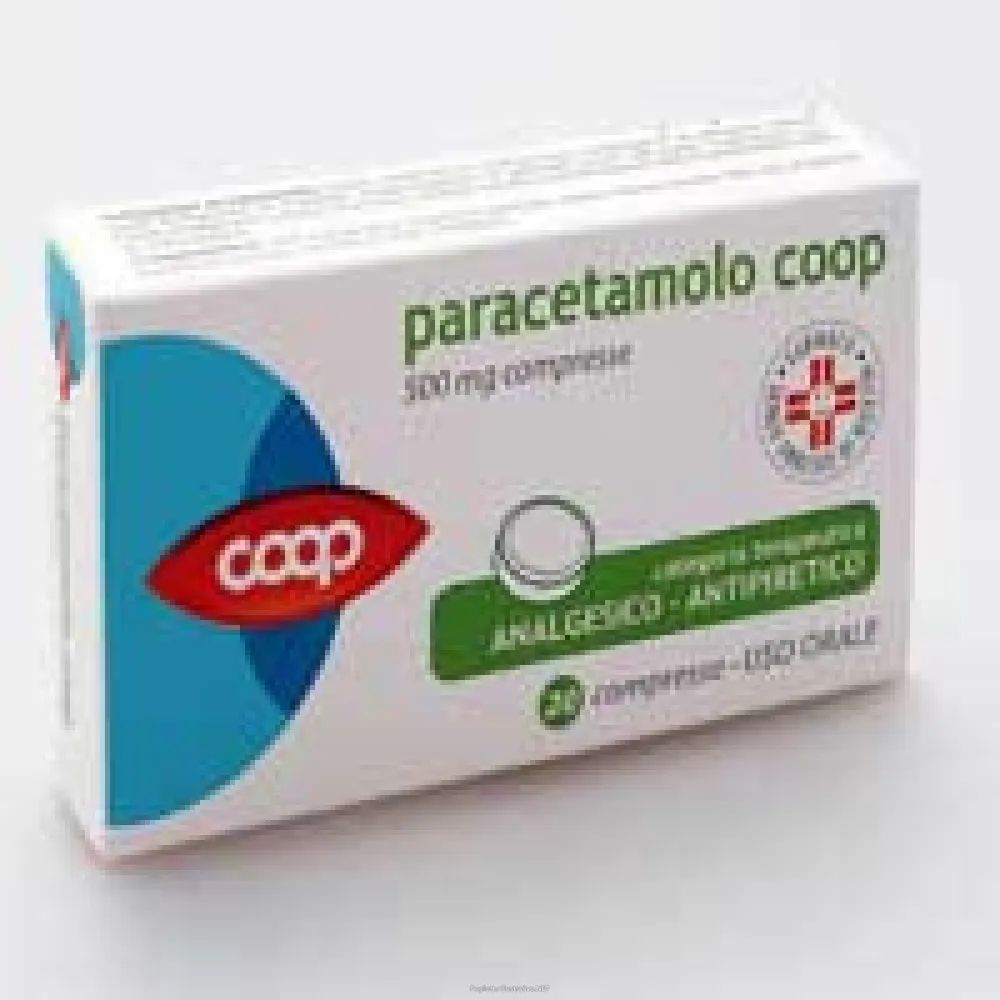
Table of Contents
- Package leaflet: Information for the user
- PARACETAMOL COOP 500 mg tablets
- 1. What is Paracetamolo COOP and what is it used for?
- 2. What you should know before taking/giving Paracetamol COOP to a child
- 3. How to take Paracetamol COOP
- 4. Possible side effects
- 5. How to store Paracetamolo COOP
- 6. Contents of the pack and other information
Package leaflet: Information for the user
PARACETAMOL COOP 500 mg tablets
Paracetamol
Equivalent medicine
Please read all of this leaflet carefully before you start taking this medicine because it contains important information for you.
Use this medicine exactly as described in this leaflet or as your doctor or pharmacist has instructed you.
- Keep this leaflet. You may need to read it again.
- If you need more information or advice, consult your pharmacist.
- If you experience any side effects, including those not listed in this leaflet, contact your doctor or pharmacist. See section 4.
- Consult your doctor if you do not notice improvement or if your symptoms worsen after 3 days of treatment.
Contents of this leaflet:
- What Paracetamol COOP is and what it is used for
- What you need to know before taking Paracetamol COOP
- How to take Paracetamol COOP
- Possible side effects
- How to store Paracetamol COOP
- Contents of the pack and other information
1. What is Paracetamolo COOP and what is it used for?
Paracetamolo COOP contains the active substance paracetamol, which works by reducing fever (antipyretic activity) and relieving pain (analgesic activity).
Paracetamolo COOP is used in adults, adolescents and children (with body weight over 21 kg) for:
- the treatment of fever associated with influenza, exanthematous diseases (infectious diseases typical in children and adolescents), acute respiratory tract illnesses, etc.
- the treatment of mild to moderate pain of various origin and nature (headache, neuralgia, muscle pain, and other painful conditions).
Consult a doctor if you/your child do not feel better or feel worse after 3 days of treatment.
2. What you should know before taking/giving Paracetamol COOP to a child
Do not take Paracetamol COOP
- if the person taking the medicine is allergic to paracetamol or to any of the other components of this medicine (listed in section 6)
- if the person taking the medicine suffers from severe loss of liver function (hepatic insufficiency)
- if the person taking the medicine suffers from severe haemolytic anaemia (a condition causing destruction of red blood cells)
Warnings and precautions
Talk to your doctor or pharmacist before taking Paracetamol COOP.
Take Paracetamol COOP with caution if the person taking the medicine:
- suffers from liver diseases that reduce liver function (hepatic insufficiency, Gilbert’s syndrome, hepatitis)
- is concurrently being treated with medicines that affect liver function (see "Other medicines and Paracetamol COOP")
- has glucose-6-phosphate dehydrogenase deficiency (a substance normally present in the human body; deficiency may cause blood disorders)
- suffers from haemolytic anaemia (destruction of red blood cells)
- chronically consumes alcohol or drinks excessively (3 or more alcoholic drinks per day)
- suffers from anorexia (an eating disorder characterised by lack or reduction of appetite)
- suffers from bulimia (an eating disorder in which a person consumes excessive amounts of food and then uses various methods to eliminate it)
- suffers from cachexia (a condition characterised by extreme thinness, reduced muscle mass, and thinning skin due to chronic illness)
- has been following a poor diet for a long time (chronic malnutrition)
- suffers from dehydration (severe loss of water/fluids from the body)
- suffers from hypovolemia (reduced blood volume in circulation)
During treatment with Paracetamol COOP, inform your doctor immediately if:
- you suffer from serious illnesses, including severe kidney impairment or sepsis (when bacteria and their toxins circulate in the blood causing organ damage), or if you have malnutrition, chronic alcoholism, or are also taking flucloxacillin (an antibiotic). In patients with these conditions, a serious condition called metabolic acidosis (an abnormality in blood and body fluids) has been reported when paracetamol is used regularly at high doses over a prolonged period or when paracetamol is taken together with flucloxacillin. Symptoms of metabolic acidosis may include: severe breathing difficulties with rapid, deep breathing, drowsiness, nausea, and vomiting.
Use of high doses and/or prolonged use
Using high doses and/or prolonged use of this medicine may cause serious adverse effects on the kidneys and blood. Therefore, before taking this medicine, inform your doctor if you/your child suffer(s) from kidney or liver disease. In such cases, your doctor will periodically monitor liver and kidney function and blood composition through appropriate tests.
Children and adolescents
This medicine can be given to children and adolescents (see section 3 “How to use Paracetamol COOP”).
Other medicines and Paracetamol COOP
Inform your doctor or pharmacist if you/your child are taking, have recently taken, or might take any other medicines.
In particular, inform your doctor if the person taking the medicine is also taking:
- medicines containing paracetamol. During treatment with paracetamol, check before taking or giving the child any other medicine to ensure it does not contain paracetamol, as serious adverse effects may occur if paracetamol is taken in excessive doses
- medicines that slow stomach emptying (e.g. anticholinergics, opioids), as these medicines delay the effect of Paracetamol COOP
- medicines that accelerate stomach emptying (e.g. prokinetics), as these medicines speed up the effect of Paracetamol COOP
- cholestyramine (a medicine used to lower blood cholesterol levels), as it reduces the effect of paracetamol
- chloramphenicol (an antibiotic), as it may increase the risk of adverse effects
- anticoagulants (medicines used to make blood less likely to clot). In this case, especially during prolonged treatment and high-dose paracetamol (4 g daily for at least 4 days), take/give Paracetamol COOP only under strict medical supervision.
- rifampicin (an antibiotic)
- cimetidine (a medicine used in the treatment of stomach ulcers)
- antiepileptics (medicines used to treat epilepsy), such as glutethimide, phenobarbital, carbamazepine
- zidovudine (a medicine for the treatment of HIV)
- flucloxacillin (an antibiotic), due to a serious risk of blood and fluid abnormalities (called metabolic acidosis with high anion gap) that requires urgent treatment (see section 2).
The use of these medicines together with Paracetamol COOP requires close medical monitoring.
Interference with blood tests
If the person taking the medicine needs to undergo blood tests, be aware that administration of paracetamol may interfere with the measurement of uric acid and blood glucose levels.
Paracetamol COOP and alcohol
Take Paracetamol COOP with caution if you consume alcohol chronically or excessively (3 or more alcoholic drinks per day), as there is a risk of toxicity (see sections “Warnings and precautions” and “If you take more Paracetamol COOP than you should”).
Pregnancy and breastfeeding
If you are pregnant, think you may be pregnant, planning a pregnancy, or breastfeeding, consult your doctor or pharmacist before taking this medicine.
Although studies conducted during pregnancy and breastfeeding have not shown particular contraindications to the use of paracetamol or caused adverse effects in mother or child, it is recommended to take this medicine only when strictly necessary and under direct medical supervision.
If needed, Paracetamol COOP may be used during pregnancy. It is advisable to use the lowest possible dose that relieves pain and/or fever, and to take it for the shortest possible duration. Contact your doctor if pain and/or fever do not improve or if you need to take the medicine more frequently.
Driving and using machines
Paracetamol COOP does not affect the ability to drive or operate machinery.
3. How to take Paracetamol COOP
Take this medicine exactly as stated in this leaflet or as instructed by your doctor or pharmacist. If you have any doubts, consult your doctor or pharmacist.
The tablet may be divided into two equal doses.
The whole tablet or its halves must be taken with a little water.
Adults
The recommended dose is 1 tablet at a time, repeated if necessary after 4 hours, without exceeding 6 doses per day.
In the case of severe pain or high fever, 2 tablets of 500 mg, repeated if necessary after no less than 4 hours.
In adults, the maximum dose is 3000 mg of paracetamol per day (see “If you take more Paracetamol COOP than you should”).
Use in children and adolescents
For children, it is essential to follow the dose based on their body weight. Your doctor will indicate the most suitable formulation according to the child's body weight. Approximate age ranges based on body weight are provided for informational purposes only.
The tablet may be divided into two equal doses.
| WEIGHT | AGE | DOSE | HOW MANY TIMES A DAY? | MAXIMUM DAILY DOSE (IN 24 HOURS) |
| 21-25 kg | 6.5 – under 8 years approximately | ½ tablet at a time | Repeat, if necessary, after 4 hours. | 3 tablets |
Do not exceed 6 doses in 24 hours.
26-40 kg 8-11 years 1 tablet Repeat, if needed, approximately every 4 hours.
Do not exceed 6 doses in 24 hours.
41-50 kg 12-15 years 1 tablet Repeat, if needed, every 4 hours.
6 tablets maximum in 24 hours.
Do not exceed 6 doses in 24 hours.
Weight Over 15 years 1 tablet Repeat, if needed, every 4 hours.
above 6 tablets maximum in 24 hours.
50 kg Do not exceed 6 doses in 24 hours.
For children weighing less than 21 kg, other specific paracetamol formulations are available on the market.
Ask your doctor or pharmacist for advice.
If you/your child suffer from severe renal impairment (severe reduction in kidney function)
If your doctor has diagnosed severe renal impairment, the interval between doses must be at least 8 hours.
Duration of treatment
Do not take/give Paracetamolo COOP to the child for more than 3 consecutive days without consulting a doctor. The doctor must assess the need for treatment beyond 3 consecutive days.
If you/your child take more Paracetamolo COOP than you should
In case of accidental ingestion/overdose of Paracetamolo COOP, contact your doctor immediately or go to the nearest hospital.
Symptoms
In case of accidental ingestion of very high doses of paracetamol, symptoms that you/your child may generally experience within the first 12–48 hours include:
- anorexia (lack or reduction of appetite), nausea and vomiting, followed by a severe deterioration in general condition;
- changes in blood laboratory values (increased blood bilirubin, lactate dehydrogenase, liver transaminase levels, decreased blood prothrombin levels);
- liver damage that may lead to coma and death.
Taking an excessive dose of paracetamol increases the risk of poisoning and can be fatal, especially in the following cases:
- if the person taking the medicine suffers from liver disease;
- chronic alcoholism;
- if the person taking the medicine has long-term inadequate nutrition (chronic malnutrition);
- if the person taking the medicine is concurrently taking other medicines or substances that increase liver metabolism.
Treatment
The doctor will provide appropriate supportive therapy based on the nature and severity of the symptoms.
If you forget to take Paracetamolo COOP
Do not take a double dose to make up for the missed dose.
If you stop treatment with Paracetamolo COOP
If you have any doubts about using this medicine, consult your doctor or pharmacist.
4. Possible side effects
Like all medicines, this medicine can cause side effects, although not everybody will experience them.
STOP treatment with this medicine and contact your doctor immediately if you/your child experience any of the following side effects:
- Allergic reactions:
- skin redness accompanied by itching (urticaria)
- swelling of the throat (laryngeal oedema)
- swelling of hands, feet, ankles, face, lips, tongue and/or throat (angioedema)
- severe allergic reaction (anaphylactic shock)
In addition, patients taking this medicine may experience the following side effects, for which insufficient data are available to estimate frequency (frequency not known):
- severe condition causing increased acidity of the blood (called metabolic acidosis), in patients with severe illness using paracetamol (see section 2)
- decrease in the number of platelets in the blood (thrombocytopenia)
- decrease in the number of white blood cells in the blood (leucopenia/agranulocytosis)
- reduction in haemoglobin in the blood, the substance that carries oxygen (anaemia)
- dizziness
- stomach and intestinal disturbances
- abnormal liver function
- inflammation of the liver (hepatitis)
- red spots, blistering lesions with areas of skin detachment, blisters, skin rashes (erythema multiforme, Stevens-Johnson syndrome, toxic epidermal necrolysis)
- reduced kidney function (acute renal failure)
- inflammation of the kidneys (interstitial nephritis)
- blood in the urine (haematuria)
- cessation or reduction in urine production (anuria)
Very rare cases of serious skin reactions have been reported.
Reporting of side effects
If you experience any side effect, including those not listed in this leaflet, talk to your doctor or pharmacist. You can also report side effects directly via the national reporting system at www.aifa.gov.it/content/segnalazioni-reazioni-avverse.
By reporting side effects, you can help provide more information on the safety of this medicine.
5. How to store Paracetamolo COOP
Keep this medicine out of the sight and reach of children.
Do not use this medicine after the expiry date which is stated on the packaging after "Exp.". The expiry date refers to the last day of that month.
Store in a tightly closed container, protected from light.
Do not dispose of any medicine via wastewater or household waste. Ask your pharmacist how to dispose of medicines no longer required. This will help protect the environment.
6. Contents of the pack and other information
What Paracetamolo COOP contains
- The active substance is: paracetamol (each tablet contains 500 mg of paracetamol).
- The other components are: povidone, maize starch, magnesium stearate.
Description of the appearance of Paracetamolo COOP and contents of the pack
The tablets are white, flat, with a central break line on one side. The tablets are packaged in blisters, in a carton box containing 20 divisible 500 mg tablets.
Marketing Authorization Holder
Industria farmaceutica NOVA ARGENTIA S.r.l.
Via Carlo Porta, 49
20064 Gorgonzola (MI)
Manufacturer
Industria Farmaceutica NOVA ARGENTIA S.r.l.
Via G. Pascoli, 1
20064 Gorgonzola (MI)