Pantozol Control
Italy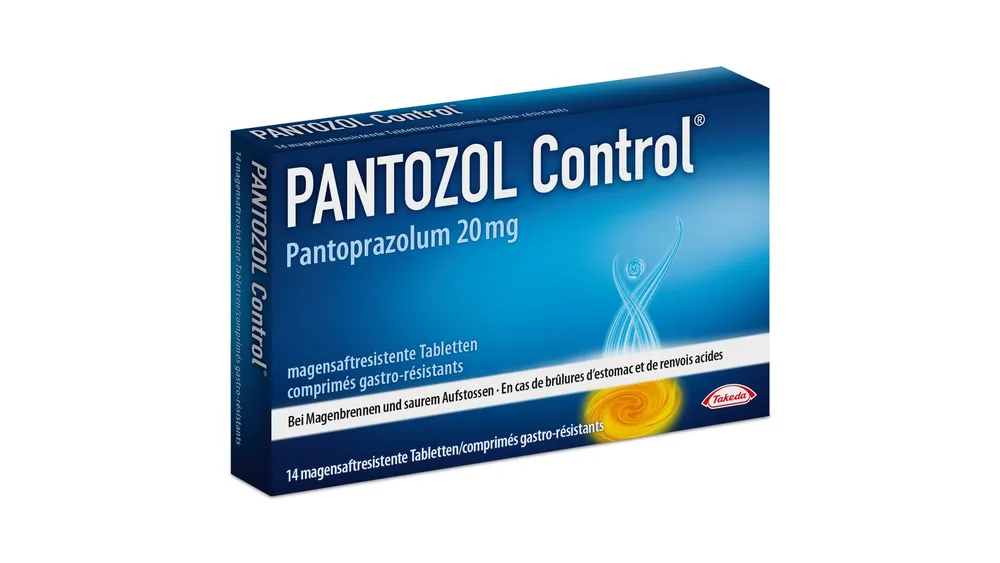
Table of Contents
- Package leaflet: Information for the patient
- PANTOZOL Control 20 mg gastro-resistant tablets
- 1. What PANTOZOL Control is and what it is used for
- 2. What you need to know before taking PANTOZOL Control
- 3. How to take PANTOZOL Control
- 4. Possible side effects
- 5. How to store PANTOZOL Control
- 6. Package contents and other information
Package leaflet: Information for the patient
PANTOZOL Control 20 mg gastro-resistant tablets
pantoprazole
Please read this leaflet carefully before taking this medicine because it contains
important information for you.
Always take this medicine exactly as described in this leaflet or as your doctor or
pharmacist has instructed you.
- Keep this leaflet. You may need to read it again.
- If you need more information or advice, consult your pharmacist.
- If you experience any side effects, including those not listed in this leaflet, contact your doctor or pharmacist. See section 4.
- Contact your doctor if you do not notice any improvement or if your symptoms worsen after 2 weeks.
- You must not take PANTOZOL Control tablets for more than 4 weeks without consulting a doctor.
Contents of this leaflet
- What PANTOZOL Control is and what it is used for
- What you need to know before taking PANTOZOL Control
- How to take PANTOZOL Control
- Possible side effects
- How to store PANTOZOL Control
- Contents of the pack and other information
1. What PANTOZOL Control is and what it is used for
PANTOZOL Control contains the active substance pantoprazole, which blocks the 'pump' that produces acid in the stomach. Therefore, it reduces the amount of acid in your stomach.
PANTOZOL Control is used for the short-term treatment of reflux symptoms (for example, heartburn, acid regurgitation) in adults.
Reflux is the return of acid from the stomach into the oesophagus ("food pipe"), which can become inflamed and cause pain. This may cause symptoms such as a painful burning sensation in the chest rising towards the throat (heartburn) and an acidic taste in the mouth (acid regurgitation).
You may experience relief from acid reflux and heartburn symptoms as early as one day after starting treatment with PANTOZOL Control; however, this medicine is not intended to provide immediate relief. You may need to take the tablets for 2-3 consecutive days to improve your symptoms.
Consult your doctor if you do not feel better or if you feel worse after 2 weeks.
2. What you need to know before taking PANTOZOL Control
Do not take PANTOZOL Control
- if you are allergic to pantoprazole or to any of the other ingredients of this medicine (listed in section 6)
- if you are taking HIV protease inhibitors such as atazanavir or nelfinavir (for the treatment of HIV infection). See "Other medicines and PANTOZOL Control".
Warnings and precautions
Talk to your doctor or pharmacist before taking PANTOZOL Control:
- if you have been treated for heartburn or indigestion continuously for 4 or more weeks
- if you are over 55 years old and take daily treatments for indigestion without a prescription
- if you are over 55 years old and experience any new or recently changed reflux symptoms
- if you have previously had a gastric ulcer or stomach surgery
- if you have liver problems or jaundice (yellowing of the skin or eyes)
- if you regularly visit your doctor for serious health conditions or disorders
- if you are scheduled for an endoscopy or a breath test called the C-urea test
- if you have ever had a skin reaction after treatment with a medicine similar to PANTOZOL Control that reduces stomach acid
- if you need to undergo a specific blood test (Chromogranin A)
- if you are taking HIV protease inhibitors such as atazanavir or nelfinavir (for the treatment of HIV infection) together with pantoprazole, consult your doctor for specific recommendations.
Do not take this medicine for longer than 4 weeks without consulting your doctor. If reflux symptoms (heartburn or acid regurgitation) persist for more than 2 weeks, consult your doctor, who will determine whether long-term use of this medicine is necessary.
Long-term use of PANTOZOL Control may lead to additional risks such as:
- reduced absorption of vitamin B_, and vitamin B_ deficiency if your body’s vitamin B_ stores are already low. Consult your doctor if you notice any of the following symptoms, which may indicate low vitamin B_ levels:
- extreme tiredness or lack of energy
- tingling or numbness
- red and sore tongue, mouth ulcers
- muscle weakness
- vision disturbances
- memory problems, confusion, depression
- fractures of the hip, wrist, or spine, especially if you already have osteoporosis (reduced bone density) or if your doctor has told you that you are at risk of developing osteoporosis (e.g., if you are taking steroids)
- reduced magnesium levels in the blood (possible symptoms: fatigue, involuntary muscle contractions, disorientation, seizures, dizziness, rapid heartbeat). Low magnesium levels may also lead to reduced potassium or calcium levels in the blood. Consult your doctor if you have been using this medicine for more than 4 weeks. Your doctor may decide to perform periodic blood tests to monitor your magnesium levels.
Contact your doctor immediately, before or after taking this medicine, if you notice
any of the following symptoms, which could be signs of another, more serious condition:
- unintentional weight loss (not related to diet or exercise program)
- vomiting, particularly if recurrent
- blood in vomit; this may appear dark, like ground coffee
- blood in stools; stools may appear black or tarry
- difficulty swallowing or pain when swallowing
- looking pale and feeling weak (anemia)
- chest pain
- stomach pain
- severe and/or persistent diarrhoea, as this medicine has been associated with a slight increase in infectious diarrhoea
- if you notice the appearance of a skin rash, especially in areas exposed to sunlight, consult your doctor as soon as possible, as treatment with PANTOZOL Control may need to be discontinued.
Also remember to report any other side effects such as
joint pain.
- Serious skin reactions such as Stevens-Johnson syndrome, toxic epidermal necrolysis, drug reaction with eosinophilia and systemic symptoms (DRESS), and erythema multiforme have been reported in association with pantoprazole treatment. Stop using pantoprazole and contact your doctor immediately if you notice any symptoms related to these serious skin reactions, described in section 4.
Your doctor may decide that you need certain tests.
If you are scheduled for a blood test, tell your doctor that you are taking this medicine.
You may experience relief from acid reflux and heartburn symptoms as early as one day after starting treatment with PANTOZOL Control, but this medicine is not designed to provide immediate relief. Do not take it as a preventive measure.
If you have suffered from recurrent heartburn or indigestion for some time, remember to see your doctor regularly.
Children and adolescents
PANTOZOL Control must not be used in children and adolescents under 18 years of age due to lack of safety information in this younger age group.
Other medicines and PANTOZOL Control
Inform your doctor or pharmacist if you are taking, have recently taken, or might take any other medicines.
PANTOZOL Control may interfere with the proper functioning of other medicines, especially those containing any of the following active substances:
- HIV protease inhibitors such as atazanavir, nelfinavir (for the treatment of HIV infection). You must not use PANTOZOL Control if you are taking HIV protease inhibitors. See "Do not take PANTOZOL Control".
- ketoconazole (used for fungal infections)
- warfarin and phenprocoumon (used to thin the blood and prevent clots). You may need additional blood tests
- methotrexate (used for the treatment of rheumatoid arthritis, psoriasis, and cancer) – if you are taking methotrexate, your doctor may temporarily discontinue treatment with PANTOZOL Control, as pantoprazole may increase methotrexate levels in the blood.
Do not take PANTOZOL Control with other medicines that reduce stomach acid production, such as another proton pump inhibitor (omeprazole, lansoprazole, or rabeprazole) or an H_ antagonist (e.g., ranitidine, famotidine).
However, if necessary, you may take PANTOZOL Control with antacids (e.g., magaldrate, alginic acid, sodium bicarbonate, aluminium hydroxide, magnesium carbonate, or their combinations).
Talk to your doctor before taking PANTOZOL Control if you are scheduled for a specific urine test (for THC, tetrahydrocannabinol).
Pregnancy, breastfeeding, and fertility
Do not take this medicine if you are pregnant or breastfeeding.
If you are pregnant, suspect you may be pregnant, planning to become pregnant, or are breastfeeding, consult your doctor or pharmacist before taking this medicine.
Driving and using machines
If you experience side effects such as dizziness or vision disturbances, do not drive or operate machinery.
PANTOZOL Control contains sodium
This medicine contains less than 1 mmol (23 mg) of sodium per tablet, i.e., essentially “sodium-free”.
3. How to take PANTOZOL Control
Take this medicine exactly as stated in this leaflet or as instructed by your doctor or pharmacist. If you have any doubts, consult your doctor or pharmacist.
The recommended dose is one tablet per day. Do not exceed this recommended dose of 20 mg of pantoprazole per day.
You should take this medicine for at least 2-3 consecutive days. Stop taking PANTOZOL Control when you no longer have any symptoms. You may experience relief from acid reflux and heartburn symptoms as soon as one day after starting treatment with PANTOZOL Control, but this medicine is not designed to provide immediate relief.
If you do not experience any symptom relief after taking this medicine continuously for 2 weeks, consult your doctor.
Do not take PANTOZOL Control for longer than 4 weeks without consulting your doctor.
Take the tablet before a meal, at the same time each day. Swallow the tablet whole with some water. Do not chew or break the tablet.
If you take more PANTOZOL Control than you should
Contact your doctor or pharmacist immediately if you have taken more than the recommended dose. If possible, bring the medicine and this patient information leaflet with you.
If you forget to take PANTOZOL Control
Do not take a double dose to make up for the forgotten dose. Take your next normal dose at the usual time the following day.
If you have any questions about how to use this medicine, consult your doctor or pharmacist.
4. Possible side effects
Like all medicines, this medicine can cause side effects, although not everyone will experience them.
Consult your doctor immediately or contact the nearest hospital emergency department if you
experience any of the following serious side effects. Stop taking this medicine immediately, but
bring this leaflet and/or the tablets with you.
- Severe allergic reactions (rare frequency: may affect up to 1 in 1,000 patients): hypersensitivity reactions, so-called anaphylactic reactions, anaphylactic shock, and angioedema. Typical symptoms include: swelling of the face, lips, mouth, tongue and/or throat, which may cause difficulty in swallowing or breathing, urticaria, severe dizziness with very rapid heartbeat and profuse sweating.
- Severe skin reactions (frequency not known: frequency cannot be estimated from the available data): you may notice one or more of the following:
- skin rash with swelling, appearance of blisters or skin detachment, peeling and bleeding around the eyes, nose, mouth or genitals, and rapid deterioration in general health, or skin rash particularly in areas of skin exposed to sunlight. You may also experience joint pain or influenza-like symptoms, fever, swollen glands (e.g. in the armpits), and blood tests may show abnormalities in certain types of white blood cells or liver enzymes.
- Non-elevated, red, circular or target-shaped spots on the trunk, often with blisters in the center, skin peeling, ulcers in the mouth, throat, nose, genitals and eyes. These serious skin reactions may be preceded by fever and flu-like symptoms (Stevens-Johnson syndrome, toxic epidermal necrolysis).
- Widespread skin rash, high fever and swollen lymph nodes (DRESS syndrome or drug hypersensitivity syndrome).
- Other serious side effects (frequency not known): yellowing of the skin or the whites of the eyes (due to severe liver damage), or fever, skin rash and kidney enlargement, sometimes with painful urination, and pain in the lower back (severe kidney inflammation), which may lead to kidney failure.
Other side effects include:
- Common side effects (may affect up to 1 in 10 patients): benign gastric polyps.
- Uncommon side effects (may affect up to 1 in 100 patients): headache; dizziness; diarrhoea; malaise, vomiting; bloating and flatulence (meteorism); constipation; dry mouth; abdominal pain and discomfort; skin rash or urticaria; itching; weakness, fatigue or general malaise; sleep disorders; increased liver enzymes in blood tests; fracture of the hip, wrist or spine.
- Rare side effects (may affect up to 1 in 1,000 patients): altered or complete loss of taste; visual disturbances such as blurred vision; joint pain; muscle pain; weight changes; increased body temperature; swelling of the extremities; depression; increased bilirubin and blood fat levels (detected in blood tests); breast enlargement in men; high fever and severe reduction in circulating granulocytes (observed in blood tests).
- Very rare side effects (may affect up to 1 in 10,000 patients): disorientation; reduced platelet count in the blood, which may cause bleeding or bruising more than normal; reduced white blood cell count, which may lead to more frequent infections; concomitant abnormal reduction in red blood cells and white blood cells, as well as platelets (observed in blood tests).
- Frequency not known (frequency cannot be estimated from the available data): hallucinations, confusion (especially in patients with a history of these symptoms); decreased levels of sodium, magnesium, calcium or potassium in the blood (see section 2); erythema, possible joint pain; tingling, pricking, stinging, burning or numbness sensations, inflammation of the large intestine causing persistent watery diarrhoea.
Reporting of side effects
If you experience any side effect, including those not listed in this leaflet, talk to your doctor or pharmacist.
You can also report side effects directly via the national reporting system listed in Annex V. By reporting side effects, you can help provide more information on the safety of this medicine.
5. How to store PANTOZOL Control
Keep this medicine out of the sight and reach of children.
Do not use this medicine after the expiry date stated on the carton and blister after "EXP.". The expiry date refers to the last day of that month.
Store in the original packaging to protect the medicine from moisture.
Do not dispose of medicines via wastewater or household waste. Ask your pharmacist how to dispose of medicines you no longer use. This will help protect the environment.
6. Package contents and other information
What PANTOZOL Control contains
- The active substance is pantoprazole. Each tablet contains 20 mg of pantoprazole (as sodium sesquihydrate).
- The other ingredients are:
Core: sodium carbonate (anhydrous), mannitol (E421), crospovidone, povidone K90, calcium stearate.
Coating: hypromellose, povidone, titanium dioxide (E171), yellow iron oxide (E172), propylene glycol (E1520), methacrylic acid-ethyl acrylate copolymer, sodium lauryl sulfate, polysorbate 80, triethyl citrate.
Printing ink: shellac, red, black and yellow iron oxides (E172), and concentrated ammonia solution.
Description of the appearance of PANTOZOL Control and contents of the pack
The gastro-resistant tablets are yellow, oval, biconvex, film-coated tablets marked “P20” on one side.
PANTOZOL Control is available in Alu/Alu blisters, with or without cardboard outer packaging.
Pack sizes containing 7 or 14 gastro-resistant tablets. Not all pack sizes may be marketed.
Marketing Authorization Holder
Takeda GmbH
Byk-Gulden-Straße 2, 78467 Konstanz
Germany
Manufacturer
Takeda GmbH
Oranienburg site
Lehnitzstraße 70-98, 16515 Oranienburg
Germany
For further information about this medicinal product, please contact the local representative of the Marketing Authorization Holder:
België/Belgique/Belgien
Takeda Belgium NV
Tél/Tel: +32 2 464 06 11
[email protected]
България (Bulgaria)
Такеда България ЕООД
Tel: +359 2 958 27 36
[email protected]
Česká republika (Czech Republic)
Takeda Pharmaceuticals Czech Republic s.r.o.
Tel: +420 234 722 722
[email protected]
Danmark (Denmark)
Takeda Pharma A/S
Tlf: +45 46 77 10 10
[email protected]
Deutschland (Germany)
DR. KADE Pharmazeutische Fabrik GmbH
Rigistrasse 2
12277 Berlin
Tel: +49 (0)30 720820
[email protected]
Eesti (Estonia)
Takeda Pharma AS
Tel: +372 6177 669
[email protected]
Ελλάδα (Greece)
Takeda ΕΛΛΑΣ Α.Ε.
Τηλ: +30 210 6387800
[email protected]
España (Spain)
Takeda Farmacéutica España, S.A.
Tel: +34 917 90 42 22
[email protected]
France (France)
Takeda France SAS
Tél: +33 1 40 67 33 00
[email protected]
Hrvatska (Croatia)
Takeda Pharmaceuticals Croatia d.o.o.
Tel: +385 1 377 88 96
[email protected]
Ireland (Ireland)
Takeda Products Ireland Ltd
Tel: 1800 937 970
[email protected]
Ísland (Iceland)
Vistor hf.
Sími: +354 535 7000
[email protected]
Italia (Italy)
Takeda Italia S.p.A.
Tel: +39 06 502601
[email protected]
Κύπρος (Cyprus)
Takeda ΕΛΛΑΣ Α.Ε.
Τηλ: +30 210 6387800
[email protected]
Latvija (Latvia)
Takeda Latvia SIA
Tel: +371 67840082
[email protected]
Lietuva (Lithuania)
Takeda, UAB
Tel: +370 521 09 070
[email protected]
Luxembourg/Luxemburg (Luxembourg)
Takeda Belgium NV
Tél/Tel: +32 2 464 06 11
[email protected]
Magyarország (Hungary)
Takeda Pharma Kft.
Tel: +36 1 270 7030
[email protected]
Malta (Malta)
Takeda HELLAS S.A.
Tel: +30 210 6387800
[email protected]
Nederland (Netherlands)
Takeda Nederland B.V.
Tel: +31 20 203 5492
[email protected]
Norge (Norway)
Takeda AS
Tlf: +47 800 800 30
[email protected]
Österreich (Austria)
Takeda Pharma Ges.m.b.H.
Tel: +43 (0) 800-20 80 50
[email protected]
Polska (Poland)
Takeda Pharma Sp. z o.o.
Tel.: +48 223062447
[email protected]
Portugal (Portugal)
Takeda Farmacêuticos Portugal, Lda.
Tel: +351 21 120 1457
[email protected]
România (Romania)
Takeda Pharmaceuticals SRL
Tel: +40 21 335 03 91
[email protected]
Slovenija (Slovenia)
Takeda Pharmaceuticals farmacevtska družba d.o.o.
Tel: +386 (0) 59 082 480
[email protected]
Slovenská republika (Slovakia)
Takeda Pharmaceuticals Slovakia s.r.o.
Tel: +421 (2) 20 602 600
[email protected]
Suomi/Finland (Finland)
Takeda Oy
Puh/Tel: 0800 774 051
[email protected]
Sverige (Sweden)
Takeda Pharma AB
Tel: 020 795 079
[email protected]
United Kingdom (Northern Ireland)
Takeda UK Ltd
Tel: +44 (0) 3333 000 181
[email protected]
More detailed information on this medicinal product is available on the website of the European Medicines Agency: http://www.ema.europa.eu.
__________________________________________________________________________________
The following lifestyle and dietary recommendations may also help relieve symptoms related to heartburn and acid reflux:
- Avoid large meals
- Eat slowly
- Stop smoking
- Reduce alcohol and caffeine intake
- Reduce weight (if overweight)
- Avoid tight clothing or belts
- Avoid eating at least three hours before going to bed
- Elevate the head of the bed (if symptoms occur at night)
- Reduce consumption of foods that may cause heartburn. These may include: chocolate, peppermint, mint, fatty and fried foods, acidic foods, spicy foods, citrus fruits and fruit juices, tomatoes.