Pantorc
Italy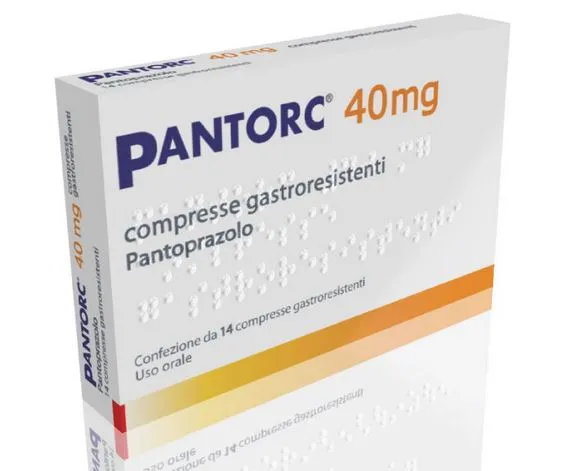
Table of Contents
Package leaflet: Information for the user
Pantorc 40 mg powder for injection solution
pantoprazole
Please read all of this leaflet carefully before you start using this medicine, as it contains important information for you.
- Keep this leaflet. You may need to read it again.
- If you have any questions, ask your doctor, pharmacist or nurse.
- If you get any side effects, talk to your doctor, pharmacist or nurse. This includes any side effects not listed in this leaflet. See section 4.
Contents of this leaflet
- What Pantorc is and what it is used for
- What you need to know before using Pantorc
- How to use Pantorc
- Possible side effects
- How to store Pantorc
- Contents of the pack and other information
1. What Pantorc is and what it is used for
Pantorc contains the active substance pantoprazole. Pantorc is a selective "proton pump inhibitor", a medicine that reduces the amount of acid produced in the stomach. It is used for the treatment of acid-related diseases of the stomach and intestine.
This preparation is injected intravenously and will be administered to you only if your doctor considers injectable pantoprazole to be more suitable at the time than pantoprazole tablets. Tablets will replace the injections as soon as your doctor deems it appropriate.
Pantorc is used in the treatment of adults with
- Gastroesophageal reflux disease (GORD) with oesophagitis. Inflammation of the oesophagus (the tube connecting the throat to the stomach) associated with regurgitation of gastric acid.
- Stomach and duodenal ulcers.
- Zollinger-Ellison syndrome and other conditions in which excessive acid is produced in the stomach.
2. What you need to know before taking Pantorc
Do not take Pantorc
- If you are allergic to pantoprazole or to any of the other ingredients of this medicine (listed in section 6).
- If you are allergic to medicines containing other proton pump inhibitors.
Warnings and precautions
Talk to your doctor, pharmacist or nurse before taking Pantorc
- If you have severe liver problems. Inform your doctor if you have ever had liver problems in the past. Your doctor will arrange for more frequent monitoring of your liver enzymes. If liver enzymes increase, treatment must be discontinued.
- If you are taking protease inhibitors for HIV, such as atazanavir (for the treatment of HIV infection), consult your doctor for specific advice.
- Taking a proton pump inhibitor such as pantoprazole, especially for longer than one year, may slightly increase the risk of fractures of the hip, wrist or spine. Inform your doctor if you have osteoporosis (reduced bone density) or if your doctor has told you that you are at risk of osteoporosis (for example, if you are taking steroids).
- If you have been taking Pantorc for more than 3 months, your blood magnesium levels may decrease. Low magnesium levels can cause fatigue, involuntary muscle contractions, disorientation, seizures, dizziness, and increased heart rate. Inform your doctor immediately if you experience any of these symptoms. Low magnesium levels may also lead to reduced levels of potassium or calcium in the blood. Your doctor may decide to perform regular blood tests to monitor your magnesium levels.
- If you have ever had a skin reaction after treatment with a medicine similar to Pantorc that reduces gastric acidity.
- If you develop a skin rash, especially in areas exposed to sunlight, consult your doctor as soon as possible, as it may be necessary to discontinue treatment with Pantorc. Remember to report any other adverse effects such as joint pain.
- Serious skin reactions such as Stevens-Johnson syndrome, toxic epidermal necrolysis, drug reaction with eosinophilia and systemic symptoms (DRESS), and erythema multiforme have been reported in association with pantoprazole treatment. Stop using pantoprazole and contact your doctor immediately if you notice any symptoms related to these serious skin reactions, described in section 4.
- If you are scheduled to undergo a specific blood test (Chromogranin A).
Inform your doctor immediately before or after taking this medicine if you notice any of the following symptoms, which may be signs of a more serious condition:
- unintentional weight loss
- vomiting, particularly if repeated
- presence of blood in vomit; this may appear as dark coffee-ground-like material in the vomit
- passage of dark or tarry stools
- difficulty swallowing or pain when swallowing
- paleness and weakness (anaemia)
- chest pain
- stomach pain
- severe and/or persistent diarrhoea, as this medicine has been associated with a slight increase in infectious diarrhoea.
Your doctor may decide that you need certain tests to rule out malignancy, as pantoprazole may relieve symptoms of cancer and could therefore delay diagnosis. If your symptoms persist despite treatment, further investigations should be considered.
Children and adolescents
The use of Pantorc is not recommended in children, as efficacy has not been demonstrated in individuals under 18 years of age.
Other medicines and Pantorc
Tell your doctor or pharmacist if you are taking, have recently taken, or might take any other medicines, including medicines without a prescription.
Pantorc may affect the effectiveness of other medicines, so inform your doctor if you are taking:
- Medicines such as ketoconazole, itraconazole and posaconazole (used to treat fungal infections) or erlotinib (used for certain types of cancer), as Pantorc may prevent these and other medicines from working properly.
- Warfarin and fenprocoumon, which affect blood clotting. You may need additional monitoring.
- Medicines used to treat HIV infection, such as atazanavir.
- Methotrexate (used to treat rheumatoid arthritis, psoriasis and cancer) – if you are taking methotrexate, your doctor may temporarily discontinue treatment with Pantorc, as pantoprazole may increase methotrexate blood levels.
- Fluvoxamine (used to treat depression and other psychiatric disorders) – if you are taking fluvoxamine, your doctor may reduce the dose.
- Rifampicin (used to treat infections).
- St John’s wort (Hypericum perforatum) (used to treat mild depression).
Talk to your doctor before taking pantoprazole if you are scheduled to undergo a specific urine test (for THC; tetrahydrocannabinol).
Pregnancy, breastfeeding and fertility
There are insufficient data on the use of pantoprazole in pregnant women. Excretion in human breast milk has been reported.
If you are pregnant, suspect you may be pregnant, are planning a pregnancy, or are breastfeeding, consult your doctor or pharmacist before taking this medicine.
You should use this medicine only if your doctor considers the benefit to you greater than the potential risk to the fetus or infant.
Driving and using machines
Pantorc does not affect, or has a negligible effect on, the ability to drive or operate machinery.
However, if you experience adverse effects such as dizziness or visual disturbances, you should not drive or operate machinery.
Pantorc contains sodium
This medicine contains less than 1 mmol (23 mg) of sodium per vial, i.e. essentially “sodium-free”.
3. How to take Pantorc
The nurse or doctor will administer your daily dose as an intravenous injection over a period of 2–15 minutes.
The recommended dose is:
Adults
For gastric, duodenal ulcers and reflux esophagitis.
One vial (40 mg of pantoprazole) per day.
For long-term treatment of Zollinger-Ellison syndrome and other conditions in which
too much acid is produced in the stomach.
Two vials (80 mg of pantoprazole) per day.
Subsequently, the doctor may adjust the dosage based on the amount of gastric acid secretion. If more than two vials (80 mg) per day are prescribed, the injections will be divided into two equal doses. The doctor may temporarily prescribe a dosage exceeding four vials (160 mg) per day. If rapid control of gastric acidity is required, an initial dose of 160 mg (four vials) will be sufficient to adequately reduce acid levels in the stomach.
Patients with liver problems
If you have severe liver problems, the daily injection should be only 20 mg (half a vial).
Use in children and adolescents
These injections are not recommended for use in children and adolescents under 18 years of age.
If you take more Pantorc than you should
Dosages are carefully controlled by the nurse or doctor, so overdose is very unlikely. Symptoms of overdose are not known.
If you have any doubts about the use of Pantorc, consult your doctor, pharmacist, or nurse.
4. Possible side effects
Like all medicines, this medicine can cause side effects, although not everyone gets them.
If you experience any of the following side effects, consult your doctor immediately or contact the
nearest hospital emergency department:
- Severe allergic reactions (rare frequency : may affect up to 1 in 1,000 people): swelling of the tongue and/or throat, difficulty swallowing, hives, breathing difficulties, allergic swelling of the face (Quincke's edema / angioedema), severe dizziness with very rapid heartbeat and profuse sweating.
- Severe skin disorders (frequency not known : frequency cannot be estimated from available data): you may notice one or more of the following:
- appearance of skin blisters and rapid deterioration of your general condition, erosion (including mild bleeding) of eyes, nose, mouth/lips or genitals, or skin sensitivity/rash, particularly in areas of skin exposed to light/sun. You may also experience joint pain or flu-like symptoms, fever, swollen glands (e.g., under the arm), and blood tests may show changes in white blood cell count or liver enzymes.
- non-elevated, circular or target-shaped reddish spots on the trunk, often with blisters in the center, skin peeling, ulcers in mouth, throat, nose, genitals and eyes. These serious skin reactions may be preceded by fever and flu-like symptoms (Stevens-Johnson syndrome, toxic epidermal necrolysis).
- widespread rash, high fever and swollen lymph nodes (DRESS syndrome or drug hypersensitivity syndrome).
- Other serious conditions (frequency not known): yellowing of the skin or whites of the eyes (severe liver cell damage, jaundice) or fever, rash, and kidney enlargement sometimes with painful urination and lower back pain (severe kidney inflammation), which may lead to possible kidney failure.
Other side effects include:
- Common (may affect up to 1 in 10 people): inflammation of the vein wall and blood clotting (thrombophlebitis) at the injection site; benign gastric polyps.
- Uncommon (may affect up to 1 in 100 people): headache; dizziness; diarrhea; nausea; vomiting; bloating and flatulence (gas); constipation; dry mouth; abdominal pain and feeling unwell; skin rash, exanthema, eruption; itching; feeling of weakness, tiredness or general malaise; sleep disturbances; fractures of the hip, wrist or spine.
- Rare (may affect up to 1 in 1,000 people): altered or complete loss of taste sensation; vision disorders such as blurred vision; hives; joint pain; muscle pain; weight changes; increased body temperature; high fever; swelling of extremities (peripheral edema); allergic reactions; depression; breast enlargement in men.
- Very rare (may affect up to 1 in 10,000 people): disorientation.
- Not known (frequency cannot be estimated from available data): hallucinations, confusion (especially in patients with a history of these symptoms); tingling sensation, pins and needles, burning sensation or numbness, erythema, possible joint pain, inflammation of the large intestine causing persistent watery diarrhea.
Side effects identified through blood tests:
- Uncommon (may affect up to 1 in 100 people): increased liver enzymes.
- Rare (may affect up to 1 in 1,000 people): increased bilirubin; increased blood lipid levels; drastic decrease in circulating granulocytes, associated with high fever.
- Very rare (may affect up to 1 in 10,000 people): reduced platelet count, which may cause bleeding or bruising more than normal; reduced white blood cell count, which may lead to more frequent infections; concurrent abnormal reduction in red blood cells, white blood cells, and platelets.
- Not known (frequency cannot be estimated from available data): decreased levels of sodium, magnesium, calcium or potassium in the blood (see section 2).
Reporting of side effects
If you get any side effects, including ones not listed in this leaflet, talk to your doctor, pharmacist or nurse.
You can also report side effects directly via the national reporting system at www.aifa.gov.it/content/segnalazioni-reazioni-avverse.
Reporting side effects can help provide more information on the safety of this medicine.
5. How to store Pantorc
Keep this medicine out of the sight and reach of children.
Do not use this medicine after the expiry date, which is stated on the carton and on the vial after
Exp.
The expiry date refers to the last day of that month.
Do not store above 25°C.
Store the vial in the outer packaging to protect it from light.
Use the reconstituted solution within 12 hours.
Use the reconstituted and diluted solution within 12 hours.
From a microbiological standpoint, the product should be used immediately. If not used immediately, the times and conditions of storage prior to use are the responsibility of the user and should normally not exceed 12 hours at a temperature not exceeding 25°C.
Do not use Pantorc if you notice any change in appearance (e.g. if cloudiness or precipitate is observed).
Do not dispose of any medicine via wastewater or household waste. Ask your pharmacist how to dispose of medicines you no longer use. This will help protect the environment.
6. Package contents and other information
What Pantorc contains
- The active substance is pantoprazole. Each vial contains 40 mg of pantoprazole (as pantoprazole sodium).
- The other components are: disodium edetate and sodium hydroxide (for pH adjustment).
Description of the appearance of Pantorc and contents of the pack
Pantorc is a white to almost white powder for injectable solution. It is supplied in a clear glass vial of 10 mL, closed with an aluminium cap and grey rubber stopper, containing 40 mg of powder for injectable solution.
Pantorc is available in the following pack sizes:
Pack containing 1 vial.
Multiple pack containing 5 vials (5 packs of 1 vial).
Hospital pack containing 1 vial.
Multiple hospital pack containing 5 vials (5 packs of 1 vial).
Multiple hospital pack containing 10 vials (10 packs of 1 vial).
Multiple hospital pack containing 20 vials (20 packs of 1 vial).
It is possible that not all pack sizes are marketed.
Marketing Authorization Holder
Takeda Italia S.p.A., Viale Manzoni 30, 00185 Rome, Italy
Manufacturer
Takeda GmbH
Singen site
Germany
This medicinal product is authorized in the Member States of the European Economic Area under the following names:
| Member State | Medicinal product name |
| Austria | Pantoloc 40 mg-Trockenstechampulle |
| Cyprus, Czech Republic, Greece, Hungary, Romania, Slovakia, | Controloc i.v. |
| Denmark, Sweden | Pantoloc |
| Finland | SOMAC 40 mg powder for solution for injection |
| France | Eupantol 40 mg poudre pour solution injectable IV |
| Germany, Netherlands | Pantozol i.v. |
| Ireland, United Kingdom | Protium i.v. |
| Italy | Pantorc |
| Norway | Somac |
| Poland | Controloc |
| Portugal | Pantoc IV |
| Slovenia | Controloc 40 mg prašek za raztopino za injiciranje |
| Spain | Anagastra 40 mg powder for injectable solution I.V. |
More detailed information on this medicinal product is available on the website of the Italian Medicines Agency (www.aifa.gov.it).
The following information is intended exclusively for physicians or healthcare professionals:
The ready-to-use solution should be prepared by injecting 10 mL of sodium chloride 9 mg/mL (0.9%) injection solution into the vial containing the powder. This solution may be administered directly or after dilution with 100 mL of sodium chloride 9 mg/mL (0.9%) injection solution or glucose 50 mg/mL (5%) injection solution. For dilution, containers made of glass or plastic must be used.
Pantorc must not be reconstituted or diluted with solvents other than those specified above.
After reconstitution, the solution must be used within 12 hours. From a microbiological standpoint, the product should be used immediately. If not used immediately, the duration and conditions of storage prior to use are the responsibility of the user and should normally not exceed 12 hours at a maximum temperature of 25°C.
The medicinal product must be administered intravenously over 2–15 minutes.
The contents of the vial are intended solely for a single intravenous administration. Any unused portion remaining in the container or any solution with altered appearance (e.g. cloudiness or precipitation) must be discarded.