Palynziq
Italy
Table of Contents
- Package leaflet: Information for the user
- Palynziq 2.5 mg solution for injection in pre-filled syringe, 10 mg solution for injection in pre-filled syringe, 20 mg solution for injection in pre-filled syringe
- 1. What Palynziq is and what it is used for
- 2. What you should know before using Palynziq
- 3. How to use Palynziq
- 4. Possible side effects
- 5. How to store Palynziq
- 6. Package contents and other information
- 7. Instructions for Use
Package leaflet: Information for the user
Palynziq 2.5 mg solution for injection in pre-filled syringe, 10 mg solution for injection in pre-filled syringe, 20 mg solution for injection in pre-filled syringe
Pegvaliase
( pegvaliasum )
Please read this leaflet carefully before using this medicine because it contains important information for you.
- Keep this leaflet. You may need to read it again.
- If you have any questions, ask your doctor, pharmacist, or nurse.
- This medicine has been prescribed for you only. Do not give it to other people, even if they have the same symptoms as yours, because it may be harmful.
- If you experience any adverse reactions, including those not listed in this leaflet, contact your doctor, pharmacist, or nurse. See section 4.
Contents of this leaflet
- What Palynziq is and what it is used for
- What you need to know before using Palynziq
- How to use Palynziq
- Possible side effects
- How to store Palynziq
- Contents of the pack and other information
1. What Palynziq is and what it is used for
Palynziq contains the active substance pegvaliase, an enzyme that can break down a substance called phenylalanine in the body. Palynziq is a treatment for patients aged 16 years and older with phenylketonuria (PKU), a rare inherited disorder that causes accumulation of phenylalanine in the body from proteins in food. People with PKU have high levels of phenylalanine, which can lead to serious health problems. Palynziq reduces blood phenylalanine levels in PKU patients whose blood phenylalanine levels cannot be maintained below 600 micromol/L by other means, such as diet.
2. What you should know before using Palynziq
Do not use Palynziq
- if you are severely allergic to pegvaliase or to any of the other ingredients of this medicine (listed in section 6), or to another medicine containing polyethylene glycol (PEG).
Warnings and precautions
Talk to your doctor, pharmacist, or nurse before using Palynziq.
Allergic reactions
You may experience allergic reactions during treatment with Palynziq. Your doctor will advise you on how to manage allergic reactions depending on their severity and may prescribe additional medicines to treat them.
Before using Palynziq, inform your doctor if you are unable or unwilling to use an adrenaline injection device to treat a severe allergic reaction to Palynziq.
Palynziq can cause severe allergic reactions, which may be life-threatening, and can occur at any time after a Palynziq injection.
- Stop injecting Palynziq immediately if you experience any of the following symptoms:
- Swelling of the face, eyes, lips, mouth, throat, tongue, hands and/or feet
- Difficulty breathing or wheezing
- Throat tightness or a sensation of choking
- Difficulty swallowing or speaking
- Feeling dizzy or lightheaded
- Loss of control of urine or bowel movements
- Rapid heartbeat
- Hives (such as itchy, raised rash) that spread quickly
- Flushing
- Severe stomach cramps or pain, vomiting, or diarrhea
- Use the adrenaline auto-injector as instructed by your doctor and seek emergency medical help immediately.
Your doctor will prescribe an adrenaline injection device for use in case of a severe allergic reaction. Your doctor will train you, and someone assisting you, on how and when to use the adrenaline. Always carry the adrenaline injection device with you.
For at least the first 6 months of treatment, someone must be with you when you self-inject Palynziq. This person must stay with you for at least 1 hour after the injection to monitor for signs and symptoms of a severe allergic reaction and, if needed, administer adrenaline and call emergency medical services.
If you experience a severe allergic reaction, do not continue using Palynziq until you have spoken with your prescribing doctor. Inform your doctor if you have had a severe allergic reaction. Your doctor will determine whether you can continue treatment with Palynziq.
Time required to reduce blood phenylalanine levels
Your doctor will initially prescribe Palynziq at a low dose, which will be gradually increased. It may take some time to establish the optimal dose to reduce your blood phenylalanine levels. Most people respond within 18 months, but in some cases it may take up to 30 months.
Injection of other medicines containing PEG while using Palynziq
Palynziq contains a component called polyethylene glycol (PEG). If you inject Palynziq together with another injectable medicine containing PEG, such as pegylated medroxyprogesterone acetate, you may have an allergic reaction. Inform your doctor or pharmacist if you are currently injecting, have recently injected, or may inject any other medicine.
Excessively low levels of phenylalanine in the blood
During treatment with Palynziq, you may develop abnormally low levels of phenylalanine in the blood. Your doctor will monitor your blood phenylalanine levels monthly. If your blood phenylalanine levels are too low, your doctor may advise you to adjust your diet and/or reduce your dose of Palynziq. Your doctor will monitor your blood phenylalanine levels every 2 weeks until they return to normal.
Children and adolescents
It is not known whether Palynziq is safe and effective in children and adolescents under 16 years of age with PKU; therefore, Palynziq should not be used in individuals under 16 years of age.
Other medicines and Palynziq
Inform your doctor or pharmacist if you are taking, have recently taken, or might take any other medicines.
Pregnancy, breastfeeding, and fertility
If you are pregnant, suspect you may be pregnant, planning to become pregnant, or breastfeeding, consult your doctor before using this medicine.
Palynziq is not recommended during pregnancy unless your clinical condition requires treatment with Palynziq and other methods to control blood phenylalanine levels have not been effective. During pregnancy, excessively high or low levels of phenylalanine may harm you or your baby. You and your doctor will decide the best way to manage your blood phenylalanine levels. It is very important to keep phenylalanine levels under control before and during pregnancy.
It is not known whether Palynziq passes into breast milk or if it affects the breastfed infant. If you are using Palynziq, consult your healthcare provider to determine the best way to feed your baby.
It is not known whether Palynziq affects fertility. Animal studies suggest that women with abnormally low phenylalanine levels may have difficulty becoming pregnant.
Driving and using machines
Palynziq may impair your ability to drive or operate machinery if you develop a severe allergic reaction.
Palynziq contains sodium
This medicine contains less than 1 mmol of sodium (23 mg) per pre-filled syringe, i.e., it is essentially ‘sodium-free’.
3. How to use Palynziq
Use this medicine exactly as instructed by your doctor. If you have any doubts, consult your doctor.
Palynziq is administered as an injection under the skin (subcutaneous injection).
Dose
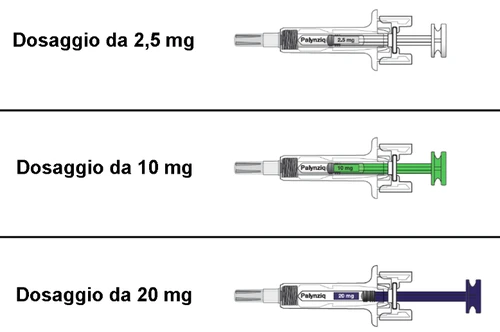
- You will start Palynziq at the lowest dose. You will use the 2.5 mg syringe once a week for at least the first 4 weeks. The 2.5 mg syringe has a white plunger.
- Your doctor will then gradually increase your dose and/or injection frequency of Palynziq. Your doctor will inform you how long to use each dose. Gradually increasing the dose over time allows your body to adapt to the medicine.
- The goal is to reach a daily dose that reduces phenylalanine levels in the blood to the desired range of 120–600 micromol/L without causing excessive side effects. Patients generally require a daily dose of 20 mg, 40 mg, or 60 mg to achieve the desired blood phenylalanine level.
Examples of dose escalation to achieve the target blood phenylalanine level
| Dosage and frequency of Palynziq | Syringe color |
| 2.5 mg once weekly | White plunger |
| 2.5 mg twice weekly | |
| 10 mg once weekly | Green plunger |
| 10 mg twice weekly | |
| 10 mg four times weekly | |
| 10 mg daily | |
| 20 mg daily | Blue plunger |
| 40 mg daily (2 injections with 20 mg pre-filled syringe)1 | |
| 60 mg daily (3 injections with 20 mg pre-filled syringe)1 |
If more than one injection is required to administer the daily dose,
all injections should be given at the same time of day, and injection sites
should be at least 5 cm apart. Do not spread the daily dose throughout the day.
- During treatment, your doctor will continue to monitor your blood phenylalanine levels and may adjust your dose of Palynziq or advise you to modify your diet.
- Your doctor should monitor your blood phenylalanine levels monthly to confirm that the medicine is effective for you.
Starting Palynziq
- A healthcare professional will administer the Palynziq injection until you (or a caregiver) are able to do it independently.
- Your doctor will prescribe medications to take before the Palynziq injection, such as paracetamol, fexofenadine, and/or ranitidine. These medications help reduce the symptoms of an allergic reaction.
- A healthcare professional will observe you for at least 1 hour after administration of Palynziq to monitor for signs or symptoms of an allergic reaction.
- Your doctor will also prescribe an adrenaline auto-injector to use in case of severe allergic reactions. The healthcare professional will inform you about which signs and symptoms to watch for and what to do in case of a severe allergic reaction.
- Your doctor will show you how and when to use the adrenaline auto-injector. Always carry it with you.
Continuing Palynziq
- This medicine is supplied in pre-filled syringes with 3 different strengths (2.5 mg with white plunger, 10 mg with green plunger, or 20 mg with blue plunger). More than one pre-filled syringe may be required for your prescribed dose. The healthcare professional will tell you which syringe or combination of syringes to use and will show you (or your caregiver) how to inject Palynziq.
- The “Instructions for Use” (section 7 of this leaflet) show:
o how to prepare and inject Palynziq, and
o how to properly dispose of used Palynziq syringes. - Your doctor will inform you how long to continue taking medications such as paracetamol, fexofenadine, and/or ranitidine before using Palynziq.
- For at least the first 6 months of Palynziq treatment, someone must be with you when you self-inject Palynziq and for at least 1 hour after the injection, to monitor for signs and symptoms of a severe allergic reaction and, if necessary, administer an adrenaline injection and call emergency medical services.
o Your doctor will train this person to recognize signs and symptoms of a severe allergic reaction and how to administer an adrenaline injection.
o Your doctor will advise you whether you will need an observer for longer than 6 months. - Do not change your protein intake unless your doctor tells you to.
If you use more Palynziq than you should
If you use more Palynziq than prescribed, inform your doctor. See section 4 for information on what to do based on symptoms.
If you forget to use Palynziq
If you miss a dose, inject the next dose at your usual time. Do not use two doses of Palynziq to make up for a missed dose.
If you stop using Palynziq
If you stop treatment with Palynziq, your blood phenylalanine levels are likely to increase. Consult your doctor before stopping Palynziq treatment.
If you have any questions about the use of this medicine, consult your doctor.
4. Possible side effects
Like all medicines, this medicine can cause side effects, although not everybody gets them.
Allergic reactions are very common ( may occur in more than 1 in 10 people ) and vary in severity. Symptoms of an allergic reaction may include rash, itching, swelling of the head or face, itchy or watery eyes, cough, difficulty breathing, wheezing, or dizziness. Your doctor will advise you on how to manage allergic reactions depending on their severity and may prescribe additional medicines to treat them. Some of these allergic reactions may be more severe and require immediate attention, as described below.
Serious side effects include:
- Sudden severe allergic reactions: (common, may occur in up to 1 in 10 people). Stop injecting Palynziq if you notice any sudden severe signs of allergy or a combination of the signs listed below:
o Swelling of the face, eyes, lips, mouth, throat, tongue, hands and/or feet
o Difficulty breathing or wheezing
o Tightness in the throat or a feeling of suffocation
o Difficulty swallowing or speaking
o Dizziness or feeling faint
o Loss of bladder or bowel control
o Rapid heartbeat
o Hives (such as itchy, raised rash) that spreads quickly
o Flushing
o Severe cramps or stomach pain, vomiting or diarrhea
Use your adrenaline injection device as instructed by your doctor and seek emergency medical help immediately. Your doctor will prescribe an adrenaline auto-injector for use in case of a severe allergic reaction. Your doctor will train you, and someone assisting you, on how and when to use the adrenaline. Always carry your adrenaline auto-injector with you.
Contact your doctor immediately if you experience:
- A type of allergic reaction called serum sickness, which includes a combination of fever (high temperature), rash, muscle and joint pain (common, may occur in up to 1 in 10 people)
Other side effects
Very common: may occur in more than 1 in 10 people
- Redness, swelling, bruising, tenderness or pain at the site where Palynziq was injected
- Joint pain
- Decreased levels of complement factors C3 and C4 (components of the immune system), detected by blood tests
- Allergic reaction
- Excessively low levels of phenylalanine, detected by blood tests
- Headache
- Rash
- Stomach pain
- Feeling unwell (nausea)
- Vomiting
- Hives (raised, itchy skin rash)
- Itching
- Thinning or loss of hair
- Cough
- Increased C-reactive protein (CRP) levels, detected by blood test (CRP is a protein indicating inflammation)
- Swollen glands in the neck, armpits or groin
- Skin redness
- Muscle pain
- Diarrhea
- Tiredness
Common: may occur in up to 1 in 10 people
- Difficulty breathing
- Joint stiffness
- Joint swelling
- Muscle stiffness
- Rash with small bumps
- Blisters or peeling of the outer layer of skin
Reporting of side effects
If you experience any side effects, including those not listed in this leaflet, tell your doctor, pharmacist or nurse. You can also report side effects directly through the national reporting system listed in Annex V. By reporting side effects, you can help provide more information on the safety of this medicine.
5. How to store Palynziq
Keep this medicine out of the sight and reach of children.
Do not use this medicine after the expiry date which is stated on the syringe label, on the tray cover, and on the carton after “Exp.”/“EXP”. The expiry date refers to the last day of that month.
Store in the refrigerator (2 °C - 8 °C). Do not freeze.
If necessary, Palynziq may be stored in its sealed tray outside the refrigerator (at a temperature below 25 °C) for a single period of up to 30 days, away from sources of heat. Record the date of removal from the refrigerator on the closed product tray. Once stored outside the refrigerator, the product must not be returned to refrigerated storage.
Do not use this medicine if the pre-filled syringe is damaged or if the solution appears discoloured, cloudy, or contains particles.
Use safe disposal procedures for syringes. Do not dispose of any medicine via wastewater or household waste. Ask your pharmacist how to dispose of medicines no longer in use. This will help protect the environment.
6. Package contents and other information
What Palynziq contains
- The active substance is pegvaliase. Each 2.5 mg pre-filled syringe contains 2.5 mg of pegvaliase in 0.5 mL of solution. Each 10 mg pre-filled syringe contains 10 mg of pegvaliase in 0.5 mL of solution. Each 20 mg pre-filled syringe contains 20 mg of pegvaliase in 1 mL of solution.
- The other components are tromethamine, tromethamine hydrochloride, sodium chloride (see section 2 for further information), trans-cinnamic acid, water for injections.
Description of Palynziq and contents of the pack
Palynziq injectable solution (injectable) is a solution that ranges from clear to slightly opalescent, from colourless to pale yellow. The pre-filled syringe includes an automatic needle protection.
2.5 mg pre-filled syringe (white plunger)
Each 2.5 mg pack contains 1 pre-filled syringe.
10 mg pre-filled syringe (green plunger)
Each 10 mg pack contains 1 pre-filled syringe.
20 mg pre-filled syringe (blue plunger)
Each 20 mg pack contains 1 or 10 pre-filled syringes.
Not all pack sizes may be marketed.
Marketing Authorisation Holder and Manufacturer
BioMarin International Limited
Shanbally, Ringaskiddy
County Cork
Ireland
P43 R298
Other sources of information
More detailed information on this medicinal product is available on the website of the European Medicines Agency: https://www.ema.europa.eu. In addition, links to other websites on rare diseases and their therapeutic treatments are provided.
7. Instructions for Use
BEFORE YOU START
Before starting to use the Palynziq pre-filled syringe, read these instructions for use and review them each time you receive a new prescription. There may be new information. Also, consult your healthcare provider for information about your medical condition or your treatment.
Carefully follow these instructions when using Palynziq. If your healthcare provider decides that you or a caregiver may administer Palynziq injections at home, they will show you or the caregiver how to inject Palynziq before you administer it for the first time. Do not inject Palynziq until your healthcare provider has shown you or the caregiver how to perform the injection.
Contact your healthcare provider if you have any questions about how to correctly inject Palynziq.
Do not share pre-filled syringes with anyone else.
For storage instructions, see section 5 “How to store Palynziq” of this patient information leaflet.
Important information about using the Palynziq pre-filled syringe:
- Use each Palynziq pre-filled syringe only once. Do not use a Palynziq syringe more than once.
- Never pull back the plunger.
- Do not remove the needle cap until you are ready to administer the injection.
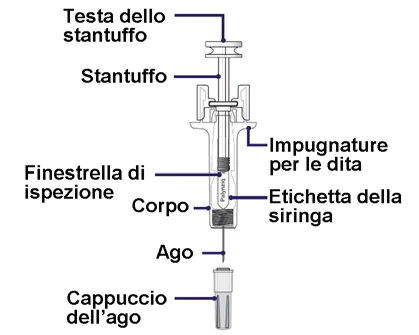
Figure A below shows what the pre-filled syringe looks like before use.
Figure A
Selecting the correct Palynziq pre-filled syringe or syringes for the prescribed dose:
When you receive the Palynziq pre-filled syringe or syringes, check that the packaging or packages display the name “Palynziq”.
- Palynziq pre-filled syringes are available in 3 different strengths: 2.5 mg, 10 mg, and 20 mg.
- More than one pre-filled syringe may be required for the prescribed dose. Your healthcare provider will tell you which syringe or combination of syringes to use. For any doubts, contact your healthcare provider.
- Before injecting Palynziq, check each package and syringe to ensure you have the correct pre-filled syringe for the prescribed dose.
Figure B
PREPARING FOR INJECTION
Step 1: Gather the necessary supplies:
Gather the supplies needed for the injection and place them on a clean, flat surface. Remove from the refrigerator the number of packages required for the prescribed dose.
Supplies needed for Palynziq injection:
- Palynziq pre-filled syringe(s) in sealed tray(s). Each tray contains 1 syringe.
- Gauze pad or cotton ball
- 1 alcohol swab
- 1 adhesive bandage
- 1 sharps or needle disposal container
Step 2: Remove the Palynziq tray(s) from the packaging and check the expiration date:
- Remove from the refrigerator the number of packages needed for the prescribed dose. Check the expiration date on the package. If the expiration date has passed, do not use the pre-filled syringe contained in that package.
- Open each package and remove the sealed tray(s) required for the dose.
- Place each sealed tray on a clean, flat surface, out of reach of children and pets.
- Return the package containing unused trays to the refrigerator. If a refrigerator is not available, see section 5 “How to store Palynziq” of this patient information leaflet.
Step 3: Before opening, allow the Palynziq tray(s) to reach room temperature for 30 minutes:
Leave the sealed tray(s) at room temperature for at least 30 minutes. Injecting cold Palynziq may be uncomfortable.
- Do not heat the pre-filled syringe in any other way. Do not place it in a microwave or in warm water.
Step 4: Remove the syringe from the tray:
Peel off the tray cover. Grasp the Figure C
central body of the pre-filled syringe and remove it
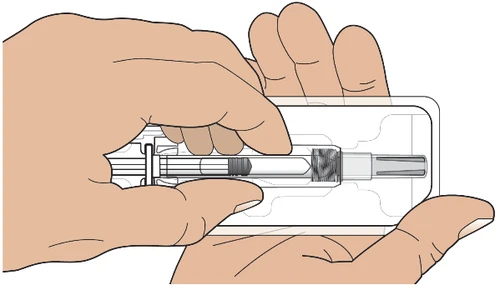
from the tray (see Figure C).
- Do not use the pre-filled syringe if it appears damaged or previously used. Use a new pre-filled syringe for the injection.
- Do not remove the needle cap from the pre-filled syringe.
- Do not shake the syringe or roll it between your hands.
Step 5: Check the syringe strength and inspect for particles:
Check the syringe label to ensure you have the correct strength for the prescribed dose. Figure D
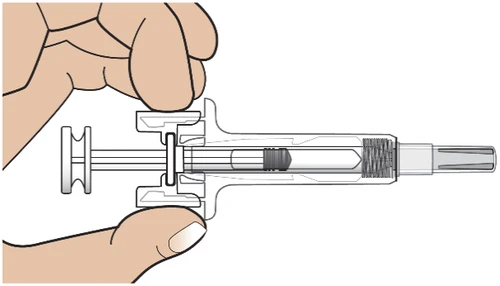
Examine the liquid through the inspection window (see Figure D). The liquid should be clear and colorless to pale yellow. It is normal to see an air bubble.
- Do not tap the syringe or attempt to remove the air bubble.
- Do not use the pre-filled syringe if the liquid is cloudy, discolored, or contains clumps or particles. Use a new pre-filled syringe for the injection.
INJECTING PALYNZIQ
Figure E
Step 6: Choose the injection site.
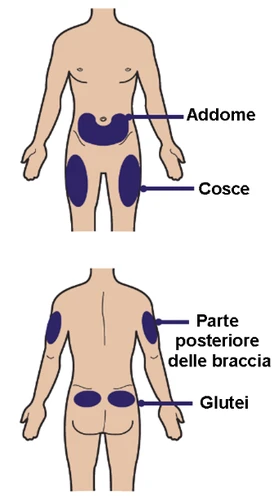
Recommended injection sites are:
- The central front area of the thighs.
- The lower abdomen, except for the area within 5 cm around the navel.
If the injection is administered by a caregiver, the upper buttocks and the upper back of the arms may also be used (see Figure E).
Note:
- Do not inject into scars, moles, birthmarks, bruises, rashes, or areas where the skin is hardened, tender, red, damaged, burned, inflamed, or tattooed. Figure F
- If more than 1 injection is required Inject at least 5 cm apart for the daily dose, injection sites must
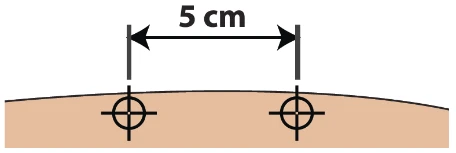
be at least 5 cm apart
(see Figures E and F).
- Change (rotate) injection sites daily. Choose a site that is at least 5 cm away from the site(s) used the previous day. The site may be on the same side or a different part of the body (see Figures E and F).
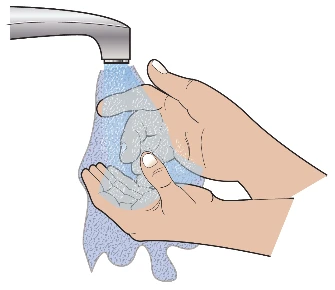
Step 7: Wash your hands thoroughly with soap and water Figure G
(see Figure G).
Step 8: Clean the selected site with an alcohol swab. Figure H
Allow the skin to dry for at least 10 seconds before injecting
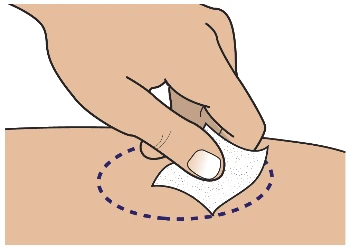
(see Figure H).
- Do not touch the cleaned injection site.
- Do not remove the needle cap until you are ready to inject Palynziq.
- Before injecting, check that the needle is not damaged or bent.
Injecting Palynziq
Step 9: Hold the body of the pre-filled syringe in one hand, with the needle pointing away from you Figure I
(see Figure I).
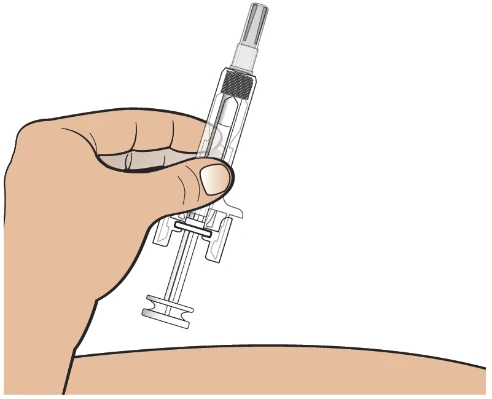
- Do not use the pre-filled syringe if it has been dropped. Use a new pre-filled syringe for the injection.
Step 10: Pull off the needle cap to remove it from the needle Figure J
(see Figure J).
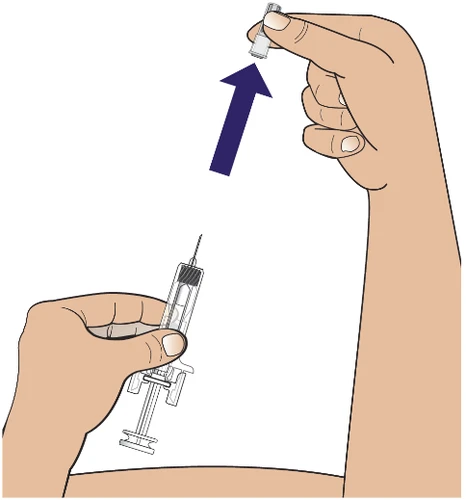
- Do not twist the needle cap while removing it.
- Do not hold the pre-filled syringe by the plunger or plunger tip while removing the needle cap.
You may see a drop of liquid at the tip of the needle.
This is normal. Do not wipe it off. Dispose of the needle cap in a sharps or needle disposal container.
Step 11: Hold the body of the pre-filled syringe in one hand, Figure K
between your thumb and index finger. Use your other hand to
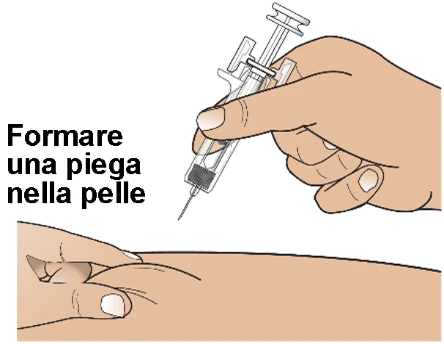
pinch a fold of skin at the injection site. Hold the skin firmly (see Figure K).
- Do not touch the plunger tip while inserting the needle into the skin.
Step 12: Quickly insert the needle fully into the skin fold at an angle of 45 to 90 degrees Figure L
(see Figure L).
Release the skin fold. Use the same hand to firmly hold the lower part of the syringe. Place the thumb of your other hand on the plunger tip
(see Figure L).
Step 13: Using your thumb, slowly and steadily push the plunger all the way down to inject the entire medication Figure M
(see Figure M). For 10 mg and 20 mg doses, increased pressure may be required to inject the full dose.
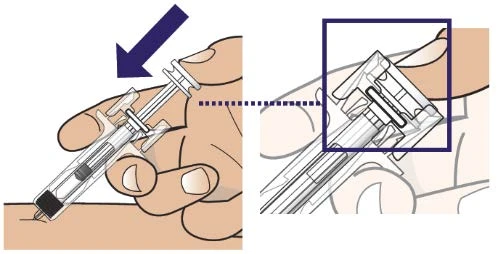
Step 14: Slowly lift your thumb to release the plunger, allowing the needle to be automatically covered by the syringe body Figure N
(see Figure N).
Treating the Injection Site
Step 15: Treat the injection site (if needed).
If you see blood at the injection site, press a sterile cotton ball or gauze pad over it and hold for about 10 seconds. If needed, you may cover the injection site with an adhesive bandage.
If more than one syringe is required:
Step 16: If your healthcare provider indicates that more than one syringe is required for the prescribed dose, repeat steps 4 to 15 listed above for each syringe to be used.
Note: Do not inject more than one injection into the same site. Injection sites must be at least 5 cm apart. See Step 6 for selecting an injection site.
If multiple syringes are required for a single dose, all injections must be administered at the same time of day. Doses should not be split throughout the day.
AFTER THE INJECTION
Disposal of Used Syringes
Immediately after use, place used needles and syringes into a sharps or needle disposal container. Ask your doctor, pharmacist, or nurse about the proper way to dispose of the container. Follow safe disposal procedures for syringes.