Palonosetron Fresenius Kabi
Italy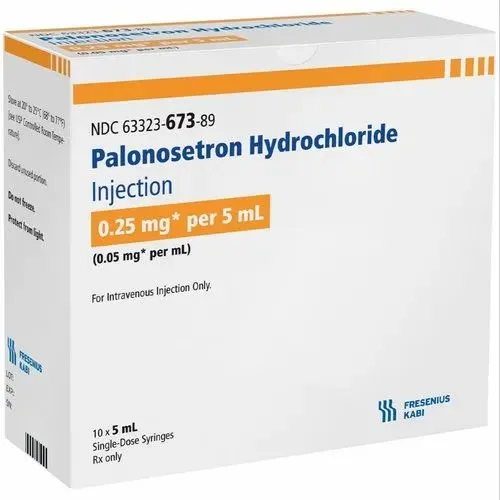
Table of Contents
- Package leaflet: Information for the user
- Palonosetron Fresenius Kabi 250 micrograms solution for injection
- 1. What Palonosetron is and what it is used for
- 2. What you need to know before using Palonosetron
- 3. How to use Palonosetron
- 4. Possible side effects
- 5. How to store Palonosetron
- 6. Package contents and other information
- The following information is intended exclusively for healthcare professionals:
- Package leaflet: Information for the user
- Palonosetron Fresenius Kabi 250 micrograms injectable solution in pre-filled syringe
- 2. What Palonosetron is and what it is used for
- 4. What you need to know before using Palonosetron
- 5. How to use Palonosetron
- 4. Possible side effects
- 5. How to store Palonosetron
- 6. Package contents and other information
- The following information is intended exclusively for healthcare professionals:
Package leaflet: Information for the user
Palonosetron Fresenius Kabi 250 micrograms solution for injection
Generic medicine
Please read this leaflet carefully before you use this medicine because it contains
important information for you.
- Keep this leaflet. You may need to read it again.
- If you have any questions, ask your doctor, pharmacist or nurse.
- This medicine has been prescribed for you only. Do not give it to other people.
- If you experience any side effects, including those not listed in this leaflet, tell your doctor, pharmacist or nurse. See section 4.
The name of the medicine is Palonosetron Fresenius Kabi 250 micrograms solution for
injection ; throughout the rest of this leaflet it will be referred to as "Palonosetron".
Contents of this leaflet
- What Palonosetron is and what it is used for
- What you need to know before using Palonosetron
- How to use Palonosetron
- Possible side effects
- How to store Palonosetron
- Contents of the pack and other information
1. What Palonosetron is and what it is used for
Palonosetron belongs to a class of medicines known as serotonin antagonists (5HT ).
These medicines are able to block the action of serotonin, a chemical substance that can cause nausea and vomiting.
Palonosetron is used to prevent nausea and vomiting associated with chemotherapy in adults, adolescents, and children over one month of age.
2. What you need to know before using Palonosetron
Do not use Palonosetron:
- If you are allergic to palonosetron or to any of the other ingredients of this medicine (listed in section 6).
Warnings and precautions
Talk to your doctor, pharmacist, or nurse before using Palonosetron:
- if you have acute intestinal obstruction or a history of repeated constipation;
- if you are using Palonosetron in combination with other medicines that may cause heart rhythm abnormalities, such as amiodarone, nicardipine, quinidine, moxifloxacin, erythromycin, haloperidol, chlorpromazine, quetiapine, thioridazine, domperidone;
- if you or a family member has a history of heart rhythm problems (QT prolongation);
- if you have other heart-related conditions;
- if you have an untreated imbalance of certain blood minerals, such as potassium or magnesium.
Palonosetron is not recommended for use in the days following chemotherapy unless you are about to undergo another cycle of chemotherapy.
Other medicines and Palonosetron
Tell your doctor or pharmacist if you are taking, have recently taken, or might take any other medicines, including:
- • SSRIs (selective serotonin reuptake inhibitors) used to treat depression and/or anxiety, including fluoxetine, paroxetine, sertraline, fluvoxamine, citalopram, escitalopram;
- SNRIs (serotonin-norepinephrine reuptake inhibitors) used to treat depression and/or anxiety, including venlafaxine, duloxetine.
Pregnancy and breastfeeding
If you are pregnant or suspect you may be pregnant, your doctor will not administer Palonosetron unless absolutely necessary.
It is not known whether Palonosetron causes harmful effects when used during pregnancy.
It is not known whether Palonosetron passes into breast milk.
If you are pregnant, suspect you may be pregnant, plan to become pregnant, or are breastfeeding, consult your doctor or pharmacist before using this medicine.
Driving and using machines
Palonosetron may cause dizziness or fatigue. If you experience these symptoms, do not drive or operate tools or machinery.
Palonosetron contains sodium
This medicine contains 0.04 mmol (or 0.91 mg) of sodium per ml. The maximum pediatric dose contains 1.19 mmol (or 27.3 mg) of sodium. This should be taken into consideration for patients on a controlled sodium diet.
3. How to use Palonosetron
The doctor or nurse will normally inject Palonosetron approximately 30 minutes before the start of chemotherapy.
Adults
The recommended dose of Palonosetron in adults is 250 micrograms administered as a rapid injection into a vein.
Children and adolescents (from 1 month to 17 years of age):
The doctor will decide the dose based on body weight; however, the maximum dose is 1500 micrograms.
Palonosetron Fresenius Kabi will be administered as a slow infusion into a vein.
If you have any doubts about the use of this medicine, consult your doctor.
4. Possible side effects
Like all medicines, this medicine can cause side effects, although not everybody gets them.
The possible side effects and their frequencies are listed below:
Adults
Common (may affect up to 1 in 10 people):
- headache
- dizziness
- constipation and diarrhoea
Uncommon (may affect up to 1 in 100 people):
- low or high blood pressure
- abnormal heart rate or reduced blood flow to the heart
- change in vein colour and/or swelling of veins
- abnormally high or low potassium levels in the blood
- high blood sugar levels or presence of sugar in urine
- low calcium levels in the blood
- high levels of the pigment bilirubin in the blood
- high levels of certain liver enzymes
- euphoric mood or feelings of anxiety
- drowsiness or difficulty sleeping
- decreased or loss of appetite
- weakness, fatigue, fever or flu-like symptoms
- sensations of numbness, burning, itching or tingling on the skin
- itchy rash
- changes in vision or eye irritation
- motion sickness
- ringing in the ears
- hiccup, flatulence (intestinal gas), dry mouth or indigestion
- abdominal pain (stomach)
- difficulty urinating
- joint pain
- • abnormalities in the electrocardiogram (QT prolongation)
Very rare (may affect up to 1 in 10,000 people):
Allergic reactions to Palonosetron (signs may include swelling of the lips, face, tongue or throat, difficulty breathing or collapse; you may also notice a rash with raised lumps and itching (urticaria)), burning or pain at the injection site.
Children and adolescents
Common (may affect up to 1 in 10 people):
- headache
Uncommon (may affect up to 1 in 100 people):
- dizziness
- jerky body movements
- irregular heart rate
- cough or shortness of breath
- nosebleed
- itchy rash or hives (urticaria)
- fever
- pain at the infusion site
Reporting of side effects
If you experience any side effect, including those not listed in this leaflet, talk to your doctor, pharmacist or nurse. You can also report side effects directly via the national reporting system at www.agenziafarmaco.gov.it/it/responsabili. By reporting side effects, you can help provide more information on the safety of this medicine.
5. How to store Palonosetron
Keep this medicine out of the sight and reach of children.
Do not use this medicine after the expiry date stated on the label. The expiry date refers to the last day of that month.
Do not use this medicine if the solution is not clear or contains visible particles.
This medicine requires no special storage conditions.
For single use only; any unused solution must be discarded.
Do not dispose of any medicine via wastewater or household waste. Ask your pharmacist how to dispose of medicines you no longer use. This will help protect the environment.
6. Package contents and other information
What Palonosetron contains
- The active substance is palonosetron (as hydrochloride). Each ml of solution contains 50 micrograms of palonosetron. Each 5 ml vial of solution contains 250 micrograms of palonosetron.
- The other components are mannitol (E421), disodium edetate dihydrate, disodium citrate dihydrate (E331), anhydrous citric acid (E330), water for injections, sodium hydroxide (to adjust pH), hydrochloric acid (to adjust pH).
Description of the appearance of Palonosetron and contents of the pack
Palonosetron injectable solution is a clear, colourless solution supplied in single-use glass vials
closed with an allobutyl rubber stopper and an aluminium seal with a plastic tear-off cap.
Packs:
1 or 10 vials
Not all pack sizes may be marketed.
Marketing Authorisation Holder and Manufacturer
Marketing Authorisation Holder
Fresenius Kabi Italia S.r.l.
Via Camagre, 41
37063 Isola della Scala
Verona
Manufacturer
Fresenius Kabi Austria GmbH
Hafnerstrasse 36 A-8055 Graz, Austria
This medicinal product is authorised in the Member States of the European Economic Area under the following
names:
| Member State | Medicinal Product Name |
| Belgium | Palonosetron Fresenius Kabi 250 microgram solution for injection, solution injectable, Injektionslösung |
| Czech Republic | Palonosetron Fresenius Kabi 250 mikrogramů injekční roztok |
| Denmark | Palonosetron Fresenius Kabi |
| Finland | Palonosetron Fresenius Kabi 250 mikrog injection solution, liquid |
| France | PALONOSETRON FRESENIUS KABI 250 micrograms/5 ml, solution for injection |
| Germany | Palonosetron Fresenius Kabi 250 micrograms injection solution |
| Ireland | Palonosetron Fresenius Kabi 250 micrograms solution for injection |
| Italy | Palonosetron Fresenius Kabi |
| Luxembourg | Palonosetron Fresenius Kabi 250 micrograms injection solution |
| Malta | Palonosetron Fresenius Kabi 250 micrograms solution for injection |
| Norway | Palonosetron Fresenius Kabi |
| Poland | Palonosetron Fresenius Kabi |
| Portugal | Palonossetron Fresenius Kabi |
| Romania | Palonosetron Fresenius Kabi 250 micrograms injectable solution |
| Slovak Republic | Palonosetron Fresenius Kabi 250 mikrogramov injekčný roztok |
| Slovenia | Palonosetron Fresenius Kabi 250 micrograms solution for injection |
| Spain | Palonosetron Fresenius Kabi 250 micrograms Solution for injection |
| Sweden | Palonosetron Fresenius Kabi 250 mikrog injection liquid, solution |
| Netherlands | Palonosetron Fresenius Kabi 250 microgram, solution for injection |
| United Kingdom | Palonosetron Fresenius Kabi 250 micrograms solution for injection |
The following information is intended exclusively for healthcare professionals:
Posology and method of administration
Adults
250 micrograms of palonosetron administered as a single intravenous bolus, approximately 30 minutes
before the start of chemotherapy. Palonosetron Fresenius Kabi must be injected over 30 seconds.
Elderly population
Dose adjustment is not required for elderly patients.
Children and adolescents (from 1 month to 17 years of age):
20 micrograms/kg (maximum total dose must not exceed 1500 micrograms) of palonosetron,
administered as a single 15-minute intravenous infusion starting approximately 30 minutes before
the start of chemotherapy.
Incompatibilities
This medicinal product must not be mixed with other medicinal products.
Special precautions for storage
This medicinal product requires no special storage conditions.
Special precautions for disposal and handling
For single use only; any unused solution must be discarded.
Unused medicine and waste material derived from this medicine must be disposed of in
accordance with current local regulations.
Package leaflet: Information for the user
Palonosetron Fresenius Kabi 250 micrograms injectable solution in pre-filled syringe
Please read this leaflet carefully before using this medicine because it contains
important information for you.
- Keep this leaflet. You may need to read it again.
- If you have any questions, ask your doctor, pharmacist or nurse.
- This medicine has been prescribed for you only. Do not give it to others.
- If you experience any side effects, including those not listed in this leaflet, tell your doctor, pharmacist or nurse. See section 4.
The name of the medicine is Palonosetron Fresenius Kabi 250 micrograms injectable solution in pre-filled syringe; in the remainder of this leaflet it will be referred to as "Palonosetron".
Contents of this leaflet
- What Palonosetron is and what it is used for
- What you need to know before using Palonosetron
- How to use Palonosetron
- Possible side effects
- How to store Palonosetron
- Package contents and other information
2. What Palonosetron is and what it is used for
Palonosetron belongs to a class of medicines known as serotonin antagonists (5HT ).
These medicines are able to block the action of serotonin, a chemical substance that can cause nausea and vomiting.
Palonosetron is used for the prevention of nausea and vomiting associated with chemotherapy in adults.
4. What you need to know before using Palonosetron
Do not use Palonosetron:
- If you are allergic to palonosetron or to any of the other ingredients of this medicine (listed in section 6).
Warnings and precautions
Talk to your doctor, pharmacist, or nurse before using Palonosetron:
- if you have acute intestinal obstruction or a history of repeated constipation;
- if you are using Palonosetron in combination with other medicines that may cause heart rhythm abnormalities, such as amiodarone, nicardipine, quinidine, moxifloxacin, erythromycin, haloperidol, chlorpromazine, quetiapine, thioridazine, domperidone;
- if you or a family member has a history of heart rhythm problems (QT prolongation);
- if you have other heart problems;
- if you have an untreated imbalance of certain blood electrolytes, such as potassium or magnesium.
Palonosetron is not recommended during the days following chemotherapy unless you are due to receive another cycle of chemotherapy.
Children and adolescents
The use of Palonosetron Fresenius Kabi in pre-filled syringes is not recommended in children and adolescents.
For this population, Palonosetron Fresenius Kabi in glass vials may be used.
Other medicines and Palonosetron
Tell your doctor or pharmacist if you are taking, have recently taken, or might take any other medicines, including:
- • SSRIs (selective serotonin reuptake inhibitors) used to treat depression and/or anxiety, including fluoxetine, paroxetine, sertraline, fluvoxamine, citalopram, escitalopram;
- SNRIs (serotonin-noradrenaline reuptake inhibitors) used to treat depression and/or anxiety, including venlafaxine, duloxetine.
Pregnancy and breastfeeding
Palonosetron will not be administered to you during pregnancy unless strictly necessary.
It is not known whether Palonosetron may cause harm if used during pregnancy.
It is not known whether Palonosetron passes into breast milk.
If you are pregnant, think you may be pregnant, are planning to become pregnant, or are breastfeeding, consult your doctor or pharmacist before using this medicine.
Driving and using machines
Palonosetron may cause dizziness or fatigue. If you experience these symptoms, do not drive or operate tools or machinery.
Palonosetron contains sodium
This medicine contains less than 1 mmol of sodium (23 mg) per pre-filled syringe and is therefore essentially "sodium-free".
5. How to use Palonosetron
The doctor or nurse will normally inject Palonosetron approximately 30 minutes before the start of chemotherapy.
The recommended dose of Palonosetron in adults is 250 micrograms administered as a rapid injection into a vein.
For children and adolescents, Palonosetron Fresenius Kabi in vials should be used.
If you have any doubts about how to use this medicine, consult your doctor.
4. Possible side effects
Like all medicines, this medicine can cause side effects, although not everybody will experience them.
The possible side effects and their frequencies are listed below:
Common (may affect up to 1 in 10 people):
- headache
- dizziness
- constipation and diarrhoea
Uncommon (may affect up to 1 in 100 people):
- low or high blood pressure
- abnormal heart rate or reduced blood flow to the heart
- change in vein colour and/or swelling of veins
- abnormally high or low potassium levels in the blood
- high blood sugar levels or presence of sugar in the urine
- low calcium levels in the blood
- high levels of the pigment bilirubin in the blood
- high levels of certain liver enzymes
- euphoric mood or feelings of anxiety
- drowsiness or difficulty sleeping
- decreased or loss of appetite
- weakness, fatigue, fever or flu-like symptoms
- sensations of numbness, burning, itching or tingling of the skin
- itchy rash
- visual disturbances or eye irritation
- motion sickness
- ringing in the ears
- hiccups, flatulence (intestinal gas), dry mouth or indigestion
- abdominal (stomach) pain
- difficulty urinating
- joint pain
- • abnormalities in the electrocardiogram (QT prolongation)
Very rare (may affect up to 1 in 10,000 people):
Allergic reactions to Palonosetron (signs may include swelling of the lips, face, tongue or throat, difficulty breathing or collapse; you may also notice a rash with raised, itchy bumps (urticaria)), burning or pain at the injection site.
Reporting of side effects
If you experience any side effect, including those not listed in this leaflet, talk to your doctor, pharmacist or nurse. You can also report side effects directly via the national reporting system at
www.agenziafarmaco.gov.it/it/responsabili. By reporting side effects, you can help provide more information on the safety of this medicine.
5. How to store Palonosetron
Keep this medicine out of the sight and reach of children.
Do not use this medicine after the expiry date stated on the label. The expiry date refers to the last day of that month.
Do not use this medicine if the solution is not clear or contains visible particles.
This medicine does not require any special storage conditions.
For single use only; any unused solution must be discarded.
Do not dispose of medicines via wastewater or household waste. Ask your pharmacist how to dispose of medicines no longer required. This will help protect the environment.
6. Package contents and other information
What Palonosetron contains
- The active substance is palonosetron (as hydrochloride). Each ml of solution contains 50 micrograms of palonosetron. Each 5 ml pre-filled syringe contains 250 micrograms of palonosetron.
- The other components are mannitol (E421), disodium edetate dihydrate, sodium citrate dihydrate (E331), anhydrous citric acid (E330), water for injections, sodium hydroxide (to adjust pH), hydrochloric acid (to adjust pH).
Description of the appearance of Palonosetron and package contents
Palonosetron injectable solution in pre-filled syringe is a clear, colourless solution supplied in a plastic pre-filled syringe consisting of a chamber made of cyclic olefin copolymer material and a plunger and bromobutyl rubber cap.
Packages
1 or 10 pre-filled syringes
Not all pack sizes may be marketed.
Marketing Authorisation Holder and Manufacturer
Marketing Authorisation Holder
Fresenius Kabi Italia S.r.l.
Via Camagre, 41
37063 Isola della Scala
Verona
Manufacturer
Fresenius Kabi Austria GmbH
Hafnerstrasse 36 A-8055 Graz, Austria
This medicinal product is authorised in the Member States of the European Economic Area under the following names:
| Member State | Medicinal Product Name |
| Belgium | Palonosetron Fresenius Kabi 250 microgram solution for injection in a pre-filled syringe, solution injectable en seringue pré-remplie, Injektionslösung in einer Fertigspritze |
| Denmark | Palonosetron Fresenius Kabi |
| Finland | Palonosetron Fresenius Kabi 250 mikrog injektioneste, liuos, esitäytetty ruisku |
| France | PALONOSETRON FRESENIUS KABI 250 microgrammes/5 ml, solution injectable en seringue pré-remplie |
| Ireland | Palonosetron Fresenius Kabi 250 micrograms solution for injection in pre-filled syringe |
| Italy | Palonosetron Fresenius Kabi |
| Malta | Palonosetron Fresenius Kabi 250 micrograms solution for injection in pre-filled syringe |
| Norway | Palonosetron Fresenius Kabi |
| Poland | Palonosetron Fresenius Kabi |
| Portugal | Palonossetrom Fresenius Kabi |
| Romania | Palonosetron Fresenius Kabi 250 micrograme soluție injectabilă în seringă preumplută |
| Spain | Palonosetron Fresenius Kabi 250 microgramos solución inyectable en jeringa precargada |
| Sweden | Palonosetron Fresenius Kabi 250 mikrog injektionsvätska, lösning i förfylld spruta |
| Netherlands | Palonosetron Fresenius Kabi 250 microgram, oplossing voor injectie in een voorgevulde spuit |
| United Kingdom | Palonosetron Fresenius Kabi 250 micrograms solution for injection in pre-filled syringe |
The following information is intended exclusively for healthcare professionals:
Posology and method of administration
Adults
250 micrograms of palonosetron administered as a single intravenous bolus, approximately 30 minutes
before the start of chemotherapy. Palonosetron Fresenius Kabi must be injected over 30 seconds.
Elderly population
Dose adjustment is not required for elderly patients.
Incompatibilities
This medicinal product must not be mixed with other medicinal products.
Special precautions for storage
This medicinal product requires no special storage conditions.
Special precautions for disposal and handling
For single use only; any unused solution must be discarded.
Any unused medicine and waste material derived from this medicine must be disposed of in
accordance with local regulations.
Use of pre-filled syringes :
Sterility must be ensured. The outer surface of the syringe and the plunger are not sterile!
- Remove the syringe from its packaging
- Remove the cap from the syringe and connect the infusion line, needle, or cannula to the
syringe. Remove the air bubble (a small bubble may remain), and the syringe is then ready for manual administration.