Paidomicina
ItalyTable of Contents
- Patient Information Leaflet
- PAIDOMICINA 0.3% eye drops, solution
- 1. What PAIDOMICINA is and what it is used for
- 2. What you should know before using PAIDOMICINA
- 3. How to use PAIDOMICINA
- 4. Possible adverse effects
- 5. How to store PAIDOMICINA
- 6. Package contents and other information
- Patient Information Leaflet
- PAIDOMICINA 0.3% eye drops, solution
- 1. What PAIDOMICINA is and what it is used for
- 2. What you need to know before using PAIDOMICINA
- 3. How to use PAIDOMICINA
- 4. Possible side effects
- 5. How to store PAIDOMICINA
- 6. Package contents and other information
- Patient Information Leaflet
- PAIDOMICINA 0.3% ear drops, solution
- 1. What PAIDOMICINA is and what it is used for
- 2. What you should know before using PAIDOMICINA
- 3. How to use PAIDOMICINA
- 4. Possible side effects
- 5. How to store PAIDOMICINA
- 6. Package contents and other information
- PAIDOMICINA 0.3% ear drops, solution
- 1. What PAIDOMICINA is and what it is used for
- 2. What you need to know before using PAIDOMICINA
- 3. How to use PAIDOMICINA
- 4. Possible side effects
- 6. Package contents and other information
Patient Information Leaflet
PAIDOMICINA 0.3% eye drops, solution
tobramycin
Equivalent medicine
Please read this leaflet carefully before using this medicine as it contains important information for you.
- Keep this leaflet. You may need to read it again.
- If you have any questions, ask your doctor or pharmacist.
- This medicine has been prescribed for you only. Do not give it to others, even if their symptoms are the same as yours, as it may be harmful.
- If you experience any side effects, including those not listed in this leaflet, contact your doctor or pharmacist. See section 4.
Contents of this leaflet:
- What PAIDOMICINA is and what it is used for
- What you need to know before using PAIDOMICINA
- How to use PAIDOMICINA
- Possible side effects
- How to store PAIDOMICINA
- Contents of the pack and other information
1. What PAIDOMICINA is and what it is used for
PAIDOMICINA 0.3% eye drops, solution contains the active substance tobramycin, an antibiotic belonging to the aminoglycoside family, which acts against various bacteria that can cause eye infections.
PAIDOMICINA is indicated in adults and children from one year of age onwards for the treatment of eye infections and ocular adnexal infections caused by bacteria sensitive to tobramycin:
- Acute, subacute and chronic catarrhal inflammations (with mucus and pus production) of the conjunctiva (the transparent membrane covering the white part of the eye and the inner surface of the eyelids);
- blepharitis (inflammation of the eyelid);
- keratitis (inflammation of the cornea, the transparent membrane covering the colored part of the eye);
- dacryocystitis (inflammation of the tear sac);
- PAIDOMICINA is also used before and after surgical procedures on the front part of the eye.
2. What you should know before using PAIDOMICINA
Do not use PAIDOMICINA
- If you are allergic (hypersensitive) to tobramycin or to any of the other ingredients of this medicine (listed in section 6).
Warnings and precautions
Talk to your doctor or pharmacist before using PAIDOMICINA.
- In some patients, sensitization (allergic reaction) to aminoglycoside antibiotics such as tobramycin administered locally may occur. This allergic reaction may range from localized itching or redness of the skin to severe generalized allergic reactions (anaphylactic reactions) or severe skin reactions. If you develop these symptoms while using the medicine, stop treatment and consult your doctor (see section “Possible side effects”).
Please also note that this allergic sensitivity may also occur with other antibiotics of the aminoglycoside class, whether administered in the eyes or systemically (by injection).
- • Consult your doctor if you have or have ever had conditions such as severe myasthenia gravis or Parkinson’s disease. Antibiotics of this type may worsen muscle weakness.
- In patients who have received systemic (by injection) tobramycin, serious adverse effects such as neurotoxicity, ototoxicity, and nephrotoxicity (problems affecting the nervous system, ear, and kidney) have occurred. Although such effects have not been reported following topical ocular use of tobramycin, caution should be exercised if tobramycin is used concomitantly with systemic therapy.
- As with other antibiotics, prolonged use of PAIDOMICINA may increase susceptibility to eye infections, including those caused by fungi. If your symptoms worsen or suddenly reappear, consult your doctor.
- Do not wear contact lenses during treatment of an eye infection (also read the section “PAIDOMICINA contains benzalkonium chloride”).
Other medicines and PAIDOMICINA
Inform your doctor or pharmacist if you are taking, have recently taken, or might take any other medicines.
Incompatibilities
The ingredient tyloxapol contained in the eye drops is incompatible with tetracycline (an antibiotic). Do not use PAIDOMICINA together with other eye products containing tetracycline.
Pregnancy, breastfeeding, and fertility
If you are pregnant, think you might be pregnant, are planning to become pregnant, or are breastfeeding, consult your doctor or pharmacist before taking this medicine.
Pregnancy
There are no adequate data on the topical ocular use of tobramycin in pregnant women.
Animal studies have shown reproductive toxicity. Tobramycin should be used during pregnancy only if strictly necessary.
Breastfeeding
It is not known whether tobramycin can pass into breast milk after ocular application. Tobramycin is excreted in breast milk following systemic administration (by injection). However, the risk to breastfed infants cannot be ruled out. Consult your doctor, who will decide whether you should discontinue breastfeeding or discontinue tobramycin therapy.
Fertility
No studies have been conducted to evaluate the effect of topical ocular administration of Paidomicina eye drops on human fertility.
Driving and using machines
Paidomicina does not affect or only transiently affects the ability to drive and use machinery.
For a certain period after using PAIDOMICINA, blurred vision may occur. Do not drive or operate machinery until this effect has disappeared.
PAIDOMICINA contains 0.5 mg of benzalkonium chloride per 5 ml, which is equivalent to 0.1 mg/ml.
Benzalkonium chloride may be absorbed by soft contact lenses and may cause a change in their color. Remove contact lenses before using this medicine and wait 15 minutes before reinserting them.
Benzalkonium chloride may also cause eye irritation, especially if you have dry eye or corneal disorders (the transparent outermost layer of the eye). If you experience an unusual sensation in the eye such as burning or pain after using this medicine, speak with your doctor.
3. How to use PAIDOMICINA
Use this medicine exactly as directed by your doctor or pharmacist. If you have any doubts, consult your doctor or pharmacist.
The recommended dose is instillation into the conjunctival sac (the space between the eyelid and the eyeball) of two drops four times a day for acute forms and three times a day for chronic forms, as prescribed by your doctor. Use the product for the length of time specified by your doctor.
The following procedure helps reduce the amount of medicine absorbed into the bloodstream after eye application:
- Keep the eyelid closed and, at the same time, apply gentle pressure with a finger to the inner corner of the eye near the nose for at least 2 minutes. If you are using other eye drops or ointments, wait at least 5 minutes between the instillation of each medication. Ophthalmic ointment should be used last.
Use in children and adolescents
Do not use PAIDOMICINA in children under one year of age, as safety and efficacy have not been established and no data are available in this population.
Due to the presence of boric acid, in children aged between 1 and 2 years, the maximum number of drops that may be administered per day is 14 drops. Higher dosages may impair fertility in the future.
In children over 2 years of age, PAIDOMICINA may be used at the same doses as in adults.
If you have any doubts, consult your doctor.
How to apply PAIDOMICINA


Figure 1 Figure 2
- Wash your hands.
- Take the PAIDOMICINA bottle and unscrew the cap.
- If you are opening the bottle for the first time, remove the detached ring from the cap before using the product.
- Hold the bottle upside down between your thumb and middle finger.
- Tilt your head backward. Pull down the eyelid with a clean finger to form a pouch between the eyelid and the eye. The drop should be instilled into this pouch (Figure 1).
- Bring the tip of the bottle close to the eye.
- Do not touch the eye, eyelid, surrounding areas, or any other surfaces with the dropper tip to avoid contaminating the remaining drops in the bottle.
- Gently press the bottom of the bottle to release one drop of PAIDOMICINA at a time.
- Do not squeeze the bottle: it is designed so that only gentle pressure on the base is needed (Figure 2).
- If instilling drops into both eyes, repeat the same procedure for the other eye.
- Immediately replace the cap after use, screwing it back tightly.
- If a drop misses the eye, try again.
If you use more PAIDOMICINA than you should
If you use more medicine than you should, rinse the eye immediately with lukewarm water. However, no adverse effects are expected.
Do not use the medicine again until the next scheduled dose.
If you forget to use PAIDOMICINA
If you forget to use PAIDOMICINA, continue treatment with the next dose as scheduled. However, if it is almost time for the next dose, skip the missed dose and return to your regular dosing schedule.
Do not use a double dose to make up for the missed dose.
If you have any doubts about how to use this medicine, consult your doctor or pharmacist.
4. Possible adverse effects
Like all medicines, this medicine can cause adverse effects, although not everybody gets them.
The following adverse effects have been reported with the use of tobramycin 0.3% eye drops:
Common (may affect from 1 to 10 users in 100)
- Eye discomfort, eye redness.
Uncommon (may affect from 1 to 10 users in 1,000)
Inflammation of the surface of the eye (keratitis), corneal damage (damage to the transparent membrane covering the coloured part of the eye), impaired vision, blurred vision, eye swelling, eyelid swelling, eyelid redness, dry eye, increased lacrimation, eye pain, eye itching, eye discharge; allergic reactions, urticaria, skin inflammation (dermatitis), reduced growth or number of eyelashes, loss of skin pigmentation, itching, dry skin, headache.
Not known (frequency cannot be estimated from the available data)
- Eye allergy, eye irritation, eyelid itching.
- Severe allergic reactions, skin rash, severe skin rashes (Stevens-Johnson syndrome, erythema multiforme).
Reporting of adverse effects
If you experience any adverse effect, including those not listed in this leaflet, please talk to your doctor or pharmacist. You may also report adverse effects directly via the national reporting system at https://www.aifa.gov.it/content/segnalazioni-reazioni-avverse.
By reporting adverse effects, you can help provide more information on the safety of this medicine.
5. How to store PAIDOMICINA
Keep this medicine out of the sight and reach of children.
Store below 25°C.
Do not use this medicine after the expiry date stated on the outer packaging and on the bottle. The expiry date refers to the last day of that month. The expiry date applies to the product in its original, unopened packaging stored correctly.
This medicine must not be used more than 28 days after first opening the container.
Do not dispose of any medicine via wastewater or household waste. Ask your pharmacist how to dispose of medicines you no longer use. This will help protect the environment.
6. Package contents and other information
What PAIDOMICINA contains
- The active substance is tobramycin. 1 ml of PAIDOMICINA contains 3 mg of tobramycin.
- The other components are: Tyloxapol, Benzalkonium chloride, Boric acid, Anhydrous sodium sulfate, Sodium chloride, Water for injections.
Description of the appearance of PAIDOMICINA and contents of the pack
Eye drops, solution
One 5 ml dropper bottle
Marketing Authorization Holder and Manufacturer
Marketing Authorization Holder
D.M.G. ITALIA S.R.L. – Via Laurentina Km 26.700 – 00071 Pomezia (Rome)
Manufacturer
Genetic S.p.A., Contrada Canfora, 84084 Fisciano (SA)
Patient Information Leaflet
PAIDOMICINA 0.3% eye drops, solution
tobramycin
“Equivalent medicine”
Please read this leaflet carefully before using this medicine because it contains important information for you.
- Keep this leaflet. You may need to read it again.
- If you have any questions, ask your doctor or pharmacist.
- This medicine has been prescribed for you only. Do not give it to others, even if their symptoms are the same as yours, as it may be harmful.
- If any adverse reaction occurs, including those not listed in this leaflet, contact your doctor or pharmacist. See section 4.
Contents of this leaflet:
- What PAIDOMICINA is and what it is used for
- What you need to know before using PAIDOMICINA
- How to use PAIDOMICINA
- Possible side effects
- How to store PAIDOMICINA
- Contents of the pack and other information
1. What PAIDOMICINA is and what it is used for
PAIDOMICINA 0.3% eye drops, solution contains the active substance tobramycin, an antibiotic belonging to the aminoglycoside family, which acts against various bacteria that can cause eye infections.
PAIDOMICINA is indicated in adults and children from one year of age onwards for the treatment of eye infections and ocular adnexa infections caused by bacteria sensitive to tobramycin:
- Acute, subacute, and chronic catarrhal inflammations (with mucus and pus production) of the conjunctiva (the transparent membrane covering the white part of the eye and the inner surface of the eyelids);
- blepharitis (inflammation of the eyelid);
- keratitis (inflammation of the cornea, the transparent membrane covering the colored part of the eye);
- dacryocystitis (inflammation of the lacrimal sac);
- PAIDOMICINA is also used before and after surgical procedures on the anterior part of the eye.
2. What you need to know before using PAIDOMICINA
Do not use PAIDOMICINA
- If you are allergic (hypersensitive) to tobramycin or to any of the other ingredients of this medicine (listed in section 6).
Warnings and precautions
Talk to your doctor or pharmacist before using PAIDOMICINA.
-
In some patients, sensitization (allergic reaction) to aminoglycoside antibiotics such as tobramycin administered locally may occur. This allergic reaction may range from localized itching or redness of the skin to severe generalized allergic reactions (anaphylactic reactions) or severe skin reactions. If you develop these symptoms while using the medicine, stop treatment and consult your doctor (see section “Possible side effects”). Also keep in mind that this allergic sensitivity may also occur with other antibiotics of the same aminoglycoside class administered either in the eyes or systemically (by injection).
-
Consult your doctor if you have or have ever had conditions such as severe myasthenia gravis or Parkinson's disease. This type of antibiotic may worsen muscle weakness.
-
Serious adverse effects such as neurotoxicity, ototoxicity, and nephrotoxicity (problems affecting the nervous system, ear, and kidney) have occurred in patients who have received tobramycin systemically (by injection). Although such effects have not been reported following topical ocular use of tobramycin, caution should be exercised if tobramycin is administered simultaneously with systemic therapy.
-
As with other antibiotics, if you use PAIDOMICINA for a prolonged period, you may become more susceptible to eye infections, including those caused by fungi. If your symptoms worsen or suddenly reappear, consult your doctor.
-
Do not wear contact lenses during treatment for an eye infection (also read the section “PAIDOMICINA contains benzalkonium chloride”).
Other medicines and PAIDOMICINA
Inform your doctor or pharmacist if you are taking, have recently taken, or might take any other medicines.
Incompatibility
The ingredient tyloxapol contained in the eye drops is incompatible with tetracycline (an antibiotic). Do not use PAIDOMICINA together with other eye products containing tetracycline.
Pregnancy, breastfeeding, and fertility
If you are pregnant, think you might be pregnant, planning to become pregnant, or breastfeeding, consult your doctor or pharmacist before taking this medicine.
Pregnancy
There are no adequate data on the topical ocular use of tobramycin in pregnant women.
Animal studies have shown reproductive toxicity. Tobramycin should be used during pregnancy only if strictly necessary.
Breastfeeding
It is not known whether tobramycin can pass into breast milk after ocular application. Tobramycin is excreted in breast milk following systemic administration (by injection). However, the risk to breastfed infants cannot be ruled out. Consult your doctor, who will decide whether you should discontinue breastfeeding or discontinue treatment with tobramycin.
Fertility
No studies have been conducted to evaluate the effect of topical ocular administration of Paidomicina eye drops on human fertility.
Driving and using machines
Paidomicina does not affect or only transiently affects the ability to drive or operate machinery.
For a certain period after using PAIDOMICINA, blurred vision may occur. Do not drive or operate machinery until this effect has disappeared.
3. How to use PAIDOMICINA
Use this medicine exactly as instructed by your doctor or pharmacist. If you have any doubts, consult your doctor or pharmacist.
The recommended dose is instillation into the conjunctival sac (the space between the eyelid and the eyeball) of two drops four times a day for acute conditions and three times a day for chronic conditions, as prescribed by your doctor. Use the product for the length of time specified by your doctor.
The following procedure helps reduce the amount of medicine that passes into the bloodstream after application to the eye:
- Close the eyelid and, at the same time, apply gentle pressure with one finger to the inner corner of the eye near the nose for at least 2 minutes.
If you are using other eye drops or ointments, wait at least 5 minutes between instilling each medicine.
Use in children and adolescents
Do not use PAIDOMICINA in children under 1 year of age, as safety and efficacy have not been established and no data are available in this population.
Due to the presence of boric acid, in children aged between 1 and 2 years, the maximum number of drops that may be administered per day is 14 drops. Higher doses may impair fertility in the future.
In children older than 2 years, PAIDOMICINA may be used at the same doses as in adults.
If you have any doubts, consult your doctor.
How to apply PAIDOMICINA

Figure 1
- Wash your hands.
- Take the single-dose container of PAIDOMICINA and open it by twisting the tab.
- Hold the single-dose container upside down between your thumb and middle finger.
- Tilt your head backward. Gently pull down the eyelid with a clean finger to form a pouch between the eyelid and the eye. The drop should be instilled into this pouch (see Figure 1).
- Bring the tip of the single-dose container close to the eye.
- Do not touch the eye, eyelid, surrounding areas, or any other surfaces with the tip of the single-dose container to avoid contaminating the remaining drops in the container.
- Gently squeeze the single-dose container to release one drop of PAIDOMICINA at a time.
- If applying drops to both eyes, repeat the same procedure for the other eye.
- If a drop does not enter the eye, try again.
If you use more PAIDOMICINA than you should
If you use more medicine than recommended, rinse the eye immediately with lukewarm water. However, no adverse effects are expected.
Do not use the medicine again until the next scheduled dose.
If you forget to use PAIDOMICINA
If you forget to use PAIDOMICINA, continue treatment with the next dose as scheduled. However, if it is almost time for the next dose, skip the missed dose and return to your regular dosing schedule.
Do not use a double dose to make up for the missed dose.
If you have any doubts about using this medicine, consult your doctor or pharmacist.
4. Possible side effects
Like all medicines, this medicine can cause side effects, although not everybody gets them.
The following side effects have been reported with the use of tobramycin 0.3% eye drops:
Common (affects from 1 to 10 users out of 100)
- Eye discomfort, eye redness.
Uncommon (affects from 1 to 10 users out of 1,000)
- Inflammation of the eye surface (keratitis), corneal damage (the transparent membrane covering the coloured part of the eye), impaired vision, blurred vision, eye swelling, eyelid swelling, eyelid redness, dry eye, increased tearing, eye pain, eye itching, eye discharge; allergic reactions, urticaria, skin inflammation (dermatitis), reduced growth or number of eyelashes, loss of skin pigmentation, itching, dry skin, headache.
Not known (frequency cannot be estimated from the available data)
- Eye allergy, eye irritation, eyelid itching.
- Severe allergic reactions, skin rash, severe skin eruptions (Stevens-Johnson syndrome, erythema multiforme).
Reporting of side effects
If you experience any side effect, including those not listed in this leaflet, talk to your doctor or pharmacist. You can also report side effects directly via the national reporting system at https://www.aifa.gov.it/content/segnalazioni-reazioni-avverse.
Reporting side effects can help provide more information on the safety of this medicine.
5. How to store PAIDOMICINA
Keep this medicine out of the sight and reach of children.
Store below 25°C.
Do not use this medicine after the expiry date stated on the outer packaging and on the bottle. The expiry
date refers to the last day of that month. The expiry date applies to the product in its original, unopened
packaging, correctly stored.
This medicine must not be used more than 28 days after first opening the container.
Do not dispose of any medicine via wastewater or household waste. Ask your pharmacist how to dispose of
medicines no longer required. This will help protect the environment.
6. Package contents and other information
What PAIDOMICINA contains
One single-dose container contains:
- The active substance is tobramycin. 1 ml of PAIDOMICINA contains 3 mg of tobramycin.
- The other components are: Tyloxapol, Boric acid, Anhydrous sodium sulfate, Sodium chloride, Water for injections.
Description of the appearance of PAIDOMICINA and contents of the pack
Eye drops, solution
20 single-dose containers of 0.25 ml
Marketing Authorization Holder and Manufacturer
Marketing Authorization Holder
D.M.G. ITALIA S.R.L. – Via Laurentina Km 26.700 – 00071 Pomezia (Rome)
Manufacturer
Genetic S.p.A., Contrada Canfora, 84084 Fisciano (SA)
Patient Information Leaflet
PAIDOMICINA 0.3% ear drops, solution
tobramycin
Equivalent medicine
Please read this leaflet carefully before using this medicine because it contains important information for you.
- Keep this leaflet. You may need to read it again.
- If you have any questions, ask your doctor or pharmacist.
- This medicine has been prescribed for you only. Do not give it to others, even if their symptoms are the same as yours, as it could be harmful.
- If you experience any side effects, including those not listed in this leaflet, consult your doctor or pharmacist. See section 4.
Contents of this leaflet:
- What PAIDOMICINA is and what it is used for
- What you need to know before using PAIDOMICINA
- How to use PAIDOMICINA
- Possible side effects
- How to store PAIDOMICINA
- Package contents and other information
1. What PAIDOMICINA is and what it is used for
PAIDOMICINA contains the active substance tobramycin, an antibiotic belonging to the
aminoglycoside family which acts against various bacteria that can cause ear
infections.
PAIDOMICINA is indicated for the treatment of infections of the external auditory canal
(external otitis) caused by bacteria sensitive to tobramycin.
If you do not feel better or if you feel worse, consult your doctor.
2. What you should know before using PAIDOMICINA
Do not use PAIDOMICINA
- if you are allergic (hypersensitive) to tobramycin or to any of the other ingredients of this medicine (listed in section 6). If you have or suspect a perforation of the eardrum. Warnings and precautions Consult your doctor or pharmacist before using PAIDOMICINA.
- Sensitization to locally administered aminoglycoside antibiotics may occur. If you develop hypersensitivity during treatment with this medicine, you must stop treatment and use alternative medications (see section “Possible side effects”).
- If you have or have ever had conditions such as severe myasthenia gravis or Parkinson's disease. Antibiotics of this type may worsen muscle weakness.
- Cross-sensitivity to other aminoglycosides may occur; therefore, consider the possibility that if you are sensitive to locally administered tobramycin, you may also be sensitive to other aminoglycosides administered locally and/or systemically.
- If you are simultaneously receiving parenteral (injected) tobramycin or other aminoglycoside antibiotics while using PAIDOMICINA, your doctor will perform blood tests to monitor the total amount of antibiotic in your bloodstream.
- If you are being treated with systemic (injected) tobramycin, serious adverse effects such as neurotoxicity, ototoxicity, and nephrotoxicity (problems affecting the nervous system, ears, and kidneys) may occur. Although such effects have not been reported following topical ocular use of tobramycin, caution is advised if tobramycin is used concurrently with systemic therapy (by injection).
- As with all antibiotics, prolonged use may lead to overgrowth of resistant microorganisms, including fungi. If superinfection occurs, appropriate therapy must be initiated.
- Due to the presence in the formulation of the non-ionic surfactant tyloxapol, concomitant use of products containing tetracyclines is not recommended.
- Do not apply the medicine on wounds or ulcers and do not use it for longer than 7 days (read the section “Recommended dose”). Although all aminoglycoside antibiotics are potentially nephro- and ototoxic, the risks of ototoxicity are associated with the duration of therapy and their administration via parenteral or topical routes on wounds and/or ulcers.
- In the absence of wounds and/or ulcers, these risks should not exist with PAIDOMICINA when administered topically, at low daily dosage, and for a limited number of days. Nevertheless, be alert for any signs of toxicity such as dizziness, vertigo, tinnitus (ringing in the ear), or hearing loss: if these occur, stop treatment immediately and consult your doctor.
- More careful medical monitoring is required in elderly patients, patients already receiving aminoglycosides, patients with impaired renal function, and those receiving concomitant treatment with loop diuretics.
The product must not be injected. PAIDOMICINA 0.3% ear drops must not be applied on wounds or ulcers of the external auditory canal or middle ear.
Children
PAIDOMICINA 0.3% ear drops, solution must not be used in children aged 2 years or younger due to its boron content.
Your doctor will assess the need to prescribe PAIDOMICINA 0.3% ear drops, solution in children over 2 years of age.
Other medicines and PAIDOMICINA
Inform your doctor or pharmacist if you are taking, have recently taken, or might take any other medicines.
Incompatibilities
The component tyloxapol is incompatible with tetracycline. Do not use PAIDOMICINA together with other ear products containing tetracyclines.
Pregnancy, breastfeeding, and fertility
If you are pregnant, think you may be pregnant, are planning to become pregnant, or are breastfeeding, consult your doctor or pharmacist before taking this medicine.
Pregnancy
In pregnant women, this medicine should be administered only if clearly needed and under direct medical supervision.
Breastfeeding
This product must not be used during breastfeeding. If your doctor considers treatment necessary, you will be instructed to stop breastfeeding.
Fertility
No studies have been conducted to evaluate the effect on human fertility following administration of PAIDOMICINA ear drops.
Driving and using machines
Based on its pharmacodynamic properties, the product is not expected to affect, except negligibly, the ability to drive vehicles or operate machinery.
PAIDOMICINA 0.3% ear drops contains benzalkonium chloride (0.5 mg per bottle). Benzalkonium chloride may irritate the skin.
PAIDOMICINA 0.3% ear drops contains boron. This medicine must not be administered to children under 2 years of age without medical advice, as it contains boron and may impair future fertility.
3. How to use PAIDOMICINA
Use this medicine exactly as instructed by your doctor or pharmacist. If in doubt, consult your doctor or pharmacist.
Apply PAIDOMICINA ear drops only into the ears.
Recommended dose
Instill four drops into the external auditory canal three times a day for 5-6 days.
Maximum duration of treatment: 7 days. If in doubt, consult your doctor.
How to apply PAIDOMICINA
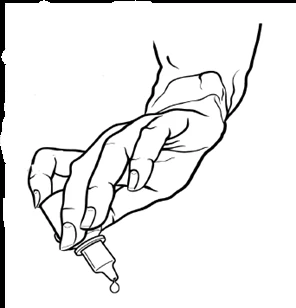

Figure 1 Figure 2
- Wash your hands.
- Take the bottle and unscrew the cap.
- Hold the bottle with the opening facing downwards, using your thumb and middle finger.
- Lie down with the affected ear facing upwards (Figure 1).
- Bring the tip of the bottle close to the ear canal.
- Avoid contact between the dropper and the earlobe, ear canal, surrounding areas, or other surfaces: this could contaminate the drops.
- Gently press at the base of the bottle to allow one drop of PAIDOMICINA to come out at a time.
- Do not squeeze the bottle; it is designed so that slight pressure at the bottom is sufficient (Figure 2).
- If using drops in both ears, repeat the procedure for the other ear.
- Immediately after use, tightly screw the cap back onto the bottle and keep the bottle securely closed when not in use.
- If a drop does not enter the ear, try again.
If you use more PAIDOMICINA than you should
There are no known cases of overdose.
In case of accidental ingestion of an excessive dose of PAIDOMICINA 0.3% ear drops, contact your doctor immediately or go to the nearest hospital.
If you forget to use PAIDOMICINA
If you forget to use PAIDOMICINA, continue treatment with the next dose as scheduled. However, if it is almost time for the next dose, skip the missed dose and return to your regular dosing schedule.
Do not use a double dose to make up for a forgotten dose.
If you have any doubts about using this medicine, consult your doctor or pharmacist.
4. Possible side effects
Like all medicines, PAIDOMICINA 0.3% ear drops can cause side effects, although not everyone experiences them.
Following local use of aminoglycoside antibiotics, reactions of ear toxicity (ototoxicity) have been reported, although the frequency is unknown.
As with all aminoglycoside antibiotics applied to the ears, local intolerance or hypersensitivity reactions (allergy) may occur. In such cases, discontinue treatment and consult your doctor.
Reporting of side effects
If you experience any side effect, including those not listed in this leaflet, talk to your doctor, pharmacist, or nurse. You may also report side effects directly through the national reporting system at https://www.aifa.gov.it/content/segnalazioni-reazioni-avverse.
Reporting side effects can help provide more information on the safety of this medicine.
5. How to store PAIDOMICINA
Keep this medicine out of the sight and reach of children.
Do not use this medicine after the expiry date stated on the outer packaging and on the vial. The expiry date refers to the last day of that month. The expiry date applies to the product in its original unopened packaging and properly stored.
This medicine must not be used more than 28 days after first opening the container.
This medicine requires no special storage conditions.
Do not dispose of medicines via wastewater or household waste. Ask your pharmacist how to dispose of medicines you no longer use. This will help protect the environment.
6. Package contents and other information
What PAIDOMICINA contains
- The active substance is tobramycin. 100 ml of PAIDOMICINA contains 0.3 g of tobramycin.
- The other components are: Tyloxapol, Benzalkonium chloride, Boric acid, Anhydrous sodium sulfate, Sodium chloride, Water for injections
Description of the appearance of PAIDOMICINA and contents of the pack
Ear drops, solution
One 5 ml dropper bottle
Marketing Authorization Holder and Manufacturer
Marketing Authorization Holder
D.M.G. ITALIA S.R.L. - Via Laurentina Km 26700, 00040 Pomezia (RM)
Manufacturer
Genetic S.p.A., Contrada Canfora, 84084 Fisciano (SA)
Patient Information Leaflet
PAIDOMICINA 0.3% ear drops, solution
tobramycin
Equivalent medicine
Please read this leaflet carefully before using this medicine because it contains important information for you.
- Keep this leaflet. You may need to read it again.
- If you have any questions, ask your doctor or pharmacist.
- This medicine has been prescribed for you only. Do not give it to other people, even if their symptoms are the same as yours, as it may be harmful.
- If you experience any side effects, including those not listed in this leaflet, consult your doctor or pharmacist. See section 4.
Contents of this leaflet:
- What PAIDOMICINA is and what it is used for
- What you need to know before using PAIDOMICINA
- How to use PAIDOMICINA
- Possible side effects
- How to store PAIDOMICINA
- Contents of the pack and other information
1. What PAIDOMICINA is and what it is used for
PAIDOMICINA contains the active substance tobramycin, an antibiotic belonging to the aminoglycoside family which acts against various bacteria that may cause ear infections.
PAIDOMICINA is indicated for the treatment of bacterial infections of the external auditory canal caused by organisms sensitive to tobramycin.
If you do not feel better or if you feel worse, consult your doctor.
2. What you need to know before using PAIDOMICINA
Do not use PAIDOMICINA
- if you are allergic (hypersensitive) to tobramycin or to any of the other ingredients of this medicine (listed in section 6).
- if you have or suspect a perforation of the eardrum.
Warnings and precautions
Talk to your doctor or pharmacist before using PAIDOMICINA.
- Sensitization to locally administered aminoglycoside antibiotics may occur. If you develop hypersensitivity during treatment, you must stop using the medicine and switch to alternative medications (see section "Possible side effects").
- If you have or have ever had conditions such as severe myasthenia gravis or Parkinson's disease. Antibiotics of this type may worsen muscle weakness.
- Cross-sensitivity to other aminoglycosides may occur; therefore, you should consider the possibility that if you are sensitive to locally administered tobramycin, you may also be sensitive to other aminoglycosides administered locally and/or systemically.
- If you are simultaneously receiving parenteral (injected) tobramycin or other aminoglycoside antibiotics while using PAIDOMICINA, your doctor will perform tests to monitor the total amount of antibiotic in your blood.
- If you are being treated with systemic (injected) tobramycin, serious adverse effects such as neurotoxicity, ototoxicity, and nephrotoxicity (affecting the nervous system, ear, and kidney) may occur. Although such effects have not been reported following topical ocular use of tobramycin, caution is advised if tobramycin is used concurrently with systemic therapy (by injection).
- As with all antibiotics, prolonged use may lead to overgrowth of resistant microorganisms, including fungi. If superinfection occurs, appropriate therapy should be initiated.
- Due to the presence of the non-ionic surfactant tyloxapol in the formulation, concomitant use of tetracycline-containing products is not recommended.
- Do not apply the medicine on wounds or ulcers and do not use it for more than 7 days (read the section "Recommended dose"). Although all aminoglycoside antibiotics are potentially nephro- and ototoxic, the risk of ototoxicity is associated with the duration of treatment and administration via parenteral or topical routes on wounds and/or ulcers.
- In the absence of wounds and/or ulcers, such risks should not exist with PAIDOMICINA, when administered topically, at low daily dosage, and for a limited number of days.
- Nevertheless, be alert for any signs of toxicity such as dizziness, vertigo, ringing in the ears, or hearing loss: in such cases, stop treatment immediately and consult your doctor.
- Closer medical monitoring is required in elderly patients, patients already receiving aminoglycosides, those with impaired renal function, and those receiving concomitant treatment with loop diuretics. This product must not be injected. PAIDOMICINA 0.3% ear drops must not be applied to wounds or ulcers of the external auditory canal or middle ear.
Children
PAIDOMICINA 0.3% ear drops, solution must not be used in children aged 2 years or younger due to its boron content.
Your doctor will assess whether prescribing PAIDOMICINA 0.3% ear drops, solution is necessary for children older than 2 years.
Other medicines and PAIDOMICINA
Tell your doctor or pharmacist if you are taking, have recently taken, or might take any other medicines.
Incompatibility
The component tyloxapol is incompatible with tetracycline. Do not use PAIDOMICINA together with other ear products containing tetracyclines.
SPECIAL WARNINGS
Pregnancy, breastfeeding, and fertility
If you are pregnant, think you may be pregnant, plan to become pregnant, or are breastfeeding, consult your doctor or pharmacist before taking this medicine.
Pregnancy
This medicine should be administered during pregnancy only if clearly needed and under direct medical supervision.
Breastfeeding
This medicine should not be used during breastfeeding. If your doctor considers treatment necessary, you will be instructed to discontinue breastfeeding.
Fertility
No studies have been conducted to evaluate the effect of PAIDOMICINA ear drops on human fertility.
Driving and use of machinery
Based on its pharmacodynamic properties, this medicine is not expected to affect, or to affect only negligibly, the ability to drive vehicles or operate machinery.
PAIDOMICINA 0.3% ear drops contains boron. This medicine should not be administered to children under 2 years of age without medical advice, as it contains boron and may impair fertility in the future.
3. How to use PAIDOMICINA
Use this medicine exactly as instructed by your doctor or
pharmacist. If you have any doubts, consult your doctor or pharmacist.
Apply PAIDOMICINA ear drops only into the ears.
Recommended dose
Instill four drops into the external auditory canal three times a day for 5–6 days.
Maximum duration of treatment: 7 days. If in doubt, consult your doctor.
If you use more PAIDOMICINA than you should
Cases of overdose are not known.
In case of accidental ingestion of an excessive dose of PAIDOMICINA 0.3% ear drops, contact your doctor immediately or go to the nearest hospital.
If you forget to use PAIDOMICINA
If you forget to use PAIDOMICINA, continue treatment with the next dose as scheduled. However, if it is almost time for the next dose, skip the missed dose and return to your regular dosing schedule.
Do not use a double dose to make up for the missed dose.
If you have any doubts about how to use this medicine, consult your doctor or pharmacist.
How to apply PAIDOMICINA
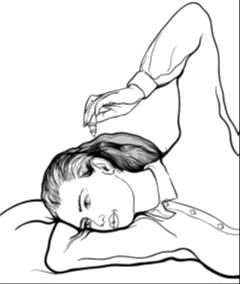
Figure 1
- Wash your hands.
- Take the single-dose container of PAIDOMICINA and open it by twisting the tab.
- Hold the single-dose container upside down, between your thumb and middle finger.
- Lie down with the affected ear facing upward (Figure 1).
- Bring the tip of the single-dose container close to the ear canal.
- Avoid contact between the single-dose container and the earlobe, ear canal, surrounding areas,
- and other surfaces to prevent contaminating the remaining drops in the single-dose container.
- Gently squeeze the single-dose container so that one drop of PAIDOMICINA comes out at a time.
- If using drops in both ears, repeat the procedure for the other ear.
- If a drop does not enter the ear, try again.
4. Possible side effects
Like all medicines, PAIDOMICINA 0.3% ear drops can cause side effects, although not everyone experiences them.
Local toxicity reactions in the ear (ototoxicity) have been reported following local use of aminoglycoside antibiotics; the frequency of this is unknown.
As with all aminoglycoside antibiotics applied to the ears, local intolerance or hypersensitivity reactions (allergy) may occur. In such cases, discontinue treatment and consult your doctor.
Reporting of side effects
If you experience any side effect, including those not listed in this leaflet, please inform your doctor, pharmacist, or nurse. You may also report side effects directly through the national reporting system at https://www.aifa.gov.it/content/segnalazioni-reazioni-avverse.
By reporting side effects, you can help provide more information on the safety of this medicine.
How to store PAIDOMICINA
Keep this medicine out of the sight and reach of children.
Do not use this medicine after the expiry date stated on the outer packaging and on the bottle. The expiry date refers to the last day of that month. The expiry date applies to the product in its original, unopened packaging, correctly stored.
This product does not contain preservatives: after administration, the vial must be discarded even if only partially used.
After opening the sachet, any remaining vials should be used within 28 days.
This medicine does not require any special storage conditions.
Do not dispose of medicines via wastewater or household waste. Ask your pharmacist how to properly dispose of medicines you no longer use. This will help protect the environment.
6. Package contents and other information
What PAIDOMICINA contains
- The active substance is tobramycin. 100 ml of PAIDOMICINA contain 0.3 g of tobramycin.
- The other components are: Tyloxapol, Boric acid, Anhydrous sodium sulfate, Sodium chloride, Water for injections
Description of the appearance of PAIDOMICINA and contents of the pack
Ear drops, solution
20 single-dose containers of 0.25 ml each
Marketing Authorization Holder and Manufacturer
Marketing Authorization Holder
D.M.G. ITALIA S.R.L. - Via Laurentina Km 26700, 00040 Pomezia (RM)
Manufacturer
Genetic S.p.A., Contrada Canfora, 84084 Fisciano (SA)