Paclitaxel Sandoz
Italy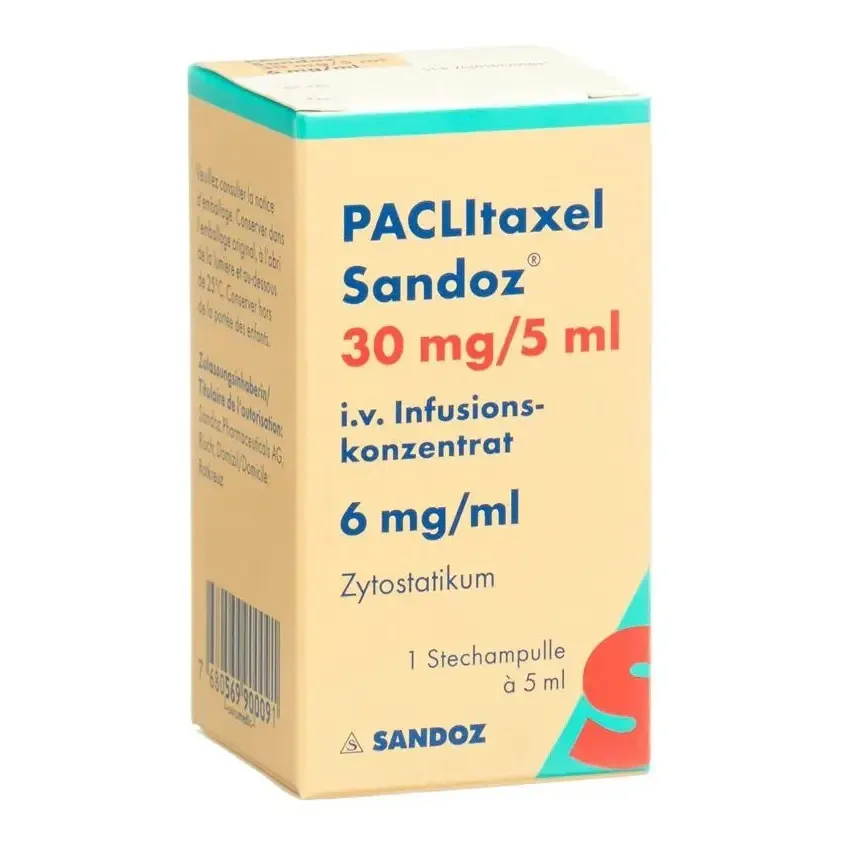
Table of Contents
- Package leaflet: Information for the user
- Paclitaxel Sandoz 6 mg/ml, concentrate for solution for infusion
- 1. WHAT PACLITAXEL SANDOZ IS AND WHAT IT IS USED FOR
- 2. WHAT YOU NEED TO KNOW BEFORE USING PACLITAXEL SANDOZ
- 3. HOW TO USE PACLITAXEL SANDOZ
- 4. POSSIBLE ADVERSE REACTIONS
- 5. HOW TO STORE PACLITAXEL SANDOZ
- 6. PACK CONTENTS AND OTHER INFORMATION
- The following information is intended exclusively for doctors or healthcare professionals
- 1. Incompatibilities
- 2. Instructions for Use and Handling
- 3. Shelf life
- 4. Special storage precautions
Package leaflet: Information for the user
Paclitaxel Sandoz 6 mg/ml, concentrate for solution for infusion
Generic Medicine
Please read this leaflet carefully before you start taking this medicine as it contains
important information for you
- Keep this leaflet. You may need to read it again.
- If you have any questions, ask your doctor, pharmacist or nurse.
- If you get any side effects, including those not listed in this leaflet, tell your doctor, pharmacist or nurse. See section 4.
Contents of this leaflet:
- What Paclitaxel Sandoz is and what it is used for
- What you need to know before using Paclitaxel Sandoz
- How to use Paclitaxel Sandoz
- Possible side effects
- How to store Paclitaxel Sandoz
- Contents of the pack and other information
1. WHAT PACLITAXEL SANDOZ IS AND WHAT IT IS USED FOR
PACLITAXEL SANDOZ is used to treat:
Ovarian Carcinoma: In first-line chemotherapy of Ovarian Carcinoma, paclitaxel is indicated for the
treatment of patients with advanced ovarian carcinoma or with residual disease (>1 cm) after initial
laparotomy, in combination with cisplatin.
In second-line chemotherapy of Ovarian Carcinoma, paclitaxel is indicated for the treatment of
metastatic ovarian carcinoma after failure of standard platinum-based therapy.
Breast Carcinoma: In the adjuvant setting, paclitaxel is indicated for the treatment of patients with
lymph node-positive breast carcinoma, following therapy with anthracyclines and cyclophosphamide (AC).
Adjuvant treatment with paclitaxel should be considered an alternative to prolonged AC therapy.
Paclitaxel is indicated for initial treatment of locally advanced or metastatic breast cancer, in combination
with anthracyclines in patients for whom anthracycline therapy is suitable, or in combination with trastuzumab
in those who overexpress HER-2 at the level of 3+, as determined by immunohistochemical method, or in
whom anthracyclines are not appropriate.
As monotherapy, paclitaxel is indicated for the treatment of metastatic breast carcinoma in patients in whom
standard anthracycline-based therapy has failed or who are not candidates for such therapy.
Advanced non-small cell lung cancer: Paclitaxel, in combination with cisplatin, is indicated for the
treatment of non-small cell lung cancer (NSCLC) in patients who are not candidates for potentially curative
surgical and/or radiation therapy.
AIDS-related Kaposi’s Sarcoma: Paclitaxel is indicated for the treatment of patients with advanced
AIDS-related Kaposi’s Sarcoma (KS) in whom prior therapy with liposomal anthracyclines has failed.
2. WHAT YOU NEED TO KNOW BEFORE USING PACLITAXEL SANDOZ
Do not use PACLITAXEL SANDOZ
- if you are allergic to paclitaxel or to any of the other ingredients of this medicine (listed in section 6), and in particular to polyoxyethylated castor oil (macrogol glycerol ricinoleate)
- if you are pregnant or breastfeeding
- if your white blood cell count, as measured by healthcare personnel, is too low (neutrophils)
- if you have Kaposi's sarcoma and serious, uncontrolled concurrent infections.
Warnings and precautions
Talk to your doctor, pharmacist or nurse before taking PACLITAXEL SANDOZ
- if you have liver disease
- if you have an uncontrolled infection
- if you are taking other medicines
- if hypersensitivity reactions (allergic reactions) occur (e.g., hypotension, respiratory distress, skin rash)
- if you have had neurological problems in your hands or feet (peripheral neuropathy)
- when severe or persistent diarrhoea occurs during or shortly after treatment with paclitaxel
- if you have heart disease
- because this medicine contains alcohol and macrogol glycerol ricinoleate (see section “Important information about some of the ingredients of Paclitaxel Sandoz”)
- when changes in blood cell counts occur
- when Paclitaxel Sandoz is administered in combination with lung radiotherapy
- if you have Kaposi's sarcoma and severe mucosal inflammation occurs.
Other medicines and PACLITAXEL SANDOZ
Inform your doctor or pharmacist if you are taking, have recently taken or might take any other
medicines, including those without a prescription.
Paclitaxel Sandoz should be administered:
- before cisplatin, when used in combination
- 24 hours after doxorubicin. Consult your doctor when taking paclitaxel at the same time as any of the following:
- medicines used to treat infections (i.e., antibiotics such as erythromycin, rifampicin, etc.; consult your doctor, nurse or pharmacist if you are unsure whether the medicine you are taking is an antibiotic), including medicines used to treat fungal infections (e.g., ketoconazole)
- medicines used to stabilise your mood, sometimes called antidepressants (e.g., fluoxetine)
- medicines used to treat seizures (epilepsy) (e.g., carbamazepine, phenytoin)
- medicines used to help lower your blood fat levels (e.g., gemfibrozil)
- medicines used for heartburn or gastric ulcers (e.g., cimetidine)
- medicines used to treat HIV and AIDS (e.g., ritonavir, saquinavir, indinavir, nelfinavir, efavirenz, nevirapine)
- a medicine called clopidogrel used to prevent blood clots.
Use of PACLITAXEL SANDOZ with food and drinks
PACLITAXEL SANDOZ may be taken with food and drinks. However, you should check with your doctor whether it is advisable for you to drink alcohol during treatment with PACLITAXEL SANDOZ.
Pregnancy, breastfeeding and fertility
If you are pregnant, think you might be pregnant, are planning a pregnancy, or are breastfeeding, ask your doctor or pharmacist for advice before taking this medicine.
Pregnancy: Do not use PACLITAXEL SANDOZ during pregnancy.
Breastfeeding: Do not use PACLITAXEL SANDOZ while breastfeeding. Do not resume breastfeeding until your doctor tells you it is safe to do so.
Avoid becoming pregnant while you are taking Paclitaxel Sandoz. If you become pregnant, inform your doctor immediately. You must stop breastfeeding while being treated with Paclitaxel Sandoz.
Driving and using machines
There is no reason why you cannot continue driving between cycles of treatment with PACLITAXEL SANDOZ, but you should remember that this medicine contains a certain amount of alcohol, and driving immediately after a treatment cycle may be unwise. However, do not drive if you feel dizzy or lightheaded.
PACLITAXEL SANDOZ contains alcohol
This medicine contains 50% (by volume) ethanol (alcohol), i.e. 20 g per dose, equivalent to 52 cl of beer or 21 cl of wine. This amount may be harmful for alcoholics.
This medicine also contains polyoxyethylated castor oil (macrogol glycerol ricinoleate), which may cause severe hypersensitivity reactions.
3. HOW TO USE PACLITAXEL SANDOZ
Your doctor has determined the dose you should receive and the number of doses.
PACLITAXEL SANDOZ is administered under the supervision of a doctor, who can provide further information.
The dose depends on the type of cancer and its severity. PACLITAXEL SANDOZ is injected into a vein through a 3-hour intravenous infusion. Treatment is generally repeated every 3 weeks (every 2 weeks in patients with Kaposi's sarcoma).
Before starting treatment with PACLITAXEL SANDOZ
Before starting treatment with PACLITAXEL SANDOZ, you will receive premedication with several other medicines. This premedication is necessary to prevent severe hypersensitivity reactions.
If you are given more PACLITAXEL SANDOZ than you should
Not applicable, as PACLITAXEL SANDOZ is administered by a doctor or nurse.
If you miss a dose of PACLITAXEL SANDOZ
Not applicable, as PACLITAXEL SANDOZ is administered by a doctor or nurse.
If you stop treatment with PACLITAXEL SANDOZ
Your doctor will decide when treatment with PACLITAXEL SANDOZ should be stopped.
If you have any doubts about using this medicine, consult your doctor or pharmacist.
Use in children and adolescents
Paclitaxel is not recommended for use in children under 18 years of age.
4. POSSIBLE ADVERSE REACTIONS
Like all medicines, PACLITAXEL SANDOZ may cause adverse reactions, although not everyone experiences them.
Contact your doctor immediately if you notice any signs of allergic reactions. These may include one or more of the following:
- flushing,
- skin reactions,
- itching,
- chest tightness,
- shortness of breath or difficulty breathing,
- swelling. These may all be signs of serious adverse reactions.
Contact your doctor immediately if
- you have fever, severe chills, sore throat, or mouth ulcers (signs of bone marrow suppression).
- you have numbness or weakness in arms and legs (signs of peripheral neuropathy).
- you develop severe or persistent diarrhea, with fever and stomach pain.
Very common (affects more than 1 in 10 users):
Hair loss (most cases of hair loss occurred within less than one month after starting paclitaxel treatment. When this occurs, hair loss is evident [over 50%] in most patients), nausea, vomiting, and diarrhea, allergic reactions such as flushing, skin rashes, itching, and general infections. Low blood pressure. Blood disorders (hence the need for regular blood tests), which may lead to mild anemia (feeling weak or tired), increased risk of infections, or increased tendency to bruising. Numbness and/or tingling in hands and/or feet, muscle and joint pain, mouth and tongue pain.
Common (affects 1 to 10 in 100 users):
Changes in heart rate or rhythm, high blood pressure, and bleeding. Patients with Kaposi's sarcoma may experience serious liver disorders. Transient changes in nails and skin. Symptoms due to extravasation: sometimes pain, redness of the skin, sensation of warmth, swelling, and possible skin peeling at the injection/infusion site. Other skin disorders.
Inflammation of a vein occurs less frequently. Chest pain and/or shortness of breath may occur if treated with other chemotherapeutic agents and/or radiotherapy. In addition, gastrointestinal disorders, abdominal pain, increased sweating, and limb pain have been reported.
Uncommon (affects 1 to 10 in 1,000 users):
Low blood pressure and reduced blood flow due to severe infection, sometimes leading to serious organ dysfunction. Fainting, seizures, temporary loss of consciousness. Heart attack.
Rare (affects 1 to 10 in 10,000 users):
Increased body temperature, dehydration, and anaphylaxis – i.e., allergic reaction with swelling of the face/throat, wheezing, feeling faint, and shortness of breath. Chills and back pain associated with allergic reaction. Pneumonia and other lung disorders, formation of scarring or thickening of deep lung tissues, resulting in shortness of breath and cough; blood clots in the lungs, causing shortness of breath, chest or shoulder pain, cough; critical lung and respiratory failure. Swelling and/or weakness in hands and/or feet have also been reported. Peritonitis (severe abdominal pain); intestinal obstruction with partial or complete blockage; full-thickness ulceration of the intestine, with leakage of intestinal contents into the abdominal cavity; areas of intestinal inflammation due to low blood flow to the intestine; inflammation of the pancreas. Heart problems that may cause shortness of breath or swelling in the ankles.
Other heart disorders have also been reported.
Very rare (affects less than 1 in 10,000 users):
Severe infections, disorders affecting vision and hearing, dizziness, vertigo, cough, severe or life-threatening allergic reactions, urticaria; widespread skin redness (due to allergy), with destruction of parts of the skin, large blisters, sometimes extending to large areas of the body surface and oral mucosa (Stevens-Johnson syndrome, toxic epidermal necrolysis, erythema multiforme), skin redness with peeling, often with itching and hair loss. Nail detachment from the nail bed. Sudden drop in blood pressure upon standing, leading to dizziness. Seizure-like attacks (convulsions); these attacks affect the entire body; confusion and other effects on the brain up to severe brain impairment. Intestinal obstruction leading to partial or complete blockage of the intestine. Blood clots in blood vessels of the abdomen and intestine. Severe inflammation of the intestine leading to bloody diarrhea, abdominal pain, or fever. Inflammation of the esophagus. Large amount of fluid in the abdominal cavity. Inflammation of the colon due to low white blood cell count in the blood. Liver disorders; death of part of liver tissue, leading to severe liver problems. Damage to the brain and nervous system as a complication of liver disorders. Loss of appetite, constipation, headache, difficulty in motor coordination, effects on hearing and/or balance, rapid heartbeat, weight loss (anorexia) have also been reported. Neoplasms of hematopoietic (blood-forming) tissues in the bone marrow; a group of bone marrow diseases causing ineffective production of blood cells (which after many years may lead to overt tumors of blood-forming bone marrow tissues).
Not known (frequency cannot be estimated from available data):
Tumor lysis syndrome, resulting in:
- high levels of potassium in the blood, which may cause heart rhythm abnormalities (hyperkalemia),
- tetany, seizures, mental retardation, movement disorders, emotional instability/agitation/anxiety, muscle pain or weakness (hypocalcemia)
- fatigue, loss of appetite, headache, fluid accumulation in limbs and lungs (renal failure) Macular edema leading to distortion of central vision
Photopsia resulting in perception of flashes of light.
Vitreous floaters appearing as spots, threads, or fragments of spider webs, slowly drifting in front of the observer's eyes.
Inflammation of a vein (phlebitis)
Symmetrical thickening of the skin (scleroderma)
Systemic lupus erythematosus resulting in fever, malaise, joint pain, myalgia, asthenia, and temporary loss of cognitive abilities.
Disseminated intravascular coagulation (DIC) has been reported. This is a serious condition making individuals highly susceptible to bleeding, blood clot formation, or both.
Reporting of adverse reactions
If you experience any adverse reaction, including those not listed in this leaflet, contact your doctor or pharmacist. You can also report adverse reactions directly via the national reporting system at www.aifa.gov.it/content/segnalazioni-reazioni-avverse. By reporting adverse reactions, you can help provide more information on the safety of this medicine.
5. HOW TO STORE PACLITAXEL SANDOZ
Do not use PACLITAXEL SANDOZ after the expiry date stated on the packaging and vial after EXP. The expiry date refers to the last day of the month.
Keep this medicine out of the sight and reach of children.
Vial before opening: keep the vial in the outer packaging to protect the medicine from light.
This medicine does not require any special storage temperature.
Medicines should not be disposed of via wastewater or household waste. Ask your pharmacist how to dispose of medicines you no longer use. This will help protect the environment.
6. PACK CONTENTS AND OTHER INFORMATION
What PACLITAXEL SANDOZ contains
- The active substance is paclitaxel. Each ml of solution contains 6 mg of paclitaxel.
A 5 ml vial contains 30 mg of paclitaxel
A 16.7 ml vial contains 100 mg of paclitaxel
A 25 ml vial contains 150 mg of paclitaxel
A 50 ml vial contains 300 mg of paclitaxel
A 100 ml vial contains 600 mg of paclitaxel - The excipients are polyoxyethylated castor oil (macrogol glycerol ricinoleate) and ethanol.
Description of the appearance of PACLITAXEL SANDOZ and pack contents
Paclitaxel Sandoz concentrate for solution for infusion is a clear, colourless or slightly yellow, viscous liquid.
Pack sizes:
1, 5 or 10 vials of 5 ml,
1 vial of 16.7 ml,
1 vial of 25 ml,
1 vial of 50 ml,
1 vial of 100 ml.
Not all pack sizes may be marketed.
Marketing Authorization Holder
Sandoz S.p.A. Largo U. Boccioni 1 - 21040, Origgio (VA) Italy
Responsible person for batch release
EBEWE Pharma Ges.m.b.H. Nfg. KG
Mondseestrasse 11
4866 Unterach
Austria
This medicinal product is authorised in the Member States of the European Economic Area under the following names:
| Belgium | Paclitaxel Sandoz 6 mg/ml - concentrate for solution for infusion |
| Denmark | Paclitaxel “Ebewe” |
| Italy | Paclitaxel Sandoz |
| Lithuania | Paclitaxel EBEWE 6 mg/ml concentrate for infusion solution |
| Luxembourg | Paclitaxel Sandoz 6 mg/ml solution to be diluted for infusion |
| Poland | Paclitaxel-Ebewe 6 mg/ml concentrate for preparation of infusion solution |
| Czech Republic | Paclitaxel "Ebewe" 6 mg/ml concentrate for preparation of infusion solution |
| Slovenia | Paclitaxel Ebewe 6 mg/ml concentrate for infusion solution |
The following information is intended exclusively for doctors or healthcare professionals
CYTOSTATIC DRUG
1. Incompatibilities
Polyoxyl 35 castor oil (macrogol glycerol ricinoleate) may cause leaching of DEHP [di(2-
ethylhexyl)phthalate] from polyvinyl chloride (PVC) plastic containers, in amounts proportional to the time and concentration. Consequently, preparation, storage, and administration of diluted Paclitaxel Sandoz must be performed using devices not containing PVC.
2. Instructions for Use and Handling
Handling:
As with all other antineoplastic agents, paclitaxel must be handled with care.
Pregnant women or women of childbearing potential should be advised to avoid handling cytotoxic agents.
Dilution must be performed under aseptic conditions by trained personnel in a designated area.
Appropriate protective gloves must be worn, and contact with skin and mucous membranes must be avoided. In case of skin contact, wash the skin thoroughly with water and soap. Tingling, burning, and redness have been observed after topical exposure. In case of contact with mucous membranes, rinse thoroughly with abundant water. After inhalation, dyspnea, chest pain, throat burning, and nausea have been reported.
If unopened vials have been stored in a refrigerator, a precipitate may form, which dissolves with gentle agitation or without agitation upon reaching room temperature. The quality of the product is not affected. If the solution remains cloudy or if an insoluble precipitate is observed, the vial must be discarded.
After multiple needle insertions and withdrawals of the product, vials maintain microbiological, chemical, and physical stability for 28 days at 25°C. Other storage times and conditions during use of the product are under the responsibility of the user.
Preparation for Infusion Administration: Prior to infusion, Paclitaxel Sandoz must be diluted under aseptic conditions with 0.9% sodium chloride injection, 5% dextrose injection, or 5% dextrose and 0.9% sodium chloride injection for infusion, to a final concentration of 0.3–1.2 mg/mL.
Chemical and physical in-use stability of the prepared infusion solution has been demonstrated for 48 hours at 5°C and at 25°C when diluted in 5% dextrose solution, and for 48 hours when diluted in 0.9% sodium chloride injection. From a microbiological standpoint, the product should be used immediately. If not used immediately, the storage times and conditions prior to use are under the responsibility of the user and should normally not exceed 24 hours at 2–8°C, unless the dilution was performed under controlled and validated aseptic conditions.
After dilution, the solution must be used only once.
After preparation, solutions may appear slightly cloudy due to the formulation vehicle; this cloudiness is not removed by filtration. Paclitaxel Sandoz must be administered through an in-line filter with a membrane pore size ≤0.22 µm. Simulated administration of the solution through an infusion set equipped with an in-line filter showed no significant loss of drug potency.
Rare cases of precipitation during paclitaxel infusions have been reported, usually at the end of a 24-hour infusion period. Although the cause is not fully understood, precipitation is likely related to supersaturation of the diluted solution. To minimize the risk of precipitation, paclitaxel should be used as soon as possible after dilution, and excessive agitation, vibrations, and shaking should be avoided. Infusion sets must be thoroughly flushed before use. During infusion, the solution should be regularly inspected visually, and if precipitation occurs, the infusion must be stopped.
To minimize patient exposure to DEHP, which may be released from plasticized PVC infusion bags, infusion sets, or other medical devices, diluted solutions of Paclitaxel Sandoz should be stored in non-PVC containers (glass, polypropylene vials) or in plastic bags (polypropylene, polyolefin) and administered using polyethylene infusion sets. The use of filters incorporating short PVC-plasticized inlet and/or outlet devices has not been associated with significant DEHP leaching.
Disposal: All equipment used for the preparation and administration of paclitaxel, or otherwise coming into contact with the drug, must be disposed of in accordance with local regulations governing the handling of cytotoxic compounds.
3. Shelf life
Unopened vials: 3 years.
After opening, prior to dilution
Chemical and physical in-use stability has been demonstrated for 28 days at 25°C, following multiple needle insertions and repeated withdrawals of the product.
From a microbiological standpoint, after opening the product may be stored for a maximum of 28 days at 25°C. Other in-use storage times and conditions are the responsibility of the user.
After dilution
Chemical and physical stability after dilution has been documented for 48 hours at 25°C and at 2-8°C. From a microbiological standpoint, the medicinal product should be used immediately. If not used immediately, the in-use storage times and conditions prior to use are the responsibility of the user, and should normally not exceed 24 hours at 2-8°C, unless the dilution was carried out under controlled and validated aseptic conditions.
4. Special storage precautions
Vial before opening: keep the vial in the outer packaging to protect the medicine from light.