Paclitaxel Accord Healthcare Italia
Italy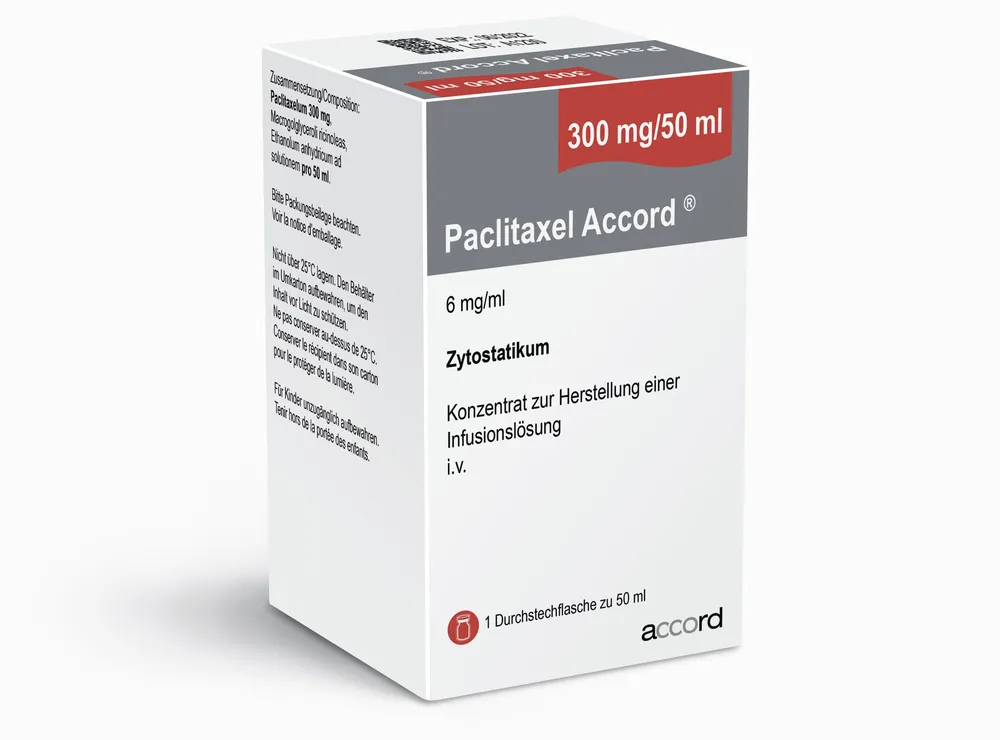
Table of Contents
- PATIENT INFORMATION LEAFLET: INFORMATION FOR THE USER
- Paclitaxel Accord Healthcare Italia
- 1. What Paclitaxel Accord Healthcare Italia is and what it is used for
- 2. What you need to know before using Paclitaxel Accord Healthcare Italia
- 3. How to use Paclitaxel Accord Healthcare Italia
- 4. Possible side effects
- 5. How to store Paclitaxel Accord Healthcare Italia
- 6. Package contents and other information
- The following information is intended exclusively for healthcare professionals
PATIENT INFORMATION LEAFLET: INFORMATION FOR THE USER
Paclitaxel Accord Healthcare Italia
6 mg/ml concentrate for solution for infusion
Equivalent medicine
Please read this leaflet carefully before using this medicine because it contains important information for you.
Keep this leaflet. You may need to read it again.
If you have any questions, ask your doctor, pharmacist, or nurse.
This medicine has been prescribed for you only. Do not give it to other people, even if their symptoms are the same as yours, as it could be harmful.
If you experience any side effects, including those not listed in this leaflet, contact your doctor, pharmacist, or nurse. See section 4.
The name of your medicine is “Paclitaxel Accord Healthcare Italia 6 mg/ml, concentrate for solution for infusion”, but throughout the rest of this leaflet it will be referred to as “Paclitaxel Accord Healthcare Italia”.
Contents of this leaflet:
- What Paclitaxel Accord Healthcare Italia is and what it is used for
- What you need to know before using Paclitaxel Accord Healthcare Italia
- How to use Paclitaxel Accord Healthcare Italia
- Possible side effects
- How to store Paclitaxel Accord Healthcare Italia
- Contents of the pack and other information
1. What Paclitaxel Accord Healthcare Italia is and what it is used for
Paclitaxel belongs to a group of anticancer medicines called taxanes, which work by inhibiting the growth of cancer cells.
Paclitaxel Accord Healthcare Italia is used to treat:
Ovarian carcinoma
- As first-line therapy (after initial surgery, in combination with cisplatin, a platinum-containing drug).
- After prior treatment with standard platinum-containing medicines has failed to produce a response.
Breast carcinoma
- As first-line therapy for advanced or metastatic disease (cancer that has spread to other parts of the body). Paclitaxel Accord Healthcare Italia is combined with an anthracycline (e.g. doxorubicin) or with a medicine called trastuzumab (for patients for whom anthracyclines are not suitable and who have cancer cells expressing a protein called HER 2; see the trastuzumab package leaflet).
- As adjuvant treatment following initial surgery, after treatment with anthracycline and cyclophosphamide (AC).
- As second-line treatment for patients who have not responded to standard anthracycline-based therapies or for whom such treatments cannot be used.
Advanced non-small cell lung carcinoma:
In combination with cisplatin, when surgery or radiotherapy are not suitable.
AIDS-related Kaposi’s sarcoma:
- When prior therapy (i.e. liposomal anthracyclines) has proven ineffective.
2. What you need to know before using Paclitaxel Accord Healthcare Italia
Do not take Paclitaxel Accord Healthcare Italia in the following cases:
If you are allergic (hypersensitive) to paclitaxel or to any of the other ingredients listed in section 6,
especially to polyoxyethylated castor oil.
If you are breastfeeding.
If you have an abnormally low white blood cell count in your blood. Your doctor will take blood samples to rule out this condition.
If you have a severe and uncontrolled infection and Paclitaxel Accord Healthcare Italia is being used to treat Kaposi's sarcoma.
If any of the above apply to you, consult your doctor before starting treatment with Paclitaxel Accord Healthcare Italia.
The use of Paclitaxel Accord Healthcare Italia is not recommended in children (under 18 years of age).
Warnings and precautions
Talk to your doctor before using Paclitaxel Accord Healthcare Italia.
To minimise the risk of allergic reactions, you will be given other medicines before receiving Paclitaxel Accord Healthcare Italia.
Contact your doctor immediately if you experience:
Severe allergic reactions (e.g. difficulty breathing, shortness of breath, chest tightness, drop in blood pressure, dizziness, feeling of emptiness in the head, skin reactions such as rashes or swelling).
Fever, severe chills, sore throat or mouth ulcers (signs of bone marrow suppression).
Numbness or weakness in the arms and legs (signs of peripheral neuropathy); a dose reduction of Paclitaxel Accord Healthcare Italia may be necessary.
Severe liver problems; in such cases, the use of Paclitaxel Accord Healthcare Italia is not recommended.
Heart conduction problems.
Severe or persistent diarrhoea, with fever and stomach pain, during or shortly after treatment with Paclitaxel Accord Healthcare Italia. In this case, you may have inflammation of the colon (pseudomembranous colitis).
Previous radiotherapy to the chest (as this may increase the risk of pneumonia).
Mouth redness or lesions (signs of mucositis) when being treated for Kaposi's sarcoma. In this case, you may require a lower dose.
If you think any of the conditions listed above apply to you, inform your doctor immediately.
Paclitaxel Accord Healthcare Italia must always be administered intravenously. Administration of Paclitaxel Accord Healthcare Italia into the arteries may cause inflammation of the arteries, leading to pain, swelling, erythema and hot flushes.
Other medicines and Paclitaxel Accord Healthcare Italia
Tell your doctor or pharmacist if you are taking, have recently taken, or might take any other medicines, including those obtained without a prescription. This is because Paclitaxel Accord Healthcare Italia or other medicines may not work as intended, or you may be more likely to experience side effects.
An interaction means that different medicines can affect each other.
Consult your doctor when taking paclitaxel together with any of the following:
- Medicines used to treat infections (i.e. antibiotics such as erythromycin, rifampicin, etc.; ask your doctor, nurse or pharmacist to confirm if the medicine you are taking is an antibiotic)
- Medicines used to stabilise mood, sometimes also called antidepressants (e.g. fluoxetine)
- Medicines used to treat epileptic seizures (epilepsy) (e.g. carbamazepine, phenytoin)
- Medicines used to lower lipid levels in the blood (e.g. gemfibrozil)
- Medicines used for heartburn or stomach ulcers (e.g. cimetidine)
- Medicines used to treat HIV and AIDS (e.g. ritonavir, saquinavir, indinavir, nelfinavir, efavirenz, nevirapine)
- A medicine called clopidogrel used to prevent blood clots
- A medicine called rifampicin, an antibiotic used for tuberculosis. An increased dose of Paclitaxel Accord Healthcare Italia may be required
- Vaccines: If you have recently been vaccinated or are planning to be vaccinated, inform your doctor. The use of Paclitaxel Accord Healthcare Italia in combination with certain vaccines may lead to serious complications
- Cisplatin (for cancer treatment): Paclitaxel Accord Healthcare Italia should be administered before cisplatin. Renal function may need to be monitored more frequently
- Doxorubicin (for cancer treatment): Paclitaxel Accord Healthcare Italia should be administered 24 hours after doxorubicin to avoid high levels of doxorubicin in the body
Pregnancy, breastfeeding and fertility
Inform your doctor if you are pregnant or think you might be pregnant before receiving paclitaxel treatment. If there is any chance you could become pregnant, use an effective and reliable method of contraception during treatment.
Paclitaxel should not be used during pregnancy unless strictly necessary. Female and male patients of reproductive age and/or their partners should use contraceptive methods for at least 6 months after treatment with paclitaxel.
Male patients should seek advice regarding sperm cryopreservation before treatment with paclitaxel due to the risk of infertility.
If you are breastfeeding, inform your doctor. You must stop breastfeeding while taking Paclitaxel Accord Healthcare Italia. Do not restart breastfeeding unless authorised by your doctor.
Driving and using machines
This medicine contains alcohol, and therefore it may not be advisable to drive immediately after a treatment cycle.
In any case, do not drive if you feel dizzy or unwell.
Important information about some excipients in Paclitaxel Accord Healthcare Italia
Paclitaxel Accord Healthcare Italia contains castor oil (50% polyoxyethylated castor oil), which may cause severe allergic reactions. If you are allergic to castor oil, talk to your doctor before Paclitaxel Accord Healthcare Italia is administered to you.
Paclitaxel Accord Healthcare Italia contains alcohol
This medicine contains 391 mg of alcohol (ethanol) per ml. The amount of alcohol in this medicine (at the maximum dose of 220 mg/m²) is equivalent to 646 ml of beer or 258 ml of wine.
The alcohol contained in this medicine may alter the effects of other medicines. Talk to your doctor or pharmacist if you are taking other medicines.
If you are pregnant or breastfeeding, talk to your doctor or pharmacist before taking this medicine.
If you are alcohol-dependent, talk to your doctor or pharmacist before taking this medicine.
3. How to use Paclitaxel Accord Healthcare Italia
- To minimize allergic reactions, you will be given other medicines before receiving Paclitaxel Accord Healthcare Italia. These medicines may be administered as tablets, or as an intravenous infusion, or both.
- You will receive Paclitaxel Accord Healthcare Italia as an intravenous infusion, administered drop by drop into a vein (intravenously), through an in-line filter. Paclitaxel Accord Healthcare Italia will be administered by a healthcare professional, who will prepare the infusion solution before administration. The dose you receive will also depend on the results of your blood tests. You will receive Paclitaxel Accord Healthcare Italia either alone or in combination with another anticancer medicine, depending on the type and severity of your cancer.
- Paclitaxel Accord Healthcare Italia must always be administered over a period of 3 or 24 hours into one of your veins. It is usually given every 2 or 3 weeks, unless your doctor decides otherwise. Your doctor will inform you about the number of cycles of Paclitaxel Accord Healthcare Italia you will need.
If you have any doubts about how to use Paclitaxel Accord Healthcare Italia, consult your doctor.
If you have been given more Paclitaxel Accord Healthcare Italia than you should have received
In case of overdose, there is no known antidote for Paclitaxel Accord Healthcare Italia. You will be treated for your symptoms.
4. Possible side effects
Like all medicines, this medicine can cause side effects, although not everybody gets them.
Contact your doctor immediately if you notice signs of allergic reactions. One or more of the following signs may occur:
hot flushes,
skin reactions,
itching,
tightness in the chest,
shortness of breath or difficulty breathing,
swelling.
All of these manifestations may be signs of serious side effects.
Contact your doctor immediately if you:
- Experience fever, severe chills, sore throat or mouth ulcers (signs of bone marrow suppression).
- Experience numbness or weakness in the arms and legs (signs of peripheral neuropathy). These neuropathy symptoms may persist for more than 6 months after stopping treatment.
- Develop severe or persistent diarrhoea, with fever and stomach pain.
Very common (may affect more than 1 in 10 people)
Minor allergic reactions such as hot flushes, skin rashes, itching.
Infections: mostly affecting the upper respiratory tract and urinary tract.
Shortness of breath.
Sore throat or mouth ulcers, redness and pain in the mouth, diarrhoea, feeling unwell (nausea, vomiting).
Hair loss (most cases of hair loss occurred less than one month after starting paclitaxel. When this occurs, hair loss is pronounced (more than 50%) in most patients).
Muscle pain, cramps, joint pain.
Fever, severe chills, headache, dizziness, fatigue, paleness, bleeding or bruising more than usual.
Numbness, tingling or weakness in the arms and legs (all symptoms of peripheral neuropathy).
Blood tests may show a reduced number of platelets, white blood cells or red blood cells, low blood pressure.
Common (may affect up to 1 in 10 people)
Mild and temporary changes to nails and skin, injection site reactions (localized swelling, pain and skin redness).
Blood tests may reveal slowed heart rate, marked increase in liver enzymes (alkaline phosphatase and AST – SGOT).
Uncommon (may affect up to 1 in 100 people)
Shock due to infections (known as "septic shock").
Palpitations, heart dysfunction (AV block), rapid heartbeat, heart attack, difficulty breathing.
Fatigue, sweating, fainting (syncope), significant allergic reactions, inflammation of veins caused by a blood clot (thrombophlebitis), swelling of the face, lips, mouth, tongue or throat.
Back pain, chest pain, pain in hands and feet, chills, abdominal pain (stomach ache).
Blood tests may show severe increase in bilirubin (jaundice), high blood pressure and blood clots.
Heart failure.
Rare (may affect up to 1 in 1,000 people)
Reduced number of white blood cells with fever and increased risk of infections (febrile neutropenia).
Nerve disorders causing muscle weakness in arms and legs (motor neuropathy).
Shortness of breath, pulmonary embolism, pulmonary fibrosis, interstitial pneumonia, dyspnoea, pleural effusion.
Intestinal obstruction, intestinal perforation, inflammation of the colon (ischaemic colitis), inflammation of the pancreas (pancreatitis).
Itching, skin rashes, skin redness (erythema).
Blood poisoning (sepsis), peritonitis.
Pyrexia, dehydration, asthenia, oedema, general feeling of malaise.
Severe and potentially fatal hypersensitivity reactions (anaphylactic reactions).
Blood tests may show increased creatinine levels, indicating kidney dysfunction.
Very rare (may affect up to 1 in 10,000 people)
Irregular and rapid heart rhythm (atrial fibrillation, supraventricular tachycardia).
Sudden disorder in blood cell formation (acute myeloid leukaemia, myelodysplastic syndrome).
Optic nerve and/or vision disorders (scintillating scotomata).
Hearing loss or reduced hearing (ototoxicity), ringing in the ears (tinnitus), dizziness.
Cough.
Blood clot in a blood vessel of the abdomen and intestine (mesenteric thrombosis), inflammation of the colon sometimes with severe persistent diarrhoea (pseudomembranous colitis, neutropenic colitis), fluid in the abdomen (ascites), oesophagitis, constipation.
Severe hypersensitivity reactions including fever, skin erythema, joint pain and/or eye inflammation (Stevens-Johnson syndrome), skin peeling (epidermal necrolysis), erythema with irregular red spots (exudative) (erythema multiforme), skin inflammation with blistering and peeling (exfoliative dermatitis), urticaria, nail loss (patients undergoing therapy must protect hands and feet from sunlight exposure).
Loss of appetite (anorexia).
Severe and potentially fatal hypersensitivity reactions with shock (anaphylactic shock).
Liver function disorders (hepatic necrosis and hepatic encephalopathy, both with documented fatal outcomes).
Confusional state.
Not known (frequency cannot be estimated from the available data)
- Disseminated intravascular coagulation (DIC) has been reported. This is a serious condition causing excessive tendency to bleeding, blood clot formation, or both.
- Hardening/thickening of the skin (scleroderma).
- Metabolic complications after cancer treatment (tumour lysis syndrome).
- Eye disorders, such as thickened and enlarged macula (macular oedema), flashes of light (photopsia), and spots, dots, patches and "webs" floating in the visual field (vitreous floaters), increased tearing.
- Inflammation of veins (phlebitis).
- Autoimmune disease with multiple symptoms, such as red, scaly patches on the skin, joint pain or fatigue (systemic lupus erythematosus) or skin rashes and red, thick, often scaly lesions that may burn or itch (cutaneous lupus erythematosus).
- Acute inflammatory reaction limited to previously irradiated areas, triggered by administration of systemic agents after radiotherapy (recall phenomenon).
- Excessive sweating (hyperhidrosis).
If any of the side effects become severe, or if you notice any side effects not listed in this leaflet, please inform your doctor.
Reporting of side effects
If you experience any side effects, including those not listed in this leaflet, talk to your doctor, pharmacist or nurse. You can also report side effects directly via the national reporting system at https://www.aifa.gov.it/content/segnalazioni-reazioni-avverse. By reporting side effects, you can help provide more information on the safety of this medicine.
5. How to store Paclitaxel Accord Healthcare Italia
Keep this medicine out of the sight and reach of children.
Do not use this medicine after the expiry date which is stated on the cardboard box after “Exp.”. The expiry date refers to the last day of that month.
Before opening
Do not store above 25 °C. Keep the vial in the outer packaging to protect the medicine from light.
Freezing does not adversely affect the product.
After opening the container and before dilution (description of conditions)
From a microbiological standpoint, after opening the medicinal product may be stored for a maximum of 28 days at 25 °C.
The user is responsible for the use of any other storage times and conditions.
After dilution (description of conditions)
From a microbiological perspective, the diluted product should be used immediately. If not used immediately, it should be stored in a refrigerator (2–8 °C) for no longer than 24 hours, unless dilution has been carried out under controlled and validated aseptic conditions. For further details on stability after dilution, refer to the section dedicated to healthcare professionals.
Do not use this medicine if you notice a cloudy solution or an insoluble precipitate.
Do not dispose of medicines via wastewater or household waste. Ask your pharmacist how to dispose of medicines no longer required. This will help protect the environment.
6. Package contents and other information
What Paclitaxel Accord Healthcare Italia contains
The active substance is paclitaxel.
Each ml of concentrate for solution for infusion contains 6 mg of paclitaxel.
Each vial contains 5, 16.7, 25, 50 or 100 ml (corresponding to 30, 100, 150, 300 or 600 mg of paclitaxel, respectively).
The excipients are polyoxyethylated castor oil (macrogol glycerol ricinoleate) and anhydrous ethanol.
Description of the appearance of Paclitaxel Accord Healthcare Italia and package contents
Paclitaxel Accord Healthcare Italia is a clear, colourless or slightly yellowish solution, free from visible particles.
It is available in vials containing 5 ml, 16.7 ml, 25 ml, 50 ml and 100 ml of concentrate for solution for infusion.
Not all pack sizes may be marketed.
Marketing Authorisation Holder and Manufacturer
Marketing Authorisation Holder
Accord Healthcare S.L.U.
World Trade Center,
Moll de Barcelona,
s/n, Edifici Est 6ª planta,
08039 Barcelona,
Spain
Manufacturer
Accord Healthcare Polska Sp. z o.o.,
ul. Lutomierska 50, 95-200 Pabianice,
Poland
Accord Healthcare Single Member S.A.
64th Km National Road Athens,
Lamia, 32009,
Greece
This medicinal product is authorised in the European Economic Area countries under the following names:
| Member State Name | Medicinal Product Name |
| Netherlands | Paclitaxel Accord 6 mg/ml, Concentrate for Solution for Intravenous Infusion |
| Austria | Paclitaxel Accord 6 mg/ml, Concentrate for Preparation of Infusion Solution |
| Belgium | Paclitaxel Accord Healthcare 6 mg/ml, solution to be diluted for perfusion / concentrate for solution for infusion / concentrate for preparation of infusion solution |
| Bulgaria | Paclitaxel Accord 6 mg/ml Concentrate for Solution for Infusion |
| Cyprus | Paclitaxel Accord 6 mg/ml, Concentrate for Solution for Infusion |
| Czech Republic | Paclitaxel Accord 6 mg/ml concentrate for preparation of infusion solution |
| Germany | Paclitaxel Accord 6 mg/ml, Concentrate for Preparation of Infusion Solution |
| Denmark | Paclitaxel Accord 6 mg/ml, Concentrate for Solution for Infusion |
| Estonia | Paclitaxel Accord 6 mg/ml |
| Spain | Paclitaxel Accord 6 mg/ml, concentrate for perfusion solution |
| Finland | Paclitaxel Accord 6 mg/ml, Infusion Concentrate, for Solution / concentrate for infusion liquid, solution |
| France | Paclitaxel Accord 6 mg/ml, Solution to be diluted for perfusion |
| Hungary | Paclitaxel Accord 6 mg/ml, Concentrate for Solution for Infusion |
| Ireland | Paclitaxel 6 mg/ml, Concentrate for Solution for Infusion |
| Italy | Paclitaxel Accord Healthcare Italia 6 mg/ml, concentrate for infusion solution |
| Lithuania | Paclitaxel Accord 6 mg/ml, concentrate for infusion solution |
| Latvia | Paclitaxel Accord |
| Norway | Paclitaxel Accord 6 mg/ml, Concentrate for Infusion Fluid |
| Poland | Paclitaxelum Accord |
| Portugal | Paclitaxel Accord |
| Romania | Paclitaxel Accord 6 mg/ml, concentrate for perfusable solution |
| Sweden | Paclitaxel Accord 6 mg/ml, Concentrate for Infusion Fluid, Solution |
| Slovenia | Paclitaxel Accord 6 mg/ml concentrate for infusion solution |
| Slovak Republic | Paclitaxel Accord 6 mg/ml, infusion concentrate |
| United Kingdom | Paclitaxel 6 mg/ml, Concentrate for Solution for Infusion |
The following information is intended exclusively for healthcare professionals
Preparation of infusion solutions:
Containers and infusion sets used with Paclitaxel Accord Healthcare Italia must be free of DEHP. This
will minimize patient exposure to the plasticizer DEHP [di-(2-ethylhexyl)phthalate], which may be
leached from PVC containers or infusion sets. When using filters incorporating short PVC-plasticized
inlet and/or outlet devices (e.g., IVEX-2), no significant leaching of DEHP has been observed.
Extreme caution must be exercised when handling Paclitaxel Accord Healthcare Italia, as with all
antineoplastic agents. Protective gloves appropriate for handling cytotoxic agents must always be worn
when handling vials containing paclitaxel. Dilution must be performed under aseptic conditions by trained
personnel in a designated area.
In case of skin contact, wash thoroughly with soap and water. In case of mucous membrane contact, flush
copiously with water.
The “Chemo-Dispensing Pin” or similar sharp piercing devices must not be used, as they may cause the
stopper to fall into the vial, resulting in loss of product sterility.
Step 1: Dilute the concentrate
Prior to administration, Paclitaxel Accord Healthcare Italia must be further diluted using one of the following solutions:
- 0.9% Sodium chloride solution for injection
- 5% Dextrose solution for injection
- 5% Dextrose and 0.9% sodium chloride solutions for injection
- 5% Dextrose in Ringer's solution for injection
The final paclitaxel concentration for infusion must be between 0.3 mg/mL and 1.2 mg/mL.
DEHP-free containers and infusion sets must be used.
After dilution, solutions may appear slightly turbid; this is due to the formulation vehicle and is not removed
by filtration. No significant loss of drug potency has been observed after simulated administration of the
solution through an infusion set equipped with an in-line filter.
Step 2: Administer the infusion
All patients must be premedicated prior to administration with corticosteroids, antihistamines, and H₂ antagonists.
Treatment with Paclitaxel Accord Healthcare Italia must not be repeated until the absolute neutrophil count is ≥1,500/mm³ (≥1,000/mm³ in patients with Kaposi's sarcoma) and the platelet count is ≥100,000/mm³ (≥75,000/mm³ in patients with Kaposi's sarcoma).
To avoid precipitation of the infusion solution:
- Use the solution as soon as possible after dilution.
- Avoid excessive agitation, vibration, or shaking.
- Flush infusion sets thoroughly before use.
- Regularly inspect the appearance of the infused solution and discontinue infusion if precipitation occurs.
Chemical and physical stability of the diluted solution has been demonstrated for 7 days at 5°C and 25°C after dilution in 5% dextrose solution, and for 14 days after dilution in 0.9% sodium chloride solution for injection.
From a microbiological standpoint, the diluted product should be used immediately or stored at 2–8°C for a maximum of 24 hours.
Paclitaxel infusion must be administered through an appropriate in-line filter with a microporous membrane having a pore size of ≤ 0.2 micrometers. DEHP-free containers and infusion sets must be used. No significant leaching of DEHP has been observed when using filters incorporating short PVC-plasticized inlet and/or outlet devices.
Step 3: Disposal
Dispose of unused medicinal product or waste materials in accordance with local regulations for handling cytotoxic compounds.
Dosage
The recommended doses for intravenous infusion of Paclitaxel Accord Healthcare Italia are as follows:
| Indication | Dose | Interval between Paclitaxel Accord Healthcare Italia cycles |
| First-line ovarian carcinoma | 135 mg/m2 over 24 hours, followed by cisplatin 75 mg/m2 or 175 mg/m2 over 3 hours, followed by cisplatin 75 mg/m2 | 3 weeks |
| Second-line ovarian carcinoma | 175 mg/m2 over 3 hours | 3 weeks |
| Adjuvant breast carcinoma | 175 mg/m2 over 3 hours; after anthracycline and cyclophosphamide (AC) therapy | 3 weeks |
| First-line breast carcinoma (with doxorubicin) | 220 mg/m2 over 3 hours, 24 hours after doxorubicin (50 mg/m2) | 3 weeks |
| First-line breast carcinoma (with trastuzumab) | 175 mg/m2 over 3 hours, after trastuzumab (see trastuzumab SmPC) | 3 weeks |
| Second-line breast carcinoma | 175 mg/m2 over 3 hours | 3 weeks |
| Advanced non-small cell lung cancer | 175 mg/m2 over 3 hours, followed by cisplatin 80 mg/m2 | 3 weeks |
| Kaposi’s sarcoma associated with AIDS | 100 mg/m2 over 3 hours | 2 weeks |
Paclitaxel Accord Healthcare Italia treatment should not be repeated until the neutrophil granulocyte count is ≥1,500/mm³ (≥1,000/mm³ in patients with Kaposi's sarcoma) and the platelet count is ≥100,000/mm³ (≥75,000/mm³ in patients with Kaposi's sarcoma).
In patients who develop severe neutropenia (neutrophils <500/mm³ for ≥7 days) or severe peripheral neuropathy, the dose for subsequent cycles must be reduced by 20% (by 25% in patients with Kaposi's sarcoma) (see the Summary of Product Characteristics).
Insufficient data are available to recommend dose adjustments in patients with mild to moderate hepatic impairment. Patients with severe hepatic impairment should not be treated with Paclitaxel Accord Healthcare Italia (see the Summary of Product Characteristics).
The use of Paclitaxel Accord Healthcare Italia is not recommended in children under 18 years of age due to lack of data on safety and efficacy.