Ovitrelle
Italy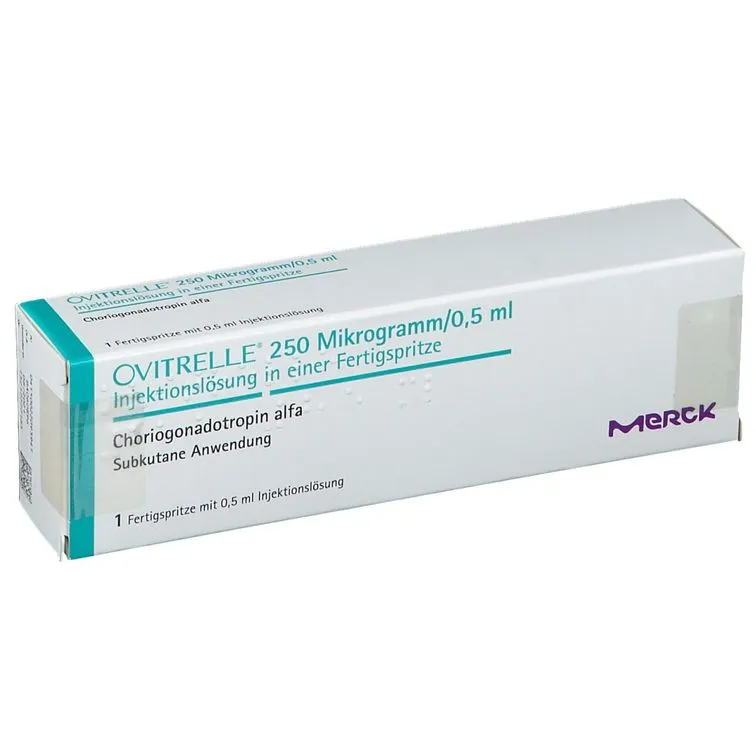
Table of Contents
- Package leaflet: Information for the user
- Ovitrelle 250 micrograms/0.5 mL solution for injection in pre-filled syringe
- 1. What Ovitrelle is and what it is used for
- 2. What you need to know before using Ovitrelle
- 3. How to use Ovitrelle
- 4. Possible side effects
- 5. How to store Ovitrelle
- 6. Package contents and other information
- Package leaflet: Information for the user
- Ovitrelle 250 micrograms solution for injection in a pre-filled pen
- 1. What Ovitrelle is and what it is used for
- 2. What you need to know before using Ovitrelle
- 3. How to use Ovitrelle
- 4. Possible side effects
- 5. How to store Ovitrelle
- 6. Package contents and other information
- Instructions for use
- OVITRELLE 250 micrograms injection solution in pre-filled pen
- 1. How to use the Ovitrelle pre-filled pen
- 2. Before starting to use the pre-filled Ovitrelle pen
- 3. How to prepare a pre-filled Ovitrelle pen for injection
- 4. How to set the dose to 250
- 5. How to inject the dose
- 6. After Injection
Package leaflet: Information for the user
Ovitrelle 250 micrograms/0.5 mL solution for injection in pre-filled syringe
chorionic gonadotropin alfa
Please read this leaflet carefully before using this medicine because it contains important information for you.
- Keep this leaflet. You may need to read it again.
- If you have any questions, ask your doctor or pharmacist.
- This medicine has been prescribed for you only. Do not give it to other people, even if their symptoms are the same as yours, because it could be harmful.
- If you experience any side effects, including those not listed in this leaflet, contact your doctor or pharmacist. See section 4.
Contents of this leaflet
- What Ovitrelle is and what it is used for
- What you need to know before using Ovitrelle
- How to use Ovitrelle
- Possible side effects
- How to store Ovitrelle
- Contents of the pack and other information
1. What Ovitrelle is and what it is used for
What Ovitrelle is
Ovitrelle contains a medicine called "choriogonadotropin alfa", produced in the laboratory using advanced recombinant DNA technology. Choriogonadotropin alfa is very similar to a hormone naturally present in the human body, human chorionic gonadotropin, which plays a role in reproduction and fertility.
What Ovitrelle is used for
Ovitrelle is used together with other medicines:
- to trigger the growth and development of multiple follicles (each containing an oocyte) in women undergoing assisted reproductive techniques (procedures that help them become pregnant), such as in vitro fertilization. Other medicines are first administered to stimulate the growth of multiple follicles;
- to trigger the release of an oocyte from the ovaries (induction of ovulation) in women who do not produce oocytes (a condition called anovulation) or who produce too few (oligo-ovulation). Initially, other medicines are given to promote follicle growth and development;
2. What you need to know before using Ovitrelle
Do not use Ovitrelle
- if you are allergic to choriogonadotropin alfa or to any of the other ingredients of this medicine (listed in section 6);
- if you have a tumour of the hypothalamus or pituitary gland (both parts of the brain);
- if you have enlarged ovaries or fluid-filled sacs in the ovaries (ovarian cysts) of unknown origin;
- if you have unexplained vaginal bleeding;
- if you have cancer of the ovary, uterus, or breast;
Global Version ID: 78691_1822858_4521304
- if you have severe inflammation of the veins or blood clots in the veins (active thromboembolic disorders);
- if you have conditions that normally make a normal pregnancy impossible, such as menopause or premature menopause (ovarian failure) or malformations of the reproductive organs.
Do not use Ovitrelle if any of these conditions apply to you. If you are unsure, consult your doctor before using this medicine.
Warnings and precautions
Before starting treatment, your fertility and that of your partner should be evaluated by a doctor experienced in the treatment of fertility problems.
Ovarian hyperstimulation syndrome (OHSS)
This medicine may increase the risk of developing OHSS. This occurs when follicles develop excessively and become large cysts.
If you experience lower abdominal pain, rapid weight gain, nausea or vomiting, or have difficulty breathing, do not administer the Ovitrelle injection and contact your doctor immediately (see section 4). If you are developing OHSS, you may be advised to avoid sexual intercourse or to use a barrier contraceptive method for at least four days.
The risk of OHSS is reduced when the usual dose of Ovitrelle is used and the treatment cycle is closely monitored (e.g., blood tests for estradiol levels and ultrasound).
Multiple pregnancies and/or birth defects
When using Ovitrelle, there is a higher risk of multiple pregnancy compared to natural conception, most commonly twins. Multiple pregnancy may lead to medical complications for you and your babies. When undergoing assisted reproductive techniques, the risk of multiple pregnancy is related to your age, and the quality and number of embryos or fertilized oocytes transferred to you. Multiple pregnancies and certain characteristics of couples with fertility problems (e.g., age) may also be associated with an increased risk of birth defects.
The risk of multiple pregnancies is reduced when the treatment cycle is closely monitored (e.g., blood tests for estradiol levels and ultrasound).
Ectopic pregnancies
In women with damaged Fallopian tubes (the tubes that carry the egg from the ovary to the uterus), pregnancy may occur outside the uterus (ectopic pregnancy). Your doctor should therefore perform an early ultrasound to exclude this possibility.
Miscarriage
When undergoing assisted reproductive techniques or ovarian stimulation to produce oocytes, the risk of miscarriage is higher than in other women.
Blood clotting problems (thromboembolic events)
Talk to your doctor before using Ovitrelle if you or a family member has ever had blood clots in the legs or lungs, or if you have had a heart attack or stroke. Taking Ovitrelle may increase your risk of developing serious blood clots or worsening existing ones.
Global Version ID: 78691_1822858_4521304
Tumours of the reproductive organs
Cases of benign and malignant tumours of the ovaries and other reproductive organs have been reported in women undergoing repeated cycles of pharmacological infertility treatment.
Pregnancy tests
If you perform a pregnancy test on serum or urine after using Ovitrelle and within ten days afterwards, you may get a false positive test result. If in doubt, consult your doctor.
Children and adolescents
Ovitrelle must not be used in children and adolescents.
Other medicines and Ovitrelle
Tell your doctor if you are taking, have recently taken, or might take any other medicines.
Pregnancy and breastfeeding
Do not use Ovitrelle if you are pregnant or breastfeeding.
If you are pregnant or breastfeeding, ask your doctor for advice before taking this medicine.
Driving and using machines
Ovitrelle is considered to have no effect on the ability to drive vehicles or use machinery.
Ovitrelle contains sodium
This medicine contains less than 1 mmol (23 mg) of sodium per dose, i.e., essentially "sodium-free".
3. How to use Ovitrelle
Use this medicine exactly as your doctor has told you. If you have any doubts, consult your doctor or pharmacist.
Dosage
- The recommended dose is 1 pre-filled syringe (250 micrograms/0.5 mL) administered as a single injection.
- Your doctor will have instructed you precisely when to administer the injection.
How to use this medicine
- Ovitrelle must be administered subcutaneously, which means by injection under the skin.
- Each pre-filled syringe is for single use only. Only use if the solution is clear and free from particles.
- Your doctor or nurse will show you how to use the pre-filled Ovitrelle syringe to inject the medicine.
- Inject Ovitrelle exactly as instructed by your doctor or nurse.
- After the injection, dispose of the used syringe safely.
Global Version ID: 78691_1822858_4521304
If you are self-administering Ovitrelle, please read the following instructions carefully:
- Wash your hands. It is important that your hands and the materials you use are as clean as possible.
- Gather all necessary items. Please note that alcohol-soaked cotton swabs are not included in the package. Find a clean area and lay out all necessary items:
- two alcohol-soaked cotton swabs;
- one pre-filled syringe containing the medicine.
- Injection:
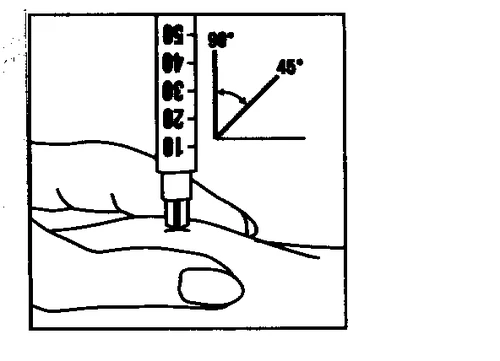
inject the solution immediately: your doctor or nurse should have already informed you of the injection site (e.g., abdomen, front of the thigh). Clean the selected area with an alcohol-soaked cotton swab. Firmly pinch the skin and insert the injection needle at an angle between 45° and 90° with a quick, dart-like motion. Inject under the skin as instructed. Do not inject directly into a vein. Inject the solution by slowly pressing the plunger of the syringe. Take the time needed to inject the entire solution. Immediately remove the needle and clean the site with an alcohol-soaked cotton swab using a circular motion.
- Disposal of used materials: after completing the injection, immediately dispose of the empty syringe in a designated sharps container. Discard any unused solution.
If you use more Ovitrelle than you should
The effects of an overdose of Ovitrelle are not known, however, ovarian hyperstimulation syndrome (OHSS) may occur, as described in section 4.
If you forget to use Ovitrelle
If you forget to use Ovitrelle, contact your doctor as soon as you remember.
If you have any doubts about how to use this medicine, consult your doctor or pharmacist.
4. Possible side effects
Like all medicines, this medicine can cause side effects, although not everybody gets them.
Stop using Ovitrelle and contact a doctor immediately if you notice any of the following serious
side effects, as urgent medical treatment may be required:
- allergic reactions such as rash, rapid or irregular pulse, swelling of the tongue and throat, sneezing, wheezing or severe breathing difficulties – very rare (may affect up to 1 in 10,000 people);
- lower abdominal pain, abdominal bloating or abdominal discomfort with nausea or vomiting may be symptoms of ovarian hyperstimulation syndrome (OHSS). This may indicate that the ovaries are over-responding to treatment and large ovarian cysts have developed (see also section 2, under "Ovarian Hyperstimulation Syndrome"). This is a common event (may affect up to 1 in 10 people);
Global Version ID: 78691_1822858_4521304
- OHSS may become severe, with obvious enlargement of the ovaries, reduced urine output, weight gain, difficulty breathing, and possible accumulation of fluid in the abdomen or chest – not common (may affect up to 1 in 100 people);
- severe blood clotting complications (thromboembolic events), sometimes independent of OHSS, have been reported very rarely. These may cause chest pain, shortness of breath, stroke or heart attack (see also section 2, under "Blood clotting problems").
Other side effects
Common (may affect up to 1 in 10 people)
- Headache.
- Local reactions at the injection site, such as pain, redness or swelling.
Uncommon (may affect up to 1 in 100 people)
- Diarrhoea.
Reporting of side effects
If you get any side effects, including those not listed in this leaflet, talk to your doctor or pharmacist.
You can also report side effects directly via the national reporting system referred to in Annex V. By reporting side effects, you can help provide more information on the safety of this medicine.
5. How to store Ovitrelle
Keep this medicine out of the sight and reach of children.
Do not use this medicine after the expiry date stated on the label and the carton after EXP. The expiry date refers to the last day of that month.
Store in a refrigerator (2°C - 8°C). Keep in the original packaging. Ovitrelle 250 micrograms solution for injection can be stored for up to 30 days at room temperature (not above 25°C) without returning it to the refrigerator; after this 30-day period, if not used, it must be discarded.
Do not dispose of any medicine via wastewater or household waste. Ask your pharmacist how to dispose of medicines you no longer use. This will help protect the environment.
6. Package contents and other information
What Ovitrelle contains
- The active substance is choriogonadotropin alfa, produced by recombinant DNA technology.
- Each pre-filled syringe contains 250 micrograms/0.5 mL (equivalent to 6,500 IU).
- The other components are mannitol, methionine, poloxamer 188, phosphoric acid, sodium hydroxide, water for injections.
Description of the appearance of Ovitrelle and package contents
Ovitrelle is supplied as an injectable solution.
It is available in a single pre-filled syringe (pack size: 1).
Marketing Authorization Holder
Merck Europe B.V., Gustav Mahlerplein 102, 1082 MA Amsterdam, The Netherlands
Global Version ID: 78691_1822858_4521304
Manufacturer
Merck Serono S.p.A., Via delle Magnolie 15, 70026 Modugno (Bari), Italy
More detailed information on this medicinal product is available on the website of the European Medicines Agency, http://www.ema.europa.eu .
Global Version ID: 78691_1822858_4521304
Package leaflet: Information for the user
Ovitrelle 250 micrograms solution for injection in a pre-filled pen
choriogonadotropin alfa
Please read this leaflet carefully before using this medicine because it contains important information for you.
- Keep this leaflet. You may need to read it again.
- If you have any questions, ask your doctor or pharmacist.
- This medicine has been prescribed for you only. Do not give it to other people, even if their symptoms are the same as yours, because it could be harmful.
- If you experience any side effects, including those not listed in this leaflet, talk to your doctor or pharmacist. See section 4.
Contents of this leaflet
- What Ovitrelle is and what it is used for
- What you need to know before using Ovitrelle
- How to use Ovitrelle
- Possible side effects
- How to store Ovitrelle
- Contents of the pack and other information
1. What Ovitrelle is and what it is used for
What Ovitrelle is
Ovitrelle contains a medicine called "chorionic gonadotropin alfa", produced in the laboratory using
advanced recombinant DNA technology. Chorionic gonadotropin alfa is very similar to a hormone
naturally present in the human body, human chorionic gonadotropin, which is involved in
reproduction and fertility.
What Ovitrelle is used for
Ovitrelle is used together with other medicines:
- to trigger the growth and development of multiple follicles (each containing an oocyte) in women undergoing assisted reproductive techniques (procedures that help them become pregnant), such as in vitro fertilization. Other medicines are first administered to stimulate the growth of multiple follicles;
- to trigger the release of an oocyte from the ovaries (induction of ovulation) in women who do not produce oocytes (a condition called anovulation) or who produce too few (oligo-ovulation). Other medicines are first administered to promote follicle growth and development;
2. What you need to know before using Ovitrelle
Do not use Ovitrelle
- if you are allergic to choriogonadotropin alfa or to any of the other ingredients of this medicine (listed in section 6);
- if you have a tumour of the hypothalamus or pituitary gland (both parts of the brain);
- if you have ovarian enlargement or fluid-filled sacs in the ovaries (ovarian cysts) of unknown origin;
- if you have unexplained vaginal bleeding;
- if you have cancer of the ovary, uterus or breast;
Global Version ID: 78691_1822858_4521304
- if you have severe inflammation of the veins or blood clots in the veins (active thromboembolic disorders);
- if you have conditions that normally make a normal pregnancy impossible, such as menopause or premature menopause (ovarian failure) or malformations of the reproductive organs.
Do not use Ovitrelle if any of these conditions apply to you. If you have any doubts, consult your doctor before using this medicine.
Warnings and precautions
Before starting treatment, your fertility and that of your partner must be evaluated by a doctor experienced in the treatment of fertility problems.
Ovarian hyperstimulation syndrome (OHSS)
This medicine may increase the risk of developing OHSS. This occurs when follicles become excessively stimulated and develop into large cysts.
If you experience lower abdominal pain, rapid weight gain, nausea or vomiting, or have difficulty breathing, do not inject Ovitrelle and contact your doctor immediately (see section 4). If you are developing OHSS, you may be advised to avoid sexual intercourse or to use a barrier contraceptive method for at least four days.
The risk of OHSS is reduced when the usual dose of Ovitrelle is used and the treatment cycle is closely monitored (e.g. blood tests for estradiol levels and ultrasound).
Multiple pregnancies and/or birth defects
When using Ovitrelle, there is a higher risk of multiple pregnancy compared to natural conception, most commonly twins. Multiple pregnancy may lead to medical complications for you and your babies. When undergoing assisted reproductive techniques, the risk of multiple pregnancy is related to your age, and the quality and number of embryos or fertilized oocytes transferred to you. Multiple pregnancies and certain characteristics of infertile couples (e.g. age) may also be associated with an increased risk of birth defects.
The risk of multiple pregnancies is reduced when the treatment cycle is closely monitored (e.g. blood tests for estradiol levels and ultrasound).
Ectopic pregnancies
In women with damaged fallopian tubes (the tubes that carry the egg from the ovary to the uterus), pregnancy may occur outside the uterus (ectopic pregnancy). Your doctor should therefore perform an early ultrasound to rule out this possibility.
Miscarriage
When undergoing assisted reproductive techniques or ovarian stimulation to produce oocytes, the risk of miscarriage is higher than in other women.
Blood clotting problems (thromboembolic events)
Talk to your doctor before using Ovitrelle if you or a family member has ever had blood clots in the legs or lungs, or if you have had a heart attack or stroke. Taking Ovitrelle may increase your risk of developing serious blood clots or worsening existing ones.
Global Version ID: 78691_1822858_4521304
Tumours of the reproductive organs
Cases of benign and malignant tumours of the ovaries and other reproductive organs have been reported in women undergoing repeated cycles of pharmacological infertility treatment.
Pregnancy test
If you perform a pregnancy test on serum or urine after using Ovitrelle and within ten days thereafter, you may get a false positive test result. If in doubt, consult your doctor.
Children and adolescents
Ovitrelle must not be used in children or adolescents.
Other medicines and Ovitrelle
Tell your doctor if you are taking, have recently taken, or might take any other medicines.
Pregnancy and breastfeeding
Do not use Ovitrelle if you are pregnant or breastfeeding.
If you are pregnant or breastfeeding, ask your doctor for advice before taking this medicine.
Driving and using machines
Ovitrelle is considered not to have any influence on the ability to drive or operate machinery.
Ovitrelle contains sodium
This medicine contains less than 1 mmol (23 mg) of sodium per dose, i.e. essentially "sodium-free".
3. How to use Ovitrelle
Use this medicine exactly as your doctor has told you. If you have any doubts, consult your doctor or pharmacist.
Dosage
- The recommended dose is 1 pre-filled pen (250 micrograms/0.5 mL) administered as a single injection.
- Your doctor will tell you exactly when to administer the injection.
How to use this medicine
- If you are self-administering Ovitrelle, carefully read and follow the “Instructions for Use” provided in the package.
- Ovitrelle must be administered by injection under the skin (subcutaneously).
- Each pre-filled pen is for single use only.
- Your doctor or nurse will show you how to use the Ovitrelle pre-filled pen to inject the medicine.
- Inject Ovitrelle as instructed by your doctor or nurse.
- After injection, dispose of the used needle safely and discard the pen.
Global Version ID: 78691_1822858_4521304
If you use more Ovitrelle than you should
The effects of an overdose of Ovitrelle are unknown; however, ovarian hyperstimulation syndrome (OHSS) may occur, as described in section 4.
If you forget to use Ovitrelle
If you forget to use Ovitrelle, contact your doctor as soon as possible.
If you have any doubts about how to use this medicine, consult your doctor or pharmacist.
4. Possible side effects
Like all medicines, this medicine can cause side effects, although not everybody will experience them.
Stop using Ovitrelle and contact a doctor immediately if you notice any of the following serious side effects, as urgent medical treatment may be required:
- allergic reactions such as rash, rapid or irregular pulse, swelling of the tongue and throat, sneezing, wheezing or severe breathing difficulties – these are very rare (may affect up to 1 in 10,000 people);
- lower abdominal pain, abdominal bloating or abdominal discomfort with nausea or vomiting may be symptoms of ovarian hyperstimulation syndrome (OHSS). This may indicate that the ovaries are over-responding to treatment and large ovarian cysts have developed (see also section 2, under "Ovarian hyperstimulation syndrome"). This is a common event (may affect up to 1 in 10 people);
- OHSS may become severe, with obvious enlargement of the ovaries, reduced urine production, weight gain, difficulty breathing, and possible accumulation of fluid in the abdomen or chest. This event is not common (may affect up to 1 in 100 people);
- severe coagulation complications (thromboembolic events), sometimes independent of OHSS, may very rarely occur. These may cause chest pain, shortness of breath, stroke or heart attack (see also section 2, under "Blood clotting problems").
Other side effects
Common (may affect up to 1 in 10 people)
- Headache.
- Local reactions at the injection site, such as pain, redness or swelling.
Uncommon (may affect up to 1 in 100 people)
- Diarrhoea.
Reporting of side effects
If you experience any side effect, including those not listed in this leaflet, talk to your doctor or pharmacist. You can also report side effects directly through the national reporting system referred to in Annex V. By reporting side effects, you can help provide more information on the safety of this medicine.
5. How to store Ovitrelle
Keep this medicine out of the sight and reach of children.
Global Version ID: 78691_1822858_4521304
Do not use this medicine after the expiry date which is stated on the label and the carton after
Exp. The expiry date refers to the last day of that month.
Store in a refrigerator (2°C - 8°C). Do not freeze.
Do not use Ovitrelle if you notice any visible signs of deterioration, if the liquid contains particles or
is not clear.
Do not dispose of any medicine via wastewater or household waste. Ask your pharmacist how to
dispose of medicines you no longer use. This will help protect the environment.
6. Package contents and other information
What Ovitrelle contains
- The active substance is coriogonadotropin alfa, produced by recombinant DNA technology.
- Each pre-filled pen contains 250 micrograms of coriogonadotropin alfa in 0.5 mL (equivalent to approximately 6,500 International Units, IU).
- The other components are mannitol, methionine, disodium phosphate dihydrate, sodium dihydrogen phosphate monohydrate, poloxamer 188, phosphoric acid (for pH adjustment), sodium hydroxide (for pH adjustment), water for injections.
Description of the appearance of Ovitrelle and package contents
- Ovitrelle is a clear, colourless to slightly yellow, injectable liquid contained in a pre-filled pen.
- Each pen contains 0.5 mL of solution.
- It is supplied in packs of 1 pre-filled pen and 2 injection needles (one spare).
Marketing Authorisation Holder
Merck Europe B.V., Gustav Mahlerplein 102, 1082 MA Amsterdam, The Netherlands
Manufacturer
Merck Serono S.p.A., Via delle Magnolie 15, 70026 Modugno (Bari), Italy
More detailed information on this medicinal product is available on the website of the European Medicines Agency: http://www.ema.europa.eu.
Global Version ID: 78691_1822858_4521304
Instructions for use
OVITRELLE 250 micrograms injection solution in pre-filled pen
Choriogonadotropin alfa
SUMMARY
1. How to use the Ovitrelle pre-filled pen
2. Before starting to use the Ovitrelle pre-filled pen
3. How to prepare an Ovitrelle pre-filled pen for injection
4. How to set the dose – “How to set the dose to 250”
5. How to inject the dose
6. After the injection
Warning: read these instructions for use before using the Ovitrelle pre-filled pen.
Follow the described procedure exactly, as it may differ from procedures used previously.
1. How to use the Ovitrelle pre-filled pen
- The pen must be used exclusively for subcutaneous injection.
- Inject Ovitrelle according to the instructions provided by your doctor or nurse.
- This pen is for single use only. Do not share the pen with anyone.
2. Before starting to use the pre-filled Ovitrelle pen

Wash your hands with water and soap.
- Choose a clean working area and a flat surface.
- Check the expiry date on the pen label.
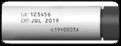
Global Version ID: 78691_1822858_4521304
- Prepare and lay out all necessary items on the surface.
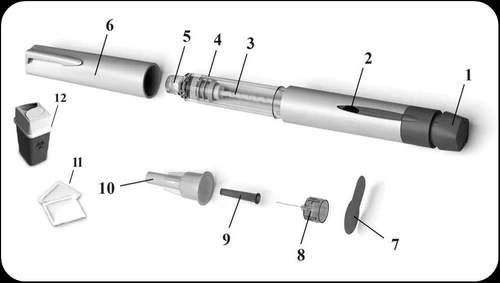
- dose setting knob
- pull tab
- dose dial
- removable needle
- plunger piston
- reservoir container
- threaded needle connector
- pen cap
- inner needle shield
- outer needle cap
- alcohol-impregnated cotton swabs
- sharps disposal container
Note: Alcohol-impregnated cotton swabs and sharps disposal container are not supplied in the package.
3. How to prepare a pre-filled Ovitrelle pen for injection
3.1 Remove the pen cap
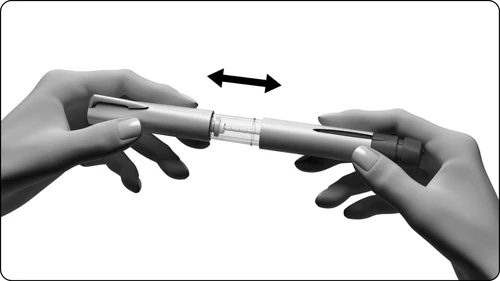
Global Version ID: 78691_1822858_4521304
3.2 Prepare the injection needle
- Take a new needle – use only the supplied “single-use” needle.
- Firmly hold the outer cap of the needle.
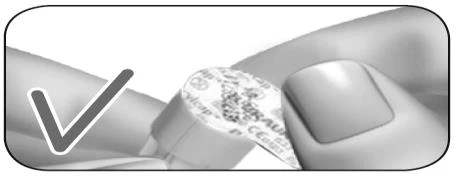
Check that the tear-off tab on the outer cap of the
needle is not damaged or loose.
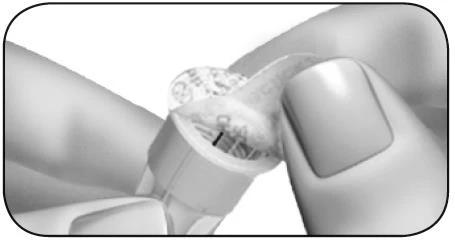
Remove the tab.
WARNING:
If the tab is damaged or loose, do not use the needle. Dispose of it in a sharps container. Ask your doctor or pharmacist how to obtain a new needle.
3.3 Attach the needle
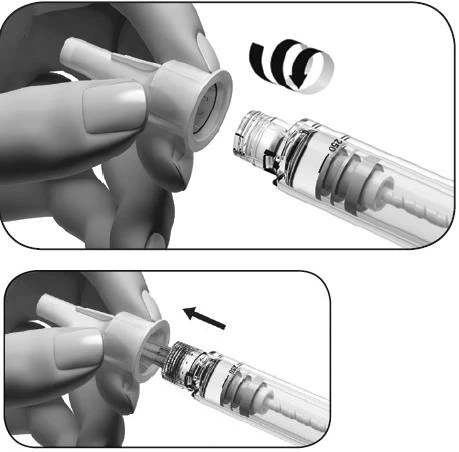
Screw the threaded tip of the pre-filled Ovitrelle pen into
the outer cap of the needle until slight resistance is felt.
Warning: Do not overtighten the needle; it may be difficult
to remove after injection.
Remove the outer cap of the needle by gently pulling it off.
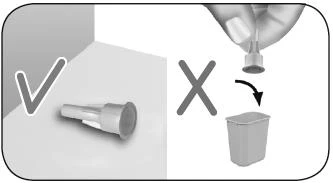
Set it aside for later use.
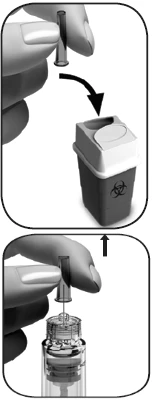
Hold the pre-filled Ovitrelle pen with the needle pointing
upwards.
- Carefully remove and discard the green inner protective cap.
Global Version ID: 78691_1822858_4521304
3.4 Carefully observe the tip of the needle and check for one or more drops of liquid
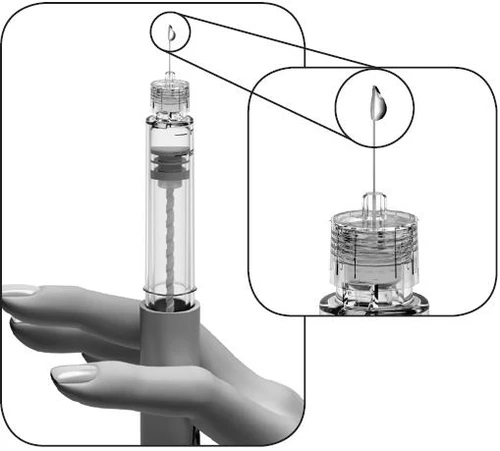
If you see one or more drops of liquid, proceed to
section 4: How to set the dose to 250.
WARNING:
If no drops of liquid are visible at or near the tip of the needle, perform the steps described on the following page.
If no drops of liquid are visible at or near the tip of the needle:
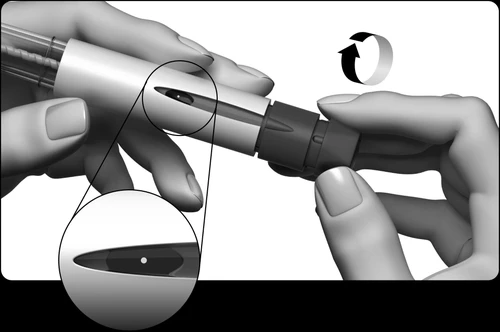
- Gently rotate the dose-setting knob clockwise until a dot (●) appears in the dose window. If you pass this position, simply turn the dose-setting knob back until the dot (●) is visible again.
- Hold the pen with the needle pointing upwards.
- Gently tap the reservoir chamber.
- Press the dose-setting knob all the way down. A small drop of liquid should appear at the tip of the needle; this indicates that the pre-filled pen is ready for injection.
Global Version ID: 78691_1822858_4521304
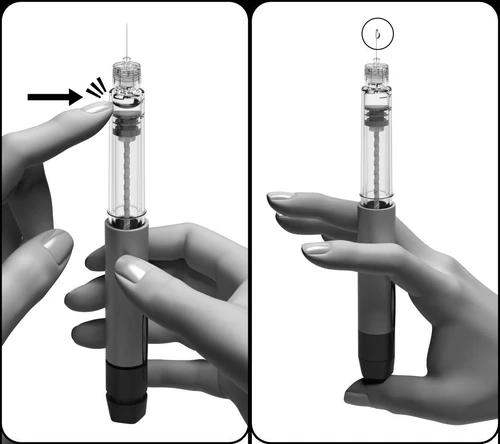
- If no liquid appears, you may try a second time (you may do this up to two times), starting again from step 1 in the section “If no drops of liquid are visible at or near the tip of the needle”.
4. How to set the dose to 250
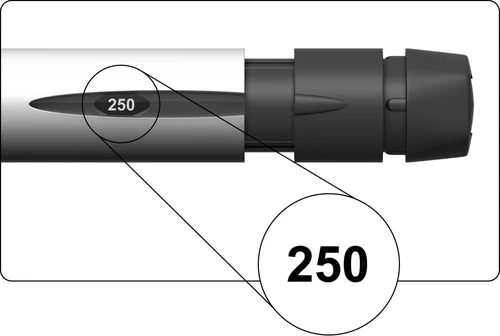
- Gently rotate the dose setting knob clockwise. A straight line will appear on the dose display, and continue rotating until the number "250" is visible.
- Do not push or pull the dose setting knob while rotating it.
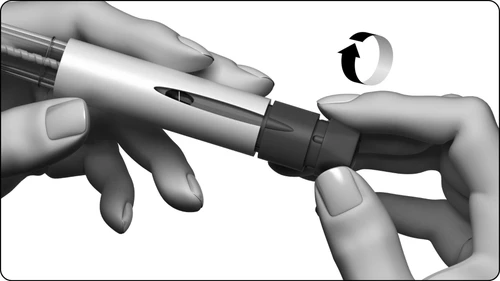
- The dose display must show "250", as shown in the figure below.
Global Version ID: 78691_1822858_4521304
5. How to inject the dose
5.1 Select the injection site within the area indicated by your doctor or nurse.
5.2 Clean the injection site with a cotton swab soaked in alcohol.
5.3 Double-check that the number shown on the dose dial is “250”. If it is not, you must adjust it (see section “4. How to set the dose to 250”).
5.4 Inject the dose as instructed by your doctor or nurse.
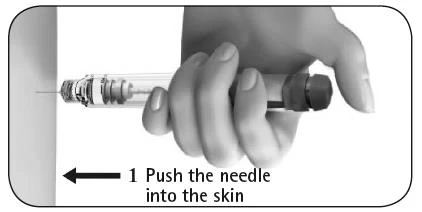
- Slowly push the entire needle into the skin (1).
- Press the dose knob completely in and keep it pressed to complete the injection.
Global Version ID: 78691_1822858_4521304
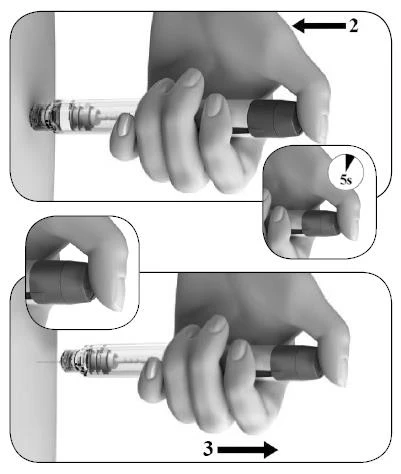
Keep the dose knob pressed for at least 5 seconds
to ensure the full dose is delivered (2).
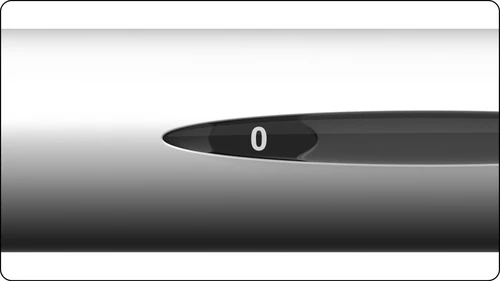
- The number in the dose confirmation window will return to “0”. This indicates that the full dose has been administered.
- After at least 5 seconds, while keeping the dose knob fully pressed, remove the needle from the skin (3).
- Release the dose knob.
6. After Injection
6.1 Ensure the dose dial displays "0"
- This confirms that the full dose has been administered. Do not attempt a second injection.
- If the dose dial does not indicate 0, contact your doctor or pharmacist.
Global Version ID: 78691_1822858_4521304
6.2 Remove the needle after injection
- Hold the pre-filled pen firmly by the reservoir holder.
- Carefully cover the needle with the outer needle cap.
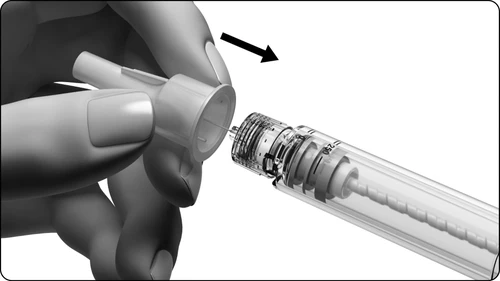
- Then grasp the outer needle cap and unscrew the needle.
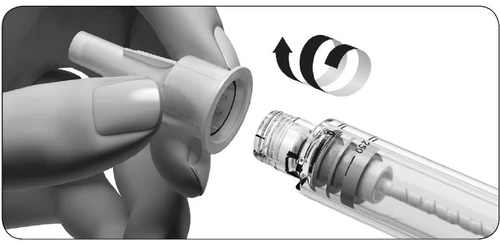
- Be careful not to prick yourself with the needle.
- Now replace the pen cap onto the pen.
6.3 Disposal
- Use the needle and pen only once.
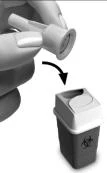
- After completing the injection, dispose of the used needle safely.
- Discard the pen. It is preferable to return it to its original packaging.
- When the pen is empty, ask your pharmacist how to dispose of it properly.
Global Version ID: 78691_1822858_4521304
Warning: Do not dispose of any medicine via wastewater or household waste.
These instructions for use were last updated on:
Global Version ID: 78691_1822858_4521304