Ovamex
Italy
Table of Contents
- Package leaflet: Information for the user
- Ovamex 0.25 mg/0.5 ml solution for injection in pre-filled syringe
- 1. What Ovamex is and what it is used for
- 2. What you need to know before using Ovamex
- 3. How to use Ovamex
- 4. Possible side effects
- 5. How to store Ovamex
- 6. Package contents and other information
Package leaflet: Information for the user
Ovamex 0.25 mg/0.5 ml solution for injection in pre-filled syringe
ganirelix
Generic medicine
Please read all of this leaflet carefully before you start using this medicine because it contains important information for you.
- Keep this leaflet. You may need to read it again.
- If you have any questions, ask your doctor, pharmacist, or nurse.
- This medicine has been prescribed for you only. Do not give it to other people, even if they have the same symptoms as yours, because it may be harmful.
- If you experience any side effect, including those not listed in this leaflet, tell your doctor, pharmacist, or nurse. See section 4.
Contents of this leaflet:
- What Ovamex is and what it is used for
- What you need to know before using Ovamex
- How to use Ovamex
- Possible side effects
- How to store Ovamex
- Contents of the pack and other information
1. What Ovamex is and what it is used for
Ovamex contains the active substance ganirelix and belongs to a group of medicines called
"gonadotropin-releasing hormone antagonists" which counteract the actions of the natural
gonadotropin-releasing hormone (GnRH). GnRH regulates the release of gonadotropins (luteinizing
hormone (LH) and follicle-stimulating hormone (FSH)). Gonadotropins play an important role in
human fertility and reproduction. In women, FSH is necessary for the growth and development of
follicles in the ovaries. Follicles are small, round sacs containing egg cells. LH is required to release
mature egg cells from the follicles and ovaries (i.e., ovulation). Ovamex inhibits the action of GnRH,
resulting in suppression of the release of LH, primarily.
Ovamex is used
In women undergoing assisted reproductive technologies, including in vitro fertilization (IVF) and
other methods, ovulation may occasionally occur too early, significantly reducing the chances of
becoming pregnant. Ovamex is used to prevent the premature release of LH, which could otherwise
trigger premature release of egg cells.
In clinical studies, ganirelix has been used in combination with recombinant follicle-stimulating
hormone (FSH) or corifollitropin alfa, a long-acting follicle-stimulating agent.
2. What you need to know before using Ovamex
Do not use Ovamex
- if you are allergic to ganirelix or to any of the other ingredients of this medicine (listed in section 6);
- if you are allergic to gonadotropin-releasing hormone (GnRH) or to a GnRH analogue;
- if you have moderate or severe kidney or liver disease;
- if you are pregnant or breastfeeding.
Warnings and precautions
Talk to your doctor, pharmacist, or nurse before using Ovamex:
- if you currently have an allergic condition, inform your doctor. Depending on the severity, your doctor will decide whether additional monitoring during treatment is necessary. Cases of allergic reactions have been reported, even after the first dose.
- Allergic reactions, both generalized and local, have been reported, including urticaria, swelling of the face, lips, tongue and/or throat, which may cause difficulty in breathing and/or swallowing (angioedema and/or anaphylaxis) (see also section 4). If you experience an allergic reaction, stop using Ovamex immediately and consult a doctor without delay.
- Ovarian hyperstimulation syndrome (OHSS) may occur during or following hormonal stimulation of the ovaries. This syndrome is associated with gonadotropin stimulation procedures. Please read the package leaflet of the gonadotropin-containing medicine prescribed to you.
- The incidence of congenital malformations (birth defects) following assisted reproductive techniques may be slightly higher than after spontaneous conception. This slightly increased incidence is thought to be related to patient characteristics associated with fertility treatment (e.g. maternal age, sperm characteristics) and the higher rate of multiple pregnancies (pregnancy with more than one baby) following assisted reproductive techniques. The incidence of congenital malformations following assisted reproductive techniques using Ovamex is not different from that observed with other GnRH analogues used in assisted reproductive techniques.
- There is a slightly increased risk of ectopic pregnancy (pregnancy outside the uterus) in women with damage to the Fallopian tubes.
- The efficacy and safety of Ovamex have not been established in women weighing less than 50 kg or more than 90 kg. Please consult your doctor for further information.
Children and adolescents
Ovamex should not be used in children or adolescents.
Other medicines and Ovamex
Inform your doctor or pharmacist if you are taking, have recently taken, or might take any other medicines.
Pregnancy, breastfeeding and fertility
If you are pregnant, suspect you may be pregnant, are planning to become pregnant, or are breastfeeding, consult your doctor or pharmacist before using this medicine.
Ovamex is intended for use during controlled ovarian stimulation in assisted reproductive techniques (ART).
Do not use Ovamex during pregnancy or breastfeeding.
Driving and using machines
No studies on the ability to drive vehicles or use machinery have been conducted.
Ovamex contains sodium
This medicine contains less than 1 mmol (23 mg) of sodium per injection, i.e. essentially ‘sodium-free’.
3. How to use Ovamex
Ovamex is used as part of treatment for assisted reproductive technologies (ART),
including in vitro fertilization (IVF).
You will need to administer the injections yourself; therefore, your doctor will explain what you need to do.
Use this medicine exactly as directed by your doctor or pharmacist. If you have any doubts, consult your doctor or pharmacist.
Phase 1
Ovarian stimulation with follicle-stimulating hormone (FSH) or corifollitropin may begin on day 2 or 3 of the cycle.
Phase 2
The contents of the Ovamex syringe (0.25 mg) must be injected just under the skin (subcutaneously) once daily, starting on day 5 or 6 of stimulation. Based on your ovarian response, your doctor may decide to start on a different day.
Ovamex and FSH should be administered at approximately the same time. However, the preparations must not be mixed, and the injections must be given at different sites.
Daily treatment with Ovamex should continue until a sufficient number of follicles of adequate size are present.
Phase 3
Final maturation of the oocytes within the follicles can be induced by administration of human chorionic gonadotropin (hCG). The interval between two Ovamex injections, and between the last Ovamex injection and the hCG injection, must not exceed 30 hours; otherwise, premature ovulation (i.e., release of oocytes) may occur. Therefore, if Ovamex was administered in the morning, you must administer Ovamex on the day you receive hCG treatment for ovulation induction. If Ovamex was administered in the afternoon, the last Ovamex injection must be given the afternoon before the day of ovulation induction.
Instructions for use
Injection site
Ovamex is supplied in pre-filled syringes containing a single dose. The contents should be injected slowly just under the skin, preferably in the thigh. Check the solution before use. Do not use if the solution contains particles or is not clear. You may notice air bubbles in the pre-filled syringe. This is expected and removal of the air bubbles is not necessary. If you or your partner will be administering the injections, follow the instructions below carefully. Do not mix Ovamex with any other medicine.
Preparing the injection site
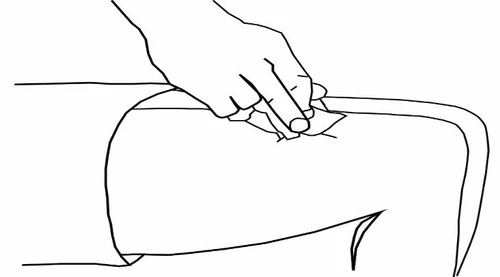
Wash your hands thoroughly with soap and water. Clean the injection site with a disinfectant (e.g., alcohol) to remove bacteria from the surface. Wipe an area of approximately 5 centimeters (two inches) around the point where the needle will enter and allow the area to dry for at least one minute before proceeding.
Inserting the needle
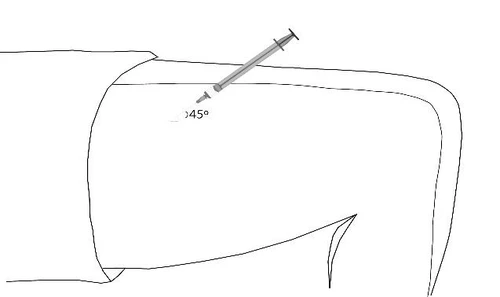
Remove the cap from the needle. Pinch a large area of skin between your thumb and index finger. Insert the needle at the base of the pinched skin between the two fingers, at a 45° angle to the skin surface. The injection site should be changed with each administration.
Checking correct needle placement
Gently pull back on the syringe plunger to check whether the needle is correctly positioned. The presence of blood in the syringe indicates that the needle has entered a blood vessel. If this occurs, do not inject Ovamex. Remove the syringe, cover the injection site with a disinfectant-soaked swab, and apply pressure; bleeding will stop within one or two minutes. Do not reuse the syringe; dispose of it properly. Start again with a new syringe.
Injecting the solution
Once the needle is correctly positioned, push the plunger slowly and steadily, so that the solution is properly injected and the skin tissue is not damaged.
Removing the syringe
Remove the needle quickly and apply pressure to the injection site using a disinfectant-soaked swab.
Use each pre-filled syringe only once.
If you use more Ovamex than you should
Contact your doctor.
If you forget to use Ovamex
If you think you have missed a dose, administer the injection as soon as possible.
Do not use a double dose to make up for a forgotten dose.
If more than 6 hours have passed since the usual injection time (so that the interval between two injections exceeds 30 hours), administer the injection as soon as possible and consult your doctor for further advice.
If you stop using Ovamex
Do not stop treatment with Ovamex unless advised by your doctor, as this may affect the outcome of the treatment.
If you have any questions about the use of this medicine, consult your doctor, pharmacist, or nurse.
4. Possible side effects
Like all medicines, this medicine can cause side effects, although not everybody gets them.
Very common (may affect more than 1 in 10 women)
- Local skin reactions at the injection site (mainly redness, with or without swelling). Local reactions usually disappear within 4 hours after administration.
Uncommon (may affect up to 1 in 100 women)
- Headache
- Nausea
- Malaise (general feeling of being unwell).
Very rare (may affect up to 1 in 10,000 women)
- Allergic reactions have been observed, even after the first dose:
- Skin rash
- Facial swelling
- Breathing difficulties (dyspnoea)
- Swelling of the face, lips, tongue and/or throat, which may cause difficulty in breathing and/or swallowing (angioedema and/or anaphylaxis)
- Urticaria.
In addition, side effects related to controlled ovarian hyperstimulation treatment have also been reported, such as:
- Abdominal pain
- Ovarian hyperstimulation syndrome (OHSS). (OHSS occurs when your ovaries over-respond to the fertility medicines you are taking)
- Ectopic pregnancy (when the embryo develops outside the uterus)
- Spontaneous abortion (see the package leaflet of the FSH-containing preparation you are being treated with).
In one subject, worsening of a pre-existing skin rash (eczema) has been reported after the first dose of ganirelix.
Reporting of side effects
If you experience any side effects, including those not listed in this leaflet, please inform your doctor, pharmacist or nurse. You can also report side effects directly via the national reporting system at https://www.aifa.gov.it/content/segnalazioni-reazioni-avverse. By reporting side effects, you can help provide more information on the safety of this medicine.
5. How to store Ovamex
Keep this medicine out of the sight and reach of children.
Do not use this medicine after the expiry date stated on the carton and label, following
"Exp.". The expiry date refers to the last day of that month.
This medicine does not require any special storage conditions.
Check the syringe before use. Only use syringes containing clear solutions, free from
particles, and with intact packaging.
Do not dispose of medicines via wastewater or household waste. Ask your pharmacist how to
dispose of medicines no longer required. This will help protect the environment.
6. Package contents and other information
What Ovamex contains
- The active substance is ganirelix. Each pre-filled syringe contains 0.25 mg of ganirelix (as acetate) in 0.5 ml of aqueous solution.
- The other components are glacial acetic acid, mannitol, water for injections. The pH (measure of acidity) may be adjusted with sodium hydroxide and glacial acetic acid.
Description of the appearance of Ovamex and contents of the pack
Ovamex is a clear, colourless, aqueous injectable solution. The solution is ready for use and intended for subcutaneous administration.
Ovamex is available in packs of 1 or 5 pre-filled syringes with injection needles (27 G).
Not all pack sizes may be marketed.
Marketing Authorization Holder
Theramex Ireland Limited
3 Floor, Kilmore House,
Park Lane, Spencer Dock,
Dublin 1
D01 YE64
Ireland
Manufacturer
GP-PHARM, S.A.
Polígono Industrial Els Vinyets-Els Fogars, Sector 2,
Carretera Comarcal C-244, Km 22,
08777 Sant Quintí de Mediona, Spain
This medicinal product is authorised in the European Economic Area countries under the following names:
Portugal: Ovamex
Belgium: Ovamex
Poland: Ovamex
Greece: Ovamex 0.25 mg/0.5 mL Ενέσιμο διάλυμα σε προγεμισμένη σύριγγα
Czech Republic: Ovamex
Italy: Ovamex