Orvatez
Italy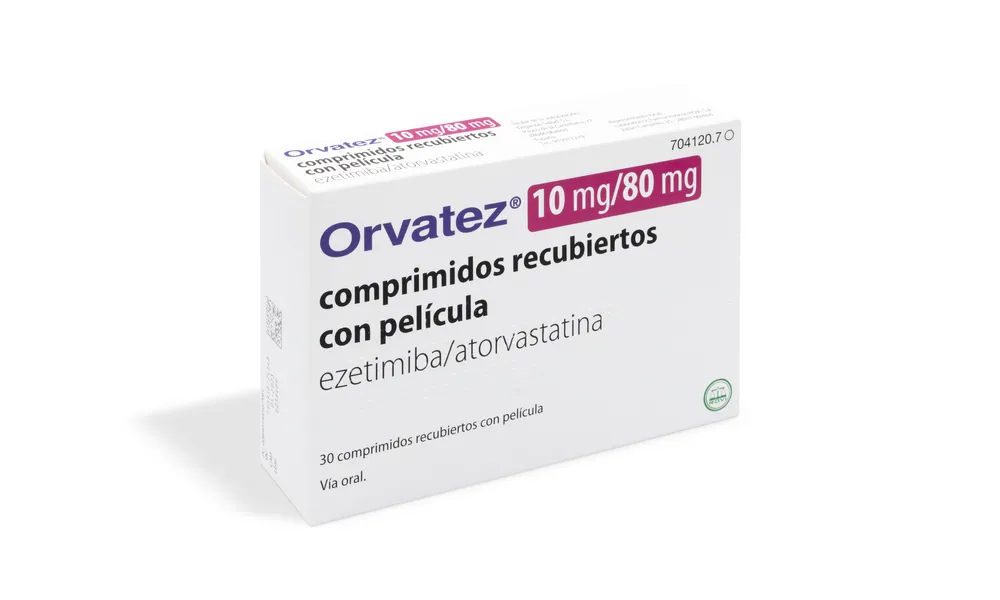
Table of Contents
- Package leaflet: Information for the user
- ORVATEZ 10 mg/10 mg film-coated tablets, 10 mg/20 mg film-coated tablets, 10 mg/40 mg film-coated tablets, 10 mg/80 mg film-coated tablets
- 1. What ORVATEZ is and what it is used for
- 2. What you need to know before taking ORVATEZ
- 3. How to take ORVATEZ
- 4. Possible side effects
- 5. How to store ORVATEZ
- 6. Package Contents and Other Information
PACKAGE LEAFLET
Package leaflet: Information for the user
ORVATEZ 10 mg/10 mg film-coated tablets, 10 mg/20 mg film-coated tablets, 10 mg/40 mg film-coated tablets, 10 mg/80 mg film-coated tablets
ezetimibe and atorvastatin
Please read this leaflet carefully before taking this medicine because it contains important information for you.
- Keep this leaflet. You may need to read it again.
- If you have any questions, ask your doctor or pharmacist.
- This medicine has been prescribed for you only. Do not give it to other people, even if they have the same symptoms as yours, because it may be harmful.
- If you experience any adverse reaction, including those not listed in this leaflet, contact your doctor or pharmacist. See section 4.
Contents of this leaflet:
- What ORVATEZ is and what it is used for
- What you need to know before taking ORVATEZ
- How to take ORVATEZ
- Possible side effects
- How to store ORVATEZ
- Contents of the pack and other information
1. What ORVATEZ is and what it is used for
ORVATEZ is a medicine used to lower elevated cholesterol levels. ORVATEZ contains ezetimibe and atorvastatina.
ORVATEZ is used in adults to reduce blood levels of total cholesterol, "bad" cholesterol (LDL cholesterol), and fatty substances called triglycerides. In addition, ORVATEZ increases levels of "good" cholesterol (HDL cholesterol).
ORVATEZ works in two ways to lower cholesterol. It reduces cholesterol absorbed through the gastrointestinal tract, as well as cholesterol naturally produced by the body.
Cholesterol is one of several fatty substances found in the bloodstream. Total cholesterol is made up mainly of LDL cholesterol and HDL cholesterol.
LDL cholesterol is often called "bad" cholesterol because it can accumulate in the walls of arteries, forming plaques. Over time, this plaque buildup can lead to narrowing of the arteries. This narrowing can slow down or block blood flow to vital organs such as the heart and brain. This blockage of blood flow can cause a heart attack or stroke.
HDL cholesterol is often called "good" cholesterol because it helps prevent "bad" cholesterol from building up in the arteries and provides protection against heart disease.
Triglycerides are another form of fat present in the blood that can increase the risk of heart disease.
ORVATEZ is used to treat patients in whom diet alone is not sufficient to control cholesterol levels. While taking this medicine, you must still follow a cholesterol-lowering diet.
ORVATEZ is used as an add-on therapy to diet to lower cholesterol if you have:
- elevated cholesterol levels in the blood (primary hypercholesterolemia [heterozygous familial and non-familial]) or elevated levels of fats in the blood (mixed hyperlipidemia)
- that are not adequately controlled with a statin alone;
- for which you have been treated with a statin and ezetimibe as separate tablets.
- an inherited disease (homozygous familial hypercholesterolemia) that increases your blood cholesterol levels. You may also be receiving other treatments.
- heart disease. ORVATEZ reduces the risk of heart attack, stroke, surgery to improve blood flow to the heart, or hospitalization for chest pain.
ORVATEZ does not help with weight loss.
2. What you need to know before taking ORVATEZ
Do not take ORVATEZ if
- you are allergic to ezetimibe, atorvastatin, or any of the other ingredients of this medicine (listed in section 6),
- you have or have ever had liver disease,
- you have had unexplained abnormal blood tests assessing liver function,
- you are a woman of childbearing potential and are not using a reliable method of contraception,
- you are pregnant, trying to become pregnant, or breastfeeding,
- you are taking the combination glecaprevir/pibrentasvir for the treatment of hepatitis C.
Warnings and precautions
Talk to your doctor or pharmacist before taking ORVATEZ if
- you have previously had a stroke with cerebral haemorrhage or if there are small accumulations of fluid in the brain due to previous strokes,
- you have kidney problems,
- you have an underactive thyroid gland (hypothyroidism),
- you have experienced repeated or unexplained episodes of muscle discomfort or pain, or have a personal or family history of muscle disorders,
- you have previously had muscle problems during treatment with other lipid-lowering medicines (e.g. other "statin" or "fibrate" medicines),
- you regularly consume large amounts of alcohol,
- you have a history of liver disease,
- you are over 70 years old,
- your doctor has told you that you have an intolerance to certain sugars; contact your doctor before taking this medicine,
- you are taking or have taken within the last 7 days a medicine called fusidic acid (a medicine for bacterial infection) taken orally or by injection. The combination of fusidic acid and ORVATEZ can lead to serious muscle problems (rhabdomyolysis),
- you have or have had myasthenia (a disease characterised by generalised muscle weakness, which in some cases may include muscles used for breathing) or ocular myasthenia (a disease causing weakness of the eye muscles), as statins may sometimes worsen myasthenia or trigger its onset (see section 4).
Contact your doctor immediately if you experience unexplained muscle pain, tenderness or weakness
while taking ORVATEZ. This is because, although rarely, muscle problems can be serious,
including muscle breakdown leading to kidney damage. It is known that atorvastatin can cause muscle problems, and cases of
muscle problems have also been reported with ezetimibe.
Additionally, inform your doctor or pharmacist if you have persistent muscle weakness. Further tests and
medicines may be needed to diagnose and treat this condition.
Before taking ORVATEZ, check with your doctor or pharmacist:
- if you have severe respiratory insufficiency.
If any of these conditions apply to you (or if you are unsure), consult your doctor or pharmacist before
taking ORVATEZ, as your doctor may need to request a blood test before and possibly during treatment with ORVATEZ to assess the risk of muscle-related side effects. It is known
that the risk of developing muscle-related side effects, such as rhabdomyolysis, increases when certain medicines are taken concomitantly (see section 2 “Other medicines and ORVATEZ”).
During treatment with this medicine, your doctor will monitor you carefully if you have diabetes or are at risk of developing diabetes. You are at risk of developing diabetes if you have high levels of sugar and fats in the
blood, are overweight, or have high blood pressure.
Inform your doctor about all your medical conditions, including allergies.
The use of ORVATEZ together with fibrates (medicines used to lower cholesterol) should be avoided, as the combination has not been studied.
Children
The use of ORVATEZ is not recommended in children and adolescents.
Other medicines and ORVATEZ
Tell your doctor or pharmacist if you are taking, have recently taken, or might take any other medicines, including those not requiring a prescription.
Some medicines may alter the effect of ORVATEZ or their effect may be altered by ORVATEZ (see section 3). This type of interaction could reduce the effectiveness of one or both medicines. Alternatively, it could increase the risk of side effects or their severity, including the serious condition of muscle breakdown known as “rhabdomyolysis” described in section 4:
- ciclosporin (a medicine often used in organ transplant patients),
- erythromycin, clarithromycin, telithromycin, fusidic acid**, rifampicin (medicines used to treat bacterial infections),
- ketoconazole, itraconazole, voriconazole, fluconazole, posaconazole (medicines used to treat fungal infections),
- gemfibrozil, other fibrates, nicotinic acid, derivatives, colestipol, cholestyramine (medicines used to regulate lipid levels),
- certain calcium antagonists used to treat angina or hypertension, e.g. amlodipine and diltiazem,
- digoxin, verapamil, amiodarone (medicines used to regulate heart rhythm),
- medicines used to treat HIV, e.g. ritonavir, lopinavir, atazanavir, indinavir, darunavir, the combination tipranavir/ritonavir, etc. (medicines for the treatment of AIDS),
- certain medicines used to treat hepatitis C, e.g. telaprevir, boceprevir and the combination elbasvir/grazoprevir,
- daptomycin (a medicine used to treat complicated skin and soft tissue infections and bacteraemia).
**If you need to take oral fusidic acid to treat a bacterial infection, you must
temporarily stop taking this medicine. Your doctor will tell you when it is safe
to restart treatment with ORVATEZ. Taking ORVATEZ with fusidic acid can
rarely lead to muscle weakness, tenderness or pain (rhabdomyolysis). See further
information on rhabdomyolysis in section 4.
- other medicines known to interact with ORVATEZ,
- oral contraceptives (medicines to prevent pregnancy),
- stiripentol (an anticonvulsant medicine used to treat epilepsy),
- cimetidine (a medicine used to treat heartburn and peptic ulcers),
- phenazone (a painkiller),
- antacids (medicines for digestive problems containing aluminium or magnesium),
- warfarin, phenprocoumon, acenocoumarol or fluindione (medicines to prevent blood clots),
- colchicine (used to treat gout),
- St John’s wort (a herbal medicine used to treat depression).
ORVATEZ with food and alcohol
For instructions on how to take ORVATEZ, see section 3. Pay attention to the following:
Grapefruit juice
Do not drink more than one or two small glasses of grapefruit juice per day, as large quantities of grapefruit juice may alter the effects of ORVATEZ.
Alcohol
Avoid drinking excessive amounts of alcohol during treatment with this medicine. For further information, consult section 2 “Warnings and precautions”.
Pregnancy and breastfeeding
Do not take ORVATEZ if you are pregnant, planning to become pregnant, or suspect you may be pregnant. Do not take ORVATEZ if you are a woman of childbearing potential unless you are using an effective method of contraception. If you become pregnant while taking ORVATEZ, stop treatment immediately and contact your doctor.
Do not take ORVATEZ if you are breastfeeding.
The safety of ORVATEZ during pregnancy and breastfeeding has not been established.
Ask your doctor or pharmacist for advice before taking this medicine.
Driving and using machines
ORVATEZ is not expected to affect your ability to drive or use machines. However, you should be aware that some people may experience dizziness after taking ORVATEZ.
ORVATEZ contains lactose
ORVATEZ tablets contain a sugar called lactose. If your doctor has diagnosed you with an intolerance to certain sugars, contact your doctor before taking this medicine.
ORVATEZ contains sodium
This medicine contains less than 1 mmol (23 mg) of sodium per tablet, i.e. essentially “sodium-free”.
3. How to take ORVATEZ
Take this medicine exactly as your doctor has instructed you. Your doctor will determine the appropriate tablet dosage for you, based on your ongoing treatment and individual risk profile. If you have any doubts, consult your doctor or pharmacist.
- Before starting treatment with ORVATEZ, you must already have begun a cholesterol-lowering diet.
- During treatment with ORVATEZ, you must continue to follow this cholesterol-lowering diet.
What dose to take
The recommended dose is one ORVATEZ tablet taken by mouth once daily.
When to take the dose
Take ORVATEZ at any time of day. You may take it with or without food.
If your doctor has prescribed ORVATEZ in combination with colestyramine or another bile acid sequestrant (medicines used to lower cholesterol levels), you must take ORVATEZ at least 2 hours before or 4 hours after taking the bile acid sequestrant.
If you take more ORVATEZ than you should
Contact your doctor or pharmacist.
If you forget to take ORVATEZ
Do not take a double dose to make up for the missed dose; take only your usual dose of ORVATEZ at the next scheduled time.
If you have any questions about how to use this medicine, ask your doctor or pharmacist.
4. Possible side effects
Like all medicines, ORVATEZ can cause side effects, although not everyone gets them.
If you notice any of the serious side effects or symptoms listed below,
stop taking the tablets immediately and contact your doctor or go to the nearest hospital emergency department.
- severe allergic reaction causing swelling of the face, tongue and throat, which may cause severe breathing difficulties
- severe illness with extensive skin peeling and swelling, blistering of the skin, mouth, eyes, genitals, and fever; skin rash with pink-red pustules, particularly on the palms of the hands or soles of the feet, which may develop into blisters
- muscle weakness, tenderness, pain or rupture, or red-brown discoloration of the urine, especially if you also feel unwell and have a high fever – this may be due to unusual muscle breakdown which can be life-threatening and may lead to kidney problems
- lupus-like syndrome (characterized by skin rash, joint problems and effects on blood cells)
If you experience unexpected or unusual bleeding or bruising, consult your doctor as soon as possible, as these may be signs of liver disorder.
The following side effects are common (may affect up to 1 in 10 people):
- diarrhoea
- muscle pain
The following side effects are uncommon (may affect up to 1 in 100 people):
-
influenza
-
depression; difficulty falling asleep; sleep disturbances
-
dizziness; headache; tingling sensation
-
slow heart rate
-
hot flushes
-
shortness of breath
-
abdominal pain; bloating; constipation; indigestion; flatulence; frequent bowel movements; stomach inflammation; nausea; stomach discomfort; stomach disorders
-
acne; urticaria
-
joint pain; back pain; leg cramps; fatigue; muscle spasms or weakness; pain in arms and legs
-
unusual weakness; feeling tired or unwell; swelling, particularly in the ankles (oedema)
-
increases in certain blood test values indicating liver or muscle (CK) function abnormalities
-
weight gain
The following side effects have been reported with unknown frequency (frequency cannot be estimated from the available data):
- myasthenia gravis (a disease causing generalized muscle weakness, including in some cases the muscles used for breathing)
- ocular myasthenia (a disease causing weakness of the eye muscles)
Contact your doctor if you develop worsening weakness in the arms or legs after periods of activity, double vision or drooping eyelids, difficulty swallowing or shortness of breath.
In patients treated with ORVATEZ or with ezetimibe or atorvastatin tablets, the following additional side effects have also been reported:
- allergic reactions including swelling of the face, lips, tongue and/or throat, which may cause difficulty breathing or swallowing (a condition requiring immediate intervention)
- raised, red skin rash, sometimes accompanied by "target-like" lesions
- liver problems
- cough
- heartburn
- decreased appetite; loss of appetite
- high blood pressure
- skin rash and itching; allergic reactions including skin rashes and urticaria
- tendon injury
- gallstones or inflammation of the gallbladder (which may cause abdominal pain, nausea and vomiting)
- inflammation of the pancreas, often with severe abdominal pain
- reduction in blood cell count, which may cause bruising/bleeding (thrombocytopenia)
- nasal inflammation; nosebleeds
- neck pain; pain; chest pain; sore throat
- increased or decreased blood sugar levels (if you have diabetes, you should continue to monitor your blood sugar levels closely)
- nightmares
- numbness or tingling in fingers and toes
- reduced sensitivity to pain or touch
- altered sense of taste; dry mouth
- memory loss
- ringing in the ears and/or head; hearing loss
- vomiting
- belching
- hair loss
- increased body temperature
- urine tests positive for white blood cells
- blurred vision; visual disturbances
- gynaecomastia (enlargement of the breast in males)
Possible side effects reported with some statins:
- sexual difficulties
- depression
- breathing problems including persistent cough and/or shortness of breath or fever
- diabetes. More likely if you have high levels of sugar and fat in the blood, are overweight, or have high blood pressure. Your doctor will monitor you during treatment with this medicine.
- muscle pain, tenderness or weakness that is persistent, and particularly if you also feel unwell or have a high fever that does not resolve after stopping ORVATEZ (frequency not known).
Reporting of side effects
If you experience any side effect, including those not listed in this leaflet, talk to your doctor.
Website: https://www.aifa.gov.it/content/segnalazioni-reazioni-avverse. By reporting side effects, you can help provide more information on the safety of this medicine.
5. How to store ORVATEZ
- Keep this medicine out of the sight and reach of children.
- Do not use ORVATEZ after the expiry date which is stated on the carton after “Exp.” or on the container after “EXP”. The expiry date refers to the last day of that month.
- Store in the original packaging to protect the medicine from oxygen.
Do not dispose of any medicine via wastewater or household waste. Ask your pharmacist how to dispose of medicines no longer required. This will help protect the environment.
6. Package Contents and Other Information
What ORVATEZ Contains
The active substances are ezetimibe and atorvastatin. Each film-coated tablet contains 10 mg of ezetimibe and
10 mg, 20 mg, 40 mg, or 80 mg of atorvastatin (as atorvastatin calcium trihydrate).
The other components are: calcium carbonate; anhydrous colloidal silica; sodium croscarmellose;
hydroxypropylcellulose; lactose monohydrate; magnesium stearate; microcrystalline cellulose; polysorbate; povidone;
sodium lauryl sulfate.
The film coating contains: hypromellose, macrogol 8000, titanium dioxide (E171), talc.
Description of the Appearance of ORVATEZ and Package Contents
Film-coated tablets, capsule-shaped, biconvex, white to off-white in colour.
ORVATEZ 10 mg/10 mg tablets: "257" engraved on one side
ORVATEZ 10 mg/20 mg tablets: "333" engraved on one side
ORVATEZ 10 mg/40 mg tablets: "337" engraved on one side
ORVATEZ 10 mg/80 mg tablets: "357" engraved on one side
Pack sizes:
Aluminum/aluminum blisters under nitrogen (cavity in oPA-Al-PVC and aluminum lid) containing 10, 30, 90, and 100 film-coated tablets.
Unit dose aluminum/aluminum blisters under nitrogen (cavity in oPA-Al-PVC and aluminum lid) containing 30 x 1 and 45 x 1 film-coated tablets.
Not all pack sizes may be marketed.
Marketing Authorization Holder and Manufacturer
Marketing Authorization Holder
Organon Italia S.r.l.
Piazza Carlo Magno, 21
00162 Rome
Italy
Manufacturer
Merck Sharp & Dohme B.V.,
Waarderweg 39,
2031 BN Haarlem,
The Netherlands
Organon Heist bv
Industriepark 30
2220 Heist-op-den-Berg
Belgium
This medicinal product is authorized in the European Economic Area countries under the following names:
ORVATEZ: Germany, Greece, Italy, Portugal, Spain
TIOBLIS: Belgium, Luxembourg