Onivyde pegylated liposomal
Italy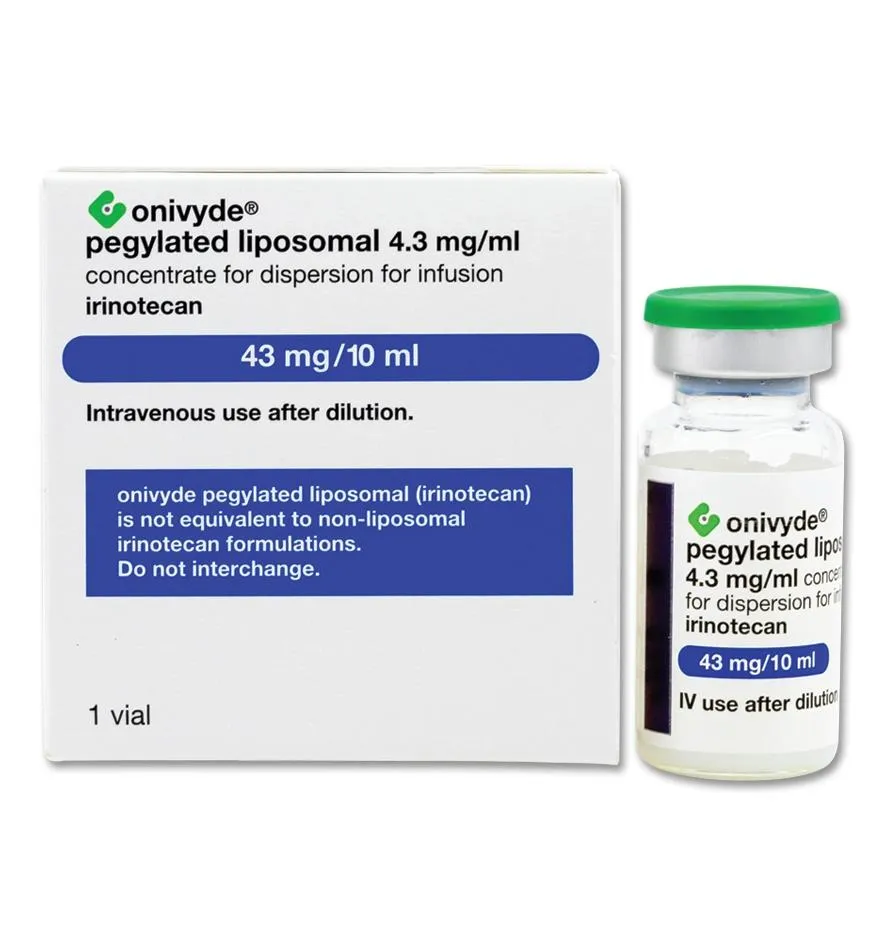
Table of Contents
- Package leaflet: Information for the user
- ONIVYDE pegylated liposomal 4.3 mg/ml concentrate for dispersion for infusion
- 1. What ONIVYDE pegylated liposomal is and what it is used for
- 2. What you need to know before using ONIVYDE pegylated liposomal
- 3. How ONIVYDE pegylated liposomal is used
- 4. Possible side effects
- 5. How to store ONIVYDE pegylated liposomal
- 6. Package contents and other information
- The following information is intended exclusively for healthcare professionals:
Package leaflet: Information for the user
ONIVYDE pegylated liposomal 4.3 mg/ml concentrate for dispersion for infusion
irinotecan
Please read all of this leaflet carefully before you start using this medicine because it contains important information for you.
- Keep this leaflet. You may need to read it again.
- If you have any questions, ask your doctor or nurse.
- If you get any side effects, talk to your doctor or nurse. This includes any possible side effects not listed in this leaflet. See section 4.
Contents of this leaflet
- What ONIVYDE pegylated liposomal is and what it is used for
- What you need to know before using ONIVYDE pegylated liposomal
- How ONIVYDE pegylated liposomal is used
- Possible side effects
- How to store ONIVYDE pegylated liposomal
- Contents of the pack and other information
1. What ONIVYDE pegylated liposomal is and what it is used for
What ONIVYDE pegylated liposomal is and how it works
ONIVYDE pegylated liposomal is an anticancer medicine that contains the active substance
irinotecan. This active substance is contained within tiny lipid (fatty) particles called liposomes.
Irinotecan belongs to a group of anticancer medicines known as 'topoisomerase inhibitors'.
It blocks an enzyme called topoisomerase I, which is involved in DNA cell division. This
prevents cancer cells from multiplying and growing, leading them to die.
It is expected that the liposomes accumulate within the tumour and slowly release the medicine over time, allowing it to act for a longer period.
What ONIVYDE pegylated liposomal is used for
ONIVYDE pegylated liposomal is used to treat adult patients with metastatic pancreatic cancer (a pancreatic tumour that has already spread to other parts of the body), whose tumour has either not been previously treated or who have been previously treated with other anticancer medicines, including one called gemcitabine.
In patients whose tumour has not been previously treated, ONIVYDE pegylated liposomal is used in combination with other anticancer medicines called oxaliplatin, 5-fluorouracil, and leucovorin.
In patients previously treated with gemcitabine, ONIVYDE pegylated liposomal is used in combination with other anticancer medicines called 5-fluorouracil and leucovorin.
If you have any questions about how ONIVYDE pegylated liposomal works or why this medicine has been prescribed for you, please consult your doctor.
2. What you need to know before using ONIVYDE pegylated liposomal
Follow carefully all instructions given by your doctor. They may differ from the general information contained in this leaflet.
Do not use ONIVYDE pegylated liposomal
- if you have a history of severe allergy to irinotecan or to any of the other components of this medicine (listed in section 6)
- if you are breastfeeding.
Warnings and precautions
Talk to your doctor or nurse before being administered ONIVYDE pegylated liposomal
- if you have ever had liver problems or jaundice
- if you have ever had lung disease or if you have previously received medications (colony-stimulating factors) to increase blood cell counts or radiotherapy
- if you are taking other medicines (see section "Other medicines and ONIVYDE pegylated liposomal")
- if you are planning to receive a vaccination, as many vaccines should not be administered during chemotherapy
- if you are on a low-sodium diet, as this medicine contains sodium.
Contact your doctor or nurse immediately during treatment with ONIVYDE pegylated liposomal
- if you experience sudden shortness of breath, flushing, headache, rash or hives (itchy skin rash with red, swollen, raised areas appearing suddenly on the skin), itching sensation, swelling around the eyes, tightness in the chest or throat during or immediately after the infusion
- if you develop fever, chills or other signs of infection
- if you develop diarrhoea with frequent loose stools that does not respond after 12–24 hours of treatment (see below)
- if you experience shortness of breath or develop cough
- if you notice signs or symptoms of a blood clot, such as sudden pain and swelling in one leg or arm, sudden onset of cough, chest pain or difficulty breathing.
What to do in case of diarrhoea
At the first occurrence of loose stools, start drinking large amounts of rehydration fluids (e.g., water, soda water, carbonated drinks, broth) to prevent your body from losing too much fluid and salts. Contact your doctor immediately to receive appropriate treatment. Your doctor may prescribe a medication containing loperamide, which you will start taking at home; this medication must not be used for more than 48 consecutive hours. If loose stools persist, contact your doctor.
Blood tests and clinical examinations
Before starting treatment with ONIVYDE pegylated liposomal, your doctor will perform blood tests (or other clinical examinations) to determine the most appropriate initial dose for you. During treatment, you will need to undergo tests (blood or other) so that your doctor can monitor your blood cells and assess your response to treatment. Your doctor may need to adjust your dose or treatment.
Children and adolescents
The use of ONIVYDE pegylated liposomal in children and adolescents under 18 years of age is not recommended.
Other medicines and ONIVYDE pegylated liposomal
Inform your doctor if you are taking, have recently taken, or might take any other medicines.
It is particularly important that you tell your doctor if you have previously received irinotecan in any form.
ONIVYDE pegylated liposomal must not be used as a substitute for other medicines containing irinotecan, as it behaves differently when encapsulated in liposomes compared to its free form.
Inform your doctor, pharmacist, or nurse if you are currently undergoing, or have recently undergone chemotherapy and/or radiotherapy, or are receiving treatment with the antifungal medicine flucytosine.
Moreover, it is particularly important that you inform your doctor if you are also taking any of the following medicines, as they reduce the level of irinotecan in your body:
- phenytoin, phenobarbital, or carbamazepine (medicines used to treat seizures and fainting)
- rifampicin and rifabutin (medicines used to treat tuberculosis)
- St. John’s wort (a herbal medicine used to treat depression and low mood)
It is particularly important that you inform your doctor if you are also taking any of the following medicines, as they increase the level of irinotecan in your body:
- ketoconazole, itraconazole, or voriconazole (medicines used to treat fungal infections)
- clarithromycin (an antibiotic used to treat bacterial infections)
- indinavir, lopinavir, nelfinavir, ritonavir, saquinavir, atazanavir (medicines used to treat HIV infection)
- regorafenib (a medicine used to treat certain types of cancer)
- telaprevir (a medicine used to treat a liver disease called hepatitis C)
- nefazodone (a medicine used to treat depression, low mood)
- gemfibrozil (a medicine used to treat high levels of fats in the blood).
ONIVYDE pegylated liposomal with food and drink
Avoid eating grapefruit and drinking grapefruit juice while taking ONIVYDE pegylated liposomal, as this may increase the level of irinotecan in your body.
Pregnancy, breastfeeding and fertility
ONIVYDE pegylated liposomal must not be given to you if you are pregnant, as it may harm the unborn baby. Inform your doctor if you are pregnant or think you might be. If you are planning to have a baby, consult your doctor. You must not breastfeed while being treated with ONIVYDE pegylated liposomal and for one month after the last dose.
Before taking this medicine, talk to your doctor about the potential risks associated with this drug and the options available to preserve your ability to have children.
During treatment with ONIVYDE pegylated liposomal and for 7 months after treatment ends, you must use an effective, suitable method of contraception to prevent pregnancy during this period. During treatment with ONIVYDE pegylated liposomal and for the following 4 months, men must use a condom.
Inform your doctor if you are breastfeeding. You must not be given ONIVYDE pegylated liposomal if you are breastfeeding, as it may be harmful to the baby.
Driving and using machines
ONIVYDE pegylated liposomal may affect your ability to drive or use machines (because ONIVYDE pegylated liposomal may cause drowsiness, dizziness, and fatigue). If you feel drowsy, dizzy, or fatigued, you should avoid driving, operating machinery, or performing any tasks requiring full attention.
ONIVYDE pegylated liposomal contains sodium
This medicine contains 33.1 mg of sodium (a key component of table salt) per vial. This corresponds to 1.65% of the maximum daily recommended dietary intake of sodium for an adult.
3. How ONIVYDE pegylated liposomal is used
ONIVYDE pegylated liposomal must be administered only by healthcare professionals trained in the administration of anticancer medicines.
Carefully follow all instructions provided by your doctor or nurse.
Your doctor will determine the doses you will receive.
ONIVYDE pegylated liposomal is given as an intravenous infusion over at least 90 minutes and must be administered as a single dose.
If your cancer has not been previously treated, after receiving ONIVYDE pegylated liposomal you will be given three other medicines: oxaliplatin, leucovorin, and 5-fluorouracil.
If your cancer has been previously treated with a medicine called gemcitabine, after ONIVYDE pegylated liposomal you will be given two other medicines: leucovorin and 5-fluorouracil.
Treatment will be repeated every two weeks.
In certain cases, it may be necessary to use lower doses or extend the intervals between administrations.
You may be given a medicine to prevent nausea and vomiting. If during previous treatments with ONIVYDE pegylated liposomal you experienced sweating, abdominal cramps, increased salivation, and, early in the cycle, frequent episodes of watery diarrhea, you may be given additional medicines before ONIVYDE pegylated liposomal to prevent or reduce these symptoms in subsequent treatment cycles.
If you have any doubts about how to use this medicine, consult your doctor or nurse.
4. Possible side effects
Like all medicines, this medicine can cause side effects, although not everybody will experience them.
It is important that you are aware of what these side effects may be.
Your doctor may also prescribe other medicines to help manage any side effects.
Contact your doctor or nurse immediately if you experience any of the following serious side effects:
-
if you develop swelling under the skin (angioedema) and/or symptoms of possible anaphylactic/anaphylactoid reactions such as sudden shortness of breath, flushing, headache, rash or
hives (itchy skin rash with red, swollen patches appearing suddenly on the skin), itching sensation, swelling around the eyes, tightness in the chest or throat during or shortly after the infusion. Severe allergic reactions can be life-threatening. In this case, the infusion may need to be stopped, and you may require treatment or monitoring for the side effects observed. -
if you develop fever, chills, and signs of infection (as immediate treatment may be required)
-
if you have persistent severe diarrhoea (frequent loose or watery stools); see section 2.
The following other side effects may occur:
Very common (may affect more than 1 in 10 people)
Laboratory test abnormalities
- low levels of white blood cells (neutropenia and leucopenia), low level of red blood cells (anaemia)
- low level of platelets (thrombocytopenia)
- low levels of salts in the body (e.g.: potassium, magnesium)
Stomach and intestine - diarrhoea (frequent loose or watery stools)
- nausea and vomiting
- stomach or intestinal area pain
- mouth pain
- irritation and swelling of the lining of the digestive tract (mucosal inflammation)
General - weight loss
- loss of appetite
- loss of body fluids (dehydration)
- fatigue and general weakness
- abnormal retention of fluid in the body causing swelling in affected tissues (oedema)
- fever
Skin - unusual hair loss
Nervous system - dizziness
- nerve damage in arms and legs causing pain, numbness, burning, or tingling (peripheral neuropathy)
- paraesthesia, a sensation of numbness or tingling
- bad taste in the mouth
Common (may affect up to 1 in 10 people)
Laboratory test abnormalities
- low level of a subtype of white blood cells called lymphocytes, which play an important role in the immune system (lymphopenia)
- low blood sugar level (hypoglycaemia)
- abnormally low levels of albumin (an important body protein) in the blood
- increased liver enzymes (alanine aminotransferase or aspartate aminotransferase or gamma-glutamyl transferase) in laboratory blood tests
- high levels in the blood of alkaline phosphatase, a protein that helps specific chemical processes occurring in many parts of the body. High levels of alkaline phosphatase in the blood may indicate a liver or bone disorder
- increased levels of bilirubin (a yellow-orange pigment, a waste product of the normal breakdown of red blood cells) in other laboratory parameters related to liver function
- increase in other laboratory parameters (increase in the international normalized ratio) related to blood coagulation system function
- increased blood creatinine, a substance indicating impaired kidney function
Stomach and intestine - inflammation of the stomach and intestine (gastroenteritis)
- intestinal inflammation (colitis), inflammation of the intestine causing diarrhoea (enterocolitis), gas, abdominal swelling
- indigestion
- constipation
- condition in which stomach acid rises into the oesophagus (gastroesophageal reflux disease)
- difficulty swallowing (dysphagia)
- haemorrhoids
- dry mouth
General - chills
- insomnia
- abnormal reaction to infusion causing symptoms such as shortness of breath, flushing, headache, tightness in the chest or throat
- rapid heartbeat
- blurred vision
- headache
Skin - itching
- dry skin
- rash
- hand-foot syndrome – redness, swelling and/or pain on the palms of the hands and/or soles of the feet
- darker areas of skin (hyperpigmentation)
Nervous system - a syndrome called cholinergic syndrome with sweating, salivation, and abdominal cramps
- toxicity causing neurological disturbances
- unpleasant and abnormal sensation to touch
- restlessness
Infections - infections, for example fungal infections in the mouth (oral candidiasis), fever with low neutrophil count in white blood cells (febrile neutropenia), infections related to intravenous administration of the product
- potentially fatal complication of the body's systemic response to an infection (septic shock)
- lung infection (pneumonia, interstitial lung disease)
- urinary tract infection
Blood vessels - low blood pressure (hypotension)
- thromboembolic events, formation of a blood clot in a blood vessel (vein or artery) or blockage of the main pulmonary artery or one of its branches (pulmonary embolism), or blockage caused by a blood clot in other areas of the circulatory system (embolism)
Lungs and respiratory tract - voice impairment, hoarseness, or excessive breathlessness
- shortness of breath
- inflammation of the nose and throat
- hiccups
- nosebleed
Kidneys - sudden onset of kidney function problems that may lead to deterioration or loss of kidney function
Muscles - muscle weakness, muscle pain, abnormal muscle contractions
Uncommon (may affect up to 1 in 100 people)
Laboratory test abnormalities
- low levels of all types of blood cells (pancytopenia)
- haemolytic anaemia, excessive destruction of red blood cells
- increased number of monocytes, elevated level of monocytes in the blood (a subtype of white blood cells)
- increased blood level of troponin I, a protein indicating possible heart damage
- decreased total proteins, reduced level of proteins in the blood related to kidney or liver function or malabsorption
- decreased creatinine clearance, a reduced level of creatinine clearance indicating impaired kidney function
- excess protein in the urine
- abnormal levels of salts in the blood
- low level of chloride in the blood (hypochloraemia)
- high levels of uric acid in the blood causing symptoms, especially painful joint inflammation (gout)
- high blood sugar level (hyperglycaemia)
- iron deficiency in the blood
Stomach and intestine - inflammation of the oesophagus (digestive tract)
- inflammation of the lining of the rectum (the final section of the large intestine)
- obstruction in the part of the intestine leaving the stomach (duodenal obstruction)
- abnormal muscle contractions of the oesophagus (the tube from the mouth to the stomach)
- loss of movement in intestinal muscles (paralytic ileus)
- lack of control over faecal passage (anal incontinence), anal fissure, difficulty in defecation (pain, straining, or obstructed defecation)
- passage of blood through the anus (haematochezia)
- rectal bleeding
- mouth pain (aphthous ulcer), abnormal and unpleasant sensation in the mouth, sensations such as numbness, prickling, tingling inside the mouth, inflammation of the corners of the mouth (or oral commissures), loss or erosion of mouth tissue (mouth ulceration)
- tongue disorders
- dental caries, gum disorders, gum diseases, increased tooth sensitivity, severe gum inflammation
- stomach disorders, inflammation of the stomach lining (gastritis)
- belching
- diverticulitis (a disease affecting the intestine)
General - allergic reaction to the active substance or excipients
- eye irritation, reduced visual sharpness, conjunctivitis, eye redness and discomfort
- vertigo, a sensation of spinning
- general malaise
- general deterioration of physical health
- redness, pain, and often swelling in an area of the body (inflammation)
- failure of one or more organs simultaneously
- abnormal perception of temperature, body temperature measured below 35°C (hypothermia)
- swelling of the lips and face
- flu-like symptoms, such as high temperature, sore throat, runny nose, cough, and chills
- inadequate nutrition
- fluid retention around the tumour
- excessive sweating
- coldness in the extremities
Skin - urticaria (red, swollen bumps)
- toxicity causing nail disorders, change in nail bed colour
- skin lesions, skin redness (erythema), dry skin, sensitive skin
- rash with pus-filled blister-like lesions (pustular rash)
- skin inflammation with blisters (bullous dermatitis)
- generalized exfoliative dermatitis, peeling or flaking of the skin
- petechiae, small blood spots under the skin, and telangiectasia, visible small linear red blood vessels
- inflammatory disease causing red, scaly patches on the skin (psoriasis)
- dryness of the vulva and vagina
Nervous system - seizures
- bleeding within the brain (cerebral haemorrhage), sudden interruption of blood flow to the brain due to blockage of blood supply to part of the brain (ischaemic stroke), temporary interruption of blood flow to the brain (transient ischaemic attack)
- inability to perceive smells (anosmia), loss of taste function of the tongue (ageusia)
- sensation of instability or dizziness (balance disorder)
- excessive drowsiness
- reduced sensitivity to touch, pain, and temperature
- limitations in cognitive function and abilities (intellectual disability) and unusual lack of energy and mental sharpness (lethargy)
- reduced ability to remember things
- transient and imminent sensation of fainting (pre-syncope) and fainting (syncope)
- feeling confused
- neurosis (a mental disorder with high levels of anxiety) and depression
Infections - systemic inflammation of the body caused by infection of the gallbladder and bile ducts (biliary sepsis)
- fever caused by infection
- bacterial infection caused by an organism called Clostridium difficile
- mucosal infection (infection of the lining of body cavities)
- boil, a bacterial infection of hair follicles
- infection of the voice box (laryngitis)
- sinusitis, inflammation of the paranasal sinuses
- tooth infection
- fungal infection of the mouth
- herpes simplex, viral infection of the mouth (such as cold sores) or genitals
- fungal infection of the vulva and vagina
- anal abscess, a swollen anal area filled with pus
Lungs and respiratory tract - reduced availability of oxygen to body tissues or increased delivery of oxygen to body tissues and organs
- cough
- inflammation of the nose
- total or partial collapse of a lung (atelectasis)
- inflammation in the lungs (pneumonia)
Pain - pain, non-cardiac chest pain, armpit pain, joint pain, back pain, bone pain, pain in the extremities, pain and inflammation in multiple joints (polyarthritis), mouth and throat pain (oropharyngeal pain)
- chest pain
- mouth pain (oral paraesthesia)
- gum pain
- painful urination
Heart and blood vessels - angina pectoris – chest, jaw, and back pain caused by physical exertion and due to blood flow problems to the heart
- heart attack
- strong heartbeat that may be rapid or irregular
- abnormal electrical activity of the heart affecting rhythm (prolonged QT ECG)
- high blood pressure (hypertension)
- inflammation of a vein (phlebitis)
- collection of blood under the skin (haematoma)
Liver - inflammation of the bile duct, usually caused by bacteria (cholangitis)
- liver inflammation in reaction to certain substances
- reduced bile flow from the liver due to blockage (cholestasis)
- hepatic cytolysis, liver inflammation with increased blood levels of transaminases, chemicals released into the blood by the liver indicating its function
Reporting of side effects
If you experience any side effect, including those not listed in this leaflet, consult your doctor or nurse.
You can also report side effects directly via the national reporting system listed in Annex V.
By reporting side effects, you can help provide more information on the safety of this medicine.
5. How to store ONIVYDE pegylated liposomal
Keep this medicine out of the sight and reach of children.
Do not use this medicine after the expiry date stated on the carton and vial after "Exp.". The expiry date refers to the last day of that month.
Store in a refrigerator (2 °C - 8 °C).
Do not freeze.
Keep the vial in the outer packaging to protect the medicine from light.
After diluting the concentrate for infusion with 5% glucose injection solution or sodium chloride 9 mg/ml (0.9%) injection solution, the dispersion should be used as soon as possible, but may be stored at room temperature (15 °C - 25 °C) for up to 6 hours.
The diluted infusion dispersion may be stored in the refrigerator (2 °C - 8 °C) for no more than 24 hours prior to use. It must be protected from light and must not be frozen.
Do not dispose of this medicine via wastewater or household waste. Ask your pharmacist how to dispose of medicines you no longer use. This will help protect the environment.
6. Package contents and other information
What ONIVYDE pegylated liposomal contains
- The active substance is irinotecan. One 10 ml vial of concentrate contains 43 mg of anhydrous irinotecan base (as succinylate salt in pegylated liposomal formulation).
- The other components are: 1,2-distearoyl-sn-glycero-3-phosphocholine (DSPC); cholesterol; N-(carbonyl-methoxypolyethylene glycol-2000)-1,2-distearoyl-sn-glycero-3-phosphoethanolamine (MPEG-2000-DSPE); octasulfate sucrose; 2-[4-(2-hydroxyethyl)piperazin-1-yl]ethanesulfonic acid (HEPES buffer); sodium chloride; and water for injections. ONIVYDE pegylated liposomal contains sodium. If you are following a low-sodium diet, see section 2.
Description of the appearance of ONIVYDE pegylated liposomal and contents of the pack
ONIVYDE pegylated liposomal is supplied as a white or slightly yellow, opaque, isotonic liposomal dispersion in a glass vial.
Each pack contains one vial with 10 ml of concentrate.
Marketing Authorization Holder
Les Laboratoires Servier
50, rue Carnot
92284 Suresnes cedex
France
Manufacturer
Ipsen Pharma Biotech
Parc d’Activités du Plateau de Signes
Chemin Départemental 402
83870 Signes
France
Les Laboratoires Servier Industrie
905 Route de Saran
45520 Gidy
France
For further information on this medicinal product, please contact the local representative of the Marketing Authorization Holder:
België/Belgique/Belgien Lietuva
S.A. Servier Benelux N.V. UAB “SERVIER PHARMA”
Tél/Tel: +32 (0)2 529 43 11 Tel: +370 (5) 2 63 86 28
България Luxembourg/Luxemburg
Сервие Медикал ЕООД S.A. Servier Benelux N.V.
Тел.: +359 2 921 57 00 Tél/Tel: +32 (0)2 529 43 11
Česká republika Magyarország
Servier s.r.o. Servier Hungaria Kft.
Tel: +420 222 118 111 Tel.: +36 1 238 7799
Danmark Malta
Servier Danmark A/S V.J. Salomone Pharma Ltd
Tlf.: +45 36 44 22 60 Tel: + 356 21 22 01 74
Deutschland Nederland
Servier Deutschland GmbH Servier Nederland Farma B.V.
Tel: +49 (0)89 57095 01 Tel: + 31 (0)71 5246700
Eesti Norge
Servier Laboratories OÜ Servier Danmark A/S
Tel:+ 372 664 5040 Tlf: +45 36 44 22 60
Eλλάδα Österreich
ΣΕΡΒΙΕ ΕΛΛΑΣ ΦΑΡΜΑΚΕΥΤΙΚΗ ΕΠΕ Servier Austria GmbH
Τηλ: + 30 210 939 1000 Tel: +43 (1) 524 39 99
España Polska
Laboratorios Servier S.L. Servier Polska Sp. z o.o.
Tel: + 34 91 748 96 30 Tel.: + 48 (0) 22 594 90 00
France Portugal
Les Laboratoires Servier Servier Portugal, Lda
Tél: + 33 (0)1 55 72 60 00 Tel: + 351 21 312 20 00
Hrvatska România
Servier Pharma, d. o. o. Servier Pharma SRL
Tel: + 385 (0)1 3016 222 Tel: + 4 021 528 52 80
Ireland Slovenija
Servier Laboratories (Ireland) Ltd. Servier Pharma d. o. o.
Tel: + 353 (0)1 663 8110 Tel: + 386 (0)1 563 48 11
Ísland Slovenská republika
Servier Laboratories Servier Slovensko spol. s r.o.
c/o Icepharma hf Tel: + 421 2 5920 41 11
Sími: + 354 540 8000
Italia Suomi/Finland
Servier Italia S.p.A. Servier Finland Oy
Tel: + 39 (06) 669081 Puh./Tel: +358 (0)9 279 80 80
Κύπρος Sverige
CA Papaellinas Ltd. Servier Sverige AB
Τηλ: + 357 22 741 741 Tel: +46 (0)8 522 508 00
Latvija
SIA Servier Latvia
Tel: + 371 67502039
More detailed information on this medicinal product is available on the website of the European Medicines Agency: http://www.ema.europa.eu.
The following information is intended exclusively for healthcare professionals:
How to prepare and administer ONIVYDE pegylated liposomal
- ONIVYDE pegylated liposomal is supplied as a sterile liposomal dispersion at a concentration of 4.3 mg/ml and must be diluted prior to administration using a needle no larger than 21 gauge. Dilute with 5% glucose injection solution or 9 mg/ml (0.9%) sodium chloride injection solution to prepare an appropriately dosed diluted solution of ONIVYDE pegylated liposomal with a final volume of 500 ml. Mix the diluted dispersion by gently inverting the container.
- In first-line treatment of metastatic pancreatic adenocarcinoma, ONIVYDE pegylated liposomal should be administered before oxaliplatin, followed by leucovorin and then 5-fluorouracil.
- In the treatment of metastatic pancreatic adenocarcinoma in patients with disease progression following gemcitabine-based therapy, ONIVYDE pegylated liposomal should be administered before leucovorin followed by 5-FU. ONIVYDE pegylated liposomal must not be administered as a bolus injection or as an undiluted dispersion.
- Aseptic techniques must be used during infusion preparation. ONIVYDE pegylated liposomal is for single use only.
- From a microbiological standpoint, the product should be used as soon as possible after dilution. The diluted infusion dispersion may be stored at room temperature (15 °C – 25 °C) for up to 6 hours or refrigerated (2 °C – 8 °C) for no more than 24 hours prior to use. It must be protected from light and must not be frozen.
- Care should be taken to avoid extravasation, and the infusion site should be monitored for signs of inflammation. In the event of extravasation, it is recommended to flush the site with 9 mg/ml (0.9%) sodium chloride injection solution and/or sterile water and to apply ice.
How to handle and dispose of ONIVYDE pegylated liposomal
- ONIVYDE pegylated liposomal is a cytotoxic medicinal product and must be handled with care. The use of gloves, goggles, and protective clothing is recommended during handling or administration of ONIVYDE pegylated liposomal. If the dispersion comes into contact with the skin, the area must be immediately and thoroughly washed with water and soap. If contact with mucous membranes occurs, they must be thoroughly rinsed with water. Due to the cytotoxic nature of the medicinal product, pregnant personnel should not handle ONIVYDE pegylated liposomal.
- Unused medicine and waste materials resulting from this medicinal product must be disposed of in accordance with local applicable regulations.