Olympus
Italy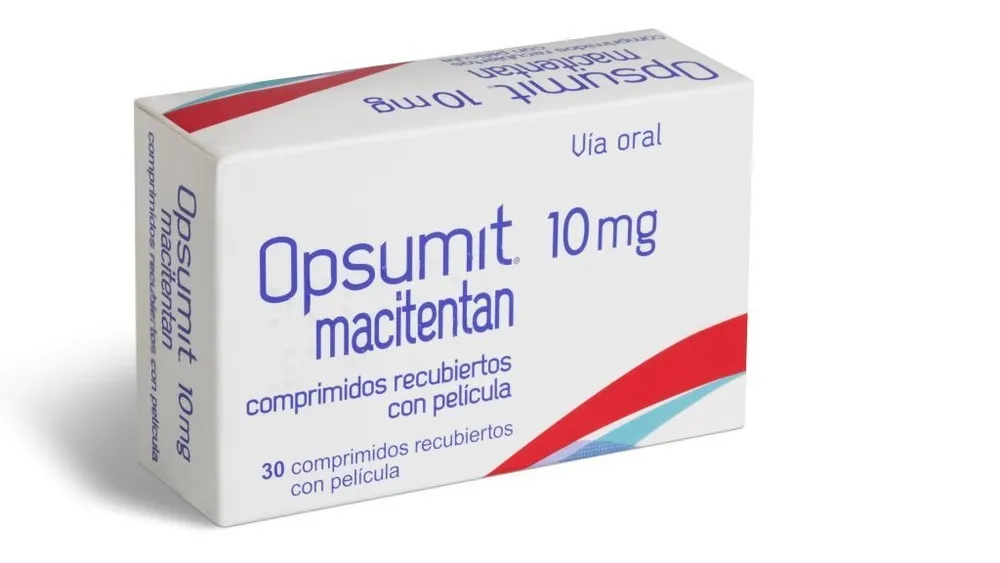
Table of Contents
- Package leaflet: Information for the patient
- Opsumit 10 mg film-coated tablets
- 1. What Opsumit is and what it is used for
- 2. What you should know before taking Opsumit
- 3. How to take Opsumit
- 4. Possible side effects
- 5. How to store Opsumit
- 6. Package contents and other information
- Patient Information Leaflet
- Opsumit 2.5 mg dispersible tablets
- 1. What Opsumit is and what it is used for
- 2. What you should know before taking or administering Opsumit
- 3. How to take or administer Opsumit
- 4. Possible side effects
- 5. How to store Opsumit
- 6. Package contents and other information
Package leaflet: Information for the patient
Opsumit 10 mg film-coated tablets
macitentan
Please read this leaflet carefully before taking this medicine because it contains
important information for you.
- Keep this leaflet. You may need to read it again.
- If you have any questions, ask your doctor or pharmacist.
- This medicine has been prescribed for you only. Do not give it to other people, even if they have the same symptoms as you, because it may be harmful.
- If you experience any side effect, including those not listed in this leaflet, talk to your doctor or pharmacist. See section 4.
Contents of this leaflet
- What Opsumit is and what it is used for
- What you need to know before taking Opsumit
- How to take Opsumit
- Possible side effects
- How to store Opsumit
- Contents of the pack and other information
1. What Opsumit is and what it is used for
Opsumit tablets contain macitentan, which belongs to a class of medicines known as endothelin receptor antagonists.
Opsumit is used in adults for the long-term treatment of pulmonary arterial hypertension (PAH):
- in adults in WHO functional class II or III
- in children under 18 years of age and weighing at least 40 kg in WHO functional class II or III.
It may be used alone or in combination with other medicines for the treatment of the disease.
Pulmonary arterial hypertension is characterized by high blood pressure in the blood vessels (the pulmonary arteries) that carry blood from the heart to the lungs. In people with pulmonary arterial hypertension, these arteries narrow, making it harder for the heart to pump blood through them. This leads to fatigue, dizziness, and difficulty breathing.
Opsumit widens the pulmonary arteries, making it easier for the heart to pump blood through them. This reduces blood pressure in the pulmonary circulation, relieves symptoms, and improves the course of the disease.
2. What you should know before taking Opsumit
Do not take Opsumit
- if you are allergic (hypersensitive) to macitentan, soy, or any of the other ingredients of Opsumit (listed in section 6);
- if you are pregnant, planning to become pregnant, or could become pregnant because you are not using an effective method of contraception. See section “Pregnancy and breastfeeding”;
- if you are breastfeeding. See section “Pregnancy and breastfeeding”;
- if you have liver disease or have very high levels of liver enzymes in your blood. Talk to your doctor, who will decide whether this medicine is suitable for you.
In any of these cases, inform your doctor.
Warnings and precautions
Talk to your doctor or pharmacist before taking Opsumit.
You will need to have blood tests as directed by your doctor
Your doctor will prescribe blood tests before starting treatment with Opsumit and during treatment to check:
- whether you have anaemia (reduced number of red blood cells)
- whether your liver is functioning properly
If you have anaemia (reduced number of red blood cells), the following symptoms may occur:
- dizziness
- tiredness/feeling unwell/weakness
- increased heart rate, palpitations
- paleness
If you notice any of these signs, talk to your doctor.
The following symptoms may indicate that your liver is not working properly:
- nausea
- vomiting
- fever
- stomach (abdominal) pain
- yellowing of the skin and whites of the eyes (jaundice)
- dark-coloured urine
- skin itching
- unusual tiredness or weakness (lethargy or fatigue)
- flu-like symptoms (joint and muscle pain with fever)
If you experience any of these symptoms, contact your doctor immediately.
If you have kidney problems, inform your doctor before using Opsumit. Macitentan may cause a reduction in blood pressure and lower haemoglobin levels in patients with kidney problems.
In patients with pulmonary veno-occlusive disease (obstruction of the pulmonary veins), treatment with medicines for pulmonary arterial hypertension, including Opsumit, may lead to pulmonary oedema. If you develop signs of pulmonary oedema while taking Opsumit, such as a sudden and significant worsening of breathlessness and reduced oxygen levels, contact your doctor immediately.
Your doctor may carry out further tests to determine the most appropriate treatment regimen for you.
Children and adolescents
Do not give this medicine to children under 2 years of age, as efficacy and safety have not been established.
Other medicines and Opsumit
Inform your doctor or pharmacist if you are taking, have recently taken, or might take any other medicines.
Opsumit may affect other medicines.
If you take Opsumit together with other medicines, including those listed below, the effect of Opsumit or the other medicines may be altered. Inform your doctor or pharmacist if you are taking any of the following medicines:
- rifampicin, clarithromycin, telithromycin, ciprofloxacin, erythromycin (antibiotics used to treat infections),
- phenytoin (a medicine used for epileptic seizures),
- carbamazepine (used for depression and epilepsy),
- St. John’s wort (a herbal preparation used for depression),
- ritonavir, saquinavir (used in HIV infection),
- nefazodone (used for depression),
- ketoconazole (except shampoo), fluconazole, itraconazole, miconazole, voriconazole (medicines used to treat fungal infections),
- amiodarone (to control heart rhythm),
- cyclosporine (used to prevent organ rejection after transplantation),
- diltiazem, verapamil (used to treat high blood pressure or certain heart conditions).
Opsumit and food
If you take piperine as a dietary supplement, it may alter how your body responds to certain medicines, including Opsumit. Inform your doctor or pharmacist if this applies to you.
Pregnancy and breastfeeding
If you are pregnant, suspect you may be pregnant, are planning to become pregnant, or are breastfeeding, consult your doctor before taking this medicine.
Opsumit may harm the unborn child conceived before, during, or shortly after treatment.
- If you could become pregnant, use an effective method of birth control (contraception) during treatment with Opsumit. Discuss this with your doctor.
- Do not take Opsumit if you are pregnant or planning to become pregnant.
- If you become pregnant or suspect you are pregnant during treatment with Opsumit or shortly after stopping Opsumit (within one month), contact your doctor immediately.
If you are a woman of childbearing potential, your doctor will ask you to take a pregnancy test before starting Opsumit and then repeat it regularly (once a month) during treatment with Opsumit.
It is not known whether Opsumit passes into breast milk. Do not breastfeed during treatment with Opsumit. Inform your doctor immediately if you are breastfeeding.
Fertility
If you are a man taking Opsumit, this medicine may reduce sperm count. Talk to your doctor if you have any questions or concerns about this.
Driving and using machines
Opsumit may cause side effects such as headache and hypotension (listed in section 4). In addition, symptoms of the disease itself may also impair your ability to drive or operate machinery.
Opsumit contains lactose, soy lecithin, and sodium
Opsumit contains a sugar called lactose. If your doctor has informed you that you are intolerant to lactose or any other sugar, contact your doctor before taking this medicine.
Opsumit contains lecithin derived from soy. If you are allergic to soy, do not use this medicine (see section 2 “Do not take Opsumit”).
This medicine contains less than 1 mmol of sodium (23 mg) per tablet, i.e., essentially “sodium-free”.
3. How to take Opsumit
Opsumit may only be prescribed by a physician experienced in the treatment of pulmonary arterial hypertension.
Always take this medicine exactly as your doctor has instructed you. If you have any doubts, consult your doctor.
Adults and children under 18 years of age weighing at least 40 kg
The recommended dose of Opsumit is one 10 mg tablet once daily. Swallow the whole tablet with a glass of water, without chewing or breaking the tablet. Opsumit can be taken either on an empty stomach or with food. It is preferable to take the tablet at the same time each day.
For children weighing less than 40 kg, Opsumit is available as 2.5 mg dispersible tablets. Your doctor will prescribe the appropriate dose.
If you take more Opsumit than you should
If you have taken more tablets than prescribed, you may experience headache, nausea, and vomiting. Seek advice from your doctor.
If you forget to take Opsumit
If you forget to take Opsumit, take a dose as soon as you remember, and then continue taking your tablets at your usual time. Do not take a double dose to make up for the missed tablet.
If you stop taking Opsumit
Opsumit is a treatment that you must continue taking to control pulmonary arterial hypertension. Do not stop treatment with Opsumit unless agreed with your doctor.
If you have any questions about how to use this medicine, ask your doctor or pharmacist.
4. Possible side effects
Like all medicines, this medicine can cause side effects, although not everybody gets them.
Serious uncommon side effects (may affect 1 in 100 people)
- Allergic reactions (swelling around the eyes, face, lips, tongue or throat, itching and/or skin rash). If you notice any of these signs, tell your doctor immediately.
Very common side effects (may affect more than 1 in 10 people)
- Anaemia (reduced number of red blood cells) or reduced haemoglobin concentration
- Headache
- Bronchitis (inflammation of the airways)
- Nasopharyngitis (inflammation of the throat and nasal passages)
- Oedema (swelling), especially in the ankles and feet
Common side effects (may affect 1 in 10 people)
- Pharyngitis (inflammation of the throat)
- Influenza
- Urinary tract infection (bladder infection)
- Hypotension (low blood pressure)
- Nasal congestion (blocked nose)
- Abnormal liver function tests
- Leucopenia (low white blood cell count)
- Thrombocytopenia (low platelet count)
- Flushing (reddening of the skin)
- Increased uterine bleeding
Side effects in children and adolescents
The side effects listed above may also occur in children. Additional side effects commonly observed in children include upper respiratory tract infection (infection of the sinuses or throat), rhinitis (itchy, runny or blocked nose), and gastroenteritis (inflammation of the stomach and intestines).
Reporting of side effects
If you experience any side effect, including those not listed in this leaflet, talk to your doctor or pharmacist. You can also report side effects directly through the national reporting system listed in Annex V. By reporting side effects, you can help provide more information on the safety of this medicine.
5. How to store Opsumit
Keep this medicine out of the sight and reach of children.
Do not use Opsumit after the expiry date stated on the carton and blister after “Scad”/“Exp”.
The expiry date refers to the last day of that month.
Do not store above 30 °C.
Do not dispose of medicines via wastewater or household waste. Ask your pharmacist how to
dispose of medicines you no longer use. This will help protect the environment.
6. Package contents and other information
What Opsumit contains
- The active substance is macitentan. Each tablet contains 10 mg of macitentan.
- The other components are monohydrate lactose (see section 2 “Opsumit contains lactose, soy lecithin and sodium”), microcrystalline cellulose (E460i), povidone, sodium starch glycolate Type A (see section 2 “Opsumit contains lactose, soy lecithin and sodium”), magnesium stearate (E470b), polysorbate 80 (E433), polyvinyl alcohol (E1203), titanium dioxide (E171), talc (E553b), soybean seed lecithin (E322) (see section 2 “Opsumit contains lactose, soy lecithin and sodium”) and xanthan gum (E415).
Description of the appearance of Opsumit and contents of the pack
The 10 mg film-coated tablets of Opsumit are white to off-white, round,
biconvex, with the inscription “10” printed on both sides.
Opsumit is available as 10 mg film-coated tablets in blister packs containing 15
or 30 tablets.
Not all pack sizes may be marketed.
Marketing Authorization Holder
Janssen-Cilag International NV
Turnhoutseweg 30
B-2340 Beerse
Belgium
Manufacturer
Janssen Pharmaceutica NV
Turnhoutseweg 30
B-2340 Beerse
Belgium
For further information about this medicinal product, please contact the local representative of the Marketing Authorization Holder:
België/Belgique/Belgien Lietuva
Janssen-Cilag NV UAB "JOHNSON & JOHNSON"
Tel /Tél: +32 14 64 94 11 Tel: +370 5 278 68 88
[email protected] [email protected]
България Luxembourg/Luxemburg
„Джонсън & Джонсън България” ЕООД Janssen-Cilag NV
Тел.: +359 2 489 94 00 Tél/Tel: +32 14 64 94 11
[email protected] [email protected]
Česká republika Magyarország
Janssen-Cilag s.r.o. Janssen-Cilag Kft.
Tel: +420 227 012 227 Tel: +36 1 884 2858
[email protected]
Danmark Malta
Janssen-Cilag A/S AM MANGION LTD
Tlf.: +45 4594 8282 Tel: +356 2397 6000
[email protected]
Deutschland Nederland
Janssen-Cilag GmbH Janssen-Cilag B.V.
Tel: 0800 086 9247 / +49 2137 955 6955 Tel: +31 76 711 1111
[email protected] [email protected]
Eesti Norge
UAB "JOHNSON & JOHNSON" Eesti filiaal Janssen-Cilag AS
Tel: +372 617 7410 Tlf: +47 24 12 65 00
[email protected] [email protected]
Ελλάδα Österreich
Janssen-Cilag Φαρμακευτική Μονοπρόσωπη Janssen-Cilag Pharma GmbH
Α.Ε.Β.Ε. Tel: +43 1 610 300
Τηλ: +30 210 80 90 000
España Polska
Janssen-Cilag, S.A. Janssen-Cilag Polska Sp. z o.o.
Tel: +34 91 722 81 00 Tel.: +48 22 237 60 00
[email protected]
France Portugal
Janssen-Cilag Janssen-Cilag Farmacêutica, Lda.
Tel: 0 800 25 50 75 / +33 1 55 00 40 03 Tel: +351 214 368 600
[email protected]
Hrvatska România
Johnson & Johnson S.E. d.o.o. Johnson & Johnson România SRL
Tel: +385 1 6610 700 Tel: +40 21 207 1800
[email protected]
Ireland Slovenija
Janssen Sciences Ireland UC Johnson & Johnson d.o.o.
Tel: 1 800 709 122 Tel: +386 1 401 18 00
[email protected] [email protected]
Ísland Slovenská republika
Janssen-Cilag AB Johnson & Johnson, s.r.o.
c/o Vistor hf. Tel: +421 232 408 400
Sími: +354 535 7000
[email protected]
Italia Suomi/Finland
Janssen-Cilag SpA Janssen-Cilag Oy
Tel: 800.688.777 / +39 02 2510 1 Puh/Tel: +358 207 531 300
[email protected] [email protected]
Κύπρος Sverige
Βαρνάβας Χατζηπαναγής Λτδ Janssen-Cilag AB
Τηλ: +357 22 207 700 Tfn: +46 8 626 50 00
[email protected]
Latvija United Kingdom (Northern Ireland)
UAB "JOHNSON & JOHNSON" filiāle Latvijā Janssen Sciences Ireland UC
Tel: +371 678 93561 Tel: +44 1 494 567 444
[email protected] [email protected]
More detailed information on this medicinal product is available on the website of the European Medicines Agency: https://www.ema.europa.eu.
Patient Information Leaflet
Opsumit 2.5 mg dispersible tablets
macitentan
Please read this leaflet carefully before taking this medicine because it contains
important information for you. This leaflet has been written for the patient ("you") and for the parent or
caregiver who will administer the medicine to the child.
- Keep this leaflet. You may need to read it again.
- If you have any questions, ask your doctor or pharmacist.
- This medicine has been prescribed for you only. Do not give it to other people, even if their symptoms are the same as yours, because it could be harmful.
- If you experience any side effects, including those not listed in this leaflet, contact your doctor or pharmacist. See section 4.
Contents of this leaflet
- What Opsumit is and what it is used for
- What you need to know before taking or administering Opsumit
- How to take or administer Opsumit
- Possible side effects
- How to store Opsumit
- Contents of the pack and other information
1. What Opsumit is and what it is used for
Opsumit tablets contain macitentan, which belongs to a class of medicines called "endothelin receptor antagonists".
Opsumit is used for the long-term treatment of pulmonary arterial hypertension (PAH) in children aged 2 to less than 18 years in WHO functional class II or III.
It may be used alone or in combination with other medicines for the treatment of the disease.
Pulmonary arterial hypertension is characterized by high blood pressure in the blood vessels (the pulmonary arteries) that carry blood from the heart to the lungs. In people with pulmonary arterial hypertension, these arteries become narrowed, making it harder for the heart to pump blood through them. This leads to feelings of fatigue, dizziness, and difficulty breathing.
Opsumit widens the pulmonary arteries, making it easier for the heart to pump blood through them. This lowers blood pressure in the pulmonary circulation, relieves symptoms, and improves the course of the disease.
2. What you should know before taking or administering Opsumit
Do not take or administer Opsumit
- if you are allergic (hypersensitive) to macitentan or to any of the other components of Opsumit (listed in section 6);
- if you are pregnant, planning a pregnancy, or if you may become pregnant because you are not using an effective method of contraception. See section “Pregnancy and breastfeeding”;
- if you are breastfeeding. See section “Pregnancy and breastfeeding”;
- if you have liver disease or if you have very high levels of liver enzymes in your blood. Talk to your doctor, who will decide whether this medicine is suitable for you.
In any of these cases, inform your doctor.
Warnings and precautions
Talk to your doctor or pharmacist before taking or administering Opsumit.
You will need to have blood tests as directed by your doctor
Your doctor will prescribe blood tests before starting treatment with Opsumit and during treatment to check:
- whether you have anaemia (reduced number of red blood cells)
- whether your liver is functioning properly
If you have anaemia (reduced number of red blood cells), the following symptoms may occur:
- dizziness
- fatigue/malaise/weakness
- increased heart rate, palpitations
- paleness
If you notice any of these signs, talk to your doctor.
The following symptoms may indicate that your liver is not functioning properly:
- nausea
- vomiting
- fever
- stomach (abdominal) pain
- yellowing of the skin and whites of the eyes (jaundice)
- dark-coloured urine
- skin itching
- unusual tiredness or weakness (lethargy or fatigue)
- flu-like symptoms (joint and muscle pain with fever)
If you experience any of these symptoms, inform your doctor immediately.
If you have kidney problems, inform your doctor before using Opsumit. Macitentan may lead to a reduction in blood pressure and lower haemoglobin levels in patients with kidney problems.
In patients with pulmonary veno-occlusive disease (obstruction of the pulmonary veins), treatment with medicines for pulmonary arterial hypertension, including Opsumit, may lead to pulmonary oedema. If you develop signs of pulmonary oedema while taking Opsumit, such as a sudden and significant worsening of breathing difficulty and reduced oxygen levels, contact your doctor immediately. Your doctor may carry out further tests to determine the most appropriate treatment regimen for you.
Children and adolescents
Do not administer this medicine to children under 2 years of age, as efficacy and safety have not been established.
Other medicines and Opsumit
Inform your doctor or pharmacist if you or the child are taking, have recently taken, or might take any other medicines.
Opsumit may affect other medicines.
If you take or administer Opsumit together with other medicines, including those listed below, the effect of Opsumit or the other medicines may be altered. Inform your doctor or pharmacist if you are taking any of the following medicines:
- rifampicin, clarithromycin, telithromycin, ciprofloxacin, erythromycin (antibiotics used to treat infections),
- phenytoin (a medicine used for epileptic seizures),
- carbamazepine (used for depression and epilepsy),
- St John’s wort (an herbal preparation used for depression),
- ritonavir, saquinavir (used in HIV infection),
- nefazodone (used in depression),
- ketoconazole (except shampoo), fluconazole, itraconazole, miconazole, voriconazole (medicines used to treat fungal infections),
- amiodarone (to control heart rhythm),
- cyclosporine (used to prevent organ rejection after transplantation),
- diltiazem, verapamil (for treating high blood pressure or certain heart conditions).
Opsumit with food
If you take piperine as a dietary supplement, it may alter how your body responds to certain medicines, including Opsumit. Inform your doctor or pharmacist if this applies to you.
Pregnancy and breastfeeding
If you are pregnant, suspect you may be pregnant, are planning a pregnancy, or are breastfeeding, consult your doctor before taking this medicine.
Opsumit may harm the unborn child conceived before, during, or shortly after treatment.
- If you may become pregnant, use an effective method of birth control (contraception) during treatment with Opsumit. Discuss this with your doctor.
- Do not take Opsumit if you are pregnant or planning a pregnancy.
- If you become pregnant or suspect you are pregnant during treatment with Opsumit or shortly after stopping Opsumit (within one month), contact your doctor immediately.
If you are a woman of childbearing potential, your doctor will require you to undergo a pregnancy test before starting Opsumit and then repeat it regularly (once a month) during treatment with Opsumit.
It is not known whether Opsumit passes into breast milk. Do not breastfeed during treatment with Opsumit. Inform your doctor immediately if you are breastfeeding.
Fertility
If you are a man taking Opsumit, this medicine may reduce sperm count. Talk to your doctor if you have any questions or concerns about this.
Driving and using machines
Opsumit may cause side effects such as headache and hypotension (listed in section 4). In addition, symptoms of the disease itself may also impair your ability to ride a bicycle, drive, or operate machinery.
Opsumit contains isomalt and sodium
Opsumit contains a sugar substitute called isomalt. If your doctor has told you that you are intolerant to lactose or to any sugars, contact your doctor before taking this medicine.
This medicine contains less than 1 mmol of sodium (23 mg) per tablet, i.e., essentially “sodium-free”.
3. How to take or administer Opsumit
Opsumit may only be prescribed by a physician experienced in the treatment of pulmonary arterial hypertension.
Take or administer this medicine exactly as directed by your doctor. If in doubt, consult your doctor.
Recommended dose
Your doctor will determine the number of Opsumit tablets based on the child's body weight.
How to take or administer the medicine
- Take or administer Opsumit dispersible tablets once daily.
- Take or administer the dispersible tablets at approximately the same time each day.
- The tablets may be taken or administered with or without food.
Take or administer Opsumit dispersible tablets as an oral suspension only
Opsumit dispersible tablets must be dispersed in liquid to form an oral suspension before administration to patients. The oral suspension can be prepared in a spoon or a small glass. Ensure the entire dose is ingested. It is necessary to wash and dry hands thoroughly before and after preparing the medicine.
How to prepare and take or administer the oral suspension using a spoon
- Prepare the oral suspension by adding the prescribed number of dispersible tablets to a small amount of drinking water at room temperature in a spoon.
- Gently stir the liquid for 1 to 3 minutes using the tip of a knife. Immediately administer the resulting cloudy white liquid to the child, or further mix it with a small amount of apple puree or yogurt to facilitate administration.
- Add a small amount of additional water, apple puree, or yogurt to the spoon and have the child ingest it to ensure the entire dose has been taken.
- If the medicine is not taken immediately, discard it and prepare a new dose.
Alternatively, the oral suspension may be prepared using orange juice, apple juice, or skimmed milk instead of drinking water.
How to prepare and take or administer the oral suspension using a small glass
- Prepare the oral suspension by adding the prescribed number of dispersible tablets to a small amount (up to 100 mL) of drinking water at room temperature in a small glass.
- Gently stir with a spoon for 1 to 2 minutes. Immediately have the child drink the resulting cloudy white liquid.
- Add a small amount of additional water to the small glass, stir again with the same spoon, and have the child drink the entire contents to ensure complete ingestion of the medicine.
- If the medicine is not taken immediately, discard it and prepare a new dose.
Special information for those administering the medicine
Those administering the medicine are advised to avoid contact with Opsumit dispersible tablet suspensions. Wash hands thoroughly before and after preparing the suspension.
If you take or administer more Opsumit than you should
If you have taken or administered more tablets than prescribed, you may experience headache, nausea, and vomiting. Consult your doctor for advice.
If you forget to take or administer Opsumit
If you forget to take or administer Opsumit, take or administer the dose as soon as you remember, then continue taking or administering the tablets at your usual time. Do not take or administer a double dose to make up for the missed tablet.
If you stop treatment with Opsumit
Opsumit is a treatment that must be continued to control pulmonary arterial hypertension. Do not stop treatment with Opsumit unless agreed upon with your doctor.
If you have any questions about the use of this medicine, consult your doctor or pharmacist.
4. Possible side effects
Like all medicines, this medicine can cause side effects, although not everybody gets them.
Uncommon serious side effects (may affect up to 1 in 100 people)
- Allergic reactions (swelling around the eyes, face, lips, tongue or throat, itching and/or rash). If you notice any of these signs, tell your doctor immediately.
Very common side effects (may affect more than 1 in 10 people)
- Anaemia (reduced number of red blood cells) or reduced haemoglobin concentration
- Headache
- Bronchitis (inflammation of the airways)
- Nasopharyngitis (inflammation of the throat and nasal passages)
- Oedema (swelling), especially in the ankles and feet
Common side effects (may affect 1 in 10 people)
- Pharyngitis (inflammation of the throat)
- Influenza
- Urinary tract infection (bladder infection)
- Hypotension (low blood pressure)
- Nasal congestion (blocked nose)
- Abnormal liver function tests
- Leucopenia (low white blood cell count)
- Thrombocytopenia (low platelet count)
- Flushing (reddening of the skin)
- Increased uterine bleeding
Side effects in children and adolescents
The side effects listed above may also occur in children. Additional side effects commonly observed in children include upper respiratory tract infection (infection of the sinuses or throat), rhinitis (itchy, runny or blocked nose), and gastroenteritis (inflammation of the stomach and intestines).
Reporting of side effects
If you experience any side effect, including those not listed in this leaflet, talk to your doctor or pharmacist. You can also report side effects directly via the national reporting system detailed in Annex V. By reporting side effects, you can help provide more information on the safety of this medicine.
5. How to store Opsumit
Keep this medicine out of the sight and reach of children.
Do not use Opsumit after the expiry date stated on the carton and blister after “Scad”/“Exp”.
The expiry date refers to the last day of that month.
Store in the original packaging to protect the medicine from moisture.
This medicine does not require any special storage temperature.
Do not dispose of medicines via wastewater or household waste. Ask your pharmacist how to dispose of medicines you no longer use. This will help protect the environment.
6. Package contents and other information
What Opsumit contains
- The active substance is macitentan. Each dispersible tablet contains 2.5 mg of macitentan.
- The other components are mannitol (E421), isomalt (E953), croscarmellose sodium (E468), magnesium stearate (E470b) (see section 2 “Opsumit contains isomalt and sodium”).
What Opsumit looks like and contents of the pack
Opsumit 2.5 mg dispersible tablets are white to almost white, round tablets,
with the imprint “2.5” on one side and “Mn” on the other side.
Opsumit is available as 2.5 mg dispersible tablets in perforated unit dose blisters (aluminium/aluminium) containing 30 x 1 dispersible tablets.
Marketing Authorisation Holder
Janssen-Cilag International NV
Turnhoutseweg 30
B-2340 Beerse
Belgium
Manufacturer
Janssen Pharmaceutica NV
Turnhoutseweg 30
B-2340 Beerse
Belgium
For further information about this medicinal product, please contact the local representative of the Marketing Authorisation Holder:
België/Belgique/Belgien Lietuva
Janssen-Cilag NV UAB "JOHNSON & JOHNSON"
Tel/Tél: +32 14 64 94 11 Tel: +370 5 278 68 88
[email protected] [email protected]
България Luxembourg/Luxemburg
„Джонсън & Джонсън България” ЕООД Janssen-Cilag NV
Тел.: +359 2 489 94 00 Tél/Tel: +32 14 64 94 11
[email protected] [email protected]
Česká republika Magyarország
Janssen-Cilag s.r.o. Janssen-Cilag Kft.
Tel: +420 227 012 227 Tel: +36 1 884 2858
[email protected]
Danmark Malta
Janssen-Cilag A/S AM MANGION LTD
Tlf.: +45 4594 8282 Tel: +356 2397 6000
[email protected]
Deutschland Nederland
Janssen-Cilag GmbH Janssen-Cilag B.V.
Tel: 0800 086 9247 / +49 2137 955 6955 Tel: +31 76 711 1111
[email protected] [email protected]
Eesti Norge
UAB "JOHNSON & JOHNSON" Eesti filiaal Janssen-Cilag AS
Tel: +372 617 7410 Tlf: +47 24 12 65 00
[email protected] [email protected]
Ελλάδα Österreich
Janssen-Cilag Φαρμακευτική Μονοπρόσωπη Janssen-Cilag Pharma GmbH
Α.Ε.Β.Ε. Tel: +43 1 610 300
Τηλ: +30 210 80 90 000
España Polska
Janssen-Cilag, S.A. Janssen-Cilag Polska Sp. z o.o.
Tel: +34 91 722 81 00 Tel.: +48 22 237 60 00
[email protected]
France Portugal
Janssen-Cilag Janssen-Cilag Farmacêutica, Lda.
Tel: 0 800 25 50 75 / +33 1 55 00 40 03 Tel: +351 214 368 600
[email protected]
Hrvatska România
Johnson & Johnson S.E. d.o.o. Johnson & Johnson România SRL
Tel: +385 1 6610 700 Tel: +40 21 207 1800
[email protected]
Ireland Slovenija
Janssen Sciences Ireland UC Johnson & Johnson d.o.o.
Tel: 1 800 709 122 Tel: +386 1 401 18 00
[email protected] [email protected]
Ísland Slovenská republika
Janssen-Cilag AB Johnson & Johnson, s.r.o.
c/o Vistor hf. Tel: +421 232 408 400
Sími: +354 535 7000
[email protected]
Italia Suomi/Finland
Janssen-Cilag SpA Janssen-Cilag Oy
Tel: 800.688.777 / +39 02 2510 1 Puh/Tel: +358 207 531 300
[email protected] [email protected]
Κύπρος Sverige
Βαρνάβας Χατζηπαναγής Λτδ Janssen-Cilag AB
Τηλ: +357 22 207 700 Tfn: +46 8 626 50 00
[email protected]
Latvija United Kingdom (Northern Ireland)
UAB "JOHNSON & JOHNSON" filiāle Latvijā Janssen Sciences Ireland UC
Tel: +371 678 93561 Tel: +44 1 494 567 444
[email protected] [email protected]
More detailed information on this medicinal product is available on the website of the European Medicines Agency: https://www.ema.europa.eu.