Oftaquix
Italy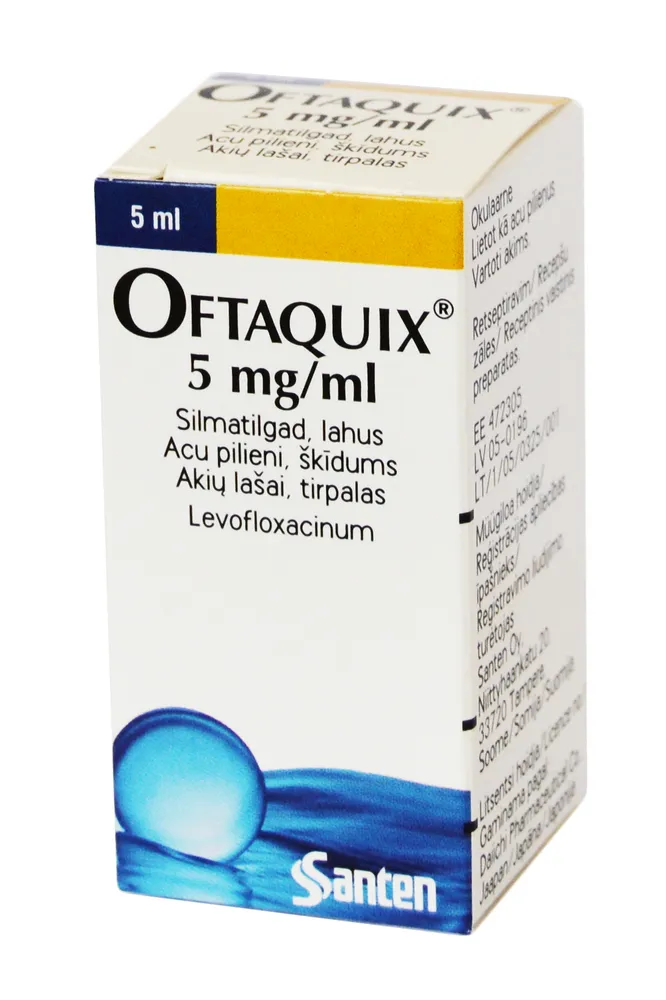
Table of Contents
- Package leaflet: Information for the user
- Oftaquix 5 mg/ml eye drops, solution
- 1. What Oftaquix is and what it is used for
- 2. What you should know before using Oftaquix
- 3. How to use Oftaquix
- 4. Possible side effects
- 5. How to store Oftaquix
- 6. Package contents and other information
- Package leaflet: Information for the user
- Oftaquix 5 mg/ml eye drops, solution, single-dose container
- 1. What Oftaquix is and what it is used for
- 2. What you should know before using Oftaquix
- 3. How to use Oftaquix
- 4. Possible side effects
- 5. How to store Oftaquix
- 6. Package contents and other information
Package leaflet: Information for the user
Oftaquix 5 mg/ml eye drops, solution
Levofloxacin
Please read this leaflet carefully before using this medicine because it contains important information for you.
- Keep this leaflet. You may need to read it again.
- If you have any questions, ask your doctor, pharmacist, or nurse.
- This medicine has been prescribed for you only. Do not give it to other people, even if they have the same symptoms as you, because it could be harmful.
- If you experience any side effects, including those not listed in this leaflet, tell your doctor, pharmacist, or nurse. See section 4.
Contents of this leaflet:
- What Oftaquix is and what it is used for
- What you need to know before using Oftaquix
- How to use Oftaquix
- Possible side effects
- How to store Oftaquix
- Contents of the pack and other information
1. What Oftaquix is and what it is used for
Levofloxacin is an antibiotic belonging to the fluoroquinolone family (also referred to simply as quinolones).
The antibiotic works by killing certain types of bacteria that can cause infections.
Levofloxacin in the form of eye drops is indicated for the treatment of bacterial infections affecting
the front surface of the eye in children aged 1 year and older, and in adults.
One type of infection affecting this part of the eye is bacterial conjunctivitis, an infection of the
outer lining of the eye (conjunctiva).
The use of Oftaquix is not recommended in children under 1 year of age.
Contact your doctor if you do not feel better or if you feel worse after 5 days.
2. What you should know before using Oftaquix
Do not use Oftaquix
- if you are allergic to levofloxacin, to other quinolones, or to any of the other ingredients of this medicine (listed in section 6).
If you have any doubts, consult your doctor or pharmacist.
Warnings and precautions
Talk to your doctor, pharmacist, or nurse before using Oftaquix
- if you experience an allergic reaction, even after a single dose, do not use this medicine any further
- if you notice worsening of eye symptoms during treatment, contact your doctor as soon as possible
- if you do not notice any improvement within the treatment period agreed with your doctor, contact your doctor as soon as possible
- in general, the use of any type of contact lenses is not recommended while an eye infection is present
- Oftaquix contains the preservative benzalkonium chloride, which may cause eye irritation.
Children and adolescents
Special warnings and precautions for use of this medicine are the same in adults, adolescents, and children aged ≥ 1 year.
Other medicines and Oftaquix
Tell your doctor or pharmacist if you are using, have recently used, or might use any other medicines.
In particular, inform your doctor or pharmacist if you are using any other type of eye drops or ophthalmic ointment before starting to use Oftaquix.
If you are using other eye drops, wait at least 15 minutes between the application of Oftaquix and any other type of eye drops.
Pregnancy, breastfeeding, and fertility
If you are pregnant, think you might be pregnant, planning to become pregnant, or breastfeeding, ask your doctor or pharmacist for advice before using this medicine.
Oftaquix eye drops should be used during pregnancy only if the potential benefit justifies the potential risk to the fetus.
Although very small amounts of levofloxacina may pass into the bloodstream and breast milk, respectively, after eye drop application, it is very unlikely that the eye drops could cause harm to the infant.
Your doctor is aware of the potential risks and will advise you whether you can use Oftaquix eye drops.
Your fertility (the ability to conceive or father a child) is not affected when using Oftaquix as directed.
Driving and using machines
Oftaquix may slightly affect the ability to drive or operate machinery.
If use of the eye drops causes blurred vision, wait until this effect has passed before driving or operating machinery.
Oftaquix contains benzalkonium chloride
It may cause irritation. Avoid contact with soft contact lenses. Remove contact lenses before application and wait at least 15 minutes before reinserting them. Discoloration of soft contact lenses has been reported.
3. How to use Oftaquix
Use this medicine exactly as directed by your doctor or pharmacist. If you have
any doubts, consult your doctor or pharmacist.
Oftaquix eye drops are for ophthalmic use and must be applied to the external surface
of the eye.
For patients over 1 year of age, the recommended dose is as follows:
DAYS 1 - 2
- Apply one or two drops into the affected eye(s) every two hours.
- Apply a maximum of 8 times per day.
DAYS 3 - 5
- Apply one or two drops into the affected eye(s).
- Apply a maximum of 4 times per day.
No dose adjustment is necessary in elderly patients.
The total duration of treatment is five days. Your doctor will advise you on how long you should
continue using the eye drops.
If you are using any other eye medication, wait at least 15 minutes between applications
of the different eye drops.
Use in children and adolescents
No dosage adjustments are required in children aged ≥ 1 year and adolescents. The use of
Oftaquix is not recommended in children under 1 year of age.
Before applying the eye drops
If possible, ask someone to help you apply the eye drops. Before applying the drops,
ask the person assisting you to read these instructions together with you.
- Wash your hands.
- Open the bottle. Take particular care to avoid the tip of the dropper bottle
touching the eye, the skin around the eyes, or fingers.
| 3) Tilt your head backward and invert the bottle above the eye. | 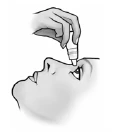 |
| 4) Pull down the lower eyelid and look upward. Gently squeeze the bottle to release one drop into the space between the lower eyelid and the eye. | 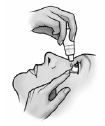 |
| 5) Close the eye and press with your finger on the inner corner of the eye for about one minute. This prevents the eye drop from draining into the tear duct. | 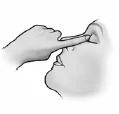 |
- Remove any residual solution remaining on the skin around the eye.
- Replace the cap and close the bottle tightly.
If you need to instill another drop or treat both eyes, repeat steps 3 to 7.
Do not inject Oftaquix eye drops inside the eyeball.
If you use more Oftaquix than you should
If you use more Oftaquix than prescribed, rinse your eye(s) with water and consult your doctor or pharmacist.
If you forget to use Oftaquix
If you forget to use the eye drops, administer the next dose as soon as you remember. Do not use a double dose to make up for the missed dose.
If you accidentally swallow Oftaquix
The amount of levofloxacin contained in the supplied bottle is too small to cause adverse effects. However, if you are concerned, consult your doctor or pharmacist, who will advise you on any necessary measures.
If you stop using Oftaquix earlier than instructed, it may delay the healing process.
If you have any doubts about the use of this medicine, consult your doctor, pharmacist, or nurse.
4. Possible side effects
Like all medicines, this medicine can cause side effects, although not everyone gets them.
An adverse reaction occurs in about 1 out of 10 people using Oftaquix.
Most of the side effects affect only the eye and do not last long. If you experience any severe or persistent side effect, stop using the eye drops and consult your doctor urgently.
Very rarely, this medicine may cause serious allergic reactions.
The following symptoms may occur even after applying a single dose of Oftaquix:
- swelling and tightness in the throat
- difficulty breathing. In rare cases, other allergic reactions may occur. Symptoms of these reactions include:
- worsening of eye redness and itching
- increased or sudden onset of swelling of the eyelids. If any of these symptoms occur, stop using Oftaquix immediately and consult a doctor without delay.
Common side effects (may affect up to 1 in 10 users):
- burning sensation in the eye
- reduced vision or mucus in the eye
Uncommon side effects (may affect up to 1 in 100 users):
- stinging or irritation of the eye
- painful eyes
- dry or inflamed eyes
- swelling or redness (bloodshot eyes) of the conjunctiva (the front membrane of the eye) or eyelids
- light sensitivity
- eye itching
- sticky eyelids
- headache
- skin rash around the eyes
- nasal congestion or runny nose.
Rare side effects (may affect up to 1 in 1,000 users):
- allergic reactions, e.g. skin rash.
Very rare side effects (may affect less than 1 in 10,000 users):
- swelling and tightness in the throat
- difficulty breathing.
Additional side effects in children and adolescents
The frequency, type, and severity of side effects in children and adolescents are expected to be the same as in adults.
Reporting of side effects
If you experience any side effect, including those not listed in this leaflet, talk to your doctor, pharmacist, or nurse. You can also report side effects directly via the national reporting system at the following address:
http://www.agenziafarmaco.gov.it/content/come-segnalare-una-sospetta-reazione-avversa .
By reporting side effects, you can help provide more information on the safety of this medicine.
5. How to store Oftaquix
Keep this medicine out of the sight and reach of children.
Do not use this medicine after the expiry date stated on the bottle label and on the carton after "EXP.". The expiry date refers to the last day of that month.
Do not use this medicine if you notice that the plastic seal around the cap and neck of the bottle is missing or damaged before starting a new bottle.
Keep the bottle tightly closed.
To prevent infections, you must discard the bottle 28 days after first opening and use a new one.
Do not dispose of any medicine via wastewater or household waste. Ask your pharmacist how to dispose of medicines you no longer use. This will help protect the environment.
6. Package contents and other information
What Oftaquix contains
- The active substance is levofloxacin. 1 ml contains 5.12 mg of levofloxacin hemihydrate, equivalent to 5 mg of levofloxacin.
- The other components are benzalkonium chloride (0.05 mg in 1 ml of eye drops, solution, preservative), sodium chloride, sodium hydroxide or hydrochloric acid, and water for injections.
Description of the appearance of Oftaquix and contents of the pack
- Oftaquix is a clear solution, ranging in colour from light yellow to pale yellow-green, free from visible precipitate.
- It is supplied in a pack containing 1 white plastic bottle with 5 ml of solution. The plastic bottle is closed with a screw cap.
Marketing Authorization Holder and Manufacturer
Santen Oy
Niittyhaankatu 20
33720 Tampere
Finland
Legal Representative:
Santen Italy S.r.l.
Via Roberto Lepetit, 8/10
20124 Milan
Italy
This medicinal product is authorized in the European Economic Area Member States under the
following trade names:
This medicinal product is authorized under the trade name Oftaquix in the following European Economic Area Member States:
Austria, Czech Republic, Denmark, Estonia, Finland, Germany, Hungary, Iceland, Italy, Latvia, Lithuania, Luxembourg, Portugal, Romania, Slovakia, Sweden, United Kingdom.
Package leaflet: Information for the user
Oftaquix 5 mg/ml eye drops, solution, single-dose container
Levofloxacin
Please read this leaflet carefully before using this medicine because it contains important information for you.
- Keep this leaflet. You may need to read it again.
- If you have any questions, ask your doctor, pharmacist, or nurse.
- This medicine has been prescribed for you. Do not give it to others, even if their symptoms are the same as yours, as it could be harmful.
- If any adverse reaction occurs, including those not listed in this leaflet, contact your doctor, pharmacist, or nurse. See section 4.
Contents of this leaflet:
- What Oftaquix is and what it is used for
- What you need to know before using Oftaquix
- How to use Oftaquix
- Possible side effects
- How to store Oftaquix
- Contents of the pack and other information
1. What Oftaquix is and what it is used for
Levofloxacin is an antibiotic belonging to the fluoroquinolone class (also referred to simply as quinolones).
The antibiotic works by killing certain types of bacteria that can cause infections.
Levofloxacin in the form of eye drops is indicated for the treatment of bacterial infections affecting the anterior surface of the eye in children aged 1 year and older and in adults.
One type of infection affecting this part of the eye is bacterial conjunctivitis, an infection of the outer lining of the eye (conjunctiva).
The use of Oftaquix is not recommended in children under 1 year of age.
If you do not feel better or feel worse after 5 days, consult your doctor.
2. What you should know before using Oftaquix
Do not use Oftaquix
- if you are allergic to levofloxacin or to other quinolones or to any of the excipients of this medicine (listed in section 6). If you have any doubt, consult your doctor or pharmacist.
Warnings and precautions
Talk to your doctor, pharmacist, or nurse before using Oftaquix
- if you experience an allergic reaction, even after a single dose, do not use this medicine anymore.
- if during treatment you notice a worsening of eye symptoms, contact your doctor as soon as possible.
- if you do not experience any improvement within the treatment period agreed with your doctor, contact your doctor as soon as possible.
- generally, wearing any type of contact lenses is not recommended while an eye infection is present.
Children and adolescents
The special warnings and precautions for use of this medicine are the same in adults, adolescents, and children aged ≥ 1 year.
Other medicines and Oftaquix
Inform your doctor or pharmacist if you are taking or have recently taken any other medicines.
In particular, inform your doctor or pharmacist if you are using any other type of eye drops or ophthalmic ointment before starting to use Oftaquix.
If you are using other eye drops, wait at least 15 minutes before applying Oftaquix and any other type of eye drops.
Pregnancy, breastfeeding and fertility
If you are pregnant, think you may be pregnant, are planning to become pregnant, or are breastfeeding, ask your doctor or pharmacist for advice before using this medicine.
Oftaquix eye drops should be used during pregnancy only if the potential benefit justifies the potential risk to the fetus.
Although very small amounts of levofloxacin may pass into the blood and breast milk, respectively, after eye drop application, it is very unlikely that the eye drops will cause harm to the infant.
Your doctor is aware of the potential risks and will advise you whether you can use Oftaquix eye drops.
Your fertility (the ability to conceive or father a child) is not compromised when applying Oftaquix as directed.
Driving and using machines
Oftaquix may slightly affect the ability to drive or use machinery.
If using the eye drops causes blurred vision, wait until this effect has passed before driving or using machinery.
3. How to use Oftaquix
Use this medicine exactly as directed by your doctor or pharmacist. If you have
any doubts, consult your doctor or pharmacist.
Oftaquix eye drops is a product for ophthalmic use and must be applied to the outer surface
of the eye.
For patients over 1 year of age, the recommended dose is as follows:
DAYS 1 - 2
- Instill one or two drops into the affected eye(s) every two hours.
- Apply the drops a maximum of 8 times per day.
DAYS 3 - 5
- Instill one or two drops into the affected eye(s).
- Apply the drops a maximum of 4 times per day. In elderly patients, no adjustment of the recommended dose is necessary.
Generally, the total duration of treatment is five days. Your doctor will advise you on how long you should continue using the eye drops.
If you are using any other eye medicines, wait at least 15 minutes between each application of the different eye drops.
Use in children and adolescents
In children aged ≥ 1 year and adolescents, no dosage adjustment is necessary. The use
of Oftaquix is not recommended in children under 1 year of age.
Before applying the eye drops
If possible, ask someone to administer the eye drops for you. Before applying the eye drops,
ask the person assisting you to read these instructions together with you.
- Wash your hands.
- Open the pouch along the dotted line.
- Detach a single-dose container from the strip.
- Place the strip back into the pouch and fold the edge of the pouch to close it.
| 5) Check that the solution is in the bottom part of the single-dose container. | 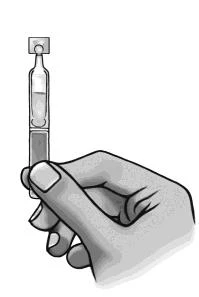 |
| 6) To open the container, twist and remove the tab. | 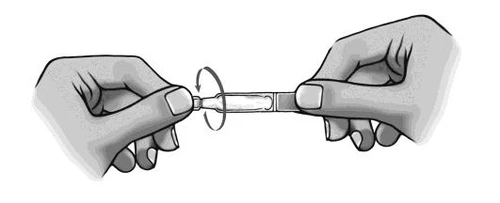 |
| 7) Sit down with your head tilted backward, or lie down in a supine position. 8) Bring the tip of the container close to the eye. | 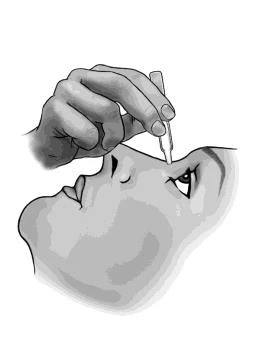 |
| 9) Pull down the lower eyelid and look upward. 10) Gently press the container and let one drop fall into the space between the lower eyelid and the eye. |
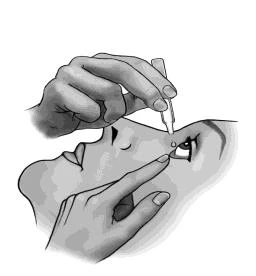
| 11) Close your eye for a moment. With your index finger, press on the inner corner of the eye for about one minute. This prevents the drop from draining through the tear duct. | 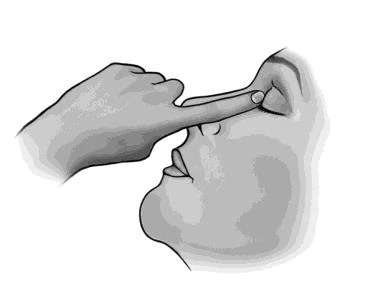 |
If you need to apply another drop, or if you are treating both eyes, repeat steps 8 to 11.
Do not inject Oftaquix eye drops into the eyeball.
For single use only. Use the eye drops immediately after first opening the single-dose container.
One single-dose container contains enough solution for both eyes.
After use, discard the container together with any remaining solution.
If you use more Oftaquix than you should
If you use more Oftaquix than you should, rinse your eye(s) with water and consult your doctor or pharmacist.
If you forget to use Oftaquix
If you forget to use the eye drops, apply the next dose as soon as you remember. Do not use a double dose to make up for the missed dose.
If you accidentally swallow Oftaquix
The amount of levofloxacin contained in the provided single-dose containers is too small to cause adverse effects. However, if you are concerned, consult your doctor or pharmacist, who will advise you on any necessary measures.
If you stop using Oftaquix before the recommended time, it may delay the healing process.
If you have any doubts about using this medicine, consult your doctor, pharmacist, or nurse.
4. Possible side effects
Like all medicines, this medicine can cause side effects, although not everybody gets them.
An adverse reaction occurs in about 1 in 10 people using Oftaquix. Most of the side effects affect only the eye and do not last long. If you experience any severe or persistent side effect, stop using the eye drops and consult your doctor urgently.
Rarely, it is possible to develop an allergic reaction to Oftaquix even after the application of a single dose. This reaction may be recognized by redness or itching of the eyes or swelling of the eyelids. In such a case, stop using Oftaquix immediately and consult your doctor without delay.
Common side effects (may affect up to 1 in 10 users)
- Burning sensation in the eye
- Reduced vision or mucus in the eye
Uncommon side effects (may affect up to 1 in 100 users)
- Stinging or irritation of the eye
- Painful eyes
- Dry or inflamed eyes
- Swelling or redness (bloodshot eyes) of the conjunctiva (the front covering of the eye)
- Light sensitivity
- Itchy eyes
- Sticky eyelids
- Headache
- Skin rash around the eyes
- Nasal congestion or rhinorrhea
Rare side effects (may affect up to 1 in 1,000 users)
- Allergic reactions such as skin rash
Very rare side effects (may affect less than 1 in 10,000 users)
- Swelling and tightness in the throat
- Breathing difficulties
Additional side effects in children and adolescents
The frequency, type, and severity of side effects in children and adolescents are expected to be the same as in adults.
Reporting of side effects
If you experience any side effect, including those not listed in this leaflet, talk to your doctor, pharmacist, or nurse. You can also report side effects directly via the national reporting system at the following website:
http://www.agenziafarmaco.gov.it/content/come-segnalare-una-sospetta-reazione-avversa .
By reporting side effects, you can help provide more information on the safety of this medicine.
5. How to store Oftaquix
Keep this medicine out of the sight and reach of children.
Do not use this medicine after the expiry date stated on the single-dose container, on the pouch, and on the carton after 'Exp'. The expiry date refers to the last day of that month.
Oftaquix containers must be stored in the original pouch to protect them from light.
You may use Oftaquix within 3 months after first opening the pouch.
After this period, dispose of any unused single-dose containers.
After first use, immediately discard the opened single-dose container together with any remaining solution.
Do not use this medicine if you notice insoluble particles in the solution.
Do not dispose of any medicine via wastewater or household waste. Ask your pharmacist how to dispose of medicines no longer used. This will help protect the environment.
6. Package contents and other information
What Oftaquix contains
- The active substance is levofloxacin. 1 ml contains 5.12 mg of levofloxacin hemihydrate, equivalent to 5 mg of levofloxacin. A single-dose container (0.3 ml) contains 1.5 mg of levofloxacin.
- The excipients are sodium chloride, diluted sodium hydroxide solution or diluted hydrochloric acid, and water for injections.
Description of the appearance of Oftaquix and package contents
- Oftaquix is a clear solution, ranging in colour from pale yellow to pale yellow-green, free from visible precipitate.
- The single-dose containers in strips of ten are packaged in an aluminium-polyethylene foil pouch lined with paper.
- A single-dose container contains 0.3 ml of solution.
- Pack sizes: 10 x 0.3 ml, 20 x 0.3 ml, 30 x 0.3 ml and 60 x 0.3 ml. Not all pack sizes may be marketed.
Marketing Authorisation Holder and Manufacturer
Santen Oy
Niittyhaankatu 20
33720 Tampere
Finland
Legal Representative:
Santen Italy S.r.l.
Via Roberto Lepetit, 8/10
20124 Milano
Italy
This medicinal product is authorised in the European Economic Area countries under the following names:
Oftaquix: Denmark, Finland, Iceland, Italy and Sweden
Oftaquix sine: Germany
Oftaquix Unit Dose: United Kingdom