Oftacortal
Italy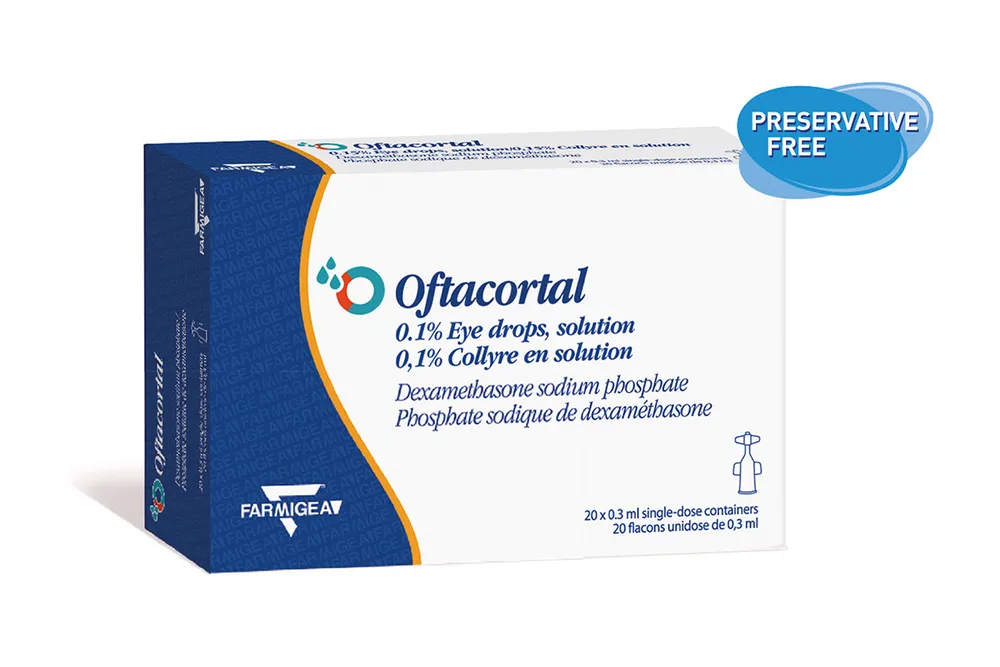
Table of Contents
PACKAGE LEAFLET: INFORMATION FOR THE USER
OFTACORTAL 0.15% eye drops, solution
Sodium phosphate of dexamethasone
Equivalent medicine
Please read all of this leaflet carefully before using this medicine because it contains
important information for you.
- Keep this leaflet. You may need to read it again.
- If you have any questions, consult your doctor or pharmacist.
- This medicine has been prescribed for you only. Do not give it to other people, even if their symptoms are the same as yours, as it could be harmful.
- If you experience any side effects, including those not listed in this leaflet, contact your doctor or pharmacist. See section 4.
Contents of this leaflet:
- What OFTACORTAL is and what it is used for
- What you need to know before using OFTACORTAL
- How to use OFTACORTAL
- Possible side effects
- How to store OFTACORTAL
- Contents of the pack and other information
1. What OFTACORTAL is and what it is used for
OFTACORTAL is a steroidal anti-inflammatory medicine (also known as a corticosteroid) indicated for the treatment of ocular inflammations of various origins:
- Spring and allergic conjunctivitis (inflammations of the conjunctiva of allergic origin);
- Allergic blepharitis and blepharoconjunctivitis (inflammations of the eyelid margin and conjunctiva of allergic origin);
- Allergic keratoconjunctivitis (inflammations of the cornea and conjunctiva of allergic origin);
- Inflammations of the outer wall of the eye, the sclera (scleritis, episcleritis), or of the uvea (uveitis).
2. What you need to know before using OFTACORTAL
Do not use OFTACORTAL
- if you are allergic (hypersensitive) to dexamethasone or to any of the other ingredients of this medicine (listed in section 6);
- if you have elevated intraocular pressure (ocular hypertension);
- if you suffer from acute ulcerative herpes simplex or other viral infections of the cornea, unless combined with specific chemotherapeutic agents for herpes;
- if you have conjunctivitis with corneal ulceration, even in the initial stage (positive fluorescein test);
- if you have ocular tuberculosis or fungal infections, purulent conjunctivitis, or styes;
- in cases of purulent or herpetic inflammation of the eyelid margin, which may be masked or worsened by corticosteroids;
- if you have corneal lesions or abrasions, because topical corticosteroids delay healing of damaged tissues and may promote infections;
- in children under three years of age;
- generally during pregnancy and breastfeeding;
- if the aluminum pouch or containers are visibly damaged.
Warnings and precautions
Talk to your doctor before using OFTACORTAL.
Exercise particular caution when using OFTACORTAL:
- if you have herpetic inflammation of the cornea, you may use it only under strict supervision by an ophthalmologist, as corticosteroids may worsen the condition, leading to irreversible corneal clouding;
- if you use it for more than two weeks, as it may increase intraocular pressure. In such cases, monitor intraocular tension and pressure regularly. Avoid prolonged use, as corticosteroids may promote the development of cataracts, blurred vision, or other visual disturbances. Long-term use (from 1 to 4 years) and high doses of ophthalmic corticosteroids may lead to clouding of the lens (posterior subcapsular cataract) (see section 4);
- if you have conditions associated with corneal thinning;
- if you have corneal lesions or abrasions, as corticosteroid application delays healing of damaged tissues and may promote the onset and spread of infections; the use of corticosteroids in the presence of lesions delays tissue healing and may promote infections;
- if you have bacterial, viral, or fungal conjunctivitis, as corticosteroids may worsen the disease or mask signs of infection progression (see section 2 “Do not use OFTACORTAL”). Seek medical advice if you experience swelling and weight gain around the trunk and face, as these are usually the first signs of a condition called Cushing's syndrome. Suppression of adrenal gland function may occur after discontinuation of prolonged or intensive treatment with OFTACORTAL. Consult your doctor before stopping treatment on your own. These risks are particularly important in children and in patients taking medications called ritonavir or cobicistat.
Children
In children aged 3 to 12 years, this medicine should be administered only when strictly necessary and under direct medical supervision.
Other medicines and OFTACORTAL
Inform your doctor if you are taking, have recently taken, or might take any other medicines.
Consult your doctor if you are using ritonavir or cobicistat, as they may increase dexamethasone levels in the blood.
Pregnancy, breastfeeding, and fertility
If you are pregnant, suspect you may be pregnant, planning to become pregnant, or breastfeeding, consult your doctor before using this medicine. This product should be administered during early infancy and pregnancy only when strictly necessary and under direct medical supervision.
Driving and using machines
No effects on driving or operating machinery are known.
However, as with any eye medication, if transient blurred vision occurs during use, wait until your vision clears before driving or operating machinery.
OFTACORTAL contains phosphate buffer
This medicine contains 0.18 mg of phosphate buffer per drop, equivalent to 3.66 mg/mL (with a theoretical drop volume of approximately 50 µL).
If you have severe damage to the outermost transparent layer of the eye (the cornea), phosphates may, in very rare cases, cause opaque corneal spots due to calcium accumulation during treatment.
3. How to use OFTACORTAL
Instill one drop into one or both eyes 3-4 times daily, as prescribed by your doctor.
The eye drops come in single-dose containers, contain no preservatives, and must be used immediately after opening.
Avoid letting the tip of the container touch the eye or any other surface.
Use this medicine exactly as directed by your doctor. If you have any doubts, consult your doctor or pharmacist.
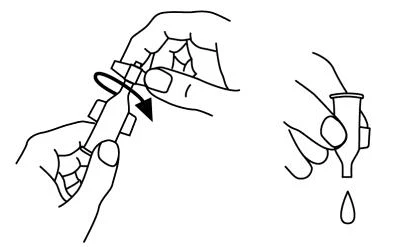
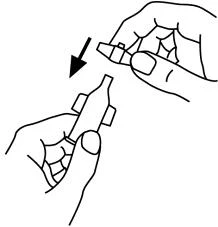
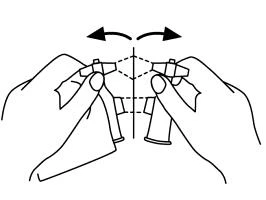
Instructions for use
- Make sure the single-dose container is intact.
- Detach the single dose from the strip.
- Open by twisting the top cap without pulling.
If you use more OFTACORTAL than you should
Excessive use or accidental ingestion may cause toxic effects. Inform your doctor and follow his or her instructions.
If you forget to use OFTACORTAL
Continue treatment with the next dose, without doubling the dose to make up for the missed one.
4. Possible side effects
Like all medicines, this medicine can cause side effects, although not everybody gets them.
Possible side effects due to the use of Oftacortal are:
Systemic effects:
- Allergic reactions (hypersensitivity)
The following side effects have occurred with medicines belonging to the same class as Oftacortal (corticosteroids):
Ocular effects:
- Clouding of the lens affecting vision (subcapsular cataract)
- Eye infection (including bacterial, fungal, and viral infections)
- Eye irritation
- Perforation of the eye (scleral or corneal perforation)
- Increased pressure in the eye
- Eye disease due to increased intraocular pressure (glaucoma)
- Sensation of itching or burning in the eye
- Blurred vision (frequency not known). In very rare cases, some patients with severe damage to the clear layer at the front of the eye (cornea) have developed opaque corneal deposits due to calcium accumulation during treatment.
Unknown side effects (frequency cannot be estimated from the available data):
Hormonal problems: excessive body hair growth (especially in women), muscle weakness and atrophy, purple stretch marks on the skin, increased blood pressure, irregular or absent menstrual cycle, changes in protein and calcium levels in the body, delayed growth in children and adolescents, and swelling and weight gain of the body and face (called “Cushing's syndrome”) (see section 2 “Special warnings”). In all these cases, treatment should be discontinued and appropriate therapy initiated.
Reporting of side effects
If you experience any side effect, including those not listed in this leaflet, talk to your doctor or pharmacist.
Side effects can also be reported directly via the national reporting system at: https://www.aifa.gov.it/content/segnalazioni-reazioni-avverse.
By reporting side effects, you can help provide more information on the safety of this medicine.
5. How to store OFTACORTAL
Keep this medicine out of the reach and sight of children.
Do not store above 25 °C.
Do not use this medicine after the expiry date stated on the carton after "Exp.".
The expiry date refers to the last day of the month in the original unopened packaging,
when stored correctly.
Medicines must not be disposed of via wastewater or household waste. Ask your
pharmacist how to dispose of medicines you no longer use. This will help protect the environment.
Shelf life after opening
Discard the opened vial after administration.
Store unopened containers inside the opened pouch and within the cardboard carton and use them
within 28 days.
6. Package contents and other information
What OFTACORTAL contains
Each single-dose container contains:
The active substance is sodium phosphate dexamethasone 0.45 mg, equivalent to dexamethasone 0.342 mg.
The other components are: trisodium citrate dihydrate, monosodium phosphate monohydrate,
disodium phosphate dodecahydrate, water for injections.
Description of the appearance of OFTACORTAL and package contents
Carton containing 20 single-dose containers made of low-density polyethylene with a volume of 0.3 ml, divided into 4 strips of 5 units each, individually packaged in pouches made of PET/Al/PE.
Marketing Authorization Holder and Manufacturer:
Farmigea SpA, Via G.B. Oliva 6/8, 56121 Pisa (PI), Italy
Sole Distributor for Sales: Diadema Farmaceutici srl - Via Malasoma 14/16 - 56121 Pisa - Italy
This patient information leaflet was last approved on xxxx