Nozinan
Italy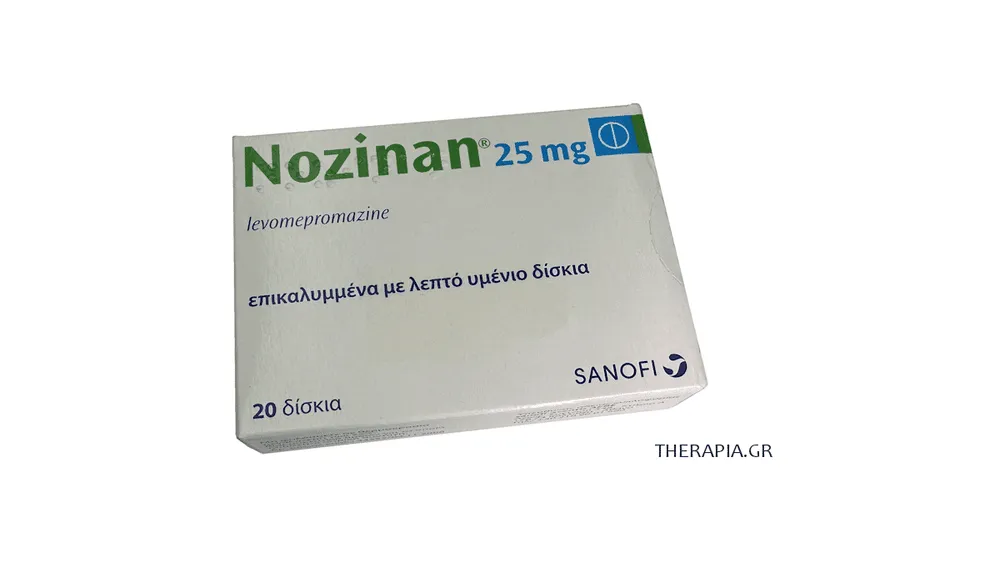
Table of Contents
- Patient Information Leaflet: Information for the Patient
- Nozinan 25 mg film-coated tablets, 100 mg film-coated tablets
- 1. What Nozinan is and what it is used for
- 2. What you should know before taking Nozinan
- 3. How to take Nozinan
- 4. Possible adverse effects
- 5. How to store Nozinan
- 6. Package contents and other information
Patient Information Leaflet: Information for the Patient
Nozinan 25 mg film-coated tablets, 100 mg film-coated tablets
levomepromazine
Please read this leaflet carefully before taking this medicine because it contains
important information for you.
- Keep this leaflet. You may need to read it again.
- If you have any questions, ask your doctor or pharmacist.
- This medicine has been prescribed for you only. Do not give it to other people, even if their symptoms are the same as yours, as it could be dangerous.
- If you experience any side effect, including those not listed in this leaflet, speak to your doctor or pharmacist. See section 4.
Contents of this leaflet:
- What Nozinan is and what it is used for
- What you need to know before taking Nozinan
- How to take Nozinan
- Possible side effects
- How to store Nozinan
- Contents of the pack and other information
1. What Nozinan is and what it is used for
Nozinan contains levomepromazine, which belongs to a class of medicines called phenothiazines,
with "psycholytic antipsychotic" activity.
Nozinan is indicated for the treatment of:
- a behavioural disorder called "schizophrenia", and personality disorders characterised by paranoia (paranoid states) or delusions;
- behavioural disturbances (psychoses) caused by the intake of toxic substances (amphetamines, LSD, cocaine, etc.);
- mental illnesses associated with delirium;
- vomiting and persistent hiccough resistant to other treatments (intractable);
- severe pain, usually in combination with pain-relieving medicines (narcotic analgesics).
2. What you should know before taking Nozinan
Do not take Nozinan
- if you are allergic to levomepromazine or to any of the other ingredients of this medicine (listed in section 6);
- if you are unconscious (in a comatose state), especially if caused by substances acting as central nervous system depressants (e.g. alcohol, barbiturates, opiates, etc.);
- if you have brain damage (subcortical brain damage) or if your doctor suspects you have brain damage;
- if you have severe depression;
- if you have a blood disorder (haematological dyscrasias);
- if you have liver disease (hepatic disorders);
- if you have kidney disease (renal disorders);
- if you are a young child (early infancy);
- if you have a tumour called "pheochromocytoma";
- if you have a disease characterized by severe muscle weakness (myasthenia gravis);
- if you have untreated epilepsy;
- if you are breastfeeding (see Pregnancy and breastfeeding);
- if you are in the first three months of pregnancy (first trimester). Beyond this period, Nozinan should only be used if your doctor considers it essential and always under direct medical supervision (see Pregnancy and breastfeeding).
Warnings and precautions
Talk to your doctor or pharmacist before taking Nozinan.
Before and during chronic treatment, your doctor will carry out blood tests to monitor liver function.
Furthermore, while taking Nozinan, you will be kept under direct medical supervision.
Take Nozinan with particular caution if you are elderly.
Before taking Nozinan, inform your doctor if:
- you have heart or blood vessel diseases;
- you have risk factors, for example if you smoke or have high blood pressure, or if you have excessive levels of sugar, cholesterol or fats in your blood. This medicine must be used with care as the risk of stroke (cerebrovascular accident) may increase;
- you have liver or kidney disease;
- you have ever had seizures (in the past or recently) or epilepsy;
- you have lung diseases;
- you have a disease characterized by increased eye pressure (glaucoma);
- you have an enlarged prostate gland (prostatic hypertrophy);
- you have constipation;
- you have decreased secretion of thyroid hormone (hypothyroidism);
- you have a tumour of the adrenal gland (pheochromocytoma);
- you have a muscle disease causing drooping eyelids, double vision, difficulty speaking and swallowing, and sometimes muscle weakness in the arms or legs (myasthenia gravis);
- you have diseases causing narrowing (stenotic conditions) of the digestive or urinary tract;
- you have Parkinson’s disease or other movement disorders, as Nozinan may increase muscle rigidity;
- you are taking other medicines.
And during treatment if:
- you develop muscle rigidity, cognitive disturbances, and fever;
- you experience intestinal blockage (paralytic ileus). A side effect of Nozinan treatment is a significant decrease in the number of certain white blood cells in the blood (agranulocytosis); your doctor will request blood tests to monitor white blood cells.
If you have a breast tumour (mammary neoplasm), you must use Nozinan with great caution, because prolonged use leads to increased blood levels of a hormone acting on the breast called "prolactin", with possible effects also on other organs.
If you have been taking Nozinan for a long time and at high doses, your doctor will perform frequent check-ups, as you may develop adverse effects affecting:
- the central nervous system,
- the liver, kidneys,
- the bone marrow,
- the eye,
- the cardiovascular system (heart circulation).
The onset of a blood disorder may be sudden; therefore, if you develop inflammatory symptoms affecting the mouth and upper respiratory tract (airways), your doctor will immediately perform blood tests.
If you are over 50 years old, you have a higher risk of experiencing a sudden drop in blood pressure upon rapidly changing from a lying or sitting position to standing (postural hypotension).
Nozinan may facilitate the occurrence of epileptic seizures. If you have epilepsy, take Nozinan with caution and discontinue treatment if you experience a seizure. (See also "Possible side effects").
If you are taking Nozinan, avoid excessive exposure to sunlight and use special protective creams if necessary.
Use Nozinan with caution if:
- you are exposed to extremely high or low temperatures, as this medicine may impair the body's normal temperature control mechanisms (thermoregulation);
- you have heart or blood vessel diseases (cardiovascular diseases), or if someone in your family has or has had a heart rhythm disorder called "QT prolongation", because Nozinan may increase the risk of developing serious heart rhythm disturbances (ventricular arrhythmias of the torsade de pointes type), which may even lead to death (sudden death). Before starting Nozinan therapy, your doctor may perform tests to rule out possible risk factors. (See Possible side effects).
In patients treated with Nozinan, increased blood glucose levels (hyperglycaemia) or glucose intolerance have been observed.
If you suffer from diabetes (diabetes mellitus) or have risk factors for developing diabetes, you should monitor your blood sugar levels (glycaemia) during treatment with Nozinan (see Possible side effects).
Nozinan has an anti-nausea and anti-vomiting effect (antiemetic effect) that may mask signs of overdose (hyperdosage) of other medicines or may make it more difficult to diagnose diseases of the gastrointestinal tract or central nervous system such as:
- intestinal obstruction,
- brain tumours,
- a disease called "Reye's syndrome".
Nozinan may cause movement disorders known as "late-onset persistent dyskinesias", and this risk is related to the duration of treatment. Your doctor will prescribe prolonged treatment with Nozinan cautiously and only if you have diseases responsive to the medicine and no suitable alternative therapies are available. If signs or symptoms of tardive dyskinesia appear while you are on Nozinan therapy, your doctor will discontinue treatment.
In general, Nozinan does not cause psychic dependence. However, abrupt discontinuation may lead to various disturbances (see "If you stop taking Nozinan").
During treatment with Nozinan, a complex of symptoms potentially leading to death, known as "Neuroleptic Malignant Syndrome", has been reported, characterized by:
- fever (hyperpyrexia),
- muscle rigidity,
- reduced muscle movement (akinesia),
- irregularities in heart rate and blood pressure,
- sweating,
- heart rhythm disturbances (tachycardia, arrhythmias),
- altered mental status that may progress to coma.
If you develop "Neuroleptic Malignant Syndrome", your doctor will immediately stop Nozinan treatment and administer therapy to treat the symptoms of this condition.
Elderly patients with dementia:
In elderly patients with dementia, the risk of death is increased.
Nozinan must not be used to treat disorders associated with dementia.
Venous thromboembolism (VTE)
Before and during treatment with Nozinan, your doctor will perform checks to identify any risk factors for a circulatory disorder called "venous thromboembolism".
Children
The use of Nozinan in children requires special attention, especially if the child has an infection or is undergoing surgery or vaccination, as under these conditions the risk of movement disorders (extrapyramidal symptoms) increases.
Other medicines and Nozinan
Inform your doctor or pharmacist if you are taking, have recently taken, or might take any other medicine.
You should avoid taking Nozinan simultaneously with:
- medicines for the treatment of Parkinson's disease,
- cabergoline or quinagolide (medicines used to treat abnormal milk flow),
- neuroleptics (medicines for the treatment of certain psychiatric disorders such as amisulpride, chlorpromazine, ciamemazine, droperidol, fluphenazine, haloperidol, pimozide, pipamperone, pipotiazine, sulpiride, sultopride, tiapride, flupentixol and zuclopentixol, barbiturates and sedatives),
- medicines containing lithium,
- medicines acting on heart rhythm (antiarrhythmics and medicines that prolong the QT interval): Nozinan may cause heart rhythm disturbances (ECG changes such as QT interval prolongation) and should therefore be used with caution if you are taking medicines with similar effects, as this combination increases the risk of heart rhythm disturbances,
- medicines causing alterations in certain blood substances called "electrolytes": this combination should be avoided,
- medicines that depress the Central Nervous System (barbiturates, anxiolytics, hypnotics, anaesthetics, antihistamines, opioid analgesics): combination with Nozinan (especially at high doses) may cause excessive sedation,
- anticonvulsant medicines: Nozinan affects seizure threshold; if you are taking antiepileptic drugs (particularly barbiturates and phenytoin), adjustment of specific therapy may be necessary,
- lithium (used for mental illnesses): combination with Nozinan has rarely led to a brain disorder called "acute encephalopathy". Your doctor will discontinue treatment with both lithium and Nozinan if you develop undetermined fever together with movement-related side effects,
- medicines for high blood pressure (antihypertensives): combination (interaction) with Nozinan may enhance blood pressure-lowering effects; however, Nozinan may block the effects of certain antihypertensive medicines (guanethidine and similar drugs),
- anticholinergic medicines: combination with Nozinan requires caution as it may promote the occurrence of side effects. Anticholinergic medicines may reduce the antipsychotic action of Nozinan,
- medicines causing decreased white blood cells (leukopenic activity, e.g. phenylbutazone, thiouracil derivatives, and other potentially myelotoxic medicines, i.e. toxic to bone marrow): combination with Nozinan should be avoided as it may lead to a greater effect on blood cells,
- metrizamide, used as a contrast agent for certain tests (myelography): this substance increases the risk of seizures caused by Nozinan. Your doctor will discontinue Nozinan treatment at least 2 days (48 hours) before a myelographic examination and will restart treatment no sooner than 1 day (24 hours) after the examination,
- lisuride, pergolide and levodopa, used for Parkinson's disease: their effects are antagonized by Nozinan; keep this in mind if you have Parkinson's disease,
- antacids: avoid taking Nozinan together with antacids or other substances that may reduce its absorption,
- interaction with laboratory tests: Nozinan may darken urine and cause false positive results in certain tests (amylase test, urobilinogen, uroporphyrins, porphobilinogens, and 5-hydroxy-indoleacetic acid). False positive pregnancy tests have been reported in women treated with Nozinan,
- medicines for diabetes (antidiabetics): because Nozinan may cause increased blood sugar (hyperglycaemia), your doctor will carefully adjust the dose of oral hypoglycaemics or insulin,
- medicines for depression (antidepressants): combination with Nozinan may increase certain effects (antimuscarinic effects),
- deferoxamine (used for iron poisoning), as this combination may lead to a condition called "transient metabolic encephalopathy",
- adrenaline: must not be used to treat low blood pressure in patients taking Nozinan, as it may cause further lowering of blood pressure,
- neuroleptic medicines (used to treat certain nervous system disorders): other medicines belonging to this group should not be administered together with Nozinan,
- medicines metabolized by the body via a specific enzyme (cytochrome P450 2D6 or CYP2D6): use of Nozinan may increase blood levels of these medicines. Your doctor will monitor for possible side effects associated with these medicines such as amitriptyline/amitriptyline oxide. If you have any doubts about using this medicine, consult your doctor or pharmacist.
Nozinan and alcohol
Do not consume alcohol during treatment with Nozinan, as alcohol may increase the risk of certain adverse effects (central side effects) of Nozinan.
Pregnancy and breastfeeding
If you are pregnant, suspect you may be pregnant, planning a pregnancy, or breastfeeding, consult your doctor or pharmacist before taking this medicine.
Pregnancy
Do not take Nozinan during the first three months of pregnancy (first trimester); beyond this period, its use is not recommended. Therefore, consult your doctor, who will prescribe Nozinan only if deemed essential and always under direct medical supervision.
The following disorders have been observed in newborns of mothers who took antipsychotic medicines (conventional or atypical antipsychotics), including Nozinan, during the last three months of pregnancy (third trimester):
- movement disorders;
- withdrawal symptoms;
- tremor;
- muscle rigidity and/or weakness;
- drowsiness;
- agitation;
- breathing problems;
- slow or rapid heartbeat;
- abdominal swelling;
- constipation (stipsis);
- feeding difficulties;
- neonatal intestinal obstruction (meconium ileus). If your baby shows any of these symptoms, contact your doctor.
Breastfeeding
Nozinan must not be taken during breastfeeding, as it passes into breast milk in small amounts and adverse effects in the breastfed infant cannot be ruled out. Therefore, if you are breastfeeding, your doctor will consider either discontinuing Nozinan or stopping breastfeeding.
Fertility
Nozinan is not recommended for women of childbearing age who do not use adequate and reliable contraceptive methods. In men, use of Nozinan may cause increased production of a hormone called prolactin (hyperprolactinaemia), which is clearly associated with reduced fertility in women and may also affect male fertility. Therefore, if you are a man, treatment with Nozinan may impair your fertility.
Driving and using machines
This medicine may cause drowsiness, disorientation, and confusion. Keep this in mind if you drive, operate machinery, or perform hazardous work. If this effect occurs, consult your doctor before driving.
Nozinan contains:
- lactose: if your doctor has diagnosed you with an intolerance to certain sugars, consult him before taking this medicine;
- gluten: NOZINAN 25 mg film-coated tablets contain only a very small amount of gluten (from wheat starch) and it is highly unlikely to cause problems if you have coeliac disease. One tablet contains no more than 5.87 micrograms of gluten. If you are allergic to wheat (a condition different from coeliac disease), do not take this medicine.
NOZINAN 100 mg film-coated tablets contain only a very small amount of gluten (from wheat starch). This medicine is considered gluten-free and it is highly unlikely to cause problems if you have coeliac disease.
One tablet contains no more than 9.0 micrograms of gluten.
If you are allergic to wheat (a condition different from coeliac disease), do not take this medicine.
3. How to take Nozinan
Take this medicine exactly as directed by your doctor or pharmacist. If
you have any doubts, consult your doctor or pharmacist.
Your doctor will determine the daily dose (dosage) according to the indications and the goals to
be achieved, generally starting treatment with low doses.
The recommended dose is:
25 mg up to three times a day.
Your doctor may gradually increase the dose up to a maximum of 300 mg per day.
Your doctor might decide to prescribe higher doses only in exceptional cases, for short periods of
time and under close supervision.
Use in the elderly
The doctor will establish the recommended dose and may consider reducing it if necessary.
If you take more Nozinan than you should
In case of accidental ingestion/overdose of Nozinan, contact your doctor immediately or go
to the nearest hospital.
An increase in undesirable effects may occur.
If you forget to take Nozinan
Do not take a double dose to make up for the missed dose.
If you stop taking Nozinan
Generally, Nozinan does not cause psychological dependence.
However, abrupt discontinuation may lead to:
- nausea,
- vomiting,
- dizziness,
- tremors,
- motor restlessness. If you suffer from depression, you should be particularly careful, as a rapid shift in mood towards depression may occur.
If you have any questions about the use of this medicine, consult your doctor or pharmacist.
4. Possible adverse effects
Like all medicines, this medicine can cause adverse effects, although not everybody experiences them.
The following effects may occur:
- dizziness when moving suddenly from a lying or sitting position to a standing position,
- dry mouth, difficulty urinating, constipation or even absence of bowel movements (intestinal obstruction, paralytic ileus), urinary retention,
- vision problems including disturbances affecting the ability of the eyes to adjust for near or distant vision (accommodation disorders), dilation of the pupil (mydriasis),
- sedation and drowsiness, especially during the first weeks of therapy, anxiety, insomnia, restlessness, mood disturbances or worsening of psychotic symptoms, euphoria, mental and motor agitation, delirium,
- reduced cough reflex which may lead to food entering the respiratory tract (ab ingestis conditions),
- movement disorders such as involuntary and rhythmic movements (tardive dyskinesia), tremors, muscle stiffness and spasms, torticollis, involuntary movements of the eyes and tongue (early dyskinesia), dystonias and akathisia, especially in children, pseudoparkinsonian syndromes (akinesia, rigidity, resting tremor, etc.), particularly in elderly patients with brain lesions, and persistent tardive dyskinesias,
- weight gain,
- changes in the levels of certain hormones (estrogens, progesterone and pituitary gonadotropins, hyperprolactinemia), which may cause breast enlargement and tenderness in women, abnormal milk flow, galactorrhea, absence of menstruation (amenorrhea), and in men breast enlargement (gynecomastia), reduced testicular volume, impotence. Other effects include peripheral swelling (edema), presence of sugar in the urine (glycosuria),
- hyponatremia, disorders due to altered release of a hormone called "antidiuretic hormone" (SIADH),
- changes in blood sugar levels (see "Warnings and precautions"), glucose intolerance, hyperglycemia,
- change in body temperature (a significant increase in body temperature may be due to intolerance to the medicine; in this case, consult your doctor and discontinue Nozinan therapy),
- formation of blood clots in veins, deep vein thrombosis (symptoms include swelling, pain and redness in the legs), which may travel through blood vessels to the lungs and cause chest pain and breathing difficulties; pulmonary embolism (blockage of one or more pulmonary arteries), sometimes fatal. (Frequency not known). If you experience any of these symptoms, seek immediate medical advice.
The following effects occur rarely:
- drop in blood pressure (hypotension), increased heart rate (tachycardia), dizziness, loss of consciousness (syncope). Hypotensive effects may pose particular problems if you have heart diseases (mitral insufficiency and cardiac diseases),
- changes in heart rhythm – cardiac arrhythmias including ventricular and atrial arrhythmias, QT interval prolongation, atrioventricular block, ventricular tachycardia, torsade de pointes, which in rare cases may be life-threatening (ventricular fibrillation and cardiac arrest),
- throat stiffness with breathing difficulty, swelling of the larynx (laryngeal edema), narrowing and contraction of the larynx (laryngospasm), swelling (angioneurotic edema),
- narrowing of the bronchi with breathing difficulty (bronchospasm),
- allergic reactions (anaphylactic),
- disorders resembling an autoimmune disease called "systemic lupus erythematosus",
- a retinal disease called "pigmentary retinopathy". Your doctor will perform periodic checks if you are taking high doses or are on long-term Nozinan treatment,
- kidney damage,
- a lung disease called "silent pneumonia" in patients on prolonged treatment,
- skin allergies, excessive skin reactions when exposed to sunlight or ultraviolet rays, characterized by skin reactions such as redness, urticaria, skin inflammation (eczema), peeling (exfoliative dermatitis),
- in long-term therapies, brownish spots (pigmentation) have been reported, especially in areas exposed to light,
- increased transaminases and alkaline phosphatase (liver enzymes), eosinophilia, jaundice (yellowing of the skin and eyes), hyperbilirubinemia, hepatitis (liver inflammation), liver damage and bile flow impairment (hepatocellular, cholestatic and mixed hepatic injury). If you develop liver problems, your doctor will immediately stop treatment with Nozinan.
The following effects occur more rarely:
- fever, excessive sweating, pallor, muscle stiffness and disturbances of consciousness. If these signs appear, treatment must be stopped immediately and the doctor or the nearest hospital emergency department must be informed (see Neuroleptic Malignant Syndrome in "Warnings and precautions"),
- prolonged and painful erection (priapism),
- brownish deposits in the eye which generally do not affect vision,
- a significant decrease in the number of certain white blood cells in the blood (agranulocytosis; leukopenia), which may lead to serious infections,
- a severe inflammatory disease affecting the intestine (necrotizing enterocolitis), sometimes life-threatening,
- isolated cases of sudden death (possibly of cardiac origin or of unknown cause).
Frequency not known:
- withdrawal syndrome in newborns whose mothers have taken Nozinan during the last trimester of pregnancy (last 3 months) (see "Pregnancy and breastfeeding"),
- confusion, seizures,
- hyponatremia (reduction in blood sodium levels),
- a brain disease (Parkinson's disease) affecting movement (tremor, rigid posture, mask-like face, slow movements and shuffling gait without balance),
- uncontrollable contractions or jerky movements of arms and legs (dyskinesia),
- effects on blood cell counts (blood dyscrasias), even severe ones: include small red spots on the skin due to capillary rupture (purpura), thrombocytopenia, i.e. reduced platelet count (blood cells that aid coagulation), evident in laboratory tests, which may lead to bleeding and bruising (thrombocytopenic purpura), anemia (hemolytic anemia and aplastic anemia). Eosinophilia, i.e. an increase in eosinophils (a type of white blood cell), evident in laboratory tests.
Reporting of adverse effects
If you experience any adverse effect, including those not listed in this leaflet, talk to your doctor or pharmacist. You can also report adverse effects directly via the national reporting system at https://www.aifa.gov.it/content/segnalazioni-reazioni-avverse
By reporting adverse effects, you can help provide more information on the safety of this medicine.
5. How to store Nozinan
Keep the blister pack in the outer packaging to protect the medicine from light.
Keep this medicine out of the sight and reach of children.
Do not use this medicine after the expiry date stated on the carton after "Exp". The expiry date refers to the last day of that month.
Do not dispose of medicines via wastewater or household waste. Ask your pharmacist how to dispose of medicines you no longer use. This will help protect the environment.
6. Package contents and other information
What Nozinan 25 mg film-coated tablets contains
- The active substance is levomepromazine maleate. Each tablet contains 33.8 mg of levomepromazine maleate, equivalent to 25 mg of levomepromazine base.
- Other components are:
- Core: wheat starch; lactose monohydrate; magnesium stearate; hydrated colloidal silica; dextrin.
- Coating: hypromellose; macrogols; titanium dioxide; yellow iron oxide.
Nozinan 100 mg film-coated tablets
- The active substance is levomepromazine maleate. Each tablet contains 135 mg of levomepromazine maleate, equivalent to 100 mg of levomepromazine base.
- Other components are:
- Core: wheat starch; lactose monohydrate; magnesium stearate; hydrated colloidal silica; dextrin.
- Coating: hypromellose; macrogols; titanium dioxide; yellow iron oxide.
Description of the appearance of Nozinan and package contents
Nozinan is available as film-coated tablets:
- Box containing 20 tablets of 25 mg
- Box containing 20 tablets of 100 mg
Marketing Authorization Holder
Neuraxpharm Italy S.p.A.
Via Piceno Aprutina, 47,
63100 - Ascoli Piceno (AP),
Italy
Manufacturer
Sanofi S.r.l. - S.S. 17 km 22 – 67019 Scoppito (AQ)