Novalgina
Italy
Table of Contents
- Patient Information Leaflet
- Novalgina 500 mg/ml oral drops, solution
- 1. What Novalgina is and what it is used for
- 2. What you need to know before taking Novalgina
- 3. How to take Novalgina
- 4. Possible side effects
- 5. How to store Novalgina
- 6. Package contents and other information
- Novalgina 1 g/2 ml injectable solution
- 1. What Novalgina is and what it is used for
- 2. What you need to know before using Novalgina
- 3. How to use Novalgina
- 4. Possible side effects
- 5. How to store Novalgina
- 6. Package contents and other information
Patient Information Leaflet
Novalgina 500 mg/ml oral drops, solution
metamizole
Novalgina may cause an unusually low white blood cell count (agranulocytosis), which can lead to
serious and potentially fatal infections (see section 4).
You must stop taking this medicine and contact your doctor immediately if you experience any of
the following symptoms: fever, chills, sore throat, painful ulcers in the nose, mouth and throat, or in
the genital or anal area.
If you have previously experienced agranulocytosis while taking metamizole or similar medicines,
you must never take these medicines again (see section 2).
Please read this leaflet carefully before taking this medicine because it contains important
information for you.
- Keep this leaflet. You may need to read it again.
- If you have any questions, ask your doctor or pharmacist.
- This medicine has been prescribed for you only. Do not give it to others, even if they have the same symptoms as you, because it could be harmful.
- If you experience any side effect, including those not listed in this leaflet, tell your doctor or pharmacist. See section 4.
Contents of this leaflet:
- What Novalgina is and what it is used for
- What you need to know before taking Novalgina
- How to take Novalgina
- Possible side effects
- How to store Novalgina
- Contents of the pack and other information
1. What Novalgina is and what it is used for
Novalgina contains metamizole, which belongs to a class of medicines called "Analgesics and antipyretics, pyrazolones".
Novalgina is indicated for the treatment of:
- severe or resistant pain;
- severe or resistant fever.
2. What you need to know before taking Novalgina
Do not take Novalgina
- if you are allergic to the active substance or to any of the other ingredients of this medicine (listed in section 6);
- if you are allergic to other medicines in the same class as Novalgina: pyrazolones (e.g. phenazone, propyphenazone) or to medicines belonging to the pyrazolidine class (e.g. phenylbutazone, oxyphenbutazone);
- if you previously experienced severe skin reactions when using this medicine or other pyrazolones (see also section 4);
- if you previously had a significant reduction in a type of white blood cells called granulocytes, caused by metamizole or other medicines called pyrazolones or pyrazolidines;
- if you have bone marrow problems or a disease affecting the production or function of blood cells;
- if after taking non-opioid painkillers (e.g. salicylates, paracetamol, diclofenac, ibuprofen, indomethacin, naproxen) you developed bronchospasm (a contraction of the bronchi that may lead to breathing difficulties) or other allergic reactions (e.g. urticaria, rhinitis, angioedema, i.e. swelling of the throat, face and limbs);
- if you suffer from a condition called "acute intermittent porphyria", because Novalgina may trigger an attack of this disease;
- if you were born with a deficiency of a substance normally present in the body called "glucose-6-phosphate dehydrogenase", because Novalgina may cause destruction of red blood cells (risk of haemolysis);
- if you are in the last three months of pregnancy;
- if you have fertility problems or have undergone fertility investigations. It is recommended not to use Novalgina during the first three months of pregnancy; consult your doctor before using Novalgina during the following three months (second trimester of pregnancy).
Warnings and precautions
Talk to your doctor or pharmacist before taking Novalgina.
Unusually low white blood cell count (agranulocytosis)
Novalgina may cause agranulocytosis, a very low level of a type of white blood cells called granulocytes, which are important in fighting infections (see section 4).
You must stop taking metamizole and consult a doctor immediately if you experience any of the following symptoms, as they may indicate possible agranulocytosis: chills, fever, sore throat, and painful ulcers on mucous membranes (moist linings of body cavities), especially in the mouth, nose, throat, genital or anal areas.
Your doctor will perform a laboratory test to check your blood cell levels.
If you are taking metamizole for fever, some symptoms of newly developed agranulocytosis may go unnoticed. Similarly, symptoms may also be masked if you are undergoing antibiotic therapy.
Agranulocytosis may develop at any time during Novalgina use and even shortly after stopping metamizole.
You may develop agranulocytosis even if you previously used metamizole without problems.
Reduction in blood cell counts
Novalgina may cause a serious blood disorder called "pancytopenia".
Stop treatment immediately and contact your doctor immediately if you experience any of the following symptoms:
- general malaise,
- infections,
- persistent fever,
- reddish-purple spots on the skin (bruising, ecchymoses),
- bleeding,
- paleness.
Novalgina may cause a serious disorder of certain blood cells called "thrombocytopenia".
Stop treatment and consult your doctor immediately if you experience bleeding (haemorrhage), with or without small reddish-purple spots on the skin (petechiae).
Allergic reactions (anaphylactic/anaphylactoid) and anaphylactic shock
Stop treatment with Novalgina immediately and consult your doctor if you experience any of the following symptoms:
- swelling of the throat (larynx), face and limbs (angioedema),
- skin problems with redness and possible itching (urticaria, rash),
- breathing difficulties (dyspnoea),
- paleness,
- increased blood flow in certain body areas (generalised hyperaemia),
- general malaise,
- low blood pressure (hypotension),
- shock.
These reactions mainly occur in sensitive patients; therefore, Novalgina should be used with caution if you suffer from:
- drug-induced asthma (from painkillers, analgesics) or intolerance to analgesics with urticaria and angioedema (facial, limb, throat swelling) (see "Do not take Novalgina"), frequent allergic reactions (atopic patient),
- bronchial asthma, particularly if you have nasal polyps and frequent colds (polypous rhinosinusitis),
- frequent (chronic) urticaria,
- alcohol intolerance, i.e. if you react to small amounts of alcoholic beverages with symptoms such as sneezing, tearing or facial flushing,
- allergy (intolerance) to dyes (e.g. tartrazine) or preservatives (e.g. benzoates).
If you suffer from any of these conditions, discuss them with your doctor before taking Novalgina.
In particular, if you have previously experienced an allergic (hypersensitivity) reaction to metamizole, you must never take metamizole or other pyrazolone drugs again.
Severe skin (cutaneous) reactions
Severe skin reactions, including Stevens-Johnson syndrome, toxic epidermal necrolysis, drug reaction with eosinophilia and systemic symptoms (DRESS), have been reported in association with metamizole treatment.
Stop using metamizole and contact your doctor immediately if you experience any symptoms related to these severe reactions described in section 4.
If you have previously developed severe skin reactions, you must never restart treatment with Novalgina (see section 4).
Liver problems
Liver inflammation with symptoms developing within a few days or months after starting treatment has been reported in patients taking metamizole.
Stop using Novalgina and contact a doctor if you experience symptoms of liver problems such as feeling unwell (nausea or vomiting), fever, fatigue, loss of appetite, dark urine, pale stools, yellowing of the skin or whites of the eyes (jaundice), itching, skin rash or upper abdominal pain. Your doctor will check your liver function.
You must not take Novalgina if you have previously taken a medicine containing metamizole and experienced liver problems.
Isolated hypotensive reactions
Administration of Novalgina may cause isolated cases of blood pressure-lowering reactions (see "Possible side effects"). These reactions are dose-dependent and are more likely with intravenous administration.
Furthermore, the risk of severe hypotensive reactions is increased if:
- intravenous administration is not performed slowly;
- you already have low blood pressure, dehydration, or instability or impairment of the circulatory system (incipient circulatory failure);
- you have high fever.
If you have blood vessel disorders affecting the heart (severe coronary insufficiency) or narrowing of blood vessels supplying the brain (stenosis) and are taking Novalgina, your doctor will periodically perform certain tests (haemodynamic monitoring) to prevent a drop in blood pressure, which would be harmful in these cases.
Avoid using Novalgina for minor conditions and use the medicine only for the necessary duration to control pain and fever; the use of painkillers (analgesics) at high doses or for prolonged periods should be evaluated by a doctor.
Children and adolescents
For children under 5 years of age, administration under medical supervision is recommended.
Other medicines and Novalgina
Tell your doctor or pharmacist if you are taking, have recently taken, or might take any other medicines.
The effects of Novalgina may be influenced by or may influence the following medicines:
- bupropion, a medicine used to treat depression or as an aid to quit smoking, because Novalgina may reduce the blood concentration of this medicine,
- efavirenz, a medicine used to treat HIV/AIDS,
- methadone, a medicine used to treat opioid addiction,
- valproate, a medicine used to treat epilepsy or bipolar disorder,
- tacrolimus, a medicine used to prevent organ rejection in transplant patients,
- sertraline, a medicine used to treat depression,
- cyclosporine (antibiotic), because Novalgina may reduce cyclosporine blood levels,
- methotrexate (used for cancer and autoimmune diseases), because Novalgina may increase methotrexate toxicity, especially in elderly patients. Avoid combining Novalgina with methotrexate,
- acetylsalicylic acid (used for inflammation or blood thinning), because Novalgina may reduce the blood-thinning effect of acetylsalicylic acid. This combination should be used cautiously if you are taking low-dose acetylsalicylic acid for heart protection.
In patients treated with Novalgina, interference has been reported in laboratory tests using the Tinder method or a method similar to Tinder, for example tests measuring blood levels of creatinine, triglycerides, HDL cholesterol and uric acid.
Novalgina and alcohol
Avoid alcohol consumption during treatment with Novalgina, as negative effects of this combination cannot be ruled out.
Pregnancy, breastfeeding and fertility
If you are pregnant, think you may be pregnant, are planning a pregnancy, or are breastfeeding, consult your doctor or pharmacist before taking this medicine.
Pregnancy
Available data on the use of metamizole during the first three months of pregnancy are limited but do not indicate harmful effects on the embryo. In selected cases, when no other treatment options are available, single doses of metamizole during the first and second trimesters may be acceptable after consulting your doctor and carefully weighing the benefits and risks of metamizole. However, in general, the use of metamizole is not recommended during the first and second trimesters.
You must not use Novalgina during the last three months of pregnancy due to an increased risk of possible complications for both mother and baby (bleeding, premature closure of an important fetal blood vessel, the so-called ductus arteriosus, which normally closes only after birth).
Breastfeeding
Metamizole metabolites pass into breast milk in considerable amounts, and the risk to breastfed infants cannot be excluded. In particular, repeated use of metamizole during breastfeeding should be avoided. After a single dose of metamizole, mothers are advised to collect and discard breast milk for 48 hours following administration.
Fertility
Discontinue Novalgina if you have fertility problems or are undergoing fertility investigations.
Driving and using machines
In patients taking Novalgina, concentration and reaction abilities may be impaired, posing a risk in situations where these abilities are particularly important (e.g. driving vehicles or operating machinery), especially if alcohol has also been consumed.
Novalgina oral drops contain sodium and ethanol
- This medicine contains 34 mg (1.48 mmol) of sodium (a main component of table salt) in 1 ml (20 drops). This corresponds to 1.7% of the maximum daily dietary intake recommended for an adult.
- This medicine contains 3.2 mg of alcohol (ethanol) in 1 ml (20 drops). 1 ml of this medicine is equivalent to 0.03 ml of wine or 0.08 ml of beer. The small amount of alcohol in this medicine will not produce significant effects.
3. How to take Novalgina
Take this medicine exactly as directed by your doctor or pharmacist. If
you have any doubts, consult your doctor or pharmacist.
Take the drops diluted in a small amount of liquid.
500 mg/ml oral drops, solution (1 ml = 20 drops; 1 drop = 25 mg)
The dose depends on the intensity of the pain or fever and on individual response to
Novalgina. The lowest effective dose required to control pain and fever should always be used. Your doctor will advise you on how to take Novalgina.
The table below shows the recommended single doses and maximum daily doses according to
body weight or age:
| Body weight | Single dose | Maximum daily dose | |||
| kg | age | drops | mg | drops | mg |
| <9 | <12 months | 1-5 | 25-125 | 4-20 | 100-500 |
| 9-15 | 1-3 years | 3-10 | 75-250 | 12-40 | 300-1,000 |
| 16-23 | 4-6 years | 5-15 | 125-375 | 20-60 | 500-1,500 |
| 24-30 | 7-9 years | 8-20 | 200-500 | 32-80 | 800-2,000 |
| 31-45 | 10-12 years | 10-30 | 250-750 | 40-120 | 1,000-3,000 |
| 46-53 | 13-14 years | 15-35 | 375-875 | 60-140 | 1,500-3,500 |
| > 53 | ≥ 15 years | 20-40 | 500-1,000 | 80-160 | 2,000-4,000 |
Single doses may be administered up to four times daily, depending on the maximum daily dose.
A noticeable effect is expected 30 to 60 minutes after oral administration.
Use in children and adolescents
For pain treatment, children and adolescents up to 14 years of age may take 8 to 16 mg of Novalgina per kilogram of body weight as a single dose (see previous table).
In case of fever, a dose of 10 mg of Novalgina per kilogram of body weight is generally sufficient in children, according to the following table:
| Body weight | Single dose | ||
| kg | Age | Drops | mg |
| <9 | <12 months | 1-3 | 25-75 |
| 9-15 | 1-3 years | 4-6 | 100-150 |
| 16-23 | 4-6 years | 6-9 | 150-225 |
| 24-30 | 7-9 years | 10-12 | 250-300 |
| 31-45 | 10-12 years | 13-18 | 325-450 |
| 46-53 | 13-14 years | 18-21 | 450-525 |
Elderly and patients in poor general health/with reduced renal function
Dosage reduction is necessary in elderly individuals, debilitated patients, and patients with
reduced renal function, as delayed excretion of metabolites derived from metamizole
metabolism may occur.
Patients with impaired renal or hepatic function
High repeated doses should be avoided in patients with impaired renal or hepatic function
due to reduced elimination rate. For short-term use only, no dosage adjustment is required.
There is no experience regarding long-term use.
If you take more Novalgina than you should
Taking an excessive amount of Novalgina (overdose) may lead to:
- nausea,
- vomiting,
- abdominal pain,
- kidney problems (acute renal failure). Less frequently, it may cause:
- central nervous system symptoms:
- dizziness,
- drowsiness,
- coma,
- convulsions,
- drop in blood pressure sometimes progressing to shock,
- increased heart rate (tachycardia).
After administration of very high doses, red discoloration of urine may occur.
In case of accidental ingestion/overdose of Novalgina, contact your doctor immediately or go to the nearest hospital.
If you forget to take Novalgina
Do not take a double dose to make up for the missed dose.
If you have any doubts about the use of this medicine, consult your doctor or pharmacist.
4. Possible side effects
Like all medicines, this medicine can cause side effects, although not everybody gets them.
Stop using Novalgina and contact a doctor immediately if you experience any of the following
symptoms: feeling unwell (nausea or vomiting), fever, feeling tired, loss of appetite, dark-coloured urine, pale-coloured stools, yellowing of the skin or the whites of the eyes, itching, skin rash or pain in the upper stomach. These symptoms may be signs of liver damage. See also section 2. Warnings and precautions.
Uncommon side effects (may affect 1 to 10 people in 1,000)
- Allergic reactions (anaphylactic/anaphylactoid), with skin and mucous membrane disorders (such as itching, burning, redness, hives, swelling), difficulty breathing and, less frequently, stomach and intestinal disorders; in more severe cases, widespread hives, swelling of the throat (larynx), face and limbs (severe angioedema), severe bronchial constriction with breathing difficulty (bronchospasm), changes in heart rhythm, drop in blood pressure (sometimes preceded by a rise in blood pressure) and allergic shock (anaphylactic). These reactions may occur immediately after administration of Novalgina or even several hours later; however, they usually occur within the first hour after administration.
The risk of anaphylactic shock, however, appears to be higher with Novalgina administered by injection.
If you suffer from asthma caused by painkillers (analgesics), intolerance reactions typically manifest as asthma attacks.
- Lowering of blood pressure, which may be occasional or transient, or rarely may present as an acute drop in blood pressure.
Rare side effects (may affect 1 to 10 people in 10,000)
- Skin disorders known as fixed drug eruptions,
- Redness (rash).
Side effects with unknown frequency (frequency cannot be determined from available data)
- Severe skin reactions. Discontinue treatment with metamizole and contact your doctor immediately if you experience any of the following serious side effects:
- Flat, reddish spots on the trunk, target-shaped or circular, often with central blisters, skin peeling, mouth, throat, nose, genital or eye ulcers. These severe skin eruptions may be preceded by fever and flu-like symptoms (Stevens-Johnson syndrome, toxic epidermal necrolysis),
- Widespread skin rash, high body temperature and swollen lymph nodes (DRESS syndrome or drug hypersensitivity syndrome),
- Liver inflammation, yellowing of the skin and whites of the eyes, increased liver enzymes in the blood,
- Acute allergic heart disease (Kounis syndrome),
- Anaemia (aplastic anaemia),
- Changes in the number of certain blood cells (agranulocytosis, pancytopenia, which may be fatal, leucopenia and thrombocytopenia). See "Warnings and precautions". Typical symptoms of "agranulocytosis" (characterised by a reduced number of certain blood cells called granulocytes) are:
- Inflammatory lesions of the mucous membranes (e.g. mouth and throat, anorectal, genital),
- Sore throat,
- Fever (including persistent or recurring fever). Typical symptoms of "thrombocytopenia" include:
- Increased tendency to bleed,
- Red spots on the skin or mucous membranes (petechiae). These reactions may occur even if you have previously used Novalgina without complications.
- Worsening of kidney function (acute kidney failure), which in some cases may be accompanied by:
- Reduced urine output (oliguria),
- Absence of urine output (anuria),
- Presence of protein in the urine (proteinuria),
- A serious kidney disease called "acute interstitial nephritis". Reddish discoloration of the urine, which disappears at the end of treatment,
- Gastrointestinal bleeding.
Reporting of side effects
If you experience any side effect, including those not listed in this leaflet, talk to your doctor or pharmacist. You can also report side effects directly via the national reporting system at https://www.aifa.gov.it/content/segnalazioni-reazioni-avverse.
By reporting side effects, you can help provide more information on the safety of this medicine.
5. How to store Novalgina
Store below 25°C.
After first opening, do not store the bottle for longer than three months.
Keep this medicine out of the sight and reach of children.
Do not use this medicine after the expiry date stated on the packaging after “Exp”. The expiry date refers to the last day of that month.
Do not dispose of medicines via wastewater or household waste. Ask your pharmacist how to dispose of medicines no longer required. These measures help protect the environment.
6. Package contents and other information
What it contains
Novalgina 500 mg/ml oral drops, solution
- The active substance is sodium noramidopyrine methanesulfonate (metamizole). 1 ml of solution contains 500 mg of sodium noramidopyrine methanesulfonate (metamizole).
- The other components are: disodium phosphate, sodium dihydrogen phosphate, citrus flavour (containing alcohol), and purified water.
Description of the appearance of Novalgina and the contents of the pack
Oral drops, solution:
- 20 ml bottle
Marketing Authorization Holder and Manufacturer
Marketing Authorization Holder
Opella Healthcare Italy S.r.l.
Viale L. Bodio, 37/B – 20158 Milan
Manufacturer
Sanofi S.r.l.
Via Valcanello, 4 – 03012 Anagni (FR) - Italy
Novalgina oral drops, solution
The bottle has a "Child-resistant closure".
To open, press down on the cap and simultaneously unscrew it in the direction indicated by the arrow.
Close after use. The closure is child-resistant if, when unscrewing the cap without pressing, you hear a click.
Patient Information Leaflet
Novalgina 1 g/2 ml injectable solution
metamizole
Novalgina may cause an unusually low white blood cell count (agranulocytosis), which can lead to serious and potentially life-threatening infections (see section 4).
You must stop taking the medicine and contact your doctor immediately if you experience any of the following symptoms: fever, chills, sore throat, painful ulcers in the nose, mouth and throat, or in the genital or anal area.
If you have previously experienced agranulocytosis while using metamizole or similar medicines, you must never take these medicines again (see section 2).
Please read this leaflet carefully before using this medicine, as it contains important information for you.
- Keep this leaflet. You may need to read it again.
- If you have any questions, consult your doctor or pharmacist.
- This medicine has been prescribed for you only. Do not give it to others, even if their symptoms are the same as yours, as it could be harmful.
- If you experience any side effects, including those not listed in this leaflet, consult your doctor or pharmacist. See section 4.
Contents of this leaflet:
- What Novalgina is and what it is used for
- What you need to know before using Novalgina
- How to use Novalgina
- Possible side effects
- How to store Novalgina
- Contents of the pack and other information
1. What Novalgina is and what it is used for
Novalgina contains metamizole, which belongs to a class of medicines known as "Analgesics and antipyretics, pyrazolones".
Novalgina is indicated for the treatment of:
- severe or resistant pain;
- severe or resistant fever.
2. What you need to know before using Novalgina
Do not use Novalgina
- if you are allergic to the active substance or to any of the other ingredients of this medicine (listed in section 6);
- if you are allergic to other medicines in the same class as Novalgina, such as pyrazolones (e.g. phenazone, propyphenazone), or to medicines belonging to the pyrazolidine class (e.g. phenylbutazone, oxyphenbutazone);
- if you previously experienced severe skin reactions when using this medicine or other pyrazolones (see also section 4);
- if you previously had a significant reduction in a type of white blood cells called granulocytes, caused by metamizole or other medicines known as pyrazolones or pyrazolidines;
- if you have bone marrow problems, or if you have a disease affecting the production or function of blood cells;
- if after taking non-opioid pain medicines (e.g. salicylates, paracetamol, diclofenac, ibuprofen, indometacin, naproxen) you experienced bronchospasm (a contraction of the bronchi that may lead to breathing difficulties) or other allergic reactions (e.g. urticaria, rhinitis, angioedema, i.e. swelling of the throat, face and limbs);
- if you suffer from a condition called "acute intermittent hepatic porphyria", because Novalgina may trigger an attack of this disease;
- if you were born with a deficiency of a substance normally present in the body called "glucose-6-phosphate dehydrogenase", because Novalgina may cause destruction of red blood cells (risk of haemolysis);
- if you suffer from low blood pressure (hypotension) or circulatory instability, Novalgina must not be administered by injection (parenteral route);
- if you are in the last three months of pregnancy;
- if you have fertility problems or have undergone fertility investigations. It is recommended not to use Novalgina during the first three months of pregnancy; consult your doctor before using Novalgina during the following three months (second trimester of pregnancy).
Warnings and precautions
Talk to your doctor or pharmacist before using Novalgina.
Unusually low white blood cell count (agranulocytosis)
Novalgina may cause agranulocytosis, a very low level of a type of white blood cells called granulocytes, which are important in fighting infections (see section 4).
You must stop taking metamizole and contact a doctor immediately if you experience any of the following symptoms, as they may indicate possible agranulocytosis: chills, fever, sore throat, and painful ulcers on mucous membranes (moist linings of body cavities), especially in the mouth, nose, throat, genital or anal areas. Your doctor will perform a laboratory test to check your blood cell levels.
If you are taking metamizole for fever, some symptoms of newly developed agranulocytosis may go unnoticed. Similarly, symptoms may also be masked if you are undergoing antibiotic therapy.
Agranulocytosis may develop at any time during treatment with Novalgina and even shortly after stopping metamizole.
You may develop agranulocytosis even if you previously used metamizole without problems.
Reduction in blood cell counts
Novalgina may cause a blood cell disorder called "pancytopenia". Stop treatment and contact your doctor immediately if you experience any of the following symptoms:
- general malaise,
- infections,
- persistent fever,
- reddish-purple spots on the skin (bruising, ecchymoses),
- bleeding,
- paleness.
Novalgina may cause a serious blood cell disorder called "thrombocytopenia".
Stop treatment and contact your doctor immediately if you experience bleeding (haemorrhage), with or without reddish-purple spots on the skin (petechiae).
Allergic reactions (anaphylactic/anaphylactoid) and anaphylactic shock
Stop treatment with Novalgina immediately and contact your doctor if you experience any of the following symptoms:
- urticaria,
- swelling of the throat (larynx), face or limbs (angioedema),
- skin problems with redness and possible itching (urticaria, rash),
- breathing difficulties (dyspnoea),
- paleness,
- increased blood flow in certain body areas (generalized hyperaemia),
- general malaise,
- low blood pressure (hypotension),
- shock.
These reactions mainly occur in sensitive patients; therefore, Novalgina should be used with caution if you suffer from:
- drug-induced asthma (from analgesics) or intolerance to analgesics with urticaria and angioedema (facial, limb, throat swelling) (see "Do not use Novalgina"),
- frequent allergic reactions (atopic patient),
- bronchial asthma, particularly if you have nasal polyps and frequent colds (polyposis rhinosinusitis),
- frequent (chronic) urticaria,
- alcohol intolerance, i.e. if you react to small amounts of alcoholic beverages with symptoms such as sneezing, tearing or facial flushing,
- allergy (intolerance) to dyes (e.g. tartrazine) or preservatives (e.g. benzoates).
If you suffer from any of these conditions, discuss them with your doctor before taking Novalgina.
In particular, if you have previously experienced an allergic (hypersensitivity) reaction to metamizole, you must never take metamizole or other pyrazolone medicines again.
Severe skin (cutaneous) reactions
Severe skin reactions, including Stevens-Johnson syndrome, toxic epidermal necrolysis, and drug reaction with eosinophilia and systemic symptoms (DRESS), have been reported in association with metamizole treatment.
Stop using metamizole and contact your doctor immediately if you experience any symptoms related to these severe skin reactions described in section 4.
If you have previously developed severe skin reactions, you must never restart treatment with Novalgina at any time (see section 4).
Liver problems
Liver inflammation with symptoms developing within a few days or months after starting treatment has been reported in patients taking metamizole.
Stop using Novalgina and contact a doctor if you experience symptoms of liver problems such as feeling unwell (nausea or vomiting), fever, fatigue, loss of appetite, dark urine, pale stools, yellowing of the skin or whites of the eyes (jaundice), itching, skin rash, or upper abdominal pain. Your doctor will check liver function.
You must not use Novalgina if you have previously taken a medicine containing metamizole and experienced liver problems.
Isolated hypotensive reactions
Administration of Novalgina may cause isolated cases of hypotensive reactions (see "Possible side effects"). These reactions are dose-dependent and more likely with injectable administration.
Furthermore, the risk of severe hypotensive reactions is increased if:
- intravenous administration is not performed slowly;
- you already suffer from low blood pressure, dehydration, or circulatory instability or disturbance (incipient circulatory failure);
- you have high fever.
If you suffer from heart vessel disorders (severe coronary insufficiency) or narrowing of vessels supplying the brain (stenosis) and are taking Novalgina, your doctor will periodically perform certain tests (haemodynamic monitoring) to prevent a drop in blood pressure, which would be harmful in these cases.
Avoid using Novalgina for minor ailments and use the medicine only for the necessary duration to control pain and fever; the use of pain medicines (analgesics) at high doses or for prolonged periods should be evaluated by a doctor.
Parenteral (injectable) administration of medicines containing metamizole may cause severe allergic reactions that can even be fatal. For this reason, injectable forms of these medicines should only be used after consulting a doctor and under their direct supervision.
Children and adolescents
In infants aged 4 to 12 months, ampoules should be administered only by intramuscular injection.
Other medicines and Novalgina
Inform your doctor or pharmacist if you are taking, have recently taken, or might take any other medicines.
The effects of Novalgina may be influenced by, or may influence, the following medicines:
- bupropion, a medicine used to treat depression or as an aid to quit smoking, because Novalgina may reduce the blood concentration of this medicine,
- efavirenz, a medicine used to treat HIV/AIDS,
- methadone, a medicine used to treat opioid dependence,
- valproate, a medicine used to treat epilepsy or bipolar disorder,
- tacrolimus, a medicine used to prevent organ rejection in transplant patients,
- sertraline, a medicine used to treat depression,
- cyclosporine (an antibiotic), because Novalgina may reduce cyclosporine blood levels,
- methotrexate (used for cancer and autoimmune diseases), because Novalgina may increase methotrexate toxicity, especially if you are elderly,
- acetylsalicylic acid (used for inflammation or blood thinning), because Novalgina may reduce the blood-thinning effect of acetylsalicylic acid. This combination should be used cautiously if you are taking low-dose acetylsalicylic acid for heart protection.
In patients treated with Novalgina, interference has been reported in laboratory tests using the Tinder method or a method similar to Tinder, for example tests measuring creatinine, triglycerides, HDL cholesterol, and uric acid levels in blood.
Novalgina and alcohol
Avoid alcohol consumption during treatment with Novalgina, as negative effects of the combination cannot be ruled out.
Pregnancy, breastfeeding and fertility
If you are pregnant, suspect you may be pregnant, are planning a pregnancy, or are breastfeeding, consult your doctor or pharmacist before using this medicine.
Pregnancy
Available data on the use of metamizole during the first three months of pregnancy are limited but do not indicate harmful effects on the embryo. In selected cases, when no other treatment options are available, single doses of metamizole during the first and second trimesters may be acceptable after consulting your doctor and carefully weighing the benefits and risks. However, in general, the use of metamizole is not recommended during the first and second trimesters.
You must not use Novalgina during the last three months of pregnancy due to an increased risk of possible complications for both mother and baby (bleeding, premature closure of an important fetal vessel, the so-called ductus arteriosus, which normally closes only after birth).
Breastfeeding
Metamizole metabolites pass into breast milk in considerable amounts, and the risk to breastfed infants cannot be excluded. In particular, repeated use of metamizole during breastfeeding should be avoided. After a single dose of metamizole, breastfeeding mothers are advised to collect and discard breast milk for 48 hours after administration.
Fertility
Discontinue Novalgina if you have fertility problems or have undergone fertility investigations.
Driving and using machines
In patients taking Novalgina, concentration and reaction abilities may be impaired, posing a risk in situations where these abilities are particularly important (e.g. driving vehicles or operating machinery), especially if alcohol has also been consumed.
Novalgina 1 g/2 ml injectable solution contains sodium
This medicine contains 65.4 mg of sodium (the main component of table salt) in 2 ml (1 ampoule).
This corresponds to 3.3% of the maximum daily dietary intake recommended for an adult.
3. How to use Novalgina
Use this medicine exactly as instructed by your doctor or pharmacist. If you have any doubts, consult your doctor or pharmacist.
Your doctor will prescribe Novalgina for injection into the muscles (intramuscular) or veins (intravenous) only when oral Novalgina cannot be used.
The injection must be administered slowly (no faster than 1 ml/min) with the patient lying down and under medical supervision.
The solution should be injected at body temperature.
Novalgina must not be mixed with other medicines in the same syringe.
When choosing the route of administration, it should be considered that parenteral administration (by injection) is associated with a higher risk of allergic reactions (anaphylactic/anaphylactoid).
The dose depends on the intensity of pain or fever and on the individual's sensitivity to Novalgina. Novalgina will be administered as an intravenous or intramuscular injection.
If the effect of a single dose is insufficient, or later when the analgesic effect wears off, the doctor may administer another dose, up to a maximum daily dose, as indicated below.
Adults and adolescents aged 15 years and older
In adults and adolescents aged 15 years or older (weighing more than 53 kg), 1–2 ml may be administered intravenously or intramuscularly as a single dose; if necessary, the single dose may be increased up to 5 ml (equivalent to 2,500 mg of Novalgina). The maximum daily dose is 8 ml; if necessary, the daily dose may be increased up to 10 ml (equivalent to 5,000 mg of Novalgina).
Neonates and children
Use the following dosage schedule as a guide for individual doses administered intravenously or intramuscularly:
| Children's age group (body weight) | Single dose | Maximum daily dose |
| Neonates 3 - 11 months (approx. 5 - 8 kg) | 0.1 - 0.2 ml | 0.4 - 0.8 ml |
| 1 - 3 years (approx. 9 - 15 kg) | 0.2 - 0.5 ml | 0.8 - 2.0 ml |
| 4 - 6 years (approx. 16 - 23 kg) | 0.3 - 0.8 ml | 1.2 - 3.2 ml |
| 7 - 9 years (approx. 24 - 30 kg) | 0.4 - 1.0 ml | 1.6 - 4.0 ml |
| 10 - 12 years (approx. 31 - 45 kg) | 0.5 - 1.4 ml | 2.0 - 5.6 ml |
| 13 - 14 years (approx. 46 - 53 kg) | 0.8 - 1.8 ml | 3.2 - 7.2 ml |
Elderly and patients in poor general health/with reduced renal function
Dosage reduction is required in elderly individuals, debilitated patients, and patients with
reduced renal function, as delayed excretion of metabolites derived from metamizole may occur.
Patients with impaired renal or hepatic function
High repeated doses should be avoided in patients with impaired renal or hepatic function due to reduced elimination rates. For short-term use only, no dosage adjustment is required. There is no experience regarding long-term use.
If you take more Novalgina than you should
Taking an excessive amount of Novalgina (overdose) may lead to:
- nausea,
- vomiting,
- abdominal pain,
- kidney problems (acute renal failure).
Less commonly:
- central nervous system symptoms:
- dizziness,
- drowsiness,
- coma,
- seizures,
- drop in blood pressure (sometimes progressing to shock),
- increased heart rate (tachycardia).
After administration of very high doses, a red discoloration of the urine may occur.
In case of accidental ingestion/overdose of Novalgina, contact your doctor immediately or go to the nearest hospital.
If you forget to use Novalgina
Do not take a double dose to make up for the missed dose.
If you have any doubts about the use of this medicine, consult your doctor or pharmacist.
4. Possible side effects
Like all medicines, this medicine can cause side effects, although not everybody gets them.
Stop using Novalgina and contact a doctor immediately if you experience any of the following
symptoms: feeling unwell (nausea or vomiting), fever, feeling tired, loss of appetite, dark-coloured
urine, pale-coloured stools, yellowing of the skin or the whites of the eyes, itching, skin rash or
pain in the upper part of the stomach. These symptoms may be signs of liver damage. See also
section 2. Warnings and precautions.
Uncommon side effects (may affect from 1 to 10 people in 1,000)
- allergic reactions (anaphylactic/anaphylactoid), with skin and mucous membrane disorders (such as itching, burning, redness, urticaria, swelling), difficulty breathing and, less frequently, stomach and intestinal disorders; in more severe cases, generalized urticaria, swelling of the throat (larynx), face and limbs (severe angioedema), severe bronchial constriction with breathing difficulty (bronchospasm), changes in heart rhythm, drop in blood pressure (sometimes preceded by a rise in blood pressure) and allergic (anaphylactic) shock. The risk of anaphylactic shock is higher after injection administration.
These reactions may occur during metamizole injection or several hours afterwards; however, they usually occur within the first hour after administration.
If you suffer from asthma triggered by painkillers (analgesics), intolerance reactions typically manifest as asthma attacks.
- drop in blood pressure, which may be occasional or transient, or rarely may present as an acute drop in blood pressure. Rapid intravenous injection may increase the risk of low blood pressure,
- pain at the injection site.
Rare side effects (may affect from 1 to 10 people in 10,000)
- skin disorders known as fixed drug eruptions,
- redness (rash).
Side effects with unknown frequency (frequency cannot be determined from the available data)
- Severe skin reactions. Discontinue treatment with metamizole and contact your doctor immediately if you experience any of the following severe side effects:
- non-elevated reddish patches on the trunk, target-shaped or circular, often with central blisters, skin peeling, mouth, throat, nose, genital or eye ulcers. These severe skin eruptions may be preceded by fever and flu-like symptoms (Stevens-Johnson syndrome, toxic epidermal necrolysis),
- widespread skin rash, high body temperature and swollen lymph nodes (DRESS syndrome or drug hypersensitivity syndrome),
- liver inflammation, yellowing of the skin and whites of the eyes, increased liver enzymes in the blood,
- acute allergic cardiac syndrome (Kounis syndrome),
- anaemia (aplastic anaemia),
- changes in the number of certain blood cells (agranulocytosis, pancytopenia, including death, leucopenia and thrombocytopenia). See "Warnings and precautions". Typical symptoms of "agranulocytosis" (characterized by a decrease in the number of certain blood cells called granulocytes) are:
- inflammatory lesions of the mucous membranes (e.g. oropharyngeal, anorectal, genital),
- sore throat,
- fever (including persistent or recurrent fever). Typical symptoms of "thrombocytopenia" include:
- increased tendency to bleed,
- red spots on the skin or mucous membranes (petechiae). These reactions may occur even if you have previously used Novalgina without complications.
- worsening of kidney function (acute renal failure), which in some cases may be accompanied by:
- reduced urine output (oliguria),
- absence of urine production (anuria),
- presence of protein in the urine (proteinuria),
- a serious kidney disease called "acute interstitial nephritis",
- red discolouration of the urine, which disappears at the end of treatment,
- local reactions at the injection site, sometimes with inflammation of the veins (phlebitis),
- gastrointestinal bleeding.
Reporting of side effects
If you get any side effects, including ones not listed in this leaflet, talk to your doctor or pharmacist.
You can also report side effects directly via the national reporting system at https://www.aifa.gov.it/content/segnalazioni-reazioni-avverse.
By reporting side effects, you can help provide more information on the safety of this medicine.
5. How to store Novalgina
This medicine does not require any special storage conditions.
Keep the medicine in the original packaging.
Keep this medicine out of the sight and reach of children.
Do not use this medicine after the expiry date which is stated on the carton after "Exp". The expiry date refers to the last day of that month.
Do not dispose of any medicine via wastewater or household waste. Ask your pharmacist how to dispose of medicines you no longer use. This will help protect the environment.
6. Package contents and other information
What Novalgina contains
- The active substance is sodium metamizole (noramidopyrine methanesulfonate). Each vial contains 1 g of sodium noramidopyrine methanesulfonate (metamizole).
- The other component is: water for injections.
Description of the appearance of Novalgina and contents of the pack
Novalgina is presented as
Injectable solution:
- Box containing 5 vials.
Marketing Authorisation Holder and Manufacturer
Marketing Authorisation Holder
Opella Healthcare Italy S.r.l. - Viale L. Bodio, 37/B – 20158 Milan, Italy
Manufacturer
Sanofi-Aventis Deutschland GmbH – 65926 Frankfurt am Main – Germany
Delpharm Dijon – 6, boulevard de l’Europe – 21800 Quetigny - France
The following information is intended exclusively for physicians or healthcare professionals:
Warnings and precautions
Reduction in blood cell count
Agranulocytosis caused by metamizole is an immune-allergic event with a duration of at least one week. Such reactions are very rare, may be severe, life-threatening, and potentially fatal. They are not dose-dependent and may occur at any time during therapy.
Patients must be informed of the need to discontinue treatment and immediately consult a physician if any of the following symptoms possibly related to neutropenia occur: fever, chills, sore throat, oral mucosal ulcers. In case of neutropenia (neutrophils/mm < 1,500), treatment must be immediately discontinued, and urgent blood count evaluation must be performed and monitored until values return to normal.
Pancytopenia
In case of pancytopenia, treatment must be immediately discontinued and complete blood count must be monitored until normalization.
All patients must be warned to immediately contact their physician if they experience signs and symptoms suggestive of blood dyscrasias (e.g., general malaise, infections, persistent fever, bruising, bleeding, pallor) while being treated with metamizole.
Anaphylactic/anaphylactoid reactions
When selecting the route of administration, it should be considered that parenteral administration is associated with a higher risk of anaphylactic/anaphylactoid reactions.
Patients particularly at risk of severe anaphylactoid reactions (see "Do not use Novalgina") include those with:
- analgesic-induced asthma or analgesic intolerance with urticaria-angioedema type reactions (see "Do not use Novalgina"),
- bronchial asthma, especially if associated with concomitant nasal polyposis,
- chronic urticaria, alcohol intolerance, i.e., patients who react to minimal amounts of alcoholic beverages with symptoms such as sneezing, lacrimation, or facial flushing. Alcohol intolerance may indicate undiagnosed analgesic-induced asthma syndrome,
- intolerance to dyes (e.g., tartrazine) or preservatives (e.g., benzoates). Specific questions must be asked to the patient before administering Novalgina. In patients at particular risk of anaphylactoid reactions, Novalgina should only be used after careful assessment of potential risks versus expected benefits. If Novalgina must be administered under these circumstances, careful medical monitoring and immediate availability of emergency treatment are required.
Severe skin reactions
Stevens-Johnson Syndrome (SJS) and Toxic Epidermal Necrolysis (TEN) have been reported with the use of metamizole. These are serious skin reactions that may be life-threatening. If symptoms or signs of SJS or TEN develop (such as progressive rash, often with blisters or mucosal lesions), treatment with metamizole must be immediately discontinued and must not be restarted.
Patients must be informed about the types of signs and symptoms, and potential skin reactions must be closely monitored, especially during the first weeks of treatment.
Drug-induced liver injury
Cases of acute hepatitis, predominantly hepatocellular in type, have been reported in patients treated with metamizole, with onset ranging from a few days to a few months after starting treatment. Signs and symptoms include elevated serum liver enzymes with or without jaundice, frequently occurring in the context of other drug hypersensitivity reactions (e.g., skin rash, blood dyscrasia, fever, eosinophilia) or accompanied by symptoms of autoimmune hepatitis. Most patients recovered after discontinuation of metamizole; however, in isolated cases, progression to acute liver failure requiring liver transplantation has been reported.
The mechanism of metamizole-induced liver injury has not been definitively established, but data suggest an immune-allergic mechanism.
Patients should be advised to contact their physician if symptoms suggestive of liver injury occur. In such patients, metamizole should be discontinued and liver function should be evaluated.
Metamizole must not be reintroduced in patients who experienced liver injury during previous metamizole treatment and for whom no other cause has been identified.
Isolated hypotensive reactions
Administration of metamizole may cause isolated cases of hypotensive reactions (see "Undesirable effects"). These reactions are possibly dose-dependent and more likely with parenteral administration. Furthermore, the risk of severe hypotensive reactions is increased:
- if intravenous administration is not performed slowly,
- in patients with pre-existing hypotension, dehydration or reduced blood volume, circulatory instability, or incipient circulatory failure,
- in patients with high fever. In these patients, the use of metamizole must be carefully evaluated, and if administered, close medical monitoring is required. Preventive measures (circulatory stabilization) may be necessary to reduce the risk of hypotensive reactions. For patients with hypotension or circulatory instability, see also "Contraindications". In patients where a drop in blood pressure must be avoided, such as those with severe coronary insufficiency or significant stenosis of vessels supplying the brain, metamizole should only be used under strict hemodynamic monitoring. Intravenous injection must be performed very slowly (not exceeding 1 ml per minute) to allow interruption at the first signs of anaphylactic/anaphylactoid reactions (see "Possible undesirable effects") and to minimize the risk of isolated hypotensive reactions. Parenteral administration of medicinal products containing metamizole may lead to fatal incidents related to patient hypersensitivity. For this reason, the use of such products by this route should be reserved only for cases where the physician considers it strictly necessary. The physician must, through the most accurate anamnesis possible, previously exclude any conditions of patient hypersensitivity, which would obviously represent an absolute contraindication to such treatments.
How to administer Novalgina
Novalgina for parenteral use (intramuscular or intravenous) should only be used when oral administration is not possible.
The injection must be administered very slowly (not more than 1 ml/min), with the patient lying down and under continuous cardiac and circulatory monitoring.
Injections must be performed according to strict aseptic and antiseptic sterilization procedures.
The solution should be injected at body temperature.
Novalgina must not be administered mixed with other drugs in the same syringe.
When choosing the route of administration, it should be considered that parenteral administration is associated with a higher risk of anaphylactic/anaphylactoid reactions.
Instructions for proper opening of the vial
Inspect the vial. DO NOT USE if it is broken or if the liquid contains particles. In all such cases, return the entire package to the pharmacy.
The colored dot on the top indicates the break point on the vial neck.
Tap the vial gently with your finger to ensure no liquid remains in the upper part when opening the vial.
| To open, hold the vial in an upright position, making sure the colored mark is facing you. Figure A shows the correct vial position. | 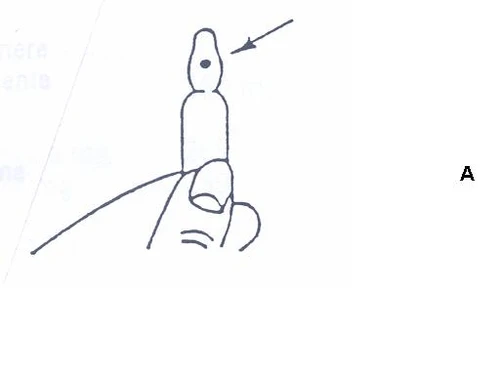 |
| Hold the base of the vial in one hand. Break off the top part of the vial at the break point by pushing backward with the thumb of the other hand. Once opened, place the vial upright on a clean, flat surface. The top part of the vial is indicated in Figure B. | 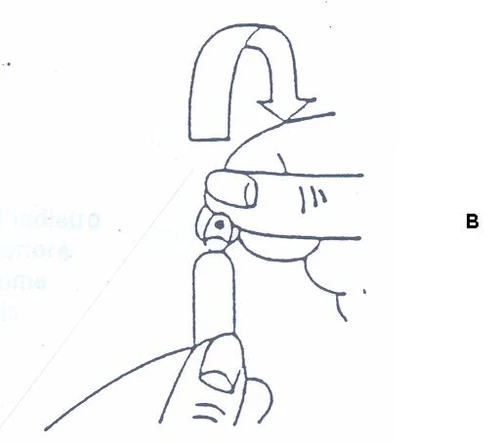 |
Overdose
Symptoms of overdose
Following acute overdose, nausea, vomiting, abdominal pain, renal dysfunction/acute renal failure (e.g., due to interstitial nephritis), and, more rarely, central nervous system symptoms (dizziness, drowsiness, coma, convulsions), decreased blood pressure (sometimes progressing to shock), and cardiac arrhythmias (tachycardia) have been reported.
After administration of very high doses, the excretion of a harmless metabolite (rubazonic acid) may cause red discoloration of urine.
Treatment of overdose
There is no known specific antidote for metamizole. If ingestion occurred recently, measures to limit further systemic absorption of the drug may be attempted, such as primary detoxification (gastric lavage) or agents reducing absorption (activated charcoal).
The main metabolite (4N-methylaminoantipyrine) can be removed by hemodialysis, hemofiltration, hemoperfusion, or plasma filtration.