Normosang
Italy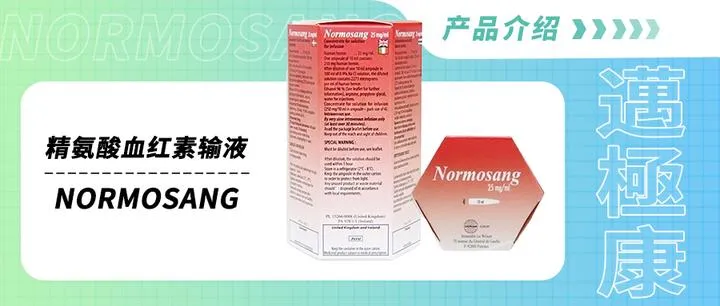
Table of Contents
- Package leaflet: information for the user
- Normosang 25 mg/ml, concentrate for solution for infusion.
- 1. What Normosang is and what it is used for
- 2. What you should know before using Normosang
- 3. How to use Normosang
- 4. Possible side effects
- 5. How to store Normosang
- 6. Package contents and other information
PACKAGE LEAFLET
Package leaflet: information for the user
Normosang 25 mg/ml, concentrate for solution for infusion.
Human medicine
Please read this leaflet carefully before using this medicine because it contains important information for you.
- Keep this leaflet. You may need to read it again.
- If you have any questions, consult your doctor.
- If you experience any side effects, including those not listed in this leaflet, consult your doctor, pharmacist, or nurse. See section 4.
Contents of this leaflet:
- What Normosang is and what it is used for
- What you need to know before using Normosang
- How to use Normosang
- Possible side effects
- How to store Normosang
- Contents of the pack and other information
1. What Normosang is and what it is used for
Normosang contains human haemin, a substance extracted from human blood.
Normosang is used to treat acute attacks occurring in patients with acute hepatic porphyria; this disease is characterised by the accumulation in the liver of certain compounds (such as porphyrins and their toxic precursors). There are three types of hepatic porphyria, whose medical names are: acute intermittent porphyria, variegate porphyria, and hereditary coproporphyria. This accumulation leads to symptoms including pain (mainly in the abdomen, back, and thighs), nausea, vomiting, and constipation.
2. What you should know before using Normosang
Do not use Normosang
- if you are allergic to human heme or to any of the other ingredients of this medicine (listed in section 6).
Warnings and precautions
- Before treatment with Normosang, your doctor must confirm hepatic porphyria crisis through a series of clinical and biological parameters: personal or family history positive for porphyria; indicative clinical signs; quantitative determination of delta-aminolevulinic acid and porphobilinogen in urine (specific markers of the disease).
- Early initiation of treatment with Normosang after the onset of the crisis increases its effectiveness.
- As a result of Normosang infusions, abdominal pain and other gastrointestinal symptoms usually resolve within 2–4 days. In contrast, neurological complications (such as paralysis and psychological disturbances) are less responsive to treatment.
- You will be closely monitored throughout the treatment period, as porphyria crises are often associated with various effects on the heart, circulation, and nervous system.
- Do not:
- suddenly change your usual diet, especially avoid prolonged fasting
- take medications or substances such as estrogens (e.g. oral contraceptives), barbiturates (drugs that help sleep and sometimes used to treat epilepsy), or steroids (drugs similar to hormones produced by the body), as these may trigger or worsen a crisis.
Ask your doctor or pharmacist for advice regarding medications and substances you should avoid (both now and
in the future).
- To prevent venous irritation, the solution will be administered by infusion into a large vein (blood vessel) in the arm or a vein in the chest over a period of at least 30 minutes. After the infusion, the vein will be flushed with physiological saline.
- A blood clot (known as "venous thrombosis") may block the vein used for infusion.
- If the cannula remains in place for a long time, vascular damage may occur, potentially causing unintended leakage of Normosang from the vein (extravasation). This leakage may cause skin discoloration.
- To minimize the risk of extravasation, the nurse or doctor will examine the cannula before infusion and check it regularly during the infusion.
- The infused solution may give the blood an unusual color.
- To minimize the risk of increased iron compound accumulation, Normosang must not be used as a preventive treatment for acute attacks.
- Human heme contains iron. Occasionally, iron may accumulate in the body after several years of repeated Normosang infusions. Your doctor may perform blood tests from time to time to monitor iron levels in your body.
- Standard measures to prevent infections associated with medicines prepared from human blood or plasma include donor selection, screening of individual donations for specific infection markers, and effective manufacturing steps to inactivate/remove viruses. Despite these precautions, administering medicines derived from human blood or plasma cannot be considered completely free of infection risk. This risk also extends to unknown or emerging viruses and other pathogens.
- The measures taken are considered effective against enveloped viruses such as HIV, HBV, and HCV. When Normosang is administered to a patient, it is strongly recommended to record the product name and batch number to maintain traceability between the treated patient and the production batch.
Other medicines and Normosang
Do not take medications or substances such as estrogens (e.g. oral contraceptives), barbiturates (drugs that help sleep and drugs sometimes used to treat epilepsy), or steroids (drugs similar to hormones produced by the body), as these may trigger or worsen a crisis.
Inform your doctor if you are taking, have recently taken, or might take any other medicines.
Pregnancy and breastfeeding
It is not known whether there is a risk in using Normosang during pregnancy. However, mothers treated with Normosang have given birth to healthy infants.
If you are pregnant, consult your doctor before taking Normosang. Your doctor will prescribe the medicine only if absolutely necessary.
Normosang has not been studied during breastfeeding. However, since many drugs are excreted in breast milk, if you are breastfeeding, inform your doctor and seek advice before taking Normosang. Your doctor will prescribe the treatment only if absolutely necessary or may advise you to discontinue breastfeeding.
Normosang contains ethanol (alcohol). This should be taken into account for women during pregnancy and breastfeeding. See the section: “Normosang contains”.
Driving and using machines
This medicine is not expected to affect your ability to drive or operate machinery.
Normosang contains
Normosang contains ethanol (alcohol) 11.78% vol., corresponding to up to 1000 mg per daily dose (one vial), equivalent to 23.6 ml of beer or 9.8 ml of wine per daily dose. This may be harmful for individuals with alcoholism. This should be taken into account for pregnant and breastfeeding women, children, and high-risk groups such as patients with liver disease or epilepsy.
Ask your doctor for advice before administering Normosang if you are in any of the conditions listed above.
3. How to use Normosang
The medicine will be administered to you only in a hospital setting by qualified healthcare personnel.
The dose to be administered will be calculated based on body weight and is approximately 3 mg per kg of body weight per day, but not exceeding 250 mg (1 vial) per day. The calculated amount will be diluted in a saline solution (0.9% sodium chloride) in a glass vial, forming a dark-colored solution.
The solution will be administered by infusion into a large vein (blood vessel) in the arm or into a vein in the chest over a period of at least 30 minutes. The infused solution may cause an unusual coloration of the blood.
After the infusion, the vein should be flushed with a saline solution.
Usually, you will receive one infusion per day for four days.
If no symptom relief is observed after this initial treatment cycle, the doctor may exceptionally decide to start a second treatment cycle.
If you have received more Normosang than you should
If you have received more Normosang than you should, the doctor will administer treatment to prevent the occurrence of harmful effects.
4. Possible side effects
Like all medicines, this medicine can cause side effects, although not everybody gets them.
Rare (may affect up to 1 in 1,000 people):
- Fever and severe allergic reactions (skin rash, swelling of the tongue), including anaphylactoid reactions, may rarely occur.
Anaphylactoid reactions are sudden and potentially life-threatening reactions, which may rarely occur.
If symptoms such as facial swelling, dyspnea, chest tightness, tachycardia, low blood pressure, urticaria, or spontaneous loss of consciousness (caused by insufficient blood supply to the brain) occur, stop the infusion immediately and contact your doctor without delay.
Very common (may affect more than 1 in 10 people):
- After repeated treatments, access to arm veins may become difficult, which may necessitate the placement of a catheter into a vein in the chest.
Common (may affect up to 1 in 10 people):
-
- Administration into a vein that is too small may cause pain and inflammation.
Uncommon (may affect up to 1 in 100 people):
- Following repeated treatments over several years, the level of an iron compound (called ferritin) in the blood may increase. To limit the risk of increased ferritin levels, Normosang must not be used as preventive treatment for acute attacks.
Frequency not known (frequency cannot be estimated from the available data):
- Headache.
- Venous thrombosis (formation of blood clots in peripheral or central veins), including thrombosis at the injection site.
- Leakage of infusion fluid into the surrounding tissue (extravasation).
- Skin damage (necrosis).
- Redness of the skin at the injection site (injection site erythema).
- Itching at the injection site.
- Increased level of creatinine (a substance excreted by the kidneys) in the blood.
- Skin discoloration.
Reporting of side effects
If you experience any side effect, including those not listed in this leaflet, talk to your doctor, pharmacist, or nurse. You can also report side effects directly via the national reporting system available at https://www.aifa.gov.it/content/segnalazioni-reazioni-avverse.
By reporting side effects, you can help provide more information on the safety of this medicine.
5. How to store Normosang
Keep this medicine out of the sight and reach of children.
Do not use this medicine after the expiry date stated on the vial label and the box after
Exp. The expiry date refers to the last day of that month.
Store in a refrigerator (2 °C – 8 °C).
Keep the vial in the outer packaging to protect the medicine from light.
The solution must be used within one hour of dilution.
Do not dispose of any medicine via wastewater or household waste. Ask your pharmacist how to dispose of medicines you no longer use. This will help protect the environment.
6. Package contents and other information
What Normosang contains
- The active substance is human heme (25 mg/ml). A 10 ml vial contains 250 mg of human heme. After dilution of one 10 ml vial in 100 ml of 0.9% sodium chloride solution, the diluted solution contains 2273 micrograms per ml of human heme.
- The other components are arginine, ethanol (96%), propylene glycol and water for injections.
Description of the appearance of Normosang and contents of the pack
Normosang is a concentrate for solution for infusion (10 ml vials – pack of 4).
Normosang is a dark-colored solution, even after dilution of the concentrate for infusion solution.
Marketing Authorization Holder
Recordati Rare Diseases
Tour Hekla
52, avenue du Général de Gaulle
F-92800 Puteaux
France
Manufacturer
Recordati Rare Diseases
Tour Hekla
52, avenue du Général de Gaulle
F-92800 Puteaux
France
or
Recordati Rare Diseases
Eco River Parc
30, rue des Peupliers
F-92000 Nanterre
France
This medicinal product is authorized in the European Economic Area countries under the following names:
Normosang – Austria / Belgium / Cyprus / Czech Republic / Denmark / Estonia / Finland / France / Germany / Greece / Hungary / Iceland / Ireland / Italy / Latvia / Lithuania / Luxembourg / Malta / Netherlands / Norway / Portugal / Spain / Sweden / Slovenia / Slovakia / United Kingdom
Human Hemin Orphan Europe - Poland