Norlevo
Italy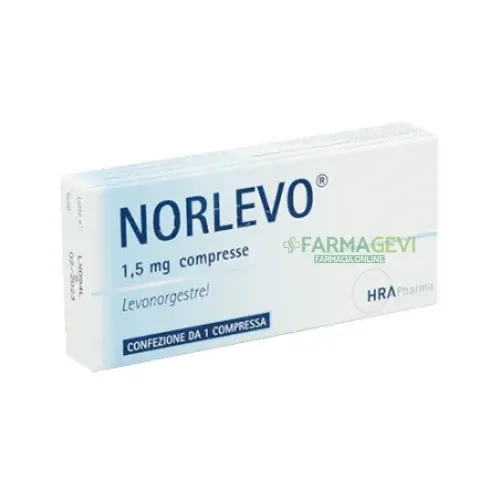
Table of Contents
- PACKAGE LEAFLET: INFORMATION FOR THE USER
- Norlevo 1.5 mg tablets
- 1. WHAT NORLEVO 1.5 MG TABLETS IS AND WHAT IT IS USED FOR
- 2. WHAT YOU SHOULD KNOW BEFORE USING NORLEVO 1.5 MG TABLETS
- 3. HOW TO USE NORLEVO 1.5 MG TABLETS
- 4. POSSIBLE ADVERSE REACTIONS
- 5. HOW TO STORE NORLEVO 1.5 MG TABLETS
- 6. PACK CONTENTS AND OTHER INFORMATION
- PACKAGE LEAFLET: INFORMATION FOR THE USER
- Norlevo 1.5 mg tablets
- 1. WHAT NORLEVO 1.5 MG TABLETS IS AND WHAT IT IS USED FOR
- 2. WHAT YOU SHOULD KNOW BEFORE USING NORLEVO 1.5 MG TABLETS
- 3. HOW TO USE NORLEVO 1.5 MG TABLETS
- 4. POSSIBLE ADVERSE REACTIONS
- 5. HOW TO STORE NORLEVO 1.5 MG TABLETS
- 6. PACK CONTENTS AND OTHER INFORMATION
PACKAGE LEAFLET: INFORMATION FOR THE USER
Norlevo 1.5 mg tablets
Levonorgestrel
Read this entire leaflet carefully before using this medicine
because it contains important information for you.
Always use this medicine exactly as described in this leaflet or as your doctor, pharmacist, or family planning clinic has instructed you.
- Keep this leaflet. You may need to read it again.
- If you would like more information or advice, consult your doctor, pharmacist, or family planning clinic. If you experience any side effects, including those not listed in this leaflet, contact your doctor or pharmacist. See section 4.
What this leaflet contains:
- What Norlevo 1.5 mg tablets are and what they are used for
- What you need to know before using Norlevo 1.5 mg tablets
- How to use Norlevo 1.5 mg tablets
- Possible side effects
- How to store Norlevo 1.5 mg tablets
- Contents of the pack and other information
1. WHAT NORLEVO 1.5 MG TABLETS IS AND WHAT IT IS USED FOR
Norlevo is an emergency oral contraceptive.
What is emergency contraception?
Emergency contraception is an emergency method intended to prevent pregnancy
after unprotected sexual intercourse or in case of contraceptive failure.
When should emergency contraception be used?
This contraceptive method should be used as soon as possible, preferably within 12
hours and no later than 72 hours (3 days), after unprotected sexual intercourse or after contraceptive failure.
The effectiveness of the method is greater the sooner treatment is started
after unprotected intercourse. Norlevo can prevent pregnancy only if
taken within 72 hours of unprotected sexual intercourse. It is not effective if pregnancy has already occurred.
If you have unprotected sexual intercourse after taking Norlevo, the medicine will not prevent pregnancy.
It has been shown that Norlevo prevents 52% to 85% of expected pregnancies.
If you suspect you may become pregnant for any of the following reasons:
- if you have had sexual intercourse without using contraception;
- if you forgot to take your contraceptive pill on time;
- if your partner's condom broke, slipped off, or was removed;
- if you suspect your intrauterine device has been expelled;
- if your contraceptive diaphragm or cervical cap has shifted or was removed too early;
- if you fear the withdrawal method or rhythm method has failed;
- in case of sexual assault.
Norlevo works by preventing the release of an egg from your ovaries. It cannot prevent the implantation in the uterus
of a fertilized egg.
This tablet is intended only for emergency contraception, not for regular contraception,
as it is less effective than the regular contraceptive pill ("the pill").
Norlevo is not indicated for use before the first menstrual bleeding (menarche).
2. WHAT YOU SHOULD KNOW BEFORE USING NORLEVO 1.5 MG TABLETS
Do not use Norlevo 1.5 mg tablets
- if you are allergic to levonorgestrel or to any of the other ingredients of this medicine (listed in section 6).
Warnings and precautions
The use of Norlevo is not recommended in the following cases:
- if you have had an ectopic pregnancy,
- or if you have had a fallopian tube infection (salpingitis),
- if you have a personal or family history of known risk factors for thrombosis (blood clots),
- or if you suffer from a severe digestive disorder affecting the absorption of food and medicines,
- or in case of severe liver disease or severe small intestine disorders, such as Crohn's disease.
A previous ectopic pregnancy or a previous fallopian tube infection increases the risk of a new ectopic pregnancy. Therefore, if you have had an ectopic pregnancy or a fallopian tube infection, you should consult your doctor before taking Norlevo.
Emergency contraception should only be used in exceptional circumstances and must not replace regular contraceptive methods because:
- it does not prevent pregnancy in every circumstance;
- there is a risk of hormonal overdose which may cause disturbances in your menstrual cycle. Emergency contraception cannot interrupt an existing pregnancy.
If you have had another unprotected sexual intercourse more than 72 hours ago, conception may have already occurred. Treatment with Norlevo following this second unprotected intercourse may therefore be ineffective in preventing pregnancy.
Repeated administration of Norlevo within the same menstrual cycle is discouraged due to the possibility of menstrual cycle disturbances.
Norlevo does not work in the same way as regular contraceptive methods. Your doctor can advise you on more effective long-term contraceptive methods for preventing pregnancy.
After taking this medicine:
It is mandatory to confirm the absence of pregnancy by performing a pregnancy test:
- if your menstrual period is delayed by more than five days,
- or if you experience abnormal bleeding, even if it occurs around the expected time of your menstrual period.
In all women, emergency contraception should be taken as soon as possible after unprotected intercourse. According to some data, Norlevo may be less effective with increasing body weight or body mass index (BMI), but these data are limited and not conclusive. Therefore, Norlevo is recommended for all women regardless of weight or BMI.
If you are concerned about problems related to taking emergency contraception, speak with a healthcare professional.
If a condom was not used during intercourse (or if it broke or slipped off), you may have been exposed to a sexually transmitted infection or HIV. The use of emergency contraception does not protect against sexually transmitted infections, nor can it replace the necessary precautions and measures to take in case of transmission risk (see National Information).
Children and adolescents
The efficacy of Norlevo in adolescents (under 18 years of age) is comparable to that in the adult population. The dose for adolescents is the same as for adults.
Do not administer this medicine before the first menstrual bleeding (menarche).
Other medicines and Norlevo 1.5 mg tablets
Inform your pharmacist or doctor if you are taking or have recently taken any other medicines, including those obtained without a prescription or herbal medicines.
Some medicines may prevent Norlevo from working effectively. If you have taken any of the medicines listed below within the past 4 weeks, Norlevo may be less suitable for you. Your doctor may prescribe another type (non-hormonal) of emergency contraceptive, namely a copper intrauterine device (Cu-IUD). If this is not an acceptable option for you or if you cannot see a doctor promptly, take a double dose of Norlevo:
- barbiturates and other medicines (used to treat epilepsy (e.g. primidone, phenytoin, and carbamazepine))
- medicines used to treat tuberculosis (e.g. rifampicin, rifabutin)
- treatment for HIV (ritonavir, efavirenz)
- a medicine used to treat fungal infections (griseofulvin)
- herbal preparations containing St. John's wort (Hypericum perforatum)
Consult your doctor or pharmacist if you need further advice on the correct dosage for you.
After taking the tablets, consult your doctor as soon as possible for further advice on how to use regular and reliable contraception and to rule out pregnancy. (See also section 3 “HOW TO USE NORLEVO 1.5 MG TABLETS” for further information).
Norlevo may also affect the way other medicines work
- a medicine called cyclosporine (which suppresses the immune system).
Norlevo must not be used together with medicines containing ulipristal acetate.
Pregnancy and breastfeeding
If you are pregnant:
This medicine does not interrupt an existing pregnancy.
If you take this contraceptive and become pregnant anyway, studies conducted to date have not shown any risk of fetal malformation.
Nevertheless, this medicine should not be taken during pregnancy.
If you become pregnant after taking Norlevo, contact your doctor. Your doctor may wish to check whether the pregnancy is ectopic (a pregnancy developing outside the uterus). This is particularly important if you experience severe abdominal pain after taking Norlevo or if you have previously had an ectopic pregnancy, fallopian tube surgery, or pelvic inflammatory disease.
If you are breastfeeding:
Breastfeeding is possible. However, since levonorgestrel is excreted in breast milk, it is recommended to breastfeed immediately before taking the Norlevo tablet and to avoid breastfeeding for at least 8 hours after taking Norlevo. During this period, if you express milk, it should be discarded.
Ask your doctor or pharmacist for advice before taking any medicine.
Driving and using machines
After taking Norlevo, some women have experienced fatigue and dizziness (see section 4 "POSSIBLE SIDE EFFECTS"): do not drive or operate machinery if you experience these symptoms.
No studies have been reported on the effect on the ability to drive or use machinery.
Important information about some ingredients of Norlevo 1.5 mg tablets
Norlevo 1.5 mg tablets contain lactose monohydrate. If your doctor has diagnosed you with an intolerance to certain sugars, contact him before taking this medicine.
3. HOW TO USE NORLEVO 1.5 MG TABLETS
Take Norlevo 1.5 mg tablets exactly as described in this leaflet or as directed by your doctor or pharmacist. If you have any doubts, consult your doctor or pharmacist.
Norlevo may be taken at any time during the menstrual cycle, provided that you are not already pregnant or suspect you might be pregnant. Do not chew the tablet; swallow it whole with water.
Take the tablet as soon as possible, preferably within 12 hours, and no later than 72 hours (3 days) after unprotected sexual intercourse. Do not delay taking the tablet. The effectiveness of the tablet is greater the sooner it is taken after unprotected sexual intercourse. The tablet can prevent pregnancy only if taken within 72 hours of unprotected sexual intercourse.
- If you are taking any of the medicines that may reduce Norlevo’s effectiveness (see section above “Other medicines and Norlevo 1.5 mg”) or if you have taken any of these medicines in the past 4 weeks, Norlevo may be less effective for you. Your doctor may prescribe another type of emergency contraceptive (non-hormonal), namely a copper intrauterine device (Cu-IUD). If this is not an acceptable option for you or if you cannot see a doctor promptly, take a double dose of Norlevo 1.5 mg tablets (i.e. 2 tablets taken together at the same time).
- If you are already using a regular contraceptive method, such as the pill, you may continue taking it at your usual times. If menstruation does not occur during the pill-free interval, perform a pregnancy test to rule out pregnancy.
If you vomit within three hours after taking the tablet, you must take another tablet immediately. Contact your pharmacist or doctor to obtain an additional tablet.
After using an emergency contraceptive, you should use a local contraceptive method (condom, spermicide, cervical cap) until your next menstrual period. If you have another episode of unprotected sexual intercourse after taking Norlevo (even if it occurs within the same menstrual cycle), the tablet will not provide contraceptive protection, and there is again a risk of pregnancy. If you are using a regular hormonal contraceptive method such as the oral contraceptive pill, continue taking it as usual.
Your doctor may also advise you about more effective long-term contraceptive methods for preventing pregnancy.
If you continue using regular hormonal contraception such as the oral contraceptive pill and do not experience bleeding during the pill-free interval, consult your doctor to confirm that you are not pregnant.
Menstrual period following Norlevo intake
After taking Norlevo, menstrual periods are usually normal and occur at the expected time; however, they may sometimes occur a few days earlier or later than expected.
If your period is delayed by more than 5 days, or if it is unusually light or unusually heavy, or if for any other reason you think you might be pregnant, you should perform a pregnancy test to confirm whether or not you are pregnant. If you become pregnant despite having taken this medicine, it is important that you consult your doctor.
If you take more Norlevo 1.5 mg tablets than you should
No cases of acute toxicity or serious harmful effects have been reported following overdose of this medicine. However, you may experience nausea, vomiting, or vaginal bleeding. In such cases, you should consult your doctor or pharmacist.
4. POSSIBLE ADVERSE REACTIONS
Like all medicines, this medicine can cause adverse reactions, although not everyone experiences them.
The following adverse reactions have been observed:
Very common adverse reactions (may affect more than 1 in 10 people):
- dizziness, headache
- nausea, abdominal pain
- breast tenderness, menstrual delay, heavy menstruation, uterine bleeding, uterine pain
- fatigue
Common adverse reactions (may affect from 1 to 10 in 100 people):
- diarrhoea, vomiting
- painful menstruation
Not known (frequency cannot be estimated from the available data):
- Cases of thromboembolic events (blood clots) have been reported during the post-marketing period.
- After taking this medicine, allergic reactions such as swelling of the throat and face, and skin rashes may occur.
If any of these adverse reactions worsens, or if you notice any adverse reaction not listed in this leaflet, inform your doctor or pharmacist.
Reporting of adverse reactions
If you experience any adverse reaction, including those not listed in this leaflet, consult your doctor or pharmacist. You can also report adverse reactions directly via the national reporting system at https://www.aifa.gov.it/content/segnalazioni-reazioni-avverse.
By reporting adverse reactions, you can help provide more information on the safety of this medicine.
5. HOW TO STORE NORLEVO 1.5 MG TABLETS
Keep this medicine out of the reach and sight of children.
Keep the blister pack in the outer packaging to protect the medicine from light.
Do not use this medicine after the expiry date stated on the carton and blister after EXP.
The expiry date refers to the last day of that month.
Do not use this medicine if you notice any visible signs of deterioration; if this is the case, return it to your pharmacist.
Do not dispose of any medicine via wastewater or household waste. Ask your pharmacist how to dispose of medicines you no longer use. This will help protect the environment.
6. PACK CONTENTS AND OTHER INFORMATION
What Norlevo 1.5 mg tablets contain
- The active substance is levonorgestrel.
- The other ingredients are: monohydrate lactose, maize starch, povidone, anhydrous colloidal silica, magnesium stearate. Levonorgestrel belongs to a group of medicines called emergency contraceptives.
Description of the appearance of Norlevo 1.5 mg tablets and pack contents
Norlevo 1.5 mg is a white, biconvex, round tablet with the code NL1.5 engraved on one side.
Each Norlevo pack contains one tablet of 1.5 mg levonorgestrel.
Marketing Authorisation Holder and Manufacturer
Marketing Authorisation Holder
LABORATOIRE HRA PHARMA
200, avenue de Paris
92320 CHATILLON - FRANCE
Legal representative in Italy:
Perrigo Italia S.r.l
Viale dell’Arte, 25 – 00144 Roma (RM)
Manufacturer
CENEXI
17, Rue de Pontoise
95520 OSNY - FRANCE
or
DELPHARM LILLE S.A.S.
Parc d’Activités Roubaix-Est
22 rue de Toufflers
CS 50070
59452 LYS LEZ LANNOY - FRANCE
This medicine is authorised in the European Economic Area Member States under the following names:
Norlevo 1.5 mg tablets
Vikela 1.5 mg tablets (Austria)
This leaflet was last approved on:
NATIONAL INFORMATION
a) Some information about the menstrual cycle and contraception
- Menstrual cycle The menstrual cycle is the time between two menstrual periods. Normally, the cycle lasts 28 days, although its duration may vary considerably from one woman to another. Menstrual periods occur when a woman is not pregnant.
- Fertilisation Around the middle of the cycle, an egg (ovum) is released from one of the two ovaries (this phase is called "ovulation"). Normally, ovulation occurs in the middle of the cycle, but it may happen at any time during the cycle. If sperm are present near the egg when it is released, fertilisation may occur (i.e. the fusion of a sperm with the egg to form an embryo).
A few days later, the fertilised egg implants in the uterus and pregnancy begins.
- Contraception Contraceptive methods aim to prevent:
- ovulation: as with the oral contraceptive pill,
- fertilisation (fusion of a sperm with the egg): as with condoms, or
- implantation of a fertilised egg: as with intrauterine devices.
- Emergency contraceptive pills Emergency contraceptive pills work by blocking or delaying ovulation after sexual intercourse. They are not effective if ovulation has already occurred.
Every time a woman has sexual intercourse without using a contraceptive method, the possibility of pregnancy cannot be ruled out.
If you have taken this medicine but are not using a regular contraceptive method, you are strongly advised to contact your doctor or a family planning clinic to obtain advice on choosing a contraceptive method suitable for your individual circumstances.
b) Recommendations in case of risk of transmission of sexually transmitted infections
If you have had unprotected sexual intercourse, you may be at risk of contracting sexually transmitted infections, especially if you do not know your partner's sexual history or have multiple partners. If you have any doubts, please consult your pharmacist, doctor, or a family planning clinic.
GLOSSARY
- Ectopic pregnancy: a pregnancy that develops outside the uterus, usually in one of the fallopian tubes. Warning signs include persistent abdominal pain, missed menstrual period, vaginal bleeding, and symptoms of pregnancy (nausea, breast tenderness). If these symptoms occur, consult your doctor immediately.
- Salpingitis: infection of the fallopian tubes. Symptoms include abdominal pain, fever, and heavy vaginal discharge.
PACKAGE LEAFLET: INFORMATION FOR THE USER
Norlevo 1.5 mg tablets
Levonorgestrel
Please read this leaflet carefully before using this medicine because it contains important information for you.
- Keep this leaflet. You may need to read it again.
- If you have any questions, ask your doctor, pharmacist, or family planning clinic.
- If you experience any side effects, including those not listed in this leaflet, contact your doctor or pharmacist. See section 4.
Contents of this leaflet:
- What Norlevo 1.5 mg tablets are and what they are used for
- What you need to know before taking Norlevo 1.5 mg tablets
- How to take Norlevo 1.5 mg tablets
- Possible side effects
- How to store Norlevo 1.5 mg tablets
- Contents of the pack and other information
1. WHAT NORLEVO 1.5 MG TABLETS IS AND WHAT IT IS USED FOR
Norlevo is an emergency oral contraceptive.
What is emergency contraception?
Emergency contraception is an emergency method intended to prevent pregnancy
after unprotected sexual intercourse or in case of failure of a contraceptive method.
When should emergency contraception be used?
This contraceptive method should be used as soon as possible, preferably within 12
hours and no later than 72 hours (3 days), after unprotected sexual intercourse or after failure
of a contraceptive method. The effectiveness of the method is higher the sooner treatment
is started after unprotected intercourse. Norlevo can prevent pregnancy only if
taken within 72 hours of unprotected sexual intercourse. It is not effective if pregnancy has already occurred.
If you have unprotected sexual intercourse after taking Norlevo, the medicine will not prevent
pregnancy.
It has been shown that Norlevo prevents 52% to 85% of expected pregnancies.
You should consider using emergency contraception if you suspect you may become pregnant for any of the following reasons:
- if you had sexual intercourse without using contraception;
- if you forgot to take your regular contraceptive pill on time;
- if your partner’s condom broke, slipped off, or was removed;
- if you suspect your intrauterine device (IUD) has been expelled;
- if your contraceptive diaphragm or cervical cap was displaced or removed too early;
- if you fear the withdrawal method or rhythm method failed;
- in case of sexual assault.
Norlevo works by preventing the release of an egg from your ovaries. It cannot prevent the implantation in the uterus
of a fertilized egg.
This tablet is intended only for emergency contraception, not for regular contraception, as it is
less effective than the regular oral contraceptive pill (“the pill”).
Norlevo is not indicated for use before the first menstrual bleeding (menarche).
2. WHAT YOU SHOULD KNOW BEFORE USING NORLEVO 1.5 MG TABLETS
Do not use Norlevo 1.5 mg tablets
- if you are allergic to levonorgestrel or to any of the other ingredients of this medicine (listed in section 6).
Warnings and precautions
The use of Norlevo is not recommended in the following cases:
- if you have had an ectopic pregnancy,
- or if you have had a fallopian tube infection (salpingitis),
- if you have a personal or family history of known risk factors for thrombosis (blood clots),
- or if you suffer from a severe digestive disease affecting the absorption of food and medicines,
- or in case of severe liver disease or severe small intestine disorders, such as Crohn's disease.
A previous ectopic pregnancy and a previous fallopian tube infection increase the risk of a new ectopic pregnancy. Therefore, if you have had an ectopic pregnancy or a fallopian tube infection, you should consult your doctor before taking Norlevo.
Emergency contraception should be used only in exceptional circumstances and must not replace a regular contraceptive method because:
- it does not prevent pregnancy in every circumstance;
- there is a risk of hormonal overdose, which may cause disturbances in your menstrual cycle. Emergency contraception cannot terminate an existing pregnancy.
If you have had another unprotected sexual intercourse more than 72 hours ago, conception may already have occurred. Therefore, treatment with Norlevo following the second unprotected intercourse may prove ineffective in preventing pregnancy.
Repeated administration of Norlevo within the same menstrual cycle is discouraged due to the possibility of menstrual cycle disturbances.
Norlevo does not work in the same way as regular contraceptive methods. Your doctor may recommend longer-term contraceptive methods that are more effective in preventing pregnancy.
After taking this medicine:
It is mandatory to confirm the absence of pregnancy by performing a pregnancy test:
- if your menstrual period is delayed by more than five days,
- in case of abnormal bleeding, even if it occurs around the expected time of menstruation.
In all women, emergency contraception should be taken as soon as possible after unprotected intercourse. According to some data, Norlevo may be less effective with increasing body weight or body mass index (BMI), but these data are limited and not conclusive. Therefore, Norlevo is recommended for all women regardless of weight or BMI.
If you are concerned about potential problems related to the use of emergency contraception, speak with a healthcare professional.
If a condom was not used during intercourse (or if it broke or slipped off), you may have been exposed to a sexually transmitted infection or HIV. The use of emergency contraception does not protect against sexually transmitted infections, nor can it replace the necessary precautions and measures required in case of transmission risk (see National Information).
Children and adolescents
The efficacy of Norlevo in adolescents (under 18 years of age) is comparable to that in the adult population. The dose for adolescents is the same as for adults.
Do not administer this medicine before the first menstrual bleeding (menarche).
Other medicines and Norlevo 1.5 mg
Inform your pharmacist or doctor if you are taking or have recently taken any other medicines, including those obtained without a prescription or herbal medicines.
Some medicines may prevent Norlevo from working effectively. If you have taken any of the medicines listed below during the past 4 weeks, Norlevo may be less suitable for you. Your doctor may prescribe another type (non-hormonal) of emergency contraceptive, namely a copper intrauterine device (Cu-IUD). If this is not an acceptable option for you or if you cannot see a doctor promptly, take a double dose of Norlevo:
- barbiturates and other medicines (used to treat epilepsy (e.g. primidone, phenytoin and carbamazepine))
- medicines used to treat tuberculosis (e.g. rifampicin, rifabutin)
- treatment for HIV (ritonavir, efavirenz)
- a medicine used to treat fungal infections (griseofulvin)
- herbal preparations containing St. John's wort (Hypericum perforatum)
Consult your doctor or pharmacist if you need further advice on the correct dosage for you.
After taking the tablets, consult your doctor as soon as possible to receive further advice on how to use regular and reliable contraception and to rule out pregnancy. (See also section 3 “HOW TO USE NORLEVO 1.5 MG TABLETS” for additional information.)
Norlevo may also affect the functioning of other medicines:
- a medicine called cyclosporine (which suppresses the immune system).
Norlevo must not be used together with medicines containing ulipristal acetate.
Pregnancy and breastfeeding
If you are pregnant:
This medicine does not interrupt an existing pregnancy.
If you take this contraceptive and become pregnant anyway, studies conducted to date have not shown any risk of fetal malformation.
However, this medicine should not be taken during pregnancy.
If you become pregnant after taking Norlevo, you must contact your doctor. Your doctor may wish to check whether the pregnancy is ectopic (development of the baby outside the uterus). This is particularly important if you experience severe abdominal pain after taking Norlevo or if you have previously had an ectopic pregnancy, fallopian tube surgery, or pelvic inflammatory disease.
If you are breastfeeding:
Breastfeeding is possible. However, since levonorgestrel is excreted in breast milk, it is recommended to breastfeed immediately before taking the Norlevo tablet and to avoid breastfeeding for at least 8 hours after taking Norlevo. During this period, if you express milk, it should be discarded.
Ask your doctor or pharmacist for advice before taking any medicine.
Driving and using machines
After taking Norlevo, some women have experienced fatigue and dizziness (see section 4 "POSSIBLE SIDE EFFECTS"): do not drive or operate machinery if you experience these symptoms.
No studies on the effect on the ability to drive or use machines have been reported.
Important information about some ingredients of Norlevo 1.5 mg tablets
Norlevo 1.5 mg tablets contain lactose monohydrate. If your doctor has diagnosed you with an intolerance to certain sugars, contact him before taking this medicine.
3. HOW TO USE NORLEVO 1.5 MG TABLETS
Take Norlevo 1.5 mg tablets exactly as stated in this leaflet or as instructed by your doctor or pharmacist. If you have any doubts, consult your doctor or pharmacist.
Norlevo can be taken at any time during the menstrual cycle, provided you are not already pregnant or suspect you may be pregnant. Do not chew the tablet; swallow it whole with water.
Take the tablet as soon as possible, preferably within 12 hours and no later than 72 hours (3 days) after unprotected sexual intercourse. Do not delay taking the tablet. The effectiveness of the tablet is greater the sooner it is taken after unprotected intercourse. The tablet can only prevent pregnancy if taken within 72 hours of unprotected sexual intercourse.
- If you are taking any of the medicines that may reduce the effectiveness of Norlevo (see section above “Other medicines and Norlevo 1.5 mg”) or if you have taken any of these medicines in the past 4 weeks, Norlevo may be less effective for you. Your doctor may prescribe you another type of emergency contraceptive (non-hormonal), namely a copper intrauterine device (Cu-IUD). If this option is not acceptable for you or if you cannot see a doctor promptly, take a double dose of Norlevo 1.5 mg tablets (i.e., 2 tablets taken together at the same time).
- If you are already using a regular contraceptive method, such as the oral contraceptive pill, you may continue taking it at your usual times. If menstruation does not occur during the pill-free interval, perform a pregnancy test to rule out pregnancy.
If you vomit within three hours after taking the tablet, take another tablet immediately. Contact your pharmacist or doctor to obtain an additional tablet.
After using an emergency contraceptive, you must use a local contraceptive method (condom, spermicide, cervical cap) until your next menstrual period. If you have another episode of unprotected intercourse after taking Norlevo (even if it occurs within the same menstrual cycle), the tablet will not provide contraceptive protection and there is again a risk of pregnancy. If you are using a regular contraceptive method such as the oral contraceptive pill, continue taking it as usual.
Your doctor may also advise you on more effective long-term contraceptive methods to prevent pregnancy.
If you continue using regular hormonal contraception such as the oral contraceptive pill and do not experience any bleeding during the pill-free interval, consult your doctor to confirm that you are not pregnant.
Menstrual period following Norlevo intake
After taking Norlevo, menstrual periods are usually normal and occur at the expected time; however, they may sometimes occur a few days earlier or later.
If your period is delayed by more than 5 days, or if it is unusually light or unusually heavy, or if you think you might be pregnant for any other reason, you should perform a pregnancy test to confirm whether or not you are pregnant. If you become pregnant despite taking this medicine, it is important that you consult your doctor.
If you take more Norlevo 1.5 mg tablets than you should
No cases of acute toxicity or serious harmful effects have been reported following overdose of this medicine. However, you may experience nausea, vomiting, or vaginal bleeding. In such cases, you should contact your doctor or pharmacist.
4. POSSIBLE ADVERSE REACTIONS
Like all medicines, this medicine can cause adverse reactions, although not everyone experiences them.
The following adverse reactions have been observed:
Very common adverse reactions (may affect more than 1 in 10 people):
- dizziness, headache
- nausea, abdominal pain
- breast tenderness, menstrual delay, heavy menstruation, uterine bleeding, uterine pain
- fatigue
Common adverse reactions (may affect from 1 to 10 in 100 people):
- Diarrhea, vomiting
- Painful menstruation
Unknown frequency (cannot be estimated from the available data):
- Cases of thromboembolic events (blood clotting) have been reported during the post-marketing period.
- Allergic reactions such as swelling of the throat and face, and skin rashes may occur after taking this medicine.
If any of these adverse reactions worsens, or if you notice any adverse reaction not listed in this leaflet, inform your doctor or pharmacist.
Reporting of adverse reactions
If you experience any adverse reaction, including those not listed in this leaflet, talk to your doctor or pharmacist. You may also report adverse reactions directly via the national reporting system at https://www.aifa.gov.it/content/segnalazioni-reazioni-avverse.
By reporting adverse reactions, you can help provide more information on the safety of this medicine.
5. HOW TO STORE NORLEVO 1.5 MG TABLETS
Keep this medicine out of the reach and sight of children.
Keep the blister in the outer packaging to protect the medicine from light.
Do not use this medicine after the expiry date stated on the carton and blister after EXP.
The expiry date refers to the last day of that month.
Do not use this medicine if you notice any visible signs of deterioration; if this is the case, return it to your pharmacist.
Do not dispose of medicines via wastewater or household waste. Ask your pharmacist how to dispose of medicines you no longer use.
This will help protect the environment.
6. PACK CONTENTS AND OTHER INFORMATION
What Norlevo 1.5 mg tablets contain
- The active substance is levonorgestrel.
- The other ingredients are: monohydrate lactose, maize starch, povidone, anhydrous colloidal silica, magnesium stearate. Levonorgestrel belongs to the group of medicines called emergency contraceptives.
Description of the appearance of Norlevo 1.5 mg tablets and pack contents
Norlevo 1.5 mg is a white, biconvex, round tablet, engraved with the code NL1.5 on one side.
Each Norlevo pack contains one tablet of 1.5 mg levonorgestrel.
Marketing Authorisation Holder and Manufacturer
Marketing Authorisation Holder
LABORATOIRE HRA PHARMA
200, avenue de Paris
92320 CHATILLON - FRANCE
Legal representative in Italy:
Perrigo Italia S.r.l
Viale dell’Arte, 25 – 00144 Roma (RM)
Manufacturer
CENEXI
17, Rue de Pontoise
95520 OSNY - FRANCE
or
DELPHARM LILLE S.A.S.
Parc d’Activités Roubaix-Est
22 rue de Toufflers
CS 50070
59452 LYS LEZ LANNOY - FRANCE
This medicinal product is authorised in the European Economic Area countries under the following names:
Norlevo 1.5 mg tablets
Vikela 1.5 mg tablets (Austria)
This leaflet was last approved on:
NATIONAL INFORMATION
a) Some information about the menstrual cycle and contraception
- Menstrual cycle: The menstrual cycle is the time between two menstrual periods. Normally, the cycle lasts 28 days, although its duration can vary significantly from one woman to another. Menstrual periods occur when a woman is not pregnant.
- Fertilisation: Midway through the cycle, an egg (ovum) is released from one of the two ovaries (this phase is called "ovulation"). Normally, ovulation occurs in the middle of the cycle, but it can happen at any time during the cycle. If sperm are present near the egg when it is released, fertilisation may occur (i.e. the fusion of a sperm with the egg to form an embryo).
A few days later, the fertilised egg implants in the uterus and pregnancy begins.
- Contraception: Contraceptive methods aim to prevent:
- ovulation: as with the oral contraceptive pill,
- fertilisation (fusion of a sperm with the egg): as with condoms, or
- implantation of a fertilised egg: as with intrauterine devices.
- Emergency contraceptive pills: Emergency contraceptive pills work by blocking or delaying ovulation after sexual intercourse. They are not effective if ovulation has already occurred.
Every time a woman has sexual intercourse without using a contraceptive method, the possibility of pregnancy cannot be ruled out.
If you have taken this medicine but are not using a regular contraceptive method, you are strongly advised to contact your doctor or a family planning clinic to obtain advice on a contraceptive method suitable for your individual circumstances.
b) Recommendations in case of risk of transmission of sexually transmitted infections
If you have had unprotected sex, you may be at risk of contracting sexually transmitted infections, especially if you do not know your partner's sexual history or have multiple partners. If you have any doubts, consult your pharmacist, doctor, or a family planning clinic.
GLOSSARY
- Ectopic pregnancy: A pregnancy that develops outside the uterus, usually in one of the Fallopian tubes. Warning signs include persistent abdominal pain, missed menstrual period, vaginal bleeding, and symptoms of pregnancy (nausea, breast tenderness). If these symptoms occur, consult your doctor immediately.
- Salpingitis: Infection of the Fallopian tubes. Symptoms include abdominal pain, fever, and heavy vaginal discharge.