Norfloxacin Sandoz
Italy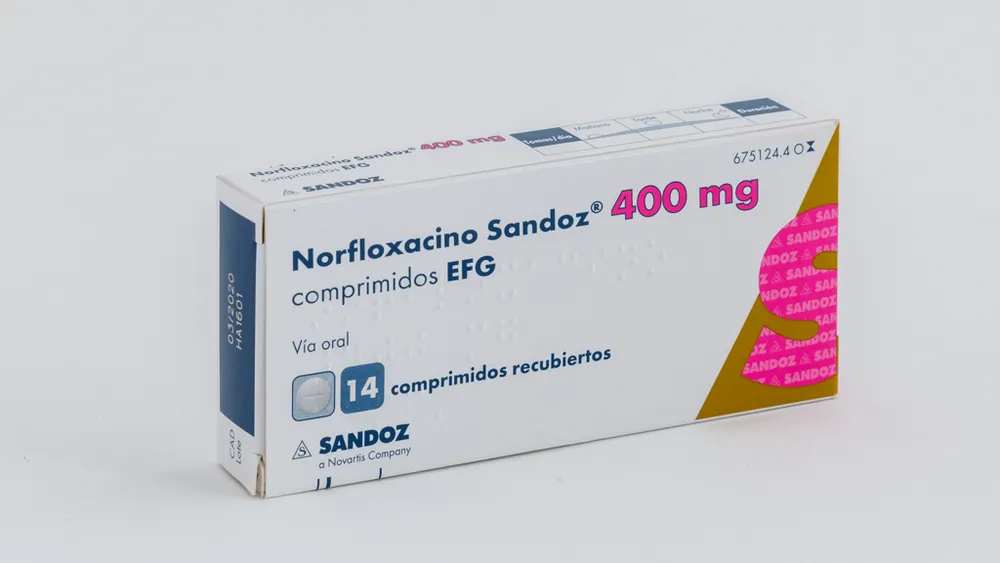
Table of Contents
- Package leaflet: Information for the patient
- Norfloxacina Sandoz 400 mg film-coated tablets
- 1. What Norfloxacina Sandoz is and what it is used for
- 2. What you should know before taking Norfloxacina Sandoz
- 3. How to take Norfloxacina Sandoz
- 4. Possible side effects
- 5. How to store Norfloxacina Sandoz
- 6. Package contents and other information
Package leaflet: Information for the patient
Norfloxacina Sandoz 400 mg film-coated tablets
Generic medicinal product
Please read this leaflet carefully before using this medicine because it contains important information for you.
- Keep this leaflet. You may need to read it again.
- If you have any questions, ask your doctor or pharmacist.
- This medicine has been prescribed for you only. Do not give it to other people, even if their symptoms are the same as yours, as it may be harmful.
- If you experience any side effects, including those not listed in this leaflet, contact your doctor or pharmacist. See section 4.
Contents of this leaflet
- What Norfloxacina Sandoz is and what it is used for
- What you need to know before taking Norfloxacina Sandoz
- How to take Norfloxacina Sandoz
- Possible side effects
- How to store Norfloxacina Sandoz
- Contents of the pack and other information
1. What Norfloxacina Sandoz is and what it is used for
Norfloxacina Sandoz belongs to a group of medicines called fluoroquinolones, which are antibacterial agents.
Norfloxacina Sandoz is used to treat infections caused by bacteria sensitive to norfloxacin, such as urinary tract infections:
- uncomplicated acute cystitis
- urethritis, including cases due to susceptible strains of Neisseria gonorrhoeae
- complicated urinary tract infections (excluding complicated pyelonephritis)
- complicated acute cystitis
2. What you should know before taking Norfloxacina Sandoz
Do not take Norfloxacina Sandoz if:
- you are allergic (hypersensitive) to norfloxacin or to any of the other ingredients of Norfloxacina Sandoz (listed in section 6)
- you have a history of tendon disorders related to the use of this type of medicine
- you are or think you may be pregnant (see section “Pregnancy and breastfeeding” below)
- you are breastfeeding
- you have previously had a reaction to a similar medicine
- the patient is a child or adolescent still in the growing phase
If any of the above situations apply to you, do not take Norfloxacina Sandoz. If you are in doubt, consult your doctor or pharmacist before taking Norfloxacina Sandoz.
Warnings and precautions
Talk to your doctor or pharmacist before taking Norfloxacina Sandoz.
Before taking this medicine:
Do not take quinolone/fluoroquinolone antibacterial medicines, including Norfloxacina Sandoz, if you have previously experienced any serious adverse reaction during treatment with a quinolone or fluoroquinolone. In such cases, inform your doctor as soon as possible.
Contact your doctor if:
- you experience severe allergic reactions (anaphylactic reactions – see section 4, “Serious uncommon undesirable effects: allergic reactions”) at the beginning of treatment or during maintenance therapy with Norfloxacina Sandoz. In such cases, treatment with Norfloxacina Sandoz must be immediately discontinued and, if necessary, appropriate emergency measures must be taken, for example with antihistamines, glucocorticosteroids, sympathomimetics and ventilation.
- you experience symptoms of tendon inflammation or tendon rupture during treatment. Rarely, pain and swelling in joints, and inflammation or rupture of tendons may occur. The risk is higher if you are elderly (over 60 years of age), have received an organ transplant, have kidney problems, or are being treated with corticosteroids. Tendon inflammation and rupture may occur within the first 48 hours of treatment and up to several months after stopping treatment with Norfloxacina Sandoz. At the first signs of pain or inflammation in a tendon (for example, in the ankle, wrist, elbow, shoulder or knee), stop treatment with Norfloxacina Sandoz, consult your doctor and keep the affected area at rest. Avoid any unnecessary movement, as the risk of tendon rupture may increase.
- you experience symptoms of nerve damage. Rarely, symptoms of nerve damage (neuropathy) such as pain, burning, tingling, numbness and/or weakness, particularly in the feet and legs or hands and arms, may occur. In such cases, stop treatment with Norfloxacina Sandoz and immediately inform your doctor to prevent permanent nerve damage.
- you have previously suffered from seizures (convulsions or stroke).
- you have previously suffered from a disorder causing seizures (convulsions), such as epilepsy.
- you suffer from impaired kidney function. Your doctor may need to adjust your dosage.
- you suffer from a disease called myasthenia gravis, which causes muscle weakness.
- you or a family member suffers from anaemia caused by a condition called glucose-6-phosphate dehydrogenase deficiency (also known as G-6-PD deficiency, or favism).
- you experience diarrhoea, especially if it is severe, persistent and/or contains blood.
- your vision decreases or your eyes are otherwise affected in any way during treatment with Norfloxacina Sandoz, consult an ophthalmologist immediately (see section “Driving and use of machines” and section 4 “Possible side effects”).
- you have been diagnosed with an enlargement or “bulging” of a large blood vessel (aortic aneurysm or peripheral aneurysm of a large blood vessel).
- you have previously experienced episodes of aortic dissection (a tear in the aortic wall).
- you have been diagnosed with insufficiency of one of the heart valves (aortic or mitral regurgitation).
- you have a family history of aortic aneurysm, aortic dissection, congenital heart valve disease, or other risk factors or predisposing conditions (e.g. connective tissue disorders such as Marfan syndrome, Ehlers-Danlos syndrome, Turner syndrome, Sjögren's syndrome [an autoimmune inflammatory disease], or if you have vascular diseases such as Takayasu arteritis, giant cell arteritis, Behcet's syndrome, known high blood pressure or atherosclerosis), rheumatoid arthritis [an autoimmune inflammatory disease] or endocarditis [inflammation of the heart].
Quinolone antibiotics may cause an increase in blood sugar levels above normal (hyperglycaemia) or a decrease below normal levels, which in severe cases may potentially lead to loss of consciousness (hypoglycaemic coma) (see section 4). This is particularly important for people with diabetes. If you have diabetes, your blood sugar levels must be closely monitored.
During treatment with Norfloxacina Sandoz:
- if you experience sudden, severe pain in the abdomen, chest or back, which may be a symptom of aneurysm or aortic dissection, go immediately to the emergency room. The risk may be higher if you are taking systemic corticosteroid medicines.
- Inform your doctor immediately if you notice a rapid onset of shortness of breath, especially when lying down, or swelling of the ankles, feet or abdomen, or new episodes of palpitations (sensation of rapid or irregular heartbeat).
Cardiac disorders
You should use caution when taking this type of medicine if you were born with or have a family history of QT interval prolongation (detected by ECG, the recording of the heart's electrical activity), if you have an electrolyte imbalance in the blood (particularly low levels of potassium or magnesium in the blood), have a very slow heart rate (called “bradycardia”), have a weak heart (heart failure), have a history of heart attack (myocardial infarction), are female or elderly, or are taking other medicines that may cause abnormal ECG changes (see section “Other medicines and Norfloxacina Sandoz”).
Serious, prolonged, disabling and potentially irreversible side effects
Fluoroquinolone/quinolone antibacterial medicines, including Norfloxacina Sandoz, have been associated with very rare but serious side effects, some of which may be prolonged (lasting months or years), disabling, or may not improve. These include tendon, muscle and joint pain in the arms and legs, difficulty walking, abnormal sensations such as pricking, tingling, itching, numbness or burning (paraesthesia), sensory organ disorders such as changes in vision, taste, smell and hearing, depression, memory impairment, severe fatigue and severe sleep disturbances.
If you experience any of these side effects after taking Norfloxacina Sandoz, consult your doctor immediately before continuing treatment.
Your doctor will decide together with you whether to continue treatment and will also consider using an antibiotic from another class.
When using norfloxacin, exposure to sunlight or ultraviolet rays should be avoided due to the possibility of developing photosensitivity.
During treatment, drink sufficient fluids to prevent crystallisation of norfloxacin in the urine.
If you are unsure whether any of the above conditions apply to you, consult your doctor or pharmacist before taking Norfloxacina Sandoz.
Other medicines and Norfloxacina Sandoz
Inform your doctor or pharmacist if you are taking other medicines that may alter your heart rhythm: these include medicines belonging to the antiarrhythmic group (such as quinidine, hydroquinidine, disopyramide, amiodarone, sotalol, dofetilide, ibutilide), tricyclic antidepressants, some antimicrobials (belonging to the macrolide group) and some antipsychotics.
Inform your doctor or pharmacist if you are taking, have recently taken, or might take any other medicines, including those obtained without a prescription. This also includes herbal remedies, as Norfloxacina Sandoz may reduce the effectiveness of certain other medicines. In addition, some other medicines may affect the action of Norfloxacina Sandoz.
Some medicines may reduce the amount of Norfloxacina Sandoz absorbed into your body. If you take Norfloxacina Sandoz, wait at least two hours before taking, and at least four hours after taking, any of the following medicines:
- antacids – used for indigestion or heartburn (this restriction does not apply to antacids of the H-receptor antagonist type).
- sucralfate – used for stomach ulcers or gastric inflammation (gastritis).
- medicines containing calcium, magnesium, aluminium, iron or zinc, including multivitamin and mineral supplements.
If you are unsure whether any of the above conditions apply to you, consult your doctor or pharmacist before taking Norfloxacina Sandoz.
It is also particularly important to inform your doctor or pharmacist if you are taking:
- theophylline – used for respiratory disorders
- medicines used to thin the blood, such as warfarin, phenprocoumon or acenocoumarol
- phenbufen – used for joint pain
- glibenclamide
- didanosine – used for HIV or AIDS
- cyclosporine or mycophenolic acid – used after organ transplantation and for certain other conditions
- probenecid – used for gout
- nitrofurantoin – used for urinary tract infections, such as bladder infection
- caffeine
If you are unsure whether any of the above conditions apply to you, consult your doctor or pharmacist before taking Norfloxacina Sandoz.
Norfloxacina Sandoz with food and drink
Take Norfloxacina Sandoz with a glass of water. Take Norfloxacina Sandoz at least one hour before or two hours after eating food or drinking milk.
Pregnancy and breastfeeding
Do not take Norfloxacina Sandoz if you are pregnant or think you may become pregnant, as this medicine may harm the unborn child.
Do not breastfeed while taking Norfloxacina Sandoz, as small amounts of the medicine may pass into breast milk.
If you are pregnant, think you may be pregnant, are planning to become pregnant, or are breastfeeding, consult your doctor or pharmacist before taking this medicine.
Driving and using machines
Do not drive or operate machinery, as Norfloxacina Sandoz may negatively affect your reaction ability, especially if you experience side effects such as dizziness, headache, fatigue or nausea. Reduced reaction ability may be more pronounced at the beginning of treatment, when the dose is increased, when switching from one medicine to another, and when combined with alcohol consumption.
A sudden, temporary loss of vision or brief fainting may occur. If you experience such symptoms, do not drive or operate machinery.
Therefore, make sure you understand how you react to Norfloxacina Sandoz before driving a vehicle or operating machinery. If in doubt, consult your doctor.
Norfloxacina Sandoz contains sodium
This medicine contains less than 1 mmol of sodium (23 mg) per tablet, i.e. essentially “sodium-free”.
3. How to take Norfloxacina Sandoz
Take this medicine exactly as directed by your doctor. If you have any doubts,
consult your doctor or pharmacist.
During treatment, drink sufficient amounts of fluids to prevent the crystallization
of norfloxacina in the urine.
Administration of the medicine
Take the medicine at least one hour before or two hours after eating food, milk, or multivitamin products.
Swallow the tablets whole with a glass of water in the morning and in the evening. If you have been prescribed one tablet per day, take it at the same time each day.
Recommended dose:
The dose depends on the type of infection you have and its location in the body.
The duration of treatment depends on the severity of the infection.
| Uncomplicated acute cystitis | 400 mg twice daily | 3 days |
| Urethritis, including cases due to sensitive strains of Neisseria gonorrhoeae | 400 mg twice daily | 7-10 days |
| Complicated urinary tract infections (urethritis and acute cystitis) | 400 mg twice daily | 2-3 weeks |
Patients with kidney disease:
Dose adjustment may be necessary.
Elderly:
Dose adjustment is not required.
Children:
This medicine is not recommended for children and growing adolescents.
If you take more Norfloxacina Sandoz than you should
If you take more Norfloxacina Sandoz than you should, contact your doctor immediately.
If you forget to take Norfloxacina Sandoz
If you forget to take a tablet, skip that dose.
Take the next dose as usual.
Do not take a double dose to make up for a forgotten dose.
If you stop taking Norfloxacina Sandoz
Continue taking the tablets for the full duration of the prescribed treatment. Continue taking them
even if you start feeling better after a few days.
If you have any doubts about using this medicine, consult your doctor or pharmacist.
4. Possible side effects
Like all medicines, this medicine can cause side effects, although not everybody gets them.
Serious side effects
If you experience any of the following symptoms, stop treatment immediately and contact your doctor or go to the nearest hospital emergency department:
Uncommon – may affect up to 1 in 100 people:
- seizures
- severe abdominal and back pain (signs of pancreas inflammation)
- severe skin reaction causing blisters and bleeding, called "Stevens-Johnson syndrome"
Rare serious side effects – may affect up to 1 in 1,000 people:
- inflammation of the bowel, called colitis (or antibiotic-associated colitis), causing severe, persistent, watery diarrhoea, stomach cramps and fever
- allergic reaction – signs may include swelling of the face, lips, tongue and throat (which may cause breathing or swallowing difficulties)
- yellowing of the skin and eyes, unusual tiredness or fever, dark-coloured urine (signs of liver inflammation and liver damage)
- kidney disease
Very rare serious side effects – may affect up to 1 in 10,000 people:
- low white blood cell count, which may lead to frequent infections, fever, severe chills, sore throat or mouth
Not known – frequency cannot be estimated from the available data:
- abnormally rapid heartbeat, potentially life-threatening irregular heart rhythms, changes in heart rhythm (prolongation of the QT interval, detected by ECG, the recording of the heart's electrical activity)
- purple bruises on the skin, itching, burning
- temporary loss of vision
Other possible side effects:
If you experience any of the following side effects, inform your doctor.
Common – may affect up to 1 in 10 people:
- changes in blood tests used to check for liver problems
- low or high levels of a specific type of white blood cells
- feeling unwell (nausea)
- stomach ache and cramps
- abnormal results in kidney function tests
- headache, dizziness, lightheadedness, fatigue
- rash
Uncommon – may affect up to 1 in 100 people:
- prolonged bleeding after a cut or tendency to bruise very easily
- paleness and tiredness. This effect may be due to anaemia, especially in patients with glucose-6-phosphate dehydrogenase deficiency, a disorder leading to loss of red blood cells
- fatigue, insomnia, inability to sleep well
- mood swings, depression, feeling nervous (anxiety)
- tingling and numbness
- uncontrollable restlessness
- a condition called Guillain-Barré syndrome. This makes you weak and may make breathing difficult
- worsening of a condition called 'myasthenia gravis' (this condition causes muscle weakness)
- ringing in the ears
- bitter, strange or altered taste
- palpitations
- heartburn, dry mouth, flatulence, stomach upset after meals, constipation
- loss of appetite, vomiting
- diarrhoea, difficulty swallowing
- changes in vision, excessive tearing
- itching
- oral or vaginal thrush (candidiasis)
- increased blood urea, crystals in the urine
Rare – may affect up to 1 in 1,000 people:
- muscle pain, joint pain, tendon pain
- rupture of the Achilles tendon
- shortness of breath, difficulty breathing
- feeling restless (irritability), disorientation, confusion, loss of contact with reality (psychosis), behavioural and personality changes, seeing things that are not really there (hallucinations)
- red or purple skin, flat pinpoint spots; red blisters and papules under the skin, dermatitis
Very rare – may affect up to 1 in 10,000 people:
- hearing loss
- QT interval prolongation
- muscle weakness, tenderness, pain, tendon rupture, or brownish-red discoloration of the urine; particularly, if at the same time you feel unwell or have a high fever, this could be due to abnormal muscle breakdown (rhabdomyolysis)
Very rare cases of delayed adverse drug reactions (lasting months or years) or permanent side effects such as tendon inflammation, tendon rupture, joint pain, pain in arms or legs, difficulty walking, abnormal sensations such as tingling, prickling, tickling, burning, numbness or pain (neuropathy), depression, fatigue, sleep disturbances, memory impairment, and changes in hearing, vision, taste and smell have been reported with the use of quinolone and fluoroquinolone antibiotics, in some cases independent of pre-existing risk factors.
Cases of aortic wall dilation and weakening or aortic wall tear (aneurysms and dissections), with possible rupture that may lead to death, as well as cases of blood regurgitation from heart valves, have been reported in patients treated with fluoroquinolones. See also section 2.
Not known (frequency cannot be estimated from the available data):
- Loss of consciousness due to a severe drop in blood sugar levels (hypoglycaemic coma). See section 2.
Reporting of side effects
If you get any side effects, including ones not listed in this leaflet, talk to your doctor or pharmacist. You can also report side effects directly via the national reporting system at the website
http://www.aifa.gov.it/content/segnalazioni-reazioni-avverse.
By reporting side effects, you can help provide more information on the safety of this medicine.
5. How to store Norfloxacina Sandoz
Keep this medicine out of sight and reach of children.
Do not use this medicine after the expiry date stated on the outer packaging and on the blister,
after the word Exp.. The expiry date refers to the last day of that month.
This medicine does not require any special storage conditions.
Medicines must not be disposed of via wastewater or household waste. Ask your
pharmacist how to dispose of medicines you no longer use. This will help protect the
environment.
6. Package contents and other information
What Norfloxacina Sandoz contains
- The active substance is norfloxacin. Each film-coated tablet contains 400 mg of norfloxacin.
- The other components are:
Core:
povidone, sodium starch glycolate (type A), microcrystalline cellulose, anhydrous colloidal silica,
magnesium stearate, purified water
Coating:
hypromellose, talc, titanium dioxide (E 171), propylene glycol
Description of the appearance of Norfloxacina Sandoz and package contents
White, round, slightly biconvex film-coated tablets with a break line on one side.
The film-coated tablets are packaged in ALU/PVC/PVDC blisters and placed in cardboard cartons.
Pack sizes:
10, 14, 20 and 50 film-coated tablets
Not all pack sizes may be marketed.
Marketing Authorization Holder and Manufacturer
Marketing Authorization Holder:
Sandoz Spa
Largo U. Boccioni, 1
21040 Origgio (VA)
Italy
Manufacturer:
S.C. Sandoz S.R.L.
7A Livezeni Street
540472 Targu Mures
Mures County
Romania