Nizoral
Italy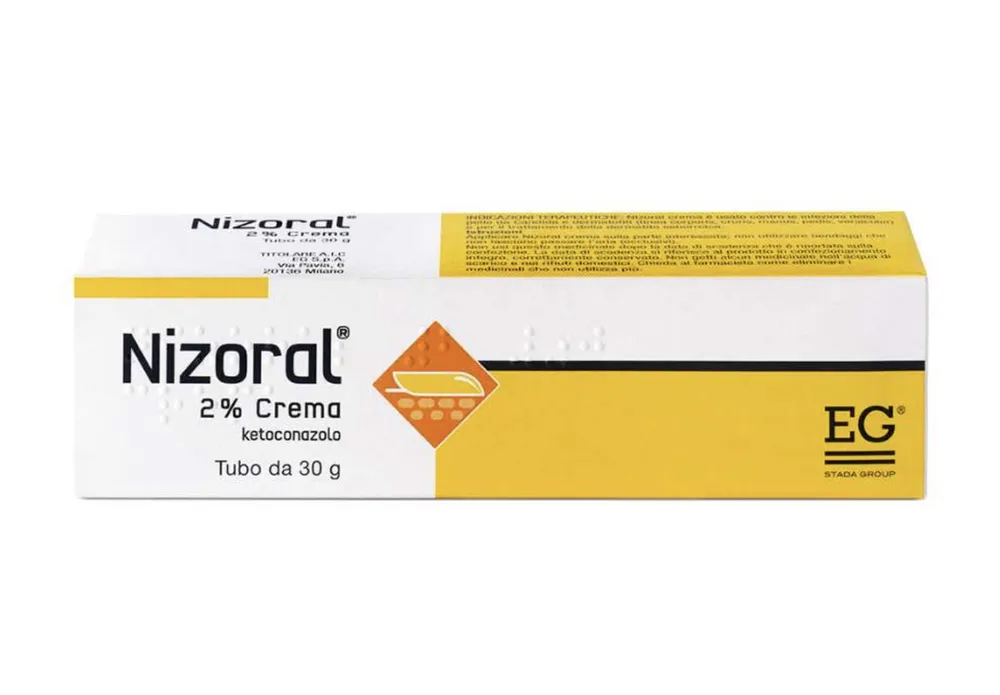
Table of Contents
- Package leaflet: Information for the patient
- NIZORAL 20 mg/g shampoo
- 1. What NIZORAL is and what it is used for
- 2. What you need to know before using NIZORAL
- 3. How to use NIZORAL
- 4. Possible side effects
- 5. How to store NIZORAL
- 6. Package contents and other information
- Patient Information Leaflet: Information for the patient
- NIZORAL 2% cream
- 1. What NIZORAL is and what it is used for
- 2. What you need to know before using NIZORAL
- 3. How to use NIZORAL
- 4. Possible side effects
- 5. How to store NIZORAL
- 6. Package contents and other information
Package leaflet: Information for the patient
NIZORAL 20 mg/g shampoo
Ketoconazole
Please read this leaflet carefully before using this medicine because it contains important information for you.
Always use this medicine exactly as described in this leaflet or as your doctor or pharmacist has instructed you to do.
- Keep this leaflet. You may need to read it again.
- If you need more information or advice, consult your pharmacist.
- If you experience any side effects, including those not listed in this leaflet, contact your doctor or pharmacist. See section 4.
- Contact your doctor if you do not notice any improvement or if you notice a worsening of symptoms during treatment.
Contents of this leaflet:
- What NIZORAL is and what it is used for
- What you need to know before using NIZORAL
- How to use NIZORAL
- Possible side effects
- How to store NIZORAL
- Contents of the pack and other information
1. What NIZORAL is and what it is used for
NIZORAL contains an active substance called ketoconazole, which belongs to a group of medicines that kill fungi, known as antifungals. Like other shampoos, NIZORAL also contains additional ingredients that help clean the hair.
NIZORAL shampoo is used to treat fungal (yeast) infections of the scalp caused by a fungus called Malassezia. This fungus is present on everyone's skin, but sometimes it can cause problems such as:
- dandruff;
- dry or greasy flaking of the skin, known as seborrhoeic dermatitis. These conditions may cause itching.
2. What you need to know before using NIZORAL
Do not use NIZORAL
if you are allergic to the active substance or to any of the other ingredients of this medicine (listed in
section 6).
Warnings and precautions
Talk to your doctor or pharmacist before using NIZORAL if:
- you are elderly;
- you have liver problems;
- you have previously used medicines containing griseofulvin, which are used to kill fungi.
Take care with NIZORAL shampoo
- If you are using on the scalp a lotion or cream containing a corticosteroid (e.g. betamethasone or hydrocortisone):
- continue applying a small amount of the lotion or cream containing the steroid;
- gradually reduce this amount during the first 2–3 weeks of treatment with NIZORAL shampoo;
- after 2–3 weeks, use only NIZORAL. This will help prevent worsening of symptoms before NIZORAL starts to take effect.
- Avoid contact with the eyes. If this occurs, rinse the eyes thoroughly with plenty of cold water.
Like other topical medicines, especially with prolonged treatment, NIZORAL shampoo
may cause redness and itching (signs of sensitization). If this occurs,
discontinue treatment and consult your doctor.
Children and adolescents
NIZORAL shampoo can be used in adolescents above 12 years of age.
Other medicines and NIZORAL
Inform your doctor or pharmacist if you are taking, have recently taken, or might take any
other medicines.
Pregnancy, breastfeeding and fertility
If you are pregnant, suspect you may be pregnant, planning to become pregnant, or are breastfeeding,
you may use NIZORAL. However, consult your doctor or pharmacist before using this
medicine.
Driving and using machines
NIZORAL does not affect the ability to drive or operate machinery.
NIZORAL contains fragrance
This medicine contains a fragrance (fragrance bouquet 2) which contains alpha-isomethyl ionone,
amyl cinnamal, amyl cinnamyl alcohol, benzyl alcohol, benzyl benzoate, benzyl cinnamate, cinnamal, cinnamyl alcohol, citral, citronellol, eugenol, extract of Evernia prunastri (oak moss), geraniol, hexyl cinnamal, hydroxycitronellal, limonene and linalool, which may cause allergic reactions.
Benzyl alcohol may cause mild local irritation.
This medicine contains 0.0012 mg benzoic acid per g of shampoo. Benzoic acid may cause local irritation.
This medicine contains butylated hydroxytoluene which may cause localized skin reactions (e.g.
contact dermatitis) or irritation to the eyes and mucous membranes.
3. How to use NIZORAL
Use this medicine exactly as stated in this leaflet or as directed by your doctor or pharmacist. If you have any doubts, consult your doctor or pharmacist.
Adults and adolescents over 12 years of age
Use NIZORAL shampoo twice a week for 2-4 weeks.
Method of use
Wash your hair with NIZORAL; a small amount of shampoo is sufficient to produce a rich lather on the scalp. Leave the shampoo on the scalp for 3-5 minutes, then rinse thoroughly with water.
Do not exceed the recommended dose or use NIZORAL more frequently than indicated above. Consult your doctor if you do not notice any improvement or if symptoms worsen.
If NIZORAL gets into the eyes: rinse the eyes immediately with plenty of cold water.
If you use more NIZORAL than you should
You may experience redness and/or onset or worsening of itching on the scalp.
In case of accidental ingestion of NIZORAL shampoo, do not induce vomiting: contact your doctor immediately or go to the nearest hospital, as appropriate medical measures may be required.
If you forget to use NIZORAL
If you miss a dose, do not use a double dose to make up for the missed dose.
If you have any questions about the use of this medicine, consult your doctor or pharmacist.
4. Possible side effects
Like all medicines, this medicine can cause side effects, although not everybody gets them.
Please inform your doctor if, during the use of NIZORAL shampoo, you notice any of the following:
Uncommon side effects (may affect up to 1 in 100 people)
- redness, itching and burning due to irritation of the scalp;
- burning or more or less sudden appearance of skin lesions, for example discolouration in patches or widespread rash, possibly due to inflammation of hair follicles (folliculitis);
- increased lacrimation;
- changes in hair structure, patchy hair loss (alopecia);
- dry skin;
- eye irritation;
- acne, skin inflammation (dermatitis), skin peeling or skin infections with pus-filled lesions (pustules) or other skin disorders;
- taste disturbances;
- allergic reactions including redness, itching and burning of the skin and/or scalp, possibly with swelling of the face, eyes, throat and breathing difficulties.
Other side effects (frequency not known)
- urticaria;
- changes in hair colour;
- swelling of the face, eyes, lips, tongue and throat with breathing difficulties (angioedema).
Reporting of side effects
If you experience any side effect, including those not listed in this leaflet, talk to your doctor or pharmacist.
You can also report side effects directly via the national reporting system at https://www.aifa.gov.it/content/segnalazioni-reazioni-avverse.
By reporting side effects, you can help provide more information on the safety of this medicine.
5. How to store NIZORAL
Keep this medicine out of the sight and reach of children.
Store below 25°C.
Do not use this medicine after the expiry date stated on the packaging. The expiry date refers to the last day of that month. This date applies to the product in its original, unopened packaging, correctly stored.
Do not dispose of any medicine via wastewater or household waste. Ask your pharmacist how to dispose of medicines you no longer use. This will help protect the environment.
6. Package contents and other information
What NIZORAL contains
The active substance is: ketoconazole.
One gram of NIZORAL shampoo contains: 20 mg of ketoconazole.
The other components are: sodium laureth sulfate; disodium laureth sulfosuccinate; cocoyl diethanolamide;
hydrolyzed laurdimonium (animal collagen); polyglycol 120 methyl glucose dioleate; perfume bouquet 2;
imidazolidinyl urea; hydrochloric acid; sodium chloride; sodium hydroxide; erythrosine; purified water.
Description of the appearance of NIZORAL and contents of the pack
NIZORAL shampoo is available in a 100 g bottle.
Marketing Authorization Holder
EG S.p.A., Via Pavia, 6 – 20136 Milan, Italy
Manufacturer
Janssen Pharmaceutica N.V., Turnhoutseweg 30, B-2340 Beerse, Belgium
Stada Arzneimittel AG, Stadastrasse 2-18, 61118 Bad Vilbel, Germany
Patient Information Leaflet: Information for the patient
NIZORAL 2% cream
Ketoconazole
Please read this leaflet carefully before using this medicine because it contains important information for you.
Always use this medicine exactly as described in this leaflet or as your doctor or pharmacist has instructed you.
- Keep this leaflet. You may need to read it again.
- If you need more information or advice, consult your pharmacist.
- If you experience any side effects, including those not listed in this leaflet, contact your doctor or pharmacist. See section 4.
- Contact your doctor if you do not notice any improvement or if your symptoms worsen during treatment.
Contents of this leaflet:
- What NIZORAL is and what it is used for
- What you need to know before using NIZORAL
- How to use NIZORAL
- Possible side effects
- How to store NIZORAL
- Contents of the pack and other information
1. What NIZORAL is and what it is used for
NIZORAL contains an active substance called ketoconazole, belonging to a group of medicines that kill fungi, known as antifungals.
NIZORAL cream is used to treat fungal or yeast skin infections, such as cutaneous candidiasis, which can cause conditions such as:
- skin inflammation affecting large areas of the body, appearing as red, fluid-containing lesions (candidiasis), or white to brownish skin patches that sometimes appear after sun exposure (tinea versicolor);
- localized skin inflammations, such as on the trunk and/or back (tinea corporis), hands (tinea manus), feet (tinea pedis), or groin area (tinea cruris), characterized by red, patchy skin, blister formation, and skin peeling;
- dry or greasy skin scaling, known as seborrheic dermatitis. These conditions may cause itching.
NIZORAL cream can be used in adults aged 18 years and above.
2. What you need to know before using NIZORAL
Do not use NIZORAL
if you are allergic to the active substance or to any of the other ingredients of this medicine (listed in
section 6).
Warnings and precautions
Talk to your doctor or pharmacist before using NIZORAL if:
- you are elderly;
- you have liver problems;
- you have previously used medicines containing griseofulvin, which are used to kill fungi.
Be careful with NIZORAL cream
- If you are using on your skin a lotion or cream containing a corticosteroid (e.g. betamethasone or hydrocortisone):
- continue applying a small amount of the corticosteroid-containing lotion or cream in the morning; apply NIZORAL cream in the evening;
- gradually reduce the amount of the corticosteroid-containing lotion or cream during the first 2–3 weeks of treatment with NIZORAL cream;
- after 2–3 weeks, use only NIZORAL. This will help prevent worsening of symptoms before NIZORAL starts to take effect.
- During treatment with NIZORAL, apply hygiene measures to avoid new infections or worsening of symptoms due to reinfection.
- Do not use NIZORAL cream in the eyes.
Like other topical medicines, especially with prolonged treatment, NIZORAL cream may
cause redness and itching (signs of sensitization). If this occurs, stop treatment and consult your doctor.
Other medicines and NIZORAL
Inform your doctor or pharmacist if you are taking, have recently taken, or might take any
other medicines.
Pregnancy, breastfeeding and fertility
If you are pregnant, think you may be pregnant, are planning a pregnancy, or are breastfeeding,
you may use NIZORAL. However, consult your doctor or pharmacist before using this
medicine.
Driving and using machines
NIZORAL does not affect the ability to drive or operate machinery.
NIZORAL contains propylene glycol, cetyl alcohol and stearyl alcohol:
- This medicine contains 200 mg of propylene glycol per gram of cream; it may cause skin irritation; cetyl alcohol and stearyl alcohol may cause localized skin reactions (e.g. contact dermatitis).
3. How to use NIZORAL
Use this medicine exactly as stated in this leaflet or as directed by your doctor or pharmacist. If you have any doubts, consult your doctor or pharmacist.
Adults
For skin infections of the trunk, groin, feet, and hands, apply NIZORAL 2% cream once or twice daily to the affected area and the immediately surrounding skin.
Your doctor will advise you on how often and for how long to use it. Depending on the type of skin infection, treatment may last from 2 to 6 weeks.
For skin infections with reddish-brown spots and yellowish-white scaling (seborrheic dermatitis), apply NIZORAL 2% Cream once or twice daily. Skin infections generally improve within 2–4 weeks.
Signs of improvement are usually seen after 4 weeks. If this is not the case, consult your doctor.
Continue using the cream for a few days after all symptoms have completely disappeared.
Even after symptoms have resolved, you may sometimes need to apply the cream once a week or once every two weeks. This helps prevent the symptoms from recurring.
Instructions for use
To open the tube, unscrew the cap and pierce the seal with the protrusion on the outer side of the cap.
Apply NIZORAL cream to the affected area and the immediately surrounding skin; do not use non-breathable (occlusive) dressings.
NIZORAL cream rapidly relieves itching. Do not exceed the recommended dose or apply it more frequently than indicated above. Contact your doctor if you do not notice improvement or if symptoms worsen after 4 weeks of treatment.
If you use more NIZORAL than you should
you may experience redness (erythema) and/or onset or worsening of itching, burning sensation, or swelling (edema).
In case of accidental ingestion of NIZORAL, inform your doctor immediately or go to the nearest hospital, as appropriate measures may be necessary.
If you forget to use NIZORAL
If you miss a dose, do not use a double dose to make up for the missed dose.
If you have any doubts about using this medicine, consult your doctor or pharmacist.
4. Possible side effects
Like all medicines, this medicine can cause side effects, although not everybody experiences them.
Inform your doctor if, during the use of NIZORAL cream, you notice the following:
Common side effects (may affect up to 1 in 10 people)
- redness or itching at the site where the cream has been applied;
- burning sensation of the skin.
Uncommon side effects (may affect up to 1 in 100 people)
- redness, itching and burning due to irritation, bleeding, discomfort, dryness, loss of sensation (paraesthesia), or other lesions at the site where the cream has been applied;
- more or less sudden appearance of skin lesions, such as spotty or widespread skin colour changes (rash) or blistering, skin inflammation (dermatitis), peeling of the skin;
- sticky skin;
- allergic reactions including redness and itching, possibly with swelling of the face, eyes, throat and breathing difficulties.
Other side effects (frequency not known)
- urticaria.
Reporting of side effects
If you experience any side effect, including those not listed in this leaflet, please inform your doctor or pharmacist.
You can also report side effects directly via the national reporting system at https://www.aifa.gov.it/content/segnalazioni-reazioni-avverse.
By reporting side effects, you can help provide more information on the safety of this medicine.
5. How to store NIZORAL
Keep this medicine out of the sight and reach of children.
Store at a temperature not exceeding 25°C.
Do not use this medicine after the expiry date stated on the packaging after 'Exp.'. The expiry date refers to the last day of that month. This date applies to the product in its original, unopened packaging and properly stored.
Do not dispose of any medicine via wastewater or household waste. Ask your pharmacist how to dispose of medicines you no longer use. This will help protect the environment.
6. Package contents and other information
What NIZORAL contains
The active substance is: ketoconazole.
One gram of NIZORAL cream contains: 20 mg of ketoconazole.
The other components are:
propylene glycol (E1520), stearyl alcohol, cetyl alcohol, polysorbate 60, isopropyl myristate, anhydrous sodium sulfite
BP 80, polysorbate 80, sorbitan monostearate, distilled water.
Description of the appearance of NIZORAL and package contents
NIZORAL cream is available in 30-gram tubes.
Marketing Authorization Holder
EG S.p.A., Via Pavia, 6 – 20136 Milan, Italy
Manufacturer
Janssen Pharmaceutica N.V., Turnhoutseweg 30, B-2340 Beerse, Belgium
(or alternatively) JANSSEN - CILAG SpA, Via C. Janssen - LATINA, Italy
Stada Arzneimittel AG, Stadastrasse 2-18, 61118 Bad Vilbel, Germany