Nisegal
ItalyTable of Contents
Patient Information Leaflet
NISEGAL 3 mg/ml / 1 mg/ml ear drops, suspension
ciprofloxacin/dexamethasone
Generic medicine
Please read this leaflet carefully before using this medicine because it contains important information for you.
- Keep this leaflet. You may need to read it again.
- If you have any questions, ask your doctor or pharmacist.
- This medicine has been prescribed for you only. Do not give it to other people, even if their symptoms are the same as yours, because it may be harmful.
- If you experience any side effects, including those not listed in this leaflet, talk to your doctor or pharmacist. See section 4.
Contents of this leaflet:
- What NISEGAL is and what it is used for
- What you need to know before using NISEGAL
- How to use NISEGAL
- Possible side effects
- How to store NISEGAL
- Package contents and other information
1. What NISEGAL is and what it is used for
NISEGAL is an ear suspension. It contains the following active substances:
- ciprofloxacin, an antibiotic belonging to the group of fluoroquinolones. Ciprofloxacin works by killing the bacteria responsible for infections;
- dexamethasone, a corticosteroid or anti-inflammatory agent that helps relieve inflammation and redness.
NISEGAL is indicated for the treatment of the following infections in adults, adolescents, and children:
- acute otitis media in patients with tympanostomy tubes (AOMT);
- acute external otitis (AOE).
Official guidelines on the appropriate use of antibacterial agents should be taken into consideration.
2. What you need to know before using NISEGAL
Do not use NISEGAL
- if you are allergic to ciprofloxacin, dexamethasone, or any of the other ingredients of this medicine (listed in section 6).
- if you are allergic to medicines known as quinolone antibiotics, as this medicine may cause the same type of allergic reaction.
- if the ear infection is caused by a virus or a fungus.
Warnings and precautions
Talk to your doctor or pharmacist before using NISEGAL.
- This medicine is for ear use only. It is not suitable for ocular use and must not be swallowed, injected, or inhaled.
- Once treatment has started, if you notice the first signs of a skin rash or any other allergic symptoms (e.g. hives (wheals), sudden swelling of the face, throat, or eyelids, breathing difficulties), stop using the medicine immediately and consult your doctor. Severe allergic reactions may require immediate emergency treatment.
- Inform your doctor if symptoms do not improve within one week of starting treatment, worsen, or suddenly reappear. As with all antibiotics, additional infections caused by organisms not sensitive to ciprofloxacin may sometimes occur. In such cases, appropriate treatment under your doctor's supervision should be initiated.
- If you experience pain, swelling, or inflammation of tendons during or immediately after using this medicine, stop treatment and contact your doctor. Pay particular attention if you are over 65 years of age or are currently being treated with corticosteroids.
- Contact your doctor if you experience blurred vision or other visual disturbances.
Children
Clinical experience with the use of NISEGAL for the treatment of middle ear infections in children under 6 months of age and for the treatment of external ear infections in children under 1 year of age is insufficient; therefore, consult your doctor before administering this medicine to your child if they fall within these age groups.
If any of these situations apply to you, seek advice from your doctor.
Other medicines and NISEGAL
Inform your doctor or pharmacist if you are using, have recently used, or might use any other medicines.
Pregnancy and breastfeeding
If you are pregnant, think you may be pregnant, planning a pregnancy, or are breastfeeding, consult your doctor before using this medicine.
Driving and using machines
NISEGAL has no effect or negligible effect on the ability to drive or use machinery.
NISEGAL contains benzalkonium chloride
This medicine contains 0.00282 mg of benzalkonium chloride per drop, equivalent to 0.1 mg per millilitre of suspension.
Benzalkonium chloride may irritate the skin.
3. How to use NISEGAL
Use this medicine exactly as directed by your doctor. If you have any doubts, consult your doctor.
The recommended dose for adults and children is 4 drops into the ear canal, twice daily – morning and evening – for 7 days. This medicine is intended for ear use only (aural administration).
Remove the protective mobile ring from the cap when opening the bottle for the first time.
Your doctor will inform you about the duration of treatment with this medicine. To prevent the infection from returning, do not stop the treatment early, even if you notice an improvement in the condition of your ear(s).
Use this medicine in both ears only if your doctor has specifically instructed you to do so.
Instructions for use
It is preferable for another person to administer the drops. Children should never be allowed to self-administer the drops.
-
Wash hands
The person administering NISEGAL must wash their hands with soap and water. -
Warm and shake the bottle
The person administering NISEGAL should hold the bottle in their hands for a few minutes to warm its contents (Figure 1), in order to avoid dizziness caused by instillation of a cold solution into the ear canal. Then shake the bottle well before use.
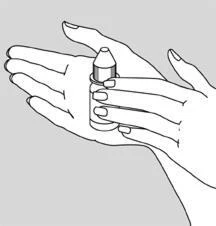
Figure 1
- Administer the drops
The patient should lie down with the infected ear facing upwards (Figure 2).
Instil 4 drops of NISEGAL into the infected ear (Figure 3). Do not let the dropper tip touch fingers, the ear, or any other surface, as this could contaminate the drops.
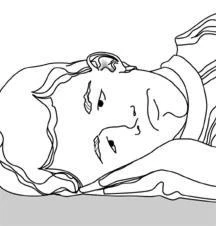
Figure 2
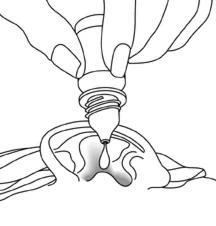
Figure 3
After instilling the drops, follow the instructions below according to the patient's specific ear infection.
- For patients with middle ear infection and drainage ear tubes (tympanostomy tubes or "grommets")
While the patient remains lying on their side, the person administering NISEGAL should gently press the skin flap at the entrance of the ear canal (Figure 4) 5 times using a pumping motion. This will help the drops pass through the tube to the eardrum and middle ear.
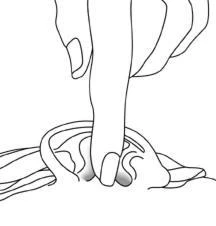
Figure 4
- For patients with outer ear infection
While the patient is lying on their side, the person administering NISEGAL should gently pull the outer earlobe upward and backward (Figure 5). This will allow the ear drops to flow into the ear canal.
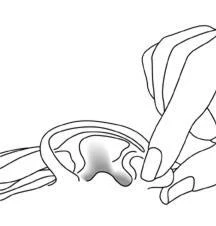
Figure 5
- Remain lying on the side
The patient should remain lying on their side for about 5 minutes to help the drops penetrate into the ear.
When the head is raised again, some drops may leak out. These can be wiped away with a non-sterile tissue.
It is essential to follow these instructions to ensure effective delivery of the medicine into the ear. Keeping the head upright or moving the head too quickly during instillation of the ear drops may result in partial loss of the medicine, as the drops may run out and trickle onto the face instead of penetrating deep into the ear canal.
Keep the bottle tightly closed when not in use.
Keep the bottle until the end of treatment. Do not keep it for future use.
During administration, take care to avoid contact between the dropper tip and the ear or fingers, to prevent contamination.
Repeat steps 2 to 5 for the other ear if both ears are infected.
If you use more NISEGAL than you should
Inform your doctor or pharmacist.
If you forget to use NISEGAL
Do not worry; simply continue with the next dose. Do not use a double dose to make up for the missed dose.
If you stop using NISEGAL
Do not stop treatment without informing your doctor or pharmacist. If your ear condition does not improve after one week of treatment, consult your doctor again.
If you have any doubts about how to use this medicine, consult your doctor or pharmacist.
4. Possible side effects
Like all medicines, NISEGAL may cause side effects, although not everybody gets them.
If you experience a severe allergic reaction or any of the following conditions, stop taking the medicine and contact your doctor immediately: swelling of hands, feet, ankles, face, lips, mouth or throat, difficulty swallowing or breathing, skin rash or hives, sores, ulcers.
Common: may affect up to 1 in 10 people
Ear-related effects: ear pain.
Uncommon: may affect up to 1 in 100 people
Ear-related effects: ear discomfort, blockage of ear drainage catheter, tingling, ear congestion, ear itching, fungal infection of the outer ear, ear discharge, ear crusts.
General side effects: candidiasis infection, irritability, crying, skin redness, vomiting, bad taste sensation, fatigue.
Rare side effects: may affect up to 1 in 1,000 people
Ear-related effects: reduced hearing, tinnitus (ringing in the ears), drug residue.
General side effects: dizziness, headache, ear redness.
The following side effects have been reported with NISEGAL ear drops. Frequency cannot be estimated from the available data:
Eye-related effects: blurred vision.
Ear-related effects: ear inflammation.
General side effects: allergy.
Reporting of side effects
If you experience any side effect, including those not listed in this leaflet, speak to your doctor or pharmacist. You may also report side effects directly via the national reporting system at https://www.aifa.gov.it/content/segnalazioni-reazioni-avverse.
By reporting side effects, you can help provide more information on the safety of this medicine.
5. How to store NISEGAL
Keep this medicine out of the sight and reach of children.
Do not use this medicine after the expiry date stated on the bottle and outer packaging. The expiry date refers to the last day of that month.
Do not freeze.
Keep the bottle in the outer packaging to protect the medicine from light.
Dispose of the bottle 4 weeks after first opening.
Do not dispose of any medicine via wastewater or household waste. Ask your pharmacist how to dispose of medicines you no longer use. This will help protect the environment.
6. Package contents and other information
What NISEGAL contains
- The active substances are ciprofloxacin and dexamethasone. 1 ml of suspension contains 3 mg of ciprofloxacin (as monohydrochloride monohydrate) and 1 mg of dexamethasone. One drop (0.0282 ml of suspension) contains approximately 0.0846 mg of ciprofloxacin (as monohydrochloride monohydrate) and 0.0282 mg of dexamethasone.
- The other components are hydroxyethylcellulose, benzalkonium chloride solution, tyloxapol, disodium edetate, sodium chloride, sodium acetate trihydrate, glacial acetic acid, boric acid, sodium hydroxide, hydrochloric acid (1 M), water for injections.
Description of the appearance of NISEGAL and contents of the pack
Ear drops, suspension
NISEGAL is a uniform white to off-white suspension free from visible foreign particles, supplied as 5 ml of suspension in a pack containing a dropper bottle (LDPE) of 10 ml with a dropper insert (LDPE) and a screw cap (HDPE).
Marketing Authorization Holder
FARMA GROUP S.r.l.
Via Farfisa, 18
60021 Camerano (AN), Italy
Manufacturer
Rafarm S.A.
Thesi Pousi Xatzi Agiou Louka
190 02 Paiania, Greece
This medicinal product is authorised in the European Economic Area countries under the
following names:
Germany: Ciprofloxacin/Dexamethason RAFARM 3 mg/ml + 1 mg/ml ear drops, suspension
Greece: Ciprofloxacin+Dexamethasone/RAFARM
Cyprus: Ciprofloxacin/Dexamethasone RAFARM 3mg/ml/1mg/ml ear drops suspension
Italy: NISEGAL
France: CIPROFLOXACINE/DEXAMETHASONE LDD PHARMA 3 mg/1 mg per mL, ear drop suspension