Nimotop
Italy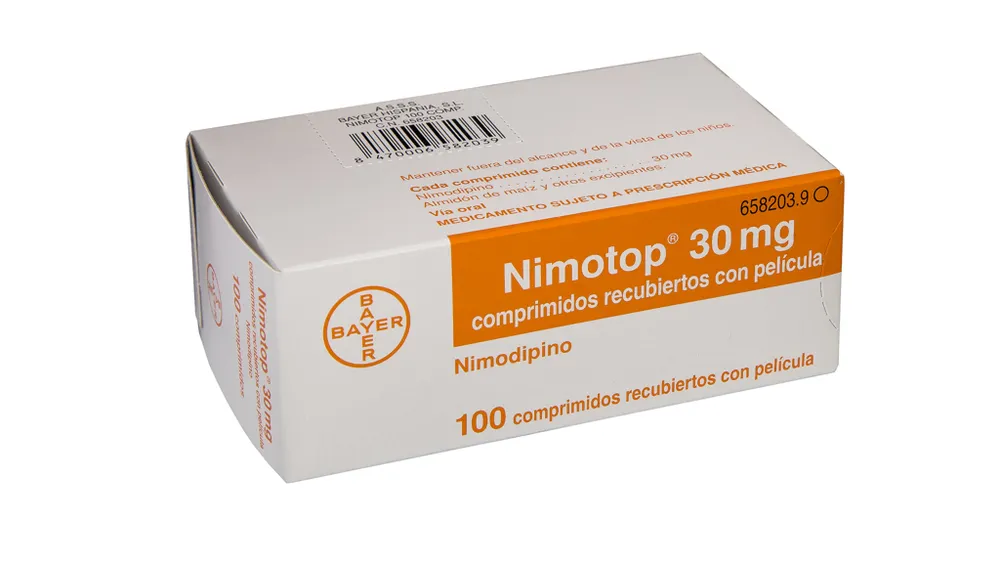
Table of Contents
- Package leaflet: Information for the patient
- Nimotop 30 mg/0.75 mL oral drops, solution
- 1. What Nimotop is and what it is used for
- 2. What you should know before taking Nimotop
- 3. How to take Nimotop
- 4. Possible side effects
- 5. How to store Nimotop
- 6. Pack contents and other information
- Patient Information Leaflet: Information for the User
- Nimotop 10 mg/50 mL infusion solution for intravenous use
- 1. What Nimotop is and what it is used for
- 2. What you need to know before being given Nimotop
- 3. How Nimotop will be administered to you
- 4. Possible side effects
- 5. How to store Nimotop infusion solution
- 6. Package contents and other information
- Nimotop 30 mg coated tablets
- 1. What Nimotop is and what it is used for
- 2. What you need to know before taking Nimotop
- 3. How to take Nimotop
- 4. Possible side effects
- 5. How to store Nimotop
- 6. Contents of the pack and other information
Package leaflet: Information for the patient
Nimotop 30 mg/0.75 mL oral drops, solution
Nimodipine
Please read all of this leaflet carefully before you start taking this medicine because it contains important information for you.
- Keep this leaflet. You may need to read it again.
- If you have any questions, ask your doctor or pharmacist.
- This medicine has been prescribed for you only. Do not pass it on to other people, even if their symptoms are the same as yours, as it may be harmful.
- If you experience any side effects, including those not listed in this leaflet, tell your doctor or pharmacist. See section 4.
Contents of this leaflet:
- What Nimotop is and what it is used for
- What you need to know before taking Nimotop
- How to take Nimotop
- Possible side effects
- How to store Nimotop
- Contents of the pack and other information
1. What Nimotop is and what it is used for
Nimotop contains the active substance nimodipine, which belongs to a group of medicines called calcium channel blockers (calcium antagonists) with a predominant effect of dilating blood vessels.
Nimotop is used for the prevention and treatment of brain damage caused by reduced blood flow to the brain due to narrowing of blood vessels.
2. What you should know before taking Nimotop
Do not take Nimotop
- if you are allergic to nimodipine or to any of the other ingredients of this medicine (listed in section 6);
- if you are pregnant or think you may be pregnant, or if you are breastfeeding (see "Pregnancy and breastfeeding");
- if you are taking a medicine containing rifampicin, an antibiotic used to treat certain types of infections (see "Other medicines and Nimotop");
- if you are being treated with antiepileptic medicines such as phenobarbital, phenytoin, or carbamazepine (see "Other medicines and Nimotop").
Warnings and precautions
Talk to your doctor or pharmacist before taking Nimotop.
Your doctor will carefully consider whether treatment with Nimotop is necessary and will monitor you regularly:
- if you are elderly and have multiple medical conditions;
- if you have severe kidney problems;
- if you have severe liver problems such as liver cirrhosis;
- if you have severely reduced cardiovascular function;
- if you have increased pressure inside the skull or accumulation of fluid in brain tissue;
- if you have low blood pressure;
- if you have chest pain and tightness at rest (unstable angina) or have had a heart attack less than 4 weeks ago.
Children and adolescents
The use of Nimotop is not recommended in children and adolescents, as the safety and efficacy of this medicine in patients under 18 years of age has not been established.
Other medicines and Nimotop
Tell your doctor or pharmacist if you are taking, have recently taken, or might take any other medicines.
Do not take this medicine in combination with:
- rifampicin, an antibiotic used to treat certain types of infections;
- certain antiepileptic medicines such as phenobarbital, phenytoin, and carbamazepine.
Taking these medicines together may significantly reduce the oral effectiveness of nimodipine (see section "Do not take Nimotop").
Be especially careful and inform your doctor if you are taking any of the following medicines:
- antibiotics belonging to the macrolide class, such as erythromycin;
- certain medicines used to treat AIDS, such as zidovudine (AZT) or antiretroviral medicines like indinavir, ritonavir, nelfinavir, or saquinavir;
- certain medicines used to treat fungal infections, such as ketoconazole;
- fluoxetine, nefazodone, and nortriptyline, used to treat depression;
- quinupristin and dalfopristin, used to treat infections;
- valproic acid, used to treat seizures;
- cimetidine, used for stomach disorders;
- medicines known as beta-blockers or other medicines used to treat high blood pressure (diuretics, β-blockers, ACE inhibitors, A1 antagonists, other calcium antagonists, alpha-blockers, PDE5 inhibitors, alpha-methyldopa).
If these medicines are taken together with nimodipine, frequent monitoring of blood pressure is required. Your doctor will assess whether a dose adjustment of Nimotop or the other medicine is needed.
The following medicines do not interfere with nimodipine when taken concomitantly:
- haloperidol (a medicine with sedative action on the nervous system);
- diazepam (a medicine that reduces anxiety and promotes sleep);
- digoxin (a medicine for the heart);
- glibenclamide (a medicine used in the treatment of diabetes);
- indomethacin (a non-steroidal anti-inflammatory drug that reduces inflammation, pain, and fever);
- ranitidine (a medicine that reduces stomach acid secretion);
- warfarin (a medicine that thins the blood).
Nimotop with food and drink
Do not drink grapefruit juice or eat grapefruit during treatment with Nimotop, as it may increase the concentration of nimodipine in the blood and thereby enhance and prolong its blood pressure-lowering effect. This effect may last for at least 4 days after the last intake of grapefruit juice (see "How to take Nimotop").
Pregnancy, breastfeeding, and fertility
If you are pregnant, think you may be pregnant, are planning to become pregnant, or are breastfeeding, consult your doctor or pharmacist before taking this medicine.
Pregnancy
Do not take Nimotop during pregnancy.
If your doctor considers it necessary to administer Nimotop during pregnancy, they must carefully weigh the expected benefits against the possible risks in relation to the severity of your condition (see "Do not take Nimotop").
Breastfeeding
Do not take this medicine if you are breastfeeding, as nimodipine passes into breast milk.
Discontinue breastfeeding if you need to take this medicine.
Fertility
In isolated cases of in vitro fertilization (experimental tests evaluating the effects of certain substances on fertilization), calcium antagonists such as nimodipine may impair sperm function. The consequences of this effect are unknown with short-term treatment.
Driving and using machines
Taking Nimotop may affect your ability to drive or operate machinery, as it may cause side effects such as dizziness. If this occurs, avoid driving or using machinery.
Nimotop contains ethanol (alcohol)
This medicine contains 720.9 mg of alcohol (ethanol) per dose, equivalent to 480.6 mg/ml (48.06 vol%). The amount in each dose (1.5 ml) of this medicine is equivalent to less than 10 ml of beer or 6 ml of wine.
The small amount of alcohol in this medicine will not produce significant effects.
Nimotop contains polyoxyl 40 hydrogenated castor oil
It may cause gastrointestinal disturbances and diarrhoea.
3. How to take Nimotop
Take this medicine exactly as directed by your doctor or pharmacist. If you have any doubts, consult your doctor or pharmacist.
For the prevention and treatment of brain damage caused by reduced blood flow to the brain due to narrowing of blood vessels following subarachnoid haemorrhage (bleeding occurring between the two membranes surrounding the brain), after completion of parenteral therapy (by injection), your doctor will continue nimodipine treatment orally for approximately 7 days (60 mg - 1.5 mL of solution corresponding to 2 droppers filled up to the mark - 6 times daily at 4-hour intervals).
Your doctor may decide to adjust the dose and duration of treatment, or to discontinue treatment, according to your individual needs.
Take Nimotop away from meals, by taking the drops diluted in a small amount of water.
Do not take with grapefruit juice (see "Nimotop with food and drink").
Do not immerse the dropper in water and do not rinse it. After dispensing the drops into water, return the dropper to the bottle.
The interval between individual doses must not be less than 4 hours.
Use in patients with liver problems
If you have severe liver problems such as hepatic cirrhosis, the concentration of nimodipine in the blood may increase. The effects of the medicine and side effects, such as low blood pressure, may be more pronounced in these patients.
In such cases, your doctor will evaluate whether the dose should be reduced or, if necessary, whether treatment should be discontinued.
If you take more Nimotop than you should
Overdose may cause: severe drop in blood pressure, accelerated or slowed heart rate, gastrointestinal disturbances, and nausea.
In case of overdose, stop nimodipine administration immediately.
If you or someone else has accidentally ingested an excessive dose of Nimotop, contact your doctor immediately or go to the nearest hospital.
If you forget to take Nimotop
Do not take a double dose to make up for the missed dose.
If you stop taking Nimotop
If you have any questions about using this medicine, consult your doctor or pharmacist.
4. Possible side effects
Like all medicines, this medicine can cause side effects, although not everyone experiences them.
The following side effects may occur:
Related to the prevention and treatment of brain damage caused by reduced blood flow to the brain due to narrowing of blood vessels.
Uncommon (may affect up to 1 in 100 people)
- low platelet count in the blood (thrombocytopenia),
- allergic reaction (swelling of the face, lips, tongue or throat, difficulty breathing, skin rash, itching, nausea or vomiting),
- skin rash,
- headache,
- fast heartbeat (tachycardia),
- low blood pressure (hypotension),
- widening of blood vessels (vasodilation, including flushing, sweating, hot flushes),
- nausea.
Rare (may affect up to 1 in 1,000 people)
- slow heartbeat (bradycardia),
- intestinal blockage (ileus),
- transient increase in liver enzymes.
Other events reported with unknown frequency include dizziness.
Reporting of side effects
If you experience any side effect, including those not listed in this leaflet, talk to your doctor or pharmacist. You can also report side effects directly via the national reporting system at https://www.aifa.gov.it/content/segnalazioni-reazioni-avverse.
By reporting side effects, you can help provide more information on the safety of this medicine.
5. How to store Nimotop
Keep this medicine out of the sight and reach of children.
Do not use this medicine after the expiry date stated on the carton and bottle after "Exp". The expiry date refers to the last day of that month. The expiry date applies to the product in undamaged packaging, correctly stored.
Store in the original packaging to protect the medicine from light.
Do not refrigerate.
The shelf life after first opening of the bottle is 12 weeks.
Do not dispose of any medicine via waste water or household waste. Ask your pharmacist how to dispose of medicines no longer in use. This will help protect the environment.
6. Pack contents and other information
What Nimotop contains
- The active substance is nimodipine. 0.75 mL of Nimotop oral drops contain 30 mg of nimodipine.
- The other components are: hydrogenated polyoxyl castor oil, ethanol 96%.
Description of the appearance of Nimotop and pack contents
1 bottle of 25 mL oral drops, with dropper.
Marketing Authorization Holder
Bayer S.p.A. - Viale Certosa, 130 - Milan
Laboratoire X.O – 170, Bureaux de la Colline 92213 Saint-
Cloud Cedex, France
Manufacturer
Bayer AG Leverkusen – Germany
KVP Pharma + Veterinär Produkte GmbH Kiel - Germany
Patient Information Leaflet: Information for the User
Nimotop 10 mg/50 mL infusion solution for intravenous use
Nimodipine
Please read this leaflet carefully before this medicine is administered to you, as it contains important information for you.
- Keep this leaflet. You may need to read it again.
- If you have any questions, ask your doctor or nurse.
- This medicine has been prescribed for you only. Do not give it to other people, even if their symptoms are the same as yours, as it could be harmful.
- If you experience any side effects, including those not listed in this leaflet, tell your doctor or nurse. See section 4.
Contents of this leaflet:
- What Nimotop is and what it is used for
- What you need to know before being administered Nimotop
- How Nimotop will be administered to you
- Possible side effects
- How to store Nimotop
- Contents of the pack and other information
1. What Nimotop is and what it is used for
Nimotop contains the active substance nimodipine, which belongs to a group of medicines called calcium channel blockers (calcium antagonists) with a predominant effect of dilating blood vessels.
Nimotop is used to prevent and treat brain damage caused by reduced blood flow to the brain due to narrowing of blood vessels following cerebral haemorrhage caused by rupture of an artery.
2. What you need to know before being given Nimotop
Do not receive Nimotop
- if you are allergic to nimodipine or to any of the other ingredients of this medicine (listed in section 6).
Warnings and precautions
Talk to your doctor or nurse before you are given Nimotop.
Your doctor will need to carefully consider whether treatment with Nimotop infusion solution is necessary and will monitor you regularly:
- if you have increased pressure inside the skull or accumulation of fluid in brain tissue
- if you have low blood pressure
- if you have chest pain and tightness at rest (unstable angina) or have had a heart attack less than 4 weeks ago
- if you have severe kidney problems or are taking other medicines that may be toxic to the kidneys (e.g. antibiotics belonging to the aminoglycoside and cephalosporin groups, or the diuretic furosemide), as concomitant treatment with Nimotop may cause kidney damage. If your condition worsens, your doctor may consider stopping treatment.
- if you are on a low-sodium (low-salt) diet.
Children and adolescents
Nimotop is not recommended for use in children and adolescents, as the safety and efficacy of this medicine in patients under 18 years of age has not been established.
Other medicines and Nimotop
Inform your doctor or nurse if you are taking, have recently taken, or might take any other medicines.
- antibiotics belonging to the macrolide class, such as erythromycin;
- certain medicines used to treat AIDS, such as zidovudine (AZT) or antiretroviral medicines like indinavir, ritonavir, nelfinavir, or saquinavir;
- certain medicines used to treat fungal infections, such as ketoconazole;
- fluoxetine, nefazodone, and nortriptyline, used to treat depression;
- quinupristin and dalfopristin, used to treat infections;
- valproic acid, used to treat seizures;
- cimetidine, used for stomach disorders;
- medicines known as beta-blockers or other medicines used to treat high blood pressure (diuretics, β-blockers, ACE inhibitors, A1 antagonists, other calcium antagonists, alpha-blockers, PDE5 inhibitors, alpha-methyldopa). If your doctor considers combination therapy essential, you will be closely monitored.
Concomitant administration of the following drugs does not interfere with nimodipine
- haloperidol (a medicine with sedative action on the nervous system),
- diazepam (a medicine that reduces anxiety and promotes sleep),
- digoxin (a medicine for the heart),
- glibenclamide (a medicine used in the treatment of diabetes),
- indomethacin (a non-steroidal anti-inflammatory drug that reduces inflammation, pain, and fever),
- ranitidine (a medicine that reduces stomach acid secretion),
- warfarin (a medicine that thins the blood).
Pregnancy, breastfeeding, and fertility
If you are pregnant, suspect you may be pregnant, plan to become pregnant, or are breastfeeding, consult your doctor before receiving this medicine.
Pregnancy
The use of Nimotop is not recommended during pregnancy. If your doctor considers it necessary to administer Nimotop during pregnancy, they will carefully weigh the expected benefits against the potential risks based on the severity of your condition.
Breastfeeding
The use of Nimotop is not recommended while breastfeeding, as nimodipine passes into breast milk. Breastfeeding should be avoided during treatment with this medicine.
Fertility
In isolated cases of in vitro fertilization (experimental testing to evaluate the effects of certain substances on fertilization), calcium antagonists such as nimodipine may impair sperm function. The consequences of this effect are unknown with short-term treatment.
Driving and using machines
Nimotop may affect your ability to drive vehicles or operate machinery, as it may cause adverse effects such as dizziness.
Nimotop infusion solution contains sodium
This medicine contains 23 mg of sodium (the main component of table salt) per 50 ml vial. This corresponds to 1.15% of the maximum daily dietary intake recommended for an adult.
Nimotop infusion solution contains ethanol (alcohol)
This medicine contains 2 g of alcohol (ethanol) in each hourly dose of 10 ml (23.7 vol%). The amount in 10 ml of this medicine is equivalent to less than 50 ml of beer or 20 ml of wine.
The amount of alcohol in this medicine is unlikely to have an effect in adults and adolescents, and its effects in children are not well defined. Some effects may occur in young children, for example drowsiness.
The alcohol in this medicine may alter the effects of other medicines. Speak with your doctor or pharmacist if you are taking other medicines.
Since this medicine is administered slowly via continuous infusion, the effects of alcohol may be reduced.
If you are pregnant or breastfeeding, talk to your doctor or pharmacist before taking this medicine.
If you are alcohol-dependent, talk to your doctor before taking this medicine.
3. How Nimotop will be administered to you
This medicine will be administered to you by a doctor or nurse who is familiar with its action and
method of use, either by intravenous infusion or by intracisternal instillation (local instillation
during a surgical procedure).
The dose administered will depend on your body weight, your clinical condition, and how well you
tolerate the medicine.
Once parenteral treatment is completed, your doctor will prescribe tablets or oral solution to
continue treatment by mouth for approximately 7 days.
If you are given more Nimotop infusion solution than you should
Symptoms of overdose include: marked decrease in blood pressure, accelerated or slowed heart
rate, gastrointestinal disturbances, and nausea.
If you have any doubts about the use of this medicine, consult your doctor or nurse.
4. Possible side effects
The following side effects may occur:
Uncommon (may affect up to 1 in 100 people)
- low platelet count in the blood (thrombocytopenia)
- allergic reaction (swelling of the face, lips, tongue or throat, difficulty breathing, skin rash, itching, nausea or vomiting)
- skin rash
- headache
- fast heartbeat (tachycardia)
- low blood pressure (hypotension)
- widening of blood vessels (vasodilation; including flushing, sweating, hot flushes)
- nausea
Rare (may affect up to 1 in 1,000 people)
- slow heartbeat (bradycardia)
- intestinal blockage (ileus)
- temporary increase in liver enzymes
- reactions at the injection or infusion site
- inflammation of the vein at the infusion site associated with blood clot formation and blood flow obstruction (thrombophlebitis)
Other side effects:
- dizziness
- increased nitrogen and/or creatinine in the blood
- irregular heartbeat (extrasystoles)
- sweating
- abdominal pain
- chest pain
Reporting of side effects
If you experience any side effect, including those not listed in this leaflet, please inform your doctor, nurse or pharmacist. You can also report side effects directly via the national reporting system at https://www.aifa.gov.it/content/segnalazioni-reazioni-avverse.
By reporting side effects, you can help provide more information on the safety of this medicine.
5. How to store Nimotop infusion solution
Keep this medicine out of the sight and reach of children.
Do not use this medicine after the expiry date stated on the vial and outer carton after "Exp.". The expiry date refers to the last day of that month.
The expiry date applies to the product in its original, undamaged packaging, correctly stored.
The shelf life after first opening of the vial is 48 hours.
Protect from direct sunlight.
Do not dispose of medicines via wastewater or household waste. Ask your pharmacist how to dispose of medicines no longer required. This will help protect the environment.
6. Package contents and other information
What Nimotop contains
- The active substance is nimodipine. One 50 mL vial of Nimotop infusion solution contains 10 mg of nimodipine in 50 mL of alcoholic solvent.
- The other ingredients are: ethanol 96%, macrogol 400, sodium citrate dihydrate, anhydrous citric acid, water for injections.
Description of the appearance of Nimotop and contents of the pack
Clear infusion solution.
Carton pack containing one 50 mL vial and one polyethylene administration set.
Marketing Authorization Holder
Laboratoire X.O
170, Bureaux de la Colline
92213 Saint-Cloud Cedex, France
Manufacturer
Bayer AG, D-51368 Leverkusen, Germany
The following information is intended exclusively for physicians or healthcare professionals:
Instructions for use
Before administration, inspect the medicinal product for the presence of particles and/or changes in colour.
Nimodipine is slightly light-sensitive. Exposure to direct sunlight should be avoided during use.
If this is unavoidable, use syringes and administration sets in black, brown, red or yellow colour, or protect them with opaque covers.
Under diffused daylight or artificial light, no special precautions are required for up to 10 hours.
Since nimodipine is absorbed by polyvinyl chloride (PVC), only polyethylene (PE) administration sets must be used.
To properly pierce the vial stopper, it is recommended to use thin injection needles. DO NOT use infusion needles, as their larger diameter may break or shatter the stopper, potentially pushing it into the vial.
Dosage
- Continuous intravenous infusion – Begin treatment at a dosage not exceeding 1 mg/hour (=5 mL of Nimotop infusion solution, equivalent to approximately 15 µg/kg/hour) for the first 2 hours. If the infusion is well tolerated and, in particular, if no significant drop in blood pressure occurs, the dosage should be increased after the second hour, maintaining an infusion rate of up to 2 mg/hour (=10 mL of Nimotop infusion solution, equivalent to approximately 30 µg/kg/hour). In patients with body weight significantly below 70 kg and/or unstable blood pressure, it is recommended to start treatment with a dosage of 0.5 mg (=2.5 mL of Nimotop infusion solution per hour). If adverse reactions occur, the dosage should be reduced or treatment discontinued, if necessary. In patients with severe renal or hepatic impairment, and particularly in those with cirrhosis, bioavailability of the compound may be increased, resulting in enhanced desired and undesired pharmacodynamic effects, such as a reduction in blood pressure. In such cases, dosage should be reduced based on blood pressure values. If necessary, discontinue treatment. Hemodynamic monitoring is required during treatment.
- Intracisternal instillation – During surgical intervention, a diluted solution of Nimotop infusion solution (1 mL of Nimotop infusion solution and 19 mL of Ringer's solution), maintained at body temperature and prepared immediately before use, may be instilled intracisternally. This diluted solution of Nimotop infusion solution must be used immediately after preparation.
Method of administration
Nimotop infusion solution for continuous intravenous infusion must be administered slowly through a central catheter, using an infusion pump and a three-way stopcock, together with 5% glucose solution, 0.9% sodium chloride solution, Ringer's lactate solution, Ringer's lactate with magnesium, dextran 40, or HAES (6% solution of polyoxyethylated starch) in a ratio of approximately 1:4 (Nimotop infusion solution: co-infusion solution). Mannitol, human albumin, or whole blood are also suitable for co-infusion.
It is recommended to continue the infusion during anaesthesia, surgery, and angiography.
Since the active substance in Nimotop infusion solution is absorbed by polyvinyl chloride (PVC), only polyethylene (PE) administration sets should be used.
Nimotop infusion solution must not be mixed with other medicinal products or added to the container of the co-infusion solution.
The three-way stopcock should be used to connect the polyethylene tubing of the Nimotop infusion solution with the co-infusion tubing and the central catheter.
Duration of treatment
For prophylactic use, intravenous treatment should be initiated no later than 4 days after the haemorrhagic event and continued for the period during which the patient is at highest risk of developing vasospasm, i.e., up to 10–14 days after subarachnoid haemorrhage.
If the patient undergoes surgery to surgically close the source of bleeding during prophylactic or therapeutic treatment with Nimotop infusion solution, intravenous administration of the preparation should be continued for at least the first 5 days following surgery.
After parenteral treatment is completed, oral administration of nimodipine is recommended for approximately 7 days (60 mg – 2 tablets of 30 mg – 6 times daily at 4-hour intervals).
For therapeutic use, in cases of established ischaemic neurological deficits due to vasospasm following subarachnoid haemorrhage, treatment should be initiated as early as possible and continued for a minimum of 5 days and a maximum of 14 days.
Thereafter, oral administration of nimodipine is recommended for approximately 7 days, at a dose of 60 mg (2 tablets of 30 mg) 6 times daily at 4-hour intervals.
If the patient undergoes surgery to surgically close the source of bleeding during prophylactic or therapeutic treatment with Nimotop infusion solution, intravenous administration of the preparation should be continued for at least the first 5 days following surgery.
Overdose
Symptoms of acute overdose to be considered include: marked hypotension, tachycardia or bradycardia, gastrointestinal disturbances, and nausea.
Treatment of intoxication
In case of acute overdose, administration of nimodipine must be immediately discontinued. Emergency measures should be directed at alleviating symptoms.
If the substance has been ingested orally, gastric lavage with activated charcoal may be considered as an emergency measure.
In cases of severe hypotension, dopamine or noradrenaline may be administered intravenously.
As no specific antidote is known, treatment of adverse events should focus on alleviating the main symptoms.
Storage instructions
Protect from direct sunlight.
Do not use the medicinal product after the expiry date stated on the vial and carton after “Exp.”. The expiry date refers to the last day of that month.
Any unused solution must be discarded.
The shelf life after first opening of the vial is 48 hours.
Package leaflet: information for the patient
Nimotop 30 mg coated tablets
Nimodipine
Please read this leaflet carefully before taking this medicine because it contains
important information for you.
- Keep this leaflet. You may need to read it again.
- If you have any questions, ask your doctor or pharmacist.
- This medicine has been prescribed for you only. Do not give it to others, even if their symptoms are the same as yours, as it could be harmful.
- If you experience any side effect, including those not listed in this leaflet, contact your doctor or pharmacist. See section 4.
Contents of this leaflet:
- What Nimotop is and what it is used for
- What you need to know before taking Nimotop
- How to take Nimotop
- Possible side effects
- How to store Nimotop
- Contents of the pack and other information
1. What Nimotop is and what it is used for
Nimotop contains the active substance nimodipine, which belongs to a group of medicines called calcium channel blockers (calcium antagonists) with a predominant effect of dilating blood vessels.
Nimotop is used for the prevention and treatment of brain damage caused by reduced blood flow to the brain due to narrowing of blood vessels.
2. What you need to know before taking Nimotop
Do not take Nimotop
- if you are allergic to nimodipine or to any of the other ingredients of this medicine (listed in section 6);
- if you are pregnant or suspect you may be pregnant, or if you are breastfeeding (see "Pregnancy and breastfeeding");
- if you are taking a medicine containing rifampicin, an antibiotic used to treat certain types of infections (see "Other medicines and Nimotop");
- if you are being treated with antiepileptic medicines such as phenobarbital, phenytoin, or carbamazepine (see "Other medicines and Nimotop").
Warnings and precautions
Talk to your doctor or pharmacist before taking Nimotop.
Your doctor will carefully consider whether treatment with Nimotop is necessary and will monitor you regularly:
- if you are elderly and have multiple medical conditions;
- if you have severe kidney problems;
- if you have severe liver problems, such as liver cirrhosis;
- if you have severely impaired cardiovascular function;
- if you have increased pressure inside the skull or accumulation of fluid in brain tissue;
- if you have low blood pressure;
- if you experience chest pain and tightness at rest (unstable angina), or if you have had a heart attack less than 4 weeks ago.
Children and adolescents
The use of Nimotop is not recommended in children and adolescents, as the safety and efficacy of this medicine in patients under 18 years of age has not been established.
Other medicines and Nimotop
Tell your doctor or pharmacist if you are taking, have recently taken, or might need to take any other medicines.
Do not take this medicine in combination with:
- rifampicin, an antibiotic used to treat certain types of infections;
- certain antiepileptic medicines such as phenobarbital, phenytoin, and carbamazepine.
Taking these medicines together may significantly reduce the oral efficacy of nimodipine (see section "Do not take Nimotop").
Be especially careful and inform your doctor if you are taking any of the following medicines:
- antibiotics belonging to the macrolide class, such as erythromycin;
- certain medicines used to treat AIDS, such as zidovudine (AZT) or antiretroviral medicines like indinavir, ritonavir, nelfinavir, or saquinavir;
- certain medicines used to treat fungal infections, such as ketoconazole;
- fluoxetine, nefazodone, and nortriptyline, used to treat depression;
- quinupristin and dalfopristin, used to treat infections;
- valproic acid, used to treat seizures;
- cimetidine, used for stomach disorders;
- medicines known as beta-blockers or other medicines used to treat high blood pressure (diuretics, β-blockers, ACE inhibitors, A1 antagonists, other calcium antagonists, alpha-blockers, PDE5 inhibitors, alpha-methyldopa).
When these medicines are taken together with nimodipine, frequent monitoring of blood pressure is required. Your doctor will assess whether a dose adjustment of Nimotop or the other medicine is needed.
The following medicines do not interfere with nimodipine when taken at the same time:
- haloperidol (a medicine with sedative action on the nervous system);
- diazepam (a medicine that reduces anxiety and promotes sleep);
- digoxin (a medicine for the heart);
- glibenclamide (a medicine used in the treatment of diabetes);
- indomethacin (a non-steroidal anti-inflammatory drug that reduces inflammation, pain, and fever);
- ranitidine (a medicine that reduces stomach acid secretion);
- warfarin (a medicine that thins the blood).
Nimotop with food and drink
Do not drink grapefruit juice or eat grapefruit during treatment with Nimotop, as it may increase the concentration of nimodipine in the blood and thereby enhance and prolong its blood pressure-lowering effect. This effect may last for at least 4 days after the last intake of grapefruit juice (see "How to take Nimotop").
Pregnancy, breastfeeding and fertility
If you are pregnant, think you might be pregnant, are planning to become pregnant, or are breastfeeding, consult your doctor or pharmacist before taking this medicine.
Pregnancy
Do not take Nimotop during pregnancy.
If your doctor considers it necessary to administer Nimotop during pregnancy, they must carefully weigh the expected benefits against the possible risks in relation to the severity of your condition (see "Do not take Nimotop").
Breastfeeding
Do not take this medicine if you are breastfeeding, as nimodipine passes into breast milk.
Discontinue breastfeeding if you need to take this medicine.
Fertility
In isolated cases during in vitro fertilization (an experimental procedure used to assess the effects of certain substances on fertilization), calcium antagonists such as nimodipine may impair sperm function. The consequences of this effect are unknown with short-term treatment.
Driving and using machines
Nimotop may affect your ability to drive or operate machinery, as it may cause adverse effects such as dizziness. If this occurs, avoid driving or using machinery.
3. How to take Nimotop
Take this medicine exactly as prescribed by your doctor or pharmacist. If you have any doubts, consult your doctor or pharmacist.
For the prevention and treatment of brain damage caused by reduced blood flow to the brain due to narrowing of blood vessels following subarachnoid hemorrhage (bleeding occurring between the two membranes surrounding the brain), after completion of parenteral therapy (by injection), your doctor will continue your treatment with oral nimodipine for approximately 7 days (60 mg - 2 tablets of 30 mg - 6 times daily at 4-hour intervals).
Your doctor may decide to adjust the dose and duration of treatment, or to discontinue treatment, according to individual needs.
Take Nimotop away from meals, swallowing the tablets with some liquid.
Do not take it with grapefruit juice (see "Nimotop with food and drink").
The interval between individual doses should not be less than 4 hours.
Use in patients with liver problems
If you have severe liver problems such as hepatic cirrhosis, the concentration of nimodipine in the blood may increase. The effects of the medicine and side effects, such as lowering of blood pressure, may be more pronounced in these patients.
In such cases, your doctor will evaluate whether the dose should be reduced or, if necessary, treatment discontinued.
If you take more Nimotop than you should
Overdose may cause: severe drop in blood pressure, accelerated or slowed heartbeat, gastrointestinal disturbances and nausea.
In case of overdose, stop taking nimodipine immediately.
If you or someone else has accidentally taken an excessive dose of Nimotop, contact your doctor immediately or go to the nearest hospital.
If you forget to take Nimotop
Do not take a double dose to make up for the missed tablet.
If you stop taking Nimotop
If you have any doubts about using this medicine, consult your doctor or pharmacist.
4. Possible side effects
Like all medicines, this medicine can cause side effects, although not everybody gets them.
The following side effects may occur:
With regard to the prevention and treatment of brain damage caused by reduced blood flow to the brain related to narrowing of blood vessels.
Uncommon (may affect up to 1 in 100 people)
- low levels of platelets in the blood (thrombocytopenia),
- allergic reaction (swelling of the face, lips, tongue or throat, difficulty breathing, skin rash, itching, nausea or vomiting),
- skin rash,
- headache,
- fast heartbeat (tachycardia),
- low blood pressure (hypotension),
- widening of blood vessels (vasodilation, including flushing, sweating, hot flushes),
- nausea.
Rare (may affect up to 1 in 1,000 people)
- slow heartbeat (bradycardia),
- intestinal blockage (ileus),
- temporary increase in liver enzymes.
Other events reported with unknown frequency include dizziness.
Reporting of side effects
If you experience any side effect, including those not listed in this leaflet, talk to your doctor or pharmacist. You may also report side effects directly via the national reporting system at https://www.aifa.gov.it/content/segnalazioni-reazioni-avverse.
By reporting side effects, you can help provide more information on the safety of this medicine.
5. How to store Nimotop
Keep this medicine out of the sight and reach of children.
Do not use this medicine after the expiry date stated on the pack after "Exp.". The expiry date refers to the last day of that month.
The expiry date refers to the product in its original packaging, correctly stored.
This medicine requires no special storage conditions.
Do not dispose of any medicine via wastewater or household waste. Ask your pharmacist how to dispose of medicines you no longer use. This will help protect the environment.
6. Contents of the pack and other information
What Nimotop contains
- The active substance is nimodipine. One coated tablet contains 30 mg of nimodipine.
- The other components are: microcrystalline cellulose, povidone, crospovidone, magnesium stearate, maize starch, hypromellose, macrogol 4000, titanium dioxide, yellow iron oxide.
Description of the appearance of Nimotop and contents of the pack
36 coated tablets of 30 mg
Marketing Authorization Holder
- Laboratoire X.O - 170, Bureaux de la Colline 92213 Saint-Cloud Cedex, France
Manufacturer
Bayer HealthCare Manufacturing S.r.l, via delle Groane 126 - Garbagnate Milanese (MI)
12/2021 07/2024