Nicozid
Italy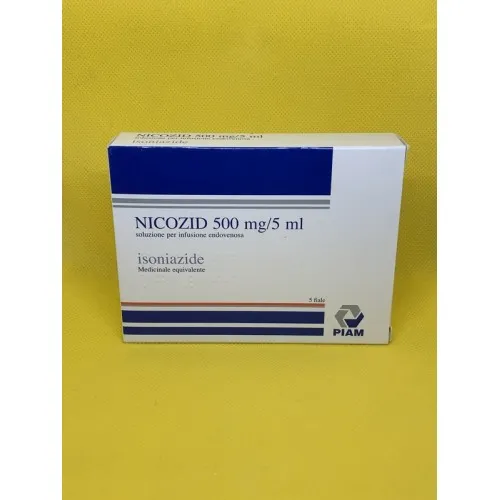
Table of Contents
- Package leaflet: Information for the user
- NICOZID 200mg tablets
- 1. What NICOZID is and what it is used for
- 3. How to use NICOZID
- 4. Possible side effects
- 5. How to store NICOZID
- Patient Information Leaflet: Information for the user
- NICOZID 100 mg/2 ml vials for intramuscular or topical use
- 1. What NICOZID is and what it is used for
- 2. What you should know before taking NICOZID
- 3. How to use NICOZID
- 4. Possible side effects
- 5. How to store NICOZID
- 6. Package contents and other information
Package leaflet: Information for the user
NICOZID 200mg tablets
Isoniazide
Generic medicine
Please read all of this leaflet carefully before you start using this medicine because it contains important information for you.
- Keep this leaflet. You may need to read it again.
- If you have any questions, ask your doctor, pharmacist, or nurse.
- This medicine has been prescribed for you only. Do not give it to other people, even if they have the same symptoms as yours, because it may be harmful.
- If you experience any side effect, including any not listed in this leaflet, tell your doctor, pharmacist, or nurse. See section 4.
Contents of this leaflet:
- What NICOZID is and what it is used for
- What you need to know before taking NICOZID
- How to take NICOZID
- Possible side effects
- How to store NICOZID
- Contents of the pack and other information
1. What NICOZID is and what it is used for
NICOZID contains the active substance isoniazide, which belongs to a group of medicines called antituberculosis agents that kill a bacterium known as Mycobacterium tuberculosis.
NICOZID is indicated, in combination with other medicines—especially ethambutol and rifampicin—for:
- the treatment of tuberculosis localized in the lungs or disseminated outside the lungs (pulmonary or extrapulmonary forms of tuberculosis);
- the prevention (prophylaxis) of tuberculosis in individuals at risk (used without combination).
- What you need to know before taking NICOZID
Do not take NICOZID
- if you are allergic to isoniazide or to any of the other ingredients of this medicine (listed in section 6);
- if you have previously experienced liver problems caused by medicines (drug-induced hepatopathy);
- if you suffer from liver diseases of any kind (acute hepatic conditions);
- if you have developed severe skin rash or skin exfoliation, or skin rash with blisters and/or mouth ulcers after taking NICOZID.
Warnings and precautions
Talk to your doctor, pharmacist, or nurse before taking NICOZID.
Use this medicine with caution and inform your doctor in the following cases:
-
if you are taking phenytoin, used to treat seizures (see section “Other medicines and NICOZID”), because isoniazide increases blood levels of phenytoin, causing a toxic state characterized by rapid, involuntary eye movements (nystagmus), loss of motor coordination (ataxia),
excessive drowsiness (lethargy). If your doctor considers it necessary to combine these two
medicines, they will prescribe lower doses of phenytoin; -
if you are recovering from surgery, illness, or trauma (convalescent patients);
-
if you suffer from liver or kidney diseases (hepatic and renal conditions).
Before and during treatment with NICOZID, undergo regular eye examinations (ophthalmological checks), as isoniazide may affect vision.
Additionally, during treatment with NICOZID, your doctor should regularly monitor liver function, especially if you are over 35 years old, and will explain to you the warning signs of liver inflammation (prodromal symptoms of hepatitis).
Immediately stop treatment and contact your doctor if, during therapy with NICOZID, you experience:
- mild and temporary impairment of liver function (elevated liver transaminases);
- severe liver inflammation (severe hepatitis). The risk of developing this condition is higher in elderly individuals or those who consume alcoholic beverages daily;
- nausea and vomiting;
- loss of appetite (anorexia);
- malaise;
- allergic reactions (hypersensitivity). In such cases, if your doctor decides it is essential to restart treatment, they will prescribe reduced doses and gradually increase them.
Exercise particular caution with NICOZID
Life-threatening skin reactions such as toxic epidermal necrolysis (TEN), drug reaction with eosinophilia and systemic symptoms (DRESS), and generalized pustular exanthema (GEP) have been reported in association with NICOZID treatment. Discontinue use of NICOZID and contact your doctor immediately if you observe any of the symptoms described in section 4.
If you are taking rifampicin—a different medicine used to treat tuberculosis—along with NICOZID, or other medicines that affect isoniazide blood levels (enzymatic induction), the risk of liver toxicity (hepatotoxicity) is increased.
Furthermore, rifampicin may increase the frequency and severity of blood disorders (hematological side effects).
During treatment with NICOZID, you may develop symptoms of nerve inflammation (peripheral neuritis) (see section “Possible side effects”). In such cases, your doctor will prescribe treatment with vitamin B6 (pyridoxine), which is used both to prevent and treat this type of inflammation.
Children
In early infancy, this medicine should be administered only when strictly necessary and under direct medical supervision.
Other medicines and NICOZID
Inform your doctor, pharmacist, or nurse if you are currently taking, have recently taken, or might take any other medicine.
Avoid using NICOZID together with disulfiram, used in the treatment of alcoholism, as taking these two medicines together may cause disturbances in coordination and mental function (psychic disturbances).
Use this medicine with caution and inform your doctor if you are taking the following medicines:
- phenytoin, used to treat seizures, because isoniazide increases blood levels of phenytoin, causing a toxic state characterized by rapid, involuntary eye movements (ocular globes), loss of motor coordination, and numbness (torpor). If your doctor considers it necessary to combine these two medicines, they will prescribe reduced doses of phenytoin;
- aluminium hydroxide, used to reduce stomach acidity (antacid), because it reduces the effects of isoniazide. Therefore, take NICOZID 1 hour before taking the antacid;
- cycloserine, used to treat bacterial infections; when administered together with NICOZID, it may increase adverse effects affecting the brain (central nervous system).
NICOZID and alcohol
Avoid consuming large amounts of alcohol during treatment with NICOZID. Alcohol may increase the risk of liver inflammation (hepatitis) and nerve damage (neuropathies).
Pregnancy and breastfeeding
If you are pregnant, think you may be pregnant, are planning a pregnancy, or are breastfeeding, consult your doctor, pharmacist, or nurse before using this medicine.
If you are pregnant or breastfeeding, use NICOZID only when strictly necessary and under direct medical supervision.
Driving and using machines
This medicine does not impair the ability to drive vehicles or operate machinery.
Page 2 of 5
3. How to use NICOZID
Use this medicine exactly as directed by your doctor, pharmacist, or nurse. If you have any doubts, consult your doctor, pharmacist, or nurse.
The dose varies depending on the type of treatment (treatment regimen):
- Daily treatment: The recommended dose is 5–10 mg per kg of body weight per day, administered orally, by intramuscular injection, or intravenously, divided into 1–2 doses during the initial phase of treatment.
- Intermittent treatment: The recommended dose is 10 mg per kg of body weight per day. Your doctor may adjust the dose depending on the interval between administrations and other medicines used concomitantly with NICOZID. If the medicine is to be administered by injection into the spinal column (intrathecal route), the recommended dose is 25–50 mg per day; if the medicine is to be administered by injection into the lungs (instillation into the pleural cavity), the recommended dose is 50–250 mg per day.
Use in children
The recommended dose is 6–10–20 mg per kg of body weight per day, up to a maximum of 500 mg per day in older children. Specifically, if the medicine is to be administered by intrathecal injection, the recommended dose is 10–20 mg per day.
Use in patients with kidney problems or undergoing hemodialysis
If you have kidney disorders (renal insufficiency), dose reduction is not necessary.
If you have severe kidney problems (glomerular filtration rate below 10 ml/min), your doctor must reduce the dose of medicine to be administered (66–75% of the normal dose).
If you are undergoing mechanical blood filtration (hemodialysis, peritoneal dialysis), your doctor must prescribe an additional dose of NICOZID.
Page 3 of 5
Use in patients with liver problems
If you have liver disorders (hepatic insufficiency), your doctor must reduce the dose of NICOZID to avoid toxic effects of the medicine.
If you use more NICOZID than you should
After administration of an excessive dose of this medicine, the following may occur within a short time (30 minutes – 3 hours): nausea, vomiting, dizziness, visual disturbances, and speech problems. In more severe cases, seizures, breathing difficulties (respiratory depression), altered consciousness with rapid progression from stupor to coma, increased blood acidity (metabolic acidosis), changes in certain urine test results (ketonuria), and increased blood sugar levels (hyperglycemia) may occur.
Your doctor will determine the most appropriate treatment based on the severity of symptoms.
In case of accidental ingestion/overdose of NICOZID, contact your doctor immediately or go to the nearest hospital.
If you forget to use NICOZID
Do not take a double dose to make up for a forgotten dose.
If you have any doubts about the use of this medicine, consult your doctor, pharmacist, or nurse immediately.
4. Possible side effects
Like all medicines, this medicine can cause side effects, although not everyone gets them.
If you experience any of the following side effects, contact your doctor as soon as possible:
- Severe and widespread skin damage (separation of the outer layer of skin and mucous membranes) (toxic epidermal necrolysis - TEN, may affect up to 1 in 1,000 people)
- A drug reaction causing redness, fever, inflammation of internal organs, blood abnormalities, and systemic illness (DRESS syndrome, may affect up to 1 in 1,000 people)
- Widespread, red, scaly rash with formation of subcutaneous pustules and blisters accompanied by fever. Symptoms usually appear at the beginning of treatment (acute generalized exanthematous pustulosis) (frequency not known)
- Lupus-like syndrome, causing symptoms such as swollen joints, fatigue, and skin rashes (frequency not known)
- Yellowing of the skin and whites of the eyes, dark urine, pale stools, tiredness, weakness, malaise, loss of appetite, nausea or vomiting due to liver problems (hepatitis, may affect up to 1 in 100 people)
- Inflammation of the pancreas, causing severe abdominal and back pain (pancreatitis, frequency not known)
The following side effects may occur:
Frequency not known (frequency cannot be estimated from the available data):
- Nerve inflammation preceded by numbness, tingling, sensitivity to touch, or weakness in arms and legs (peripheral neuropathies preceded by paresthesia in extremities), especially in people with poor nutrition, those predisposed due to high alcohol consumption (alcoholics), or those with diabetes (diabetics); Page 4 of 5
- Inflammation and damage of the optic nerve (optic neuritis and optic atrophy)
- Seizures, excessive activity (hyperactivity), euphoria, inability to sleep (insomnia), mental disturbances (toxic psychoses) with mania (manic episodes) and delirium
- Nausea, vomiting, altered liver function (increased liver transaminases), changes in certain blood test results (hyperbilirubinemia) and urine (bilirubinuria)
- Decreased number of red blood cells (hemolytic anemia, aplastic anemia), white blood cells (agranulocytosis), and platelets (thrombocytopenia) in the blood; increased number of a specific type of white blood cells in the blood (eosinophilia)
- Symptoms caused by deficiency of certain vitamins (vit. B6 and PP), increased blood sugar levels (hyperglycemia), increased blood acidity (acidosis)
- Fever, skin irritations (morbilliform, maculopapular, exfoliative rashes), lymph node inflammation (lymphadenitis)
- Inflammation of blood vessels
- Joint inflammation and pain (rheumatoid syndrome)
- Irritation at the injection site (inoculation site), in case of administration by intramuscular injection
Reporting of side effects
If you get any side effects, including those not listed in this leaflet, talk to your doctor or pharmacist.
You can also report side effects directly via the national reporting system at the following website:
https://www.aifa.gov.it/content/segnalazioni-reazioni-avverse.
By reporting side effects, you can help provide more information on the safety of this medicine.
5. How to store NICOZID
Keep this medicine out of the sight and reach of children.
Do not use this medicine after the expiry date stated on the packaging after "Exp.".
The expiry date refers to the last day of that month.
Do not dispose of any medicine via wastewater or household waste. Ask your pharmacist how to dispose of medicines you no longer use. This will help protect the environment.
- Contents of the pack and other information What NICOZID contains
- The active substance is isoniazide. Each tablet contains 200 mg of isoniazide.
- The other components are: polyvinylpyrrolidone, pregelatinized corn starch, sodium croscarmellose, vegetable magnesium stearate, anhydrous colloidal silica.
Description of the appearance of NICOZID and contents of the pack
Box containing 50 tablets of 200 mg.
Marketing Authorization Holder
PIAM FARMACEUTICI S.p.A. – Via XII Ottobre, 10 – 16121 Genoa – Italy
Manufacturer
Fine Foods & Pharmaceuticals NTM S.p.A. - Via Grignano, 43 - 24041 Brembate (Bergamo)
Page 5 of 5
Patient Information Leaflet: Information for the user
NICOZID 100 mg/2 ml vials for intramuscular or topical use
NICOZID 500 mg/5 ml vials for slow intravenous infusion
Isoniazid
Please read this leaflet carefully before using this medicine, as it contains
important information for you.
- Keep this leaflet. You may need to read it again.
- If you have any questions, ask your doctor, pharmacist or nurse.
- This medicine has been prescribed for you only. Do not give it to other people, even if their symptoms are the same as yours, as it may be harmful.
- If you experience any side effect, including those not listed in this leaflet, contact your doctor, pharmacist or nurse. See section 4.
Contents of this leaflet:
- What NICOZID is and what it is used for
- What you need to know before using NICOZID
- How to use NICOZID
- Possible side effects
- How to store NICOZID
- Package contents and other information
1. What NICOZID is and what it is used for
NICOZID contains the active substance isoniazid, which belongs to a group of medicines called antituberculosis agents that kill a bacterium called Mycobacterium tuberculosis.
NICOZID is indicated, in combination with other medicines—especially ethambutol and rifampicin—for:
- the treatment of tuberculosis localized in the lungs or spread outside the lungs (pulmonary or extrapulmonary tuberculosis);
- the prevention (prophylaxis) of tuberculosis in individuals at risk (used without combination).
2. What you should know before taking NICOZID
Do not take NICOZID
- if you are allergic to isoniazid or to any of the other ingredients of this medicine (listed in section 6);
- if you have previously experienced liver problems caused by medicines (drug-induced hepatopathy);
- if you suffer from liver diseases of any kind (acute hepatic disorders);
- if you have developed a severe skin rash or skin peeling, or a rash with blisters and/or mouth ulcers after taking NICOZID.
Warnings and precautions
Talk to your doctor, pharmacist, or nurse before taking NICOZID.
Use this medicine with caution and inform your doctor in the following cases:
- if you are taking phenytoin, used to treat seizures (see section “Other medicines and NICOZID”), because isoniazid increases blood levels of phenytoin, causing a toxic state characterized by rapid and involuntary eye movements (nystagmus), loss of motor coordination (ataxia), and excessive drowsiness (lethargy). If your doctor considers it necessary to combine these two medicines, they will prescribe lower doses of phenytoin; Page 6 of 5
- if you are recovering from surgery, illness, or trauma (convalescent patients);
- if you suffer from liver or kidney diseases (hepatic and renal disorders).
Before and during treatment with NICOZID, undergo regular eye examinations (ophthalmological checks), as isoniazid may affect vision.
Furthermore, during treatment with NICOZID, your doctor must regularly monitor liver function, especially if you are over 35 years old, and will explain the warning signs of liver inflammation (prodromal signs of hepatitis).
Immediately stop treatment and contact your doctor if, during therapy with NICOZID, you experience:
- mild and temporary alteration of liver function (elevated liver transaminases);
- severe liver inflammation (severe hepatitis). The risk of developing this condition is higher in elderly individuals or those who consume alcohol regularly;
- nausea and vomiting;
- loss of appetite (anorexia);
- malaise;
- allergic reactions (hypersensitivity). In such cases, if your doctor decides it is essential to resume treatment, they will prescribe reduced doses and gradually increase them.
Exercise particular caution with NICOZID
- Severe skin reactions that may be life-threatening, such as toxic epidermal necrolysis (TEN), drug reaction with eosinophilia and systemic symptoms (DRESS), and acute generalized exanthematous pustulosis (AGEP), have been reported in association with NICOZID treatment. Discontinue use of NICOZID and seek immediate medical attention if you notice any of the symptoms described in section 4.
If you are taking rifampicin, another medicine for the treatment of tuberculosis, or other medicines that affect the blood levels of isoniazid (enzyme induction), the risk of liver toxicity (hepatotoxicity) is increased.
Moreover, rifampicin may increase the frequency and severity of blood disorders (hematological side effects).
During treatment with NICOZID, you may develop symptoms of nerve inflammation (peripheral neuritis) (see section “Possible side effects”). In such cases, your doctor will prescribe treatment with vitamin B6 (pyridoxine), used both to prevent and treat this type of inflammation.
Children
During early infancy, this medicine should be administered only when strictly necessary and under direct medical supervision.
Other medicines and NICOZID
Inform your doctor, pharmacist, or nurse if you are currently using, have recently used, or might use any other medicines.
Avoid using NICOZID together with disulfiram, used to treat alcoholism, as taking these two medicines together may cause disturbances in coordination and mental function (psychic disturbances).
Use this medicine with caution and inform your doctor if you are taking the following medicines:
- phenytoin, used to treat seizures, because isoniazid increases Page 7 of 5
blood levels of phenytoin, causing a toxic state characterized by rapid and involuntary eye movements (ocular globes), loss of motor coordination, and numbness (torpor). If your doctor considers it necessary to combine these two medicines, they will prescribe lower doses of phenytoin;
- aluminum hydroxide, used to reduce stomach acidity (antacid), because it reduces the effects of isoniazid. Therefore, take NICOZID 1 hour before taking the antacid;
- cycloserine, used to treat bacterial infections; when administered together with NICOZID, it may increase the risk of adverse effects affecting the brain (central nervous system).
NICOZID and alcohol
Avoid consuming large amounts of alcohol during treatment with NICOZID. Alcohol may increase the risk of liver inflammation (hepatitis) and nerve damage (neuropathies).
Pregnancy and breastfeeding
If you are pregnant, suspect you may be pregnant, are planning a pregnancy, or are breastfeeding, consult your doctor, pharmacist, or nurse before using this medicine.
If you are pregnant or breastfeeding, use NICOZID only when strictly necessary and under direct medical supervision.
Driving and using machines
This medicine does not impair the ability to drive vehicles or operate machinery.
3. How to use NICOZID
Use this medicine exactly as instructed by your doctor, pharmacist, or nurse. If you have any doubts, consult your doctor, pharmacist, or nurse.
This medicine can be administered by intramuscular injection, intravenous injection, intrathecal injection (into the spinal column), or instillation into the lungs (pleural cavity).
The dose varies depending on the type of treatment (treatment regimen):
- Daily treatment: At the beginning of treatment, the recommended dose is 5–10 mg per kg of body weight per day, divided into 1–2 doses administered by intramuscular or intravenous injection.
- Intermittent treatment: The recommended dose is 10 mg per kg of body weight per day. Your doctor may adjust the dose depending on the interval between doses and other medicines used in combination with NICOZID. If the medicine is to be administered by intrathecal injection (into the spinal column), the recommended dose is 25–50 mg per day. If the medicine is to be administered by instillation into the lungs (pleural cavity), the recommended dose is 50–250 mg per day.
Use in children
The recommended dose is 6–10–20 mg per kg of body weight per day, up to a maximum of 500 mg per day in older children. In particular, if the medicine is to be administered by intrathecal injection (into the spinal column), the recommended dose is 10–20 mg per day.
Use in patients with kidney problems or undergoing dialysis
If you have kidney disorders (renal insufficiency), dose reduction is not usually necessary.
If you have severe kidney problems (glomerular filtration rate less than 10 ml/min), your doctor must reduce the dose to be administered (66–75% of the normal dose).
If you are undergoing mechanical blood filtration (hemodialysis, peritoneal dialysis), your doctor must prescribe an additional dose of NICOZID.
Use in patients with liver problems
If you have liver problems (hepatic insufficiency), your doctor must reduce the dose of NICOZID to avoid toxic effects of the medicine.
If you use more NICOZID than you should
After administration of an excessive dose of this medicine, symptoms may occur within a short time (30 minutes – 3 hours), such as nausea, vomiting, dizziness, visual disturbances, and speech problems. In more severe cases, seizures, breathing difficulties (respiratory depression), altered consciousness with rapid progression from stupor to coma, increased blood acidity (metabolic acidosis), changes in urine test results (ketonuria), and increased blood sugar levels (hyperglycemia) may occur.
Your doctor will determine the most appropriate treatment based on the severity of symptoms.
In case of accidental ingestion/overdose of NICOZID, contact your doctor immediately or go to the nearest hospital.
If you forget to use NICOZID
Do not use a double dose to make up for a missed dose.
If you have any doubts about how to use this medicine, contact your doctor, pharmacist, or nurse immediately.
4. Possible side effects
Like all medicines, this medicine can cause side effects, although not everybody gets them.
If you experience any of the following side effects, contact your doctor as soon as possible:
- Severe and widespread skin damage (separation of the outer layer of skin and mucous membranes) (toxic epidermal necrolysis - TEN, may affect up to 1 in 1,000 people)
- A drug reaction causing redness of the skin, fever, inflammation of internal organs, blood abnormalities, and systemic illness (DRESS syndrome, may affect up to 1 in 1,000 people)
- Widespread, red, scaly rash with formation of subcutaneous pustules and blisters accompanied by fever. Symptoms usually occur early in treatment (acute generalized exanthematous pustulosis) (frequency not known)
- Lupus-like syndrome, causing symptoms such as swollen joints, fatigue, and skin rashes (frequency not known)
- Yellowing of the skin and whites of the eyes, dark urine, pale stools, tiredness, weakness, malaise, loss of appetite, nausea or vomiting due to liver problems (hepatitis, may affect up to 1 in 100 people)
- Inflammation of the pancreas, causing severe abdominal and back pain (pancreatitis, frequency not known)
The following side effects may also occur:
Frequency not known (cannot be estimated from the available data):
- Nerve inflammation preceded by numbness, tingling, sensitivity to touch, or weakness in arms and legs (peripheral neuropathies preceded by paresthesia in the extremities), especially in people who do not eat properly (malnourished), who are predisposed because of high alcohol consumption (alcoholics), or who suffer from diabetes (diabetics);
- Inflammation and damage of the optic nerve (optic neuritis and optic atrophy);
- Seizures, excessive activity (hyperactivity), euphoria, inability to sleep (insomnia), mental disturbances (toxic psychoses) with mania (manic episodes) and delirium;
- Nausea, vomiting, altered liver function (elevated liver transaminases), changes in certain blood tests (hyperbilirubinemia) and urine tests (bilirubinuria);
- Decreased number of red blood cells (hemolytic anemia, aplastic anemia), white blood cells (agranulocytosis), and platelets (thrombocytopenia) in the blood; increased number of a type of white blood cells in the blood (eosinophilia);
- Symptoms caused by deficiency of certain vitamins (vit. B6 and PP), increased blood sugar levels (hyperglycemia), increased blood acidity (acidosis);
- Fever, skin irritations (morbilliform, maculopapular, exfoliative rashes), inflammation of lymph nodes (lymphadenitis);
- Inflammation of blood vessels (vasculitis);
- Joint inflammation and pain (rheumatoid syndrome);
- Irritation at the injection site (inoculation site reaction), when administered by intramuscular injection.
Reporting of side effects
If you get any side effects, including ones not listed in this leaflet, talk to your doctor or pharmacist.
You can also report side effects directly via the national reporting system at
https://www.aifa.gov.it/content/segnalazioni-reazioni-avverse.
By reporting side effects, you can help provide more information on the safety of this medicine.
5. How to store NICOZID
Keep this medicine out of the sight and reach of children.
Do not use this medicine after the expiry date stated on the packaging after "Exp.". The expiry date refers to the last day of that month.
Do not dispose of any medicine via wastewater or household waste. Ask your pharmacist how to dispose of medicines you no longer use. This will help protect the environment.
6. Package contents and other information
What NICOZID contains
NICOZID 100 mg/2 ml vials for intramuscular or topical use
- The active substance is isoniazid. Each vial (2 ml) contains 100 mg of isoniazid.
- The other component is water for injections.
NICOZID 500 mg/5 ml vials for slow intravenous infusion
- The active substance is isoniazid. Each vial (5 ml) contains 500 mg of isoniazid.
- The other component is water for injections.
Description of the appearance of NICOZID and contents of the pack
NICOZID 100 mg/2 ml vials for intramuscular or topical use
Pack of 6 vials containing 100 mg/2 ml.
NICOZID 500 mg/5 ml vials for slow intravenous infusion
Page 10 of
Pack of 5 vials containing 500 mg/5 ml.
Marketing Authorization Holder
PIAM FARMACEUTICI S.p.A. – Via XII Ottobre, 10 – 16121 Genoa – Italy
Manufacturer
Laboratorio Farmaceutico C.T. S.r.l. - Via Dante Alighieri, 71 - 18038 Sanremo (IM) - Italy
Page 11 of