Nexpovio
Italy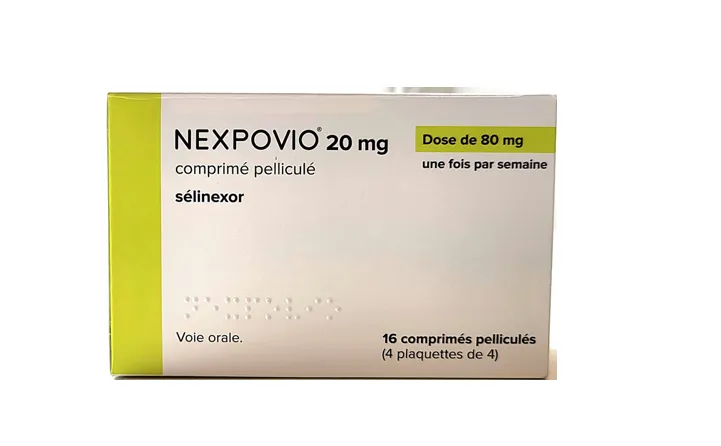
Table of Contents
Package leaflet: Information for the patient
NEXPOVIO 20 mg film-coated tablets
selinexor

This medicinal product is subject to additional monitoring. This will allow rapid identification of
new safety information. You can help by reporting any side effects you experience while taking
this medicine. See the end of section 4 for information on how to report side effects.
Please read this leaflet carefully before taking this medicine because it contains
important information for you.
- Keep this leaflet. You may need to read it again.
- If you have any questions, ask your doctor or pharmacist.
- This medicine has been prescribed for you only. Do not give it to others, even if they have the same symptoms as you, because it may be harmful.
- If you experience any side effect, including those not listed in this leaflet, contact your doctor, pharmacist or nurse. See section 4.
Contents of this leaflet
- What NEXPOVIO is and what it is used for
- What you need to know before taking NEXPOVIO
- How to take NEXPOVIO
- Possible side effects
- How to store NEXPOVIO
- Contents of the pack and other information
1. What NEXPOVIO is and what it is used for
NEXPOVIO contains the active substance selinexor. Selinexor is an anticancer medicine, known as an
XPO1 inhibitor. It blocks the action of a protein called XPO1, which transports other proteins from
the cell nucleus to the cytoplasm. Certain proteins need to remain in the nucleus in order to function
properly.
By inhibiting XPO1 function, selinexor prevents specific proteins from leaving the nucleus. This interferes with the continuous growth of cancer cells and leads to their death.
What NEXPOVIO is used for
NEXPOVIO is used to treat adult patients with multiple myeloma that has returned after prior
treatment. NEXPOVIO is used
- in combination with two other medicines called bortezomib and dexamethasone in patients who have received at least one prior therapy, OR
- in combination with dexamethasone in patients who have received at least four prior lines of therapy for multiple myeloma and whose disease cannot be controlled with previous medicines used to treat multiple myeloma.
Multiple myeloma is a cancer affecting a type of blood cell called plasma cells. Normally, plasma cells produce proteins to help fight infections. In people with multiple myeloma, cancerous plasma cells—also known as myeloma cells—develop. These cells can damage bones and kidneys and increase the risk of infection. Treatment with NEXPOVIO kills myeloma cells and reduces disease symptoms.
2. What you should know before taking NEXPOVIO
Do not take NEXPOVIO
if you are allergic to selinexor or to any of the other ingredients of this medicine (listed in
section 6).
Warnings and precautions
Talk to your doctor or pharmacist before taking NEXPOVIO and during treatment if:
- you have or have had bleeding problems
- you have recently had or currently have an infection
- you have nausea, vomiting, or diarrhoea
- you have lost your appetite or have lost weight
- you experience confusion or dizziness
- you have low levels of sodium in your blood (hyponatraemia)
- you develop new or worsening cataracts. Your doctor will examine you and you will be closely monitored during treatment. Before starting NEXPOVIO and during treatment, you will have blood tests to check that you have enough blood cells.
Children and adolescents
NEXPOVIO must not be given to children and adolescents under 18 years of age.
Other medicines and NEXPOVIO
Tell your doctor or pharmacist if you are taking, have recently taken, or might take
any other medicines.
Pregnancy
A pregnancy test is recommended for women of childbearing age before starting treatment with
NEXPOVIO.
Do not use NEXPOVIO during pregnancy as it may cause harm to the unborn child. Women who
become pregnant while taking NEXPOVIO must stop treatment immediately and inform their doctor.
Breast-feeding
Do not breast-feed during treatment with NEXPOVIO or for 1 week after the last dose, as it is unknown whether selinexor or its metabolites are excreted in breast milk and may harm the breast-fed infant.
Fertility
NEXPOVIO may impair female and male fertility.
Contraception
Women of childbearing potential must use effective contraception during treatment and for
at least 1 week after the last dose.
Men are advised to use effective contraception or abstain from sexual intercourse with women of childbearing potential during treatment and for at least 1 week after the last dose.
Driving and using machines
NEXPOVIO may cause fatigue, confusion, and dizziness. Do not drive or operate machinery if you experience such reactions during treatment with this medicine.
NEXPOVIO contains sodium
This medicine contains less than 1 mmol (23 mg) of sodium per 20 mg tablet, i.e.
essentially ‘sodium-free’.
3. How to take NEXPOVIO
Take this medicine exactly as directed by your doctor or pharmacist. If you have any doubts, consult your doctor or pharmacist.
Recommended dose:
- when used in combination with bortezomib and dexamethasone: 100 mg (5 tablets) once daily on day 1 of each week, or as directed by your doctor.
- when used with dexamethasone: 80 mg (4 tablets) once daily on days 1 and 3 of each week, or as directed by your doctor.
Your doctor may adjust the dose if you experience adverse effects or have severe liver problems.
It is important to take this medicine exactly as prescribed by your doctor to avoid dosing errors.
Instructions for use
Swallow the NEXPOVIO tablets whole with a glass of water, with food or between meals. Do not chew, crush, divide, or break the tablets to avoid the risk of skin irritation caused by the active substance.
Duration of use
Your doctor will determine how long you should continue treatment based on your response to therapy and any side effects.
If you take more NEXPOVIO than you should
Call your doctor or go immediately to the nearest hospital emergency department. Take the NEXPOVIO tablet pack with you.
If you forget to take NEXPOVIO
Do not take a double dose to make up for the missed dose. Do not take an additional dose even if you vomit after taking NEXPOVIO. Take the next dose as scheduled.
If you stop taking NEXPOVIO
Do not stop treatment or change the dose of NEXPOVIO without your doctor's approval. However, if you become pregnant while taking NEXPOVIO, you must stop treatment immediately and inform your doctor.
If you have any questions about how to use this medicine, consult your doctor or pharmacist.
4. Possible side effects
Like all medicines, this medicine can cause side effects, although not everybody gets them.
Inform your doctor or nurse immediately if you notice any of the following side effects.
NEXPOVIO may cause the following serious side effects:
Very common (may affect more than 1 in 10 people)
-
Reduction in the number of platelets in the blood Your doctor will perform blood tests before you start NEXPOVIO and when necessary during and after treatment. These tests will be more frequent during the first two months of treatment to monitor your platelet count. Your doctor may interrupt treatment or adjust the dose based on your platelet count. Inform your doctor immediately if you notice signs of low platelet count, such as:
- easy or excessive bruising
- skin changes appearing as a rash with red-violet pinpoint spots
- prolonged bleeding from cuts
- bleeding from gums or nose
- blood in urine or stools
-
Reduction in the number of red blood cells and white blood cells, including neutrophils and lymphocytes. Your doctor will perform blood tests to monitor your red and white blood cell counts before you start NEXPOVIO and when necessary during and after treatment. These tests will be more frequent during the first two months of treatment. Your doctor may interrupt treatment or adjust the dose based on your blood cell counts, or may treat you with other medicines to increase blood cell levels. Inform your doctor immediately if you notice signs of low neutrophil count, such as fever.
-
Tiredness Inform your doctor if you develop new or worsening tiredness. Your doctor may adjust the dose if tiredness persists or worsens.
-
Nausea, vomiting, diarrhoea Inform your doctor immediately if you develop nausea, vomiting, or diarrhoea. Your doctor may adjust the dose or interrupt treatment depending on the severity of symptoms. Additionally, your doctor may prescribe medicines to be taken before or during NEXPOVIO treatment to prevent and treat nausea and/or vomiting and/or diarrhoea.
-
Reduced appetite and/or weight loss Your doctor will weigh you before you start NEXPOVIO and when necessary during and after treatment. This measurement will be more frequent during the first two months of treatment. Inform your doctor if you lose your appetite or lose weight. Your doctor may adjust the dose in case of reduced appetite and weight loss and/or may prescribe medicines to increase your appetite. Maintain adequate fluid and calorie intake throughout the treatment period.
-
Reduction in sodium levels Your doctor will perform blood tests to check your sodium levels before you start NEXPOVIO and when necessary during and after treatment. These tests will be more frequent during the first two months of treatment. Your doctor may adjust the dose and/or prescribe salt tablets or fluids depending on your sodium level.
-
Confusion and dizziness Inform your doctor if you experience confusion. Avoid situations where dizziness or confusion could be problematic, and do not take other medicines that may cause dizziness or confusion without first discussing with your doctor. Do not drive or operate machinery if you experience confusion or dizziness until symptoms resolve. Your doctor may adjust the dose to reduce these symptoms.
-
Cataract Inform your doctor if you experience symptoms of cataract, such as double vision, light sensitivity, or glare. If you notice changes in vision, your doctor may refer you for an eye examination by an eye specialist (ophthalmologist), and you may require eye surgery to remove the cataract and restore vision.
Inform your doctor or nurse immediately if you notice any of the other side effects listed below.
Other possible side effects
Very common (may affect more than 1 in 10 people):
- lung infection
- upper respiratory tract infection
- bronchitis
- viral infection of the nose and throat (nasopharyngitis)
- nerve damage in hands and feet, which may cause tingling and numbness (peripheral neuropathy)
- nosebleeds
- headache
- dehydration
- increased blood sugar levels
- reduced potassium levels
- sleep loss (insomnia)
- altered taste
- blurred vision
- shortness of breath
- cough
- abdominal pain
- constipation
- loss of energy
- fever
Common (may affect more than 1 in 100 people):
- bacterial infection in the blood
- the body normally releases chemicals into the bloodstream to fight infection; when the body's response to these chemicals is unbalanced, it triggers changes that could damage multiple organ systems (sepsis)
- low neutrophil count with fever
- reduced phosphate levels
- increased potassium levels
- reduced calcium levels
- reduced magnesium levels
- mental confusion (hallucination)
- increased levels of amylase and lipase
- increased uric acid levels
- confused thinking (delirium)
- fainting (syncope)
- increased heart rate (tachycardia)
- decreased vision
- loss of taste
- taste disturbance
- balance disorder
- cognitive disorder
- attention disturbance
- memory impairment
- low blood pressure (hypotension)
- dizziness (vertigo)
- indigestion, dry mouth, abdominal discomfort
- flatulence or bloated stomach
- itching
- muscle spasms
- kidney problems
- deterioration in general physical health, malaise, gait disturbance, chills
- increased liver enzyme levels (alanine aminotransferase, aspartate aminotransferase, and alkaline phosphatase)
- falls
- memory impairment, including amnesia
- increased levels of the muscle enzyme creatine
- hair loss
- night sweats, including excessive sweating
- lower respiratory tract infection
- bruising
Uncommon (may affect up to 1 in 100 people):
- rapid breakdown of tumour cells, which could be life-threatening and cause symptoms such as muscle cramps, muscle weakness, confusion, loss or disturbance of vision, and shortness of breath (tumour lysis syndrome)
- brain inflammation which could cause confusion, headache, and seizures (encephalopathy)
Reporting of side effects
If you experience any side effects, including those not listed in this leaflet, talk to your doctor, pharmacist, or nurse. You can also report side effects directly via the national reporting system listed in Annex V. Reporting side effects can help provide more information on the safety of this medicine.
5. How to store NEXPOVIO
Keep this medicine out of the sight and reach of children.
Do not use this medicine after the expiry date stated on the blister, the inner carton, and the outer box after "Exp.". The expiry date refers to the last day of that month.
This medicine does not require any special storage conditions.
Do not use this medicine if you notice any damage or signs of tampering.
Do not dispose of any medicine via wastewater or household waste. Ask your pharmacist how to dispose of medicines you no longer use. This will help protect the environment.
6. Package contents and other information
What NEXPOVIO contains
- The active substance is selinexor. Each film-coated tablet contains 20 mg of selinexor.
- The other components are microcrystalline cellulose, sodium croscarmellose, povidone K30, sodium lauryl sulfate, colloidal silicon dioxide, magnesium stearate. The tablet coating components are talc, partially hydrolysed poly(vinyl alcohol), glyceryl monostearate, polysorbate 80, titanium dioxide, macrogol, indigo carmine aluminium lake, and brilliant blue FCF aluminium lake. See section 2 “NEXPOVIO contains sodium”.
Description of the appearance of NEXPOVIO and pack contents
NEXPOVIO film-coated tablets are blue, round, and marked with "K20" on one side.
Each carton contains four child-resistant inner packages. Each inner package contains a plastic blister containing 2, 3, 4, 5 or 8 tablets, for a total of 8, 12, 16, 20 or 32 tablets.
Marketing Authorisation Holder
Stemline Therapeutics B.V.
Basisweg 10,
1043 AP Amsterdam
The Netherlands
Manufacturer(s)
Stemline Therapeutics B.V.
Basisweg 10,
1043 AP Amsterdam
The Netherlands
Berlin-Chemie AG
Glienicker Weg 125
12489 Berlin
Germany
For further information about this medicinal product, please contact the local representative of the Marketing Authorisation Holder:
België/Belgique/Belgien; България; Deutschland; Česká republika; Danmark; Eesti; Ελλάδα; Hrvatska; Ireland; Ísland; Κύπρος; Latvija; Lietuva; Luxembourg/Luxemburg; Magyarország; Malta; Nederland; Norge; Polska; Portugal; România; Slovenija; Slovenská republika; Suomi/Finland; Sverige
Menarini Stemline Deutschland GmbH
Tel: +49 (0)800 0008974
[email protected]
España
Menarini Stemline España, S.L.U.
Tel: +34 919490327
[email protected]
France
Stemline Therapeutics B.V.
Tél: +33 (0)800 991 014
[email protected]
Italia
Menarini Stemline Italia S.r.l.
Tel: +39 800776814
[email protected]
Österreich
Stemline Therapeutics B.V.
Tel: +43 (0)800 297 649
[email protected]
More detailed information on this medicinal product is available on the European Medicines Agency website: https://www.ema.europa.eu